
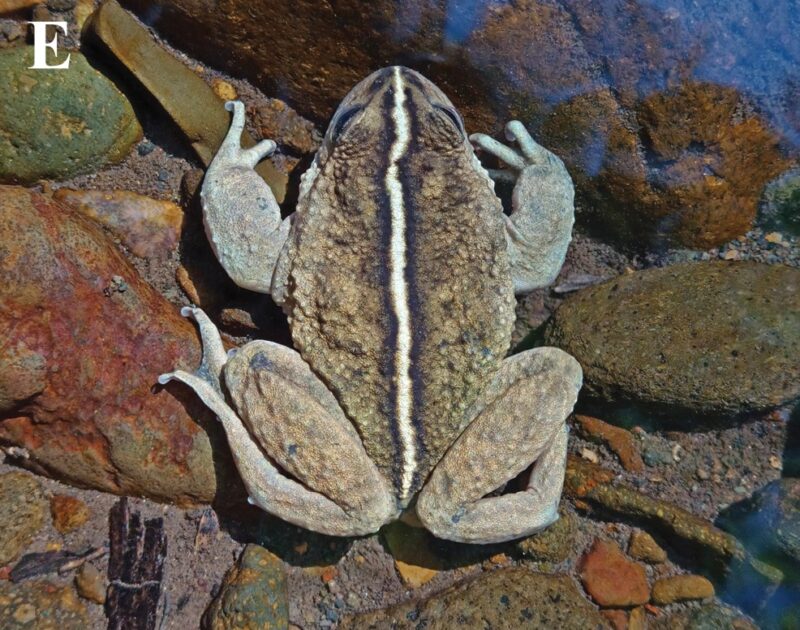
Discovered in 1893, the frog Alsodes vittatus was found again in Chile after no known sighting of them for 130 years. A team of scientists from the University of Concepción and the University of Valparaíso in Chile released a blog about their discovery on March 11, 2025. Lead author Claudio Correa, renewable natural resources engineer Edvin Riveros Riffo and biologist Juan Pablo Donoso, published their study on March 6, 2025, in the peer-reviewed open-access journal ZooKeys.
The 2025 EarthSky lunar calendar makes a great gift. Get yours today!
Previous sightings of the frog
The Alsodes vittatus frog was first spotted in 1893. Philibert Germain, a French entomologist, discovered the frog at the former Hacienda San Ignacio de Pemehue in La Araucanía region in Chile. An entomologist studies insects, and they study other creatures as well.
Germain captured three of the Alsodes vittatus frogs and passed them on to Rodolfo Amando Philippi, a paleontologist and zoologist. Philippi was the first to release a scientific description of the Alsodes vittatus frog in 1902. However, the frog was not been spotted after that until 130 years after its discovery.
Discovering the frog
According to the study, Alsodes vittatus is “one of the rarest and most elusive amphibians from Chile.” So, despite several expeditions, there were no sightings of Alsodes vittatus. From 1995 to 2002, scientists were unsuccessful in locating the frog in the northwest area of Pemehue. Then in 2015 and 2016, Claudio Correa and Juan Pablo Donoso led a new search for the elusive frog.
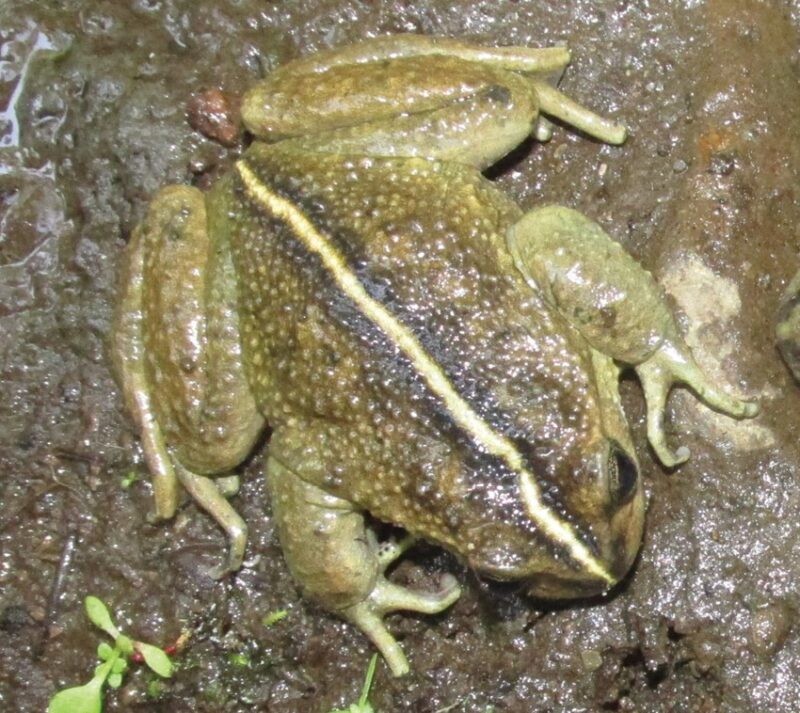
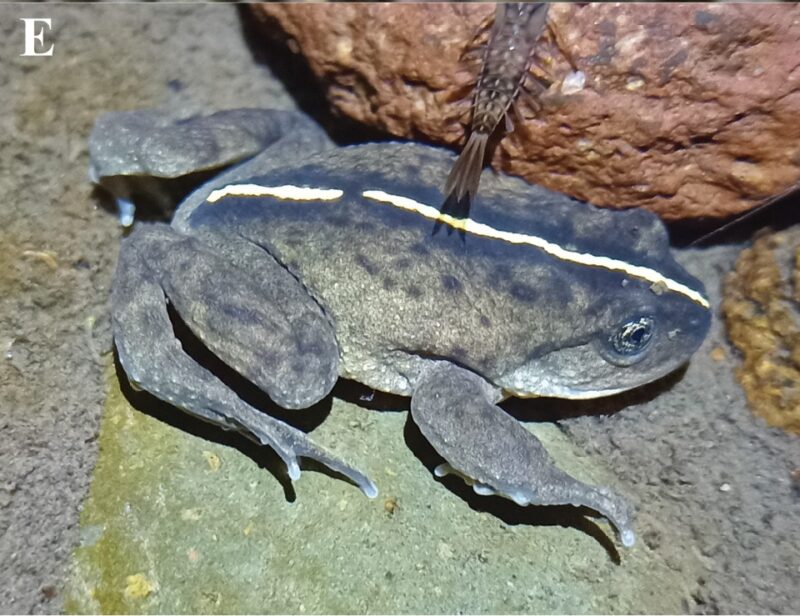
They found two populations of Alsodes, but they weren’t Alsodes vittatus. Those frogs didn’t have the characteristic white or yellow line on their backs like the Alsodes vittatus frog.
Unfortunately, Correa and his team were not certain exactly where Germain originally discovered and collected his three Alsodes vittatus. They said:
The main challenge in locating it was the lack of precision in the description of its type locality. In Germain’s time, the Hacienda San Ignacio de Pemehue was an estate of enormous size, and the naturalist did not specify the exact place where he collected the specimens.
The treasure hunt ends
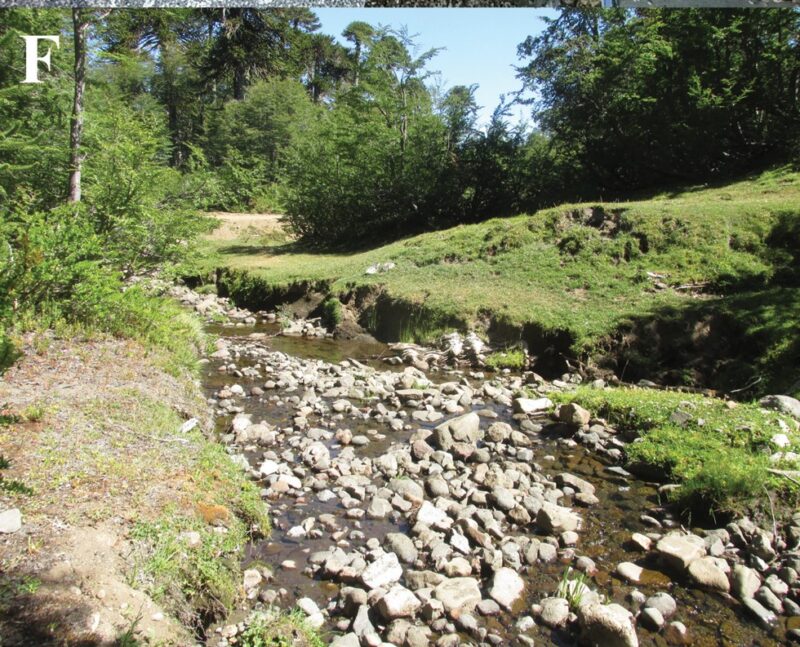
After studying Germain’s papers and documents researchers refined the location of the original discovery, and a second expedition took place between 2023 and 2024. This time Correa and Riveros located two populations of Alsodes vittatus in the Lolco and Portales river basins, and in the Tupuyuntué River, in the La Araucanía region.

And what happens now?
After more than a century without sighting any Alsodes vittatus, you might wonder why it has been so difficult to find one again. There is great biodiversity in the Southern Cone of Latin America, which includes Argentina, Chile and Uruguay.
The rediscovery of A. vittatus allowed us to obtain, more than a century after its description, the first biological and ecological data on the species. Field observations also indicate that this amphibian faces several significant threats and that it could be considered endangered. In a broader context, this rediscovery demonstrates the limited biological, evolutionary and biogeographic knowledge of the amphibians that inhabit the southern cone of South America, emphasizing the urgency of their study and conservation.
Bottom line: A rare and elusive frog was rediscovered after 130 years! Learn how a team of scientists found them.
Read more: New species of giant sea bug named for Darth Vader
New species of moray eel discovered and named Hades
The post A rare and elusive frog found again after 130 years first appeared on EarthSky.
from EarthSky https://ift.tt/bJTuDQe
Discovered in 1893, the frog Alsodes vittatus was found again in Chile after no known sighting of them for 130 years. A team of scientists from the University of Concepción and the University of Valparaíso in Chile released a blog about their discovery on March 11, 2025. Lead author Claudio Correa, renewable natural resources engineer Edvin Riveros Riffo and biologist Juan Pablo Donoso, published their study on March 6, 2025, in the peer-reviewed open-access journal ZooKeys.
The 2025 EarthSky lunar calendar makes a great gift. Get yours today!
Previous sightings of the frog
The Alsodes vittatus frog was first spotted in 1893. Philibert Germain, a French entomologist, discovered the frog at the former Hacienda San Ignacio de Pemehue in La Araucanía region in Chile. An entomologist studies insects, and they study other creatures as well.
Germain captured three of the Alsodes vittatus frogs and passed them on to Rodolfo Amando Philippi, a paleontologist and zoologist. Philippi was the first to release a scientific description of the Alsodes vittatus frog in 1902. However, the frog was not been spotted after that until 130 years after its discovery.
Discovering the frog
According to the study, Alsodes vittatus is “one of the rarest and most elusive amphibians from Chile.” So, despite several expeditions, there were no sightings of Alsodes vittatus. From 1995 to 2002, scientists were unsuccessful in locating the frog in the northwest area of Pemehue. Then in 2015 and 2016, Claudio Correa and Juan Pablo Donoso led a new search for the elusive frog.
They found two populations of Alsodes, but they weren’t Alsodes vittatus. Those frogs didn’t have the characteristic white or yellow line on their backs like the Alsodes vittatus frog.
Unfortunately, Correa and his team were not certain exactly where Germain originally discovered and collected his three Alsodes vittatus. They said:
The main challenge in locating it was the lack of precision in the description of its type locality. In Germain’s time, the Hacienda San Ignacio de Pemehue was an estate of enormous size, and the naturalist did not specify the exact place where he collected the specimens.
The treasure hunt ends
After studying Germain’s papers and documents researchers refined the location of the original discovery, and a second expedition took place between 2023 and 2024. This time Correa and Riveros located two populations of Alsodes vittatus in the Lolco and Portales river basins, and in the Tupuyuntué River, in the La Araucanía region.
And what happens now?
After more than a century without sighting any Alsodes vittatus, you might wonder why it has been so difficult to find one again. There is great biodiversity in the Southern Cone of Latin America, which includes Argentina, Chile and Uruguay.
The rediscovery of A. vittatus allowed us to obtain, more than a century after its description, the first biological and ecological data on the species. Field observations also indicate that this amphibian faces several significant threats and that it could be considered endangered. In a broader context, this rediscovery demonstrates the limited biological, evolutionary and biogeographic knowledge of the amphibians that inhabit the southern cone of South America, emphasizing the urgency of their study and conservation.
Bottom line: A rare and elusive frog was rediscovered after 130 years! Learn how a team of scientists found them.
Read more: New species of giant sea bug named for Darth Vader
New species of moray eel discovered and named Hades
The post A rare and elusive frog found again after 130 years first appeared on EarthSky.
from EarthSky https://ift.tt/bJTuDQe

Aucun commentaire:
Enregistrer un commentaire