
A video about the experiments showing that wild fish use visual cues to identify human divers, provided by the Max Planck Institute of Animal Behavior.
- Wild fish recognize divers based on visual cues from their dive gear, such as color differences in the gear.
- Fish were trained to follow a specific diver who provided food, and they learned to distinguish this diver from another without food.
- When both divers wore identical gear, fish couldn’t differentiate between them, showing that visual cues from diving equipment were crucial for recognition.
Wild fish use visual cues to identify human divers
Scientists at a Mediterranean Sea research station with the Max Planck Institute of Animal Behavior said on February 19, 2025, that they noticed something curious about wild fish in their behavioral studies. The fish would follow divers that carried food used as rewards in experiments. So the scientists wondered, did these fish recognize the divers with food? They devised an experiment to find out. And they discovered that wild fish are able to recognize divers based on visual cues from their dive gear.
The scientists published their peer-reviewed findings in the journal Biology Letters on February 19, 2025.
There’s not much previous scientific evidence that fish, wild or captive, can recognize humans. However, one intriguing study of a captive archerfish showed that it was able to distinguish human faces.
Lead author Maëlan Tomasek of the Max Planck Institute of Animal Behavior said:
But nobody has ever asked whether wild fish have the capacity, or indeed motivation, to recognize us when we enter their underwater world.
The 2025 EarthSky lunar calendar makes a great gift. Get yours today!

Testing fish in the wild
Researchers conducted their experiments in the summer of 2024. The study site was in open water, 13 to 26 feet (4 to 8 meters) deep, in the Mediterranean Sea near Corsica, France.
The scientists studied two fish species, saddled sea bream (Oblada melanura) and black sea bream (Spondyliosoma cantharus).
No fish were held captive in the experiments. Co-author and diver Katinka Soller of the Max Planck Institute said:
[The fish were] willing volunteers who could come and go as they pleased.
There were two parts to the experiment: First, scientists trained the fish to follow a diver to get a food reward. Second, they wanted to determine if the fish could distinguish between two divers and follow the diver they associated with food.
Training wild fish to follow a diver with food
Before the food training, none of the fish would follow the divers. But that would soon change.
Katinka Soller was the fish trainer. She spent 12 days training the fish to follow her.
Soller began by feeding the fish pieces of shrimp. Then she swam a distance of 164 feet (50 meters) and fed the fish that followed her.
She repeated this exercise each day, and the fish started associating her with food. Soller said:
Once I entered the water, it was a matter of seconds before I would see them swimming towards me, seemingly coming out of nowhere.
At the beginning of the training, Soller wore a bright red vest and other conspicuous accessories with her standard diving gear. But as the training progressed, she gradually shed those accessories. Towards the end of the training, she was only swimming with standard dive gear and not providing food at the starting point. The fish continued to follow her.
A second diver joins the experiment
In the second part of the experiment, Tomasek joined Soller. He wore different dive gear from Soller, with different colors.
For five days, they repeated what Soller had done but each diver swam in different directions. Soller fed the fish, but Tomasek did not.
On the first day, equal numbers of fish followed each diver. Soller said:
You could see them struggling to decide who to chase.
On the second day, more fish followed Soller. And that number increased over the course of the five-day experiment.
Bernie, Alfie, and other fish with unique features
Some of the fish that followed Soller for food had distinctive features. The scientists were curious to see how these individuals behaved and even gave them names.
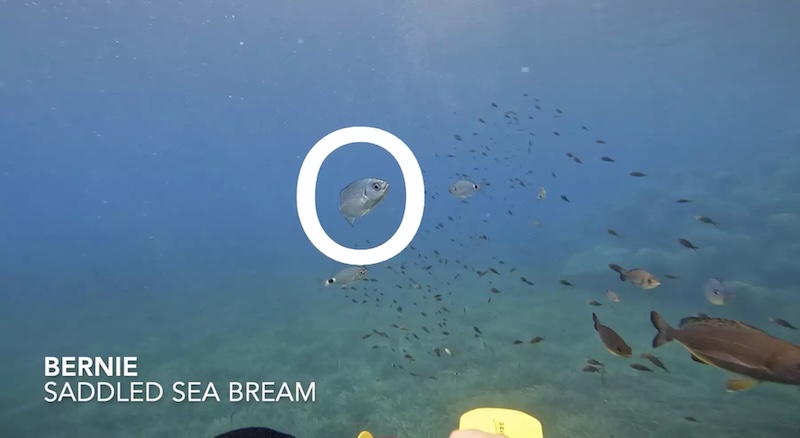
Soller remarked:
There was Bernie with two shiny silver scales on the back and Alfie who had a nip out of the tail fin.
The researchers observed that four of those fish quickly learned that Soller was the one to follow for food. Tomasek commented:
This is a cool result because it shows that fish were not simply following Katinka out of habit or because other fish were there. They were conscious of both divers, testing each one and learning that Katinka produced the reward at the end of the swim.
A twist on that last experiment
Now, what would happen if both divers wore identical diving gear, making them indistinguishable? The fish, it turns out, were unable to tell them apart.
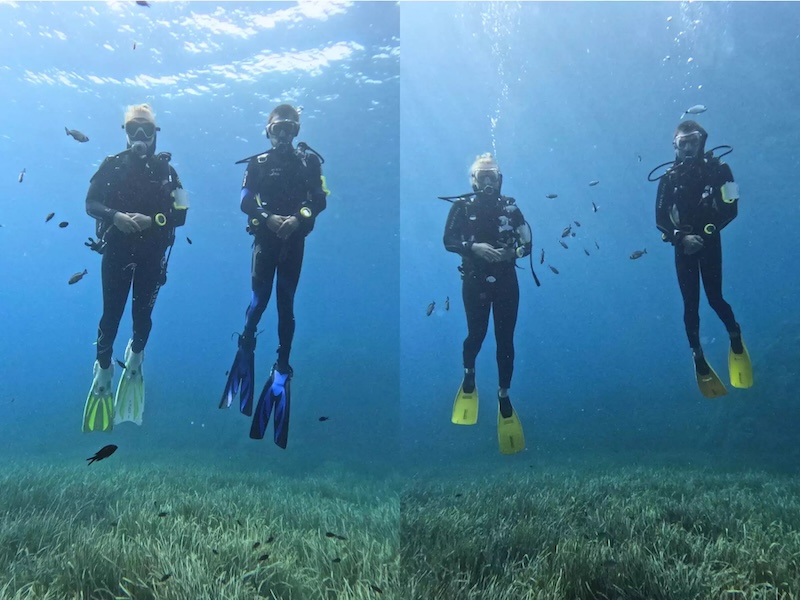
This, the researchers said, was strong evidence that the fish used visual cues from the diving gear to identify the divers. Tomasek explained:
Almost all fish have color vision, so it is not surprising that the sea bream learned to associate the correct diver based on patches of color on the body.
Soller added that humans do the same thing underwater:
Faces are distorted by diving masks, so we usually rely on differences between wetsuits, fins, or other parts of the gear to recognize each other.
Bottom line: Wild fish are able to recognize divers based on visual cues from their dive gear. But they cannot tell apart divers that are dressed in identical dive gear.
Source: Wild fish use visual cues to recognize individual divers
Via Max Planck Institute of Animal Behavior
Read more: 5 ways fish are like you and me
The post Wild fish can recognize unique humans with visual cues first appeared on EarthSky.
from EarthSky https://ift.tt/1iS5W9A
A video about the experiments showing that wild fish use visual cues to identify human divers, provided by the Max Planck Institute of Animal Behavior.
- Wild fish recognize divers based on visual cues from their dive gear, such as color differences in the gear.
- Fish were trained to follow a specific diver who provided food, and they learned to distinguish this diver from another without food.
- When both divers wore identical gear, fish couldn’t differentiate between them, showing that visual cues from diving equipment were crucial for recognition.
Wild fish use visual cues to identify human divers
Scientists at a Mediterranean Sea research station with the Max Planck Institute of Animal Behavior said on February 19, 2025, that they noticed something curious about wild fish in their behavioral studies. The fish would follow divers that carried food used as rewards in experiments. So the scientists wondered, did these fish recognize the divers with food? They devised an experiment to find out. And they discovered that wild fish are able to recognize divers based on visual cues from their dive gear.
The scientists published their peer-reviewed findings in the journal Biology Letters on February 19, 2025.
There’s not much previous scientific evidence that fish, wild or captive, can recognize humans. However, one intriguing study of a captive archerfish showed that it was able to distinguish human faces.
Lead author Maëlan Tomasek of the Max Planck Institute of Animal Behavior said:
But nobody has ever asked whether wild fish have the capacity, or indeed motivation, to recognize us when we enter their underwater world.
The 2025 EarthSky lunar calendar makes a great gift. Get yours today!
Testing fish in the wild
Researchers conducted their experiments in the summer of 2024. The study site was in open water, 13 to 26 feet (4 to 8 meters) deep, in the Mediterranean Sea near Corsica, France.
The scientists studied two fish species, saddled sea bream (Oblada melanura) and black sea bream (Spondyliosoma cantharus).
No fish were held captive in the experiments. Co-author and diver Katinka Soller of the Max Planck Institute said:
[The fish were] willing volunteers who could come and go as they pleased.
There were two parts to the experiment: First, scientists trained the fish to follow a diver to get a food reward. Second, they wanted to determine if the fish could distinguish between two divers and follow the diver they associated with food.
Training wild fish to follow a diver with food
Before the food training, none of the fish would follow the divers. But that would soon change.
Katinka Soller was the fish trainer. She spent 12 days training the fish to follow her.
Soller began by feeding the fish pieces of shrimp. Then she swam a distance of 164 feet (50 meters) and fed the fish that followed her.
She repeated this exercise each day, and the fish started associating her with food. Soller said:
Once I entered the water, it was a matter of seconds before I would see them swimming towards me, seemingly coming out of nowhere.
At the beginning of the training, Soller wore a bright red vest and other conspicuous accessories with her standard diving gear. But as the training progressed, she gradually shed those accessories. Towards the end of the training, she was only swimming with standard dive gear and not providing food at the starting point. The fish continued to follow her.
A second diver joins the experiment
In the second part of the experiment, Tomasek joined Soller. He wore different dive gear from Soller, with different colors.
For five days, they repeated what Soller had done but each diver swam in different directions. Soller fed the fish, but Tomasek did not.
On the first day, equal numbers of fish followed each diver. Soller said:
You could see them struggling to decide who to chase.
On the second day, more fish followed Soller. And that number increased over the course of the five-day experiment.
Bernie, Alfie, and other fish with unique features
Some of the fish that followed Soller for food had distinctive features. The scientists were curious to see how these individuals behaved and even gave them names.
Soller remarked:
There was Bernie with two shiny silver scales on the back and Alfie who had a nip out of the tail fin.
The researchers observed that four of those fish quickly learned that Soller was the one to follow for food. Tomasek commented:
This is a cool result because it shows that fish were not simply following Katinka out of habit or because other fish were there. They were conscious of both divers, testing each one and learning that Katinka produced the reward at the end of the swim.
A twist on that last experiment
Now, what would happen if both divers wore identical diving gear, making them indistinguishable? The fish, it turns out, were unable to tell them apart.
This, the researchers said, was strong evidence that the fish used visual cues from the diving gear to identify the divers. Tomasek explained:
Almost all fish have color vision, so it is not surprising that the sea bream learned to associate the correct diver based on patches of color on the body.
Soller added that humans do the same thing underwater:
Faces are distorted by diving masks, so we usually rely on differences between wetsuits, fins, or other parts of the gear to recognize each other.
Bottom line: Wild fish are able to recognize divers based on visual cues from their dive gear. But they cannot tell apart divers that are dressed in identical dive gear.
Source: Wild fish use visual cues to recognize individual divers
Via Max Planck Institute of Animal Behavior
Read more: 5 ways fish are like you and me
The post Wild fish can recognize unique humans with visual cues first appeared on EarthSky.
from EarthSky https://ift.tt/1iS5W9A

Aucun commentaire:
Enregistrer un commentaire