

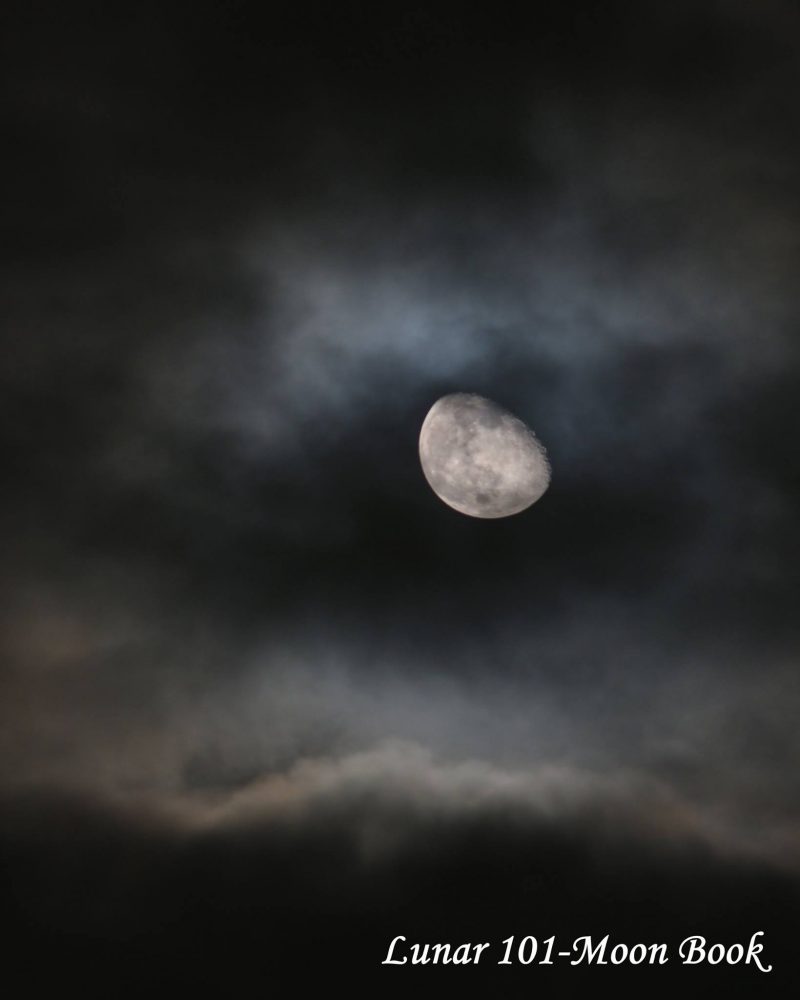
Waning gibbous moon and fast-moving clouds on the morning of March 6, 2018. Photo taken from Toronto by Steven A. Sweet from Lunar 101 – Moon Book.
Are you looking for the moon and not finding it? That’s because the moon is now in a waning gibbous phase: less than full but more than half-lighted. It’s rising later at night and appearing in the predawn sky and in the sky after sunrise. Last quarter moon will come on March 9, 2018, at 11:20 UTC; translate to your time zone.
A waning gibbous moon can surprise you if you happen to be out late in the evening. It rises eerily some hours after sunset, glowing red like a full moon when it’s near the horizon.
Sometimes it looks like a misshapen clone of a full moon.

A waning gibbous moon is sometimes seen in a blue daylight sky. Here it is on March 5, 2018, caught by Sam Rowland in Zamboanga City, Philippines.
A waning gibbous moon also initiates a rash of questions about seeing the moon during the day.
If it rises late at night, you know the waning gibbous moon must set after sunrise.
In fact, in the few days after full moon, you’ll often see the waning gibbous moon in the west in early morning, floating against the pale blue sky.
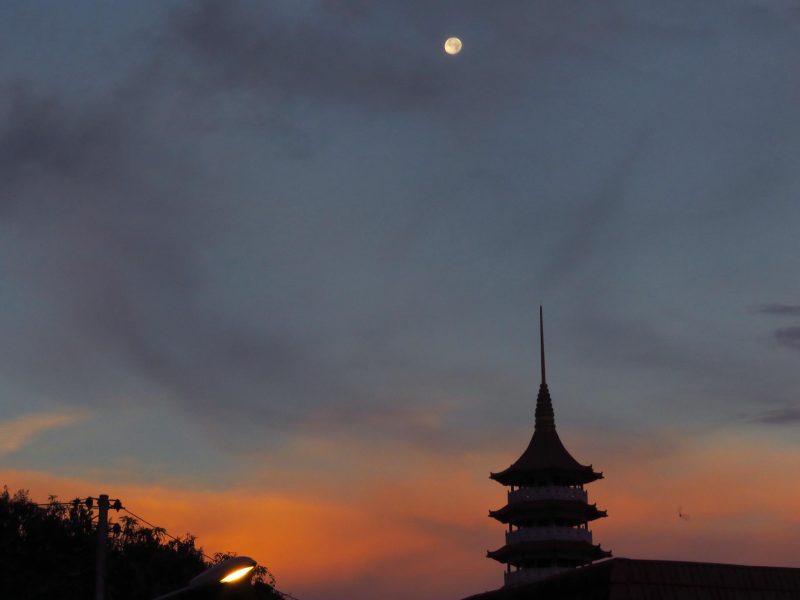
Waning gibbous moon at dawn over Sabah, North Borneo via our friend Jenney Disimon.
As the moon orbits Earth, it changes phase in an orderly way. Follow these links to understand the various phases of the moon.
Four keys to understanding moon phases
Where’s the moon? Waxing crescent
Where’s the moon? First quarter
Where’s the moon? Waxing gibbous
What’s special about a full moon?
Where’s the moon? Waning gibbous
Where’s the moon? Last quarter
Where’s the moon? Waning crescent
Where’s the moon? New phase
from EarthSky http://ift.tt/1gESgg1
Waning gibbous moon and fast-moving clouds on the morning of March 6, 2018. Photo taken from Toronto by Steven A. Sweet from Lunar 101 – Moon Book.
Are you looking for the moon and not finding it? That’s because the moon is now in a waning gibbous phase: less than full but more than half-lighted. It’s rising later at night and appearing in the predawn sky and in the sky after sunrise. Last quarter moon will come on March 9, 2018, at 11:20 UTC; translate to your time zone.
A waning gibbous moon can surprise you if you happen to be out late in the evening. It rises eerily some hours after sunset, glowing red like a full moon when it’s near the horizon.
Sometimes it looks like a misshapen clone of a full moon.
A waning gibbous moon is sometimes seen in a blue daylight sky. Here it is on March 5, 2018, caught by Sam Rowland in Zamboanga City, Philippines.
A waning gibbous moon also initiates a rash of questions about seeing the moon during the day.
If it rises late at night, you know the waning gibbous moon must set after sunrise.
In fact, in the few days after full moon, you’ll often see the waning gibbous moon in the west in early morning, floating against the pale blue sky.
Waning gibbous moon at dawn over Sabah, North Borneo via our friend Jenney Disimon.
As the moon orbits Earth, it changes phase in an orderly way. Follow these links to understand the various phases of the moon.
Four keys to understanding moon phases
Where’s the moon? Waxing crescent
Where’s the moon? First quarter
Where’s the moon? Waxing gibbous
What’s special about a full moon?
Where’s the moon? Waning gibbous
Where’s the moon? Last quarter
Where’s the moon? Waning crescent
Where’s the moon? New phase
from EarthSky http://ift.tt/1gESgg1

Aucun commentaire:
Enregistrer un commentaire