aads

First contact

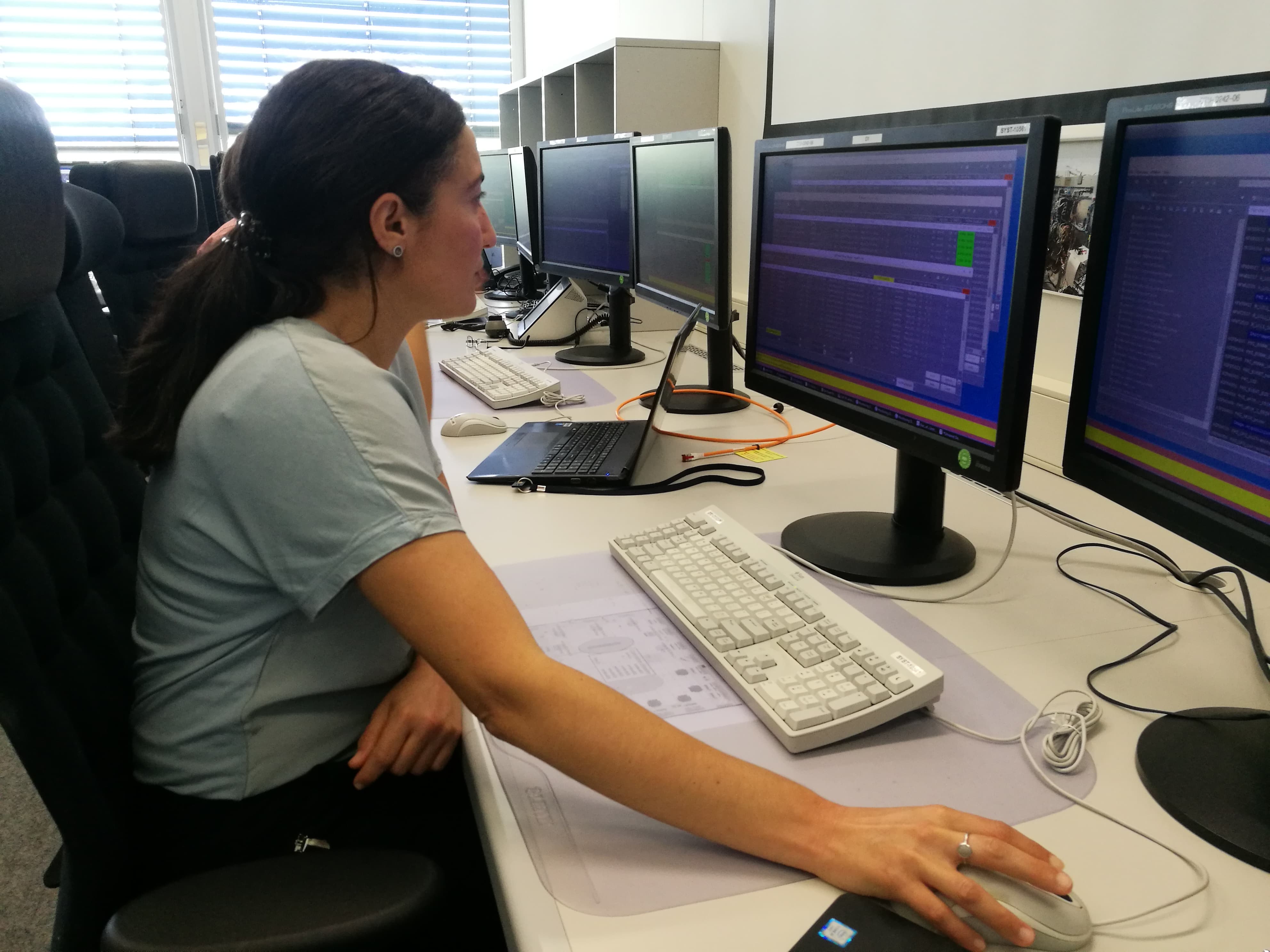
Salma Fahmy, team member on the Solar Orbiter Project Office at ESTEC Credit: ESA/D. Lakey

Salma Fahmy, team member on the Solar Orbiter Project Office at ESTEC Credit: ESA/D. Lakey

ESA’s Solar Orbiter team have been busy for the last few months preparing for the first ‘Spacecraft Validation Test’ – referred to in engineering-speak as ‘SVT-0’ – which is the first opportunity the mission control team to establish a data link to the actual flight hardware and send commands to the spacecraft.

The mission controllers are working at ESA’s ESOC control centre in Darmstadt this week, joined by representatives from the mission’s two instrument teams, the ESA Project Team based at ESTEC in the Netherlands and the AirbusDS-UK industrial team. The spacecraft itself is located in Stevenage, UK.

Jose-Luis Pellon-Bailon & Matthias Eiblmaier Credit: ESA/D. Lakey

Jose-Luis Pellon-Bailon & Matthias Eiblmaier Credit: ESA/D. Lakey

Yesterday and today, the team will validate flight control procedures and the database that describes the commands and telemetry of the spacecraft. It’s a lot of work but at the end of it, a real milestone will have been passed.

Spacecraft Operations Engineer Daniel Lakey explains, “This is the culmination of months of work by us, our colleagues across ESA and, of course, the teams at AirbusDS-UK, who are leading the build of the spacecraft and are supporting these test connections from the cleanroom in Stevenage.”

“We have a list of over 250 procedures that we will methodically go through, to ensure they are ready for flight. This first contact with the real spacecraft is an exciting step after having spent years working on paper!”

More tests are planned over the coming months, and next year.

#Solo

#ESOC


from Rocket Science https://ift.tt/2NrqlVJ
v
Salma Fahmy, team member on the Solar Orbiter Project Office at ESTEC Credit: ESA/D. Lakey

Salma Fahmy, team member on the Solar Orbiter Project Office at ESTEC Credit: ESA/D. Lakey

ESA’s Solar Orbiter team have been busy for the last few months preparing for the first ‘Spacecraft Validation Test’ – referred to in engineering-speak as ‘SVT-0’ – which is the first opportunity the mission control team to establish a data link to the actual flight hardware and send commands to the spacecraft.

The mission controllers are working at ESA’s ESOC control centre in Darmstadt this week, joined by representatives from the mission’s two instrument teams, the ESA Project Team based at ESTEC in the Netherlands and the AirbusDS-UK industrial team. The spacecraft itself is located in Stevenage, UK.

Jose-Luis Pellon-Bailon & Matthias Eiblmaier Credit: ESA/D. Lakey

Jose-Luis Pellon-Bailon & Matthias Eiblmaier Credit: ESA/D. Lakey

Yesterday and today, the team will validate flight control procedures and the database that describes the commands and telemetry of the spacecraft. It’s a lot of work but at the end of it, a real milestone will have been passed.

Spacecraft Operations Engineer Daniel Lakey explains, “This is the culmination of months of work by us, our colleagues across ESA and, of course, the teams at AirbusDS-UK, who are leading the build of the spacecraft and are supporting these test connections from the cleanroom in Stevenage.”

“We have a list of over 250 procedures that we will methodically go through, to ensure they are ready for flight. This first contact with the real spacecraft is an exciting step after having spent years working on paper!”

More tests are planned over the coming months, and next year.

#Solo

#ESOC


from Rocket Science https://ift.tt/2NrqlVJ
v

A grave tale: The case of the corpse-eating flies


Dozens of ceramic vessels from West Mexico, part of the collection of Emory's Michael C. Carlos Museum, were believed to be "grave goods," traditionally placed near bodies in underground burial chambers almost 1,500 years before the Aztecs. The compact figures depict humans and animals engaged in everyday activities, vividly capturing a place and time. Residue and wear patterns suggested that the vessels had once been filled with food and drink, perhaps to accompany the departed along their journey.

But were the figures authentic?

Seeking answers, the museum invited forensic anthropologist Robert Pickering — who uses entomology, among other techniques – to examine the vessels with the help of Emory scholars.

His quest? Locate telltale insect casings likely left by coffin flies, corpse-eating insects that fed on decomposing bodies interred in the ancient underground shaft tombs of Western Mexico.

"Not to be impolite, but where you have dead people, you have bugs," Pickering explains.

Read more about the project here.

from eScienceCommons https://ift.tt/2KFnoCp

Dozens of ceramic vessels from West Mexico, part of the collection of Emory's Michael C. Carlos Museum, were believed to be "grave goods," traditionally placed near bodies in underground burial chambers almost 1,500 years before the Aztecs. The compact figures depict humans and animals engaged in everyday activities, vividly capturing a place and time. Residue and wear patterns suggested that the vessels had once been filled with food and drink, perhaps to accompany the departed along their journey.

But were the figures authentic?

Seeking answers, the museum invited forensic anthropologist Robert Pickering — who uses entomology, among other techniques – to examine the vessels with the help of Emory scholars.

His quest? Locate telltale insect casings likely left by coffin flies, corpse-eating insects that fed on decomposing bodies interred in the ancient underground shaft tombs of Western Mexico.

"Not to be impolite, but where you have dead people, you have bugs," Pickering explains.

Read more about the project here.

from eScienceCommons https://ift.tt/2KFnoCp

New Atlanta NMR Consortium links resources of Emory, Georgia Tech and Georgia State

The Atlanta Nuclear Magnetic Resonance Consortium "lowers the activation energy to take advantage of partners’ expertise," says Emory chemist David Lynn.

NMR – nuclear magnetic resonance – is a powerful tool to investigate matter. It is based on measuring the interaction between the nuclei of atoms in molecules in the presence of an external magnetic field; the higher the field strength, the more sensitive the instrument.

For example, high magnetic fields enable measurement of analytes at low concentrations, such as the compounds in the urine of blue crabs, opening doors to understanding how chemicals invisibly regulate marine life. High-field NMR also allows scientists to “see” the structure and dynamics of complex molecules, such as proteins, nucleic acids, and their complexes.

NMR is used widely in many fields, from biochemistry, biology, chemistry, and physics, to geology engineering, pharmaceutical sciences, medicine, food science, and many others.
David Lynn

NMR instruments, however, are a major investment. The most advanced units can cost up to up to millions of dollars per piece. Maintenance can cost tens of thousands of dollars a year. The investment in people is also significant. It can take years of training before a user can perform some of the most advanced techniques.

For these and other reasons, Emory University, Georgia Institute of Technology, and Georgia State University have formed the Atlanta NMR Consortium. The aim is to maximize use of institutional NMR equipment by sharing facilities and expertise with consortium partners.

Through the consortium, students, faculty, and staff of a consortium member can use the NMR facilities of their partners. The cost to a consortium member is the same as what the facility charges its own constituents.

“NMR continues to grow and develop because of technological advances,” says David Lynn, a chemistry professor at Emory University. To keep up, institutions need to keep buying new, improved instruments. Such a never-ending commitment is becoming untenable and redundant across Atlanta, Lynn says. Combining forces is the way to go.


Immediately, the consortium offers access to the most sensitive instruments now in Atlanta – the 700- and 800-MHz units at Georgia Tech. Georgia Tech invested more than $5 million to install the two high-field units, as well as special capabilities, in 2016.

Partners can gain access to Georgia State’s large variety of NMR probes. Solid-state capability, which is well established in Emory and advancing at Georgia Tech, will be available to partners.

Needless to say, the consortium offers alternatives when an instrument at a member institution malfunctions.

Beyond maximizing use of facilities, the consortium offers other potential benefits.
Anant Paravastu

“The biggest benefit is community,” says Anant Paravastu. Paravastu is an associate professor in the Georgia Tech School of Chemical and Biomolecular Engineering. He is also a member of the Parker H. Petit Institute for Bioengineering and Bioscience (IBB).

“Each of us specializes the hardware and software for our experiments,” Paravastu says. “As we go in different directions, we will benefit from a cohesive community of people who know how to use NMR for a wide range of problems.”

Paravastu previously worked at the National High Magnetic Field Laboratory, in Florida State University. That national facility sustains a large community of NMR researchers who help each other build expertise, he says. “We Atlanta researchers would benefit from a similar community, and not only for the scientific advantage.”

Both Lynn and Paravastu believe the consortium will help the partners jointly compete for federal grants for instrumentation. “A large user group will make us more competitive,” Lynn says. “The federal government would much rather pay for an instrument that will benefit many scientists rather than just one research group in one university,” Paravastu says.

“The most important goal for us is the sharing of our expertise,” says Markus Germann, a professor of chemistry at Georgia State. A particular expertise there is the study of nucleic acids. More broadly, Georgia State has wide experience in solution NMR. Researchers there have developed NMR applications to study complex structures of biological and clinical importance.

Germann offers some examples:
Structure and dynamics of damaged and unusual DNA
Structure and dynamics of protein—DNA and protein—RNA complexes
Structural integrity of protein mutants
Small ligand-DNA and -RNA binding for gene control
Protein-based contrast agents for magnetic resonance imaging

“For me, there’s a direct benefit in learning from people at Georgia State about soluble-protein structure,” Paravastu says. He studies the structures of peptides; of particular interest are certain water-soluble states of beta-amyloid peptide, in Alzheimer’s disease. These forms, Paravastu says, have special toxicity to neurons.
Markus Germann

Paravastu also studies proteins that self-assemble. “People at Emory have a different approach to studying self-assembling proteins,” he says. “We have a lot of incentive to strengthen our relationships with other groups.”

“Different labs do different things and have different expertise,” Lynn says. “The consortium lowers the activation energy to take advantage of partners’ expertise.”

Even before the consortium, Germann notes, his lab has worked with Georgia Tech’s Francesca Storici on studies of the impact of ribonucleotides on DNA structure and properties. Storici is a professor in the School of Biological Sciences and a member of IBB.

Germann has also worked with Georgia Tech’s Nicholas Hud on the binding of small molecules to duplex DNA. Hud is a professor in the School of Chemistry and Biochemistry and a member of IBB.

“While collaborations between researchers in Atlanta Universities is not new,” Paravastu says, “the consortium will help facilitate ongoing and new collaborations."

What will now be tested is whether the students, faculty, and staff of the partners will take advantage of the consortium.

Travel from one institution to another is a barrier, Lynn says. “Are people going to travel, or will they find another way to solve the problem? How do you know that the expertise over there will really help you?” he asks.

“The intellectual barrier is very critical,” Lynn says. “We address that through the web portal.”

The website defines the capabilities, terms of use, training for access, and institutional fees, among others. Eventually, Lynn says, it will be a place to share papers from the consortium partners.

“Like many things in life, the consortium is about breaking barriers,” Paravastu says. It’s about students meeting and working with students and professors outside their home institutions.

Already some partners share a graduate-level NMR course. For the long-term, Paravastu suggests, the partners could work together on training users to harmonize best practices and ease the certification to gain access to facilities.

“We can think of students being trained by the consortium rather than just by Georgia Tech, or Emory, or Georgia State,” Paravastu says. “By teaming up, we can create things that are bigger than the sum of the parts.”

Written by Maureen Rouhi, Georgia Tech 

Related:
How protein misfolding may kickstart chemical evolution
Peptides may hold 'missing link' to life


from eScienceCommons https://ift.tt/2z4ywUO
The Atlanta Nuclear Magnetic Resonance Consortium "lowers the activation energy to take advantage of partners’ expertise," says Emory chemist David Lynn.

NMR – nuclear magnetic resonance – is a powerful tool to investigate matter. It is based on measuring the interaction between the nuclei of atoms in molecules in the presence of an external magnetic field; the higher the field strength, the more sensitive the instrument.

For example, high magnetic fields enable measurement of analytes at low concentrations, such as the compounds in the urine of blue crabs, opening doors to understanding how chemicals invisibly regulate marine life. High-field NMR also allows scientists to “see” the structure and dynamics of complex molecules, such as proteins, nucleic acids, and their complexes.

NMR is used widely in many fields, from biochemistry, biology, chemistry, and physics, to geology engineering, pharmaceutical sciences, medicine, food science, and many others.
David Lynn

NMR instruments, however, are a major investment. The most advanced units can cost up to up to millions of dollars per piece. Maintenance can cost tens of thousands of dollars a year. The investment in people is also significant. It can take years of training before a user can perform some of the most advanced techniques.

For these and other reasons, Emory University, Georgia Institute of Technology, and Georgia State University have formed the Atlanta NMR Consortium. The aim is to maximize use of institutional NMR equipment by sharing facilities and expertise with consortium partners.

Through the consortium, students, faculty, and staff of a consortium member can use the NMR facilities of their partners. The cost to a consortium member is the same as what the facility charges its own constituents.

“NMR continues to grow and develop because of technological advances,” says David Lynn, a chemistry professor at Emory University. To keep up, institutions need to keep buying new, improved instruments. Such a never-ending commitment is becoming untenable and redundant across Atlanta, Lynn says. Combining forces is the way to go.


Immediately, the consortium offers access to the most sensitive instruments now in Atlanta – the 700- and 800-MHz units at Georgia Tech. Georgia Tech invested more than $5 million to install the two high-field units, as well as special capabilities, in 2016.

Partners can gain access to Georgia State’s large variety of NMR probes. Solid-state capability, which is well established in Emory and advancing at Georgia Tech, will be available to partners.

Needless to say, the consortium offers alternatives when an instrument at a member institution malfunctions.

Beyond maximizing use of facilities, the consortium offers other potential benefits.
Anant Paravastu

“The biggest benefit is community,” says Anant Paravastu. Paravastu is an associate professor in the Georgia Tech School of Chemical and Biomolecular Engineering. He is also a member of the Parker H. Petit Institute for Bioengineering and Bioscience (IBB).

“Each of us specializes the hardware and software for our experiments,” Paravastu says. “As we go in different directions, we will benefit from a cohesive community of people who know how to use NMR for a wide range of problems.”

Paravastu previously worked at the National High Magnetic Field Laboratory, in Florida State University. That national facility sustains a large community of NMR researchers who help each other build expertise, he says. “We Atlanta researchers would benefit from a similar community, and not only for the scientific advantage.”

Both Lynn and Paravastu believe the consortium will help the partners jointly compete for federal grants for instrumentation. “A large user group will make us more competitive,” Lynn says. “The federal government would much rather pay for an instrument that will benefit many scientists rather than just one research group in one university,” Paravastu says.

“The most important goal for us is the sharing of our expertise,” says Markus Germann, a professor of chemistry at Georgia State. A particular expertise there is the study of nucleic acids. More broadly, Georgia State has wide experience in solution NMR. Researchers there have developed NMR applications to study complex structures of biological and clinical importance.

Germann offers some examples:
Structure and dynamics of damaged and unusual DNA
Structure and dynamics of protein—DNA and protein—RNA complexes
Structural integrity of protein mutants
Small ligand-DNA and -RNA binding for gene control
Protein-based contrast agents for magnetic resonance imaging

“For me, there’s a direct benefit in learning from people at Georgia State about soluble-protein structure,” Paravastu says. He studies the structures of peptides; of particular interest are certain water-soluble states of beta-amyloid peptide, in Alzheimer’s disease. These forms, Paravastu says, have special toxicity to neurons.
Markus Germann

Paravastu also studies proteins that self-assemble. “People at Emory have a different approach to studying self-assembling proteins,” he says. “We have a lot of incentive to strengthen our relationships with other groups.”

“Different labs do different things and have different expertise,” Lynn says. “The consortium lowers the activation energy to take advantage of partners’ expertise.”

Even before the consortium, Germann notes, his lab has worked with Georgia Tech’s Francesca Storici on studies of the impact of ribonucleotides on DNA structure and properties. Storici is a professor in the School of Biological Sciences and a member of IBB.

Germann has also worked with Georgia Tech’s Nicholas Hud on the binding of small molecules to duplex DNA. Hud is a professor in the School of Chemistry and Biochemistry and a member of IBB.

“While collaborations between researchers in Atlanta Universities is not new,” Paravastu says, “the consortium will help facilitate ongoing and new collaborations."

What will now be tested is whether the students, faculty, and staff of the partners will take advantage of the consortium.

Travel from one institution to another is a barrier, Lynn says. “Are people going to travel, or will they find another way to solve the problem? How do you know that the expertise over there will really help you?” he asks.

“The intellectual barrier is very critical,” Lynn says. “We address that through the web portal.”

The website defines the capabilities, terms of use, training for access, and institutional fees, among others. Eventually, Lynn says, it will be a place to share papers from the consortium partners.

“Like many things in life, the consortium is about breaking barriers,” Paravastu says. It’s about students meeting and working with students and professors outside their home institutions.

Already some partners share a graduate-level NMR course. For the long-term, Paravastu suggests, the partners could work together on training users to harmonize best practices and ease the certification to gain access to facilities.

“We can think of students being trained by the consortium rather than just by Georgia Tech, or Emory, or Georgia State,” Paravastu says. “By teaming up, we can create things that are bigger than the sum of the parts.”

Written by Maureen Rouhi, Georgia Tech 

Related:
How protein misfolding may kickstart chemical evolution
Peptides may hold 'missing link' to life


from eScienceCommons https://ift.tt/2z4ywUO

Cell ‘chatter’ discovery could open clinical trial opportunity for fatal childhood brain tumour

Brain tumours are hard to treat. But even this is a harrowing understatement for some forms of the disease.

Diffuse intrinsic pontine glioma (DIPG) is one such example. These rare brain tumours almost exclusively affect children, and they’re invariably fatal.

“Almost all children with DIPG sadly die within a couple of years of diagnosis,” says Professor Chris Jones from the Institute of Cancer Research, London, a Cancer Research UK-funded expert on the disease.

Prof Chris Jones and his team are finding the key gene faults driving childhood brain tumours.

“There aren’t any effective treatments.”

One of the main reasons that the outlook for DIPG is so poor is down to where it grows in the brain. These tumours start in the brainstem, which lies at the base of the brain and hooks up the spinal cord with deeper brain regions. This crucial piece of machinery controls many of the body’s vital processes, such as breathing and our heart beat.

That means surgery – a cornerstone treatment for many cancers – is out of the question. Drugs are also notoriously ineffective for brain tumours, because most are shut out by the protective blood brain barrier. DIPG is no exception, and Jones says that no chemotherapies have convincingly shown a beneficial effect, despite many different clinical trials testing a variety of drugs. This leaves radiotherapy as the only option, but it isn’t a cure.

“Radiotherapy is the only treatment that’s been shown to have any effect on DIPG,” he says.

“Usually patients will be given a drug as well in an attempt to find something that works, but the cancer usually comes back within 6-9 months.”

Difficult by name and by nature

This situation leaves a pressing need for new treatments. Behind every cancer treatment is research, but that’s where the nature of DIPG presents scientists with yet another challenge.

Studying samples of patients’ tumours in the lab helps scientists understand the biology of the disease and leads them towards new treatments. But for many years biopsy samples weren’t taken from children with DIPG, because the procedure was too dangerous due to the tumours’ delicate position. That left scientists with a shortage of tissue to work with and learn from.

“DIPG is diagnosed by imaging, so questions were raised over the need for invasive and risky biopsies. That set back the collection of tissue for study,” Jones says.

But the field was reawakened in 2012 when a new way of taking biopsy samples with a thin needle was shown to be safe. Using this brain tissue, and also samples taken from children who have died from the diseases, scientists can now grow DIPG cells in the lab and in mice, boosting research efforts and uncovering the genes and molecules that may fuel the disease.

And Jones’ latest research, published in Nature Medicine, is testament to how important these samples are.

More than meets the eye

Scientists already knew that DIPG doesn’t grow as a uniform bundle of cells. Instead, these tumours resemble a diverse patchwork of cells with distinct genetic and molecular fingerprints.

“Down the microscope it looks like adult glioblastoma,” says Jones. “So, a variety of drugs designed against the biology of this tumour type have been tried in DIPG patients, but none of them have worked.”

The tumour isn’t limited to the brainstem either; it spreads throughout the brain, seeding new patchworks of cancer cells in distant regions.

We think these different populations of cells are cooperating, helping one another to grow or spread.

– Prof Chris Jones

Armed with this knowledge, Jones and his team studied the brains of children who had died of DIPG, comparing the genetic features of different populations of cells. By creating a map of their DNA faults, the scientists showed that spreading cells move early in the tumour’s development, although they tended to grow slower than those in the original tumour.

Next, they grew up samples taken from the brains of children with DIPG into balls of cells in the lab, observing their behaviour and characteristics.

“We found that they were very different; some grew very fast while others didn’t, and some could spread extensively when others couldn’t,” Jones says.

But when they mixed cells together, those that previously had weaker characteristics became more aggressive. “We think these different populations are cooperating, helping one another to grow or spread,” he adds.

This helping hand seems to come from molecular signals that the cancer cells send out, since bathing cells in the liquid that more aggressive cells had been grown in also boosted their ability to divide and spread.

Trials and tribulations

Alongside revealing the intricacies of the disease, Jones hopes that his research brings new, smarter ways to treat DIPG.

“This work opens up a new way of thinking about how we may treat tumours,” he says. “If we can better understand what these different populations of cells are doing, and how they’re interacting, maybe we can identify which ones are the key to go after with drugs.”

This work opens up a new way of thinking about how we may treat tumours.

– Prof Chris Jones

With support from Cancer Research UK, the next stage of this research aims to find out precisely that. Hopefully, discoveries that emerge could make their way towards patients sooner, as Jones is also part of a Cancer Research UK-funded clinical trial that’s treating children with DIPG based on the biology of their disease. Because the study is designed to be adaptive, meaning the treatment a child receives on the trial isn’t set in stone, promising new treatments being developed could be added in and tested out in the trial as it progresses.

Supporting this type of research is exactly why we’ve made brain tumours a top priority, and why we’re committing an extra £25 million over the next 5 years specifically for research in this area.

“New, targeted drugs are now starting to make their way into clinical trials for DIPG,” says Jones.

“We don’t yet know whether they’ll work, but ultimately we want to combine targeted drugs with other treatments, such as radiotherapy or immunotherapy.

“For the first time, these kinds of trials are now opening for DIPG.”

And it’s research like this that hopefully means cancers like DIPG will no longer be defined by how hard they are to treat.

Justine 

Vinci, M. et al. (2018). Functional diversity and cooperativity between subclonal populations of pediatric glioblastoma and diffuse intrinsic pontine glioma cells. Nature Medicine. https://ift.tt/2z3UJSP.


from Cancer Research UK – Science blog https://ift.tt/2MJhiOT

Brain tumours are hard to treat. But even this is a harrowing understatement for some forms of the disease.

Diffuse intrinsic pontine glioma (DIPG) is one such example. These rare brain tumours almost exclusively affect children, and they’re invariably fatal.

“Almost all children with DIPG sadly die within a couple of years of diagnosis,” says Professor Chris Jones from the Institute of Cancer Research, London, a Cancer Research UK-funded expert on the disease.

Prof Chris Jones and his team are finding the key gene faults driving childhood brain tumours.

“There aren’t any effective treatments.”

One of the main reasons that the outlook for DIPG is so poor is down to where it grows in the brain. These tumours start in the brainstem, which lies at the base of the brain and hooks up the spinal cord with deeper brain regions. This crucial piece of machinery controls many of the body’s vital processes, such as breathing and our heart beat.

That means surgery – a cornerstone treatment for many cancers – is out of the question. Drugs are also notoriously ineffective for brain tumours, because most are shut out by the protective blood brain barrier. DIPG is no exception, and Jones says that no chemotherapies have convincingly shown a beneficial effect, despite many different clinical trials testing a variety of drugs. This leaves radiotherapy as the only option, but it isn’t a cure.

“Radiotherapy is the only treatment that’s been shown to have any effect on DIPG,” he says.

“Usually patients will be given a drug as well in an attempt to find something that works, but the cancer usually comes back within 6-9 months.”

Difficult by name and by nature

This situation leaves a pressing need for new treatments. Behind every cancer treatment is research, but that’s where the nature of DIPG presents scientists with yet another challenge.

Studying samples of patients’ tumours in the lab helps scientists understand the biology of the disease and leads them towards new treatments. But for many years biopsy samples weren’t taken from children with DIPG, because the procedure was too dangerous due to the tumours’ delicate position. That left scientists with a shortage of tissue to work with and learn from.

“DIPG is diagnosed by imaging, so questions were raised over the need for invasive and risky biopsies. That set back the collection of tissue for study,” Jones says.

But the field was reawakened in 2012 when a new way of taking biopsy samples with a thin needle was shown to be safe. Using this brain tissue, and also samples taken from children who have died from the diseases, scientists can now grow DIPG cells in the lab and in mice, boosting research efforts and uncovering the genes and molecules that may fuel the disease.

And Jones’ latest research, published in Nature Medicine, is testament to how important these samples are.

More than meets the eye

Scientists already knew that DIPG doesn’t grow as a uniform bundle of cells. Instead, these tumours resemble a diverse patchwork of cells with distinct genetic and molecular fingerprints.

“Down the microscope it looks like adult glioblastoma,” says Jones. “So, a variety of drugs designed against the biology of this tumour type have been tried in DIPG patients, but none of them have worked.”

The tumour isn’t limited to the brainstem either; it spreads throughout the brain, seeding new patchworks of cancer cells in distant regions.

We think these different populations of cells are cooperating, helping one another to grow or spread.

– Prof Chris Jones

Armed with this knowledge, Jones and his team studied the brains of children who had died of DIPG, comparing the genetic features of different populations of cells. By creating a map of their DNA faults, the scientists showed that spreading cells move early in the tumour’s development, although they tended to grow slower than those in the original tumour.

Next, they grew up samples taken from the brains of children with DIPG into balls of cells in the lab, observing their behaviour and characteristics.

“We found that they were very different; some grew very fast while others didn’t, and some could spread extensively when others couldn’t,” Jones says.

But when they mixed cells together, those that previously had weaker characteristics became more aggressive. “We think these different populations are cooperating, helping one another to grow or spread,” he adds.

This helping hand seems to come from molecular signals that the cancer cells send out, since bathing cells in the liquid that more aggressive cells had been grown in also boosted their ability to divide and spread.

Trials and tribulations

Alongside revealing the intricacies of the disease, Jones hopes that his research brings new, smarter ways to treat DIPG.

“This work opens up a new way of thinking about how we may treat tumours,” he says. “If we can better understand what these different populations of cells are doing, and how they’re interacting, maybe we can identify which ones are the key to go after with drugs.”

This work opens up a new way of thinking about how we may treat tumours.

– Prof Chris Jones

With support from Cancer Research UK, the next stage of this research aims to find out precisely that. Hopefully, discoveries that emerge could make their way towards patients sooner, as Jones is also part of a Cancer Research UK-funded clinical trial that’s treating children with DIPG based on the biology of their disease. Because the study is designed to be adaptive, meaning the treatment a child receives on the trial isn’t set in stone, promising new treatments being developed could be added in and tested out in the trial as it progresses.

Supporting this type of research is exactly why we’ve made brain tumours a top priority, and why we’re committing an extra £25 million over the next 5 years specifically for research in this area.

“New, targeted drugs are now starting to make their way into clinical trials for DIPG,” says Jones.

“We don’t yet know whether they’ll work, but ultimately we want to combine targeted drugs with other treatments, such as radiotherapy or immunotherapy.

“For the first time, these kinds of trials are now opening for DIPG.”

And it’s research like this that hopefully means cancers like DIPG will no longer be defined by how hard they are to treat.

Justine 

Vinci, M. et al. (2018). Functional diversity and cooperativity between subclonal populations of pediatric glioblastoma and diffuse intrinsic pontine glioma cells. Nature Medicine. https://ift.tt/2z3UJSP.


from Cancer Research UK – Science blog https://ift.tt/2MJhiOT

2018 SkS Weekly Climate Change & Global Warming News Roundup #26

A chronological listing of news articles posted on the Skeptical Science Facebook Page during the past week.

Editor's Pick

A city in Oman just posted the world’s hottest low temperature ever recorded: 109 degrees 

Oman June 26, 2018 

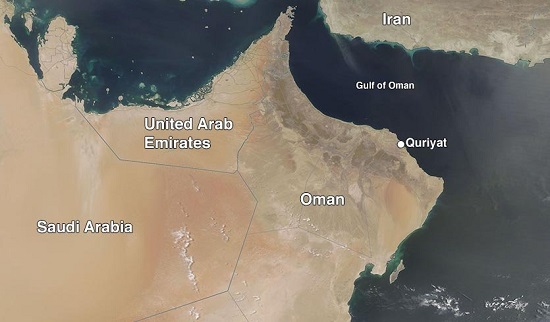
Above: MODIS satellite image from June 26, 2018 shows clear weather over Oman on the day the 24-hour world high-minimum temperature record was set at Quriyat, Oman. Image credit: NASA.

Over a period of 24 hours, the temperature in the coastal city of Quriyat, Oman, never dropped below 108.7 degrees (42.6 Celsius) Tuesday, most likely the highest minimum temperature ever observed on Earth.

For a location to remain no lower than 109 degrees around the clock is mind-boggling. In many locations, a temperature of 109 degrees even during the heat of the afternoon would be unprecedented. For example, in nearly  150 years of weather records, Washington, D.C.’s high temperature has never exceeded 106 degrees.

Quriyat’s suffocating low temperature, first reported by Jeff Masters at Weather Underground, breaks the world’s previous hottest minimum temperature of 107.4 degrees (41.9 Celsius), also set in Oman, on June 27, 2011.

Masters received word of the exceptional temperature from weather records expert Maximiliano Herrera. Incredibly, the temperature in Quriyat, Masters said, remained above 107.4 degrees (41.9 Celsius) for 51 straight hours. Its blistering afternoon high temperature of 121.6 degrees (49.8 Celsius) Tuesday was just about two degrees shy of Oman’s all-time heat record and its highest June temperature, Masters reported.

A city in Oman just posted the world’s hottest low temperature ever recorded: 109 degrees by Jason Samenow, Capital Weather Gang, Washington Post, June 7, 2018 


Links posted on Facebook

Sun June 24, 2018

Mon June 25, 2018

Tue June 26, 2018

Wed June 27, 2018

Thu June 28, 2018

Fri June 29, 2018

Sat June 30, 2018


from Skeptical Science https://ift.tt/2KkJzyi
A chronological listing of news articles posted on the Skeptical Science Facebook Page during the past week.

Editor's Pick

A city in Oman just posted the world’s hottest low temperature ever recorded: 109 degrees 

Oman June 26, 2018 

Above: MODIS satellite image from June 26, 2018 shows clear weather over Oman on the day the 24-hour world high-minimum temperature record was set at Quriyat, Oman. Image credit: NASA.

Over a period of 24 hours, the temperature in the coastal city of Quriyat, Oman, never dropped below 108.7 degrees (42.6 Celsius) Tuesday, most likely the highest minimum temperature ever observed on Earth.

For a location to remain no lower than 109 degrees around the clock is mind-boggling. In many locations, a temperature of 109 degrees even during the heat of the afternoon would be unprecedented. For example, in nearly  150 years of weather records, Washington, D.C.’s high temperature has never exceeded 106 degrees.

Quriyat’s suffocating low temperature, first reported by Jeff Masters at Weather Underground, breaks the world’s previous hottest minimum temperature of 107.4 degrees (41.9 Celsius), also set in Oman, on June 27, 2011.

Masters received word of the exceptional temperature from weather records expert Maximiliano Herrera. Incredibly, the temperature in Quriyat, Masters said, remained above 107.4 degrees (41.9 Celsius) for 51 straight hours. Its blistering afternoon high temperature of 121.6 degrees (49.8 Celsius) Tuesday was just about two degrees shy of Oman’s all-time heat record and its highest June temperature, Masters reported.

A city in Oman just posted the world’s hottest low temperature ever recorded: 109 degrees by Jason Samenow, Capital Weather Gang, Washington Post, June 7, 2018 


Links posted on Facebook

Sun June 24, 2018

Mon June 25, 2018

Tue June 26, 2018

Wed June 27, 2018

Thu June 28, 2018

Fri June 29, 2018

Sat June 30, 2018


from Skeptical Science https://ift.tt/2KkJzyi

News digest – obesity plan, more doctors needed, cancer waiting times, and HPV vaccine

Childhood obesity plan updated

Plans to stop shops from offering certain deals on unhealthy foods as well as restrictions on television advertising have been proposed by the Government. The Guardian reports on the plans that update the childhood obesity plan, which was widely criticised for not being strong enough when it was introduced in 2016. We think the new measures need implementing urgently.

Calls to double the number of medical students

The NHS needs to double the number of medical students in training to avoid collapse, reports The Telegraph. The Royal College of Physicians said rising obesity levels, new genetic technologies and other factors mean the number of new students entering medical school each year should rise to 15,000. We recently welcomed new NHS funding but said it needs to be spent wisely, most urgently on a boost in staff numbers.

NHS ‘below-average’ for treating common deadly illnesses

The NHS is lagging many other countries when it comes to treating some common, life-threatening illnesses, reports BBC News. The BBC commissioned a study that found the UK is ‘below average’ on preventing deaths from many diseases, including cancer.

HPV vaccine should be offered to boys, say doctors

A group of doctors has called for boys to be given the human papillomavirus (HPV) jab while at primary school, reports The Telegraph. The vaccine protects against a virus that causes virtually all cases of cervical cancer, as well as increasing the risk of cancers of other genital areas, the mouth and throat. Only girls are offered the vaccination from the age of 12, but doctors at the British Medical Association’s annual conference called for the jabs to be given to children as young as 10.

Hospitals should do more to help smokers quit

All smokers should be given help to quit when they’re treated in hospital, according to a report by the Royal College of Physicians. The Times (£) reports on their calls for stop-smoking services to be an automatic part of all hospital care, that could double the rate of quitting.

Latest cancer treatment waiting times are ‘worst ever’

Scotland’s cancer treatment waiting times are at their worst level in six years, reports BBC News. The latest figures show that the target of 95% of patients being treated within 62 days of a cancer diagnosis is being missed by more than two thirds of the country’s 14 health. In the first three months of 2018 only 85% of patients began treatment within target time, a fall from 2017. There’s a similar picture in Northern Ireland where all health trusts missed the 95% target according to the Belfast Telegraph. 

Non-smokers and lung cancer

Lung cancer is the most common cancer globally, and it’s often associated with smokers. But the BBC looks at why rates of the disease are rising among non-smokers, as well as women.

Technology driving personalised treatment

Our scientists in Cambridge are sequencing the tumour DNA of breast cancer patients to help choose the right treatment and predict whether they’ll experience side effects, reports BBC News. They’ve done this for 275 patients so far and they aim to enrol 2,000 patients over the next four years.

And finally

In a 6-part series we’re exploring the major challenges that are holding back progress in the field of brain tumour research. Part one focuses on how brain tumours develop, and what makes them different to other cancer types.


from Cancer Research UK – Science blog https://ift.tt/2tRB5DX

Childhood obesity plan updated

Plans to stop shops from offering certain deals on unhealthy foods as well as restrictions on television advertising have been proposed by the Government. The Guardian reports on the plans that update the childhood obesity plan, which was widely criticised for not being strong enough when it was introduced in 2016. We think the new measures need implementing urgently.

Calls to double the number of medical students

The NHS needs to double the number of medical students in training to avoid collapse, reports The Telegraph. The Royal College of Physicians said rising obesity levels, new genetic technologies and other factors mean the number of new students entering medical school each year should rise to 15,000. We recently welcomed new NHS funding but said it needs to be spent wisely, most urgently on a boost in staff numbers.

NHS ‘below-average’ for treating common deadly illnesses

The NHS is lagging many other countries when it comes to treating some common, life-threatening illnesses, reports BBC News. The BBC commissioned a study that found the UK is ‘below average’ on preventing deaths from many diseases, including cancer.

HPV vaccine should be offered to boys, say doctors

A group of doctors has called for boys to be given the human papillomavirus (HPV) jab while at primary school, reports The Telegraph. The vaccine protects against a virus that causes virtually all cases of cervical cancer, as well as increasing the risk of cancers of other genital areas, the mouth and throat. Only girls are offered the vaccination from the age of 12, but doctors at the British Medical Association’s annual conference called for the jabs to be given to children as young as 10.

Hospitals should do more to help smokers quit

All smokers should be given help to quit when they’re treated in hospital, according to a report by the Royal College of Physicians. The Times (£) reports on their calls for stop-smoking services to be an automatic part of all hospital care, that could double the rate of quitting.

Latest cancer treatment waiting times are ‘worst ever’

Scotland’s cancer treatment waiting times are at their worst level in six years, reports BBC News. The latest figures show that the target of 95% of patients being treated within 62 days of a cancer diagnosis is being missed by more than two thirds of the country’s 14 health. In the first three months of 2018 only 85% of patients began treatment within target time, a fall from 2017. There’s a similar picture in Northern Ireland where all health trusts missed the 95% target according to the Belfast Telegraph. 

Non-smokers and lung cancer

Lung cancer is the most common cancer globally, and it’s often associated with smokers. But the BBC looks at why rates of the disease are rising among non-smokers, as well as women.

Technology driving personalised treatment

Our scientists in Cambridge are sequencing the tumour DNA of breast cancer patients to help choose the right treatment and predict whether they’ll experience side effects, reports BBC News. They’ve done this for 275 patients so far and they aim to enrol 2,000 patients over the next four years.

And finally

In a 6-part series we’re exploring the major challenges that are holding back progress in the field of brain tumour research. Part one focuses on how brain tumours develop, and what makes them different to other cancer types.


from Cancer Research UK – Science blog https://ift.tt/2tRB5DX

New research, June 18-24, 2018

A selection of new climate related research articles is shown below.

Climate change

On the Time of Emergence of Tropical Width Change

Modeling the climate and carbon systems to estimate the social cost of carbon

Temperature, precipitation, wind

On the linearity of local and regional temperature changes from 1.5°C to 2°C of global warming

Changes in climate extremes over West and Central Africa at 1.5 °C and 2 °C global warming (open access)

How have daily climate extremes changed in the recent past over northeastern Argentina?

Ensemble-based CMIP5 simulations of West African summer monsoon rainfall: current climate and future changes

Secular variation of rainfall regime in the central region of Argentina

On the determination of global ocean wind and wave climate from satellite observations

Future Changes of Wind Speed and Wind Energy Potentials in EURO‐CORDEX Ensemble Simulations

Seasonal contrast of the dominant factors for spatial distribution of land surface temperature in urban areas

Extreme events

Projected changes in tropical cyclones over the South West Indian Ocean under different extents of global warming (open access)

Characterizing the exceptional 2014 drought event in São Paulo by drought period length

Multi-model extreme event attribution of the weather conducive to the 2016 Fort McMurray wildfire

The Impact of Drought on Native Southern California Vegetation: Remote Sensing Analysis Using MODIS‐Derived Time Series

Forcings and feedbacks

Reconciling Atmospheric and Oceanic Views of the Transient Climate Response to Emissions (open access)

Effective Radiative Forcing and Climate Response to Short‐Lived Climate Pollutants Under Different Scenarios (open access)

Aerosol Optical Depth variability over the Arabian Peninsula as inferred from satellite measurements

Impact of aerosol and water vapour on SW radiation at the surface: Sensitivity study and applications

Trend differences in lower stratospheric water vapour between Boulder and the zonal mean and their role in understanding fundamental observational discrepancies (open access)

Sensitivities of modelled water vapour in the lower stratosphere: temperature uncertainty, effects of horizontal transport and small-scale mixing (open access)

Spatial distribution, temporal variation, and transport characteristics of atmospheric water vapor over Central Asia and the arid region of China

Local Radiative Feedbacks Over the Arctic Based on Observed Short‐Term Climate Variations

Upper Ocean Cooling in a Coupled Climate Model Due to Light Attenuation by Yellowing Materials

Evaluation of Radiative Transfer Models With Clouds

The urban growth of the metropolitan area of Sao Paulo and its impact on the climate (open access)

Cryosphere

The land ice contribution to sea level during the satellite era (open access)

Glacier Energy and Mass Balance in the Inland Tibetan Plateau: Seasonal and Interannual Variability in Relation to Atmospheric Changes (open access)

Linkages of the dynamics of glaciers and lakes with the climate elements over the Tibetan Plateau

The Impact of Stratospheric Circulation Extremes on Minimum Arctic Sea Ice Extent

Local topography increasingly influences the mass balance of a retreating cirque glacier (open access)

Ice velocity of Jakobshavn Isbræ, Petermann Glacier, Nioghalvfjerdsfjorden, and Zachariæ Isstrøm, 2015–2017, from Sentinel 1-a/b SAR imagery (open access)

Hydrosphere 

Continued warming, salinification and oxygenation of the Greenland Sea gyre

The sensitivity of estuarine aragonite saturation state and pH to the carbonate chemistry of a freshet-dominated river (open access)

Insights into the zonal-mean response of the hydrologic cycle to global warming from a diffusive energy balance model

Spatiotemporal changes in aridity index and reference evapotranspiration over semi-arid and humid regions of Iran: trend, cause, and sensitivity analyses

Atmospheric and oceanic circulation

Multicentury Instability of the Atlantic Meridional Circulation in Rapid Warming Simulations With GISS ModelE2

"In the Goddard Institute for Space Studies (GISS) climate model, when global warming due to higher CO2 levels was sufficiently advanced, and the effect of aerosols on cloud cover included, the North Atlantic overturning ocean circulation shuts down. It stayed off for about 1,000 years and then suddenly resumed."

Climatic Effect of Antarctic Meltwater Overwhelmed by Concurrent Northern Hemispheric Melt (open access)

Changes in atmospheric blocking circulations linked with winter Arctic warming: A new perspective

Evaluating ENSO teleconnections using observations and CMIP5 models (open access)

Nearly synchronous multidecadal oscillations of surface air temperature in Punta Arenas and the Atlantic Multidecadal Oscillation index

Carbon cycle

Field-warmed soil carbon changes imply high 21st-century modeling uncertainty (open access)

Decelerating Autumn CO2 Release With Warming Induced by Attenuated Temperature Dependence of Respiration in Northern Ecosystems

Biotic responses buffer warming‐induced soil organic carbon loss in Arctic tundra

Factors regulating carbon sinks in mangrove ecosystems

Upside-down fluxes Down Under: CO2 net sink in winter and net source in summer in a temperate evergreen broadleaf forest (open access)

Response of soil respiration and its components to experimental warming and water addition in a temperate Sitka spruce forest ecosystem

The carbon balance of a Scots pine forest following severe windthrow: Comparison of reforestation techniques

Changes to the Air‐Sea Flux and Distribution of Radiocarbon in the Ocean Over the 21st Century

Climate change impacts

Mankind

Analysis of the Economic Ripple Effect of the United States on the World due to Future Climate Change (open access)

An integrated assessment approach for estimating the economic impacts of climate change on River systems: An application to hydropower and fisheries in a Himalayan River, Trishuli

Weather Variations and International Trade

Weather, Climate and Total Factor Productivity

Vulnerability to climate change of smallholder farmers in the Hamadan province, Iran (open access)

Biosphere

Geographical CO2 sensitivity of phytoplankton correlates with ocean buffer capacity

Vulnerability of the global terrestrial ecosystems to climate change

Non‐linear shift from grassland to shrubland in temperate barrier islands

Changes in urban plant phenology in the Pacific Northwest from 1959 to 2016: anthropogenic warming and natural oscillation

The phenology of the subnivium (open access)

Photosynthetic capacity and leaf nitrogen decline along a controlled climate gradient in provenances of two widely distributed Eucalyptus species

Cambial phenology and xylogenesis of Juniperus przewalskii over a climatic gradient is influenced by both temperature and drought

Successional change in species composition alters climate sensitivity of grassland productivity

The devil is in the detail: Nonadditive and context‐dependent plant population responses to increasing temperature and precipitation

Divergent response of seasonally dry tropical vegetation to climatic variations in dry and wet seasons

Climate change mitigation

Climate change communication

Economic, environmental, and social performance indicators of sustainability reporting: Evidence from the Russian oil and gas industry

"The findings suggest that companies with a share of foreign ownership disclose more transparent sustainability information than companies owned only by local investors. Additionally, companies that prepare sustainability reports only in Russian provide more valuable sustainability information than companies that publish reports in both English and Russian."

Emission savings

Drivers of greenhouse gas emissions in the United States: revisiting STIRPAT model

Carbon footprints of 13 000 cities (open access)

Can community energy initiatives motivate sustainable energy behaviours? The role of initiative involvement and personal pro-environmental motivation

Evaluation and mitigation of cement CO2 emissions: projection of emission scenarios toward 2030 in China and proposal of the roadmap to a low-carbon world by 2050

Energy production

The threat to climate change mitigation posed by the abundance of fossil fuels (open access)

The slow expansion of renewable energy in Russia: Competitiveness and regulation issues

Ecohydrological changes after tropical forest conversion to oil palm (open access)

From decentralization to re-nationalization: Energy policy networks and energy agenda setting in Thailand (1987–2017)

Climate Policy

Are European decision-makers preparing for high-end climate change? (open access)

Targeted policies can compensate most of the increased sustainability risks in 1.5 °C mitigation scenarios (open access)

The impact of climate change policy on the risk of water stress in southern and eastern Asia (open access)

Citizen preferences for possible energy policies at the national and state levels

Other papers

Palaeoclimatology

On the mechanisms of warming the mid-Pliocene and the inference of a hierarchy of climate sensitivities with relevance to the understanding of climate futures (open access)

"We find that two-thirds of the warming pervasive during the mid-Pliocene, compared to the preindustrial, could be attributed to the reduction in the planetary emissivity owing to the higher concentrations of the greenhouse gases CO2 and water vapor, and the remaining one-third to the reduction in planetary albedo. We also find that changes to the orography and the pCO2 are the leading causes of the warming with each contributing in roughly equal parts to a total of 87 % of the warming and changes to the polar ice sheets responsible for the remaining warming." ... "on the short timescale, owing to the influence of fast feedback processes, the climate sensitivity is 3.25 °C per doubling of CO2; sensitivity increases to 4.16 °C per doubling of CO2 on an intermediate timescale as the ice–albedo feedback becomes active, and then sensitivity further increases to 7.0 °C per doubling of CO2 on long timescales due to the feedback from the glacial isostatic adjustment of the Earth's surface in response to the melting of the polar ice sheets. Finally, once the slow feedbacks have stabilized, the sensitivity of the system drops to 3.35 °C per doubling of CO2."

Large-scale, millennial-length temperature reconstructions from tree-rings

"Whereas the reconstructions agree on several important features, such as warmth during medieval times and cooler temperatures in the 17th and 19th centuries, they still exhibit substantial differences during 13th and 14th centuries. We caution users who might consider combining the reconstructions through simple averaging that all reconstructions share some of the same underlying tree-ring data, and provide four recommendations to guide future efforts to better understand past millennium temperature variability."

Arctic warming induced by the Laurentide Ice Sheet topography (open access)


from Skeptical Science https://ift.tt/2tF6w55

A selection of new climate related research articles is shown below.

Climate change

On the Time of Emergence of Tropical Width Change

Modeling the climate and carbon systems to estimate the social cost of carbon

Temperature, precipitation, wind

On the linearity of local and regional temperature changes from 1.5°C to 2°C of global warming

Changes in climate extremes over West and Central Africa at 1.5 °C and 2 °C global warming (open access)

How have daily climate extremes changed in the recent past over northeastern Argentina?

Ensemble-based CMIP5 simulations of West African summer monsoon rainfall: current climate and future changes

Secular variation of rainfall regime in the central region of Argentina

On the determination of global ocean wind and wave climate from satellite observations

Future Changes of Wind Speed and Wind Energy Potentials in EURO‐CORDEX Ensemble Simulations

Seasonal contrast of the dominant factors for spatial distribution of land surface temperature in urban areas

Extreme events

Projected changes in tropical cyclones over the South West Indian Ocean under different extents of global warming (open access)

Characterizing the exceptional 2014 drought event in São Paulo by drought period length

Multi-model extreme event attribution of the weather conducive to the 2016 Fort McMurray wildfire

The Impact of Drought on Native Southern California Vegetation: Remote Sensing Analysis Using MODIS‐Derived Time Series

Forcings and feedbacks

Reconciling Atmospheric and Oceanic Views of the Transient Climate Response to Emissions (open access)

Effective Radiative Forcing and Climate Response to Short‐Lived Climate Pollutants Under Different Scenarios (open access)

Aerosol Optical Depth variability over the Arabian Peninsula as inferred from satellite measurements

Impact of aerosol and water vapour on SW radiation at the surface: Sensitivity study and applications

Trend differences in lower stratospheric water vapour between Boulder and the zonal mean and their role in understanding fundamental observational discrepancies (open access)

Sensitivities of modelled water vapour in the lower stratosphere: temperature uncertainty, effects of horizontal transport and small-scale mixing (open access)

Spatial distribution, temporal variation, and transport characteristics of atmospheric water vapor over Central Asia and the arid region of China

Local Radiative Feedbacks Over the Arctic Based on Observed Short‐Term Climate Variations

Upper Ocean Cooling in a Coupled Climate Model Due to Light Attenuation by Yellowing Materials

Evaluation of Radiative Transfer Models With Clouds

The urban growth of the metropolitan area of Sao Paulo and its impact on the climate (open access)

Cryosphere

The land ice contribution to sea level during the satellite era (open access)

Glacier Energy and Mass Balance in the Inland Tibetan Plateau: Seasonal and Interannual Variability in Relation to Atmospheric Changes (open access)

Linkages of the dynamics of glaciers and lakes with the climate elements over the Tibetan Plateau

The Impact of Stratospheric Circulation Extremes on Minimum Arctic Sea Ice Extent

Local topography increasingly influences the mass balance of a retreating cirque glacier (open access)

Ice velocity of Jakobshavn Isbræ, Petermann Glacier, Nioghalvfjerdsfjorden, and Zachariæ Isstrøm, 2015–2017, from Sentinel 1-a/b SAR imagery (open access)

Hydrosphere 

Continued warming, salinification and oxygenation of the Greenland Sea gyre

The sensitivity of estuarine aragonite saturation state and pH to the carbonate chemistry of a freshet-dominated river (open access)

Insights into the zonal-mean response of the hydrologic cycle to global warming from a diffusive energy balance model

Spatiotemporal changes in aridity index and reference evapotranspiration over semi-arid and humid regions of Iran: trend, cause, and sensitivity analyses

Atmospheric and oceanic circulation

Multicentury Instability of the Atlantic Meridional Circulation in Rapid Warming Simulations With GISS ModelE2

"In the Goddard Institute for Space Studies (GISS) climate model, when global warming due to higher CO2 levels was sufficiently advanced, and the effect of aerosols on cloud cover included, the North Atlantic overturning ocean circulation shuts down. It stayed off for about 1,000 years and then suddenly resumed."

Climatic Effect of Antarctic Meltwater Overwhelmed by Concurrent Northern Hemispheric Melt (open access)

Changes in atmospheric blocking circulations linked with winter Arctic warming: A new perspective

Evaluating ENSO teleconnections using observations and CMIP5 models (open access)

Nearly synchronous multidecadal oscillations of surface air temperature in Punta Arenas and the Atlantic Multidecadal Oscillation index

Carbon cycle

Field-warmed soil carbon changes imply high 21st-century modeling uncertainty (open access)

Decelerating Autumn CO2 Release With Warming Induced by Attenuated Temperature Dependence of Respiration in Northern Ecosystems

Biotic responses buffer warming‐induced soil organic carbon loss in Arctic tundra

Factors regulating carbon sinks in mangrove ecosystems

Upside-down fluxes Down Under: CO2 net sink in winter and net source in summer in a temperate evergreen broadleaf forest (open access)

Response of soil respiration and its components to experimental warming and water addition in a temperate Sitka spruce forest ecosystem

The carbon balance of a Scots pine forest following severe windthrow: Comparison of reforestation techniques

Changes to the Air‐Sea Flux and Distribution of Radiocarbon in the Ocean Over the 21st Century

Climate change impacts

Mankind

Analysis of the Economic Ripple Effect of the United States on the World due to Future Climate Change (open access)

An integrated assessment approach for estimating the economic impacts of climate change on River systems: An application to hydropower and fisheries in a Himalayan River, Trishuli

Weather Variations and International Trade

Weather, Climate and Total Factor Productivity

Vulnerability to climate change of smallholder farmers in the Hamadan province, Iran (open access)

Biosphere

Geographical CO2 sensitivity of phytoplankton correlates with ocean buffer capacity

Vulnerability of the global terrestrial ecosystems to climate change

Non‐linear shift from grassland to shrubland in temperate barrier islands

Changes in urban plant phenology in the Pacific Northwest from 1959 to 2016: anthropogenic warming and natural oscillation

The phenology of the subnivium (open access)

Photosynthetic capacity and leaf nitrogen decline along a controlled climate gradient in provenances of two widely distributed Eucalyptus species

Cambial phenology and xylogenesis of Juniperus przewalskii over a climatic gradient is influenced by both temperature and drought

Successional change in species composition alters climate sensitivity of grassland productivity

The devil is in the detail: Nonadditive and context‐dependent plant population responses to increasing temperature and precipitation

Divergent response of seasonally dry tropical vegetation to climatic variations in dry and wet seasons

Climate change mitigation

Climate change communication

Economic, environmental, and social performance indicators of sustainability reporting: Evidence from the Russian oil and gas industry

"The findings suggest that companies with a share of foreign ownership disclose more transparent sustainability information than companies owned only by local investors. Additionally, companies that prepare sustainability reports only in Russian provide more valuable sustainability information than companies that publish reports in both English and Russian."

Emission savings

Drivers of greenhouse gas emissions in the United States: revisiting STIRPAT model

Carbon footprints of 13 000 cities (open access)

Can community energy initiatives motivate sustainable energy behaviours? The role of initiative involvement and personal pro-environmental motivation

Evaluation and mitigation of cement CO2 emissions: projection of emission scenarios toward 2030 in China and proposal of the roadmap to a low-carbon world by 2050

Energy production

The threat to climate change mitigation posed by the abundance of fossil fuels (open access)

The slow expansion of renewable energy in Russia: Competitiveness and regulation issues

Ecohydrological changes after tropical forest conversion to oil palm (open access)

From decentralization to re-nationalization: Energy policy networks and energy agenda setting in Thailand (1987–2017)

Climate Policy

Are European decision-makers preparing for high-end climate change? (open access)

Targeted policies can compensate most of the increased sustainability risks in 1.5 °C mitigation scenarios (open access)

The impact of climate change policy on the risk of water stress in southern and eastern Asia (open access)

Citizen preferences for possible energy policies at the national and state levels

Other papers

Palaeoclimatology

On the mechanisms of warming the mid-Pliocene and the inference of a hierarchy of climate sensitivities with relevance to the understanding of climate futures (open access)

"We find that two-thirds of the warming pervasive during the mid-Pliocene, compared to the preindustrial, could be attributed to the reduction in the planetary emissivity owing to the higher concentrations of the greenhouse gases CO2 and water vapor, and the remaining one-third to the reduction in planetary albedo. We also find that changes to the orography and the pCO2 are the leading causes of the warming with each contributing in roughly equal parts to a total of 87 % of the warming and changes to the polar ice sheets responsible for the remaining warming." ... "on the short timescale, owing to the influence of fast feedback processes, the climate sensitivity is 3.25 °C per doubling of CO2; sensitivity increases to 4.16 °C per doubling of CO2 on an intermediate timescale as the ice–albedo feedback becomes active, and then sensitivity further increases to 7.0 °C per doubling of CO2 on long timescales due to the feedback from the glacial isostatic adjustment of the Earth's surface in response to the melting of the polar ice sheets. Finally, once the slow feedbacks have stabilized, the sensitivity of the system drops to 3.35 °C per doubling of CO2."

Large-scale, millennial-length temperature reconstructions from tree-rings

"Whereas the reconstructions agree on several important features, such as warmth during medieval times and cooler temperatures in the 17th and 19th centuries, they still exhibit substantial differences during 13th and 14th centuries. We caution users who might consider combining the reconstructions through simple averaging that all reconstructions share some of the same underlying tree-ring data, and provide four recommendations to guide future efforts to better understand past millennium temperature variability."

Arctic warming induced by the Laurentide Ice Sheet topography (open access)


from Skeptical Science https://ift.tt/2tF6w55

adds 2