aads

Unlocking new insight into brain tumours using neuroscience

Brain tumour research illustration

In a 6-part series, we’re exploring the major challenges that are holding back progress in the field of brain tumour research. This first part focuses on how brain tumours develop.

The brain is the most complex organ in our bodies, controlling almost everything we do. Our ability to breathe, our earliest memories and deepest thoughts and emotions are all housed in an organ the size of a large grapefruit.

Add to this that the entire organ grows from just a tiny bundle of microscopic cells, and the process becomes even more awe-inspiring.

Piecing together this process is perhaps one of the most complicated puzzles known to humankind, and one that scientists have been trying to solve for decades.

But it’s not just the growth of healthy brain tissue that scientists are still puzzling over. It’s also the growth of brain tumours. The exact way these diseases develop in the brain remains somewhat of a mystery, and it’s only through today’s sophisticated imaging and genetic techniques that we’re starting to unravel what’s going on inside patients’ heads.

To try and solve this puzzle, Cancer Research UK has set it as one of the challenges for the new Brain Tumour Awards. And our hope is that by unlocking clues on how brain tumours grow and develop we will reveal important features of their biology, opening up new ways to tackle these diseases in the future.

Brain tumours are different to other cancers

Every type of cancer is different. Even in the same part of the body, one person’s cancer can look and behave very differently to another. And when it comes to the brain, there are about 130 types of brain tumour, including those that affect adults and children.

Dr Luis F. Parada

Most brain tumour doctors are not neuroscientists – Dr Luis F. Parada

Dr Luis F. Parada, Director of the Brain Tumor Center at the Memorial Sloan Kettering Cancer Center in New York, says that the brain is a unique organ with very unique properties. And he thinks that scientists’ approach to understanding brain tumours hasn’t been quite right until now.

“Most brain tumour doctors are not neuroscientists,” he says, “so adapting techniques and treatments that we designed for other types of cancer and testing them on the brain might not be the smartest strategy.” Instead, Parada is excited by the new wave of cancer doctors whose research is rooted in a greater understanding of the biology of the brain.

Some of the difficulties researchers face come down to seemingly simple things. First, the brain is hidden behind the skull. This makes it much harder to see what’s going on as tumours grow, so doctors and researchers need to use advanced techniques to try and image the brain. Studying animals, such as zebrafish and flies, can also help see into the brain as it grows and understand the earliest events in tumour formation.

Another big issue is that scientists can’t just take out pieces of the brain to see what’s going on. The brain is a delicate organ and if certain parts are removed, this can cause irreversible damage to the person, from changes in personality to physical disabilities.

Parada says that for many years, researchers’ views on brain development have likely been wrong.

“I was taught that the brain is hardwired as we grow, and that the cells in the brain are static. But what we know now is that the brain contains stem cells that persist throughout a person’s life.”

These specialised stem cells are one of the most controversial topics in brain tumour growth.

What are brain stem cells and cancer stem cells?

Stem cells are an essential part of development, as they carry shape-shifting properties that mean they turn into different cell types that help grow whole organs as we develop from embryos or replace adult cells as they die. Brain stem cells are the specialised building blocks of the brain, and can divide and grow to become all the different types of neural cell.

In the past, researchers thought that fully-grown adult brains may no longer contain these stem cells. But we now know that many of them continue to exist throughout our lives.

When it comes to cancer, the traditional school of thought has been that brain tumours can develop from a range of different cell types in the adult brain. But recent research is suggesting that tumours may only grow from specific ‘cancer stem cells’.

Slow-growing stem cells can exist within the brain that have the potential to develop into cancers. These cells would be like the other stem cells that already exist in the brain, but contain genetic changes that make them more likely to grow out of control and develop into cancer.

Parada believes that this is likely the case, and while he says this hasn’t yet been proven for all types of brain tumours, “every new piece of evidence tends to support that theory.”

As support grows, the need to uncover the properties of these cancer stem cells in the brain builds. Armed with that information, we would have a much better chance of developing ways to destroy the cells and the cancers they cause.

Waking up sleeping stem cells to knock them back down

Dr Rita Sousa-Nunes, a Cancer Research UK-funded scientist at King’s College London, is among those who haven’t ruled out that other types of brain cell can become cancer stem cells before seeding a tumour.

Dr Rita Sousa-Nunes

It’s no use only killing the rapidly-growing cells if the quiet ones remain – Dr Rita Sousa-Nunes

“I don’t think there’s one single answer” she says, “it’s possible there’s a particular cocktail of mutations in a mouse or human that could lead to a tumour, however improbable. And maybe that’s why these events are reasonably rare.”

Sousa-Nunes’ work on how brain tumours develop in flies highlights other mechanisms that may influence their growth, along with how scientists might stop these cells in their tracks.

One of the things that makes some cancers so hard to cure is that cancer cells can become resistant to treatment. Cancer stem cells can resist treatments through a unique process called quiescence, that helps them hide from drugs trying to kill them. Much like hibernating animals, quiescent cells shut down some of their systems so that they use much less energy and aren’t subject to the same wear and tear of active cells.

This means that quiescent cancer stem cells can evade cancer treatments like chemotherapy that are designed to attack very busy, energetic cancer cells. So, although some treatments can kill most of the cells that make up a tumour, a group of cells remain that may eventually wake up and regrow another cancer after treatment.

Researchers like Parada and Sousa-Nunes are exploring how we can find ways to stop this.

Sousa-Nunes’ team has discovered new features of quiescence in the brain. And that we may be able to use this against cancer stem cells. “Counterintuitively, you might want to get cells out of quiescence, to hit them with the current therapies,” she speculates.

Although this may sound strange, taking slow-growing cancer cells and making them grow faster might be necessary to kill them. “It’s no use only killing the rapidly-growing cells if the quiet ones remain.”

And Parada agrees. In addition to blocking the growth of cells that make up most of the tumour, he says we also need to “identify strategies to kill the quiescent cells”. If we can do this, we might be able to give the entire tumour a knockout blow.

But it’s not just stem cells’ ability to regrow tumours that’s important for cancer development. In some organisms, brain stem cells have an internal clock that can influence the likelihood of a tumour growing. Whether this is the case for humans is unknown.

There may be a clock in the brain controlling cancer growth

Sousa-Nunes’ work in flies has shown that potentially cancer-causing changes in a gene called Prospero (PROX1 in humans) in the brain don’t always lead to a tumour. Her work and that of others shows that this is down to how strongly the gene is expressed and also timing.

“These brain cells in flies have an internal timer and change their properties over time,” she says. “If you trigger a genetic change in these cells at one point, it can lead to cancer, but if you do it later, the cell’s properties have changed and instead you just get increased cell growth and no cancer.”

Sousa-Nunes is particularly excited to see if the same is true in human tumours. “The genetic changes found in flies have also been found to be linked to cancer growth in humans. But we’re yet to work out if timing plays a role in our cells too. It’s not been seen yet, but the possibility is tantalising.”

It’s a distant goal, but if this is found to be the case, it points to potential new ways to intervene before a cancer develops. If scientists can work out the timings of these changes that cause a cell to become either a cancer or a non-cancerous growth, then they might be able to encourage them down the potentially less harmful route.

Brain tumour research illustration

Unlocking the biology that could lead to new treatments

Parada and Sousa-Nunes’ work is rooted in the lab. So it’s some way from being turned into new treatments. But it’s the knowledge we gain from their studies that brings us closer to that possibility.

By figuring out the mechanisms that cause brain tumours to grow, scientists can find new targets and ideas for treatments. Without this sort of work, and the collaborations and debates this research inspires, many of today’s cancer therapies wouldn’t exist.

But, just like with a jigsaw, where finding the corner pieces first helps you to complete the whole picture, these early discoveries help us find the way to eventually improve the outcomes for people with cancer.

We still have a long way to go before we can say exactly how brain tumours start and grow, but that’s one of the goals of the Cancer Research UK Brain Tumour Awards.

Sousa-Nunes believes it will “lure more neuroscientists in” to focusing on cancer. If this is the case, we can use their knowledge of the brain and translate it into beating cancer.

Parada also feels optimistic. “It’s really exciting to see that Cancer Research UK have focused on brain tumours. It’s those kinds of moments of focus that tend to create great leaps forward in research.”

A leap is exactly what we’re looking for.

Carl


from Cancer Research UK – Science blog https://ift.tt/2Ku7hUI
Brain tumour research illustration

In a 6-part series, we’re exploring the major challenges that are holding back progress in the field of brain tumour research. This first part focuses on how brain tumours develop.

The brain is the most complex organ in our bodies, controlling almost everything we do. Our ability to breathe, our earliest memories and deepest thoughts and emotions are all housed in an organ the size of a large grapefruit.

Add to this that the entire organ grows from just a tiny bundle of microscopic cells, and the process becomes even more awe-inspiring.

Piecing together this process is perhaps one of the most complicated puzzles known to humankind, and one that scientists have been trying to solve for decades.

But it’s not just the growth of healthy brain tissue that scientists are still puzzling over. It’s also the growth of brain tumours. The exact way these diseases develop in the brain remains somewhat of a mystery, and it’s only through today’s sophisticated imaging and genetic techniques that we’re starting to unravel what’s going on inside patients’ heads.

To try and solve this puzzle, Cancer Research UK has set it as one of the challenges for the new Brain Tumour Awards. And our hope is that by unlocking clues on how brain tumours grow and develop we will reveal important features of their biology, opening up new ways to tackle these diseases in the future.

Brain tumours are different to other cancers

Every type of cancer is different. Even in the same part of the body, one person’s cancer can look and behave very differently to another. And when it comes to the brain, there are about 130 types of brain tumour, including those that affect adults and children.

Dr Luis F. Parada

Most brain tumour doctors are not neuroscientists – Dr Luis F. Parada

Dr Luis F. Parada, Director of the Brain Tumor Center at the Memorial Sloan Kettering Cancer Center in New York, says that the brain is a unique organ with very unique properties. And he thinks that scientists’ approach to understanding brain tumours hasn’t been quite right until now.

“Most brain tumour doctors are not neuroscientists,” he says, “so adapting techniques and treatments that we designed for other types of cancer and testing them on the brain might not be the smartest strategy.” Instead, Parada is excited by the new wave of cancer doctors whose research is rooted in a greater understanding of the biology of the brain.

Some of the difficulties researchers face come down to seemingly simple things. First, the brain is hidden behind the skull. This makes it much harder to see what’s going on as tumours grow, so doctors and researchers need to use advanced techniques to try and image the brain. Studying animals, such as zebrafish and flies, can also help see into the brain as it grows and understand the earliest events in tumour formation.

Another big issue is that scientists can’t just take out pieces of the brain to see what’s going on. The brain is a delicate organ and if certain parts are removed, this can cause irreversible damage to the person, from changes in personality to physical disabilities.

Parada says that for many years, researchers’ views on brain development have likely been wrong.

“I was taught that the brain is hardwired as we grow, and that the cells in the brain are static. But what we know now is that the brain contains stem cells that persist throughout a person’s life.”

These specialised stem cells are one of the most controversial topics in brain tumour growth.

What are brain stem cells and cancer stem cells?

Stem cells are an essential part of development, as they carry shape-shifting properties that mean they turn into different cell types that help grow whole organs as we develop from embryos or replace adult cells as they die. Brain stem cells are the specialised building blocks of the brain, and can divide and grow to become all the different types of neural cell.

In the past, researchers thought that fully-grown adult brains may no longer contain these stem cells. But we now know that many of them continue to exist throughout our lives.

When it comes to cancer, the traditional school of thought has been that brain tumours can develop from a range of different cell types in the adult brain. But recent research is suggesting that tumours may only grow from specific ‘cancer stem cells’.

Slow-growing stem cells can exist within the brain that have the potential to develop into cancers. These cells would be like the other stem cells that already exist in the brain, but contain genetic changes that make them more likely to grow out of control and develop into cancer.

Parada believes that this is likely the case, and while he says this hasn’t yet been proven for all types of brain tumours, “every new piece of evidence tends to support that theory.”

As support grows, the need to uncover the properties of these cancer stem cells in the brain builds. Armed with that information, we would have a much better chance of developing ways to destroy the cells and the cancers they cause.

Waking up sleeping stem cells to knock them back down

Dr Rita Sousa-Nunes, a Cancer Research UK-funded scientist at King’s College London, is among those who haven’t ruled out that other types of brain cell can become cancer stem cells before seeding a tumour.

Dr Rita Sousa-Nunes

It’s no use only killing the rapidly-growing cells if the quiet ones remain – Dr Rita Sousa-Nunes

“I don’t think there’s one single answer” she says, “it’s possible there’s a particular cocktail of mutations in a mouse or human that could lead to a tumour, however improbable. And maybe that’s why these events are reasonably rare.”

Sousa-Nunes’ work on how brain tumours develop in flies highlights other mechanisms that may influence their growth, along with how scientists might stop these cells in their tracks.

One of the things that makes some cancers so hard to cure is that cancer cells can become resistant to treatment. Cancer stem cells can resist treatments through a unique process called quiescence, that helps them hide from drugs trying to kill them. Much like hibernating animals, quiescent cells shut down some of their systems so that they use much less energy and aren’t subject to the same wear and tear of active cells.

This means that quiescent cancer stem cells can evade cancer treatments like chemotherapy that are designed to attack very busy, energetic cancer cells. So, although some treatments can kill most of the cells that make up a tumour, a group of cells remain that may eventually wake up and regrow another cancer after treatment.

Researchers like Parada and Sousa-Nunes are exploring how we can find ways to stop this.

Sousa-Nunes’ team has discovered new features of quiescence in the brain. And that we may be able to use this against cancer stem cells. “Counterintuitively, you might want to get cells out of quiescence, to hit them with the current therapies,” she speculates.

Although this may sound strange, taking slow-growing cancer cells and making them grow faster might be necessary to kill them. “It’s no use only killing the rapidly-growing cells if the quiet ones remain.”

And Parada agrees. In addition to blocking the growth of cells that make up most of the tumour, he says we also need to “identify strategies to kill the quiescent cells”. If we can do this, we might be able to give the entire tumour a knockout blow.

But it’s not just stem cells’ ability to regrow tumours that’s important for cancer development. In some organisms, brain stem cells have an internal clock that can influence the likelihood of a tumour growing. Whether this is the case for humans is unknown.

There may be a clock in the brain controlling cancer growth

Sousa-Nunes’ work in flies has shown that potentially cancer-causing changes in a gene called Prospero (PROX1 in humans) in the brain don’t always lead to a tumour. Her work and that of others shows that this is down to how strongly the gene is expressed and also timing.

“These brain cells in flies have an internal timer and change their properties over time,” she says. “If you trigger a genetic change in these cells at one point, it can lead to cancer, but if you do it later, the cell’s properties have changed and instead you just get increased cell growth and no cancer.”

Sousa-Nunes is particularly excited to see if the same is true in human tumours. “The genetic changes found in flies have also been found to be linked to cancer growth in humans. But we’re yet to work out if timing plays a role in our cells too. It’s not been seen yet, but the possibility is tantalising.”

It’s a distant goal, but if this is found to be the case, it points to potential new ways to intervene before a cancer develops. If scientists can work out the timings of these changes that cause a cell to become either a cancer or a non-cancerous growth, then they might be able to encourage them down the potentially less harmful route.

Brain tumour research illustration

Unlocking the biology that could lead to new treatments

Parada and Sousa-Nunes’ work is rooted in the lab. So it’s some way from being turned into new treatments. But it’s the knowledge we gain from their studies that brings us closer to that possibility.

By figuring out the mechanisms that cause brain tumours to grow, scientists can find new targets and ideas for treatments. Without this sort of work, and the collaborations and debates this research inspires, many of today’s cancer therapies wouldn’t exist.

But, just like with a jigsaw, where finding the corner pieces first helps you to complete the whole picture, these early discoveries help us find the way to eventually improve the outcomes for people with cancer.

We still have a long way to go before we can say exactly how brain tumours start and grow, but that’s one of the goals of the Cancer Research UK Brain Tumour Awards.

Sousa-Nunes believes it will “lure more neuroscientists in” to focusing on cancer. If this is the case, we can use their knowledge of the brain and translate it into beating cancer.

Parada also feels optimistic. “It’s really exciting to see that Cancer Research UK have focused on brain tumours. It’s those kinds of moments of focus that tend to create great leaps forward in research.”

A leap is exactly what we’re looking for.

Carl


from Cancer Research UK – Science blog https://ift.tt/2Ku7hUI

Trump should inspire us all, but not in the way you might guess

Scientists like me – and really, everyone – can learn from President Donald Trump’s mastery of viral messaging.

True, he has turned the United States into a pariah nation, one reviled for ripping immigrant children from their parents and from withdrawing from our only real chance at stabilizing the climate, the Paris Accord

But Trump’s success at creating and maintaining a political base is not because of his incoherent policies. It is solely because he is able to communicate with people in ways that that evoke emotion, go viral, and make people think he understands them.

The way super-communicators like Jesus, Shakespeare, Oprah, or even Trump work their magic was unpacked by Dr. Joe Romm in a must-read book, How To Go Viral and Reach Millions.

The cover of ‘How to Go Viral and Reach Millions’ 

The cover of ‘How to Go Viral and Reach Millions’

The job for scientists, for all of us, is to learn the techniques that make our messages clicky and sticky, but use the techniques in a way that keeps the science true and the facts straight. Be a Jedi, not a Sith Lord.

Yet it’s more than just that. Many of us – scientists included – downplay the importance of catchy writing, memorable phrases, and captivating metaphors. Using purposefully compelling language is somehow ‘dirty.’ I am a scientist for crying out loud. Can’t I just stick to facts, show my graphs, and let the data speak?

No, you can’t; not if you want anyone to hear you or listen to you.

And if no one is listening to you, why are you here? 

Let me be clear to my colleagues, all so-called pointed-headed, ivory-tower intellectuals who think they have something important to say. Listen up. Are you listening?

There is nothing special about you and your message.

Audiences are fire-hosed with information from all sides. We have very little time to really dig deeply into issues. Communicators are competing with many other voices, and most more interesting than you. So, if you are not going to learn techniques to communicate quickly and compellingly, you might as well just stay home.

So how does Dr. Romm’s book teach effective communication? I won’t spoil it too much – you need to read the book. But I will tell you that he has five basic rules that he leads with. I will also tell you that he teaches everything from word choice to how to recast your scientific stories in ways that connect with people emotionally. He tells the importance of long-successful tools such as repetition, use of irony, metaphor, and foreshadowing.

But perhaps the most important chapter is the one devoted headlines. How the first few words a reader sees or hears are all-important in determining whether they will devote any mental energy to your message. Whether they will click on your headline, read any part of your article, keep the channel tuned to your station, or just tune out and turn off. 

Throughout the book, Dr. Romm weaves in evolutionary biology, art, and history to reinforce his message. He discusses how the human brain evolved to be able to process huge amounts of data. The processing amounts to quickly assessing whether a situation warrants our attention; think of these as “mental shortcuts” that we use, subconsciously, to determine whether and how we digest a message. He shows how the world’s greatest artists and communicators have used the very same strategies throughout history to go viral, to get their message to spread and endure.

In a nutshell, Dr. Romm teaches techniques to become a force of good in this world using time-tested techniques. We can be Luke Skywalker, not Darth Vader.

I asked Dr. Romm why he wrote this book and he told me:

Click here to read the rest


from Skeptical Science https://ift.tt/2Kwqdpr

Scientists like me – and really, everyone – can learn from President Donald Trump’s mastery of viral messaging.

True, he has turned the United States into a pariah nation, one reviled for ripping immigrant children from their parents and from withdrawing from our only real chance at stabilizing the climate, the Paris Accord

But Trump’s success at creating and maintaining a political base is not because of his incoherent policies. It is solely because he is able to communicate with people in ways that that evoke emotion, go viral, and make people think he understands them.

The way super-communicators like Jesus, Shakespeare, Oprah, or even Trump work their magic was unpacked by Dr. Joe Romm in a must-read book, How To Go Viral and Reach Millions.

The cover of ‘How to Go Viral and Reach Millions’ 

The cover of ‘How to Go Viral and Reach Millions’

The job for scientists, for all of us, is to learn the techniques that make our messages clicky and sticky, but use the techniques in a way that keeps the science true and the facts straight. Be a Jedi, not a Sith Lord.

Yet it’s more than just that. Many of us – scientists included – downplay the importance of catchy writing, memorable phrases, and captivating metaphors. Using purposefully compelling language is somehow ‘dirty.’ I am a scientist for crying out loud. Can’t I just stick to facts, show my graphs, and let the data speak?

No, you can’t; not if you want anyone to hear you or listen to you.

And if no one is listening to you, why are you here? 

Let me be clear to my colleagues, all so-called pointed-headed, ivory-tower intellectuals who think they have something important to say. Listen up. Are you listening?

There is nothing special about you and your message.

Audiences are fire-hosed with information from all sides. We have very little time to really dig deeply into issues. Communicators are competing with many other voices, and most more interesting than you. So, if you are not going to learn techniques to communicate quickly and compellingly, you might as well just stay home.

So how does Dr. Romm’s book teach effective communication? I won’t spoil it too much – you need to read the book. But I will tell you that he has five basic rules that he leads with. I will also tell you that he teaches everything from word choice to how to recast your scientific stories in ways that connect with people emotionally. He tells the importance of long-successful tools such as repetition, use of irony, metaphor, and foreshadowing.

But perhaps the most important chapter is the one devoted headlines. How the first few words a reader sees or hears are all-important in determining whether they will devote any mental energy to your message. Whether they will click on your headline, read any part of your article, keep the channel tuned to your station, or just tune out and turn off. 

Throughout the book, Dr. Romm weaves in evolutionary biology, art, and history to reinforce his message. He discusses how the human brain evolved to be able to process huge amounts of data. The processing amounts to quickly assessing whether a situation warrants our attention; think of these as “mental shortcuts” that we use, subconsciously, to determine whether and how we digest a message. He shows how the world’s greatest artists and communicators have used the very same strategies throughout history to go viral, to get their message to spread and endure.

In a nutshell, Dr. Romm teaches techniques to become a force of good in this world using time-tested techniques. We can be Luke Skywalker, not Darth Vader.

I asked Dr. Romm why he wrote this book and he told me:

Click here to read the rest


from Skeptical Science https://ift.tt/2Kwqdpr

Government’s updated childhood obesity plan has bold ambitions. Now it needs urgent implementation

Children TV

After months of speculation, the Government has launched its updated childhood obesity plan.

We were critical of the first attempt, which was launched 2 years ago. But Steve Brine, the Public Health Minister, has said that the first part was meant to be the “start of the conversation, not the final word”.

So, how’s the conversation going?

The updated plan includes a bold ambition to halve childhood obesity by 2030. Around 60 cancers a day are diagnosed in the UK due to excess weight in adulthood. And overweight children are 5 times more likely to be overweight as adults. So, cutting childhood obesity could have a big impact on cancer rates in the future.

The Government says it will do this in many ways, most importantly through tackling how junk food is marketed at children and families.

We congratulate the Government on putting forward this bold plan, demonstrating its commitment to address one of the most significant health challenges of our time. Once implemented following the consultation, the proposed restrictions on junk food advertising will make an enormous impact on childhood obesity rates

– Sir Harpal Kumar, Cancer Research UK’s chief executive

Tackling unhealthy food marketing

Proposed measures include a potential ban on junk food adverts before the 9pm watershed with similar protections online and a ban on promotions for foods high in fat, salt or sugar in stores.

These are issues we’ve been campaigning on for a long time across the UK, and their inclusion shows that Government has been listening.

There’s already a ban on junk food ads on TV programmes made specifically for children. But almost three-quarters of children’s viewing time doesn’t fall under those rules, including peak-time family entertainment shows such as Britain’s Got Talent.

The same is true of popular websites and social media platforms. The new plan shows that Government recognises this, and we think it’s vital that changes in children’s media habits are being accounted for.

It’s also encouraging that the strength of ‘pester power’ is being acknowledged through a commitment to remove buy one, get one free and other offers on junk food in supermarkets. Displays of sweets and other junk food at checkouts are also proposed to be banned, again protecting kids from eye-level marketing.

What has happened in the last 2 years?

In 2016, we launched our campaign to tackle childhood obesity through a ban on junk food adverts on TV before the 9pm watershed.

Back then David Cameron was Prime Minister, and his team showed interest in reducing childhood obesity, so we were confident there would be a Government strategy shortly.

But in July 2016 Cameron resigned and Theresa May became Prime Minister. Then during August when many people (including the Government) were on holiday, the first Childhood Obesity Plan was published.

We were very disappointed.

The plan wasn’t as bold as promised and many called it a missed opportunity to tackle the country’s biggest public health challenge after smoking.

Since then, we’ve been maintaining the pressure on the Government, with the support of almost 4000 members of the public.

Fast forward 2 years and the updated plan is much stronger.

The battle isn’t over just yet

The 9pm watershed isn’t a done deal. Government will gather opinions from the public, health bodies, food and drinks and advertising industries, and on what the ban should look like, before the end of the year. So now is our chance to tell the Government exactly what we would like to see.

We know there will be a big push back from industry, but the evidence is strong. Reducing the number of adverts and discounts children see for unhealthy foods will give parents and families greater control of their diets.

We need to maintain public and parliamentary pressure for the foreseeable future to make sure these measures don’t get watered down or forgotten.

So, while we welcome the intention to introduce a bold set of measures to address the obesity epidemic, it must be followed up with action.

Alex Kenney is a public affairs officer at Cancer Research UK

  • Find out how to get involved in our campaigning on junk food marketing on our website.


from Cancer Research UK – Science blog https://ift.tt/2yTe9Kj
Children TV

After months of speculation, the Government has launched its updated childhood obesity plan.

We were critical of the first attempt, which was launched 2 years ago. But Steve Brine, the Public Health Minister, has said that the first part was meant to be the “start of the conversation, not the final word”.

So, how’s the conversation going?

The updated plan includes a bold ambition to halve childhood obesity by 2030. Around 60 cancers a day are diagnosed in the UK due to excess weight in adulthood. And overweight children are 5 times more likely to be overweight as adults. So, cutting childhood obesity could have a big impact on cancer rates in the future.

The Government says it will do this in many ways, most importantly through tackling how junk food is marketed at children and families.

We congratulate the Government on putting forward this bold plan, demonstrating its commitment to address one of the most significant health challenges of our time. Once implemented following the consultation, the proposed restrictions on junk food advertising will make an enormous impact on childhood obesity rates

– Sir Harpal Kumar, Cancer Research UK’s chief executive

Tackling unhealthy food marketing

Proposed measures include a potential ban on junk food adverts before the 9pm watershed with similar protections online and a ban on promotions for foods high in fat, salt or sugar in stores.

These are issues we’ve been campaigning on for a long time across the UK, and their inclusion shows that Government has been listening.

There’s already a ban on junk food ads on TV programmes made specifically for children. But almost three-quarters of children’s viewing time doesn’t fall under those rules, including peak-time family entertainment shows such as Britain’s Got Talent.

The same is true of popular websites and social media platforms. The new plan shows that Government recognises this, and we think it’s vital that changes in children’s media habits are being accounted for.

It’s also encouraging that the strength of ‘pester power’ is being acknowledged through a commitment to remove buy one, get one free and other offers on junk food in supermarkets. Displays of sweets and other junk food at checkouts are also proposed to be banned, again protecting kids from eye-level marketing.

What has happened in the last 2 years?

In 2016, we launched our campaign to tackle childhood obesity through a ban on junk food adverts on TV before the 9pm watershed.

Back then David Cameron was Prime Minister, and his team showed interest in reducing childhood obesity, so we were confident there would be a Government strategy shortly.

But in July 2016 Cameron resigned and Theresa May became Prime Minister. Then during August when many people (including the Government) were on holiday, the first Childhood Obesity Plan was published.

We were very disappointed.

The plan wasn’t as bold as promised and many called it a missed opportunity to tackle the country’s biggest public health challenge after smoking.

Since then, we’ve been maintaining the pressure on the Government, with the support of almost 4000 members of the public.

Fast forward 2 years and the updated plan is much stronger.

The battle isn’t over just yet

The 9pm watershed isn’t a done deal. Government will gather opinions from the public, health bodies, food and drinks and advertising industries, and on what the ban should look like, before the end of the year. So now is our chance to tell the Government exactly what we would like to see.

We know there will be a big push back from industry, but the evidence is strong. Reducing the number of adverts and discounts children see for unhealthy foods will give parents and families greater control of their diets.

We need to maintain public and parliamentary pressure for the foreseeable future to make sure these measures don’t get watered down or forgotten.

So, while we welcome the intention to introduce a bold set of measures to address the obesity epidemic, it must be followed up with action.

Alex Kenney is a public affairs officer at Cancer Research UK

  • Find out how to get involved in our campaigning on junk food marketing on our website.


from Cancer Research UK – Science blog https://ift.tt/2yTe9Kj

International Space University looks to the sustainable future of space

An aerial view of ESTEC from this year. Note the Erasmus building to the front right, the T building – home to ESA's Galileo team – in the foreground, the restaurant at the top of the car park and the main building beside the dunes. Credit: ESA

An aerial view of ESTEC from this year. Credit: ESA

The International Space University’s Space Studies Program will officially open today at ESA in the Netherlands. The nine-week programme will see more than 130 participants representing 37 nationalities take part in lectures, workshops and team projects to gain an interdisciplinary understanding of all aspects of the space industry.

This year’s ISU programme is co-hosted by the Technical University Delft and the Netherlands Space Office, in close cooperation with ESA and Leiden University.

Two groups of participants will focus in particular on issues of space safety and sustainability as they prepare project reports on the role space should play in human adaptation to global climate change and on new ideas for the removal of space debris from Earth orbit using ecologically sound technology.

Looking ahead to sustainable innovation

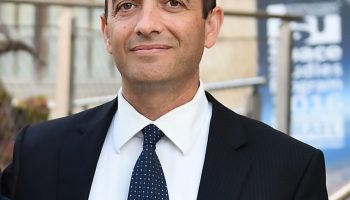
Omar Hatamleh Credit: ISU/NitzanZohar

Omar Hatamleh Credit: ISU/NitzanZohar

“Working with young professionals reminds us all of the need to keep space sustainable for the generations to come,” says Omar Hatamleh, ISU’s Director of the Space Studies Program. “We look ahead to a future of great innovation and technology, but we also realise the importance of making those great advances available to everyone and to make them sustainable over the long term.”

The space debris project will examine some of the proposals by space agencies and commercial companies that include the deorbiting of defunct satellites, moving them to safer orbits or salvaging them for reuse on other satellites or spacecraft, before composing a plan for an original mission. The participants at ISU come from a wide range of backgrounds and experiences and will be encouraged to bring new approaches to the problem.

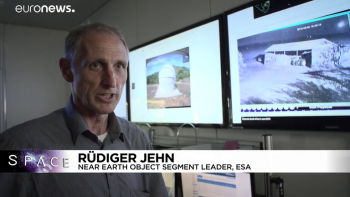
Rüdiger Jehn Crfedit: ESA/Euronews

Rüdiger Jehn Credit: ESA/Euronews

“I’m looking forward to seeing exciting new ideas from the participants in the project,” says team project co-chair Rüdiger Jehn, who is also Co-Manager for Near-Earth Objects within ESA’s Space Situational Awareness Programme.

“We need to guarantee the long-term safety and security of space operations, so that all of the generations to come can benefit from knowledge we gain from space data. Developing awareness of the issue and good ideas for addressing it is really important for everyone with an interest in space.”

Looking at key risks of climate change

The host nation of the Netherlands has a particular interest in another of the team projects, as it looks at two key risks of climate change – flooding and diminished air quality. Lying at or below sea level, the Dutch interest in flood mitigation is clear, while scientists from the Netherlands were also key in developing the Tropomi instrument measuring air quality on board the Sentinel 5P satellite launched last year.

“We welcome participants from many countries to their summer of space in the Netherlands this year,” says Erik Laan, co-chair of the team project on adaptation from space for climate change. “We are interested in understanding how climate change affects different environments and ecosystems, and how our knowledge from space can help us all to minimise the impacts of a changing climate for people on the ground. This international group will allow us to explore new ideas for what will be our common future.”

The opening ceremony of the Space Studies Program will be attended by HM the King of the Netherlands and addressed by ESA Director General Jan Wörner. The ceremony is available to view on ISU’s YouTube channel.

Today’s post contributed by Ruth McAvinia. Ruth is an ATG-Europe editor for ESA and a member of the global faculty of ISU.

More info

ISU SSP in Facebook


from Rocket Science https://ift.tt/2tpv0za
v
An aerial view of ESTEC from this year. Note the Erasmus building to the front right, the T building – home to ESA's Galileo team – in the foreground, the restaurant at the top of the car park and the main building beside the dunes. Credit: ESA

An aerial view of ESTEC from this year. Credit: ESA

The International Space University’s Space Studies Program will officially open today at ESA in the Netherlands. The nine-week programme will see more than 130 participants representing 37 nationalities take part in lectures, workshops and team projects to gain an interdisciplinary understanding of all aspects of the space industry.

This year’s ISU programme is co-hosted by the Technical University Delft and the Netherlands Space Office, in close cooperation with ESA and Leiden University.

Two groups of participants will focus in particular on issues of space safety and sustainability as they prepare project reports on the role space should play in human adaptation to global climate change and on new ideas for the removal of space debris from Earth orbit using ecologically sound technology.

Looking ahead to sustainable innovation

Omar Hatamleh Credit: ISU/NitzanZohar

Omar Hatamleh Credit: ISU/NitzanZohar

“Working with young professionals reminds us all of the need to keep space sustainable for the generations to come,” says Omar Hatamleh, ISU’s Director of the Space Studies Program. “We look ahead to a future of great innovation and technology, but we also realise the importance of making those great advances available to everyone and to make them sustainable over the long term.”

The space debris project will examine some of the proposals by space agencies and commercial companies that include the deorbiting of defunct satellites, moving them to safer orbits or salvaging them for reuse on other satellites or spacecraft, before composing a plan for an original mission. The participants at ISU come from a wide range of backgrounds and experiences and will be encouraged to bring new approaches to the problem.

Rüdiger Jehn Crfedit: ESA/Euronews

Rüdiger Jehn Credit: ESA/Euronews

“I’m looking forward to seeing exciting new ideas from the participants in the project,” says team project co-chair Rüdiger Jehn, who is also Co-Manager for Near-Earth Objects within ESA’s Space Situational Awareness Programme.

“We need to guarantee the long-term safety and security of space operations, so that all of the generations to come can benefit from knowledge we gain from space data. Developing awareness of the issue and good ideas for addressing it is really important for everyone with an interest in space.”

Looking at key risks of climate change

The host nation of the Netherlands has a particular interest in another of the team projects, as it looks at two key risks of climate change – flooding and diminished air quality. Lying at or below sea level, the Dutch interest in flood mitigation is clear, while scientists from the Netherlands were also key in developing the Tropomi instrument measuring air quality on board the Sentinel 5P satellite launched last year.

“We welcome participants from many countries to their summer of space in the Netherlands this year,” says Erik Laan, co-chair of the team project on adaptation from space for climate change. “We are interested in understanding how climate change affects different environments and ecosystems, and how our knowledge from space can help us all to minimise the impacts of a changing climate for people on the ground. This international group will allow us to explore new ideas for what will be our common future.”

The opening ceremony of the Space Studies Program will be attended by HM the King of the Netherlands and addressed by ESA Director General Jan Wörner. The ceremony is available to view on ISU’s YouTube channel.

Today’s post contributed by Ruth McAvinia. Ruth is an ATG-Europe editor for ESA and a member of the global faculty of ISU.

More info

ISU SSP in Facebook


from Rocket Science https://ift.tt/2tpv0za
v

2018 SkS Weekly Climate Change & Global Warming News Roundup #25

A chronological listing of news articles posted on the Skeptical Science Facebook Page during the past week.

Editor's Pick

2018 Arctic sea ice melt season just got a big headstart

 Arctic sea ice in East Greenland

Pack ice after sunset in East Greenland near Kulusuk. Predicting the Arctic September minimum in advance remains beyond science’s predictive capabilities. However, signs so far this year indicate the possibility for a new record low ice extent, beating 2012. Image by Markus Trienke, Flickr. 

Close, but no cigar. That assessment, though unscientific, well describes May 2018 sea ice extent in the Arctic Ocean – a month some polar experts thought could be one for the record books.

At the month’s mid-point, freakishly warm weather brewed above the northern ocean. But in the end, May 2018 staggered over the finish line in second place, and far from a photo finish at 12.2 million square kilometers (4.7 million square miles). That’s 310,000 square kilometers (120,000 square miles) greater than the all time May record set in 2016.

Yet the fact that so much debate swirled around May this year is news enough, as it’s often a month overlooked by the sea ice community and by the media, with May falling between March’s winter maximum sea ice extent and September’s summer minimum. But attention is shifting as global warming escalates.

“Now, what’s happening in winter and spring is starting to become very, very interesting,” says Mark Serreze, director of the National Snow and Ice Data Center which tracks and analyzes sea ice. September, he says, is no longer the only hot topic: “We’re seeing these big heatwaves over the North Pole in the middle of winter. Wow. That’s not supposed to happen and yet [it has] the last four winters.” 

2018 Arctic sea ice melt season just got a big headstart by Gloria Dickey, Mongabay, June 19, 2018


Links posted on Facebook

Sun June 17, 2018

Mon June 18, 2018

Tue June 19, 2018

Wed June 20, 2018

Thu June 21, 2018

Fri June 22, 2018

Sat June 23, 2018


from Skeptical Science https://ift.tt/2KdxuGW
A chronological listing of news articles posted on the Skeptical Science Facebook Page during the past week.

Editor's Pick

2018 Arctic sea ice melt season just got a big headstart

 Arctic sea ice in East Greenland

Pack ice after sunset in East Greenland near Kulusuk. Predicting the Arctic September minimum in advance remains beyond science’s predictive capabilities. However, signs so far this year indicate the possibility for a new record low ice extent, beating 2012. Image by Markus Trienke, Flickr. 

Close, but no cigar. That assessment, though unscientific, well describes May 2018 sea ice extent in the Arctic Ocean – a month some polar experts thought could be one for the record books.

At the month’s mid-point, freakishly warm weather brewed above the northern ocean. But in the end, May 2018 staggered over the finish line in second place, and far from a photo finish at 12.2 million square kilometers (4.7 million square miles). That’s 310,000 square kilometers (120,000 square miles) greater than the all time May record set in 2016.

Yet the fact that so much debate swirled around May this year is news enough, as it’s often a month overlooked by the sea ice community and by the media, with May falling between March’s winter maximum sea ice extent and September’s summer minimum. But attention is shifting as global warming escalates.

“Now, what’s happening in winter and spring is starting to become very, very interesting,” says Mark Serreze, director of the National Snow and Ice Data Center which tracks and analyzes sea ice. September, he says, is no longer the only hot topic: “We’re seeing these big heatwaves over the North Pole in the middle of winter. Wow. That’s not supposed to happen and yet [it has] the last four winters.” 

2018 Arctic sea ice melt season just got a big headstart by Gloria Dickey, Mongabay, June 19, 2018


Links posted on Facebook

Sun June 17, 2018

Mon June 18, 2018

Tue June 19, 2018

Wed June 20, 2018

Thu June 21, 2018

Fri June 22, 2018

Sat June 23, 2018


from Skeptical Science https://ift.tt/2KdxuGW

New research, June 11-17, 2018

A selection of new climate related research articles is shown below.

Climate change mitigation

Climate change communication

Climate Hypocrisies: A Comparative Study of News Discourse

What makes them believe in the low-carbon energy transition? Exploring corporate perceptions of the credibility of climate policy mixes (open access)

Analyzing the factors that influence U.S. public support for exporting natural gas

Turkish public preferences for energy

Nature Articulations in Norwegian Advertising Discourse: A Depoliticized Discourse of Climate Change

Weather, Climate, and Narrative: A Relational Model for Democratizing Risk Communication

Cold winters warming? Perceptions of climate change in the North Country

Emission savings

Electric vehicles: solution or new problem?

Leveraging material efficiency as an energy and climate instrument for heavy industries in the EU

Mangrove conservation for climate change mitigation in Indonesia

Reducing greenhouse gas emissions while maintaining yield in the croplands of Huang-Huai-Hai Plain, China

AFM special issue – Greenhouse gas and ammonia emissions from livestock production

Ammonia and greenhouse gas emissions at beef cattle feedlots in Alberta Canada

Tradeoffs in the quest for climate smart agricultural intensification in Mato Grosso, Brazil (open access)

Mitigation of greenhouse gas emissions from animal production

The impact of socioeconomic and behavioural factors for purchasing energy efficient household appliances: A case study for Denmark

The availability of life-cycle assessment, water footprinting, and carbon footprinting studies in Brazil

Does energy efficiency matter to real estate-consumers? Survey evidence on willingness to pay from a cost-optimal analysis in the context of a developing country

Energy production

Large methane emissions from natural gas vehicles in Chinese cities

The Water‐Energy Nexus of Hydraulic Fracturing: A Global Hydrologic Analysis for Shale Oil and Gas Extraction (open access)

Drivers of growth in commercial-scale solar PV capacity

The Fukushima Accident and Public Perceptions About Nuclear Power Around the Globe – A Challenge & Response Model

Application of German energy transition in Taiwan: A critical review of unique electricity liberalisation as a core strategy to achieve renewable energy growth

Carbon pathways in the global gas market: An attributional lifecycle assessment of the climate impacts of liquefied natural gas exports from the United States to Asia

Climate Policy

Conflicting energy policy priorities in EU energy governance (open access)

Overcoming public resistance to carbon taxes (open access)

Socioeconomic factors and future challenges of the goal of limiting the increase in global average temperature to 1.5 °C

Reducing global GHG emissions by replicating successful sector examples: the ‘good practice policies’ scenario

Geoengineering

Cost-Risk Trade-Off of Mitigation and Solar Geoengineering: Considering Regional Disparities Under Probabilistic Climate Sensitivity

The Effects of Carbon Dioxide Removal on the Carbon Cycle (open access)

Climate change

Temperature, precipitation, wind

Land Surface Air Temperature Data Are Considerably Different Among BEST‐LAND, CRU‐TEM4v, NASA‐GISS, and NOAA‐NCEI

Temperature and precipitation extremes under current, 1.5 °C and 2.0 °C global warming above pre-industrial levels over Botswana, and implications for climate change vulnerability (open access)

Winds: intensity and power density simulated by RegCM4 over South America in present and future climate

Extreme events

Tornado Warnings at Night: Who Gets the Message?

Drought Monitoring of Southwestern China Using Insufficient GRACE Data for the Long-term Mean Reference Frame under Global Change

East Asian dust storm in May 2017: observations, modelling, and its influence on the Asia-Pacific region (open access)

Hurricane Strikes and Migration: Evidence from Storms in Central America and the Caribbean

Forcings and feedbacks

Latitudinal variability of the dynamic linkage between temperature and atmospheric carbon dioxide concentrations

"In the latitude belts surrounding the equator (0°− 24° N and 0°− 24° S), the link seems very similar. On the opposite, the patterns of the temperature CO2 link in the Arctic is very distant from those concerning the equatorial regions and other latitude bands in the South Hemisphere. This big distance is consistent with the so-called Arctic amplification phenomenon. Further, it is important to underline that this observational data-based analysis provides an independent statistical confirmation of the results from global circulation modelling."

Generation of common coefficients to estimate global solar radiation over different locations of India 

On the Cause of Recent Variations in Lower Stratospheric Ozone (open access)

Source Apportionments of Aerosols and Their Direct Radiative Forcing and Long‐Term Trends Over Continental United States (open access)

Ozone response to emission reductions in the southeastern United States (open access)

Cryosphere

A new tracking algorithm for sea ice age distribution estimation (open access)

Thin Arctic sea ice in L-band observations and an ocean reanalysis (open access)

How does the ice sheet surface mass balance relate to snowfall? Insights from a ground-based precipitation radar in East Antarctica (open access)

Antarctic sub-shelf melt rates via PICO (open access)

Bathymetric controls on calving processes at Pine Island Glacier (open access)

Reemergence of Antarctic sea ice predictability and its link to deep ocean mixing in global climate models 

Atmospheric and oceanic circulation

Cycles in oceanic teleconnections and global temperature change

"During the period 1940–1950, the LL[leading–lagging] relations for the long cycles were circular (nomenclature x leads y: x → y): GTA[global temperature anomaly] → NAO → SOI → PDO → GTA. However, after 1960, the LL relations become more complex and there are indications that GTA leads to both NAO and PDO."

Large scale climate oscillation impacts on temperature, precipitation and land surface phenology in Central Asia (open access)

A barotropic mechanism for the response of jet stream variability to Arctic Amplification and sea ice loss

Carbon cycle

Where is the residual terrestrial carbon sink?

Persistent carbon sink at a boreal drained bog forest (open access)

Drought, Heat, and the Carbon Cycle: a Review (open access)

Quantification of carbon dioxide and methane emissions in urban areas: source apportionment based on atmospheric observations

Can we separate industrial CH4 emission sources from atmospheric observations? - A test case for carbon isotopes, PMF and enhanced APCA

Climate change impacts

Mankind

Health risks of warming of 1.5 °C, 2 °C, and higher, above pre-industrial temperatures (open access)

Limiting global-mean temperature increase to 1.5–2 °C could reduce the incidence and spatial spread of dengue fever in Latin America

A universal model for predicting human migration under climate change: examining future sea level rise in Bangladesh (open access)

Limits to growth redux: A system dynamics model for assessing energy and climate change constraints to global growth

Changes in rainfed and irrigated crop yield response to climate in the western US (open access)

Adaptability of global olive cultivars to water availability under future Mediterranean climate

Estimating spring frost and its impact on yield across winter wheat in China

Resistance to relocation in flood-vulnerable coastal areas: a proposed composite index

Is agricultural adaptation to global change in lower-income countries on track to meet the future food production challenge?

Biosphere

Increased growth of Qinghai spruce in northwestern China during the recent warming hiatus

Impacts of recent climate extremes on spring phenology in arid-mountain ecosystems in China

Ocean acidification and nutrient limitation synergistically reduce growth and photosynthetic performances of a green tide alga Ulva linza (open access)

Asymmetric responses of primary productivity to altered precipitation simulated by ecosystem models across three long-term grassland sites (open access)

Invoking adaptation to decipher the genetic legacy of past climate change

The potential of 230Th for detection of ocean acidification impacts on pelagic carbonate production (open access)

The effects of food stoichiometry and temperature on copepods are mediated by ontogeny (open access)

Other impacts

Disentangling the impact of nutrient load and climate changes on Baltic Sea hypoxia and eutrophication since 1850

Other papers

Palaeoclimatology

Svalbard glaciers re‐advanced during the Pleistocene–Holocene transition

Climate sensitivity and meridional overturning circulation in the late Eocene using GFDL CM2.1 (open access)

Statistical reconstruction of global vegetation for the last glacial maximum


from Skeptical Science https://ift.tt/2Ikc1uw

A selection of new climate related research articles is shown below.

Climate change mitigation

Climate change communication

Climate Hypocrisies: A Comparative Study of News Discourse

What makes them believe in the low-carbon energy transition? Exploring corporate perceptions of the credibility of climate policy mixes (open access)

Analyzing the factors that influence U.S. public support for exporting natural gas

Turkish public preferences for energy

Nature Articulations in Norwegian Advertising Discourse: A Depoliticized Discourse of Climate Change

Weather, Climate, and Narrative: A Relational Model for Democratizing Risk Communication

Cold winters warming? Perceptions of climate change in the North Country

Emission savings

Electric vehicles: solution or new problem?

Leveraging material efficiency as an energy and climate instrument for heavy industries in the EU

Mangrove conservation for climate change mitigation in Indonesia

Reducing greenhouse gas emissions while maintaining yield in the croplands of Huang-Huai-Hai Plain, China

AFM special issue – Greenhouse gas and ammonia emissions from livestock production

Ammonia and greenhouse gas emissions at beef cattle feedlots in Alberta Canada

Tradeoffs in the quest for climate smart agricultural intensification in Mato Grosso, Brazil (open access)

Mitigation of greenhouse gas emissions from animal production

The impact of socioeconomic and behavioural factors for purchasing energy efficient household appliances: A case study for Denmark

The availability of life-cycle assessment, water footprinting, and carbon footprinting studies in Brazil

Does energy efficiency matter to real estate-consumers? Survey evidence on willingness to pay from a cost-optimal analysis in the context of a developing country

Energy production

Large methane emissions from natural gas vehicles in Chinese cities

The Water‐Energy Nexus of Hydraulic Fracturing: A Global Hydrologic Analysis for Shale Oil and Gas Extraction (open access)

Drivers of growth in commercial-scale solar PV capacity

The Fukushima Accident and Public Perceptions About Nuclear Power Around the Globe – A Challenge & Response Model

Application of German energy transition in Taiwan: A critical review of unique electricity liberalisation as a core strategy to achieve renewable energy growth

Carbon pathways in the global gas market: An attributional lifecycle assessment of the climate impacts of liquefied natural gas exports from the United States to Asia

Climate Policy

Conflicting energy policy priorities in EU energy governance (open access)

Overcoming public resistance to carbon taxes (open access)

Socioeconomic factors and future challenges of the goal of limiting the increase in global average temperature to 1.5 °C

Reducing global GHG emissions by replicating successful sector examples: the ‘good practice policies’ scenario

Geoengineering

Cost-Risk Trade-Off of Mitigation and Solar Geoengineering: Considering Regional Disparities Under Probabilistic Climate Sensitivity

The Effects of Carbon Dioxide Removal on the Carbon Cycle (open access)

Climate change

Temperature, precipitation, wind

Land Surface Air Temperature Data Are Considerably Different Among BEST‐LAND, CRU‐TEM4v, NASA‐GISS, and NOAA‐NCEI

Temperature and precipitation extremes under current, 1.5 °C and 2.0 °C global warming above pre-industrial levels over Botswana, and implications for climate change vulnerability (open access)

Winds: intensity and power density simulated by RegCM4 over South America in present and future climate

Extreme events

Tornado Warnings at Night: Who Gets the Message?

Drought Monitoring of Southwestern China Using Insufficient GRACE Data for the Long-term Mean Reference Frame under Global Change

East Asian dust storm in May 2017: observations, modelling, and its influence on the Asia-Pacific region (open access)

Hurricane Strikes and Migration: Evidence from Storms in Central America and the Caribbean

Forcings and feedbacks

Latitudinal variability of the dynamic linkage between temperature and atmospheric carbon dioxide concentrations

"In the latitude belts surrounding the equator (0°− 24° N and 0°− 24° S), the link seems very similar. On the opposite, the patterns of the temperature CO2 link in the Arctic is very distant from those concerning the equatorial regions and other latitude bands in the South Hemisphere. This big distance is consistent with the so-called Arctic amplification phenomenon. Further, it is important to underline that this observational data-based analysis provides an independent statistical confirmation of the results from global circulation modelling."

Generation of common coefficients to estimate global solar radiation over different locations of India 

On the Cause of Recent Variations in Lower Stratospheric Ozone (open access)

Source Apportionments of Aerosols and Their Direct Radiative Forcing and Long‐Term Trends Over Continental United States (open access)

Ozone response to emission reductions in the southeastern United States (open access)

Cryosphere

A new tracking algorithm for sea ice age distribution estimation (open access)

Thin Arctic sea ice in L-band observations and an ocean reanalysis (open access)

How does the ice sheet surface mass balance relate to snowfall? Insights from a ground-based precipitation radar in East Antarctica (open access)

Antarctic sub-shelf melt rates via PICO (open access)

Bathymetric controls on calving processes at Pine Island Glacier (open access)

Reemergence of Antarctic sea ice predictability and its link to deep ocean mixing in global climate models 

Atmospheric and oceanic circulation

Cycles in oceanic teleconnections and global temperature change

"During the period 1940–1950, the LL[leading–lagging] relations for the long cycles were circular (nomenclature x leads y: x → y): GTA[global temperature anomaly] → NAO → SOI → PDO → GTA. However, after 1960, the LL relations become more complex and there are indications that GTA leads to both NAO and PDO."

Large scale climate oscillation impacts on temperature, precipitation and land surface phenology in Central Asia (open access)

A barotropic mechanism for the response of jet stream variability to Arctic Amplification and sea ice loss

Carbon cycle

Where is the residual terrestrial carbon sink?

Persistent carbon sink at a boreal drained bog forest (open access)

Drought, Heat, and the Carbon Cycle: a Review (open access)

Quantification of carbon dioxide and methane emissions in urban areas: source apportionment based on atmospheric observations

Can we separate industrial CH4 emission sources from atmospheric observations? - A test case for carbon isotopes, PMF and enhanced APCA

Climate change impacts

Mankind

Health risks of warming of 1.5 °C, 2 °C, and higher, above pre-industrial temperatures (open access)

Limiting global-mean temperature increase to 1.5–2 °C could reduce the incidence and spatial spread of dengue fever in Latin America

A universal model for predicting human migration under climate change: examining future sea level rise in Bangladesh (open access)

Limits to growth redux: A system dynamics model for assessing energy and climate change constraints to global growth

Changes in rainfed and irrigated crop yield response to climate in the western US (open access)

Adaptability of global olive cultivars to water availability under future Mediterranean climate

Estimating spring frost and its impact on yield across winter wheat in China

Resistance to relocation in flood-vulnerable coastal areas: a proposed composite index

Is agricultural adaptation to global change in lower-income countries on track to meet the future food production challenge?

Biosphere

Increased growth of Qinghai spruce in northwestern China during the recent warming hiatus

Impacts of recent climate extremes on spring phenology in arid-mountain ecosystems in China

Ocean acidification and nutrient limitation synergistically reduce growth and photosynthetic performances of a green tide alga Ulva linza (open access)

Asymmetric responses of primary productivity to altered precipitation simulated by ecosystem models across three long-term grassland sites (open access)

Invoking adaptation to decipher the genetic legacy of past climate change

The potential of 230Th for detection of ocean acidification impacts on pelagic carbonate production (open access)

The effects of food stoichiometry and temperature on copepods are mediated by ontogeny (open access)

Other impacts

Disentangling the impact of nutrient load and climate changes on Baltic Sea hypoxia and eutrophication since 1850

Other papers

Palaeoclimatology

Svalbard glaciers re‐advanced during the Pleistocene–Holocene transition

Climate sensitivity and meridional overturning circulation in the late Eocene using GFDL CM2.1 (open access)

Statistical reconstruction of global vegetation for the last glacial maximum


from Skeptical Science https://ift.tt/2Ikc1uw

The NHS must adapt now to care for older cancer patients

Elderly cancer patient

In the second part of our series on old age and cancer, we look at how the NHS needs to adapt as the number of cancer cases diagnosed in older people is projected to rise.

Every year around 130,000 people aged 75 and over in the UK are told they have cancer. By 2035 this is projected to rise to around 234,000.

This means that in just under 20 years, almost half (46%) of people diagnosed with cancer each year in the UK will be over 75.

Cancer is primarily a disease of ageing. And as we age, we’re more likely to develop other health conditions too. This means older cancer patients often need extra support to get through treatment or to recover from it.

This added complexity of cancer care, alongside growing numbers of patients, points to a future where the NHS will need to adapt to provide this additional support and the best care possible.

The problem is the NHS is already under a lot of pressure, including facing severe staff shortages. And there’s the added challenge that older patients already tend to have poorer outcomes than their younger counterparts. If the UK is to give all cancer patients the best chance of survival, the NHS must focus on improving outcomes for older patients.

Our new report published today summarises the challenges facing the NHS as our population ages. It’s based on interviews and surveys with patients, health professionals and people who make decisions about NHS care. And the conclusions highlight how services must act to make sure they’re working well for older people with cancer now, and in the future.

What’s the problem?

Evidence shows that right now, UK cancer services aren’t doing as well as they should for older people with cancer.

Cancer survival is generally lower for older patients, even when taking into account other health conditions that older people may also have. The cancer survival gap between the UK and other similar countries is also worse for older patients than it is for younger patients.

And despite survival doubling over the past 40 years, the gap in survival between younger and older patients remains.

One explanation for this is that older patients are less likely to have several different types of treatment that could help them live longer.

Why are older patients not having as much treatment?

In some cases, patients might choose not to have intensive treatment, either because they’re not well enough or because they’re prioritising their independence and quality of life, rather than trying to extend their lives at any cost. That decision is up to each patient and their loved ones. But it raises the challenge of how to have complex conversations when consultation times and NHS staff are stretched.

But sometimes, the treatment people are offered isn’t based on a full assessment of how fit they are, how much support they need, or how well they will be able to cope with treatment. This means that sometimes older patients aren’t given the best possible treatment for them.

In contrast, from speaking to older people with cancer in our research, we heard that some feel under pressure by their doctors to have intense treatment, and don’t feel like their doctors give them enough information about the side effects they could face.

Mostly, it was assumed that I would do whatever they suggested […] I do not feel in hindsight that I was given much choice, or indeed support to make that choice

– Patient

The NHS needs to get the balance right. No two patients are the same, so cancer treatment and care plans should be shaped around each person’s individual situation – including their social and medical needs.

What’s the solution?

It can be difficult to make a busy health service a personalised one. And when staff are under so much pressure, it’s hard to find enough time for in-depth conversations about options. But it’s vital the NHS finds a way.

Today I had a patient who has cancer but has other comorbidities […] so I had to discuss that […] and make it clear to them that these are the risk factors, these are the things that go wrong […] that 20/30 minutes […] gets dragged on to 45 minutes. We can’t just stop the consultation because it’s been running out of time

– Anaesthetist

But there are ways that this process can be made easier. And we think it hinges on finding better ways of assessing older patients’ needs.

This was highlighted in the 2015 Cancer Strategy for England, which said that methods of assessing older patients weren’t fit for purpose, “resulting in older people’s needs not being identified or understood”.

In our research, we found that although doctors know that gauging frailty is important, very few places use the most comprehensive tests and assessments. We’d like to see this change.

These assessments help doctors predict how well a patient will cope with treatment, and the support they might need. They should be used consistently for everyone. That’s why we want health services to roll these out across UK cancer services. And we’ll be exploring how research might help improve assessments in the next post in this series.

The NHS must also make sure patients receive the support they and their loved ones need to get through treatment and recover from it.

It’s one thing to choose to decline treatment, because the effort of chemotherapy and how ill it’s going to make you feel isn’t worth (it) […] It’s very different to making a decision based on ‘I can’t get the care for my husband or I can’t get the care for my wife or I don’t have transport to get to the chemotherapy […] or I’ll feel too rubbish afterwards and there’s nobody around to do my cooking and cleaning’

– National interviewee

There are also ways to help make sure cancer teams have enough time to discuss complicated cases in depth, by making the multidisciplinary team meetings (MDTs) more efficient and effective.

One of the issues for all MDTs is managing to comprehensively get through the cases in a meaningful way in which we [healthcare professionals] make the right selection of treatment strategies when you’ve maybe got […] forty patients plus at an MDT

– Clinical oncologist

Fundamental to all of this is information, which needs to be shared more effectively. This means sharing information between GPs, doctors and cancer teams. But perhaps most importantly, it means sharing information with patients, to help support discussions and decisions.

This isn’t easy, and there are lots of different groups involved. So, to make all of this happen, and to do it well, the NHS needs more staff.

For 70 years, the NHS has been at the forefront of fighting cancer. But it needs more investment in staff. And while it’s great that there’s now extra funding, this falls short of what’s needed to transform how patients of all ages are cared for.

If the Government is serious about its bold ambitions for improving cancer survival and care, this needs to change. And older patients need to be a part of it.

Rose Gray is a policy manager at Cancer Research UK

Read more


from Cancer Research UK – Science blog https://ift.tt/2M929G1
Elderly cancer patient

In the second part of our series on old age and cancer, we look at how the NHS needs to adapt as the number of cancer cases diagnosed in older people is projected to rise.

Every year around 130,000 people aged 75 and over in the UK are told they have cancer. By 2035 this is projected to rise to around 234,000.

This means that in just under 20 years, almost half (46%) of people diagnosed with cancer each year in the UK will be over 75.

Cancer is primarily a disease of ageing. And as we age, we’re more likely to develop other health conditions too. This means older cancer patients often need extra support to get through treatment or to recover from it.

This added complexity of cancer care, alongside growing numbers of patients, points to a future where the NHS will need to adapt to provide this additional support and the best care possible.

The problem is the NHS is already under a lot of pressure, including facing severe staff shortages. And there’s the added challenge that older patients already tend to have poorer outcomes than their younger counterparts. If the UK is to give all cancer patients the best chance of survival, the NHS must focus on improving outcomes for older patients.

Our new report published today summarises the challenges facing the NHS as our population ages. It’s based on interviews and surveys with patients, health professionals and people who make decisions about NHS care. And the conclusions highlight how services must act to make sure they’re working well for older people with cancer now, and in the future.

What’s the problem?

Evidence shows that right now, UK cancer services aren’t doing as well as they should for older people with cancer.

Cancer survival is generally lower for older patients, even when taking into account other health conditions that older people may also have. The cancer survival gap between the UK and other similar countries is also worse for older patients than it is for younger patients.

And despite survival doubling over the past 40 years, the gap in survival between younger and older patients remains.

One explanation for this is that older patients are less likely to have several different types of treatment that could help them live longer.

Why are older patients not having as much treatment?

In some cases, patients might choose not to have intensive treatment, either because they’re not well enough or because they’re prioritising their independence and quality of life, rather than trying to extend their lives at any cost. That decision is up to each patient and their loved ones. But it raises the challenge of how to have complex conversations when consultation times and NHS staff are stretched.

But sometimes, the treatment people are offered isn’t based on a full assessment of how fit they are, how much support they need, or how well they will be able to cope with treatment. This means that sometimes older patients aren’t given the best possible treatment for them.

In contrast, from speaking to older people with cancer in our research, we heard that some feel under pressure by their doctors to have intense treatment, and don’t feel like their doctors give them enough information about the side effects they could face.

Mostly, it was assumed that I would do whatever they suggested […] I do not feel in hindsight that I was given much choice, or indeed support to make that choice

– Patient

The NHS needs to get the balance right. No two patients are the same, so cancer treatment and care plans should be shaped around each person’s individual situation – including their social and medical needs.

What’s the solution?

It can be difficult to make a busy health service a personalised one. And when staff are under so much pressure, it’s hard to find enough time for in-depth conversations about options. But it’s vital the NHS finds a way.

Today I had a patient who has cancer but has other comorbidities […] so I had to discuss that […] and make it clear to them that these are the risk factors, these are the things that go wrong […] that 20/30 minutes […] gets dragged on to 45 minutes. We can’t just stop the consultation because it’s been running out of time

– Anaesthetist

But there are ways that this process can be made easier. And we think it hinges on finding better ways of assessing older patients’ needs.

This was highlighted in the 2015 Cancer Strategy for England, which said that methods of assessing older patients weren’t fit for purpose, “resulting in older people’s needs not being identified or understood”.

In our research, we found that although doctors know that gauging frailty is important, very few places use the most comprehensive tests and assessments. We’d like to see this change.

These assessments help doctors predict how well a patient will cope with treatment, and the support they might need. They should be used consistently for everyone. That’s why we want health services to roll these out across UK cancer services. And we’ll be exploring how research might help improve assessments in the next post in this series.

The NHS must also make sure patients receive the support they and their loved ones need to get through treatment and recover from it.

It’s one thing to choose to decline treatment, because the effort of chemotherapy and how ill it’s going to make you feel isn’t worth (it) […] It’s very different to making a decision based on ‘I can’t get the care for my husband or I can’t get the care for my wife or I don’t have transport to get to the chemotherapy […] or I’ll feel too rubbish afterwards and there’s nobody around to do my cooking and cleaning’

– National interviewee

There are also ways to help make sure cancer teams have enough time to discuss complicated cases in depth, by making the multidisciplinary team meetings (MDTs) more efficient and effective.

One of the issues for all MDTs is managing to comprehensively get through the cases in a meaningful way in which we [healthcare professionals] make the right selection of treatment strategies when you’ve maybe got […] forty patients plus at an MDT

– Clinical oncologist

Fundamental to all of this is information, which needs to be shared more effectively. This means sharing information between GPs, doctors and cancer teams. But perhaps most importantly, it means sharing information with patients, to help support discussions and decisions.

This isn’t easy, and there are lots of different groups involved. So, to make all of this happen, and to do it well, the NHS needs more staff.

For 70 years, the NHS has been at the forefront of fighting cancer. But it needs more investment in staff. And while it’s great that there’s now extra funding, this falls short of what’s needed to transform how patients of all ages are cared for.

If the Government is serious about its bold ambitions for improving cancer survival and care, this needs to change. And older patients need to be a part of it.

Rose Gray is a policy manager at Cancer Research UK

Read more


from Cancer Research UK – Science blog https://ift.tt/2M929G1

adds 2