See the best deep-sky photos of November 2025 here
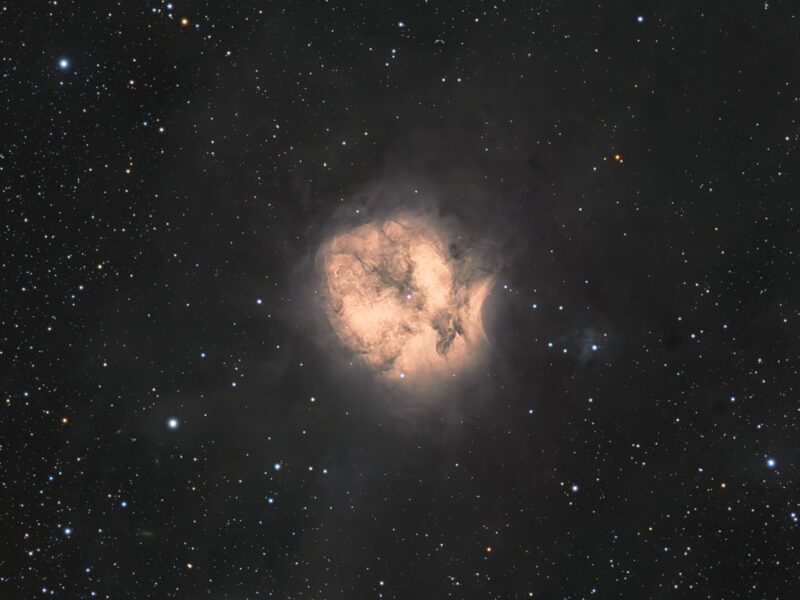
View at EarthSky Community Photos. | Steven Bellavia in Smithfield, Virginia, captured the Cocoon Nebula on November 26, 2025. Steven wrote: “The Cocoon Nebula is a reflection and emission nebula in the constellation Cygnus, at the head of the Swan and near the boundary of the constellation Lacerta. It is about 4,000 light-years away. And the central star that illuminates it formed 100,000 years ago. The nebula is approximately 12 arc minutes across, which is a span of 15 light-years.” Thank you, Steven! See more deep-sky photos from November 2025 below.
Stunning deep-sky photos from our community
The EarthSky community has many talented astrophotographers who capture stunning images of the deep sky. We gathered some of our favorite deep-sky photos we received in November 2025 for you to enjoy. Do you have some of your own images to share? You can submit them to us here. We would love to see them!
Deep-sky photos of diffuse nebulae
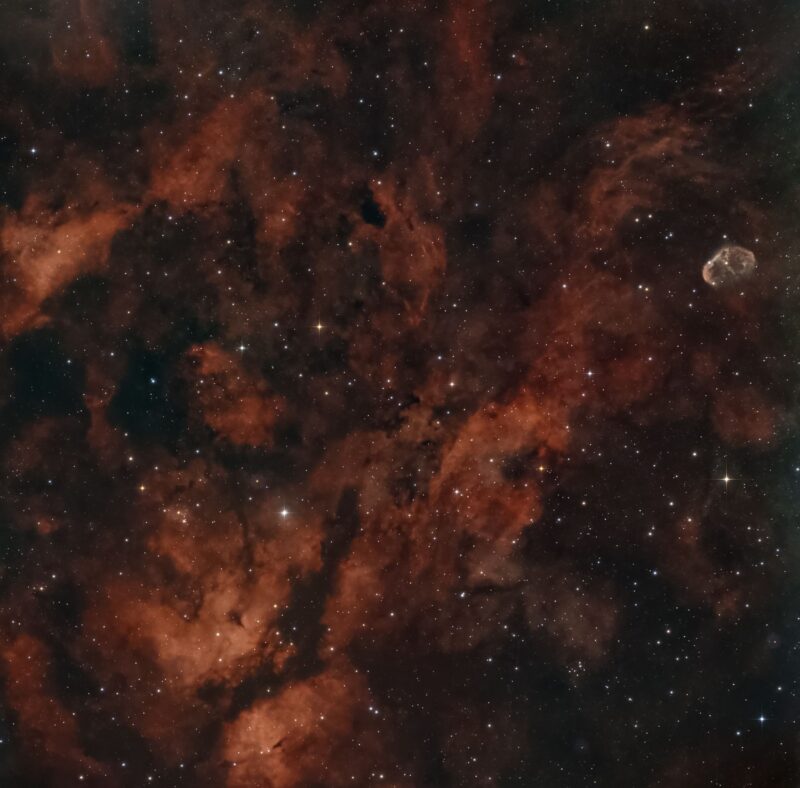
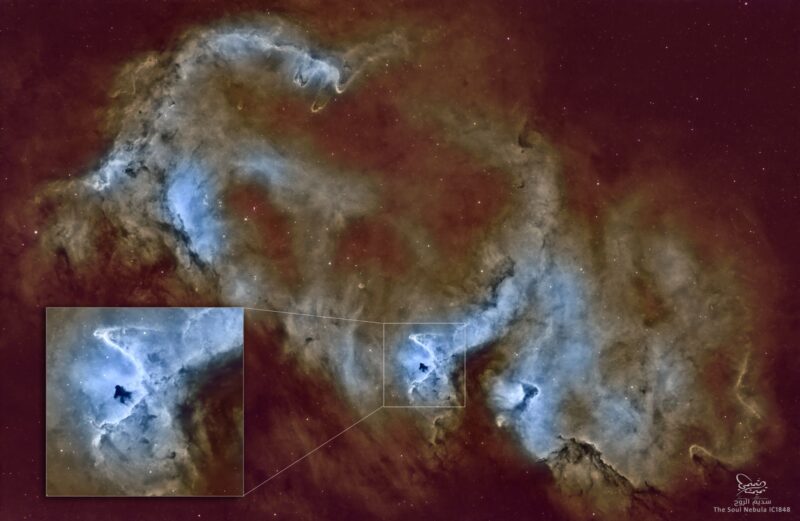
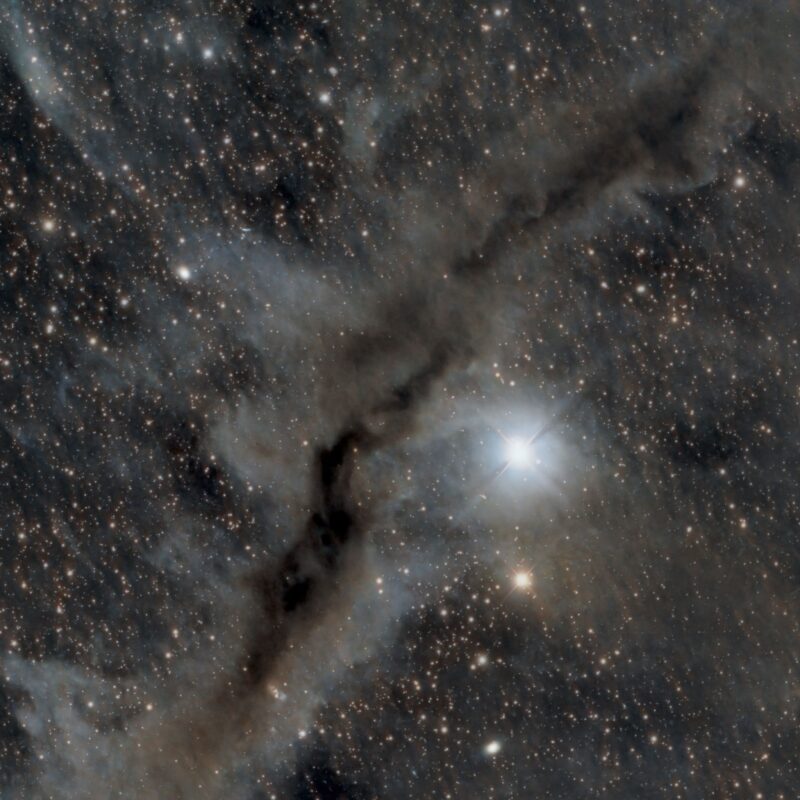
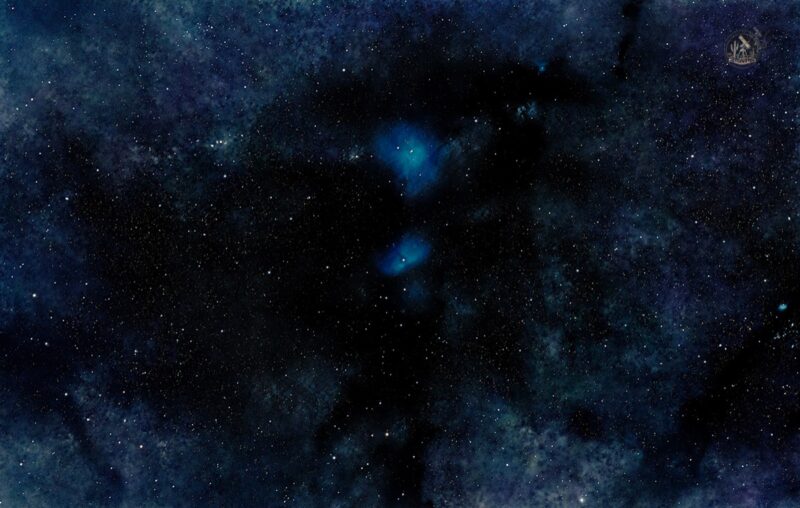
View at EarthSky Community Photos. | Aquib Ali Ansari in Jaipur, Rajasthan, India, caught IC 1318, a nebulous region in the constellation Cygnus, on November 11, 2025. Aquib wrote: “This wide-field image highlights one of the richest regions of the northern Milky Way. These are the glowing hydrogen clouds and dark dust lanes surrounding the central star of the Northern Cross. In the upper right is the Crescent Nebula (NGC 6888). It’s created by fast stellar winds from a massive Wolf-Rayet star. The winds carve out a glowing bubble of ionized gas. This image reveals the faint, intricate details of this complex star-forming region.” Thank you, Aquib!View at EarthSky Community Photos. | Tameem Altameemi in the United Arab Emirates captured the Soul Nebula on November 21, 2025. Tameem wrote: “The Soul Nebula is a vast star-forming complex located about 7,500 light-years away in Cassiopeia. The nebula glows in emissions of hydrogen, oxygen and sulfur. It reveals sweeping clouds of ionized gas shaped by intense radiation and stellar winds from massive young stars. Within the nebula are several embedded star clusters and pillar-like formations sculpted over millions of years. I noticed a striking dark feature that resembles a lost astronaut drifting within the nebula’s glowing clouds … adding a human-like touch to this cosmic landscape.” Thank you, Tameem!View at EarthSky Community Photos. | Steven Bellavia in Smithfield, Virginia, captured Barnard 213, a dark nebula in Taurus, on November 14, 2025. Steven wrote: “To me, it looks like a rope, perhaps with some smoke, meandering through the stars. Dark nebulae consist of clouds of interstellar gas – primarily molecular hydrogen – and dust. These clouds are dense enough to block visible light from objects behind them.” Thank you, Steven!
More diffuse nebulae
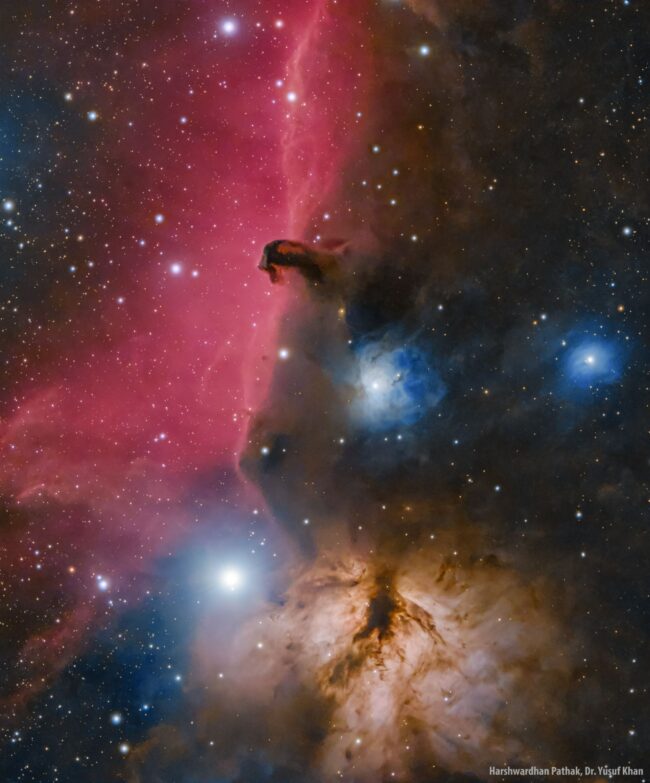
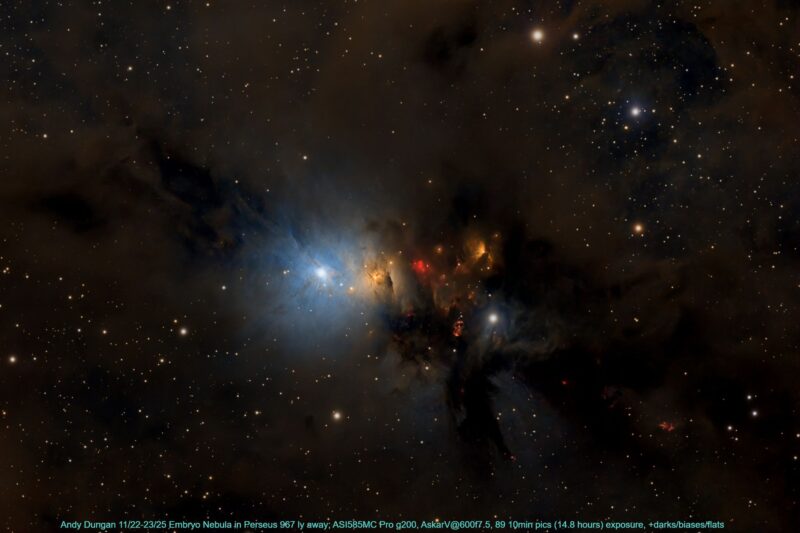
View at EarthSky Community Photos. | Harshwardhan Pathak in Sharavasti, Uttar Pradesh, India, captured the Horsehead Nebula on November 14, 2025. Harshwardhan wrote: “The Horsehead Nebula, located in the Orion constellation, is a dark nebula approximately 1,500 light-years away. This iconic cloud of gas and dust is about 3.5 light-years across and illuminated by nearby stars, giving it a striking horsehead shape.” Thank you, Harshwardhan!View at EarthSky Community Photos. | Andy Dungan near Cotopaxi, Colorado, captured the Embryo Nebula in Perseus on November 23, 2025. Andy wrote: “This is such an unusual item to photograph. It has more color and shape than so many other nebulae and also has dark nebulae. It isn’t large. One thing interesting about astrophotography is you can’t easily determine the difference in the size of an object (as viewed from Earth) by looking at a pic. This is why I enjoy doing wide-field astrophotography as well as deep space, like this pic.” Thank you, Andy!
Even more deep-sky photos of nebulae
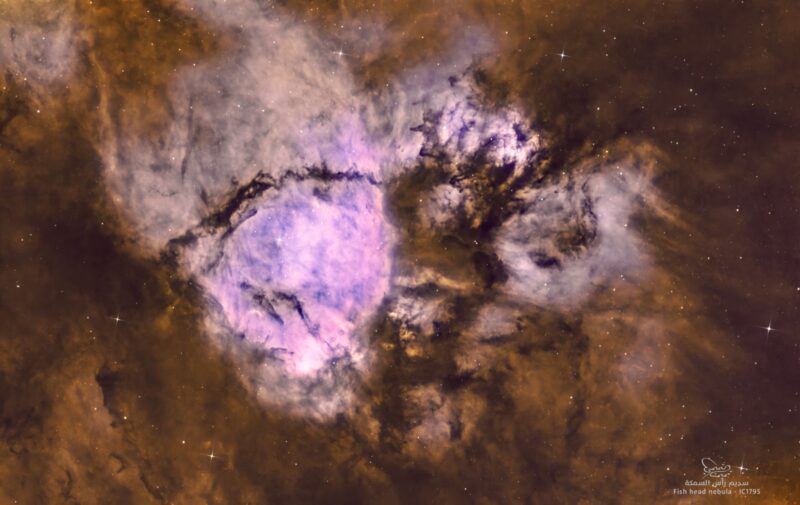
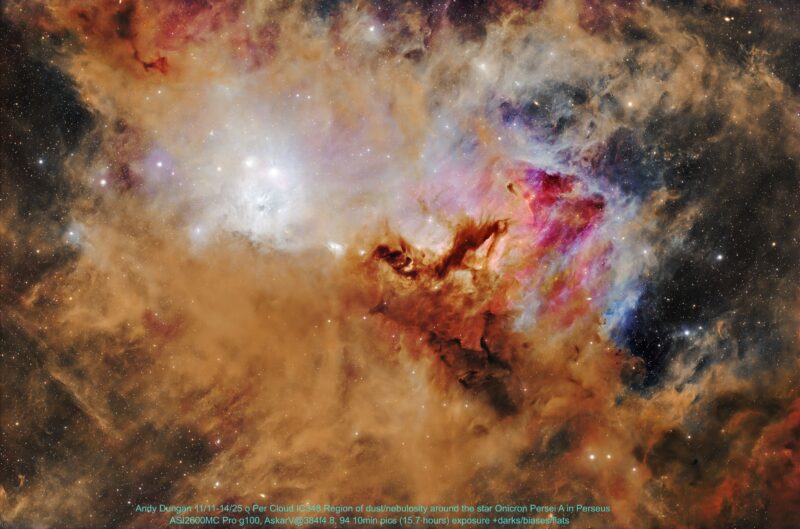
View at EarthSky Community Photos. | Tameem Altameemi in the United Arab Emirates captured the Fish Head Nebula on November 22, 2025. Tameem wrote: “The Fish Head Nebula is an active star-forming region located about 6,000 to 6,500 light-years away in the constellation Cassiopeia. It’s part of a larger star-forming complex and one of the most dynamic regions of massive star birth in the Milky Way.” Thank you, Tameem!View at EarthSky Community Photos. | Andy Dungan near Cotopaxi, Colorado, captured the IC 348 region of dust and nebulosity around the star Omicron Persei A on November 14, 2025. Andy wrote: “What a surprise! I don’t know how I became interested in this area. I was shocked at the colors and size of this region. There are so many exciting and unusual things out there in space. To infinity and beyond!” Thank you, Andy!
An interesting reflection nebula
View at EarthSky Community Photos. | Jelieta Walinski at Desert Bloom Observatory in St. David, Arizona, captured VdB 126, a reflection nebula in the constellation Vulpecula, on November 25, 2025. Jelieta wrote: “In the soft darkness of Vulpecula, where star-winds drift like ancient hymns, VdB 126 glows as a delicate reflection nebula … a floating lantern of cosmic dust scattering the blue light of a hidden star. Roughly 1,200 light-years from Earth, this cloud of interstellar grains becomes a quiet teacher of astrophysics, showing how dust not only obscures starlight but also paints it into ethereal color.” Thank you, Jelieta!
Deep-sky photos of faraway galaxies
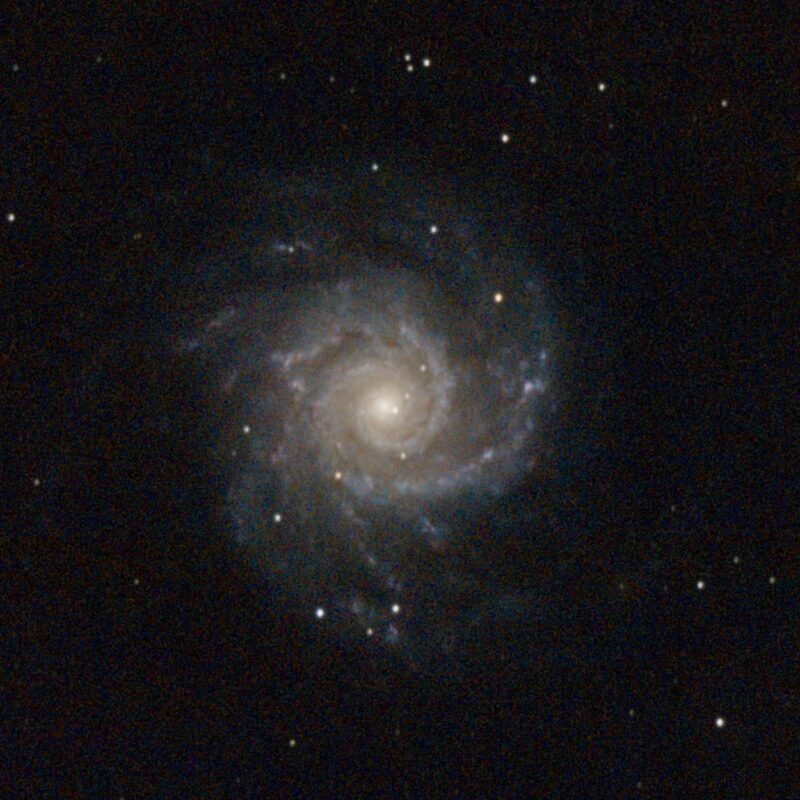
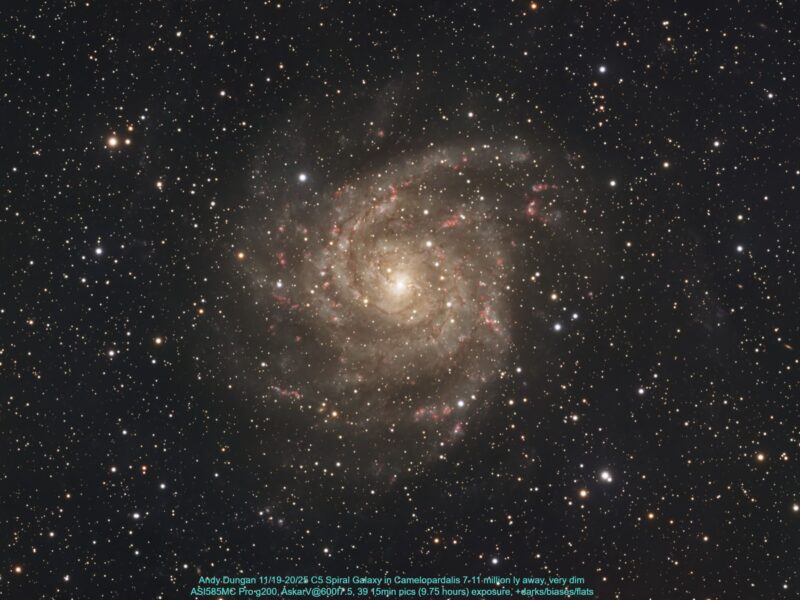
View at EarthSky Community Photos. | Gwen Forrester in DeKalb County, Tennessee, captured Messier 74, in the constellation Pisces, on November 13, 2025. Gwen wrote: “Messier 74, the Phantom Galaxy, so-called because its low surface brightness makes it difficult to see. It’s 85,000 light-years across, 32 million light-years away.” Thank you, Gwen!View at EarthSky Community Photos. | Andy Dungan in Colorado captured the spiral galaxy IC 342 in the constellation Camelopardalis on November 20, 2025. Andy wrote: “This is really sort of the first of the winter galaxies. The Cigar Galaxy comes next, in a month or two, and then lots of galaxies in the vicinity of the Big Dipper. The challenge of IC 342 is how dim it is compared to many others of its size. Evidently there is a substantial amount of dust someplace in between here and the 7 to 10 million light-years to the galaxy.” Thank you, Andy!
Bottom line: Enjoy this gallery of deep-sky photos for November 2025 from our EarthSky community. If you have a great photo to share, send it in, too. We love to see them!

Aucun commentaire:
Enregistrer un commentaire