
EarthSky’s 2026 lunar calendar is available! Makes a great gift. Get yours today!
The forms of aurora: From arcs to curtains and more
The aurora – or northern and southern lights – can take many shapes. And as you watch, the lights dance and flicker, morphing from a diffuse glow to rays that shoot up from the horizon to cinnamon-bun swirls. There are many names for the variety of auroral forms you can see. And there is no specific or definitive list of shapes, but here are some of the most common forms you might spot.
Diffuse glows
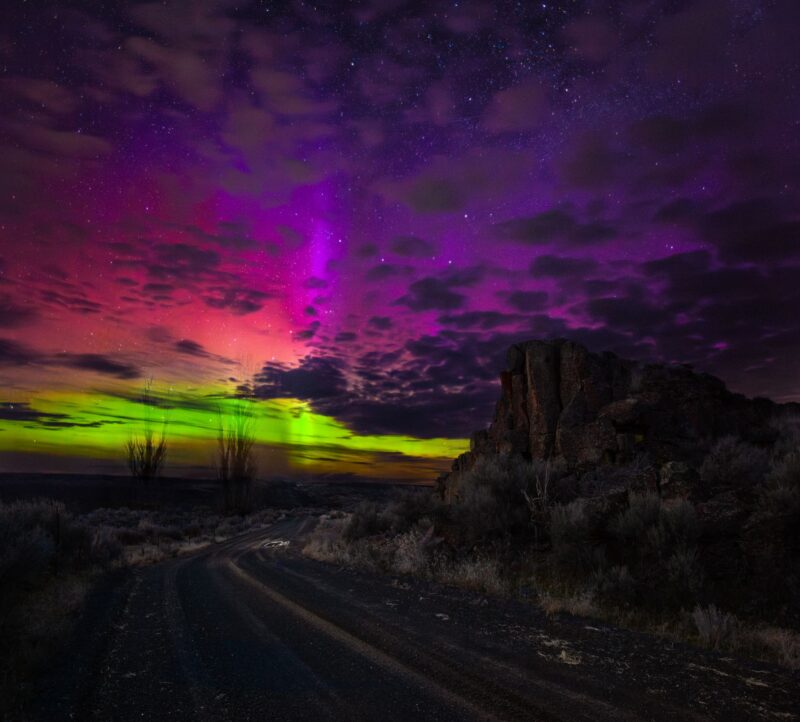
A diffuse glow on the horizon is a form of aurora that people often overlook. If your eyes are not adjusted to the dark or if you’re not in a dark-sky location, you can miss it altogether. And if you don’t know what you’re looking at, the glow of light in the distance might just look like light pollution from a distant city, dimly illuminating the sky.
But a diffuse glow is probably the most common type of aurora. You can see this form when geomagnetic activity is low or when a storm is just beginning or ending. It first starts as a faint, hazy glow that can spread to reach more areas of sky. Your camera will pick it up much more quickly than your eyes, which is also true of all auroral forms. Diffuse auroras don’t have any distinct edges or specific patterns.
Diffuse auroras occur when energetic electrons scatter widely before colliding with atmospheric particles, producing an even, cloud-like illumination instead of defined shapes.
Arcs
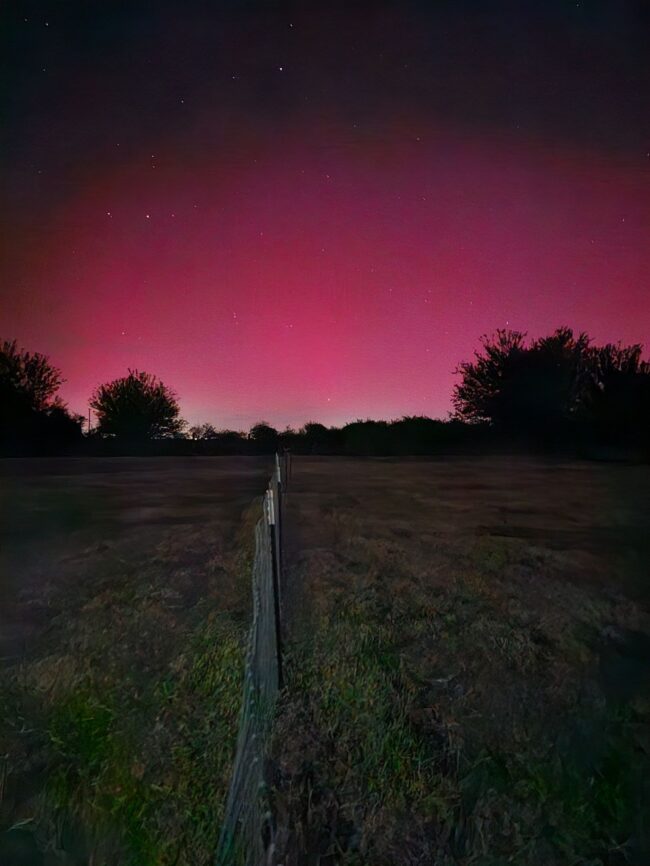
An auroral arc might be the next step up in activity you see. Arcs can be smooth with curves (homogenous arcs) or look like streaks of upward brush strokes (rayed arcs). Sometimes arcs can look like ribbons undulating in the sky as they pulsate and flicker. But auroral arcs can also remain static or shift slowly.
This form of aurora happens when charged particles flow along magnetic field lines, creating a concentrated band of light at specific latitudes known as the auroral oval.
Rays
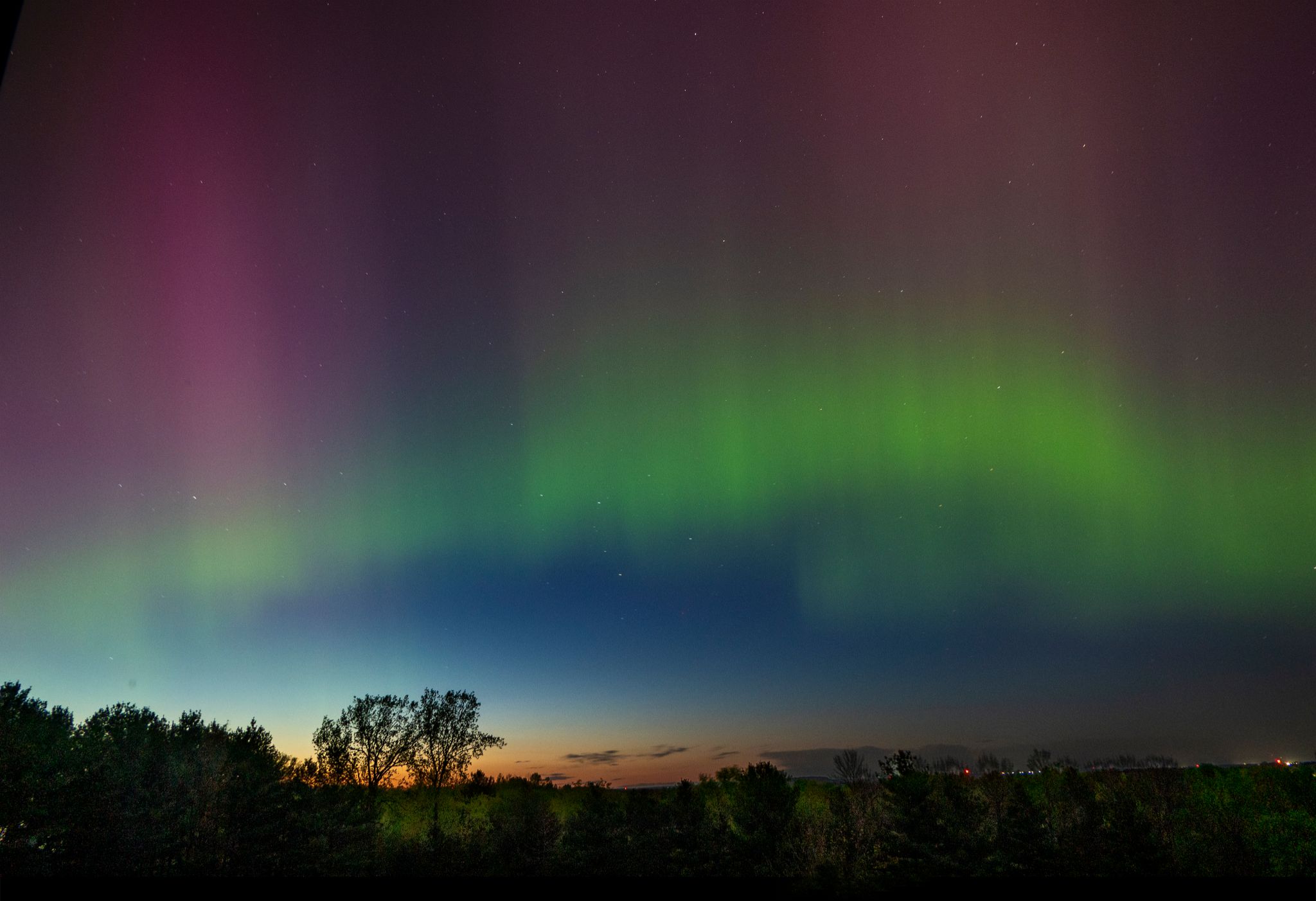
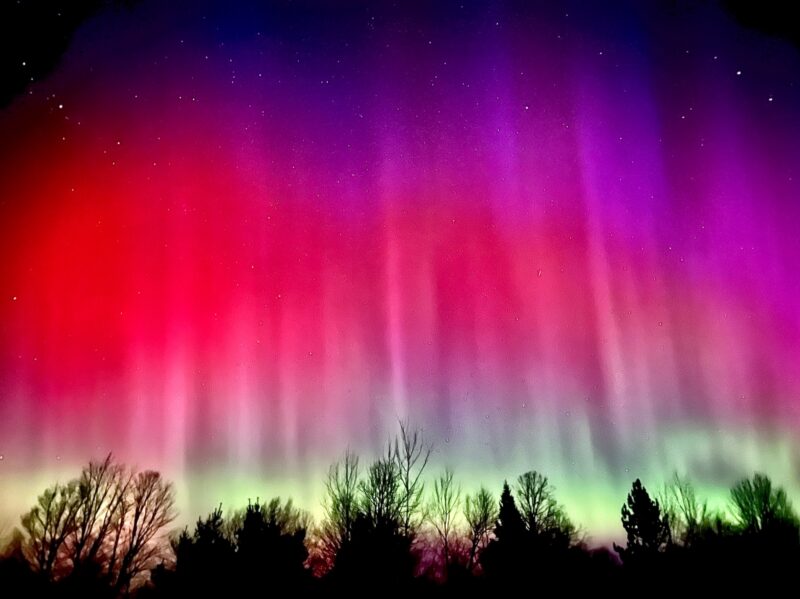
When activity starts to ramp up, you might see rays – or vertical streaks – shooting upward into the sky. You can have a single ray projecting upward from an otherwise diffuse glow, or you can have a sky filled with rays. The rays can converge overhead to create an auroral corona, discussed below.
Auroral rays form when the incoming particles follow individual magnetic field lines, creating parallel columns of light.
Curtains and draperies
The curtain and drapery form of aurora is especially photogenic. This shape can resemble a billowing sheet or shimmering veil. Plus, it often ripples, giving it even more of a 3D appearance. Curtains are essentially auroral arcs bunched up in parallel lines.
This form of aurora also occurs because auroras line up parallel to magnetic field lines. But there is more at play, including currents and wave-particle interactions that help define the shape of the aurora. We still don’t know everything about how the aurora forms in the different shapes it does, and it’s an active area of research.
Spirals and swirls
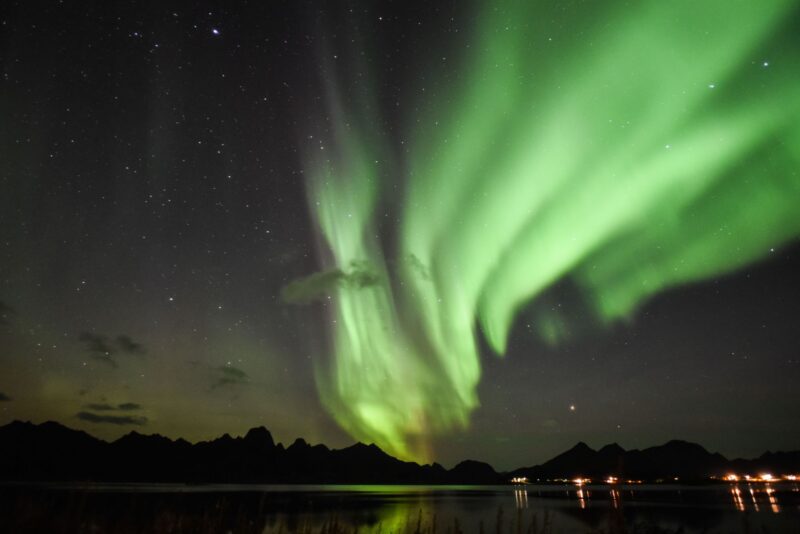
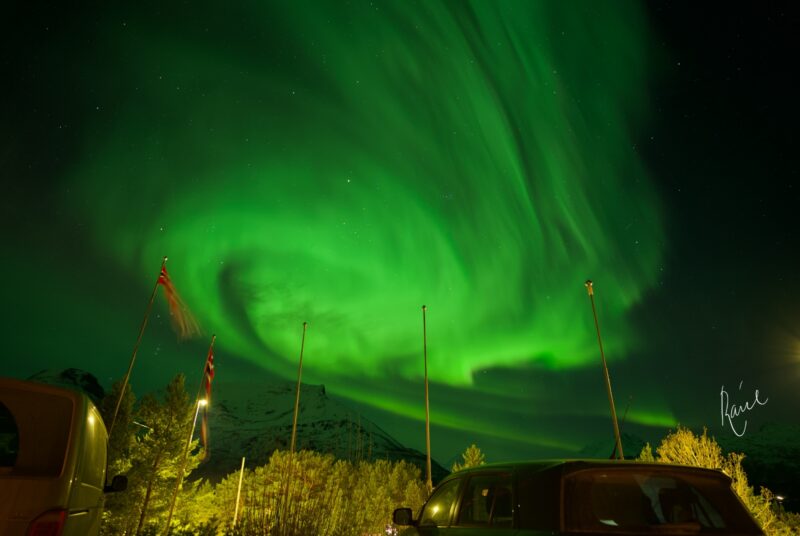
Sometimes the shapes of the aurora become very active, twisting into unique forms such as spirals and swirls. You will likely only see this shape during an especially strong geomagnetic storm or when you’re closer to one of the poles.
When you see spiraling or swirling aurora, you’re seeing the turbulent, shearing motions within the solar plasma, which is guided by Earth’s magnetic field lines.
Auroral corona
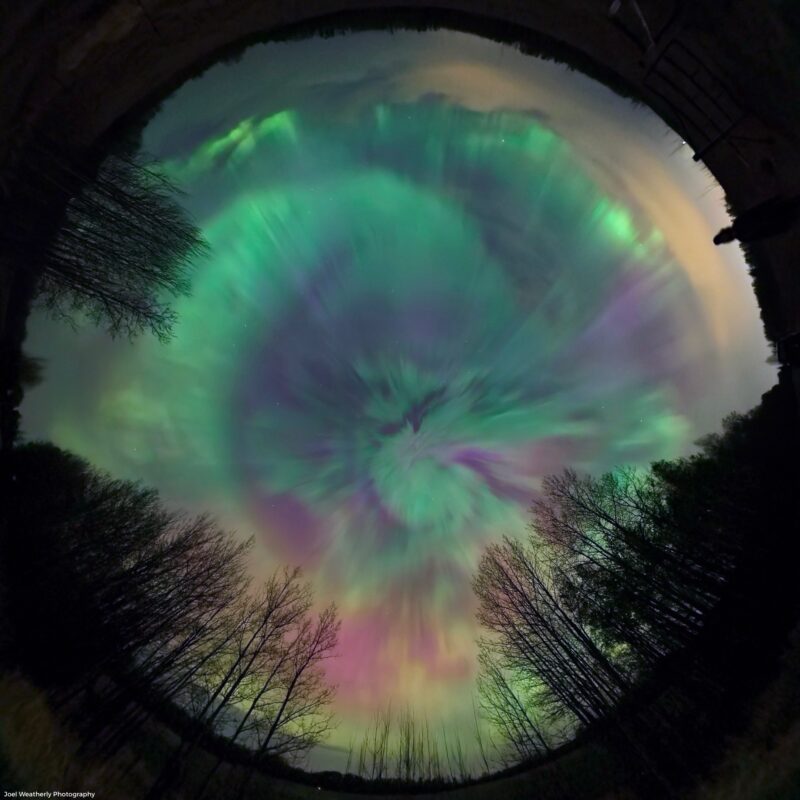
And if you’re having a really great night, the aurora may dip so far south that you can see it right overhead. Perhaps it will even fill your sky from horizon to horizon! The name for the aurora when it appears overhead is corona. It can look as if it is beaming down right to touch you. If you see an auroral corona, consider yourself lucky.
Bottom line: Here are some of the forms of aurora that you might see in the sky. Some of the forms are more common, such as diffuse glows, while others are a sign of a big geomagnetic storm.
Read more: What are these weird aurora blobs? Explainer here
The post Forms of aurora: Arcs, curtains, corona and more first appeared on EarthSky.
from EarthSky https://ift.tt/AnGjmt6
Aucun commentaire:
Enregistrer un commentaire