aads

New sea anemone builds homes for hermit crabs

Sea anemone: 4 images of a pinkish, round creature with tentacles at the top, attached to a small crab.
The recently discovered sea anemone Paracalliactis tsukisome creates a home for hermit crabs. Image via Yoshigawa et al./ Kumamoto University.

Scientists have discovered a new species of sea anemone, Paracalliactis tsukisome, which inhabits the depths of the Pacific Ocean off the coast of Japan. Researchers from Kumamoto University in Japan said on October 22, 2025, that this organism, with a delicate pink hue, possesses an unusual ability. It creates a kind of shell using its own secretions to house hermit crabs, forming a unique symbiotic relationship. The anemone’s name, tsukisome, comes from a word found in Japan’s oldest collection of poems – the Manyoshu – and evokes the idea of sincere and enduring love.

The research team published their study in the peer-reviewed journal Royal Society Open Science on October 22, 2025.

Discovery of the sea anemone Paracalliactis tsukisome

The team, led by Akihiro Yoshikawa of Kumamoto University, together with Takato Izumi of Fukuyama University and Kensuke Yanagi of Chiba Museum of Natural History and Institute, collected specimens at depths of 656 to 1,640 feet (200 to 500 meters) in the Kumano-Nada and Suruga Bay areas.

Unlike common anemones, this species can create a hardened form. The new anemone secretes a substance that can form a shell-like structure, or a carcinoecium. And it’s this structure that can provide a larger living space for a host hermit crab.

Morphological and genetic analyses confirmed that the anemone belongs to the genus Paracalliactis, though it has distinct features that justify its classification as a new species.

Additionally, 3D tomography images revealed the anemone always attaches itself in the same direction on the shell, indicating a certain degree of spatial awareness. And that’s something that’s rare in radially symmetrical animals.

A radial animal (or one with radial symmetry) has a body organized around a central axis, so it can be divided into equal parts, like the slices of a pizza.

6 images zooming in. They show the structure the anemone creates.
The anemone secretes a substance that forms a structure around the shell, expanding and reinforcing the crab’s refuge. Image via Yoshigawa et al.

Mutual benefit in the depths of the ocean

Scientists performed analyses to determine what P. tsukisome eats. They discovered that it partially feeds on the waste and organic remains of its host. In turn, the crabs associated with this anemone species grow larger than crabs that don’t participate in this mutual relationship. This interdependence suggests a long co-evolutionary process in which both species benefit. One gains food and shelter, while the other gains protection and an expanded home.

Hermit crabs living with the new species of anemone reach significantly larger sizes than related species that lack such companionship. This difference suggests their relationship with P. tsukisome provides tangible ecological advantages. The carcinoecium – the structure the anemone builds around the shell – expands and reinforces the crab’s refuge, allowing it to continue using it as it grows.

Normally, hermit crabs must change shells several times during their lives. This exposes them to predators while searching for a new home. But thanks to its collaboration with the anemone, the crab reduces that risk and conserves energy. In turn, that might result in more stable and prolonged growth. Moreover, the anemone serves as a living shield, warding off potential attackers with its stinging tentacles.

2 images of anemones. They look round and have long, thin tentacles at the top.
This is a symbiotic relationship. The anemone feeds on the crab secretions, and the crab earns a bigger and stronger shell. Plus, the anemone has stinging tentacles to protect its companion from predators. Image via Yoshigawa et al.

Cultural and scientific significance

The name tsukisome, which alludes to the pale pink color of the peach blossom, evokes in ancient poetry a discreet and sincere form of love. The researchers chose this term to reflect the harmony between the anemone and its hermit companion.

This discovery also highlights the biological diversity of Japan’s deep-sea environments, many of which remain unexplored and are threatened by bottom trawling.

4 images of hermit crabs with a tubular anemone on top. Only one doesn't have tentacles and looks like a mushroom.
The scientists that made the discovery named the anemone tsukisome because it evokes the idea of sincere and enduring love in Japanese. Image via Yoshigawa et al.

Looking ahead

The case of P. tsukisome provides an exceptional opportunity to study how simple organisms can develop spatial orientation and asymmetric structures. These phenomena are uncommon among radially symmetrical animals.

Scientists hope future behavioral experiments in aquariums will shed light on how these anemones decide the direction of their growth.

As it is frequently caught as bycatch, this species could become an accessible research model and an appealing ambassador for deep-sea ecosystems. Its discovery not only expands our understanding of marine evolution, but it also serves as a reminder of the beauty of the bond that unites two lives in the vast ocean.

Map of Japan with some areas labeled.
The scientists found the sea anemone off the coast of Japan, in the Pacific Ocean. Frequently caught as bycatch, this species could serve as an accessible research model and a compelling ambassador for deep-sea ecosystems. Image via Yoshigawa-et-al.

Bottom line: A team of scientists has discovered a sea anemone that secretes a substance that becomes a hardened home for hermit crabs. The animals have a mutually beneficial relationship.

Source: Mutualism on the deep-sea floor: a novel shell-forming sea anemone in symbiosis with a hermit crab

Via Kumamoto University

Read more: Blackwater photography reveals new fish-anemone interactions

Read more: New fish species named for Princess Mononoke

The post New sea anemone builds homes for hermit crabs first appeared on EarthSky.


from EarthSky https://ift.tt/gFv4JdA
Sea anemone: 4 images of a pinkish, round creature with tentacles at the top, attached to a small crab.
The recently discovered sea anemone Paracalliactis tsukisome creates a home for hermit crabs. Image via Yoshigawa et al./ Kumamoto University.

Scientists have discovered a new species of sea anemone, Paracalliactis tsukisome, which inhabits the depths of the Pacific Ocean off the coast of Japan. Researchers from Kumamoto University in Japan said on October 22, 2025, that this organism, with a delicate pink hue, possesses an unusual ability. It creates a kind of shell using its own secretions to house hermit crabs, forming a unique symbiotic relationship. The anemone’s name, tsukisome, comes from a word found in Japan’s oldest collection of poems – the Manyoshu – and evokes the idea of sincere and enduring love.

The research team published their study in the peer-reviewed journal Royal Society Open Science on October 22, 2025.

Discovery of the sea anemone Paracalliactis tsukisome

The team, led by Akihiro Yoshikawa of Kumamoto University, together with Takato Izumi of Fukuyama University and Kensuke Yanagi of Chiba Museum of Natural History and Institute, collected specimens at depths of 656 to 1,640 feet (200 to 500 meters) in the Kumano-Nada and Suruga Bay areas.

Unlike common anemones, this species can create a hardened form. The new anemone secretes a substance that can form a shell-like structure, or a carcinoecium. And it’s this structure that can provide a larger living space for a host hermit crab.

Morphological and genetic analyses confirmed that the anemone belongs to the genus Paracalliactis, though it has distinct features that justify its classification as a new species.

Additionally, 3D tomography images revealed the anemone always attaches itself in the same direction on the shell, indicating a certain degree of spatial awareness. And that’s something that’s rare in radially symmetrical animals.

A radial animal (or one with radial symmetry) has a body organized around a central axis, so it can be divided into equal parts, like the slices of a pizza.

6 images zooming in. They show the structure the anemone creates.
The anemone secretes a substance that forms a structure around the shell, expanding and reinforcing the crab’s refuge. Image via Yoshigawa et al.

Mutual benefit in the depths of the ocean

Scientists performed analyses to determine what P. tsukisome eats. They discovered that it partially feeds on the waste and organic remains of its host. In turn, the crabs associated with this anemone species grow larger than crabs that don’t participate in this mutual relationship. This interdependence suggests a long co-evolutionary process in which both species benefit. One gains food and shelter, while the other gains protection and an expanded home.

Hermit crabs living with the new species of anemone reach significantly larger sizes than related species that lack such companionship. This difference suggests their relationship with P. tsukisome provides tangible ecological advantages. The carcinoecium – the structure the anemone builds around the shell – expands and reinforces the crab’s refuge, allowing it to continue using it as it grows.

Normally, hermit crabs must change shells several times during their lives. This exposes them to predators while searching for a new home. But thanks to its collaboration with the anemone, the crab reduces that risk and conserves energy. In turn, that might result in more stable and prolonged growth. Moreover, the anemone serves as a living shield, warding off potential attackers with its stinging tentacles.

2 images of anemones. They look round and have long, thin tentacles at the top.
This is a symbiotic relationship. The anemone feeds on the crab secretions, and the crab earns a bigger and stronger shell. Plus, the anemone has stinging tentacles to protect its companion from predators. Image via Yoshigawa et al.

Cultural and scientific significance

The name tsukisome, which alludes to the pale pink color of the peach blossom, evokes in ancient poetry a discreet and sincere form of love. The researchers chose this term to reflect the harmony between the anemone and its hermit companion.

This discovery also highlights the biological diversity of Japan’s deep-sea environments, many of which remain unexplored and are threatened by bottom trawling.

4 images of hermit crabs with a tubular anemone on top. Only one doesn't have tentacles and looks like a mushroom.
The scientists that made the discovery named the anemone tsukisome because it evokes the idea of sincere and enduring love in Japanese. Image via Yoshigawa et al.

Looking ahead

The case of P. tsukisome provides an exceptional opportunity to study how simple organisms can develop spatial orientation and asymmetric structures. These phenomena are uncommon among radially symmetrical animals.

Scientists hope future behavioral experiments in aquariums will shed light on how these anemones decide the direction of their growth.

As it is frequently caught as bycatch, this species could become an accessible research model and an appealing ambassador for deep-sea ecosystems. Its discovery not only expands our understanding of marine evolution, but it also serves as a reminder of the beauty of the bond that unites two lives in the vast ocean.

Map of Japan with some areas labeled.
The scientists found the sea anemone off the coast of Japan, in the Pacific Ocean. Frequently caught as bycatch, this species could serve as an accessible research model and a compelling ambassador for deep-sea ecosystems. Image via Yoshigawa-et-al.

Bottom line: A team of scientists has discovered a sea anemone that secretes a substance that becomes a hardened home for hermit crabs. The animals have a mutually beneficial relationship.

Source: Mutualism on the deep-sea floor: a novel shell-forming sea anemone in symbiosis with a hermit crab

Via Kumamoto University

Read more: Blackwater photography reveals new fish-anemone interactions

Read more: New fish species named for Princess Mononoke

The post New sea anemone builds homes for hermit crabs first appeared on EarthSky.


from EarthSky https://ift.tt/gFv4JdA

The sinking of the Edmund Fitzgerald, 50 years later


The Edmund Fitzgerald sank in Lake Superior during a fierce storm 50 years ago, on November 10, 1975. Superior is known as a lake that never gives up her dead, and there’s a scientific reason why.

EarthSky isn’t powered by billionaires. We’re powered by you.
Support EarthSky’s 2025 Donation Campaign and help keep science accessible.

It was 50 years ago, on November 10, 1975, that the Great Lakes’ most famous shipwreck claimed the lives of 29 men. SS Edmund Fitzgerald was a 729-foot iron ore freighter that sank during a violent storm in Lake Superior. The tragedy was immortalized in the song “The Wreck of the Edmund Fitzgerald” by Gordon Lightfoot. Today, we still think of Lake Superior as the lake that “never gives up her dead.”

A storm for the ages

The Edmund Fitzgerald sailed out of Superior, Wisconsin, on the afternoon of November 9, 1975. It was carrying 29 crew and more than 26,000 tons of taconite pellets. These balls of iron ore concentrate were bound for a steel mill near Detroit.

On November 9, meteorologists issued a gale warning for Lake Superior. The winds were forecast to reach between 34-47 knots (39 and 54 mph). Then, early morning on November 10, forecasters upgraded the gale warning to a storm warning. Forecasters now called for winds of 48 to 55 knots (55-63 mph) and waves of 8 to 15 feet (2.4 to 4.5 meters). But the storm that hit Lake Superior on the 10th ended up having wind gusts of up to 75 knots (86 mph) and waves up to 35 feet (11 meters).

The Edmund Fitzgerald: Large ship with a dark bottom and white levels on top in the water.
The Edmund Fitzgerald in 1971. Image via Greenmars/ Wikimedia Commons (CC BY-SA 3.0).

The fate of the Edmund Fitzgerald

Ernest McSorley was the captain of the Edmund Fitzgerald. On that day, he was radioing with other ships in the area about the storm and the battering his ship was taking. At around 3:30 p.m., the captain radioed another ship, the Arthur M. Anderson, and said:

Anderson, this is the Fitzgerald. I have sustained some topside damage. I have a fence rail laid down, two vents lost or damaged, and a list. I’m checking down. Will you stay by me til I get to Whitefish?

About an hour later, McSorley radioed the captain of the Avafors and reported:

I have a bad list, I have lost both radars, and am taking heavy seas over the deck in one of the worst seas I have ever been in.

The final communication came just after 7 p.m. when McSorley radioed the Anderson and said:

We are holding our own.

Not long after that, the ship disappeared from radar off the coast of Whitefish Point, Michigan.

The shipwreck still lies there today, in two pieces, some 530 feet below the surface. No bodies were ever recovered.

Why Lake Superior never gives up her dead

The first three lines of Gordon Lightfoot’s “The Wreck of the Edmund Fitzgerald” are:

The legend lives on from the Chippewa on down
Of the big lake, they called Gitche Gumee
The lake, it is said, never gives up her dead

This notion that Lake Superior never gives up her dead is more than just folklore. There’s a scientific reason why the cold lake holds onto its dead.

Lake Superior is the coldest and deepest of the Great Lakes. Its temperatures averages below 40°F (4°C) even in summer. In water that cold, the natural processes of decomposition slow down. In warmer water, when someone drowns, the bacteria in their body create gas that causes them to float to the surface. But in the frigid waters of Lake Superior, bacteria aren’t active. So, without those gases, the bodies will remain at the bottom of the lake.

Not the only graveyard at the bottom of the lake

There are some 550 shipwrecks in Lake Superior, and the final resting place of about 200 of them have yet to be discovered. One of those wrecks was SS Kamloops in 1927. Those who went down with the Kamloops are also preserved at the bottom of the cold lake. In 1977, divers discovered the Kamloops off the north shore of Isle Royale. As Geo Rutherford wrote in her book Spooky Lakes:

They looked as fresh as the day they drowned. One crewmate in particular never left his post in the belly of the ship. His corpse, known as ‘Old Whitey,’ floats around the boiler room, where currents from diver’s fins made it seem like the body was following them around the waterlogged space. … The lack of decomposition shocked the divers.

Rutherford explains how bacteria don’t break down in cold water and added:

The cold fresh water can generate a chemical reaction between minerals in the water and human skin that results in a substance called adipocere. The chemical reaction is called ‘saponification,’ which is a process that turns body fat into a soaplike substance … Saponification stops the decay process in its tracks, so a soap mummy can remain intact for potentially hundreds of years …

Black and white image of an old ship with a wide bow.
SS Kamloops in better days. Image via Wikimedia Commons.

Bottom line: The sinking of the Edmund Fitzgerald happened 50 years ago, on November 10, 1975. It rests in Lake Superior, known for never giving up her dead. And there’s a scientific reason why.

Read more: Searching for shipwrecks from space

The post The sinking of the Edmund Fitzgerald, 50 years later first appeared on EarthSky.


from EarthSky https://ift.tt/NuLqc0x


The Edmund Fitzgerald sank in Lake Superior during a fierce storm 50 years ago, on November 10, 1975. Superior is known as a lake that never gives up her dead, and there’s a scientific reason why.

EarthSky isn’t powered by billionaires. We’re powered by you.
Support EarthSky’s 2025 Donation Campaign and help keep science accessible.

It was 50 years ago, on November 10, 1975, that the Great Lakes’ most famous shipwreck claimed the lives of 29 men. SS Edmund Fitzgerald was a 729-foot iron ore freighter that sank during a violent storm in Lake Superior. The tragedy was immortalized in the song “The Wreck of the Edmund Fitzgerald” by Gordon Lightfoot. Today, we still think of Lake Superior as the lake that “never gives up her dead.”

A storm for the ages

The Edmund Fitzgerald sailed out of Superior, Wisconsin, on the afternoon of November 9, 1975. It was carrying 29 crew and more than 26,000 tons of taconite pellets. These balls of iron ore concentrate were bound for a steel mill near Detroit.

On November 9, meteorologists issued a gale warning for Lake Superior. The winds were forecast to reach between 34-47 knots (39 and 54 mph). Then, early morning on November 10, forecasters upgraded the gale warning to a storm warning. Forecasters now called for winds of 48 to 55 knots (55-63 mph) and waves of 8 to 15 feet (2.4 to 4.5 meters). But the storm that hit Lake Superior on the 10th ended up having wind gusts of up to 75 knots (86 mph) and waves up to 35 feet (11 meters).

The Edmund Fitzgerald: Large ship with a dark bottom and white levels on top in the water.
The Edmund Fitzgerald in 1971. Image via Greenmars/ Wikimedia Commons (CC BY-SA 3.0).

The fate of the Edmund Fitzgerald

Ernest McSorley was the captain of the Edmund Fitzgerald. On that day, he was radioing with other ships in the area about the storm and the battering his ship was taking. At around 3:30 p.m., the captain radioed another ship, the Arthur M. Anderson, and said:

Anderson, this is the Fitzgerald. I have sustained some topside damage. I have a fence rail laid down, two vents lost or damaged, and a list. I’m checking down. Will you stay by me til I get to Whitefish?

About an hour later, McSorley radioed the captain of the Avafors and reported:

I have a bad list, I have lost both radars, and am taking heavy seas over the deck in one of the worst seas I have ever been in.

The final communication came just after 7 p.m. when McSorley radioed the Anderson and said:

We are holding our own.

Not long after that, the ship disappeared from radar off the coast of Whitefish Point, Michigan.

The shipwreck still lies there today, in two pieces, some 530 feet below the surface. No bodies were ever recovered.

Why Lake Superior never gives up her dead

The first three lines of Gordon Lightfoot’s “The Wreck of the Edmund Fitzgerald” are:

The legend lives on from the Chippewa on down
Of the big lake, they called Gitche Gumee
The lake, it is said, never gives up her dead

This notion that Lake Superior never gives up her dead is more than just folklore. There’s a scientific reason why the cold lake holds onto its dead.

Lake Superior is the coldest and deepest of the Great Lakes. Its temperatures averages below 40°F (4°C) even in summer. In water that cold, the natural processes of decomposition slow down. In warmer water, when someone drowns, the bacteria in their body create gas that causes them to float to the surface. But in the frigid waters of Lake Superior, bacteria aren’t active. So, without those gases, the bodies will remain at the bottom of the lake.

Not the only graveyard at the bottom of the lake

There are some 550 shipwrecks in Lake Superior, and the final resting place of about 200 of them have yet to be discovered. One of those wrecks was SS Kamloops in 1927. Those who went down with the Kamloops are also preserved at the bottom of the cold lake. In 1977, divers discovered the Kamloops off the north shore of Isle Royale. As Geo Rutherford wrote in her book Spooky Lakes:

They looked as fresh as the day they drowned. One crewmate in particular never left his post in the belly of the ship. His corpse, known as ‘Old Whitey,’ floats around the boiler room, where currents from diver’s fins made it seem like the body was following them around the waterlogged space. … The lack of decomposition shocked the divers.

Rutherford explains how bacteria don’t break down in cold water and added:

The cold fresh water can generate a chemical reaction between minerals in the water and human skin that results in a substance called adipocere. The chemical reaction is called ‘saponification,’ which is a process that turns body fat into a soaplike substance … Saponification stops the decay process in its tracks, so a soap mummy can remain intact for potentially hundreds of years …

Black and white image of an old ship with a wide bow.
SS Kamloops in better days. Image via Wikimedia Commons.

Bottom line: The sinking of the Edmund Fitzgerald happened 50 years ago, on November 10, 1975. It rests in Lake Superior, known for never giving up her dead. And there’s a scientific reason why.

Read more: Searching for shipwrecks from space

The post The sinking of the Edmund Fitzgerald, 50 years later first appeared on EarthSky.


from EarthSky https://ift.tt/NuLqc0x

Arctic air blast to drop temps for millions in U.S.


This is the Northern Hemisphere’s polar jet stream. It’s a fast-moving belt of westerly winds that traverses the lower layers of the atmosphere, created by the convergence of cold air masses descending from the Arctic and rising warm air from the tropics. In early November 2025, this jet stream is dipping southward, bringing an Arctic air blast – with cold and snow – to much of the U.S. Video via NASA Goddard Scientific Visualization Studio.

We’ve never needed good science more than we do right now.
Support EarthSky in 2025 and help us keep it going strong.

An unusually strong polar airmass is moving into the United States. Meteorologist expect it to bring the first real shot of cold air so far this season for many across the country, from the U.S. Midwest out toward the U.S. East, and as far south as Texas. Freeze watches and warnings are in place for Oklahoma, Arkansas, Texas, Louisiana, Mississippi, Alabama and Georgia as cold air filters in Sunday and Monday, November 9 and 10, 2025. In addition to cold weather, snow and lake effect snow could total up to nearly a foot (.3 meter) for some around the Great Lakes.

Arctic air is spilling south from northern Canada thanks to a dip in the polar jet stream. The jet stream is a band of strong winds in the upper levels of the atmosphere, typically about 30,000 feet (9,000 meters) above the ground. When the jet stream dips south, the cold air spills south.

The jet stream, with this push of cold air, could go as far as the Deep South, which is why the freeze watches and warnings have been issued as far south as they are.

Note: Freeze watches and warnings are issued for agricultural reasons as freezes can kill or damage sensitive crops. Freeze advisories are typically issued in the fall and spring to help farmers and other crop producers protect their plants. Once a hard freeze has occurred, the growing season is considered finished, and freeze watches and warnings typically no longer go out until the following spring.

  • Freeze watches are alerts for significant, widespread freezing temperatures are expected within the next 24 to 36 hours.
  • Freeze warnings are for when temperatures are expected to fall below freezing for an extended period of time.

Read more from Weather.gov: Understanding Cold Weather Alerts.

Arctic air blast: A leaf is on the ground in the morning as sunshine shows the grass and leaf covered in frost.
A frosty leaf on a cold morning. Though it’s now early in the season – early November 2025 – freeze watches and warnings are already in place for Oklahoma, Arkansas, Texas, Louisiana, Mississippi, Alabama and Georgia. Cold air from an Arctic air blast is filtering deeper into North America Sunday and Monday, November 9 and 10, 2025. Image via photos_by_ginny/ Pexels.

Meanwhile, near the Great Lakes

Forecasts indicate that some communities near the Great Lakes will receive a significant snowfall anywhere from Sunday through Tuesday, depending on location. A “clipper” low pressure system is forecast to move northeast near the Great Lakes, bringing a quick burst of snow. But meteorologists expect lake effect snow to bring more for communities south of Lakes Michigan, Superior and Erie, as well as areas east of Lake Michigan.

Lake effect snow can be tricky to forecast at times, because the bands of snow are typically narrow and dependent on wind direction.

As it stands, the forecast calls for 7-10 inches (18-25 cm) from Chicago through northern Indiana, 6-12 inches (15-30 cm) for western Michigan, and 5-10 inches (13-25 cm) for the Upper Peninsula of Michigan south of Lake Superior. The exceptions are communities southeast of Marquette, Michigan, where 8-19 inches (20-48 cm) are expected.

All of these snowfall totals are through Tuesday night.

Map with text and big colorful stripes over Midwest.
Lake effect snow impacts. Image via NWS.
Lake effect snow. Image via NWS.
Lake effect snow for Chicago. Image via NWS.

What is lake effect snow?

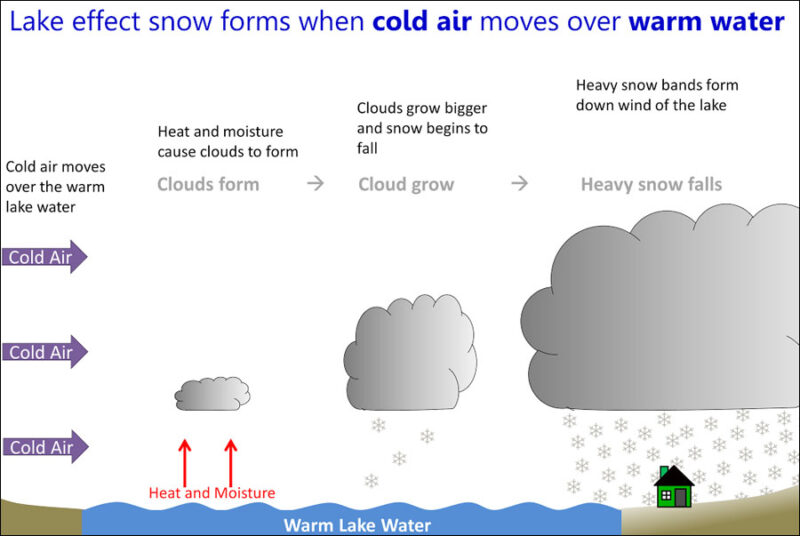
Lake effect snow occurs when cold air moves over warmer water, most often the Great Lakes. As the cold air moves over warm water, the warm water increases the temperature of the air due to something called latent heat release. The warm air then rises and eventually clouds develop. As the clouds continue to develop and precipitation forms, if the air is at or below freezing from the surface up to a few thousand feet up, the precipitation then develops into snow.

Lake effect snow often falls in narrow bands that can drop on average 2-3″ (5-8 cm) of snow per hour. But some lake effect bands can produce more than 3 inches (8 cm) of snow per hour.

The wind direction is crucial for lake effect as a slight shift in wind can shift the band of snow, leading to variability in snowfall totals. But a persistent, prevailing wind also directly plays into why communities under a snow band can easily see inches of snow in a short amount of time.

Time of year also plays an important role in the development of lake effect snow. Late fall and early winter – when lake waters are still relatively warm and not as much ice is covering the water – are more favorable for significant lake effect snow.

A simplified lake effect snow setup. Image via NOAA/ National Weather Service.

Arctic air blast to bring cold nights, chilly afternoons

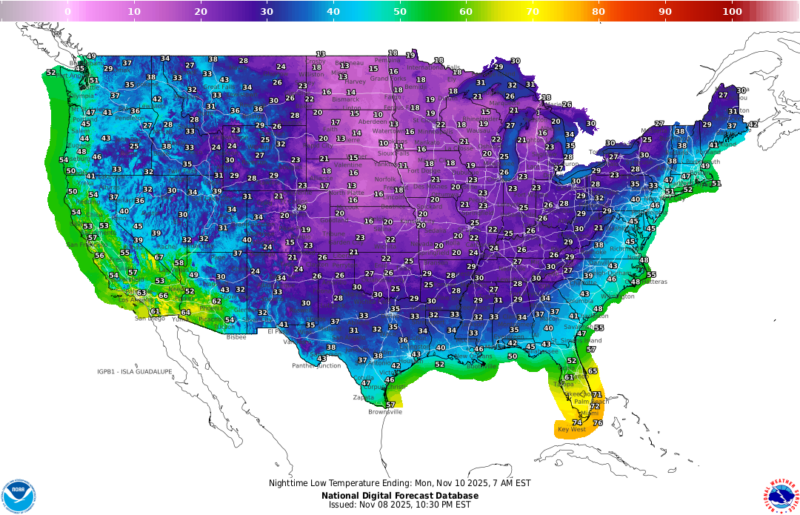
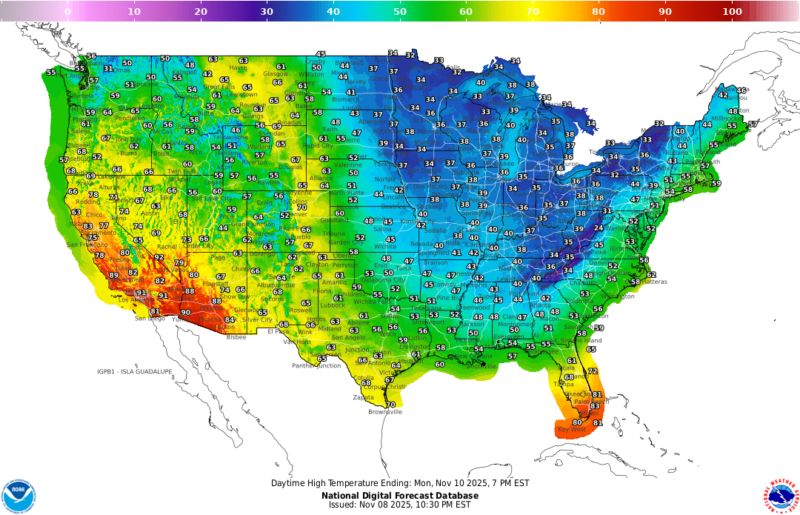
The Arctic air blast will bring the first real shot of cold temperatures for many across the United States. In fact, some areas have already been feeling the cold this weekend. Temperatures will likely be lowest Sunday night, and then Monday afternoon, although Tuesday morning will also be cold for many. Sunday night could have some in the Northern Plains experiencing temperatures in the teens, while Monday afternoon won’t warm up much with high temperatures for many staying in the 30s Fahrenheit (around 0 Celsius).

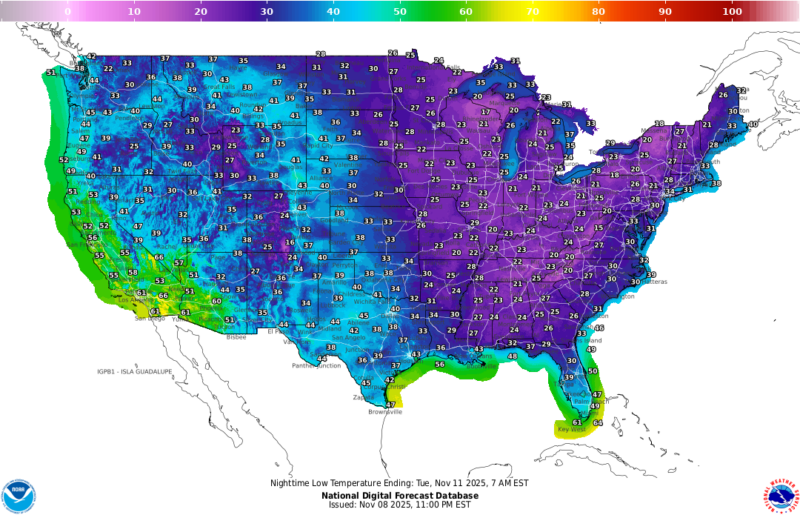
By Monday night and Tuesday morning the core of the cold air shifts east and south, with morning temperatures Tuesday falling into the 20s F (a few degrees below 0 C) in some places. The forecast comes from the National Weather Service.

The forecast morning low for Monday, November 10, 2025. Image via NWS.
The forecast afternoon high for Monday, November 10, 2025. Image via NWS.
The forecast morning low for Tuesday, November 11, 2025.

Bottom line: A dip in the jet stream will bring a significant Arctic air blast across much of the United States, including Oklahoma, Arkansas, Texas, Louisiana, Mississippi, Alabama and Georgia on Sunday and Monday. Snow and lake effect snow could total up to nearly a foot (.3 meter) for some around the Great Lakes.

National Weather Service site

The post Arctic air blast to drop temps for millions in U.S. first appeared on EarthSky.


from EarthSky https://ift.tt/PQyjp7J


This is the Northern Hemisphere’s polar jet stream. It’s a fast-moving belt of westerly winds that traverses the lower layers of the atmosphere, created by the convergence of cold air masses descending from the Arctic and rising warm air from the tropics. In early November 2025, this jet stream is dipping southward, bringing an Arctic air blast – with cold and snow – to much of the U.S. Video via NASA Goddard Scientific Visualization Studio.

We’ve never needed good science more than we do right now.
Support EarthSky in 2025 and help us keep it going strong.

An unusually strong polar airmass is moving into the United States. Meteorologist expect it to bring the first real shot of cold air so far this season for many across the country, from the U.S. Midwest out toward the U.S. East, and as far south as Texas. Freeze watches and warnings are in place for Oklahoma, Arkansas, Texas, Louisiana, Mississippi, Alabama and Georgia as cold air filters in Sunday and Monday, November 9 and 10, 2025. In addition to cold weather, snow and lake effect snow could total up to nearly a foot (.3 meter) for some around the Great Lakes.

Arctic air is spilling south from northern Canada thanks to a dip in the polar jet stream. The jet stream is a band of strong winds in the upper levels of the atmosphere, typically about 30,000 feet (9,000 meters) above the ground. When the jet stream dips south, the cold air spills south.

The jet stream, with this push of cold air, could go as far as the Deep South, which is why the freeze watches and warnings have been issued as far south as they are.

Note: Freeze watches and warnings are issued for agricultural reasons as freezes can kill or damage sensitive crops. Freeze advisories are typically issued in the fall and spring to help farmers and other crop producers protect their plants. Once a hard freeze has occurred, the growing season is considered finished, and freeze watches and warnings typically no longer go out until the following spring.

  • Freeze watches are alerts for significant, widespread freezing temperatures are expected within the next 24 to 36 hours.
  • Freeze warnings are for when temperatures are expected to fall below freezing for an extended period of time.

Read more from Weather.gov: Understanding Cold Weather Alerts.

Arctic air blast: A leaf is on the ground in the morning as sunshine shows the grass and leaf covered in frost.
A frosty leaf on a cold morning. Though it’s now early in the season – early November 2025 – freeze watches and warnings are already in place for Oklahoma, Arkansas, Texas, Louisiana, Mississippi, Alabama and Georgia. Cold air from an Arctic air blast is filtering deeper into North America Sunday and Monday, November 9 and 10, 2025. Image via photos_by_ginny/ Pexels.

Meanwhile, near the Great Lakes

Forecasts indicate that some communities near the Great Lakes will receive a significant snowfall anywhere from Sunday through Tuesday, depending on location. A “clipper” low pressure system is forecast to move northeast near the Great Lakes, bringing a quick burst of snow. But meteorologists expect lake effect snow to bring more for communities south of Lakes Michigan, Superior and Erie, as well as areas east of Lake Michigan.

Lake effect snow can be tricky to forecast at times, because the bands of snow are typically narrow and dependent on wind direction.

As it stands, the forecast calls for 7-10 inches (18-25 cm) from Chicago through northern Indiana, 6-12 inches (15-30 cm) for western Michigan, and 5-10 inches (13-25 cm) for the Upper Peninsula of Michigan south of Lake Superior. The exceptions are communities southeast of Marquette, Michigan, where 8-19 inches (20-48 cm) are expected.

All of these snowfall totals are through Tuesday night.

Map with text and big colorful stripes over Midwest.
Lake effect snow impacts. Image via NWS.
Lake effect snow. Image via NWS.
Lake effect snow for Chicago. Image via NWS.

What is lake effect snow?

Lake effect snow occurs when cold air moves over warmer water, most often the Great Lakes. As the cold air moves over warm water, the warm water increases the temperature of the air due to something called latent heat release. The warm air then rises and eventually clouds develop. As the clouds continue to develop and precipitation forms, if the air is at or below freezing from the surface up to a few thousand feet up, the precipitation then develops into snow.

Lake effect snow often falls in narrow bands that can drop on average 2-3″ (5-8 cm) of snow per hour. But some lake effect bands can produce more than 3 inches (8 cm) of snow per hour.

The wind direction is crucial for lake effect as a slight shift in wind can shift the band of snow, leading to variability in snowfall totals. But a persistent, prevailing wind also directly plays into why communities under a snow band can easily see inches of snow in a short amount of time.

Time of year also plays an important role in the development of lake effect snow. Late fall and early winter – when lake waters are still relatively warm and not as much ice is covering the water – are more favorable for significant lake effect snow.

A simplified lake effect snow setup. Image via NOAA/ National Weather Service.

Arctic air blast to bring cold nights, chilly afternoons

The Arctic air blast will bring the first real shot of cold temperatures for many across the United States. In fact, some areas have already been feeling the cold this weekend. Temperatures will likely be lowest Sunday night, and then Monday afternoon, although Tuesday morning will also be cold for many. Sunday night could have some in the Northern Plains experiencing temperatures in the teens, while Monday afternoon won’t warm up much with high temperatures for many staying in the 30s Fahrenheit (around 0 Celsius).

By Monday night and Tuesday morning the core of the cold air shifts east and south, with morning temperatures Tuesday falling into the 20s F (a few degrees below 0 C) in some places. The forecast comes from the National Weather Service.

The forecast morning low for Monday, November 10, 2025. Image via NWS.
The forecast afternoon high for Monday, November 10, 2025. Image via NWS.
The forecast morning low for Tuesday, November 11, 2025.

Bottom line: A dip in the jet stream will bring a significant Arctic air blast across much of the United States, including Oklahoma, Arkansas, Texas, Louisiana, Mississippi, Alabama and Georgia on Sunday and Monday. Snow and lake effect snow could total up to nearly a foot (.3 meter) for some around the Great Lakes.

National Weather Service site

The post Arctic air blast to drop temps for millions in U.S. first appeared on EarthSky.


from EarthSky https://ift.tt/PQyjp7J

Black hole record: Brightest and most distant flare yet

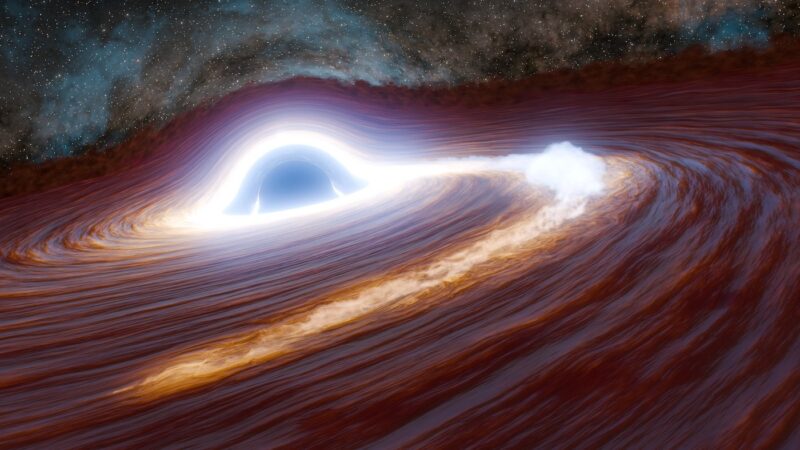
Artwork of a black hole with a dark spot and white around it plus a disk with a bright bulge in one spot.
Artist’s concept of a supermassive black hole in the process of shredding a giant star. Scientists propose this happened around the distant black hole J2245+3743, which in 2018 was seen to brighten dramatically, creating the brightest black hole flare – and possibly the most massive star-shredding event – ever recorded. The star is thought to have been some 30 times the mass of our sun. Image via Caltech/ R. Hurt (IPAC).

No hype. Just real science, powered by real people.
That’s you. Donate today!

  • In 2018, astronomers saw the biggest black hole flare yet. It happened around a black hole 10 billion light-years away.
  • The flare was 30 times brighter than any black hole flare we’d seen before. At its brightest, the flare shone with the light of 10 trillion suns.
  • It was likely due to a massive star getting too close to the supermassive black hole. The black hole shredded the star, which is slowly spiraling into the black hole.

Caltech published this original story by Whitney Clavin on November 4, 2025. Edits by EarthSky.

The biggest and most distant flare from a black hole

The most massive stars in the universe are destined to explode as brilliant supernovas before collapsing into black holes. Yet one huge star appears never to have fulfilled its destiny; in a twist of irony, the star wandered too close to a gargantuan black hole, which gobbled it up, shredding the star to bits and pieces.

That is the most likely explanation to come from authors of a new Nature Astronomy report on November 4, 2025. It describes the most powerful and most distant flare of energy ever recorded from a supermassive black hole. Scientists first observed the cosmic object in 2018 using the U.S. National Science Foundation (NSF)-funded Zwicky Transient Facility (ZTF), based at Caltech’s Palomar Observatory, and the Caltech-led Catalina Real-Time Transient Survey, which is also funded by NSF. The flare rapidly brightened by a factor of 40 over a period of months. And, at its peak, it shone with the light of 10 trillion suns, making it 30 times more luminous than any previous black hole flare seen to date.

The supermassive black hole behind the flare is a type of accreting, or feeding, black hole called an active galactic nucleus (AGN). Referred to as J2245+3743, this AGN is estimated to be 500 million times more massive than our sun. It resides 10 billion light-years away in the remote universe. Because light has a finite speed and takes time to reach us, astronomers observe distant events like this one in the past, when the universe was young.

Lead author Matthew Graham, research professor of astronomy at Caltech, as well as the project scientist for ZTF and a co-principal investigator of the project, said:

The energetics show this object is very far away and very bright. This is unlike any AGN we’ve ever seen.

Learning more about the black hole flare

Astronomers are continuing to monitor the black hole flare, though it is fading over time. In fact, in addition to witnessing the object in the past, time itself runs slower at the remote site of the black hole compared to our own experience of time. Graham explained:

It’s a phenomenon called cosmological time dilation due to stretching of space and time. As the light travels across expanding space to reach us, its wavelength stretches as does time itself.

Graham also noted that long-lived surveys like ZTF and Catalina are important to fully witness events in the past because, in this case:

… seven years here is two years there. We are watching the event play back at quarter speed.

A man with glasses and hair swept bag and a large, full beard.
Lead author Matthew Graham of Caltech. Image via Caltech/ Nick Macdonald.

A star too near a black hole

To determine what could cause such a dramatic burst of light in the cosmos, the researchers thoroughly examined a list of possibilities, concluding that the most likely culprit is a tidal disruption event (TDE). This phenomenon occurs when a supermassive black hole’s gravity shears a star that comes too close. Then it slowly consumes the star over time as it spirals into the black hole. The fact that the black hole flare J2245+3743 is still going on indicates we are witnessing a star not yet fully devoured but rather like. as Graham said:

a fish only halfway down the whale’s gullet.

If the flare is from a TDE, the scientists estimate that the supermassive black hole gobbled a star with a mass at least 30 times greater than that of our sun. The previous record holder for the largest candidate TDE, an event nicknamed Scary Barbie after its initial ZTF classification as ZTF20abrbeie, was not nearly as intense. That TDE, which scientists also think originated from an AGN, was 30 times weaker than that of J2245+3743. And its doomed star is estimated to have been between three and 10 solar masses.

Tidal disruption events

Most of the roughly 100 TDEs seen to date do not take place around active galactic nuclei. Active galactic nuclei are massive structures that consist of supermassive black holes surrounded by large, swirling disks of material that feed the central black hole. The behemoths burble along, flaring up with their own feeding activity, which can mask TDE bursts and make them harder to find. The recent jumbo flare J2245+3743, on the other hand, was so large that it was easier to see.

However, at first, J2245+3743 did not seem to be anything special. In 2018, after researchers spotted the first object, they used the 200-inch Hale Telescope at Caltech’s Palomar Observatory to obtain a spectrum of the object’s light. But it did not reveal anything unusual. In 2023, the team noticed the flare was decaying slower than expected. So they obtained another spectrum from the W.M. Keck Observatory in Hawaii, which indicated the extreme brightness of this particular active galactic nucleus.

A remarkably bright flare

Co-author K.E. Saavik Ford is a professor at the City University of New York (CUNY) Graduate Center and Borough of Manhattan Community College and American Museum of Natural History. Ford said:

At first, it was important to establish that this extreme object was truly this bright.

It was possible, she said, that the object could have been beaming the light toward us rather than glowing in all directions. But data from NASA’s former Wide-field Infrared Survey Explorer (WISE) mission helped rule that out. In the end, after other scenarios were also ruled out, the researchers concluded that J2245+3743 was indeed the brightest black hole flare ever recorded. Ford said:

If you convert our entire sun to energy, using Albert Einstein’s famous formula E = mc2, that’s how much energy has been pouring out from this flare since we began observing it.

A rare star

Once the team established the unprecedented brightness of the event, they looked at what could possibly have caused it. Ford said, as one possibility:

Supernovae are not bright enough to account for this.

Instead, the team’s favored explanation is a supermassive black hole slowly ripping a huge star to death. Ford explained:

Stars this massive are rare, but we think stars within the disk of an active galactic nucleus can grow larger. The matter from the disk is dumped onto stars, causing them to grow in mass.

Finding a black hole meal with such mega proportions indicates that other events like this are likely taking place across the cosmos. The researchers hope to mine through more ZTF data to find others, and the NSF and Department of Energy’s Vera C. Rubin Observatory may likewise find unusually large TDEs. Graham said:

We never would have found this rare event in the first place if it weren’t for ZTF. We’ve been observing the sky with ZTF for seven years now, so when we see anything flare or change, we can see what it has done in the past and how it will evolve.

Bottom line: Astronomers have found a black hole flare that is the biggest and most distant we’ve yet seen. It was likely caused by a massive star getting ripped apart by a supermassive black hole.

Source: An extremely luminous flare recorded from a supermassive black hole

Via Caltech

The post Black hole record: Brightest and most distant flare yet first appeared on EarthSky.


from EarthSky https://ift.tt/i1FQ8Ux
Artwork of a black hole with a dark spot and white around it plus a disk with a bright bulge in one spot.
Artist’s concept of a supermassive black hole in the process of shredding a giant star. Scientists propose this happened around the distant black hole J2245+3743, which in 2018 was seen to brighten dramatically, creating the brightest black hole flare – and possibly the most massive star-shredding event – ever recorded. The star is thought to have been some 30 times the mass of our sun. Image via Caltech/ R. Hurt (IPAC).

No hype. Just real science, powered by real people.
That’s you. Donate today!

  • In 2018, astronomers saw the biggest black hole flare yet. It happened around a black hole 10 billion light-years away.
  • The flare was 30 times brighter than any black hole flare we’d seen before. At its brightest, the flare shone with the light of 10 trillion suns.
  • It was likely due to a massive star getting too close to the supermassive black hole. The black hole shredded the star, which is slowly spiraling into the black hole.

Caltech published this original story by Whitney Clavin on November 4, 2025. Edits by EarthSky.

The biggest and most distant flare from a black hole

The most massive stars in the universe are destined to explode as brilliant supernovas before collapsing into black holes. Yet one huge star appears never to have fulfilled its destiny; in a twist of irony, the star wandered too close to a gargantuan black hole, which gobbled it up, shredding the star to bits and pieces.

That is the most likely explanation to come from authors of a new Nature Astronomy report on November 4, 2025. It describes the most powerful and most distant flare of energy ever recorded from a supermassive black hole. Scientists first observed the cosmic object in 2018 using the U.S. National Science Foundation (NSF)-funded Zwicky Transient Facility (ZTF), based at Caltech’s Palomar Observatory, and the Caltech-led Catalina Real-Time Transient Survey, which is also funded by NSF. The flare rapidly brightened by a factor of 40 over a period of months. And, at its peak, it shone with the light of 10 trillion suns, making it 30 times more luminous than any previous black hole flare seen to date.

The supermassive black hole behind the flare is a type of accreting, or feeding, black hole called an active galactic nucleus (AGN). Referred to as J2245+3743, this AGN is estimated to be 500 million times more massive than our sun. It resides 10 billion light-years away in the remote universe. Because light has a finite speed and takes time to reach us, astronomers observe distant events like this one in the past, when the universe was young.

Lead author Matthew Graham, research professor of astronomy at Caltech, as well as the project scientist for ZTF and a co-principal investigator of the project, said:

The energetics show this object is very far away and very bright. This is unlike any AGN we’ve ever seen.

Learning more about the black hole flare

Astronomers are continuing to monitor the black hole flare, though it is fading over time. In fact, in addition to witnessing the object in the past, time itself runs slower at the remote site of the black hole compared to our own experience of time. Graham explained:

It’s a phenomenon called cosmological time dilation due to stretching of space and time. As the light travels across expanding space to reach us, its wavelength stretches as does time itself.

Graham also noted that long-lived surveys like ZTF and Catalina are important to fully witness events in the past because, in this case:

… seven years here is two years there. We are watching the event play back at quarter speed.

A man with glasses and hair swept bag and a large, full beard.
Lead author Matthew Graham of Caltech. Image via Caltech/ Nick Macdonald.

A star too near a black hole

To determine what could cause such a dramatic burst of light in the cosmos, the researchers thoroughly examined a list of possibilities, concluding that the most likely culprit is a tidal disruption event (TDE). This phenomenon occurs when a supermassive black hole’s gravity shears a star that comes too close. Then it slowly consumes the star over time as it spirals into the black hole. The fact that the black hole flare J2245+3743 is still going on indicates we are witnessing a star not yet fully devoured but rather like. as Graham said:

a fish only halfway down the whale’s gullet.

If the flare is from a TDE, the scientists estimate that the supermassive black hole gobbled a star with a mass at least 30 times greater than that of our sun. The previous record holder for the largest candidate TDE, an event nicknamed Scary Barbie after its initial ZTF classification as ZTF20abrbeie, was not nearly as intense. That TDE, which scientists also think originated from an AGN, was 30 times weaker than that of J2245+3743. And its doomed star is estimated to have been between three and 10 solar masses.

Tidal disruption events

Most of the roughly 100 TDEs seen to date do not take place around active galactic nuclei. Active galactic nuclei are massive structures that consist of supermassive black holes surrounded by large, swirling disks of material that feed the central black hole. The behemoths burble along, flaring up with their own feeding activity, which can mask TDE bursts and make them harder to find. The recent jumbo flare J2245+3743, on the other hand, was so large that it was easier to see.

However, at first, J2245+3743 did not seem to be anything special. In 2018, after researchers spotted the first object, they used the 200-inch Hale Telescope at Caltech’s Palomar Observatory to obtain a spectrum of the object’s light. But it did not reveal anything unusual. In 2023, the team noticed the flare was decaying slower than expected. So they obtained another spectrum from the W.M. Keck Observatory in Hawaii, which indicated the extreme brightness of this particular active galactic nucleus.

A remarkably bright flare

Co-author K.E. Saavik Ford is a professor at the City University of New York (CUNY) Graduate Center and Borough of Manhattan Community College and American Museum of Natural History. Ford said:

At first, it was important to establish that this extreme object was truly this bright.

It was possible, she said, that the object could have been beaming the light toward us rather than glowing in all directions. But data from NASA’s former Wide-field Infrared Survey Explorer (WISE) mission helped rule that out. In the end, after other scenarios were also ruled out, the researchers concluded that J2245+3743 was indeed the brightest black hole flare ever recorded. Ford said:

If you convert our entire sun to energy, using Albert Einstein’s famous formula E = mc2, that’s how much energy has been pouring out from this flare since we began observing it.

A rare star

Once the team established the unprecedented brightness of the event, they looked at what could possibly have caused it. Ford said, as one possibility:

Supernovae are not bright enough to account for this.

Instead, the team’s favored explanation is a supermassive black hole slowly ripping a huge star to death. Ford explained:

Stars this massive are rare, but we think stars within the disk of an active galactic nucleus can grow larger. The matter from the disk is dumped onto stars, causing them to grow in mass.

Finding a black hole meal with such mega proportions indicates that other events like this are likely taking place across the cosmos. The researchers hope to mine through more ZTF data to find others, and the NSF and Department of Energy’s Vera C. Rubin Observatory may likewise find unusually large TDEs. Graham said:

We never would have found this rare event in the first place if it weren’t for ZTF. We’ve been observing the sky with ZTF for seven years now, so when we see anything flare or change, we can see what it has done in the past and how it will evolve.

Bottom line: Astronomers have found a black hole flare that is the biggest and most distant we’ve yet seen. It was likely caused by a massive star getting ripped apart by a supermassive black hole.

Source: An extremely luminous flare recorded from a supermassive black hole

Via Caltech

The post Black hole record: Brightest and most distant flare yet first appeared on EarthSky.


from EarthSky https://ift.tt/i1FQ8Ux

Galaxy’s south window looks into intergalactic space

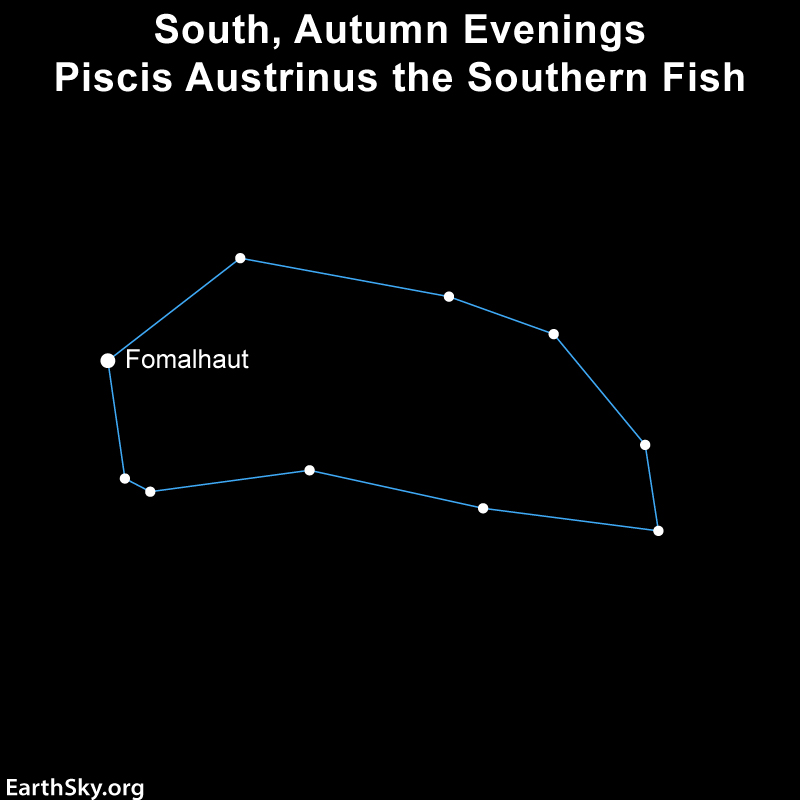
Galaxy's south window: Star chart outlining a blob-like shape with 1 star, Fomalhaut, labeled.
As seen from the Northern Hemisphere … looking southward on an autumn evening means you’re looking toward the constellation Piscis Austrinus the Southern Fish. The rest of the stars making up Piscis Austrinus are faint. You need a dark sky to see them. But there’s one bright star here, Fomalhaut. And Fomalhaut is easy to spot in the south on autumn evenings. When you look in this direction, you’re looking out our galaxy’s south window and into intergalactic space. Chart via EarthSky.

Gazing toward our galaxy’s south window into intergalactic space

When you gaze toward the bright star Fomalhaut, in the constellation Piscis Austrinus the Southern Fish, you’re looking toward what’s called our galaxy’s south window. That is, you’re looking away from the flat plane of our Milky Way, where most of our galaxy’s stars reside. And you’re looking toward the direction toward one of the galaxy’s poles. Why find Fomalhaut? When you look at this star – sometimes called the Loneliest Star – you are looking some 90 degrees from the plane of our galaxy’s equator.

Most of the galaxy’s stars reside in its flat plane. So – to the eye – the region of the sky around Fomalhaut looks relatively empty. But beyond Fomalhaut, and beyond other Milky Way stars in this direction of space – beyond your ability to see with the eye alone – you’re gazing into the vast space between galaxies.

Voila! You’re looking out the galaxy’s south window.

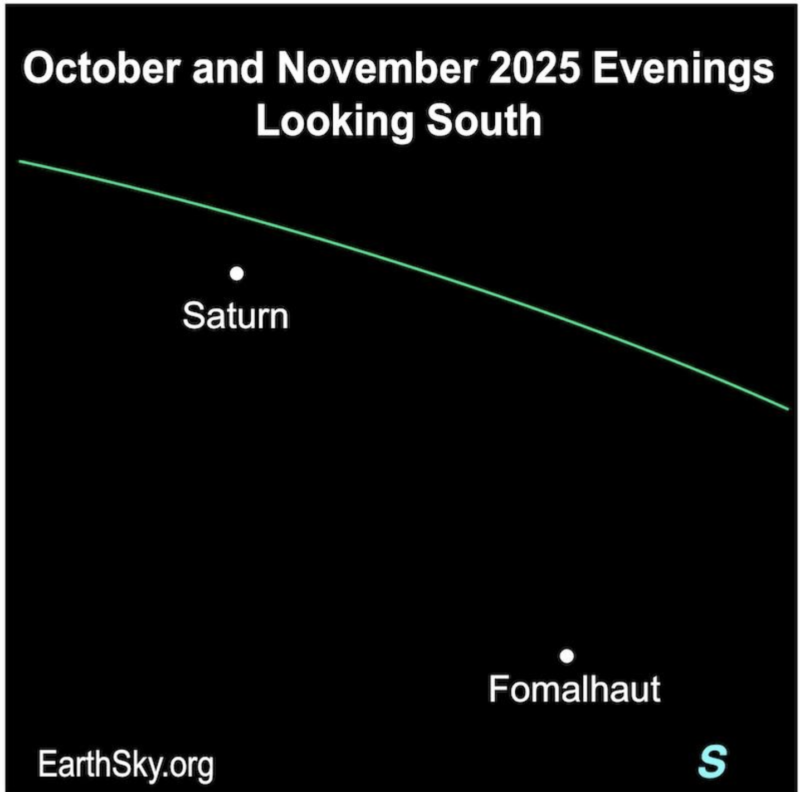
Star chart facing southward in October and November, showing the star Fomalhaut and the planet Saturn.
Fomalhaut is known as the Loneliest Star. But in 2025, Fomalhaut has company. The other bright “star” in this part of the sky, in 2025, is the planet Saturn. Saturn and Fomalhaut are about the same brightness. Saturn is a creamy golden color and shines with a steady light. Fomalhaut appears white, perhaps with a tinge of blue, and it twinkles, as all stars do. To see a precise view from your location, try Stellarium Online.

The Milky Way’s south galactic pole

Our Milky Way galaxy is round and flat, like a pancake. When you look toward Fomalhaut, you’re looking away from the pancake, and out the south window of the galaxy. In other words, we’re looking away from the star-packed disk of the galaxy, into intergalactic space and the realm of galaxies.

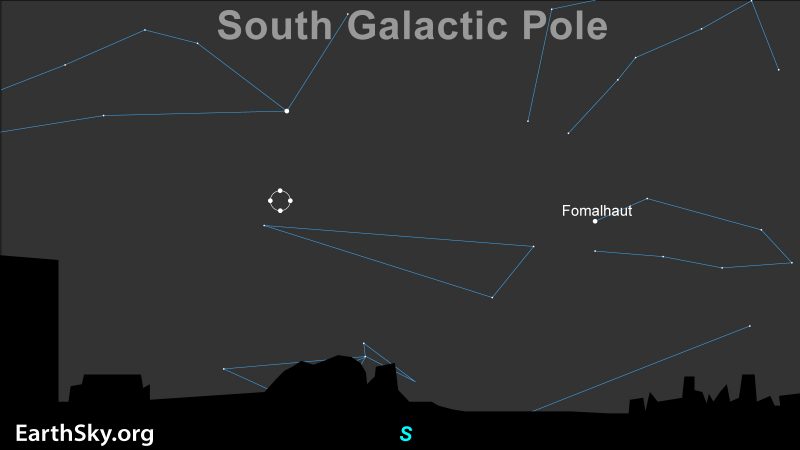
Want the exact location of the south galactic pole? It lies east of Fomalhaut, in the faint constellation Sculptor. See the chart below.

Sky chart: Several constellations and a small circle close to a triangular constellation.
The circle with tick marks indicates the position of the south galactic pole, just above the triangle shape of Sculptor. Chart via EarthSky.

Finding Fomalhaut

Fomalhaut is a very noticeable star because it’s in a region of the heavens where there are few stars bright enough to be seen with the eye. That’s why Fomalhaut is often called the Loneliest Star.

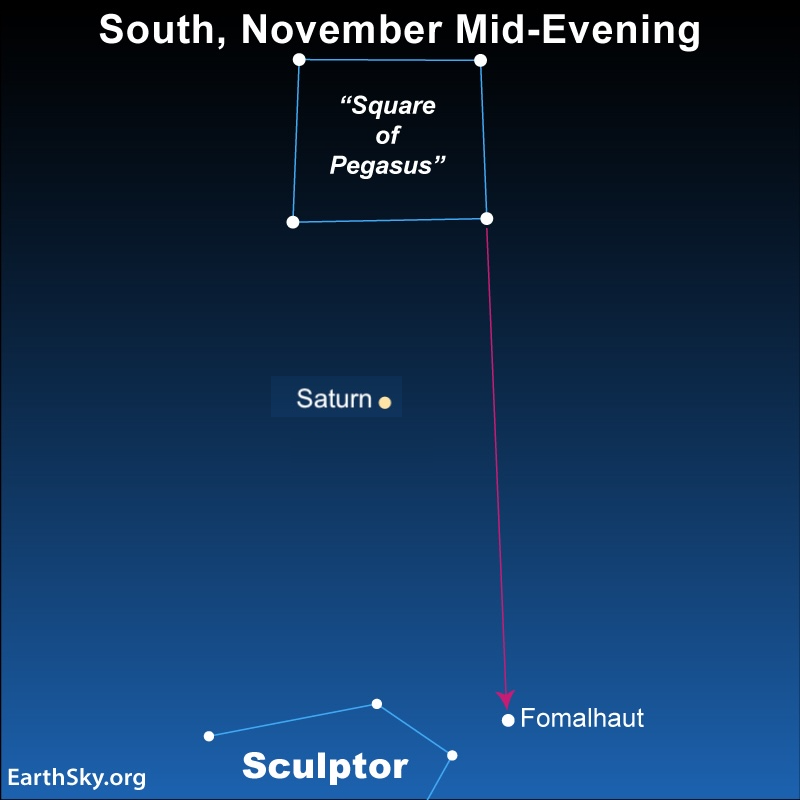
If you’re not sure which star is Fomalhaut, try using the Great Square of Pegasus as a guide. The Great Square of Pegasus appears in the south to overhead by around 7 to 8 p.m. local time in late November and early December. You’ll notice, this large asterism really does look like a large square pattern, with four medium-bright stars marking the corners. Then draw a line from the two westernmost stars downward to Fomalhaut. The golden light – in 2025 – between them is Saturn. See the chart below.

What about from the Southern Hemisphere? Look for the Great Square to the north around 9 to 10 p.m. local time in late November and early December. Then draw a line from the two westernmost stars upward to Fomalhaut. Be sure to look for golden Saturn in between them.

Star chart: 4 stars making a square at top, with an arrow from it pointing to a much lower star. Golden Saturn is between them.
The 4 stars making up the Great Square of Pegasus. You can use the Great Square to find the star Fomalhaut. And in 2025, the steady golden light of Saturn is between Fomalhaut and the Great Square. Chart via EarthSky

Bottom line: Use the Great Square of Pegasus to locate Fomalhaut. And once you’ve found Fomalhaut, you’re on your way to looking out our galaxy’s south window into intergalactic space.

For more sky events, visit EarthSky’s night sky guide.

Easily locate stars and constellations during any day and time with EarthSky’s Planisphere.

The post Galaxy’s south window looks into intergalactic space first appeared on EarthSky.


from EarthSky https://ift.tt/8p9bxVu
Galaxy's south window: Star chart outlining a blob-like shape with 1 star, Fomalhaut, labeled.
As seen from the Northern Hemisphere … looking southward on an autumn evening means you’re looking toward the constellation Piscis Austrinus the Southern Fish. The rest of the stars making up Piscis Austrinus are faint. You need a dark sky to see them. But there’s one bright star here, Fomalhaut. And Fomalhaut is easy to spot in the south on autumn evenings. When you look in this direction, you’re looking out our galaxy’s south window and into intergalactic space. Chart via EarthSky.

Gazing toward our galaxy’s south window into intergalactic space

When you gaze toward the bright star Fomalhaut, in the constellation Piscis Austrinus the Southern Fish, you’re looking toward what’s called our galaxy’s south window. That is, you’re looking away from the flat plane of our Milky Way, where most of our galaxy’s stars reside. And you’re looking toward the direction toward one of the galaxy’s poles. Why find Fomalhaut? When you look at this star – sometimes called the Loneliest Star – you are looking some 90 degrees from the plane of our galaxy’s equator.

Most of the galaxy’s stars reside in its flat plane. So – to the eye – the region of the sky around Fomalhaut looks relatively empty. But beyond Fomalhaut, and beyond other Milky Way stars in this direction of space – beyond your ability to see with the eye alone – you’re gazing into the vast space between galaxies.

Voila! You’re looking out the galaxy’s south window.

Star chart facing southward in October and November, showing the star Fomalhaut and the planet Saturn.
Fomalhaut is known as the Loneliest Star. But in 2025, Fomalhaut has company. The other bright “star” in this part of the sky, in 2025, is the planet Saturn. Saturn and Fomalhaut are about the same brightness. Saturn is a creamy golden color and shines with a steady light. Fomalhaut appears white, perhaps with a tinge of blue, and it twinkles, as all stars do. To see a precise view from your location, try Stellarium Online.

The Milky Way’s south galactic pole

Our Milky Way galaxy is round and flat, like a pancake. When you look toward Fomalhaut, you’re looking away from the pancake, and out the south window of the galaxy. In other words, we’re looking away from the star-packed disk of the galaxy, into intergalactic space and the realm of galaxies.

Want the exact location of the south galactic pole? It lies east of Fomalhaut, in the faint constellation Sculptor. See the chart below.

Sky chart: Several constellations and a small circle close to a triangular constellation.
The circle with tick marks indicates the position of the south galactic pole, just above the triangle shape of Sculptor. Chart via EarthSky.

Finding Fomalhaut

Fomalhaut is a very noticeable star because it’s in a region of the heavens where there are few stars bright enough to be seen with the eye. That’s why Fomalhaut is often called the Loneliest Star.

If you’re not sure which star is Fomalhaut, try using the Great Square of Pegasus as a guide. The Great Square of Pegasus appears in the south to overhead by around 7 to 8 p.m. local time in late November and early December. You’ll notice, this large asterism really does look like a large square pattern, with four medium-bright stars marking the corners. Then draw a line from the two westernmost stars downward to Fomalhaut. The golden light – in 2025 – between them is Saturn. See the chart below.

What about from the Southern Hemisphere? Look for the Great Square to the north around 9 to 10 p.m. local time in late November and early December. Then draw a line from the two westernmost stars upward to Fomalhaut. Be sure to look for golden Saturn in between them.

Star chart: 4 stars making a square at top, with an arrow from it pointing to a much lower star. Golden Saturn is between them.
The 4 stars making up the Great Square of Pegasus. You can use the Great Square to find the star Fomalhaut. And in 2025, the steady golden light of Saturn is between Fomalhaut and the Great Square. Chart via EarthSky

Bottom line: Use the Great Square of Pegasus to locate Fomalhaut. And once you’ve found Fomalhaut, you’re on your way to looking out our galaxy’s south window into intergalactic space.

For more sky events, visit EarthSky’s night sky guide.

Easily locate stars and constellations during any day and time with EarthSky’s Planisphere.

The post Galaxy’s south window looks into intergalactic space first appeared on EarthSky.


from EarthSky https://ift.tt/8p9bxVu

Watch for the daytime moon after sunrise this week

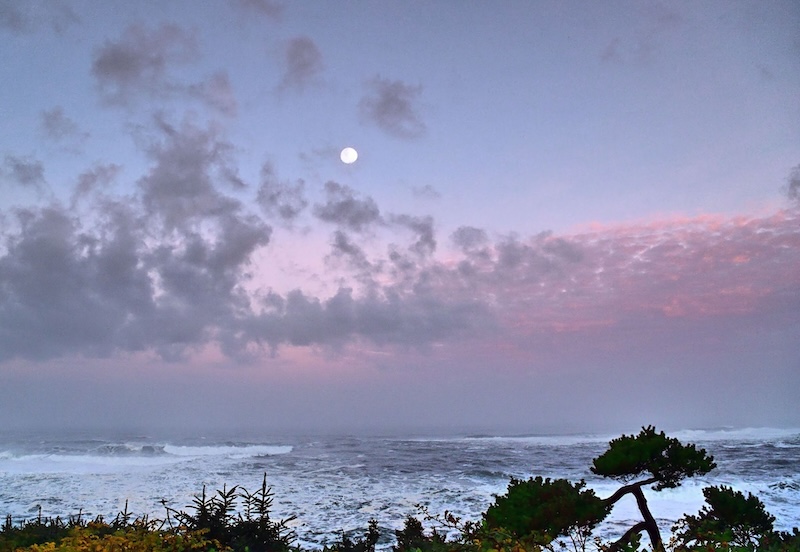
Coastline with waves coming in, and sky with moon above shredded clouds in with pink band in the sky in background.
View at EarthSky Community Photos. | Our friend Cecille Kennedy captured the waning gibbous moon in the early morning of November 7, 2025, from the Oregon Coast. Cecille wrote: “At moonset … the waning gibbous moon in the western sky with sunrise hues, two days after the full Beaver Moon [Hunter’s Moon].” Thank you, Cecille!

Watch for the daytime moon

This month’s Super Hunter’s Moon – which many called the Beaver Moon – came overnight on November 5-6, 2025. So this week’s moon is in a waning gibbous phase. Full moons rise at sunset. But waning gibbous moons rise later – and later – on each successive night.

And that means the moon sets later and later now, too. In the days following every full moon, you’ll find the moon setting in the west after sunrise. That makes the mornings following a full moon a good time to catch a daytime moon. Watch for it during the coming week, after sunrise, over your western horizon. It’ll appear pale against the blue sky. Thanks to what’s called the moon illusion, you might notice the daytime moon looking huge when close to the horizon.

The moon is up in the daytime half of the time. But, because it’s pale against the blue sky, it’s not as noticeable during the day as at night. Still, there are certain windows each month during which the daytime moon is most noticeable.

The coming week presents one of those windows. It’s a good time to watch for a daytime moon in the morning sky.

Read more: Here are 4 keys to understanding the moon’s phases.

When is last quarter moon?

Then, the next last quarter moon will fall at 5:28 UTC on November 12, 2025. Last quarter moons rise in the middle of the night (no matter where you are on the globe). And they set around midday. Watch for the last quarter moon high in the sky before dawn.

Daytime moon photos from the EarthSky community

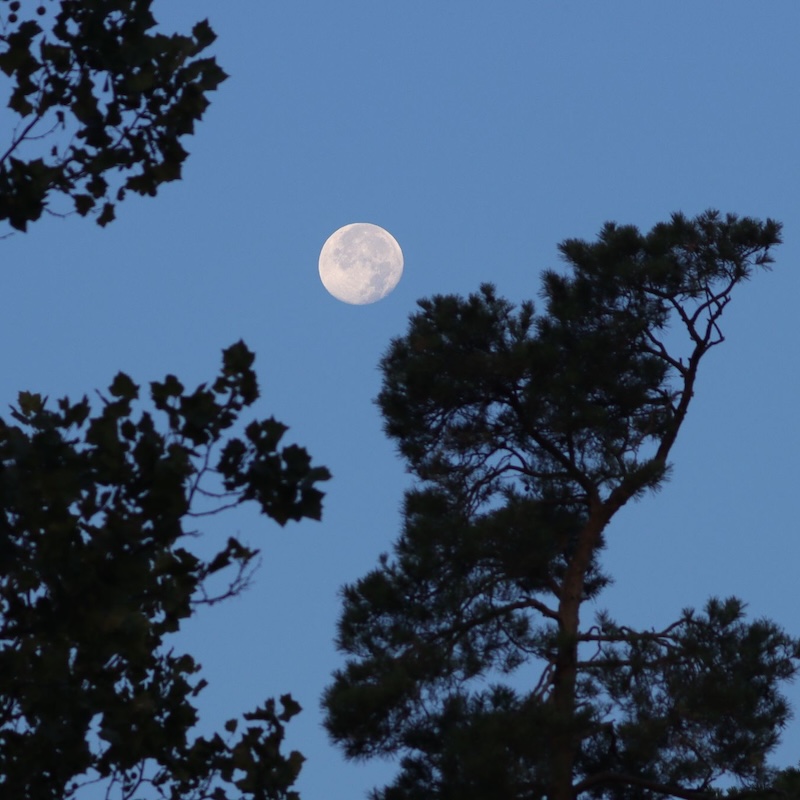
Daytime moon: Almost full moon in daytime sky with trees in the foreground.
View at EarthSky Community Photos. | Steven Sweet captured this image on September 9, 2025, from Canada and wrote: “Waning gibbous moon back in the morning sky a couple days after full.” Thank you, Steven! Be sure to watch for the daytime moon this week in the western morning sky.
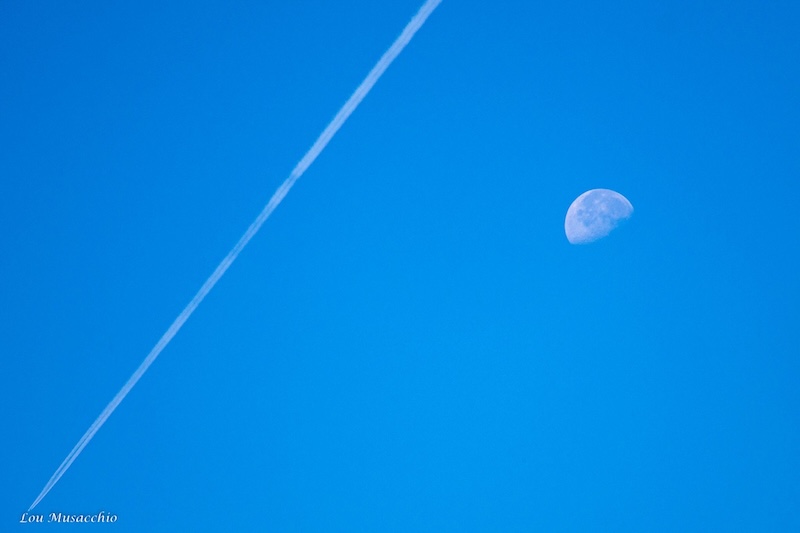
Daytime waning gibbous moon in blue sky.
View at EarthSky Community Photos. | Lou Musacchio captured this image on September 12, 2025, from Canada and wrote: “I stepped outside to check on some feral baby kittens and saw the moon in the daytime sky with a contrail going across the sky.” Thank you, Lou!
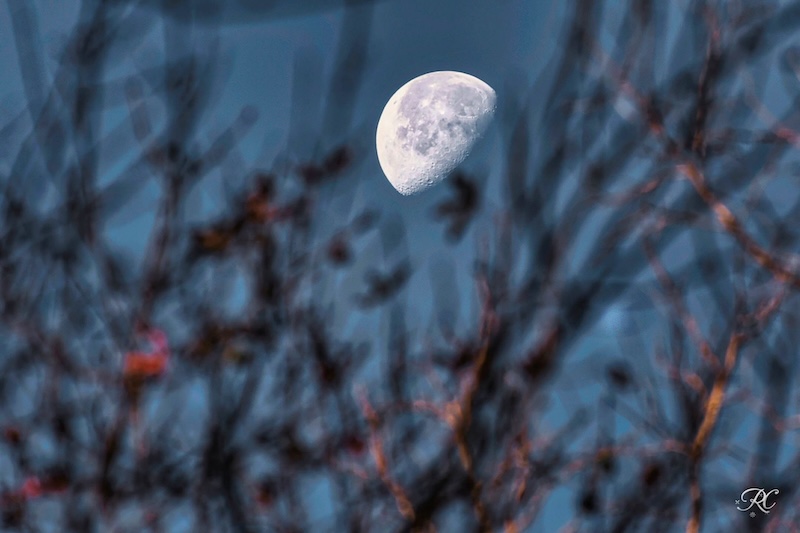
Waning gibbous moon in daylight with out-of-focus branches in the foreground.
View at EarthSky Community Photos. | Ragini Chaturvedi captured this image on November 14, 2022, in New Jersey. Ragini wrote: “Daytime moon basking in the morning sun, amidst the cold and windy start to the day.” Thank you, Ragini!

Bottom line: Watch for the beautiful daytime moon this week, a pale orb floating against a blue sky in the morning hours. Look west! You’ll see it!

Submit your recent photo to EarthSky here.

4 keys to understanding moon phases

The post Watch for the daytime moon after sunrise this week first appeared on EarthSky.


from EarthSky https://ift.tt/AfNVb8s
Coastline with waves coming in, and sky with moon above shredded clouds in with pink band in the sky in background.
View at EarthSky Community Photos. | Our friend Cecille Kennedy captured the waning gibbous moon in the early morning of November 7, 2025, from the Oregon Coast. Cecille wrote: “At moonset … the waning gibbous moon in the western sky with sunrise hues, two days after the full Beaver Moon [Hunter’s Moon].” Thank you, Cecille!

Watch for the daytime moon

This month’s Super Hunter’s Moon – which many called the Beaver Moon – came overnight on November 5-6, 2025. So this week’s moon is in a waning gibbous phase. Full moons rise at sunset. But waning gibbous moons rise later – and later – on each successive night.

And that means the moon sets later and later now, too. In the days following every full moon, you’ll find the moon setting in the west after sunrise. That makes the mornings following a full moon a good time to catch a daytime moon. Watch for it during the coming week, after sunrise, over your western horizon. It’ll appear pale against the blue sky. Thanks to what’s called the moon illusion, you might notice the daytime moon looking huge when close to the horizon.

The moon is up in the daytime half of the time. But, because it’s pale against the blue sky, it’s not as noticeable during the day as at night. Still, there are certain windows each month during which the daytime moon is most noticeable.

The coming week presents one of those windows. It’s a good time to watch for a daytime moon in the morning sky.

Read more: Here are 4 keys to understanding the moon’s phases.

When is last quarter moon?

Then, the next last quarter moon will fall at 5:28 UTC on November 12, 2025. Last quarter moons rise in the middle of the night (no matter where you are on the globe). And they set around midday. Watch for the last quarter moon high in the sky before dawn.

Daytime moon photos from the EarthSky community

Daytime moon: Almost full moon in daytime sky with trees in the foreground.
View at EarthSky Community Photos. | Steven Sweet captured this image on September 9, 2025, from Canada and wrote: “Waning gibbous moon back in the morning sky a couple days after full.” Thank you, Steven! Be sure to watch for the daytime moon this week in the western morning sky.
Daytime waning gibbous moon in blue sky.
View at EarthSky Community Photos. | Lou Musacchio captured this image on September 12, 2025, from Canada and wrote: “I stepped outside to check on some feral baby kittens and saw the moon in the daytime sky with a contrail going across the sky.” Thank you, Lou!
Waning gibbous moon in daylight with out-of-focus branches in the foreground.
View at EarthSky Community Photos. | Ragini Chaturvedi captured this image on November 14, 2022, in New Jersey. Ragini wrote: “Daytime moon basking in the morning sun, amidst the cold and windy start to the day.” Thank you, Ragini!

Bottom line: Watch for the beautiful daytime moon this week, a pale orb floating against a blue sky in the morning hours. Look west! You’ll see it!

Submit your recent photo to EarthSky here.

4 keys to understanding moon phases

The post Watch for the daytime moon after sunrise this week first appeared on EarthSky.


from EarthSky https://ift.tt/AfNVb8s

How to see Earth’s shadow at sunrise and sunset


EarthSky’s Kelly Kizer Whitt explains how to see Earth’s shadow and the Belt of Venus, in this video.

Earth’s shadow is easy to see

Like all worlds orbiting a sun, Earth casts a shadow. It extends some 870,000 miles (1.4 million km) into space. And like all shadows, the shadow of Earth is always opposite the sun. You can see the shadow of Earth cast onto Earth’s atmosphere twice daily as a bluish band adjacent to the horizon. It’s easy to see in the sky. Just look east after sunset or west before sunrise.

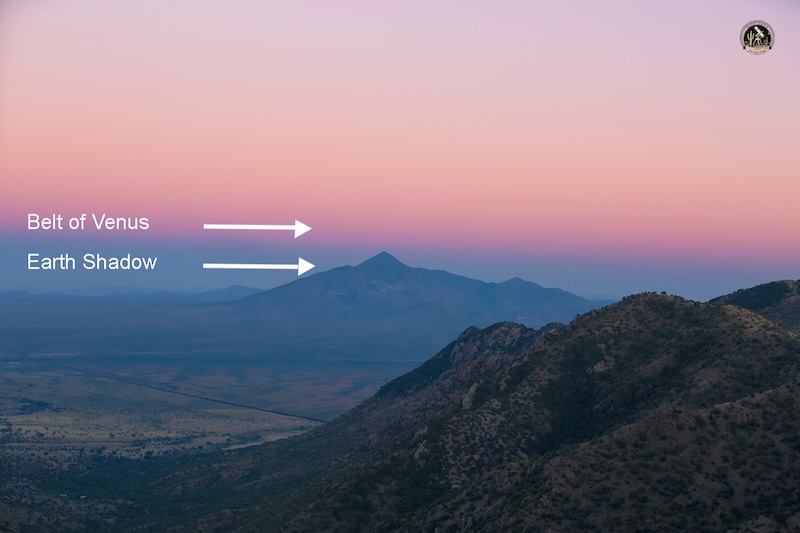
Plus, the pretty band of pink that lies on top of Earth’s bluish shadow is called the Belt of Venus. More on that below!

What to look for to see Earth’s shadow

You’ll see Earth’s shadow as deep blue-gray. It’s darker than the blue of the twilight sky.

The shadow of the Earth is big. It helps to be on a hill or somewhere you have a long view to the horizon. You might have to turn your head this way and that – along the arc of the horizon opposite the sun – to see the whole thing. And, just so you’ll recognize it more easily, remember that the shadow is curved, in exactly the same way that the whole Earth is curved.

Once you spot it, don’t go back inside just yet. Wait a while, and watch Earth’s shadow ascending or descending at exactly the same rate that the sun is rising or setting on the opposite horizon.

And here’s a fun thought … night itself is a shadow. When night falls, you’re standing within the shadow of Earth.

Twilight sky showing the pinkish Belt of Venus and Earth's shadow over distant mountains.
View at EarthSky Community Photos. | Jelieta Walinski Ph.D captured this image on November 5, 2025, from Arizona and wrote: “As twilight embraced Montezuma Pass, I turned my lens toward the quiet horizon with Mexico resting beneath the breath of dusk. There it was, the Belt of Venus, a delicate blush of rose-pink caressing the edge of the world, wrapped above the deepening Earth’s shadow, a quiet blue veil cast by our own planet upon its sky. This ethereal belt forms when sunlight scatters through Earth’s atmosphere, reflecting from the opposite horizon just as the sun dips below it. The pink hue arises from backscattered reddened sunlight, while the darker band beneath is the Earth’s umbra, slowly rising as night claims the day. Between these two — light and shadow — the heavens whisper of cycles eternal: dusk to dawn, day to night, and the tender reminder that even Earth casts beauty in its own shadow.” Thank you, Jelieta!

What exactly is the Belt of Venus?

The Belt of Venus, that pink band of sky above Earth’s shadow, also has the name of the anti-twilight arch. So, for example, during sunset, the colors of twilight will be happening in the west, and when you turn to the opposite horizon, you’ll see the anti-twilight arch. You’ve probably noticed that sometimes the whole sky seems colorful at sunset. There’s a good chance that what you’re seeing opposite the sunset is Earth’s shadow and the Belt of Venus.

When the sun is below the horizon, some of the sun’s rays of light still reach our atmosphere. The light passes through our atmosphere and – at the antisolar point – it backscatters. That light then reaches back to us in shades of pink.

You might think that the Belt of Venus got its name from the planet Venus. Venus, orbiting inside Earth’s orbit, never strays far from the sun in our sky. So we often see it around sunrise and sunset. But, of course, the sun is on the opposite side of the sky from the Belt of Venus. So if Venus is visible in the sky, it’s near the sun, not on the opposite horizon.

Instead, like many other objects we know in the sky, it gets its name from ancient myth. The Belt of Venus is named for the Goddess of Love’s pink girdle.

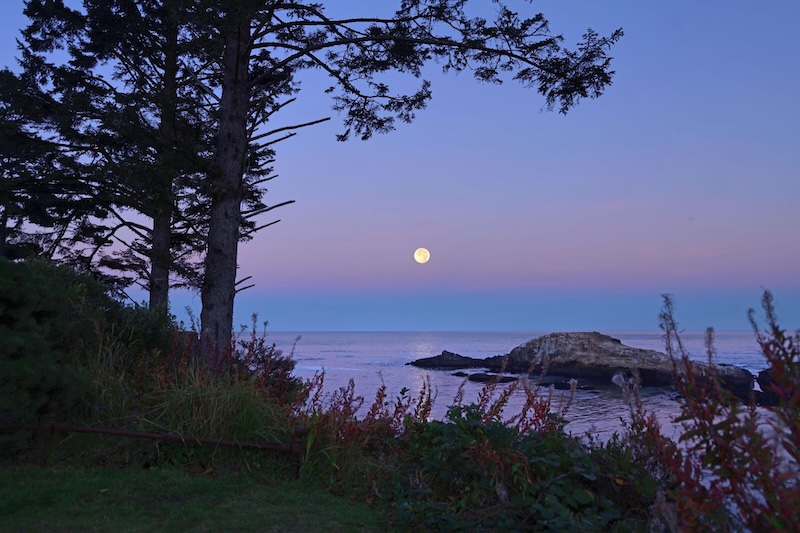
Full Super Harvest Moon shining brightly in Earth's shadow over the ocean with trees in the foreground.
View at EarthSky Community Photos. | Cecille Kennedy captured this image on October 7, 2025, from Oregon and wrote: “Harvest Super Moon setting at Pirate Cove with the Belt of Venus colors.” Thank you, Cecille!

Our shadow is why we see lunar eclipses

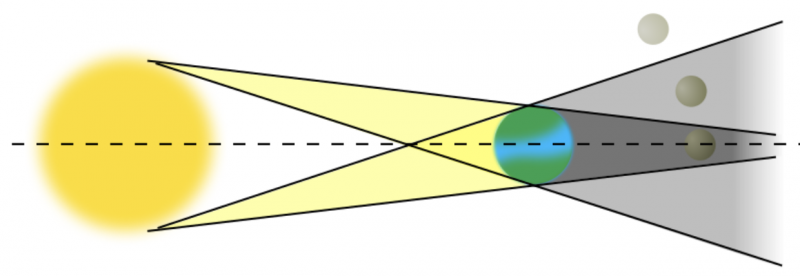
Earth’s shadow extends so far into space that it can touch the moon. In fact, that’s what a lunar eclipse is. It’s the moon within Earth’s shadow.

When the sun, Earth and moon align in space (nearly or perfectly), with the Earth between the sun and moon, then Earth’s shadow falls on the moon’s face. That’s when people on Earth see the shadow gradually turn a bright full moon into a dark lunar eclipse.

As seen from Earth’s surface, there are typically two or more lunar eclipses every year. Some are total, some are partial, and others are a subtle kind of eclipse known as penumbral.

During a lunar eclipse, a very small amount of light from the sun filters through Earth’s atmosphere onto Earth’s shadow on the moon. It’s why – at the middle part of a total lunar eclipse – the shadow on the moon looks reddish.

Diagram of sun, Earth and moon, with Earth's shadow extending into space, falling on the moon.
A lunar eclipse takes place when the sun, Earth and full moon line up in space. The full moon passes through Earth’s shadow. Image via Wikimedia Commons (CC0 1.0 Universal Public Domain).

The view from space

Another way to get an awareness of Earth’s shadow is simply to think about it as seen from space.

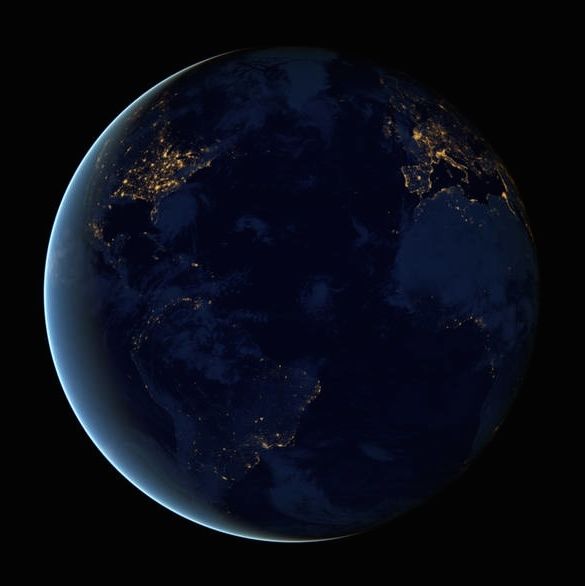
The image below provides a beautiful global view of Earth at night. It’s a composite image, assembled from data acquired by the Suomi National Polar-orbiting Partnership (Suomi NPP) satellite over nine days in April 2012 and 13 days in October 2012.

The dark part is, of course, in Earth’s shadow.

Full Earth at night, mostly very deep blue with small patches of light and light along one edge.
Global view of Earth at night. Image via NASA.

Photos of Earth’s shadow

EarthSky’s global community shares amazing photos with us every day. Here are some of their images of Earth’s shadow. Do you have a great photo to share? Send it to us!

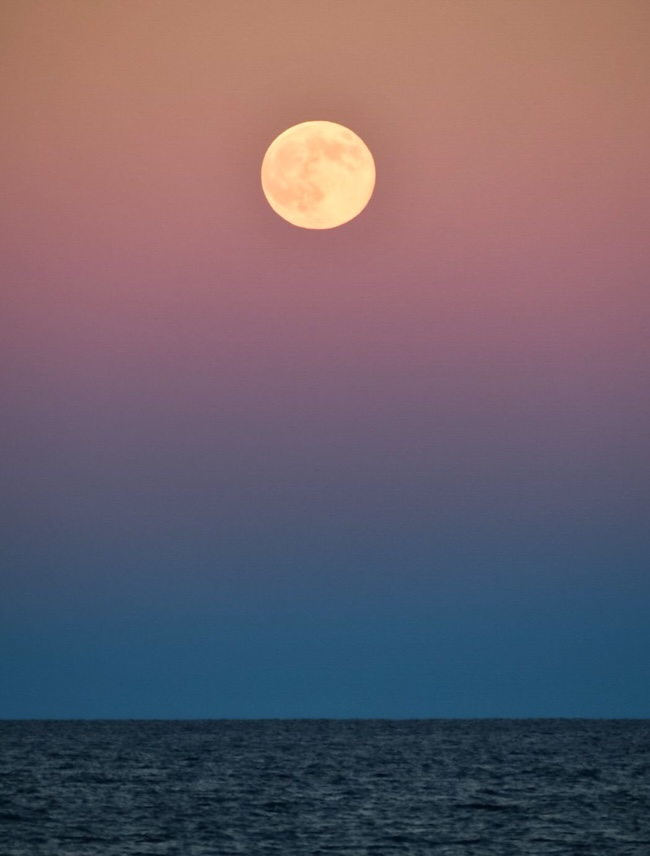
Full Super Hunter's Moon shining brightly in Earth's shadow.
View at EarthSky Community Photos. | Teresa Molinaro captured this image on November 5, 2025, from Italy and wrote: “The November full moon rises above the sea, bathed in the twilight colors of the Earth’s shadow on the atmosphere and the rosy Belt of Venus.” Thank you, Teresa!
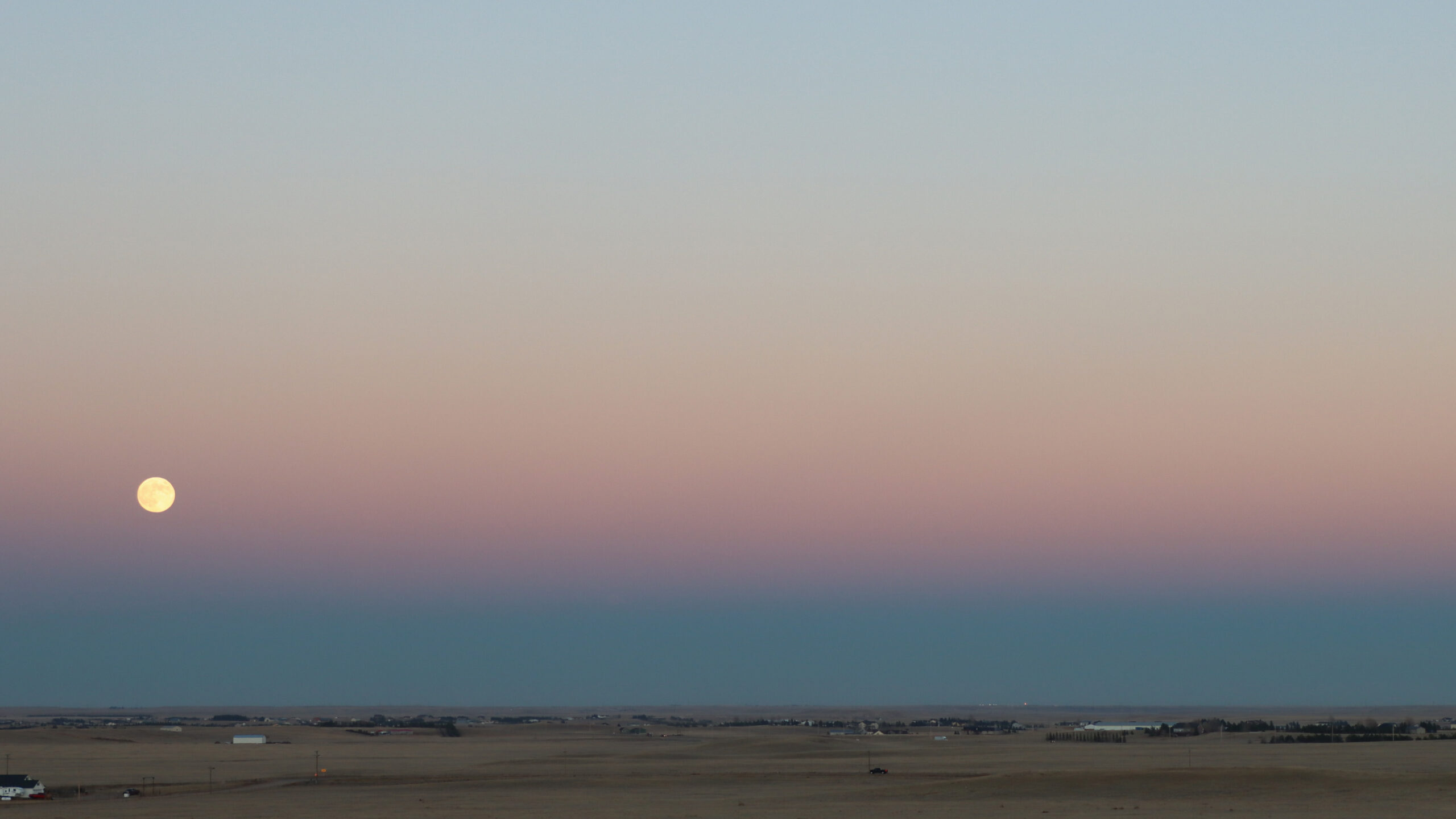
A panorama of a flat countryside with a few houses and on the far horizon is a curved band of blue with pink above.
View larger. | Jan Curtis captured this view of the full moon rising in Earth’s shadow with the pink Belt of Venus above on November 30, 2020, from Wyoming. In this image, you can see the curve of the blue shadow that mimics the curve of Earth. Image via Jan Curtis. Used with permission.
A full supermoon lying in the Belt of Venus and above Earth's shadow on a distant horizon.
Marcy Curran captured this image from Wyoming of the full Super Beaver Moon on November 15, 2024, lying in the Belt of Venus and above Earth’s shadow.
Looking down a hill past houses to horizon, where a blue band fades into a pink band, under yellow and light blue.
View at EarthSky Community Photos. | EarthSky’s own Kelly Kizer Whitt captured this image of Earth’s shadow and the Belt of Venus on November 13, 2023.
Earth's shadow: Snowy mountain rising from foggy lowland, against blue sky with a horizontal, fuzzy light pink stripe.
View at EarthSky Community Photos. | Stephanie Longo captured this image of Earth’s shadow (on the right side) and the pink Belt of Venus before sunrise on February 2, 2020. Thank you, Stephanie!
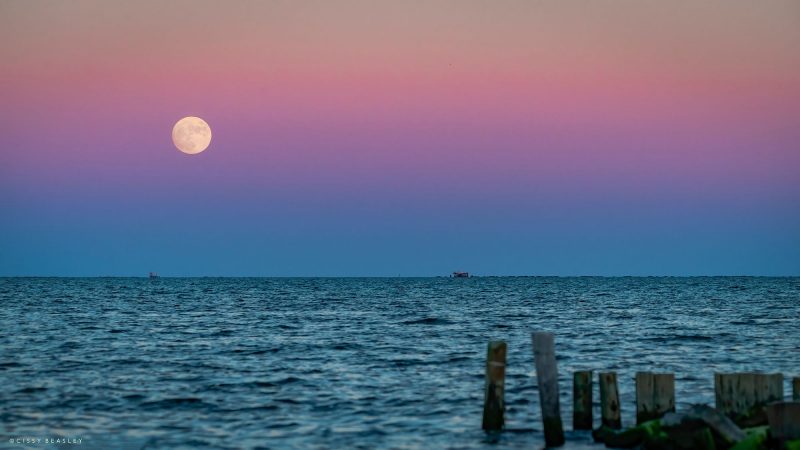
Large, nearly full moon rising behind blue, pink and orange horizontally striped sky over deep blue sea.
View at EarthSky Community Photos. | Cissy Beasley captured the moon from Rockport, Texas. She wrote: “As a professional nature photographer, I eagerly embrace opportunities to capture scenes of sunrises and sunsets, and the moon. Last night, I found a nice spot for documenting the rising moon amid the Belt of Venus. Here is what I saw!” Gorgeous, Cissy. Thank you!

Bottom line: You can see Earth’s shadow in both the evening and morning sky. It appears as a bluish band opposite the sun. Above that you may see a pink band, which carries the pretty name of the Belt of Venus.

The post How to see Earth’s shadow at sunrise and sunset first appeared on EarthSky.


from EarthSky https://ift.tt/cbjgN7Z


EarthSky’s Kelly Kizer Whitt explains how to see Earth’s shadow and the Belt of Venus, in this video.

Earth’s shadow is easy to see

Like all worlds orbiting a sun, Earth casts a shadow. It extends some 870,000 miles (1.4 million km) into space. And like all shadows, the shadow of Earth is always opposite the sun. You can see the shadow of Earth cast onto Earth’s atmosphere twice daily as a bluish band adjacent to the horizon. It’s easy to see in the sky. Just look east after sunset or west before sunrise.

Plus, the pretty band of pink that lies on top of Earth’s bluish shadow is called the Belt of Venus. More on that below!

What to look for to see Earth’s shadow

You’ll see Earth’s shadow as deep blue-gray. It’s darker than the blue of the twilight sky.

The shadow of the Earth is big. It helps to be on a hill or somewhere you have a long view to the horizon. You might have to turn your head this way and that – along the arc of the horizon opposite the sun – to see the whole thing. And, just so you’ll recognize it more easily, remember that the shadow is curved, in exactly the same way that the whole Earth is curved.

Once you spot it, don’t go back inside just yet. Wait a while, and watch Earth’s shadow ascending or descending at exactly the same rate that the sun is rising or setting on the opposite horizon.

And here’s a fun thought … night itself is a shadow. When night falls, you’re standing within the shadow of Earth.

Twilight sky showing the pinkish Belt of Venus and Earth's shadow over distant mountains.
View at EarthSky Community Photos. | Jelieta Walinski Ph.D captured this image on November 5, 2025, from Arizona and wrote: “As twilight embraced Montezuma Pass, I turned my lens toward the quiet horizon with Mexico resting beneath the breath of dusk. There it was, the Belt of Venus, a delicate blush of rose-pink caressing the edge of the world, wrapped above the deepening Earth’s shadow, a quiet blue veil cast by our own planet upon its sky. This ethereal belt forms when sunlight scatters through Earth’s atmosphere, reflecting from the opposite horizon just as the sun dips below it. The pink hue arises from backscattered reddened sunlight, while the darker band beneath is the Earth’s umbra, slowly rising as night claims the day. Between these two — light and shadow — the heavens whisper of cycles eternal: dusk to dawn, day to night, and the tender reminder that even Earth casts beauty in its own shadow.” Thank you, Jelieta!

What exactly is the Belt of Venus?

The Belt of Venus, that pink band of sky above Earth’s shadow, also has the name of the anti-twilight arch. So, for example, during sunset, the colors of twilight will be happening in the west, and when you turn to the opposite horizon, you’ll see the anti-twilight arch. You’ve probably noticed that sometimes the whole sky seems colorful at sunset. There’s a good chance that what you’re seeing opposite the sunset is Earth’s shadow and the Belt of Venus.

When the sun is below the horizon, some of the sun’s rays of light still reach our atmosphere. The light passes through our atmosphere and – at the antisolar point – it backscatters. That light then reaches back to us in shades of pink.

You might think that the Belt of Venus got its name from the planet Venus. Venus, orbiting inside Earth’s orbit, never strays far from the sun in our sky. So we often see it around sunrise and sunset. But, of course, the sun is on the opposite side of the sky from the Belt of Venus. So if Venus is visible in the sky, it’s near the sun, not on the opposite horizon.

Instead, like many other objects we know in the sky, it gets its name from ancient myth. The Belt of Venus is named for the Goddess of Love’s pink girdle.

Full Super Harvest Moon shining brightly in Earth's shadow over the ocean with trees in the foreground.
View at EarthSky Community Photos. | Cecille Kennedy captured this image on October 7, 2025, from Oregon and wrote: “Harvest Super Moon setting at Pirate Cove with the Belt of Venus colors.” Thank you, Cecille!

Our shadow is why we see lunar eclipses

Earth’s shadow extends so far into space that it can touch the moon. In fact, that’s what a lunar eclipse is. It’s the moon within Earth’s shadow.

When the sun, Earth and moon align in space (nearly or perfectly), with the Earth between the sun and moon, then Earth’s shadow falls on the moon’s face. That’s when people on Earth see the shadow gradually turn a bright full moon into a dark lunar eclipse.

As seen from Earth’s surface, there are typically two or more lunar eclipses every year. Some are total, some are partial, and others are a subtle kind of eclipse known as penumbral.

During a lunar eclipse, a very small amount of light from the sun filters through Earth’s atmosphere onto Earth’s shadow on the moon. It’s why – at the middle part of a total lunar eclipse – the shadow on the moon looks reddish.

Diagram of sun, Earth and moon, with Earth's shadow extending into space, falling on the moon.
A lunar eclipse takes place when the sun, Earth and full moon line up in space. The full moon passes through Earth’s shadow. Image via Wikimedia Commons (CC0 1.0 Universal Public Domain).

The view from space

Another way to get an awareness of Earth’s shadow is simply to think about it as seen from space.

The image below provides a beautiful global view of Earth at night. It’s a composite image, assembled from data acquired by the Suomi National Polar-orbiting Partnership (Suomi NPP) satellite over nine days in April 2012 and 13 days in October 2012.

The dark part is, of course, in Earth’s shadow.

Full Earth at night, mostly very deep blue with small patches of light and light along one edge.
Global view of Earth at night. Image via NASA.

Photos of Earth’s shadow

EarthSky’s global community shares amazing photos with us every day. Here are some of their images of Earth’s shadow. Do you have a great photo to share? Send it to us!

Full Super Hunter's Moon shining brightly in Earth's shadow.
View at EarthSky Community Photos. | Teresa Molinaro captured this image on November 5, 2025, from Italy and wrote: “The November full moon rises above the sea, bathed in the twilight colors of the Earth’s shadow on the atmosphere and the rosy Belt of Venus.” Thank you, Teresa!
A panorama of a flat countryside with a few houses and on the far horizon is a curved band of blue with pink above.
View larger. | Jan Curtis captured this view of the full moon rising in Earth’s shadow with the pink Belt of Venus above on November 30, 2020, from Wyoming. In this image, you can see the curve of the blue shadow that mimics the curve of Earth. Image via Jan Curtis. Used with permission.
A full supermoon lying in the Belt of Venus and above Earth's shadow on a distant horizon.
Marcy Curran captured this image from Wyoming of the full Super Beaver Moon on November 15, 2024, lying in the Belt of Venus and above Earth’s shadow.
Looking down a hill past houses to horizon, where a blue band fades into a pink band, under yellow and light blue.
View at EarthSky Community Photos. | EarthSky’s own Kelly Kizer Whitt captured this image of Earth’s shadow and the Belt of Venus on November 13, 2023.
Earth's shadow: Snowy mountain rising from foggy lowland, against blue sky with a horizontal, fuzzy light pink stripe.
View at EarthSky Community Photos. | Stephanie Longo captured this image of Earth’s shadow (on the right side) and the pink Belt of Venus before sunrise on February 2, 2020. Thank you, Stephanie!
Large, nearly full moon rising behind blue, pink and orange horizontally striped sky over deep blue sea.
View at EarthSky Community Photos. | Cissy Beasley captured the moon from Rockport, Texas. She wrote: “As a professional nature photographer, I eagerly embrace opportunities to capture scenes of sunrises and sunsets, and the moon. Last night, I found a nice spot for documenting the rising moon amid the Belt of Venus. Here is what I saw!” Gorgeous, Cissy. Thank you!

Bottom line: You can see Earth’s shadow in both the evening and morning sky. It appears as a bluish band opposite the sun. Above that you may see a pink band, which carries the pretty name of the Belt of Venus.

The post How to see Earth’s shadow at sunrise and sunset first appeared on EarthSky.


from EarthSky https://ift.tt/cbjgN7Z

adds 2