aads

Listening to the patterns of the universe


Wanda Diaz Merced speaks at TED2016 – Dream, February 15-19, 2016, Vancouver Convention Center, Vancouver, Canada.

By Graham Jones of Ten Sentences and Richard Gelderman, an astronomy professor and director of the Hardin Planetarium at Western Kentucky University. Interview by Richard Gelderman.

After losing her sight in her 20s, Wanda Díaz Merced became a pioneer of sonification, a technique for turning data into sounds. Her TED talk on How a blind astronomer found a way to hear the stars is one of TED’s most-watched astronomy videos. We caught up with Wanda at the General Assembly of the International Astronomical Union (IAU) in Vienna earlier this year.

Scientists used data sonification to transform a photo of sunrise on Mars into a piece of music.

Wanda Díaz Merced was deep in a conversation about her effort to draw more information out of an important data set. I was waiting to break into this discussion, introduce myself, and ask a question of this respected astronomer. To any onlooker, the energy and brightness shared as she expounded on the details of her research were no different from what we experience in encounter after encounter, all through each day, at the IAU General Assembly.

When I got the chance to introduce myself, Wanda’s hand was so confidently extended toward mine that I momentarily wondered if Wanda had at least partial use of her sight. This caught my attention, because I was there to ask a question about how she, as a person with complete loss of her eyesight, uses sound to experience multi-dimensional data sets and images.

Wanda was 19 years old and in the USA studying mathematics and physics at university when her first symptoms of blind spots occurred. Wanda was born with diabetic retinopathy, and it slowly destroyed her eyesight until she was completely blind at age 29.
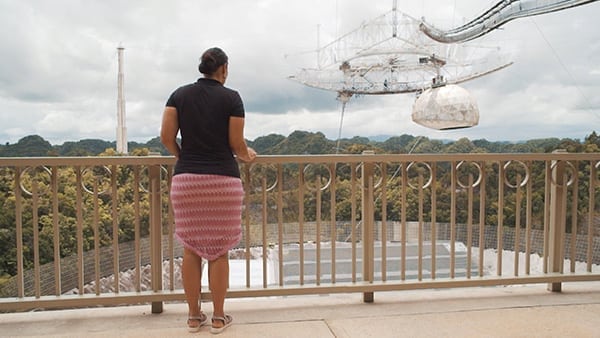
Our ancestors believed that the movements of celestial bodies were a form of music – they called it the music of the spheres. Wanda Diaz Merced, a blind astrophysicist from Puerto Rico, studies the universe through sound and carries on this ancient tradition. Using Wanda’s actual sounds, this film weaves a journey of a truly unique scientist. Watch it here. Image via Wild & Scenic Music Festival.

During these difficult young adult years, Wanda resolved to find a way to continue her study of astronomy. At NASA-GSFC during a summer 2005 ACCESS internship, heliophysicist Robert Candey agreed that Wanda should be able to get as deeply involved with the data as any sighted astronomer. She used that encouragement to develop methods to turn plots into dimensions of time and pitch, loudness, or duration. As her efforts increased, they became the foundation of her groundbreaking PhD thesis from the University of Glasgow.

Wanda announced to the audience of her 2016 TED talk:

Information access empowers us to flourish.

However, creating a scientific playing field that is not dependent upon access to all five senses is only one aspect of Wanda’s research.

During our conversation at the IAU’s Inspiring Stars booth, I noted with some surprise as Wanda seamlessly transitioned from facing me, to pointing out a nearby demo, to turning to type on her laptop. She explained:

Without sight, I require a sequence to orient me.

Her work with sonification of digital data is an example of a similar organizational framework.

Astronomical research frequently involves the scrutiny of representations of digital data. Visual interpretation of plots is one way to pursue this goal, but the results of Wanda’s research show that combining sensory modalities makes anyone better at such interpretation.

The computer application interprets brightness, wavelength, position, or temporal information into pitch, loudness, or rhythm changing over time. It is these changes that Wanda listens for. She said:

I keep vigilant for the unexpected. Sensitivity to events increases when you use sound. In noisy data, those in our studies identify more peaks, dips, and pulses than just with sight.

Bottom line: Astronomer Wanda Díaz Merced explains how turning digital data into sound can help us find the patterns hidden in the information we receive from telescopes.

EarthSky lunar calendars are cool! They make great gifts. Order now. Going fast!


from EarthSky https://ift.tt/2Rn4dgC


Wanda Diaz Merced speaks at TED2016 – Dream, February 15-19, 2016, Vancouver Convention Center, Vancouver, Canada.

By Graham Jones of Ten Sentences and Richard Gelderman, an astronomy professor and director of the Hardin Planetarium at Western Kentucky University. Interview by Richard Gelderman.

After losing her sight in her 20s, Wanda Díaz Merced became a pioneer of sonification, a technique for turning data into sounds. Her TED talk on How a blind astronomer found a way to hear the stars is one of TED’s most-watched astronomy videos. We caught up with Wanda at the General Assembly of the International Astronomical Union (IAU) in Vienna earlier this year.

Scientists used data sonification to transform a photo of sunrise on Mars into a piece of music.

Wanda Díaz Merced was deep in a conversation about her effort to draw more information out of an important data set. I was waiting to break into this discussion, introduce myself, and ask a question of this respected astronomer. To any onlooker, the energy and brightness shared as she expounded on the details of her research were no different from what we experience in encounter after encounter, all through each day, at the IAU General Assembly.

When I got the chance to introduce myself, Wanda’s hand was so confidently extended toward mine that I momentarily wondered if Wanda had at least partial use of her sight. This caught my attention, because I was there to ask a question about how she, as a person with complete loss of her eyesight, uses sound to experience multi-dimensional data sets and images.

Wanda was 19 years old and in the USA studying mathematics and physics at university when her first symptoms of blind spots occurred. Wanda was born with diabetic retinopathy, and it slowly destroyed her eyesight until she was completely blind at age 29.

Our ancestors believed that the movements of celestial bodies were a form of music – they called it the music of the spheres. Wanda Diaz Merced, a blind astrophysicist from Puerto Rico, studies the universe through sound and carries on this ancient tradition. Using Wanda’s actual sounds, this film weaves a journey of a truly unique scientist. Watch it here. Image via Wild & Scenic Music Festival.

During these difficult young adult years, Wanda resolved to find a way to continue her study of astronomy. At NASA-GSFC during a summer 2005 ACCESS internship, heliophysicist Robert Candey agreed that Wanda should be able to get as deeply involved with the data as any sighted astronomer. She used that encouragement to develop methods to turn plots into dimensions of time and pitch, loudness, or duration. As her efforts increased, they became the foundation of her groundbreaking PhD thesis from the University of Glasgow.

Wanda announced to the audience of her 2016 TED talk:

Information access empowers us to flourish.

However, creating a scientific playing field that is not dependent upon access to all five senses is only one aspect of Wanda’s research.

During our conversation at the IAU’s Inspiring Stars booth, I noted with some surprise as Wanda seamlessly transitioned from facing me, to pointing out a nearby demo, to turning to type on her laptop. She explained:

Without sight, I require a sequence to orient me.

Her work with sonification of digital data is an example of a similar organizational framework.

Astronomical research frequently involves the scrutiny of representations of digital data. Visual interpretation of plots is one way to pursue this goal, but the results of Wanda’s research show that combining sensory modalities makes anyone better at such interpretation.

The computer application interprets brightness, wavelength, position, or temporal information into pitch, loudness, or rhythm changing over time. It is these changes that Wanda listens for. She said:

I keep vigilant for the unexpected. Sensitivity to events increases when you use sound. In noisy data, those in our studies identify more peaks, dips, and pulses than just with sight.

Bottom line: Astronomer Wanda Díaz Merced explains how turning digital data into sound can help us find the patterns hidden in the information we receive from telescopes.

EarthSky lunar calendars are cool! They make great gifts. Order now. Going fast!


from EarthSky https://ift.tt/2Rn4dgC

Astronomy beyond sight

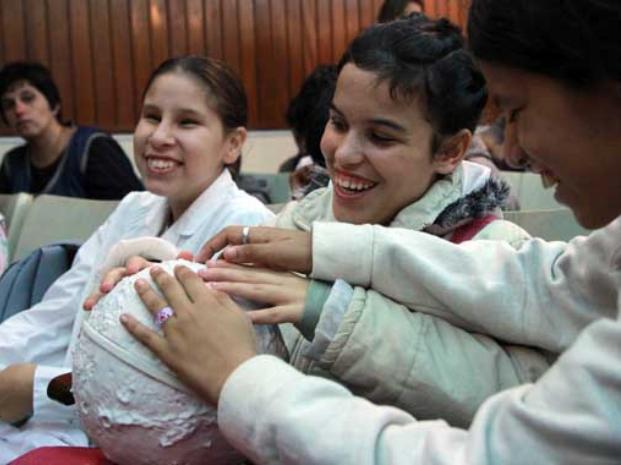
Tactile moon. Image via A Touch of the Universe.

By Graham Jones of Ten Sentences and Richard Gelderman, an astronomy professor and director of the Hardin Planetarium at Western Kentucky University.

That which distinguishes astronomy from all the other sciences is this: it deals with objects we cannot touch.

So wrote the great astronomer Edward Walter Maunder in 1912. Yet tactile astronomy, originally developed for blind and partially sighted people, can help everyone improve their understanding of the universe – even people with perfect eyesight. Amelia Ortiz Gil, from the Astronomical Observatory of the University of Valencia in Spain, tells her story.

Note: All of the resources Amelia mentions in this article — tactile domes and planets, software, soundtracks and guides — are available under a Creative Commons license at A Touch of the Universe. She said:

We want to share this with everyone in the world.

It all started when a school for children with disabilities asked if they could visit our observatory. We started to work with their teachers, saying “OK, these are the things that we do with other schools. How can we adapt these to the needs of your children?” From here, we were asked if we could organize some special activities for the International Year of Astronomy in 2009. We were lucky because we found a science communicator in Argentina, Sebastián Musso, who had organized a planetarium show for the blind, and he shared his ideas with us.

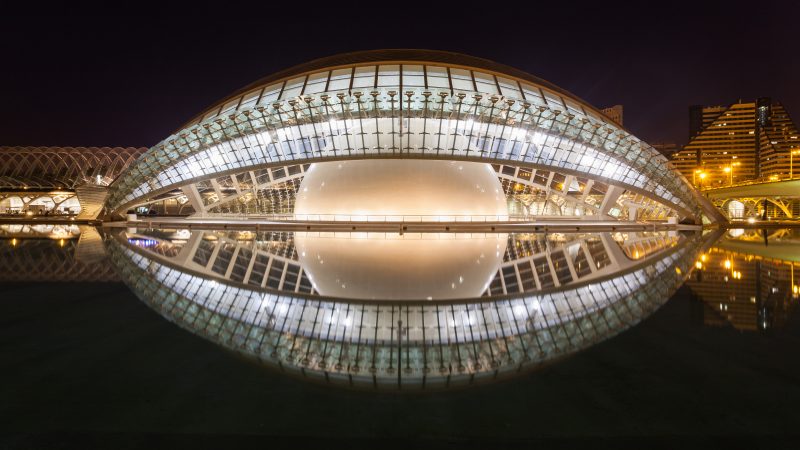
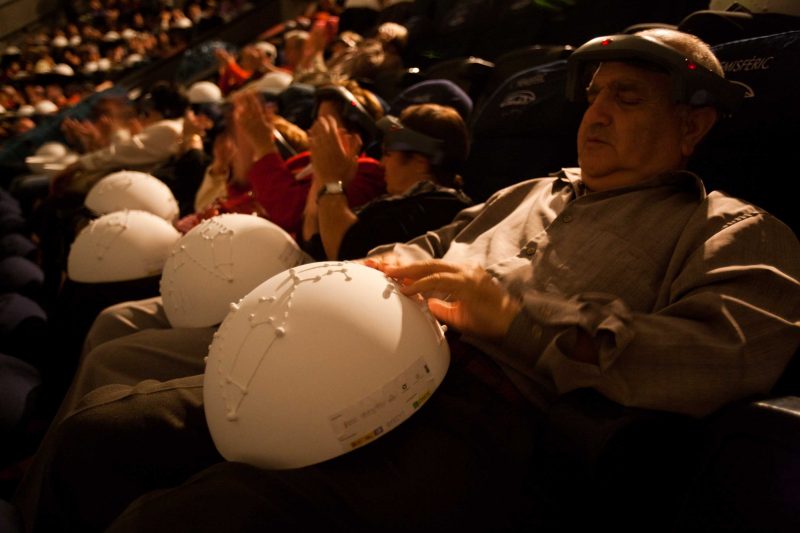
We made tactile domes with some of the northern hemisphere constellations engraved on them, and wrote a script and a soundtrack for a planetarium show: The Sky In Your Hands. Our premiere was at L’Hemisfèric, a planetarium and IMAX Cinema here in Valencia.

L’Hemisfèric in Valencia, Spain. Image via Diego Delso/Wikimedia Commons.

The planetarium has speakers distributed across the dome. In the soundtrack, each constellation was associated with a sound, which came from the speaker that was closest in the ceiling to that star. So this, together with the tactile domes, gave people the distribution of the stars through the use of touch and sound.

This was important because my colleagues had found that some blind people thought that all the stars were packed together in one single spot in the sky. When you work in this area you sometimes have to find misconceptions that you would never think of beforehand; this was one of them.

The show was a moving experience. Some people, who had lost their vision later in life, were crying because they said they had remembered what they used to see when they were kids. Others were telling us that they had finally grasped concepts they had read about but not really understood: the distribution of stars, the shape of the constellations, and things like that.

It was a mixed audience, and people who were not blind also enjoyed the show. They enjoyed touching the models and realizing that the thicker stars are the brightest ones, and the smaller ones shine a bit less. You cannot always grasp that when you are just looking at a lot of stars in the dome.

Kids also enjoyed the program. It’s nice to touch! We have a natural inclination to touch everything. And there was an exchange of information between blind and non-blind people. Because they are using different sensory channels they perceive differences that the other one might not perceive. So it helped everybody.

A touch of the universe

After the tactile sky, our next challenge was the tactile moon. We thought about doing a topographical representation of the moon. But would that really be useful? We felt, no, it would be nicer to have a tactile representation of our visual impression of the moon. For example, we are used to seeing the rays around craters, and you miss that when you use a topographical representation because the rays have no height.

We took visual data from Clementine’s map of the moon (the NASA probe that mapped the whole surface of the moon) and translated it into height on a globe. The brighter features have a greater height than the darker features; the maria — the dark seas on the map — are smooth on our globe.

We have a meridian that is the border between the near side and the far side. An engraved T marks the north pole, with the vertical line pointing to the near side. We also put some braille letters close to some of the features, and created a braille key. We like to give people this autonomy — this freedom — to explore the moon for themselves.

Blind people conceive the world in a different way, they have different misconceptions to the rest of us. For example, one blind person said — this is recorded in a video, it’s amazing — “Hey, so the moon is a globe?!” Until then her tactile experience of the moon had been in books with just a flat map, so she thought the moon was a flat disk. So that was another misconception that I didn’t expect to find, but is there.

After that we thought, why stop at the moon? So now we have topological models of Mars, Venus, Mercury and the Earth. And one of our team, Jordi Burguet, has produced some wonderful software called Mapelia — you can take any map you can think of and convert it into a tactile sphere that can be printed on a 3D printer.

Making the models helped me to better understand the surface of these planets. With Mars, you really see how flat and smooth the northern hemisphere is compared to the south. And Venus has many complicated features.

And so we are giving people tactile models of things that nobody can see, neither blind nor sighted people. OK, you can see a bit of Mars through a telescope, but you cannot see anything of Venus. No human being has a direct visual experience of the surface of Venus.

Bottom line: Astronomer Amelia Ortiz Gil explains how tactile models of the constellations, moon and planets can give people – blind or sighted – a better appreciation of the universe.

EarthSky lunar calendars are cool! They make great gifts. Order now. Going fast!


from EarthSky https://ift.tt/2P8YQzY

Tactile moon. Image via A Touch of the Universe.

By Graham Jones of Ten Sentences and Richard Gelderman, an astronomy professor and director of the Hardin Planetarium at Western Kentucky University.

That which distinguishes astronomy from all the other sciences is this: it deals with objects we cannot touch.

So wrote the great astronomer Edward Walter Maunder in 1912. Yet tactile astronomy, originally developed for blind and partially sighted people, can help everyone improve their understanding of the universe – even people with perfect eyesight. Amelia Ortiz Gil, from the Astronomical Observatory of the University of Valencia in Spain, tells her story.

Note: All of the resources Amelia mentions in this article — tactile domes and planets, software, soundtracks and guides — are available under a Creative Commons license at A Touch of the Universe. She said:

We want to share this with everyone in the world.

It all started when a school for children with disabilities asked if they could visit our observatory. We started to work with their teachers, saying “OK, these are the things that we do with other schools. How can we adapt these to the needs of your children?” From here, we were asked if we could organize some special activities for the International Year of Astronomy in 2009. We were lucky because we found a science communicator in Argentina, Sebastián Musso, who had organized a planetarium show for the blind, and he shared his ideas with us.

We made tactile domes with some of the northern hemisphere constellations engraved on them, and wrote a script and a soundtrack for a planetarium show: The Sky In Your Hands. Our premiere was at L’Hemisfèric, a planetarium and IMAX Cinema here in Valencia.

L’Hemisfèric in Valencia, Spain. Image via Diego Delso/Wikimedia Commons.

The planetarium has speakers distributed across the dome. In the soundtrack, each constellation was associated with a sound, which came from the speaker that was closest in the ceiling to that star. So this, together with the tactile domes, gave people the distribution of the stars through the use of touch and sound.

This was important because my colleagues had found that some blind people thought that all the stars were packed together in one single spot in the sky. When you work in this area you sometimes have to find misconceptions that you would never think of beforehand; this was one of them.

The show was a moving experience. Some people, who had lost their vision later in life, were crying because they said they had remembered what they used to see when they were kids. Others were telling us that they had finally grasped concepts they had read about but not really understood: the distribution of stars, the shape of the constellations, and things like that.

It was a mixed audience, and people who were not blind also enjoyed the show. They enjoyed touching the models and realizing that the thicker stars are the brightest ones, and the smaller ones shine a bit less. You cannot always grasp that when you are just looking at a lot of stars in the dome.

Kids also enjoyed the program. It’s nice to touch! We have a natural inclination to touch everything. And there was an exchange of information between blind and non-blind people. Because they are using different sensory channels they perceive differences that the other one might not perceive. So it helped everybody.

A touch of the universe

After the tactile sky, our next challenge was the tactile moon. We thought about doing a topographical representation of the moon. But would that really be useful? We felt, no, it would be nicer to have a tactile representation of our visual impression of the moon. For example, we are used to seeing the rays around craters, and you miss that when you use a topographical representation because the rays have no height.

We took visual data from Clementine’s map of the moon (the NASA probe that mapped the whole surface of the moon) and translated it into height on a globe. The brighter features have a greater height than the darker features; the maria — the dark seas on the map — are smooth on our globe.

We have a meridian that is the border between the near side and the far side. An engraved T marks the north pole, with the vertical line pointing to the near side. We also put some braille letters close to some of the features, and created a braille key. We like to give people this autonomy — this freedom — to explore the moon for themselves.

Blind people conceive the world in a different way, they have different misconceptions to the rest of us. For example, one blind person said — this is recorded in a video, it’s amazing — “Hey, so the moon is a globe?!” Until then her tactile experience of the moon had been in books with just a flat map, so she thought the moon was a flat disk. So that was another misconception that I didn’t expect to find, but is there.

After that we thought, why stop at the moon? So now we have topological models of Mars, Venus, Mercury and the Earth. And one of our team, Jordi Burguet, has produced some wonderful software called Mapelia — you can take any map you can think of and convert it into a tactile sphere that can be printed on a 3D printer.

Making the models helped me to better understand the surface of these planets. With Mars, you really see how flat and smooth the northern hemisphere is compared to the south. And Venus has many complicated features.

And so we are giving people tactile models of things that nobody can see, neither blind nor sighted people. OK, you can see a bit of Mars through a telescope, but you cannot see anything of Venus. No human being has a direct visual experience of the surface of Venus.

Bottom line: Astronomer Amelia Ortiz Gil explains how tactile models of the constellations, moon and planets can give people – blind or sighted – a better appreciation of the universe.

EarthSky lunar calendars are cool! They make great gifts. Order now. Going fast!


from EarthSky https://ift.tt/2P8YQzY

Meet ESA’s SpaceBok robot

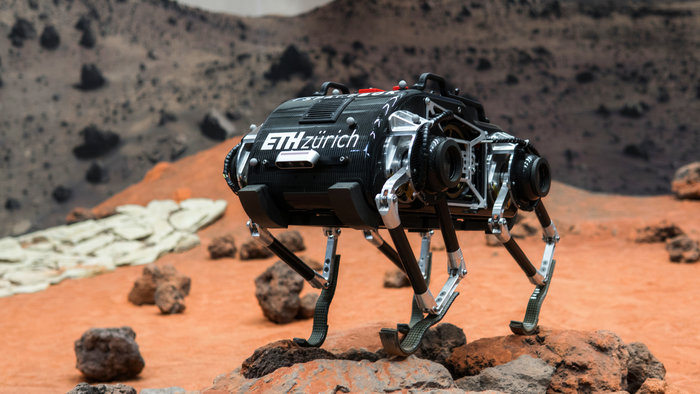
Meet SpaceBok is a quadruped robot designed by a Swiss student team, for future missions to the moon or Mars. Image via ESA.

Maybe it’s because I’m yearning for this toy robot for my grandson as a holiday gift, or maybe it’s just because robots are cool and interesting. But I really enjoyed reading about this new walking and hopping SpaceBok robot – not a toy, but a real planetary explorer – which the European Space Agency (ESA) is now helping to support, in conjunction with ETH Zurich and ZHAW Zurich. ESA said this week it’s testing this robot in its Mars Yard – a 26-feet-square (8-meter-square) ‘sandbox’, filled with different sizes of sand, gravel and rock – part of the Planetary Robotics Laboratory in Noordwijk, the Netherlands. Click here for pics of the Mars Yard.

SpaceBok team member Patrick Barton said:

Legged robots can traverse unstructured terrain and could be used to explore areas of interest, such as craters, which rovers are unable to reach. As they are very versatile, they can change gait to adapt to different terrain.

Team member Elias Hampp explained:

In contrast to other legged robots, SpaceBok is primarily built for hopping. While this is not particularly useful on Earth, it could reach a height of four metres on the moon. This would allow for a fast and efficient way of moving forward.

And team member Radek Zenkl added:

We are currently implementing and testing vision sensors, to increase SpaceBok’s autonomy and robustness.

Not convinced yet that the SpaceBok robot is cool? Try this video! Can’t wait to show it to my grandson!

Bottom line: ESA is testing its SpaceBok robot as a possible moon or Mars explorer.

Via ESA


from EarthSky https://ift.tt/2rduuCQ

Meet SpaceBok is a quadruped robot designed by a Swiss student team, for future missions to the moon or Mars. Image via ESA.

Maybe it’s because I’m yearning for this toy robot for my grandson as a holiday gift, or maybe it’s just because robots are cool and interesting. But I really enjoyed reading about this new walking and hopping SpaceBok robot – not a toy, but a real planetary explorer – which the European Space Agency (ESA) is now helping to support, in conjunction with ETH Zurich and ZHAW Zurich. ESA said this week it’s testing this robot in its Mars Yard – a 26-feet-square (8-meter-square) ‘sandbox’, filled with different sizes of sand, gravel and rock – part of the Planetary Robotics Laboratory in Noordwijk, the Netherlands. Click here for pics of the Mars Yard.

SpaceBok team member Patrick Barton said:

Legged robots can traverse unstructured terrain and could be used to explore areas of interest, such as craters, which rovers are unable to reach. As they are very versatile, they can change gait to adapt to different terrain.

Team member Elias Hampp explained:

In contrast to other legged robots, SpaceBok is primarily built for hopping. While this is not particularly useful on Earth, it could reach a height of four metres on the moon. This would allow for a fast and efficient way of moving forward.

And team member Radek Zenkl added:

We are currently implementing and testing vision sensors, to increase SpaceBok’s autonomy and robustness.

Not convinced yet that the SpaceBok robot is cool? Try this video! Can’t wait to show it to my grandson!

Bottom line: ESA is testing its SpaceBok robot as a possible moon or Mars explorer.

Via ESA


from EarthSky https://ift.tt/2rduuCQ

Last quarter moon is November 29-30

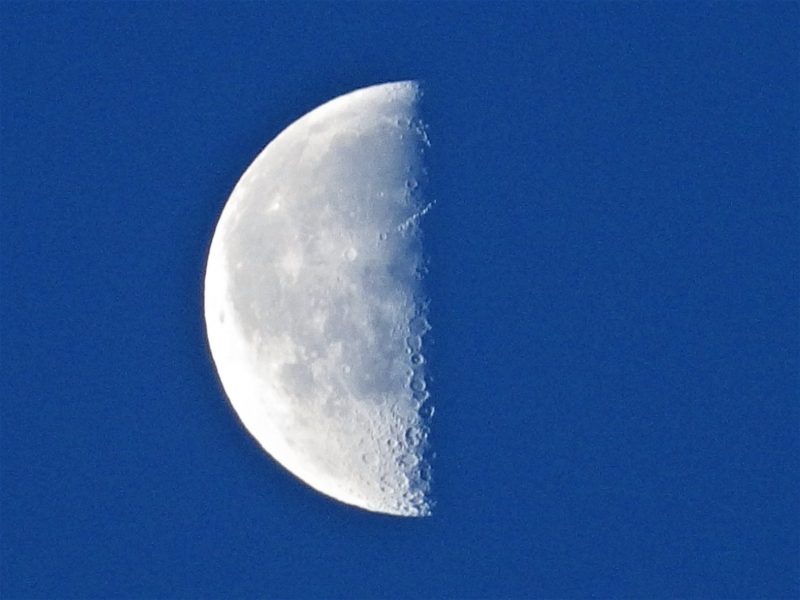
The moon was almost exactly at last quarter when Deirdre Horan in Dublin, Ireland, captured this photo. The terminator line, or line between light and dark on the moon, appears straight.

A last quarter moon appears half-lit by sunshine and half-immersed in its own shadow. It rises in the middle of the night, appears at its highest in the sky around dawn, and sets around midday. The moon reaches its exact half-illuminated phase, as viewed from Earth, on November 30, 2018, at 00:19 UTC; translate UTC to your time.

On a last quarter moon, the lunar terminator – the shadow line dividing day and night – shows you where it’s sunset on the moon.

The 2019 lunar calendars are here! Order yours before they’re gone. Makes a great gift.

The night before last quarter moon – on November 28, 2018 – the moon is near the bright star Regulus, Heart of the Lion in Leo. Day by day, before dawn, watch for the waning moon to sink toward Venus and to meet up with this dazzling world in early December, 2018.

A last quarter moon provides a great opportunity to think of yourself on a three-dimensional world in space. For example, it’s fun to see this moon just after moonrise, shortly after midnight. Then the lighted portion points downward, to the sun below your feet. Think of the last quarter moon as a mirror to the world you’re standing on. Think of yourself standing in the middle of Earth’s nightside, on the midnight portion of Earth.

Also, a last quarter moon can be used as a guidepost to Earth’s direction of motion in orbit around the sun.

In other words, when you look toward a last quarter moon high in the predawn sky, for example, you’re gazing out approximately along the path of Earth’s orbit, in a forward direction. The moon is moving in orbit around the sun with the Earth and never holds still. But, if we could somehow anchor the moon in space … tie it down, keep it still … Earth’s orbital speed of 18 miles per second would carry us across the space between us and the moon in only a few hours.

Want to read more about the last quarter moon as a guidepost for Earth’s motion? Astronomer Guy Ottewell talked about it recently, too.

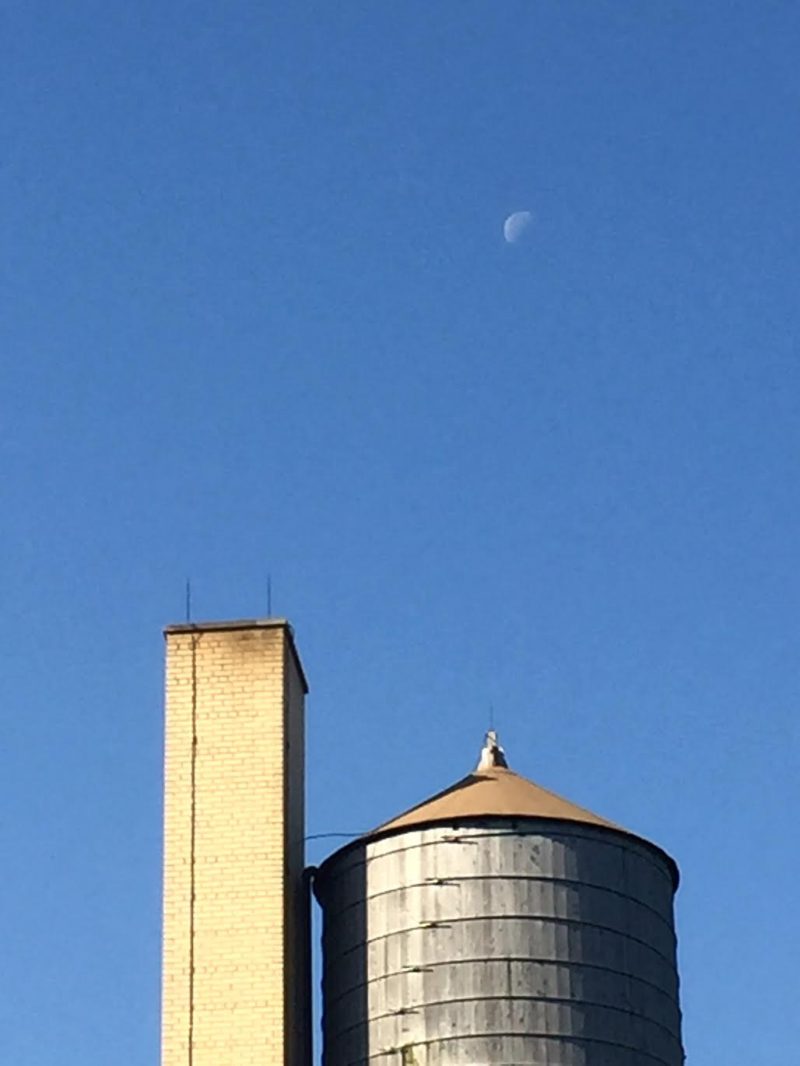
A great thing about using the moon as a guidepost to Earth’s motion is that you can do it anywhere … as, for example, in the photo below, from large cities.

Ben Orlove wrote from New York City: “I was sitting in the roof garden of my building, and there was the moon, right in front of me. You were right, this is a perfect time to visualize … the Earth’s motion.”

As the moon orbits Earth, it changes phase in an orderly way. Follow the links below to understand the phases of the moon.

New moon
Waxing crescent moon
First quarter moon
Waxing gibbous moon
Full moon
Waning gibbous moon
Last quarter moon
Waning crescent moon

Read more: 4 keys to understanding moon phases

Bottom line: The next last quarter moon falls on November 30, 2018 at 00:19 UTC; translate UTC to your time.


from EarthSky https://ift.tt/2ze0n1D

The moon was almost exactly at last quarter when Deirdre Horan in Dublin, Ireland, captured this photo. The terminator line, or line between light and dark on the moon, appears straight.

A last quarter moon appears half-lit by sunshine and half-immersed in its own shadow. It rises in the middle of the night, appears at its highest in the sky around dawn, and sets around midday. The moon reaches its exact half-illuminated phase, as viewed from Earth, on November 30, 2018, at 00:19 UTC; translate UTC to your time.

On a last quarter moon, the lunar terminator – the shadow line dividing day and night – shows you where it’s sunset on the moon.

The 2019 lunar calendars are here! Order yours before they’re gone. Makes a great gift.

The night before last quarter moon – on November 28, 2018 – the moon is near the bright star Regulus, Heart of the Lion in Leo. Day by day, before dawn, watch for the waning moon to sink toward Venus and to meet up with this dazzling world in early December, 2018.

A last quarter moon provides a great opportunity to think of yourself on a three-dimensional world in space. For example, it’s fun to see this moon just after moonrise, shortly after midnight. Then the lighted portion points downward, to the sun below your feet. Think of the last quarter moon as a mirror to the world you’re standing on. Think of yourself standing in the middle of Earth’s nightside, on the midnight portion of Earth.

Also, a last quarter moon can be used as a guidepost to Earth’s direction of motion in orbit around the sun.

In other words, when you look toward a last quarter moon high in the predawn sky, for example, you’re gazing out approximately along the path of Earth’s orbit, in a forward direction. The moon is moving in orbit around the sun with the Earth and never holds still. But, if we could somehow anchor the moon in space … tie it down, keep it still … Earth’s orbital speed of 18 miles per second would carry us across the space between us and the moon in only a few hours.

Want to read more about the last quarter moon as a guidepost for Earth’s motion? Astronomer Guy Ottewell talked about it recently, too.

A great thing about using the moon as a guidepost to Earth’s motion is that you can do it anywhere … as, for example, in the photo below, from large cities.

Ben Orlove wrote from New York City: “I was sitting in the roof garden of my building, and there was the moon, right in front of me. You were right, this is a perfect time to visualize … the Earth’s motion.”

As the moon orbits Earth, it changes phase in an orderly way. Follow the links below to understand the phases of the moon.

New moon
Waxing crescent moon
First quarter moon
Waxing gibbous moon
Full moon
Waning gibbous moon
Last quarter moon
Waning crescent moon

Read more: 4 keys to understanding moon phases

Bottom line: The next last quarter moon falls on November 30, 2018 at 00:19 UTC; translate UTC to your time.


from EarthSky https://ift.tt/2ze0n1D

Moon and Regulus late night to dawn November 28 and 29

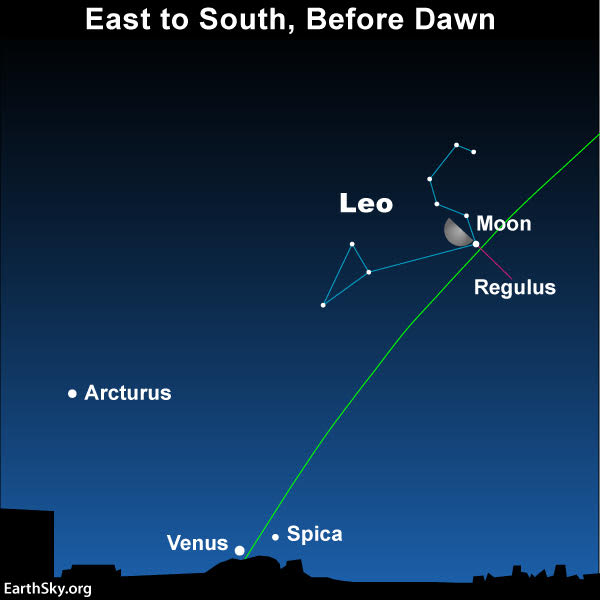
On November 28 and 29, 2018, you’ll have to stay up late, or get up before dawn, to see the waning moon coupling up with Regulus, brightest star in the constellation Leo the Lion. The two luminaries will be highest up for the night at or near dawn.

As darkness is giving way to dawn, notice the relationship between the moon, Regulus, and a very bright object in the direction of sunrise. Venus is the 3rd-brightest object in the sky after the sun and moon. If you’re up before dawn, you might also see the 1st-magnitude star Spica near Venus (which Venus outshines by well over a hundredfold).

The lighted portion of the moon will be pointing toward Venus and Spica, the constellation Virgo’s brightest star, on Thursday and in the coming mornings, as shown on the chart below.

The green line on our sky charts is the ecliptic – Earth’s orbital plane projected onto the constellations of the zodiac. Because the planets orbit the sun, and the moon orbits Earth, on nearly the same plane that Earth circles the sun, the moon and planets are always found on or near the ecliptic. If you’re an early bird, waking up before the sun, then use the moon, the star Regulus and the dazzling planet Venus to help you envision the ecliptic with the mind’s-eye in late November and early December 2018.

The size of the moon is greatly exaggerated in this chart! Day by day, before dawn, watch for the waning moon to sink toward Venus and to meet up with this dazzling world in early December 2018.

Regulus is the only first-magnitude star to sit almost squarely on the ecliptic, which marks the path of the sun, moon and planets across our sky. In our day and age, the sun’s yearly conjunction with Regulus happens on or near August 23. That’s about two months after the June solstice, or about a month before the September equinox.

Early astronomers thought the sun literally moved through the constellations of the zodiac, while the Earth remained at rest at the center of the universe. Of course, we now know that the Earth revolves around the sun, and that the sun resides at the center of our solar system.

We also know that the sun’s apparent daily motion in front of the backdrop stars is really a reflection of Earth’s movement in orbit around the sun.

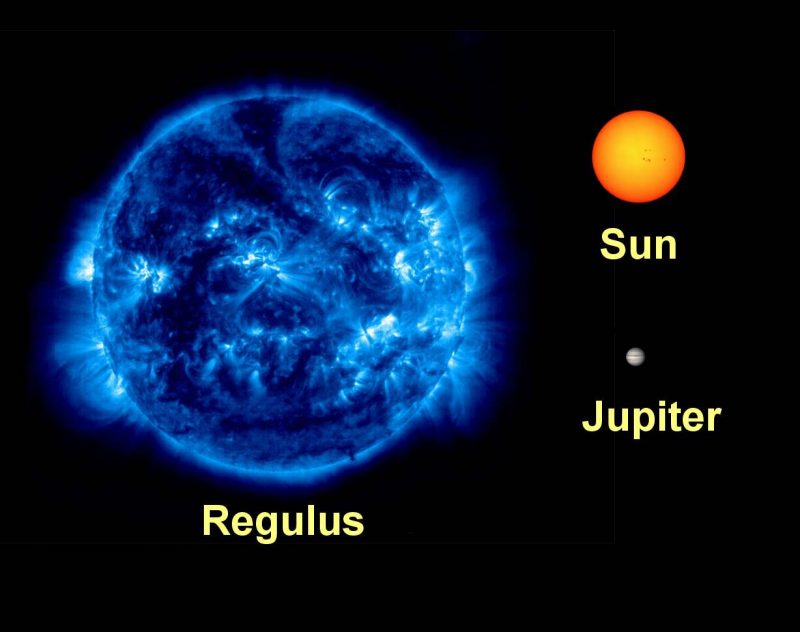
When you see Regulus near the moon on the mornings of November 28 and 29, 2018, remember … it’s a much larger star than our sun. Image via The Night Sky Guy.

Bottom line: See the waning gibbous moon near Regulus from around midnight until dawn. Then watch over the coming mornings as the moon moves past Regulus and toward the planet Venus.

EarthSky lunar calendars are cool! They make great gifts. Order now. Going fast!

Donate: Your support means the world to us


from EarthSky https://ift.tt/2QmCWOk

On November 28 and 29, 2018, you’ll have to stay up late, or get up before dawn, to see the waning moon coupling up with Regulus, brightest star in the constellation Leo the Lion. The two luminaries will be highest up for the night at or near dawn.

As darkness is giving way to dawn, notice the relationship between the moon, Regulus, and a very bright object in the direction of sunrise. Venus is the 3rd-brightest object in the sky after the sun and moon. If you’re up before dawn, you might also see the 1st-magnitude star Spica near Venus (which Venus outshines by well over a hundredfold).

The lighted portion of the moon will be pointing toward Venus and Spica, the constellation Virgo’s brightest star, on Thursday and in the coming mornings, as shown on the chart below.

The green line on our sky charts is the ecliptic – Earth’s orbital plane projected onto the constellations of the zodiac. Because the planets orbit the sun, and the moon orbits Earth, on nearly the same plane that Earth circles the sun, the moon and planets are always found on or near the ecliptic. If you’re an early bird, waking up before the sun, then use the moon, the star Regulus and the dazzling planet Venus to help you envision the ecliptic with the mind’s-eye in late November and early December 2018.

The size of the moon is greatly exaggerated in this chart! Day by day, before dawn, watch for the waning moon to sink toward Venus and to meet up with this dazzling world in early December 2018.

Regulus is the only first-magnitude star to sit almost squarely on the ecliptic, which marks the path of the sun, moon and planets across our sky. In our day and age, the sun’s yearly conjunction with Regulus happens on or near August 23. That’s about two months after the June solstice, or about a month before the September equinox.

Early astronomers thought the sun literally moved through the constellations of the zodiac, while the Earth remained at rest at the center of the universe. Of course, we now know that the Earth revolves around the sun, and that the sun resides at the center of our solar system.

We also know that the sun’s apparent daily motion in front of the backdrop stars is really a reflection of Earth’s movement in orbit around the sun.

When you see Regulus near the moon on the mornings of November 28 and 29, 2018, remember … it’s a much larger star than our sun. Image via The Night Sky Guy.

Bottom line: See the waning gibbous moon near Regulus from around midnight until dawn. Then watch over the coming mornings as the moon moves past Regulus and toward the planet Venus.

EarthSky lunar calendars are cool! They make great gifts. Order now. Going fast!

Donate: Your support means the world to us


from EarthSky https://ift.tt/2QmCWOk

Huge 4,000-year-old termite mounds visible via satellite

A team of researchers have found a vast network consisting of more than 200 million regularly-spaced termite mounds in northeastern Brazil covering an area the size of Great Britain. According to the research, published in the journal Current Biology on November 19, 2018, the still-inhabited mounds are up to 4,000 years old and so tall they can be seen via satellite.

The cone-shaped mounds are not nests, said the scientists. Rather, they are the result of the termites‘ slow and steady excavation of a network of interconnected underground tunnels. The termites’ activities over thousands of years has resulted in huge quantities of soil deposited in approximately 200 million cone-shaped mounds, each about 8 feet (2.5 meters) tall and 30 feet (9 meters) across.

Roy Funch of Universidade Estadual de Feira de Santana in Brazil is a co-author of the study. Funch said in a statement:

This is apparently the world’s most extensive bioengineering effort by a single insect species. Perhaps most exciting of all – the mounds are extremely old – up to 4,000 years, similar to the ages of the pyramids.

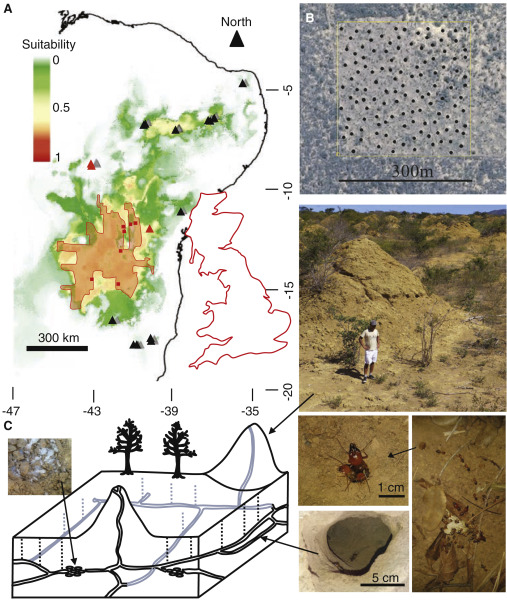
(A) Core area (orange) of the mounds confirmed by ground visits. A model predicted a suitable area, and new mound sites were confirmed by visits (orange triangle) or using satellite images (black triangles). Dated mounds indicated by red squares. Great Britain outline illustrates the extent of the mound fields. (B) Satellite image with the position of each mound indicated by a black dot. (C) Sketch showing the mound structure and network of major tunnels (solid lines) and smaller vertical foraging tunnels (dashed lines). Image via Current Biology.

The mounds are largely hidden from view in the fully deciduous, semi-arid, thorny-scrub caatinga forests unique to northeastern Brazil. They’d only really come into view by “outsiders,” including scientists, when some of the lands were cleared for pasture in recent decades.

Stephen Martin of the University of Salford in the U.K. is a co-author of the study. He said:

It’s incredible that, in this day and age, you can find an ‘unknown’ biological wonder of this sheer size and age still existing, with the occupants still present.

EarthSky lunar calendars are cool! They make great gifts. Order now. Going fast!

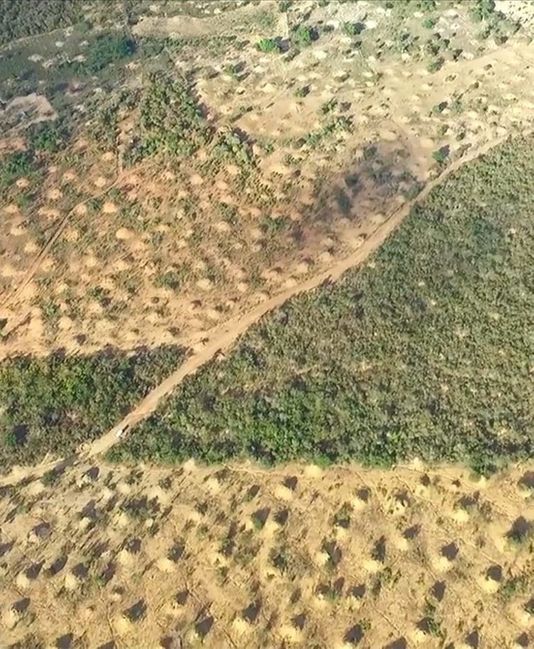
Drone image of the termite mounds. Image via Roy R. Funch.

Soil samples collected from the centers of 11 mounds and dated indicated that the mounds were filled 690 to 3,820 years ago. That makes them about as old as the world’s oldest known termite mounds in Africa. Martin said:

These mounds were formed by a single termite species that excavated a massive network of tunnels to allow them to access dead leaves to eat safely and directly from the forest floor. The amount of soil excavated is over 10 cubic kilometers [2.4 cubic miles], equivalent to 4,000 great pyramids of Giza, and represents one of the biggest structures built by a single insect species.

Bottom line: Researchers have found a vast array of regularly-spaced, still-inhabited termite mounds in northeastern Brazil, covering an area the size of Great Britain, that they say is about 4,000 years old.

Source: A vast 4,000-year-old spatial pattern of termite mounds

Via Science Daily


from EarthSky https://ift.tt/2RlwqV2

A team of researchers have found a vast network consisting of more than 200 million regularly-spaced termite mounds in northeastern Brazil covering an area the size of Great Britain. According to the research, published in the journal Current Biology on November 19, 2018, the still-inhabited mounds are up to 4,000 years old and so tall they can be seen via satellite.

The cone-shaped mounds are not nests, said the scientists. Rather, they are the result of the termites‘ slow and steady excavation of a network of interconnected underground tunnels. The termites’ activities over thousands of years has resulted in huge quantities of soil deposited in approximately 200 million cone-shaped mounds, each about 8 feet (2.5 meters) tall and 30 feet (9 meters) across.

Roy Funch of Universidade Estadual de Feira de Santana in Brazil is a co-author of the study. Funch said in a statement:

This is apparently the world’s most extensive bioengineering effort by a single insect species. Perhaps most exciting of all – the mounds are extremely old – up to 4,000 years, similar to the ages of the pyramids.

(A) Core area (orange) of the mounds confirmed by ground visits. A model predicted a suitable area, and new mound sites were confirmed by visits (orange triangle) or using satellite images (black triangles). Dated mounds indicated by red squares. Great Britain outline illustrates the extent of the mound fields. (B) Satellite image with the position of each mound indicated by a black dot. (C) Sketch showing the mound structure and network of major tunnels (solid lines) and smaller vertical foraging tunnels (dashed lines). Image via Current Biology.

The mounds are largely hidden from view in the fully deciduous, semi-arid, thorny-scrub caatinga forests unique to northeastern Brazil. They’d only really come into view by “outsiders,” including scientists, when some of the lands were cleared for pasture in recent decades.

Stephen Martin of the University of Salford in the U.K. is a co-author of the study. He said:

It’s incredible that, in this day and age, you can find an ‘unknown’ biological wonder of this sheer size and age still existing, with the occupants still present.

EarthSky lunar calendars are cool! They make great gifts. Order now. Going fast!

Drone image of the termite mounds. Image via Roy R. Funch.

Soil samples collected from the centers of 11 mounds and dated indicated that the mounds were filled 690 to 3,820 years ago. That makes them about as old as the world’s oldest known termite mounds in Africa. Martin said:

These mounds were formed by a single termite species that excavated a massive network of tunnels to allow them to access dead leaves to eat safely and directly from the forest floor. The amount of soil excavated is over 10 cubic kilometers [2.4 cubic miles], equivalent to 4,000 great pyramids of Giza, and represents one of the biggest structures built by a single insect species.

Bottom line: Researchers have found a vast array of regularly-spaced, still-inhabited termite mounds in northeastern Brazil, covering an area the size of Great Britain, that they say is about 4,000 years old.

Source: A vast 4,000-year-old spatial pattern of termite mounds

Via Science Daily


from EarthSky https://ift.tt/2RlwqV2

NASA hears MarCO CubeSats loud and clear from Mars

MarCO-B, one of the experimental Mars Cube One (MarCO) CubeSats, took this image of Mars from about 4,700 miles (6,000 km) away during its flyby of the Red Planet on November 26, 2018. MarCO-B was flying by Mars with its twin, MarCO-A, to attempt to serve as communications relays for NASA’s InSight spacecraft as it landed on Mars. Image via NASA/JPL-Caltech.

NASA’s MarCO mission was built to see whether two experimental, briefcase-sized spacecraft could survive the trip to deep space, and the two CubeSats proved more than able. After cruising along behind NASA’s InSight for seven months, they successfully relayed data back down to Earth from the lander during its descent to the Martian surface yesterday (Monday, November 26, 2018).

Nicknamed “EVE” and “WALL-E” after the stars of the 2008 Pixar film, MarCO-A and MarCO-B used experimental radios and antennas, providing an alternate way for engineers to monitor the landing. The CubeSats provided information to InSight’s landing team in just 8 minutes – the time it took for radio signals to travel from Mars to Earth. That was much faster than waiting on NASA’s Mars orbiters, which weren’t positioned to be able to observe the entire event and send data back to Earth immediately.

Andy Klesh is MarCO chief engineer at NASA’s Jet Propulsion Laboratory (JPL) in Pasadena, California, which built the CubeSats. Klesh said in a statement:

WALL-E and EVE performed just as we expected them to. They were an excellent test of how CubeSats can serve as ‘tag-alongs’ on future missions, giving engineers up-to-the-minute feedback during a landing.

Landing on Mars is exceptionally difficult: Before InSight, only about 40 percent of all attempts by various nations had succeeded. Even if a spacecraft doesn’t survive landing, having a “black box” – or a pair of them, as with MarCO – to record the event can help engineers design better landing technology.

Neither of the MarCO CubeSats carry science instruments, but that didn’t stop the team from testing whether future CubeSats could perform useful science at Mars. As MarCO-A flew by, it conducted some impromptu radio science, transmitting signals through the edge of Mars’ atmosphere. Interference from the Martian atmosphere changes the signal when received on Earth, allowing scientists to determine how much atmosphere is present and, to some degree, what it’s made of.

John Baker is JPL’s program manager for small spacecraft. He said:

CubeSats have incredible potential to carry cameras and science instruments out to deep space. They’ll never replace the more capable spacecraft NASA is best known for developing. But they’re low-cost ride-alongs that can allow us to explore in new ways.

As a bonus, some consumer-grade cameras aboard MarCO provided “drive-by” images as the CubeSats sailed past Mars. MarCO-B was programmed to turn so that it could image the planet in a sequence of shots as it approached Mars (before launch, MarCO-A’s cameras were found to be either non-functioning or too blurry to use).

After the landing, MarCO-B turned backward to take a farewell shot of the Red Planet. It also attempted to snap some photos of Mars’ moons, Phobos and Deimos.

Bottom line: The 2 briefcase-sized CubeSats successfully relayed data back down to Earth from Insight during its descent to the Martian surface on Monday, November 26, 2018.

Via NASA

Bottom line: NASA heard from the MarCO CubeSats loud and clear from Mars on November 26, 2018.


from EarthSky https://ift.tt/2FK6zoC

MarCO-B, one of the experimental Mars Cube One (MarCO) CubeSats, took this image of Mars from about 4,700 miles (6,000 km) away during its flyby of the Red Planet on November 26, 2018. MarCO-B was flying by Mars with its twin, MarCO-A, to attempt to serve as communications relays for NASA’s InSight spacecraft as it landed on Mars. Image via NASA/JPL-Caltech.

NASA’s MarCO mission was built to see whether two experimental, briefcase-sized spacecraft could survive the trip to deep space, and the two CubeSats proved more than able. After cruising along behind NASA’s InSight for seven months, they successfully relayed data back down to Earth from the lander during its descent to the Martian surface yesterday (Monday, November 26, 2018).

Nicknamed “EVE” and “WALL-E” after the stars of the 2008 Pixar film, MarCO-A and MarCO-B used experimental radios and antennas, providing an alternate way for engineers to monitor the landing. The CubeSats provided information to InSight’s landing team in just 8 minutes – the time it took for radio signals to travel from Mars to Earth. That was much faster than waiting on NASA’s Mars orbiters, which weren’t positioned to be able to observe the entire event and send data back to Earth immediately.

Andy Klesh is MarCO chief engineer at NASA’s Jet Propulsion Laboratory (JPL) in Pasadena, California, which built the CubeSats. Klesh said in a statement:

WALL-E and EVE performed just as we expected them to. They were an excellent test of how CubeSats can serve as ‘tag-alongs’ on future missions, giving engineers up-to-the-minute feedback during a landing.

Landing on Mars is exceptionally difficult: Before InSight, only about 40 percent of all attempts by various nations had succeeded. Even if a spacecraft doesn’t survive landing, having a “black box” – or a pair of them, as with MarCO – to record the event can help engineers design better landing technology.

Neither of the MarCO CubeSats carry science instruments, but that didn’t stop the team from testing whether future CubeSats could perform useful science at Mars. As MarCO-A flew by, it conducted some impromptu radio science, transmitting signals through the edge of Mars’ atmosphere. Interference from the Martian atmosphere changes the signal when received on Earth, allowing scientists to determine how much atmosphere is present and, to some degree, what it’s made of.

John Baker is JPL’s program manager for small spacecraft. He said:

CubeSats have incredible potential to carry cameras and science instruments out to deep space. They’ll never replace the more capable spacecraft NASA is best known for developing. But they’re low-cost ride-alongs that can allow us to explore in new ways.

As a bonus, some consumer-grade cameras aboard MarCO provided “drive-by” images as the CubeSats sailed past Mars. MarCO-B was programmed to turn so that it could image the planet in a sequence of shots as it approached Mars (before launch, MarCO-A’s cameras were found to be either non-functioning or too blurry to use).

After the landing, MarCO-B turned backward to take a farewell shot of the Red Planet. It also attempted to snap some photos of Mars’ moons, Phobos and Deimos.

Bottom line: The 2 briefcase-sized CubeSats successfully relayed data back down to Earth from Insight during its descent to the Martian surface on Monday, November 26, 2018.

Via NASA

Bottom line: NASA heard from the MarCO CubeSats loud and clear from Mars on November 26, 2018.


from EarthSky https://ift.tt/2FK6zoC

adds 2