aads

Why do stars twinkle, but planets don’t?

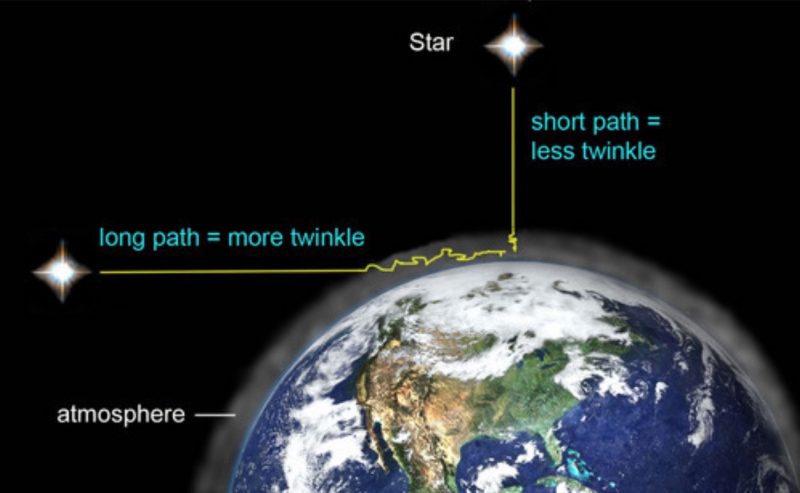
The more atmosphere you are peering through, the more stars appear to twinkle.

The more atmosphere you are peering through, the more stars (or planets) appear to twinkle. Illustration by AstroBob, via The Random Science blog.

Stars twinkle, while planets (usually) shine steadily. Why?

Stars twinkle because … they’re so far away from Earth that, even through large telescopes, they appear only as pinpoints. And it’s easy for Earth’s atmosphere to disturb the pinpoint light of a star. As a star’s light pierces our atmosphere, each single stream of starlight is refracted – caused to change direction, slightly – by the various temperature and density layers in Earth’s atmosphere. You might think of it as the light traveling a zig-zag path to our eyes, instead of the straight path the light would travel if Earth didn’t have an atmosphere.

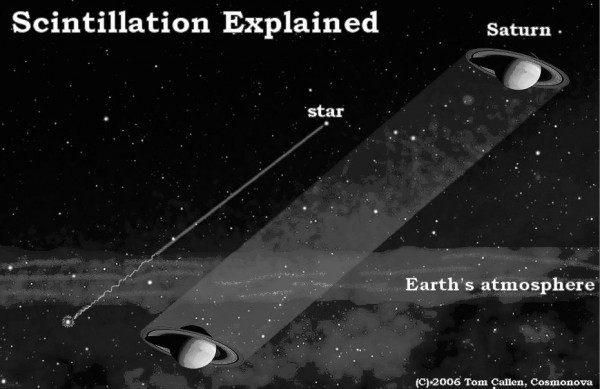
Planets shine more steadily because … they’re closer to Earth and so appear not as pinpoints, but as tiny disks in our sky. You’d could see planets as disks if you looked through a telescope, while stars would remain pinpoints. The light from these little disks is also refracted by Earth’s atmosphere, as it travels toward our eyes. But – while the light from one edge of a planet’s disk might be forced to “zig” one way – light from the opposite edge of the disk might be “zagging” in an opposite way. The zigs and zags of light from a planetary disk cancel each other out, and that’s why planets appear to shine steadily.

Illustration by Tom Callen of Cosmonova

Astronomers use the term ‘scintillation’ to describe the twinkling of stars. Illustration via Tom Callen of the Cosmonova theater in Sweden.

You might see planets twinkling if you spot them low in the sky. That’s because, in the direction of any horizon, you’re looking through more atmosphere than when you look overhead.

If you could see stars and planets from outer space, both would shine steadily. There’d be no atmosphere to disturb the steady streaming of their light.

Can you figure out which objects are stars and which are planets just by looking for the twinklers vs the non-twinklers? Experienced observers often can, but, at first, if you can recognize a planet in some other way, you might notice the steadiness of its light by contrasting it to a nearby star.

The 2019 lunar calendars are here! Order yours before they’re gone. Makes a great gift.

Bottom line: Explanation of why stars twinkle in the night sky but planets don’t.


from EarthSky https://ift.tt/2Kr9pxf
The more atmosphere you are peering through, the more stars appear to twinkle.

The more atmosphere you are peering through, the more stars (or planets) appear to twinkle. Illustration by AstroBob, via The Random Science blog.

Stars twinkle, while planets (usually) shine steadily. Why?

Stars twinkle because … they’re so far away from Earth that, even through large telescopes, they appear only as pinpoints. And it’s easy for Earth’s atmosphere to disturb the pinpoint light of a star. As a star’s light pierces our atmosphere, each single stream of starlight is refracted – caused to change direction, slightly – by the various temperature and density layers in Earth’s atmosphere. You might think of it as the light traveling a zig-zag path to our eyes, instead of the straight path the light would travel if Earth didn’t have an atmosphere.

Planets shine more steadily because … they’re closer to Earth and so appear not as pinpoints, but as tiny disks in our sky. You’d could see planets as disks if you looked through a telescope, while stars would remain pinpoints. The light from these little disks is also refracted by Earth’s atmosphere, as it travels toward our eyes. But – while the light from one edge of a planet’s disk might be forced to “zig” one way – light from the opposite edge of the disk might be “zagging” in an opposite way. The zigs and zags of light from a planetary disk cancel each other out, and that’s why planets appear to shine steadily.

Illustration by Tom Callen of Cosmonova

Astronomers use the term ‘scintillation’ to describe the twinkling of stars. Illustration via Tom Callen of the Cosmonova theater in Sweden.

You might see planets twinkling if you spot them low in the sky. That’s because, in the direction of any horizon, you’re looking through more atmosphere than when you look overhead.

If you could see stars and planets from outer space, both would shine steadily. There’d be no atmosphere to disturb the steady streaming of their light.

Can you figure out which objects are stars and which are planets just by looking for the twinklers vs the non-twinklers? Experienced observers often can, but, at first, if you can recognize a planet in some other way, you might notice the steadiness of its light by contrasting it to a nearby star.

The 2019 lunar calendars are here! Order yours before they’re gone. Makes a great gift.

Bottom line: Explanation of why stars twinkle in the night sky but planets don’t.


from EarthSky https://ift.tt/2Kr9pxf

Does eating turkey make you sleepy?

Ah, Thanksgiving Day. You pile your plates with turkey, dressing, two kinds of potatoes, cranberries – all the traditional foods – and dig in. Second helpings? Of course! An hour later, after plenty of food and conversation, you push back and notice you’ve become very, very sleepy. You think:

I’m sleepy because turkey is high in tryptophan.

True? Or myth?

The answer is – don’t blame it on the turkey. While it’s a commonly held myth that turkey is especially high in tryptophan – and causes that drowsiness (“turkey coma”) you feel after a big Thanksgiving meal – the reality is that the amount of tryptophan in turkey is comparable to that found in chicken, beef, and other meats. In fact, turkey doesn’t result in higher levels of tryptophan in your blood than other common foods.

Happy Thanksgiving!

Happy Thanksgiving!

So why do you get so sleepy after a big turkey dinner? Post-meal drowsiness on Thanksgiving might have more to do with what else is on your plate – in particular, carbohydrates. A heavy meal rich in carbohydrates increases the production of sleep-promoting melatonin in the brain.

Melatonin is a hormone – produced in the pineal gland – that plays a role in regulating biological rhythms, including sleep. Melatonin is sold as a sleep aid. People often use it to combat jet lag when flying between time zones. Hence, “feast-induced drowsiness” — which many people across the U.S. will feel this afternoon – might be the result of a rich meal high in carbohydrates – not because of the tryptophan in turkey.

And there are other factors in post-Thanksgiving meal drowsiness including, possibly, the amount of fat in the meal (slows down the digestion), alcohol consumption, overeating and just plain tiredness from all the conversation with relatives and friends, plus the work of preparing the meal itself.

By the way, certain foods, such as soybeans, sesame and sunflower seeds, and certain cheeses, are high in tryptophan. Although it is possible these might induce sleepiness if consumed in sufficient quantities, this is not well-studied.

So enjoy your Thanksgiving meal today, and aim for a nap afterwards. Why not? Happy Thanksgiving!

Bottom line: Turkey does contain tryptophan but no more so than chicken, beef, and other meats. The drowsiness you feel after a rich Thanksgiving meal might result from the inclusion of large amounts of carbohydrates (the dressing, rolls, mashed potatoes), which increases the production of sleep-inducing melatonin in the brain. Plus the fats in the meal, alcohol, overeating and just plain tiredness all can have an effect.

Enjoying EarthSky? Sign up for our free daily newsletter today!


from EarthSky https://ift.tt/2Q8MHj1

Ah, Thanksgiving Day. You pile your plates with turkey, dressing, two kinds of potatoes, cranberries – all the traditional foods – and dig in. Second helpings? Of course! An hour later, after plenty of food and conversation, you push back and notice you’ve become very, very sleepy. You think:

I’m sleepy because turkey is high in tryptophan.

True? Or myth?

The answer is – don’t blame it on the turkey. While it’s a commonly held myth that turkey is especially high in tryptophan – and causes that drowsiness (“turkey coma”) you feel after a big Thanksgiving meal – the reality is that the amount of tryptophan in turkey is comparable to that found in chicken, beef, and other meats. In fact, turkey doesn’t result in higher levels of tryptophan in your blood than other common foods.

Happy Thanksgiving!

Happy Thanksgiving!

So why do you get so sleepy after a big turkey dinner? Post-meal drowsiness on Thanksgiving might have more to do with what else is on your plate – in particular, carbohydrates. A heavy meal rich in carbohydrates increases the production of sleep-promoting melatonin in the brain.

Melatonin is a hormone – produced in the pineal gland – that plays a role in regulating biological rhythms, including sleep. Melatonin is sold as a sleep aid. People often use it to combat jet lag when flying between time zones. Hence, “feast-induced drowsiness” — which many people across the U.S. will feel this afternoon – might be the result of a rich meal high in carbohydrates – not because of the tryptophan in turkey.

And there are other factors in post-Thanksgiving meal drowsiness including, possibly, the amount of fat in the meal (slows down the digestion), alcohol consumption, overeating and just plain tiredness from all the conversation with relatives and friends, plus the work of preparing the meal itself.

By the way, certain foods, such as soybeans, sesame and sunflower seeds, and certain cheeses, are high in tryptophan. Although it is possible these might induce sleepiness if consumed in sufficient quantities, this is not well-studied.

So enjoy your Thanksgiving meal today, and aim for a nap afterwards. Why not? Happy Thanksgiving!

Bottom line: Turkey does contain tryptophan but no more so than chicken, beef, and other meats. The drowsiness you feel after a rich Thanksgiving meal might result from the inclusion of large amounts of carbohydrates (the dressing, rolls, mashed potatoes), which increases the production of sleep-inducing melatonin in the brain. Plus the fats in the meal, alcohol, overeating and just plain tiredness all can have an effect.

Enjoying EarthSky? Sign up for our free daily newsletter today!


from EarthSky https://ift.tt/2Q8MHj1

Why does a full moon look full?

This is last year’s full Beaver Moon. That’s a Northern Hemisphere name for the full moon in November. It’s from John Entwistle Photography, who was at the Twin Lights Lighthouse, Jersey Shore, New Jersey. Read more about full moon names.

Full moon falls on November 23, 2018 at 05:39 UTC. That means that – for the Americas – the night of November 22 will feature this month’s fullest moon.

Technically speaking, the moon is full at the instant it’s 180 degrees from the sun in ecliptic longitude. Want to know the instant of full moon in your part of the world, as well as the moonrise and moonset times? Click here, remembering to check the moon phases plus moonrise and moonset boxes.

So why does a full moon look full? Remember that half the moon is always illuminated by the sun. That lighted half is the moon’s day side.

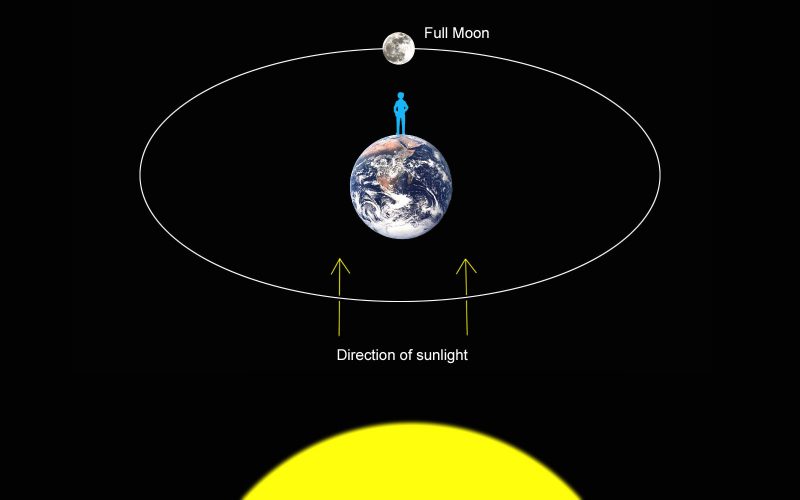
In order to appear full to us on Earth, we have to see the entire day side of the moon. That happens only when the moon is opposite the sun in our sky. So a full moon looks full because it’s opposite the sun.

That’s also why every full moon rises in the east around sunset – climbs highest up for the night midway between sunset and sunrise (around midnight) – and sets around sunrise. Stand outside tonight around sunset and look for the moon. Sun going down while the moon is coming up? That’s a full moon, or close to one.

Just be aware that the moon will look full for at least a couple of night around the instant of full moon.

A full moon is opposite the sun. We see all of its dayside. Illustration via Bob King.

Often, you’ll find two different dates on calendars for the date of full moon. That’s because some calendars list moon phases in Coordinated Universal Time or Universal Time Coordinated (UTC). And other calendars list moon phases in local time, a clock time of a specific place, usually the place that made and distributed the calendars. Click here to translate UTC to your local time.

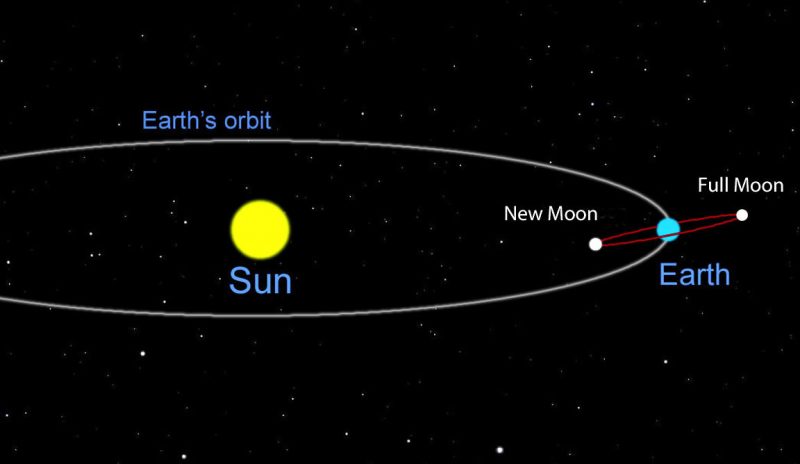
If a full moon is opposite the sun, why doesn’t Earth’s shadow fall on the moon at every full moon? The reason is that the moon’s orbit is titled by 5.1 degrees with respect to Earth’s orbit around the sun. At every full moon, Earth’s shadow sweeps near the moon. But, in most months, there’s no eclipse.

A full moon normally passes above or below Earth’s shadow, with no eclipse. Illustration by Bob King.

Full moon and Earth’s shadow on the morning of March 2, 2018, via Eliot Herman in Tucson, Arizona.

As the moon orbits Earth, it changes phase in an orderly way. Follow these links to understand the various phases of the moon.

New moon
Waxing crescent moon
First quarter moon
Waxing gibbous moon
Full moon
Waning gibbous moon
Last quarter moon
Waning crescent moon

Read more: 4 keys to understanding moon phases

Read more: What are the full moon names?

Man and moonset by Martin Marthadinata in Surabaya, East Java, Indonesia.

Bottom line: Full moon – when the moon is most opposite the sun for this month – happens on November 23, 2018 at 05:39 UTC; translate UTC to your time. That means that – for the Americas – the moon will appear fullest on the night of November 22.

Check out EarthSky’s guide to the bright planets.

Help EarthSky keep going! Please donate.


from EarthSky https://ift.tt/2CEamRl

This is last year’s full Beaver Moon. That’s a Northern Hemisphere name for the full moon in November. It’s from John Entwistle Photography, who was at the Twin Lights Lighthouse, Jersey Shore, New Jersey. Read more about full moon names.

Full moon falls on November 23, 2018 at 05:39 UTC. That means that – for the Americas – the night of November 22 will feature this month’s fullest moon.

Technically speaking, the moon is full at the instant it’s 180 degrees from the sun in ecliptic longitude. Want to know the instant of full moon in your part of the world, as well as the moonrise and moonset times? Click here, remembering to check the moon phases plus moonrise and moonset boxes.

So why does a full moon look full? Remember that half the moon is always illuminated by the sun. That lighted half is the moon’s day side.

In order to appear full to us on Earth, we have to see the entire day side of the moon. That happens only when the moon is opposite the sun in our sky. So a full moon looks full because it’s opposite the sun.

That’s also why every full moon rises in the east around sunset – climbs highest up for the night midway between sunset and sunrise (around midnight) – and sets around sunrise. Stand outside tonight around sunset and look for the moon. Sun going down while the moon is coming up? That’s a full moon, or close to one.

Just be aware that the moon will look full for at least a couple of night around the instant of full moon.

A full moon is opposite the sun. We see all of its dayside. Illustration via Bob King.

Often, you’ll find two different dates on calendars for the date of full moon. That’s because some calendars list moon phases in Coordinated Universal Time or Universal Time Coordinated (UTC). And other calendars list moon phases in local time, a clock time of a specific place, usually the place that made and distributed the calendars. Click here to translate UTC to your local time.

If a full moon is opposite the sun, why doesn’t Earth’s shadow fall on the moon at every full moon? The reason is that the moon’s orbit is titled by 5.1 degrees with respect to Earth’s orbit around the sun. At every full moon, Earth’s shadow sweeps near the moon. But, in most months, there’s no eclipse.

A full moon normally passes above or below Earth’s shadow, with no eclipse. Illustration by Bob King.

Full moon and Earth’s shadow on the morning of March 2, 2018, via Eliot Herman in Tucson, Arizona.

As the moon orbits Earth, it changes phase in an orderly way. Follow these links to understand the various phases of the moon.

New moon
Waxing crescent moon
First quarter moon
Waxing gibbous moon
Full moon
Waning gibbous moon
Last quarter moon
Waning crescent moon

Read more: 4 keys to understanding moon phases

Read more: What are the full moon names?

Man and moonset by Martin Marthadinata in Surabaya, East Java, Indonesia.

Bottom line: Full moon – when the moon is most opposite the sun for this month – happens on November 23, 2018 at 05:39 UTC; translate UTC to your time. That means that – for the Americas – the moon will appear fullest on the night of November 22.

Check out EarthSky’s guide to the bright planets.

Help EarthSky keep going! Please donate.


from EarthSky https://ift.tt/2CEamRl

Glory, above a sea of clouds

View larger. | A glory on a foggy morning, via Arnaud Besancon.

Arnaud Besancon in Germany caught this image on November 16, 2018. He said he took the photo while looking west at sunrise, and he said:

I was all the night long under a really nice sky, with not so much light pollution, because there was a fantastic sea of clouds, stopping the city’s lights. I was there for deep-sky shooting and shooting the Leonid meteors, and, in the morning, I saw this amazing irisation of light above the sea of clouds…Actually, I don’t really know what it is. Maybe it is something called ‘a glory,’ because the rising sun (east) was exactly in front of the optic phenomenon (west).

I hope you will enjoy my picture.

Thank you, Arnaud, yes, it’s a beautiful example of a glory. As Les Cowley of the great website Atmospheric Optics has explained:

Glories are always directly opposite the sun, centered at the antisolar point and therefore below the horizon except at sunrise and sunset. Look for them whenever mist or cloud is beneath you and the sun breaks through to shine on it.

We sent your photo to Les, by the way, asking for his comment. He confirmed:

Yes, a nice glory. Not as colored as usual because the sun’s light was highly reddened.

If you look carefully, you can even see a hint of a brocken spectre (possibly due to the photographer himself and his equipment?) inside the glory. As Les points out on his page, you can also look for glories from mountains and hillsides, from aircraft and in sea fog and even indoors.

Read more from Les Cowley about how glories are formed

Bottom line: Glory, above a sea of clouds, in Germany.


from EarthSky https://ift.tt/2OWHFl5

View larger. | A glory on a foggy morning, via Arnaud Besancon.

Arnaud Besancon in Germany caught this image on November 16, 2018. He said he took the photo while looking west at sunrise, and he said:

I was all the night long under a really nice sky, with not so much light pollution, because there was a fantastic sea of clouds, stopping the city’s lights. I was there for deep-sky shooting and shooting the Leonid meteors, and, in the morning, I saw this amazing irisation of light above the sea of clouds…Actually, I don’t really know what it is. Maybe it is something called ‘a glory,’ because the rising sun (east) was exactly in front of the optic phenomenon (west).

I hope you will enjoy my picture.

Thank you, Arnaud, yes, it’s a beautiful example of a glory. As Les Cowley of the great website Atmospheric Optics has explained:

Glories are always directly opposite the sun, centered at the antisolar point and therefore below the horizon except at sunrise and sunset. Look for them whenever mist or cloud is beneath you and the sun breaks through to shine on it.

We sent your photo to Les, by the way, asking for his comment. He confirmed:

Yes, a nice glory. Not as colored as usual because the sun’s light was highly reddened.

If you look carefully, you can even see a hint of a brocken spectre (possibly due to the photographer himself and his equipment?) inside the glory. As Les points out on his page, you can also look for glories from mountains and hillsides, from aircraft and in sea fog and even indoors.

Read more from Les Cowley about how glories are formed

Bottom line: Glory, above a sea of clouds, in Germany.


from EarthSky https://ift.tt/2OWHFl5

Full moon in Taurus on November 22

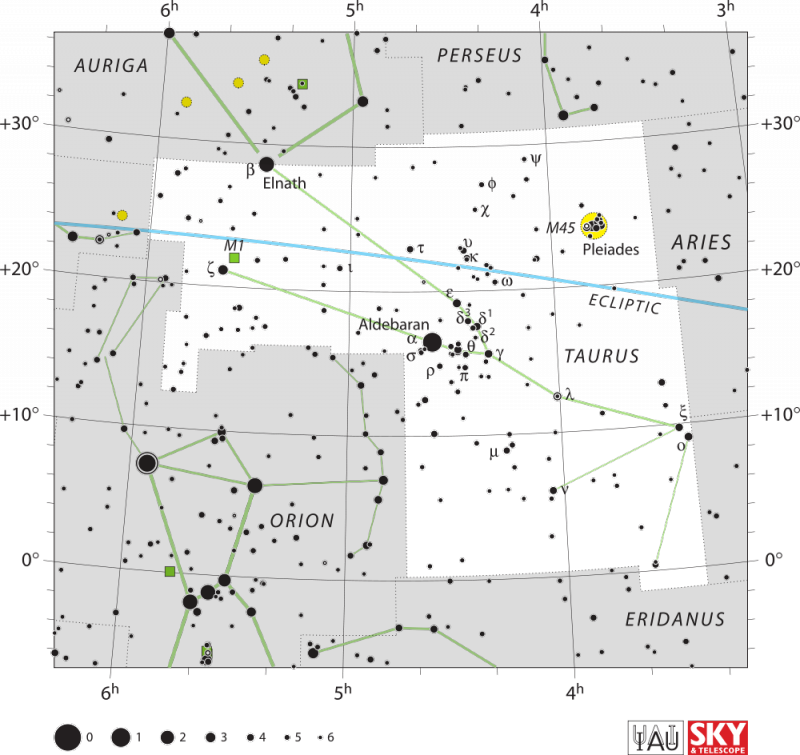
On November 22, 2018, despite the glare from the full or nearly full moon, you might be able to spot two major signposts in the constellation Taurus the Bull. Look first for the bright star Aldebaran, part of the V-shaped face of the Bull. Then look for the dipper-shaped Pleiades star cluster, in the Bull’s shoulder.

In North America, we often call the November full moon the Beaver Moon or Frosty Moon. In the Southern Hemisphere, where it’s the opposite time of year, the November full moon is a fixture of the spring season rather than autumn. But no matter where you live worldwide, this November 2018 full moon shines directly in front of the constellation Taurus the Bull, and presents the third and final full moon of this Northern Hemisphere autumn or Southern Hemisphere spring.

By season, we mean the time period between the September equinox and the December solstice – or vice versa. Next month’s December full moon will occur less than one day after the December solstice – so we just miss having four moons this season.

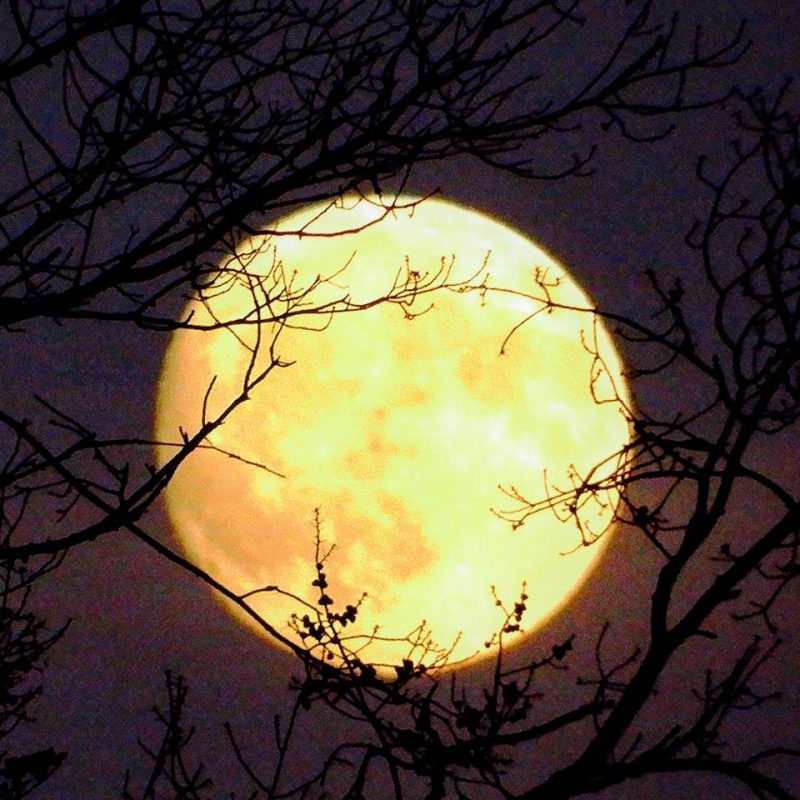
The November full moon is also called the Beaver Moon. Maggie NY wrote, “November’s Beaver Moon over NY.”

The glare from the brilliant moon will make the mighty Bull appear quite meek over these next several nights. Despite the moonlit glare, you still might be able to spot the star Aldebaran and the Pleiades star cluster. If you can’t see Aldebaran or the Pleiades, try placing your finger over the moon to reduce its blinding presence.

The moon turns precisely full on November 23, 2018, at 5:39 Universal Time. Although the instant of full moon happens at the same time worldwide, the clock differs by time zone. For us in the United States, the full moon occurs on November 23, at 12:39 a.m. Eastern Time – yet on November 22 at 11:39 p.m. Central Time, 10:39 p.m. Mountain Time, 9:39 p.m. Pacific Time, 8:39 p.m. Alaskan Time and 7:39 p.m. Hawaiian Time.

Although the moon actually looks full to the eye for a few days in a row, the moon is astronomically full for only an instant – when it’s 180 degrees opposite the sun in ecliptic longitude. At full moon, the sun-moon elongation equals 180 degrees. Click here to know the present elongation of the sun and moon, remembering that a positive number means a waxing moon and a negative number a waning moon.

Orion’s Belt, at the lower left, always points in the direction of the constellation Taurus the Bull. The star Aldebaran resides to the south of the ecliptic and the Pleiades star cluster to the north of the ecliptic.

Since the moon stays more or less opposite the sun throughout the night at the vicinity of full moon, look for the moon (and the constellation Taurus) to rise in the east around sunset, climb highest up for the night around midnight and to set in the west around sunrise.

Because the full moon resides opposite the sun in the northern constellation Taurus the Bull, the full moon’s path across the night sky will resemble that of the sun’s path across the May daytime sky. In May, the sun resides to the north of the Earth’s equator, and therefore rises north of due east and sets north of due west. For the Northern Hemisphere, that means this northerly full moon will also rise and set to the north of due east and west. Therefore, for the Northern Hemisphere, this November full moon will mimic the high path of the springtime sun; and in the Southern Hemisphere, it’ll imitate the path of the autumn sun.

Bottom line: Full moon falls on November 23, 2018 at 05:39 UTC. That means that – for the Americas – the night of November 22 will feature this month’s fullest moon.

Read more: What are the full moon names?


from EarthSky https://ift.tt/2zluFAy

On November 22, 2018, despite the glare from the full or nearly full moon, you might be able to spot two major signposts in the constellation Taurus the Bull. Look first for the bright star Aldebaran, part of the V-shaped face of the Bull. Then look for the dipper-shaped Pleiades star cluster, in the Bull’s shoulder.

In North America, we often call the November full moon the Beaver Moon or Frosty Moon. In the Southern Hemisphere, where it’s the opposite time of year, the November full moon is a fixture of the spring season rather than autumn. But no matter where you live worldwide, this November 2018 full moon shines directly in front of the constellation Taurus the Bull, and presents the third and final full moon of this Northern Hemisphere autumn or Southern Hemisphere spring.

By season, we mean the time period between the September equinox and the December solstice – or vice versa. Next month’s December full moon will occur less than one day after the December solstice – so we just miss having four moons this season.

The November full moon is also called the Beaver Moon. Maggie NY wrote, “November’s Beaver Moon over NY.”

The glare from the brilliant moon will make the mighty Bull appear quite meek over these next several nights. Despite the moonlit glare, you still might be able to spot the star Aldebaran and the Pleiades star cluster. If you can’t see Aldebaran or the Pleiades, try placing your finger over the moon to reduce its blinding presence.

The moon turns precisely full on November 23, 2018, at 5:39 Universal Time. Although the instant of full moon happens at the same time worldwide, the clock differs by time zone. For us in the United States, the full moon occurs on November 23, at 12:39 a.m. Eastern Time – yet on November 22 at 11:39 p.m. Central Time, 10:39 p.m. Mountain Time, 9:39 p.m. Pacific Time, 8:39 p.m. Alaskan Time and 7:39 p.m. Hawaiian Time.

Although the moon actually looks full to the eye for a few days in a row, the moon is astronomically full for only an instant – when it’s 180 degrees opposite the sun in ecliptic longitude. At full moon, the sun-moon elongation equals 180 degrees. Click here to know the present elongation of the sun and moon, remembering that a positive number means a waxing moon and a negative number a waning moon.

Orion’s Belt, at the lower left, always points in the direction of the constellation Taurus the Bull. The star Aldebaran resides to the south of the ecliptic and the Pleiades star cluster to the north of the ecliptic.

Since the moon stays more or less opposite the sun throughout the night at the vicinity of full moon, look for the moon (and the constellation Taurus) to rise in the east around sunset, climb highest up for the night around midnight and to set in the west around sunrise.

Because the full moon resides opposite the sun in the northern constellation Taurus the Bull, the full moon’s path across the night sky will resemble that of the sun’s path across the May daytime sky. In May, the sun resides to the north of the Earth’s equator, and therefore rises north of due east and sets north of due west. For the Northern Hemisphere, that means this northerly full moon will also rise and set to the north of due east and west. Therefore, for the Northern Hemisphere, this November full moon will mimic the high path of the springtime sun; and in the Southern Hemisphere, it’ll imitate the path of the autumn sun.

Bottom line: Full moon falls on November 23, 2018 at 05:39 UTC. That means that – for the Americas – the night of November 22 will feature this month’s fullest moon.

Read more: What are the full moon names?


from EarthSky https://ift.tt/2zluFAy

Did bombing during second world war cool global temperatures?

This is a re-post from Carbon Brief

Prof Alan Robock is a distinguished professor of climate science in the Department of Environmental Sciences at Rutgers University in New Jersey, US.

Between 3 February and 9 August 1945 during the second world war, an area of 461 square kilometres in 69 Japanese cities was burned by US bombing raids. This included the nuclear bombs dropped on the cities of Hiroshima and Nagasaki.

The resulting fires saw plumes of thick, dark smoke rise high into the atmosphere. Much like the cloud and ash thrown into the air by volcanic eruptions, this soot had the potential to block out incoming sunlight, cooling the Earth’s surface.

In a recent paper, published in Journal of Geophysical Research: Atmospheres, we investigate whether the smoke from these fires was enough to change global temperatures.

Nuclear winter

I’ve been working on the threat of nuclear winter for 35 years now. In the 1980s, using simple climate models, we discovered that global nuclear arsenals, if used on cities and industrial areas, could produce a nuclear winter and lead to global famine.

Smoke from the fires would last for years in the upper atmosphere, blocking sunlight, and making it cold, dark and dry at the Earth’s surface. It would also destroy ozone, enhancing ultraviolet radiation reaching the surface.

While the immediate effects of nuclear strikes might kill hundreds of thousands, the numbers that would die from starvation in the years that followed could run into billions.

Normally scientists test their theories in a laboratory or with real world observations.  Fortunately, we do not have a global nuclear war to examine. So how can we test nuclear winter theory?

One option is to look at the impact of forest fires. Large wildfires have been observed to pump smoke into the upper atmosphere – the stratosphere – above where rain can wash it out, and then be further lofted by solar heating. Such was the case with a massive fire in British Columbia in August 2017.

We also have many examples of cities that have burned in the past. Accidental fires burned numerous cities, such as London in 1666Chicago in 1871 and San Francisco in 1906.

But while we don’t have a global nuclear war to study, we do have two cases where nuclear weapons were deployed – Hiroshima and Nagasaki during the second world war.

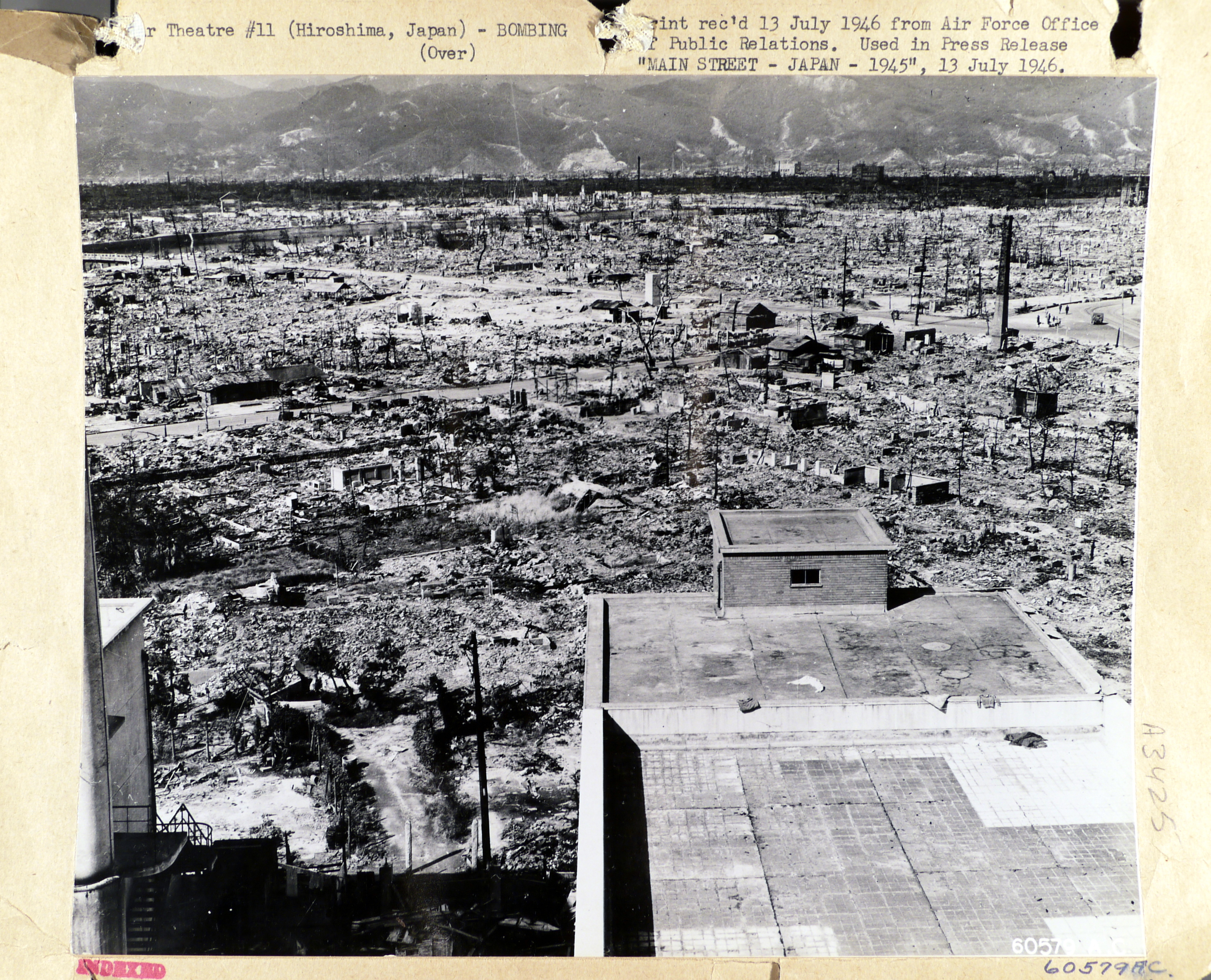
Archive photo of flattened Main Street, Hiroshima. Taken on 13 July 1946 in Hiroshima.

Photo of Main Street, Hiroshima. Taken on 13 July 1946 in Hiroshima. Credit: National Archives, RG-342-FH-60579AC, from www.japanairaids.org

Temperature drop

While the atomic bombs dropped on Hiroshima and Nagasaki – on 6 and 9 August 1945, respectively – have gone down in history as the first use of nuclear weapons in warfare, what is less well known is that they were part of a larger bombing campaign by US B-29 Superfortress bombers.

Between 3 February and 9 August 1945, an area of 461sq kilometers in 69 Japanese cities, including Hiroshima and Nagasaki, was burned during these air raids – killing 800,000 civilians. The smoke produced by Hiroshima and Nagasaki made up less than 5% of the total.

Archive photo showing Part of Shizuoka after it was bombed on 19 June 1945. Credit: National Archives, RG-342-FH-59080AC, from www.japanairaids.org

Part of Shizuoka after it was bombed on 19 June 1945. Credit: National Archives, RG-342-FH-59080AC, from www.japanairaids.org

In our study, we calculated how much smoke was emitted based on estimates for the area burned by fires, the amount of fuel, how much soot was emitted into the upper troposphere and lower stratosphere, and how much was washed out by rain.

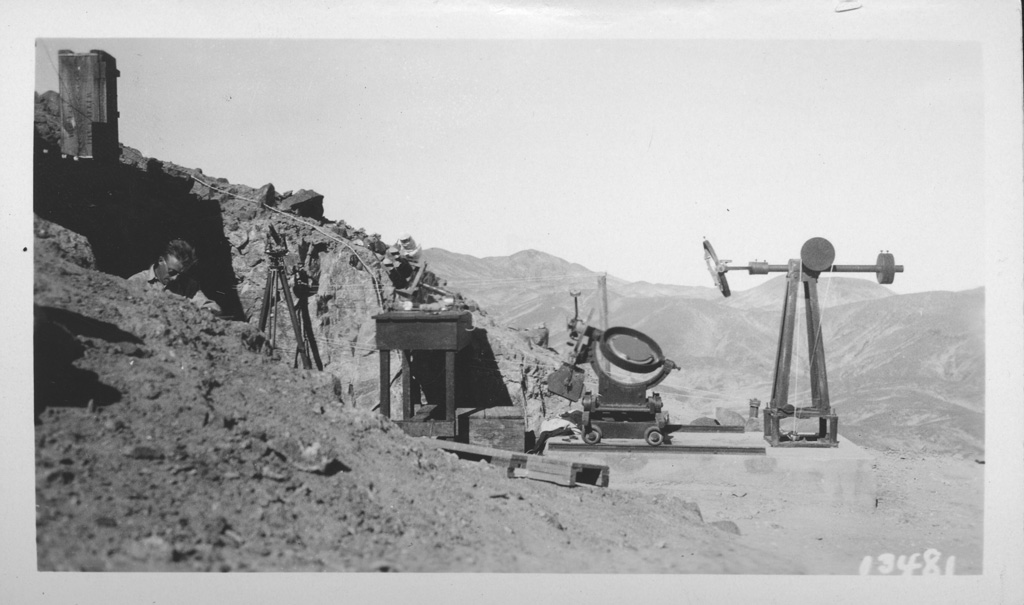
We then estimated the impact on the climate using observed records of solar irradiance – i.e. the amount of the sun’s energy that reaches the Earth’s surface – and land surface temperature. Fortunately, the Smithsonian Astrophysical Observatory maintained two long-term records for solar irradiance – at Mount Montezuma in Chile and on Table Mountain in California, US – so there are data available.

Archive photo of The solar irradiance observatory at Mt. Montezuma, Chile. Credit: Smithsonian Institution Archives, Record Unit 7005, Box 187, Folder: 9, Image #2003-19480.

The solar irradiance observatory at Mt. Montezuma, Chile. Credit: Smithsonian Institution Archives, Record Unit 7005, Box 187, Folder: 9, Image #2003-19480.

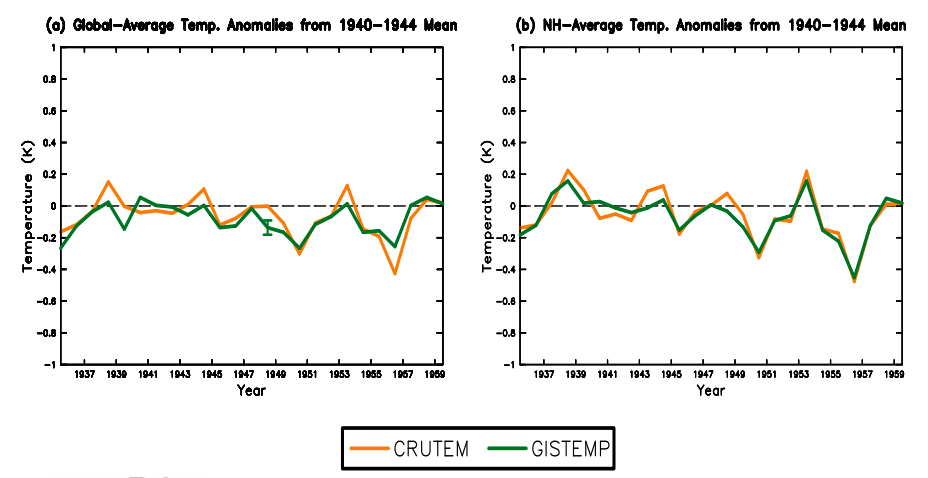
For global land surface temperature records, we used GISTEMP from NASA and CRUTEM from the Met Office Hadley Centre and the Climatic Research Unit at the University of East Anglia.

The chart below shows the land temperatures during the 1940s and 1950s for CRUTEM (yellow) and GISTEMP (green) as anomalies from the 1940-44 average. Both temperature records show a drop in global temperature (left-hand chart) in 1945 of around 0.1C and in northern hemisphere (right) temperature of 0.2C.

Two graphs showing Global (left) and northern hemisphere (right) annual average land surface air temperature anomaly (K) with respect to 1940-1944 average. Data are from CRUTEM and GISTEMP. The green whisker (plotted at 1948 in (a)) is the uncertainty of the GISTEMP observations (95% confidence limit) accounting only for incomplete spatial sampling. Source: Robock & Zambri (2018)

Global (left) and northern hemisphere (right) annual average land surface air temperature anomaly (K) with respect to 1940-1944 average. Data are from CRUTEM and GISTEMP. The green whisker (plotted at 1948 in (a)) is the uncertainty of the GISTEMP observations (95% confidence limit) accounting only for incomplete spatial sampling. Source: Robock & Zambri (2018)

However, we know that there were other factors in play. For example, seasonal temperatures show that cooling in 1945 started at the beginning of the year, before the air raids on Japan. This suggests that natural variability was also playing a role.

Yet there were no significant volcanic eruptions in 1945, nor any El Niño or La Niña event in 1945 or 1946. (In fact, you can see the cooling effect of La Niñas later in the data series – two of the largest La Niñas on record occurred in 1950 and 1956.)

Therefore, despite a detectable amount of cooling in 1945, the multiple uncertainties mean we cannot say for sure that it was caused by this period of bombings in the second world war.

Arsenal

Although our results could not formally detect a cooling signal from second world war smoke, it does not invalidate the nuclear winter theory that much more massive smoke emissions from nuclear war would cause large climate change and impacts on agriculture.

There are many analogues that support parts of nuclear winter theory – not least the way in which major volcanic eruptions create long-lasting clouds in the stratosphere, cooling the Earth and reducing rainfall. The 1815 Tambora eruption in Indonesia, for example, caused the “Year Without a Summer” in 1816, bringing crop failures and food shortages across the northern hemisphere.

Since the end of the Cold War in the early 1990s, the global nuclear arsenal has been reduced by a factor of four. The world currently possesses about 14,000 nuclear weapons, distributed among nine nations – the US, Russia, France, the UK, China, India, Pakistan, Israel and North Korea.

Yet our climate model simulations show that these would still be enough to produce nuclear winter – and that even 1% of them could cause climate change unprecedented in recorded human history.

Robock, A. and Zambri, B. (2018) Did smoke from city fires in World War II cause global cooling? Journal of Geophysical Research: Atmospheres, doi:10.1029/2018JD028922


from Skeptical Science https://ift.tt/2DCPJoM

This is a re-post from Carbon Brief

Prof Alan Robock is a distinguished professor of climate science in the Department of Environmental Sciences at Rutgers University in New Jersey, US.

Between 3 February and 9 August 1945 during the second world war, an area of 461 square kilometres in 69 Japanese cities was burned by US bombing raids. This included the nuclear bombs dropped on the cities of Hiroshima and Nagasaki.

The resulting fires saw plumes of thick, dark smoke rise high into the atmosphere. Much like the cloud and ash thrown into the air by volcanic eruptions, this soot had the potential to block out incoming sunlight, cooling the Earth’s surface.

In a recent paper, published in Journal of Geophysical Research: Atmospheres, we investigate whether the smoke from these fires was enough to change global temperatures.

Nuclear winter

I’ve been working on the threat of nuclear winter for 35 years now. In the 1980s, using simple climate models, we discovered that global nuclear arsenals, if used on cities and industrial areas, could produce a nuclear winter and lead to global famine.

Smoke from the fires would last for years in the upper atmosphere, blocking sunlight, and making it cold, dark and dry at the Earth’s surface. It would also destroy ozone, enhancing ultraviolet radiation reaching the surface.

While the immediate effects of nuclear strikes might kill hundreds of thousands, the numbers that would die from starvation in the years that followed could run into billions.

Normally scientists test their theories in a laboratory or with real world observations.  Fortunately, we do not have a global nuclear war to examine. So how can we test nuclear winter theory?

One option is to look at the impact of forest fires. Large wildfires have been observed to pump smoke into the upper atmosphere – the stratosphere – above where rain can wash it out, and then be further lofted by solar heating. Such was the case with a massive fire in British Columbia in August 2017.

We also have many examples of cities that have burned in the past. Accidental fires burned numerous cities, such as London in 1666Chicago in 1871 and San Francisco in 1906.

But while we don’t have a global nuclear war to study, we do have two cases where nuclear weapons were deployed – Hiroshima and Nagasaki during the second world war.

Archive photo of flattened Main Street, Hiroshima. Taken on 13 July 1946 in Hiroshima.

Photo of Main Street, Hiroshima. Taken on 13 July 1946 in Hiroshima. Credit: National Archives, RG-342-FH-60579AC, from www.japanairaids.org

Temperature drop

While the atomic bombs dropped on Hiroshima and Nagasaki – on 6 and 9 August 1945, respectively – have gone down in history as the first use of nuclear weapons in warfare, what is less well known is that they were part of a larger bombing campaign by US B-29 Superfortress bombers.

Between 3 February and 9 August 1945, an area of 461sq kilometers in 69 Japanese cities, including Hiroshima and Nagasaki, was burned during these air raids – killing 800,000 civilians. The smoke produced by Hiroshima and Nagasaki made up less than 5% of the total.

Archive photo showing Part of Shizuoka after it was bombed on 19 June 1945. Credit: National Archives, RG-342-FH-59080AC, from www.japanairaids.org

Part of Shizuoka after it was bombed on 19 June 1945. Credit: National Archives, RG-342-FH-59080AC, from www.japanairaids.org

In our study, we calculated how much smoke was emitted based on estimates for the area burned by fires, the amount of fuel, how much soot was emitted into the upper troposphere and lower stratosphere, and how much was washed out by rain.

We then estimated the impact on the climate using observed records of solar irradiance – i.e. the amount of the sun’s energy that reaches the Earth’s surface – and land surface temperature. Fortunately, the Smithsonian Astrophysical Observatory maintained two long-term records for solar irradiance – at Mount Montezuma in Chile and on Table Mountain in California, US – so there are data available.

Archive photo of The solar irradiance observatory at Mt. Montezuma, Chile. Credit: Smithsonian Institution Archives, Record Unit 7005, Box 187, Folder: 9, Image #2003-19480.

The solar irradiance observatory at Mt. Montezuma, Chile. Credit: Smithsonian Institution Archives, Record Unit 7005, Box 187, Folder: 9, Image #2003-19480.

For global land surface temperature records, we used GISTEMP from NASA and CRUTEM from the Met Office Hadley Centre and the Climatic Research Unit at the University of East Anglia.

The chart below shows the land temperatures during the 1940s and 1950s for CRUTEM (yellow) and GISTEMP (green) as anomalies from the 1940-44 average. Both temperature records show a drop in global temperature (left-hand chart) in 1945 of around 0.1C and in northern hemisphere (right) temperature of 0.2C.

Two graphs showing Global (left) and northern hemisphere (right) annual average land surface air temperature anomaly (K) with respect to 1940-1944 average. Data are from CRUTEM and GISTEMP. The green whisker (plotted at 1948 in (a)) is the uncertainty of the GISTEMP observations (95% confidence limit) accounting only for incomplete spatial sampling. Source: Robock & Zambri (2018)

Global (left) and northern hemisphere (right) annual average land surface air temperature anomaly (K) with respect to 1940-1944 average. Data are from CRUTEM and GISTEMP. The green whisker (plotted at 1948 in (a)) is the uncertainty of the GISTEMP observations (95% confidence limit) accounting only for incomplete spatial sampling. Source: Robock & Zambri (2018)

However, we know that there were other factors in play. For example, seasonal temperatures show that cooling in 1945 started at the beginning of the year, before the air raids on Japan. This suggests that natural variability was also playing a role.

Yet there were no significant volcanic eruptions in 1945, nor any El Niño or La Niña event in 1945 or 1946. (In fact, you can see the cooling effect of La Niñas later in the data series – two of the largest La Niñas on record occurred in 1950 and 1956.)

Therefore, despite a detectable amount of cooling in 1945, the multiple uncertainties mean we cannot say for sure that it was caused by this period of bombings in the second world war.

Arsenal

Although our results could not formally detect a cooling signal from second world war smoke, it does not invalidate the nuclear winter theory that much more massive smoke emissions from nuclear war would cause large climate change and impacts on agriculture.

There are many analogues that support parts of nuclear winter theory – not least the way in which major volcanic eruptions create long-lasting clouds in the stratosphere, cooling the Earth and reducing rainfall. The 1815 Tambora eruption in Indonesia, for example, caused the “Year Without a Summer” in 1816, bringing crop failures and food shortages across the northern hemisphere.

Since the end of the Cold War in the early 1990s, the global nuclear arsenal has been reduced by a factor of four. The world currently possesses about 14,000 nuclear weapons, distributed among nine nations – the US, Russia, France, the UK, China, India, Pakistan, Israel and North Korea.

Yet our climate model simulations show that these would still be enough to produce nuclear winter – and that even 1% of them could cause climate change unprecedented in recorded human history.

Robock, A. and Zambri, B. (2018) Did smoke from city fires in World War II cause global cooling? Journal of Geophysical Research: Atmospheres, doi:10.1029/2018JD028922


from Skeptical Science https://ift.tt/2DCPJoM

The Scientific Consensus on Climate Change

This is a re-post from the Boston University Institute for Sustainable Energy by Sarah Finnie Robinson

When do 97% of people agree on anything, even ice cream? In scientific circles, consensus is a rare trophy, held to famously exacting standards. When a scientific consensus is finally reached — e.g., the Earth orbits the sun; water freezes at 32°F, 0°C; blood is red — a new fact joins the foundations of human discovery.

Under normal circumstances, a 97% consensus of the world’s leading scientists on anything would establish it as fact and compel action if needed. But our circumstances are not normal. Only 12% of Americans realize that that the scientific consensus on climate change is greater than 90%. Even among people who are Alarmed or Concerned about climate change, the consensus is somewhat unknown. Of the Alarmed, 84% understand the scientific consensus on climate change (16% do not); and 73% of the Concerned (27%).

This is a great opportunity for climate communicators.

Background:

In 2004, Naomi Oreskes published The Scientific Consensus on Climate Changein which she established the substantive “scientific consensus on the reality of anthropogenic climate change.” The paper was widely cited, including in the Academy-award winning movie An Inconvenient Truth.

Several years went by. CO2 emissions continued their upward trend.

A team of scientists led by John Cook decided to revisit Oreskes’s findings and provide an update. After examining 21 years of published papers and over 12,000 abstracts, in 2013 Cook et al. published Quantifying the consensus on anthropogenic global warming in the scientific literature. The conclusion: 97% of scientists agree.

Cook’s paper went viral, in the manner of an academic paper with nine authors and twenty-three references; as I write, it has been downloaded 862,789 times. An advertising director named Matt Birdoff, of SJI in New York, proposed a pro-bono social-media campaign: The Consensus Project. “Matt’s website was terrific, and it was helpful in raising awareness of the paper.” Cook says. “An AP journalist wrote about it, and President Obama tweeted a link to the article. I’m thinking, that’s a big deal!”

But then, the 97% Consensus balloon popped.

In the world of climate solutions, which is populated with world-class heroes and also villains, you’re onto something powerful when the trolls come out and the deniers kick in. And so it went for Cook: “’The Lie of the Century!’ read one especially virulent headline. Cook decided to refute the noisy (and unfounded) claims. “I got together six of the other consensus people, my heroes [Oreskes, Ed Maibach, and four others], and we co-authored a rebuttal to say, We agree with each other.” “The Consensus on the Consensus” was published in 2016:

“We examine the available studies and conclude that the finding of 97% consensus in published climate research is robust and consistent with other surveys of climate scientists and peer-reviewed studies.”

The other 2 or 3%? As HBO’s John Oliver says, Who cares? This is a fact, not an opinion! The science is settled. A consensus has been identified, confirmed ¾ and re-confirmed. Danger is upon us. Now the question is what to do about it.

Giants of contemporary communicators have seized on the 97% consensus: John Oliver is one. Jimmy Kimmel (“The planet is going out of business!) is another. David Fenton is a third.

Fenton’s advertising firm has created a quick, brilliant video called The Dentists.

Opening scene: a dentist peers into his patient’s mouth and shakes his head before giving the bad news. Voiceover: “If 97% of dentists told you a tooth couldn’t be saved, you’d pull that tooth.” Cue the dreaded whirring sound of a dentist’s drill.

Next: zoom into two construction engineers in hard hats. “And if 97 percent of all engineers told you your house was unstable, you’d move.” Cut to a nice house crashing to smithereens as the cliff below it crumbles.

Third scene: airline employees advising passengers not to board the plane.

The Dentists did really well,” Fenton told me. “Off the charts.” Pause. “Even with skeptics.” The Dentists was funded by The Partnership for Responsible Growth, a seasoned, bi-partisan group advocating for a price on carbon and focused on Capitol Hill policy-makers.

Like the Consensus Project campaign, The Dentists utilizes best practices of climate communications:

  1. the power of Scientific Consensus to build Social Consensus (source TK) And,
  2. it exemplifies another another potent principle: the effectiveness of the Trusted Messenger.  People like your dentist, a building engineer, or your airline personnel.

Sadly, the ad was aired for only one week, and in only one market (Washington, D.C.).

Ed Maibach is the founding director of the George Mason University Climate Communications Center, a Six Americas collaborator, and a Trusted Messenger expert. His communications mantra: “simple clear messages, repeated often, by a variety of trusted sources.”  The corollary: “make the behaviors we are promoting easy, fun and popular.”

The Dentists satisfies these requirements. It’s a simple message, repeated in a fun way by three sets of trusted sources. It’s easy to watch, and it’s short. Is it popular? It will be when more people see it! According to Maibach, it will be more effective as it is repeated. Which is exactly what a 30-second spot is designed to do on television. “Message repetition works best when many different messengers repeat the same set of messages, consistently, over time.”

Here’s an idea: Create a partnership with the TV networks, Netflix, Google, HBO, Facebook, nytimes.com, and/or other screen channels. Target the shows and sporting events that the 51% of Concerned and Alarmed people are likely to watch. Schedule The Dentists to air in major markets on a strategic, repetitive schedule, for at least one month and preferably three or until it achieves the desired effect.

How do we pay for this? Let’s figure it out. Maybe the Dentists becomes a PSA endorsed by Oprah Winfrey or Bruce Springsteen. Maybe the CEOs of NBC, CNN, Netflix, Google, HBO, Facebook, and The New York Times decide to offer a discounted rate or other practical arrangement.

The film, so easy, persuasive, and fun, will increase people’s self-confidence about having a climate conversation. It provides an amusing way to communicate their personal alarm or concern about global warming without being preachy or long-winded. It’s convenient and easy to use: simply key it up on your smart phone. Show it to a friend at an opportune moment. Post it on Facebook. Show it to your book club, your dinner companion, the guy sitting next to you on a bus.

In this way, the 51 Percent become Trusted Messengers themselves. Equipped to share a bedrock fact via the clever Fenton interpretation, they may find it much easier to chat about the realities of climate change, and thereby bend the stultifying climate spiral of silence.

Stay tuned.

Sarah Finnie Robinson is an investor in large-scale climate solutions and founding partner of WeSpire, a Boston tech firm that powers sustainability programs at F500 corporations. She is active on the Climate Task Force for Boston Harbor Now. She serves as a judge for MIT’s Climate CoLab “Shifting Behaviors & Attitudes” track; advises the Metcalf Institute for Environmental Reporting at the University of Rhode Island; and supports Ceres and the Environmental Defense Fund. She is a Climate Reality Leader and mentor, and she advises Kripalu Center for Yoga & Health. Robinson also serves on the board of the Princeton78 Foundation, whose endowment fuels undergraduate service projects in the United States and around the world. She holds a B.A. from Princeton, an M.A. from the Bread Loaf School of English at Middlebury College, and she graduated with the inaugural class of Seth Godin’s altMBA in 2015.

Robinson began her career at The New Yorker and continued at The Atlantic and at iVillage, where she was the launch content director. She blogs on HuffPost, Medium, and mindbodygreen. Her current project is a curated digital showcase to identify and share standout communications to engage and accelerate broad public support for the global clean-energy transition now underway.


from Skeptical Science https://ift.tt/2QbHoPB

This is a re-post from the Boston University Institute for Sustainable Energy by Sarah Finnie Robinson

When do 97% of people agree on anything, even ice cream? In scientific circles, consensus is a rare trophy, held to famously exacting standards. When a scientific consensus is finally reached — e.g., the Earth orbits the sun; water freezes at 32°F, 0°C; blood is red — a new fact joins the foundations of human discovery.

Under normal circumstances, a 97% consensus of the world’s leading scientists on anything would establish it as fact and compel action if needed. But our circumstances are not normal. Only 12% of Americans realize that that the scientific consensus on climate change is greater than 90%. Even among people who are Alarmed or Concerned about climate change, the consensus is somewhat unknown. Of the Alarmed, 84% understand the scientific consensus on climate change (16% do not); and 73% of the Concerned (27%).

This is a great opportunity for climate communicators.

Background:

In 2004, Naomi Oreskes published The Scientific Consensus on Climate Changein which she established the substantive “scientific consensus on the reality of anthropogenic climate change.” The paper was widely cited, including in the Academy-award winning movie An Inconvenient Truth.

Several years went by. CO2 emissions continued their upward trend.

A team of scientists led by John Cook decided to revisit Oreskes’s findings and provide an update. After examining 21 years of published papers and over 12,000 abstracts, in 2013 Cook et al. published Quantifying the consensus on anthropogenic global warming in the scientific literature. The conclusion: 97% of scientists agree.

Cook’s paper went viral, in the manner of an academic paper with nine authors and twenty-three references; as I write, it has been downloaded 862,789 times. An advertising director named Matt Birdoff, of SJI in New York, proposed a pro-bono social-media campaign: The Consensus Project. “Matt’s website was terrific, and it was helpful in raising awareness of the paper.” Cook says. “An AP journalist wrote about it, and President Obama tweeted a link to the article. I’m thinking, that’s a big deal!”

But then, the 97% Consensus balloon popped.

In the world of climate solutions, which is populated with world-class heroes and also villains, you’re onto something powerful when the trolls come out and the deniers kick in. And so it went for Cook: “’The Lie of the Century!’ read one especially virulent headline. Cook decided to refute the noisy (and unfounded) claims. “I got together six of the other consensus people, my heroes [Oreskes, Ed Maibach, and four others], and we co-authored a rebuttal to say, We agree with each other.” “The Consensus on the Consensus” was published in 2016:

“We examine the available studies and conclude that the finding of 97% consensus in published climate research is robust and consistent with other surveys of climate scientists and peer-reviewed studies.”

The other 2 or 3%? As HBO’s John Oliver says, Who cares? This is a fact, not an opinion! The science is settled. A consensus has been identified, confirmed ¾ and re-confirmed. Danger is upon us. Now the question is what to do about it.

Giants of contemporary communicators have seized on the 97% consensus: John Oliver is one. Jimmy Kimmel (“The planet is going out of business!) is another. David Fenton is a third.

Fenton’s advertising firm has created a quick, brilliant video called The Dentists.

Opening scene: a dentist peers into his patient’s mouth and shakes his head before giving the bad news. Voiceover: “If 97% of dentists told you a tooth couldn’t be saved, you’d pull that tooth.” Cue the dreaded whirring sound of a dentist’s drill.

Next: zoom into two construction engineers in hard hats. “And if 97 percent of all engineers told you your house was unstable, you’d move.” Cut to a nice house crashing to smithereens as the cliff below it crumbles.

Third scene: airline employees advising passengers not to board the plane.

The Dentists did really well,” Fenton told me. “Off the charts.” Pause. “Even with skeptics.” The Dentists was funded by The Partnership for Responsible Growth, a seasoned, bi-partisan group advocating for a price on carbon and focused on Capitol Hill policy-makers.

Like the Consensus Project campaign, The Dentists utilizes best practices of climate communications:

  1. the power of Scientific Consensus to build Social Consensus (source TK) And,
  2. it exemplifies another another potent principle: the effectiveness of the Trusted Messenger.  People like your dentist, a building engineer, or your airline personnel.

Sadly, the ad was aired for only one week, and in only one market (Washington, D.C.).

Ed Maibach is the founding director of the George Mason University Climate Communications Center, a Six Americas collaborator, and a Trusted Messenger expert. His communications mantra: “simple clear messages, repeated often, by a variety of trusted sources.”  The corollary: “make the behaviors we are promoting easy, fun and popular.”

The Dentists satisfies these requirements. It’s a simple message, repeated in a fun way by three sets of trusted sources. It’s easy to watch, and it’s short. Is it popular? It will be when more people see it! According to Maibach, it will be more effective as it is repeated. Which is exactly what a 30-second spot is designed to do on television. “Message repetition works best when many different messengers repeat the same set of messages, consistently, over time.”

Here’s an idea: Create a partnership with the TV networks, Netflix, Google, HBO, Facebook, nytimes.com, and/or other screen channels. Target the shows and sporting events that the 51% of Concerned and Alarmed people are likely to watch. Schedule The Dentists to air in major markets on a strategic, repetitive schedule, for at least one month and preferably three or until it achieves the desired effect.

How do we pay for this? Let’s figure it out. Maybe the Dentists becomes a PSA endorsed by Oprah Winfrey or Bruce Springsteen. Maybe the CEOs of NBC, CNN, Netflix, Google, HBO, Facebook, and The New York Times decide to offer a discounted rate or other practical arrangement.

The film, so easy, persuasive, and fun, will increase people’s self-confidence about having a climate conversation. It provides an amusing way to communicate their personal alarm or concern about global warming without being preachy or long-winded. It’s convenient and easy to use: simply key it up on your smart phone. Show it to a friend at an opportune moment. Post it on Facebook. Show it to your book club, your dinner companion, the guy sitting next to you on a bus.

In this way, the 51 Percent become Trusted Messengers themselves. Equipped to share a bedrock fact via the clever Fenton interpretation, they may find it much easier to chat about the realities of climate change, and thereby bend the stultifying climate spiral of silence.

Stay tuned.

Sarah Finnie Robinson is an investor in large-scale climate solutions and founding partner of WeSpire, a Boston tech firm that powers sustainability programs at F500 corporations. She is active on the Climate Task Force for Boston Harbor Now. She serves as a judge for MIT’s Climate CoLab “Shifting Behaviors & Attitudes” track; advises the Metcalf Institute for Environmental Reporting at the University of Rhode Island; and supports Ceres and the Environmental Defense Fund. She is a Climate Reality Leader and mentor, and she advises Kripalu Center for Yoga & Health. Robinson also serves on the board of the Princeton78 Foundation, whose endowment fuels undergraduate service projects in the United States and around the world. She holds a B.A. from Princeton, an M.A. from the Bread Loaf School of English at Middlebury College, and she graduated with the inaugural class of Seth Godin’s altMBA in 2015.

Robinson began her career at The New Yorker and continued at The Atlantic and at iVillage, where she was the launch content director. She blogs on HuffPost, Medium, and mindbodygreen. Her current project is a curated digital showcase to identify and share standout communications to engage and accelerate broad public support for the global clean-energy transition now underway.


from Skeptical Science https://ift.tt/2QbHoPB

adds 2