aads

C18 carbomers

Interesting 18 π-electron systems involving cyclooctadecanonenetriyne rings have been synthesized and examined by computations.1 The mono-, di- and tri-C18
ring compounds 1, 2, and 3 were prepared and the x-ray structure of 2 was obtained. The B3PW91/6-31G(d,p) optimized geometries of 1-3 and of the tetra ring 4 are shown in Figure 1.


1


2


3


4

Figure 1. B3PW91/6-31G(d,p) optimized geometries of 1-4.

Since the rings are composed of 18 π-electrons in the π-system perpendicular to the nearly planar ring, the natural question is to wonder if the ring is aromatic. The authors computed NICS(0) and NICS(1) values at the center of the C18 rings. For all four compounds, both the NICS(0) and NICS(1) values are negative, ranging from -12.4 to -14.9 ppm, indicating that the rings are aromatic.

References

1) Chongwei, Z.; Albert, P.; Carine, D.; Brice, K.; Alix, S.; Valérie, M.; Remi, C., "Carbo‐biphenyls and Carbo‐terphenyls: Oligo(phenylene ethynylene) Ring Carbo‐mers." Angew. Chem. Int. Ed. 2018, 57, 5640-5644, DOI: 10.1002/anie.201713411.

InChIs

1: InChI=1S/C58H54/c1-3-5-7-9-11-17-27-49-37-41-55(51-29-19-13-20-30-51)45-47-57(53-33-23-15-24-34-53)43-39-50(28-18-12-10-8-6-4-2)40-44-58(54-35-25-16-26-36-54)48-46-56(42-38-49)52-31-21-14-22-32-52/h13-16,19-26,29-36H,3-12,17-18,27-28H2,1-2H3
InChIKey=KWXYBTWOEJBCQD-UHFFFAOYSA-N

2: InChI=1S/C102H74/c1-3-5-7-9-11-21-39-83-59-67-95(87-41-23-13-24-42-87)75-79-99(91-49-31-17-32-50-91)71-63-85(64-72-100(92-51-33-18-34-52-92)80-76-96(68-60-83)88-43-25-14-26-44-88)57-58-86-65-73-101(93-53-35-19-36-54-93)81-77-97(89-45-27-15-28-46-89)69-61-84(40-22-12-10-8-6-4-2)62-70-98(90-47-29-16-30-48-90)78-82-102(74-66-86)94-55-37-20-38-56-94/h13-20,23-38,41-56H,3-12,21-22,39-40H2,1-2H3
InChIKey=HHRPTZGYBIHFOL-UHFFFAOYSA-N

3: InChI=1S/C146H94/c1-3-5-7-9-11-25-51-117-81-93-135(123-53-27-13-28-54-123)105-109-139(127-61-35-17-36-62-127)97-85-119(86-98-140(128-63-37-18-38-64-128)110-106-136(94-82-117)124-55-29-14-30-56-124)77-79-121-89-101-143(131-69-43-21-44-70-131)113-115-145(133-73-47-23-48-74-133)103-91-122(92-104-146(134-75-49-24-50-76-134)116-114-144(102-90-121)132-71-45-22-46-72-132)80-78-120-87-99-141(129-65-39-19-40-66-129)111-107-137(125-57-31-15-32-58-125)95-83-118(52-26-12-10-8-6-4-2)84-96-138(126-59-33-16-34-60-126)108-112-142(100-88-120)130-67-41-20-42-68-130/h13-24,27-50,53-76H,3-12,25-26,51-52H2,1-2H3
InChIKey=WCBXPLIBHKYESX-UHFFFAOYSA-N

4: InChI=1S/C190H114/c1-3-5-7-9-11-29-63-151-103-119-175(159-65-31-13-32-66-159)135-139-179(163-73-39-17-40-74-163)123-107-153(108-124-180(164-75-41-18-42-76-164)140-136-176(120-104-151)160-67-33-14-34-68-160)97-99-155-111-127-183(167-81-47-21-48-82-167)143-147-187(171-89-55-25-56-90-171)131-115-157(116-132-188(172-91-57-26-58-92-172)148-144-184(128-112-155)168-83-49-22-50-84-168)101-102-158-117-133-189(173-93-59-27-60-94-173)149-145-185(169-85-51-23-52-86-169)129-113-156(114-130-186(170-87-53-24-54-88-170)146-150-190(134-118-158)174-95-61-28-62-96-174)100-98-154-109-125-181(165-77-43-19-44-78-165)141-137-177(161-69-35-15-36-70-161)121-105-152(64-30-12-10-8-6-4-2)106-122-178(162-71-37-16-38-72-162)138-142-182(126-110-154)166-79-45-20-46-80-166/h13-28,31-62,65-96H,3-12,29-30,63-64H2,1-2H3
InChIKey=LLVPDVPZEIYJGN-UHFFFAOYSA-N


from Computational Organic Chemistry https://ift.tt/2z9xeW5

Interesting 18 π-electron systems involving cyclooctadecanonenetriyne rings have been synthesized and examined by computations.1 The mono-, di- and tri-C18
ring compounds 1, 2, and 3 were prepared and the x-ray structure of 2 was obtained. The B3PW91/6-31G(d,p) optimized geometries of 1-3 and of the tetra ring 4 are shown in Figure 1.


1


2


3


4

Figure 1. B3PW91/6-31G(d,p) optimized geometries of 1-4.

Since the rings are composed of 18 π-electrons in the π-system perpendicular to the nearly planar ring, the natural question is to wonder if the ring is aromatic. The authors computed NICS(0) and NICS(1) values at the center of the C18 rings. For all four compounds, both the NICS(0) and NICS(1) values are negative, ranging from -12.4 to -14.9 ppm, indicating that the rings are aromatic.

References

1) Chongwei, Z.; Albert, P.; Carine, D.; Brice, K.; Alix, S.; Valérie, M.; Remi, C., "Carbo‐biphenyls and Carbo‐terphenyls: Oligo(phenylene ethynylene) Ring Carbo‐mers." Angew. Chem. Int. Ed. 2018, 57, 5640-5644, DOI: 10.1002/anie.201713411.

InChIs

1: InChI=1S/C58H54/c1-3-5-7-9-11-17-27-49-37-41-55(51-29-19-13-20-30-51)45-47-57(53-33-23-15-24-34-53)43-39-50(28-18-12-10-8-6-4-2)40-44-58(54-35-25-16-26-36-54)48-46-56(42-38-49)52-31-21-14-22-32-52/h13-16,19-26,29-36H,3-12,17-18,27-28H2,1-2H3
InChIKey=KWXYBTWOEJBCQD-UHFFFAOYSA-N

2: InChI=1S/C102H74/c1-3-5-7-9-11-21-39-83-59-67-95(87-41-23-13-24-42-87)75-79-99(91-49-31-17-32-50-91)71-63-85(64-72-100(92-51-33-18-34-52-92)80-76-96(68-60-83)88-43-25-14-26-44-88)57-58-86-65-73-101(93-53-35-19-36-54-93)81-77-97(89-45-27-15-28-46-89)69-61-84(40-22-12-10-8-6-4-2)62-70-98(90-47-29-16-30-48-90)78-82-102(74-66-86)94-55-37-20-38-56-94/h13-20,23-38,41-56H,3-12,21-22,39-40H2,1-2H3
InChIKey=HHRPTZGYBIHFOL-UHFFFAOYSA-N

3: InChI=1S/C146H94/c1-3-5-7-9-11-25-51-117-81-93-135(123-53-27-13-28-54-123)105-109-139(127-61-35-17-36-62-127)97-85-119(86-98-140(128-63-37-18-38-64-128)110-106-136(94-82-117)124-55-29-14-30-56-124)77-79-121-89-101-143(131-69-43-21-44-70-131)113-115-145(133-73-47-23-48-74-133)103-91-122(92-104-146(134-75-49-24-50-76-134)116-114-144(102-90-121)132-71-45-22-46-72-132)80-78-120-87-99-141(129-65-39-19-40-66-129)111-107-137(125-57-31-15-32-58-125)95-83-118(52-26-12-10-8-6-4-2)84-96-138(126-59-33-16-34-60-126)108-112-142(100-88-120)130-67-41-20-42-68-130/h13-24,27-50,53-76H,3-12,25-26,51-52H2,1-2H3
InChIKey=WCBXPLIBHKYESX-UHFFFAOYSA-N

4: InChI=1S/C190H114/c1-3-5-7-9-11-29-63-151-103-119-175(159-65-31-13-32-66-159)135-139-179(163-73-39-17-40-74-163)123-107-153(108-124-180(164-75-41-18-42-76-164)140-136-176(120-104-151)160-67-33-14-34-68-160)97-99-155-111-127-183(167-81-47-21-48-82-167)143-147-187(171-89-55-25-56-90-171)131-115-157(116-132-188(172-91-57-26-58-92-172)148-144-184(128-112-155)168-83-49-22-50-84-168)101-102-158-117-133-189(173-93-59-27-60-94-173)149-145-185(169-85-51-23-52-86-169)129-113-156(114-130-186(170-87-53-24-54-88-170)146-150-190(134-118-158)174-95-61-28-62-96-174)100-98-154-109-125-181(165-77-43-19-44-78-165)141-137-177(161-69-35-15-36-70-161)121-105-152(64-30-12-10-8-6-4-2)106-122-178(162-71-37-16-38-72-162)138-142-182(126-110-154)166-79-45-20-46-80-166/h13-28,31-62,65-96H,3-12,29-30,63-64H2,1-2H3
InChIKey=LLVPDVPZEIYJGN-UHFFFAOYSA-N


from Computational Organic Chemistry https://ift.tt/2z9xeW5

Wow! Amazing timelapse of Beta Pictoris b

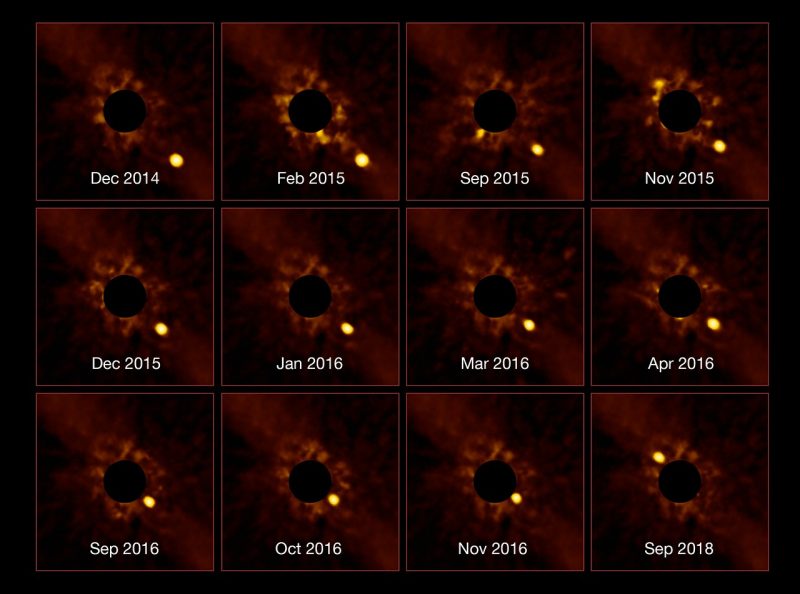
View larger. | Exoplanet Beta Pictoris b moving around its parent star, from December 2014 until it disappeared into the star’s glare in late 2016. Then, 2 years later, astronomers saw it re-emerge on the other side of its star. Notice the planet’s position in the bottom right image, in contrast to the others! Image via ESO/ Lagrange/ SPHERE consortium.

The European Southern Observatory (ESO) said on November 12, 2018 that its Very Large Telescope has captured an unprecedented series of images showing the passage of the exoplanet Beta Pictoris b around its parent star. The images are above? They’re amazing on their face, but especially when you notice the location of the exoplanet in the bottom right image – theone from September, 2018 – in contrast to all those that came before. In other words, this planet went into the glare of its star for about two years. We couldn’t see it at all then. But now it has re-emerged on the opposite side of its star, as any respectable world moving in orbit would do.

We know worlds in space do this, but to see it! That’s something new.

It wasn’t until the early 1990s that astronomers began finding planets orbiting distant suns. Now – despite the conjecture that there might be some billion planets in our Milky Way galaxy alone – we’ve managed to discover only several thousand exoplanets. It’s finding them in the glare of their stars that has been the challenge. By their nature, stars produce light; planets don’t. Planets only shine with the reflected light from their stars. So spotting them in their stars’ glare was a major challenge to astronomers for decades.

And it’s still a challenge, although – as you can see from this stunning image – the technologies have vastly improved.

Beta Pictoris b is a young massive exoplanet, initially discovered via direct imaging in 2008 using ESO’s NACO instrument at the Very Large Telescope. Most exoplanets are discovered when they transit, or pass in front of, their stars along our line of sight. But, from our earthly perspective, Beta Pictoris b doesn’t quite transit, so it had to be found via direct imaging. ESO said:

The same science team [that discovered it] since tracked the exoplanet from late 2014 until late 2016, using the Spectro-Polarimetric High-contrast Exoplanet REsearch instrument (SPHERE) — another instrument on the Very Large Telescope.

Beta Pictoris b then passed so close to the halo of the star that no instrument could resolve them from one another. Almost two years later, after seeming to merge into the image of the star, Beta Pictoris b has now emerged from the halo. This reappearance was captured again by SPHERE … [which] specializes in direct imaging, hunting for exoplanets by taking their photographs. This extraordinarily challenging endeavor provides us with clear images of distant worlds such as Beta Pictoris b, 63 light-years away.

Beta Pictoris b orbits its star at a distance similar to that between the sun and Saturn [approximately 800 million miles or 1.3 billion kilometers], meaning it’s the most closely orbiting exoplanet ever to have been directly imaged. The surface of this young planet is still hot, around 1 500 °C, and the light it emits enabled SPHERE to discover it and track its orbit, seeing it emerge from its passage in front of its parent star.

ESO has also created a timelapse video from these images, which you can see here. Enjoy!

Bottom line: Stunning new sequence of images from ESO’s SPHERE instrument, showing the passage of exoplanet Beta Pictoris b into the glare of its star and then, two years later, re-emerging.

Via ESO


from EarthSky https://ift.tt/2PVUGjb

View larger. | Exoplanet Beta Pictoris b moving around its parent star, from December 2014 until it disappeared into the star’s glare in late 2016. Then, 2 years later, astronomers saw it re-emerge on the other side of its star. Notice the planet’s position in the bottom right image, in contrast to the others! Image via ESO/ Lagrange/ SPHERE consortium.

The European Southern Observatory (ESO) said on November 12, 2018 that its Very Large Telescope has captured an unprecedented series of images showing the passage of the exoplanet Beta Pictoris b around its parent star. The images are above? They’re amazing on their face, but especially when you notice the location of the exoplanet in the bottom right image – theone from September, 2018 – in contrast to all those that came before. In other words, this planet went into the glare of its star for about two years. We couldn’t see it at all then. But now it has re-emerged on the opposite side of its star, as any respectable world moving in orbit would do.

We know worlds in space do this, but to see it! That’s something new.

It wasn’t until the early 1990s that astronomers began finding planets orbiting distant suns. Now – despite the conjecture that there might be some billion planets in our Milky Way galaxy alone – we’ve managed to discover only several thousand exoplanets. It’s finding them in the glare of their stars that has been the challenge. By their nature, stars produce light; planets don’t. Planets only shine with the reflected light from their stars. So spotting them in their stars’ glare was a major challenge to astronomers for decades.

And it’s still a challenge, although – as you can see from this stunning image – the technologies have vastly improved.

Beta Pictoris b is a young massive exoplanet, initially discovered via direct imaging in 2008 using ESO’s NACO instrument at the Very Large Telescope. Most exoplanets are discovered when they transit, or pass in front of, their stars along our line of sight. But, from our earthly perspective, Beta Pictoris b doesn’t quite transit, so it had to be found via direct imaging. ESO said:

The same science team [that discovered it] since tracked the exoplanet from late 2014 until late 2016, using the Spectro-Polarimetric High-contrast Exoplanet REsearch instrument (SPHERE) — another instrument on the Very Large Telescope.

Beta Pictoris b then passed so close to the halo of the star that no instrument could resolve them from one another. Almost two years later, after seeming to merge into the image of the star, Beta Pictoris b has now emerged from the halo. This reappearance was captured again by SPHERE … [which] specializes in direct imaging, hunting for exoplanets by taking their photographs. This extraordinarily challenging endeavor provides us with clear images of distant worlds such as Beta Pictoris b, 63 light-years away.

Beta Pictoris b orbits its star at a distance similar to that between the sun and Saturn [approximately 800 million miles or 1.3 billion kilometers], meaning it’s the most closely orbiting exoplanet ever to have been directly imaged. The surface of this young planet is still hot, around 1 500 °C, and the light it emits enabled SPHERE to discover it and track its orbit, seeing it emerge from its passage in front of its parent star.

ESO has also created a timelapse video from these images, which you can see here. Enjoy!

Bottom line: Stunning new sequence of images from ESO’s SPHERE instrument, showing the passage of exoplanet Beta Pictoris b into the glare of its star and then, two years later, re-emerging.

Via ESO


from EarthSky https://ift.tt/2PVUGjb

The Prime Minister committed to diagnosing cancers earlier – so how many staff does the NHS need to get there?

Image of a doctor analysing a scan.

“We won’t be able to care for the rising number of cancer patients and diagnose them early without more specialist staff,” says Dr Giles Maskell, consultant radiologist at Royal Cornwall Hospitals.

It’s a familiar picture: a short-staffed NHS is leaving hospitals under increasing pressure.

“Far too many patients are waiting too long for scans and results. In my own department, staff are already at full stretch,” adds Maskell.

“Extra scanners are welcome but will achieve nothing without staff to run them and experts to interpret the scans. It’s like buying a fleet of planes with no pilots to fly them.”

Put simply, the NHS is heading for a staff crisis. But what’s the true shortfall in staff? And how many might be needed in the future to achieve the Prime Minister’s commitment to diagnose more cancers early?

We’ve attempted to find out by estimating the number of cancer staff the NHS will need in the future so that people with cancer receive the best possible care. And it highlights the challenges ahead.

Based on our estimates, we think the NHS will need to double its cancer staff to cope with demand.

Share the findings of our new report with the Health Secretary, Matt Hancock, by writing to him and asking him to come up with plan to fix this pending staff crisis.

What did we do?

By 2027, around 389,000 people in England are expected to be diagnosed with cancer every year, which is an increase of over 80,000 on current levels. We wanted to estimate how many staff would be needed to diagnose and treat this many more people in the future.

It may surprise you, but workforce planning in the NHS doesn’t always consider the needs of patients in the future.

We spoke to doctors to find out how many times they need to perform certain tasks to care for people with different types of cancer, and how long each task takes.

We then used the projected number of cancer cases to estimate how much staff time would be needed to care for cancer patients in 2027 – making sure to reflect the fact that many more people will undergo tests for cancer than will go on to be diagnosed with cancer.

By asking doctors what proportion of their time they spend caring for patients with cancer, we were then able to estimate of how many staff in total would be required in the future.

What did we find out?

We estimated the staff numbers that we think the NHS will need in 2027 across four key groups who diagnose and treat cancer:

  • radiologists (who interpret scans);
  • gastroenterologists (who perform tests such as colonoscopies);
  • therapeutic radiographers (who treat patients with radiotherapy); and
  • oncologists (who treat people with cancer).

Our estimates show that across these key groups, the number of staff needs to double by 2027 – just to meet the needs of the extra people we expect to be diagnosed with cancer in the next 10 years.

There are many other crucial staff for whom we couldn’t estimate numbers, but where the NHS will likely need to boost numbers too, such as GPs, histopathologists and diagnostic radiographers.

The NHS needs more staff to help people affected by cancer

These extra staff are what we estimate will be required to provide the same level of care for increased numbers of patients in the future.

But we want more people to survive their cancer for 10 years or more in the future. To do this the NHS needs to improve care, not just maintain current standards.

The Prime Minister’s recent commitment to diagnose 3 in 4 cancers at an early stage by 2028 will be vital to this – for the most common cancers, people are 3 times more likely to survive when their cancer is diagnosed at an early stage (1 and 2) compared to a late stage (3 and 4).

Graphic showing that early diagnosis leads to three times higher survival.

The Prime Minister announced some changes to help meet this ambition, such as lowering the bowel screening age to 50. Our report considers the possible impact of these and many other changes on the staff numbers we need. For example, lowering the bowel screening age is likely to require many more colonoscopies, which means the NHS will need more staff to perform these tests.

As well as diagnosing people earlier, the NHS must make sure patients have access to the best possible treatments when they are diagnosed. Our report explores how new treatments might affect the numbers of staff the NHS needs – for example, newer types of radiotherapy like IMRT, SABR and proton beam therapy might require more radiographers to carry out more complicated planning and treatment.

We want the Government and the NHS to factor in growing patient numbers, as well as ambitions to provide better care, when developing a long-term plan for the workforce.

Doctors and other healthcare professionals take a long time to train – so if the Government doesn’t plan now to meet the needs of future patients, the NHS won’t achieve better cancer services and improve survival.

Patients now and in the future need a long-term plan for the NHS workforce, and the Government must provide investment to make it happen.

Matt Case is a policy manager at Cancer Research UK

Have your say

Ask Matt Hancock to fund a long-term plan for the workforce – without one, the NHS won’t be able to provide better care for patients in the future.


from Cancer Research UK – Science blog https://ift.tt/2qJ9inM
Image of a doctor analysing a scan.

“We won’t be able to care for the rising number of cancer patients and diagnose them early without more specialist staff,” says Dr Giles Maskell, consultant radiologist at Royal Cornwall Hospitals.

It’s a familiar picture: a short-staffed NHS is leaving hospitals under increasing pressure.

“Far too many patients are waiting too long for scans and results. In my own department, staff are already at full stretch,” adds Maskell.

“Extra scanners are welcome but will achieve nothing without staff to run them and experts to interpret the scans. It’s like buying a fleet of planes with no pilots to fly them.”

Put simply, the NHS is heading for a staff crisis. But what’s the true shortfall in staff? And how many might be needed in the future to achieve the Prime Minister’s commitment to diagnose more cancers early?

We’ve attempted to find out by estimating the number of cancer staff the NHS will need in the future so that people with cancer receive the best possible care. And it highlights the challenges ahead.

Based on our estimates, we think the NHS will need to double its cancer staff to cope with demand.

Share the findings of our new report with the Health Secretary, Matt Hancock, by writing to him and asking him to come up with plan to fix this pending staff crisis.

What did we do?

By 2027, around 389,000 people in England are expected to be diagnosed with cancer every year, which is an increase of over 80,000 on current levels. We wanted to estimate how many staff would be needed to diagnose and treat this many more people in the future.

It may surprise you, but workforce planning in the NHS doesn’t always consider the needs of patients in the future.

We spoke to doctors to find out how many times they need to perform certain tasks to care for people with different types of cancer, and how long each task takes.

We then used the projected number of cancer cases to estimate how much staff time would be needed to care for cancer patients in 2027 – making sure to reflect the fact that many more people will undergo tests for cancer than will go on to be diagnosed with cancer.

By asking doctors what proportion of their time they spend caring for patients with cancer, we were then able to estimate of how many staff in total would be required in the future.

What did we find out?

We estimated the staff numbers that we think the NHS will need in 2027 across four key groups who diagnose and treat cancer:

  • radiologists (who interpret scans);
  • gastroenterologists (who perform tests such as colonoscopies);
  • therapeutic radiographers (who treat patients with radiotherapy); and
  • oncologists (who treat people with cancer).

Our estimates show that across these key groups, the number of staff needs to double by 2027 – just to meet the needs of the extra people we expect to be diagnosed with cancer in the next 10 years.

There are many other crucial staff for whom we couldn’t estimate numbers, but where the NHS will likely need to boost numbers too, such as GPs, histopathologists and diagnostic radiographers.

The NHS needs more staff to help people affected by cancer

These extra staff are what we estimate will be required to provide the same level of care for increased numbers of patients in the future.

But we want more people to survive their cancer for 10 years or more in the future. To do this the NHS needs to improve care, not just maintain current standards.

The Prime Minister’s recent commitment to diagnose 3 in 4 cancers at an early stage by 2028 will be vital to this – for the most common cancers, people are 3 times more likely to survive when their cancer is diagnosed at an early stage (1 and 2) compared to a late stage (3 and 4).

Graphic showing that early diagnosis leads to three times higher survival.

The Prime Minister announced some changes to help meet this ambition, such as lowering the bowel screening age to 50. Our report considers the possible impact of these and many other changes on the staff numbers we need. For example, lowering the bowel screening age is likely to require many more colonoscopies, which means the NHS will need more staff to perform these tests.

As well as diagnosing people earlier, the NHS must make sure patients have access to the best possible treatments when they are diagnosed. Our report explores how new treatments might affect the numbers of staff the NHS needs – for example, newer types of radiotherapy like IMRT, SABR and proton beam therapy might require more radiographers to carry out more complicated planning and treatment.

We want the Government and the NHS to factor in growing patient numbers, as well as ambitions to provide better care, when developing a long-term plan for the workforce.

Doctors and other healthcare professionals take a long time to train – so if the Government doesn’t plan now to meet the needs of future patients, the NHS won’t achieve better cancer services and improve survival.

Patients now and in the future need a long-term plan for the NHS workforce, and the Government must provide investment to make it happen.

Matt Case is a policy manager at Cancer Research UK

Have your say

Ask Matt Hancock to fund a long-term plan for the workforce – without one, the NHS won’t be able to provide better care for patients in the future.


from Cancer Research UK – Science blog https://ift.tt/2qJ9inM

See it! Moon sweeps past Saturn

Ken Christison caught the moon and Saturn on Saturday evening, November 10, 2018. He wrote: “Here is a stack of about 40 minutes of the moon last evening shot at 1-minute intervals as it was going down. Saturn is seen to the left of the moon stack. Shot from northeastern North Carolina.” Beautiful, Ken! Thank you.

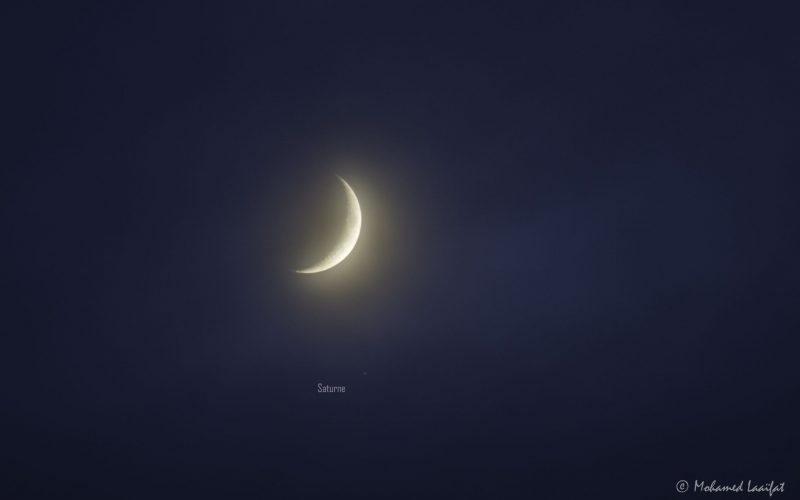
Mohamed Laaifat Photographies in Normandy, France also caught the moon and Saturn on November 10. Thank you, Mohamed!

Dennis Chabot of POSNE NightSky caught the moon and Saturn Sunday evening – November 11, 2018 – from Massachusetts. See how the moon has moved with respect to Saturn since Saturday? That movement on our sky’s dome is due to the moon’s actual motion in orbit around Earth. Thanks, Dennis!

Bottom line: The moon passed Saturn this weekend. Photos from the EarthSky community.


from EarthSky https://ift.tt/2PnfTDp

Ken Christison caught the moon and Saturn on Saturday evening, November 10, 2018. He wrote: “Here is a stack of about 40 minutes of the moon last evening shot at 1-minute intervals as it was going down. Saturn is seen to the left of the moon stack. Shot from northeastern North Carolina.” Beautiful, Ken! Thank you.

Mohamed Laaifat Photographies in Normandy, France also caught the moon and Saturn on November 10. Thank you, Mohamed!

Dennis Chabot of POSNE NightSky caught the moon and Saturn Sunday evening – November 11, 2018 – from Massachusetts. See how the moon has moved with respect to Saturn since Saturday? That movement on our sky’s dome is due to the moon’s actual motion in orbit around Earth. Thanks, Dennis!

Bottom line: The moon passed Saturn this weekend. Photos from the EarthSky community.


from EarthSky https://ift.tt/2PnfTDp

How did Earth get its water?

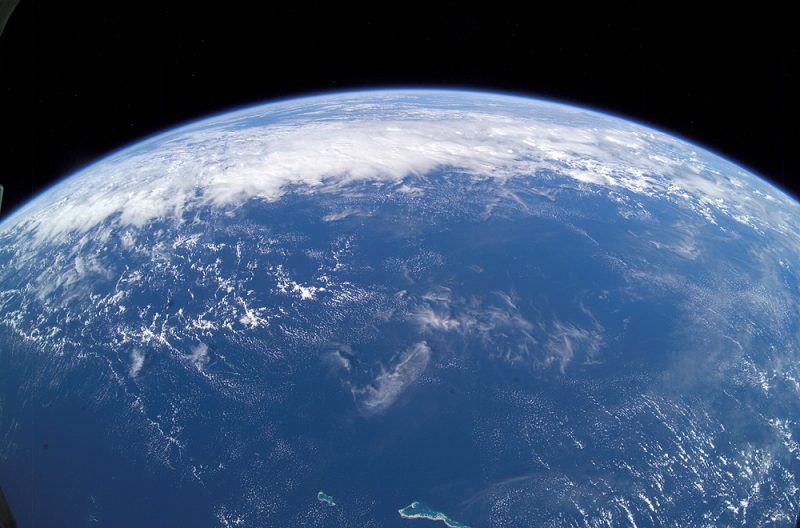
Earth, the water planet. Image via NASA.

Earth is rich in water, and has been for a few billion years, but scientists are still debating just where all that life-sustaining liquid came from. At least some of it was thought to have been brought here by comets or asteroids, but that idea still falls short in explaining how so much water ended up on Earth’s surface – and deep below, as well. Now, a team of scientists at Arizona State University (ASU), led by Peter Buseck, has come up with a new proposal. The new peer-reviewed paper was published in the Journal of Geophysical Research: Planets on October 9, 2018.

The new research suggests that Earth’s water came from both rocky material, such as asteroids, and from the vast cloud of dust and gas remaining after the sun’s formation, called the solar nebula.

The 2019 lunar calendars are here! Order yours before they’re gone. Makes a great gift.

Earth’s ocean water is similar to that found in asteroids. That’s one reason scientists have long thought that most earthly water came from an asteroid bombardment in the days of the early solar system. The ratio of deuterium – a heavier hydrogen isotope – to normal hydrogen is a unique chemical signature in various water sources. In the case of Earth’s oceans, the deuterium-to-hydrogen ratio is close to what is found in asteroids. But, according to Steven Desch, also at ASU and one of the team members:

It’s a bit of a blind spot in the community. When people measure the [deuterium-to-hydrogen] ratio in ocean water and they see that it is pretty close to what we see in asteroids, it was always easy to believe it all came from asteroids.

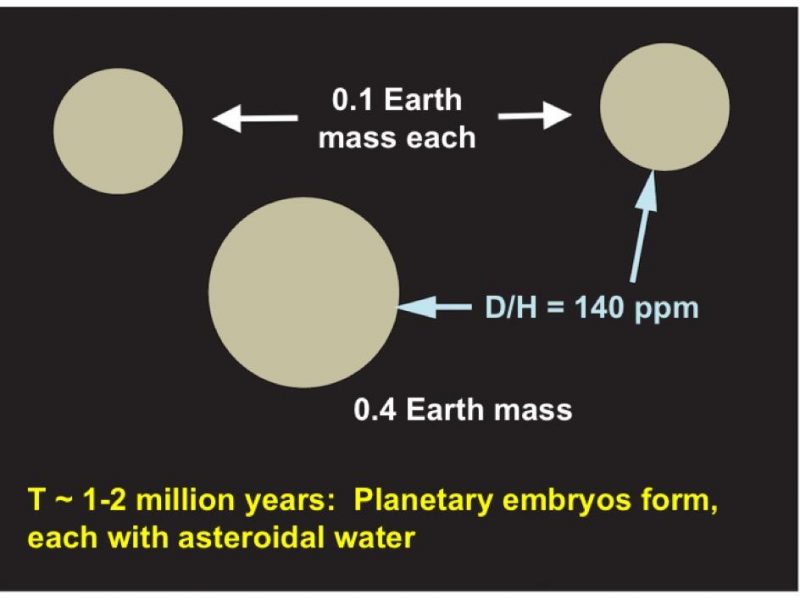
Some of Earth’s first water came from colliding planetary embryos containing asteroidal water. Image via J. Wu/S. Desch/ASU.

Jun Wu at ASU is lead author of the study. He added:

The solar nebula has been given the least attention among existing theories, although it was the predominant reservoir of hydrogen in our early solar system.

The hydrogen in Earth’s oceans may not represent the hydrogen throughout the planet as a whole, however. Samples of hydrogen from deep inside the Earth, close to the boundary between the core and mantle, have notably less deuterium – indicating that this hydrogen may not have come from asteroids, after all. The noble gases helium and neon, with isotopic signatures inherited from the solar nebula, have also been found in the Earth’s mantle.

How to explain these differences? The researchers needed to develop a new theoretical model of Earth’s formation to answer that question. According to the model, Earth was the largest of many planetary embryos – aka protoplanets – in the early solar system.

Essentially, their model shows large, waterlogged asteroids eventually forming into planets like Earth through collisions.

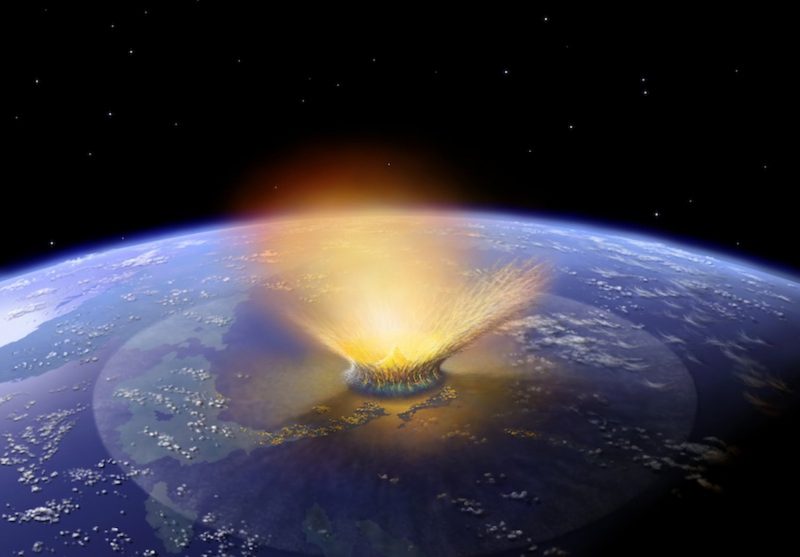
Much of Earth’s water is thought to have come from asteroids impacting the planet early in its history. Image via NASA/Don Davis.

The surface of the very young Earth was initially an ocean of magma. Hydrogen and noble gases from the solar nebula were drawn to the planetary embryo, forming the first atmosphere. Nebular hydrogen, which contains less deuterium and is lighter than asteroidal hydrogen, dissolved into the molten iron of the magma ocean.

Hydrogen was then drawn toward the center of the Earth – a process called isotopic fractionation. Hydrogen was delivered to the core through its attraction to iron, while much of the heavier isotope, deuterium, remained in the magma which eventually cooled to form the mantle. Impacts from smaller planetary embryos and other objects continued to add additional water and mass until Earth reached its final size.

The end result was that Earth had noble gases deep in its interior, with a lower deuterium-to-hydrogen ratio in its core than in its mantle and oceans. Most of Earth’s water did come from asteroids, but some also came from the solar nebula. As Wu noted:

For every 100 molecules of Earth’s water, there are one or two coming from the solar nebula.

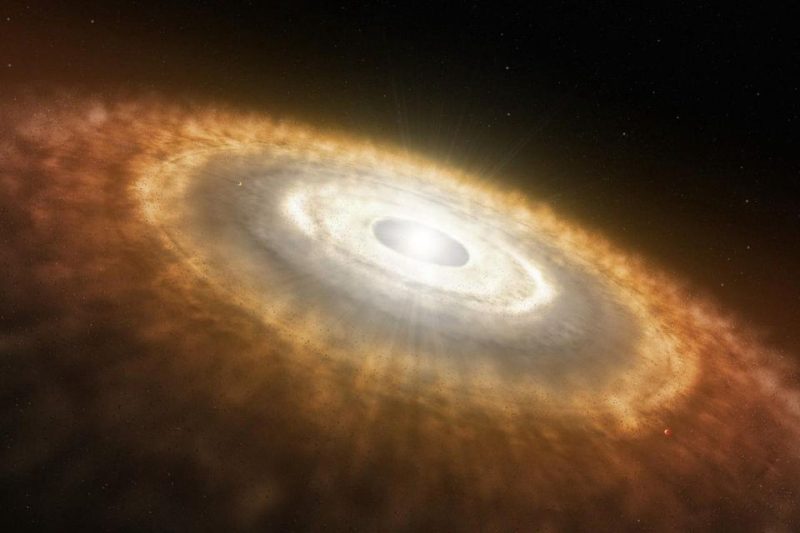
Artist’s concept of the solar nebula – a giant disk of gas and dust – that surrounded the young sun early in the solar system’s history. Some of Earth’s water is now thought to also have come from here. Image via ESO/L. Calçada.

So what about comets, since they have so much water-ice in them? According to Desch:

Comets contain a lot of ices, and in theory could have supplied some water. But there’s another way to think about sources of water in the solar system’s formative days. Because water is hydrogen plus oxygen, and oxygen is abundant, any source of hydrogen could have served as the origin of Earth’s water.

Also, comets have higher deuterium-to-hydrogen (D/H) ratios, so they are actually not good sources for Earth’s water. The D/H ratio of hydrogen gas in the solar nebula was only 21 ppm, too low to have supplied most of the water on Earth. Asteroids are a much better match, along with the solar nebula.

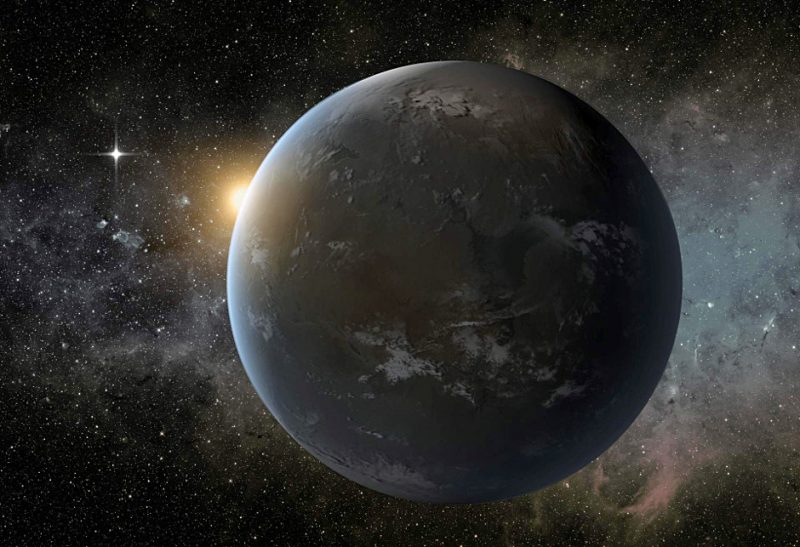
The new study results could also have implications for rocky exoplanets orbiting other stars, such as the super-Earth Wolf 1061c in this artist’s concept image. Many of them could have abundant water, just like Earth. Image via NASA/Ames/JPL-Caltech.

Finally, the new results have implications for rocky exoplanets orbiting other stars. Many such worlds have now been discovered, and if there is a greater chance for some of them to also have liquid water, that also increases the chances of those planets being habitable. According to the researchers:

Our results suggest that forming water is likely inevitable on sufficiently large rocky planets in extrasolar systems.

Bottom line: The origin of Earth’s water has been debated for a long time, but this new study points to a source – the solar nebula, or cloud of gas and dust left after the sun’s formation – that had been previously mostly overlooked. The new work, based on computer modeling, may have implications for rocky worlds orbiting distant stars.

Source: Origin of Earth’s Water: Chondritic Inheritance Plus Nebular Ingassing and Storage of Hydrogen in the Core

Via Arizona State University


from EarthSky https://ift.tt/2FjPWjk

Earth, the water planet. Image via NASA.

Earth is rich in water, and has been for a few billion years, but scientists are still debating just where all that life-sustaining liquid came from. At least some of it was thought to have been brought here by comets or asteroids, but that idea still falls short in explaining how so much water ended up on Earth’s surface – and deep below, as well. Now, a team of scientists at Arizona State University (ASU), led by Peter Buseck, has come up with a new proposal. The new peer-reviewed paper was published in the Journal of Geophysical Research: Planets on October 9, 2018.

The new research suggests that Earth’s water came from both rocky material, such as asteroids, and from the vast cloud of dust and gas remaining after the sun’s formation, called the solar nebula.

The 2019 lunar calendars are here! Order yours before they’re gone. Makes a great gift.

Earth’s ocean water is similar to that found in asteroids. That’s one reason scientists have long thought that most earthly water came from an asteroid bombardment in the days of the early solar system. The ratio of deuterium – a heavier hydrogen isotope – to normal hydrogen is a unique chemical signature in various water sources. In the case of Earth’s oceans, the deuterium-to-hydrogen ratio is close to what is found in asteroids. But, according to Steven Desch, also at ASU and one of the team members:

It’s a bit of a blind spot in the community. When people measure the [deuterium-to-hydrogen] ratio in ocean water and they see that it is pretty close to what we see in asteroids, it was always easy to believe it all came from asteroids.

Some of Earth’s first water came from colliding planetary embryos containing asteroidal water. Image via J. Wu/S. Desch/ASU.

Jun Wu at ASU is lead author of the study. He added:

The solar nebula has been given the least attention among existing theories, although it was the predominant reservoir of hydrogen in our early solar system.

The hydrogen in Earth’s oceans may not represent the hydrogen throughout the planet as a whole, however. Samples of hydrogen from deep inside the Earth, close to the boundary between the core and mantle, have notably less deuterium – indicating that this hydrogen may not have come from asteroids, after all. The noble gases helium and neon, with isotopic signatures inherited from the solar nebula, have also been found in the Earth’s mantle.

How to explain these differences? The researchers needed to develop a new theoretical model of Earth’s formation to answer that question. According to the model, Earth was the largest of many planetary embryos – aka protoplanets – in the early solar system.

Essentially, their model shows large, waterlogged asteroids eventually forming into planets like Earth through collisions.

Much of Earth’s water is thought to have come from asteroids impacting the planet early in its history. Image via NASA/Don Davis.

The surface of the very young Earth was initially an ocean of magma. Hydrogen and noble gases from the solar nebula were drawn to the planetary embryo, forming the first atmosphere. Nebular hydrogen, which contains less deuterium and is lighter than asteroidal hydrogen, dissolved into the molten iron of the magma ocean.

Hydrogen was then drawn toward the center of the Earth – a process called isotopic fractionation. Hydrogen was delivered to the core through its attraction to iron, while much of the heavier isotope, deuterium, remained in the magma which eventually cooled to form the mantle. Impacts from smaller planetary embryos and other objects continued to add additional water and mass until Earth reached its final size.

The end result was that Earth had noble gases deep in its interior, with a lower deuterium-to-hydrogen ratio in its core than in its mantle and oceans. Most of Earth’s water did come from asteroids, but some also came from the solar nebula. As Wu noted:

For every 100 molecules of Earth’s water, there are one or two coming from the solar nebula.

Artist’s concept of the solar nebula – a giant disk of gas and dust – that surrounded the young sun early in the solar system’s history. Some of Earth’s water is now thought to also have come from here. Image via ESO/L. Calçada.

So what about comets, since they have so much water-ice in them? According to Desch:

Comets contain a lot of ices, and in theory could have supplied some water. But there’s another way to think about sources of water in the solar system’s formative days. Because water is hydrogen plus oxygen, and oxygen is abundant, any source of hydrogen could have served as the origin of Earth’s water.

Also, comets have higher deuterium-to-hydrogen (D/H) ratios, so they are actually not good sources for Earth’s water. The D/H ratio of hydrogen gas in the solar nebula was only 21 ppm, too low to have supplied most of the water on Earth. Asteroids are a much better match, along with the solar nebula.

The new study results could also have implications for rocky exoplanets orbiting other stars, such as the super-Earth Wolf 1061c in this artist’s concept image. Many of them could have abundant water, just like Earth. Image via NASA/Ames/JPL-Caltech.

Finally, the new results have implications for rocky exoplanets orbiting other stars. Many such worlds have now been discovered, and if there is a greater chance for some of them to also have liquid water, that also increases the chances of those planets being habitable. According to the researchers:

Our results suggest that forming water is likely inevitable on sufficiently large rocky planets in extrasolar systems.

Bottom line: The origin of Earth’s water has been debated for a long time, but this new study points to a source – the solar nebula, or cloud of gas and dust left after the sun’s formation – that had been previously mostly overlooked. The new work, based on computer modeling, may have implications for rocky worlds orbiting distant stars.

Source: Origin of Earth’s Water: Chondritic Inheritance Plus Nebular Ingassing and Storage of Hydrogen in the Core

Via Arizona State University


from EarthSky https://ift.tt/2FjPWjk

How to see Venus in daytime

Venus and moon, through a telescope, in daytime. Venus is the most commonly seen sky object seen in daytime, after the sun and moon. (NASA image)

Crescent Venus (left) and crescent moon, through a telescope, in daytime. Venus is the most commonly seen sky object seen in daytime, after the sun and moon. Image via NASA.

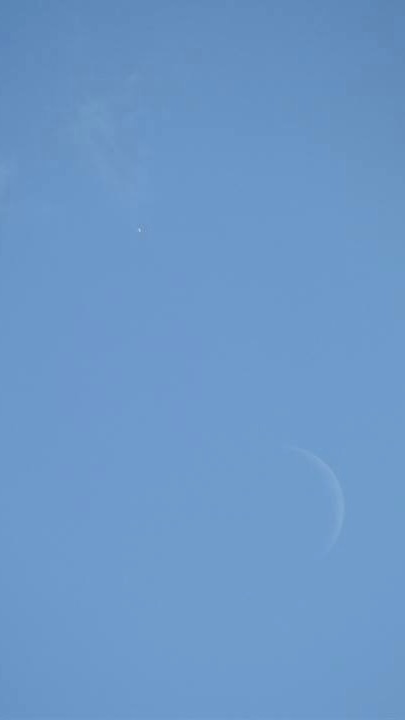
Have you ever seen the moon in a daytime sky? You can see the brightest planet, Venus, in daylight, too, if you know exactly where to look. The coming weeks offer a great opportunity for seeing Venus in a blue daytime sky. The planet is up before the sun now – low in the east as dawn breaks – and it’s approaching another time of greatest brilliancy in late November and early December. Many will find Venus before sunup, and watch it with the eye until after the sun rises. Others will capture Venus in daylight on film, especially around December 2 to 4, when Venus will be near the waning moon.

The 2019 lunar calendars are here! Order yours before they’re gone. Makes a great gift.

Venus is bright. Not counting some short-lived meteors and comets, it’s the brightest natural object in the sky other than the sun and the moon. Venus is often so bright that it is easily viewed by the unaided human eye during daylight hours. It’s not always easy, though. In this post, we’ll tell you how to improve your chances of seeing Venus during the day.

Here are 3 great mornings to look for Venus in daylight. On December 2 to 4, 2018, the brightest planet will be near the waning crescent moon. Spot them before sunup, and follow them as the sky lightens.

No matter where you are on Earth, here are some general rules to follow:

1. Get some good, free, open source planetarium software that’ll let you set your latitude and longitude … and show you the exact orientation of Venus with respect to the sunrise (or the moon) in your sky on a specific date. There are lots of options here. Many people like Stellarium. Or you can try Google Planetarium. Or maybe you have your own favorite. The great value of using planetarium software is that it allows you to see the exact orientation of objects in your sky.

2. Finding Venus in daylight in the morning sky is much easier than finding it in the evening sky. That’s because you can start watching it before sunrise, then follow it until after sunrise. If you lose it, try scanning with your binoculars! Or try again the next morning.

3. Need a good sunrise/sunset calculator? Try this one.

4. When you spot Venus in daylight, you’d find it a very small and inconspicuous object. It’s much less conspicuous than the daytime moon. The easiest way to find Venus in daylight is to have something more easily found nearby from which you can navigate to the otherwise inconspicuous daytime planet. The best landmark, of course, is the moon. Try the mornings of December 2, 3 or 4, when the moon will be nearby. Those mornings will offer you good photo opportunities as well. And if you catch a good photo, be sure to submit it to EarthSky!

For more things to see in the daytime sky, see Larry’s previous article: 10 surprising space objects to see in the daytime sky.

And, remember, if you miss Venus in daytime, you can still catch it before sunup! Venus is blazing away in the east before sunup now. It’s the brightest object in that part of the sky.

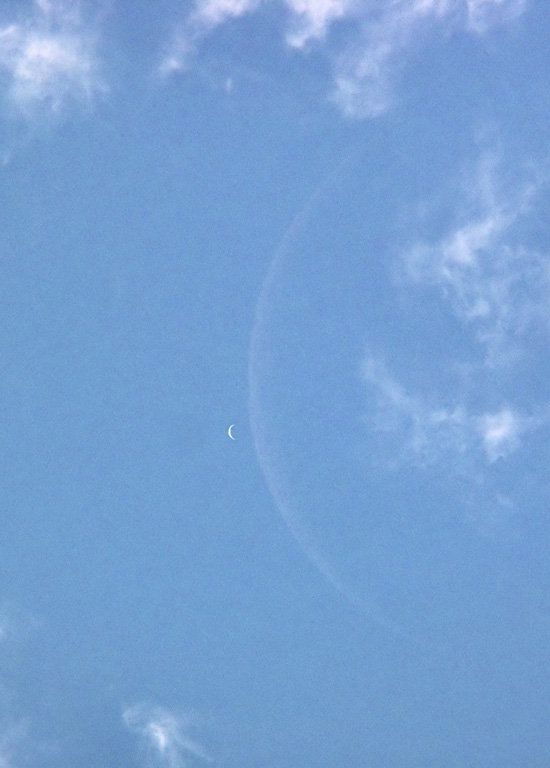
Venus and moon in daylight on September 8, 2013, as captured by Enrique Fiset in Canada. Thank you, Enrique!

Bottom line: This post tells you how to see Venus in a blue daytime sky in late 2018. Late November and early December are great times to look, because Venus is brightest around then. Good luck!


from EarthSky https://ift.tt/2JXA7gJ
Venus and moon, through a telescope, in daytime. Venus is the most commonly seen sky object seen in daytime, after the sun and moon. (NASA image)

Crescent Venus (left) and crescent moon, through a telescope, in daytime. Venus is the most commonly seen sky object seen in daytime, after the sun and moon. Image via NASA.

Have you ever seen the moon in a daytime sky? You can see the brightest planet, Venus, in daylight, too, if you know exactly where to look. The coming weeks offer a great opportunity for seeing Venus in a blue daytime sky. The planet is up before the sun now – low in the east as dawn breaks – and it’s approaching another time of greatest brilliancy in late November and early December. Many will find Venus before sunup, and watch it with the eye until after the sun rises. Others will capture Venus in daylight on film, especially around December 2 to 4, when Venus will be near the waning moon.

The 2019 lunar calendars are here! Order yours before they’re gone. Makes a great gift.

Venus is bright. Not counting some short-lived meteors and comets, it’s the brightest natural object in the sky other than the sun and the moon. Venus is often so bright that it is easily viewed by the unaided human eye during daylight hours. It’s not always easy, though. In this post, we’ll tell you how to improve your chances of seeing Venus during the day.

Here are 3 great mornings to look for Venus in daylight. On December 2 to 4, 2018, the brightest planet will be near the waning crescent moon. Spot them before sunup, and follow them as the sky lightens.

No matter where you are on Earth, here are some general rules to follow:

1. Get some good, free, open source planetarium software that’ll let you set your latitude and longitude … and show you the exact orientation of Venus with respect to the sunrise (or the moon) in your sky on a specific date. There are lots of options here. Many people like Stellarium. Or you can try Google Planetarium. Or maybe you have your own favorite. The great value of using planetarium software is that it allows you to see the exact orientation of objects in your sky.

2. Finding Venus in daylight in the morning sky is much easier than finding it in the evening sky. That’s because you can start watching it before sunrise, then follow it until after sunrise. If you lose it, try scanning with your binoculars! Or try again the next morning.

3. Need a good sunrise/sunset calculator? Try this one.

4. When you spot Venus in daylight, you’d find it a very small and inconspicuous object. It’s much less conspicuous than the daytime moon. The easiest way to find Venus in daylight is to have something more easily found nearby from which you can navigate to the otherwise inconspicuous daytime planet. The best landmark, of course, is the moon. Try the mornings of December 2, 3 or 4, when the moon will be nearby. Those mornings will offer you good photo opportunities as well. And if you catch a good photo, be sure to submit it to EarthSky!

For more things to see in the daytime sky, see Larry’s previous article: 10 surprising space objects to see in the daytime sky.

And, remember, if you miss Venus in daytime, you can still catch it before sunup! Venus is blazing away in the east before sunup now. It’s the brightest object in that part of the sky.

Venus and moon in daylight on September 8, 2013, as captured by Enrique Fiset in Canada. Thank you, Enrique!

Bottom line: This post tells you how to see Venus in a blue daytime sky in late 2018. Late November and early December are great times to look, because Venus is brightest around then. Good luck!


from EarthSky https://ift.tt/2JXA7gJ

Venus spectacular in morning sky

Photo at top: Venus in the east before sunrise – November 8, 2018 – via Brett Joseph in San Anselmo, California

In late October 2018, the planet Venus transitioned out of the evening sky and into the morning sky. Now that it’s well into November 2018, this dazzling world has reclaimed its position as the morning “star” and will be shining at its brightest best in the morning sky in late November and early December.

Given an unobstructed horizon in the direction of sunrise, you’ll easily see Venus blazing away in the east an hour before sunrise. After all, Venus ranks the 3rd-brightest celestial body to light up the sky, after the sun and moon.

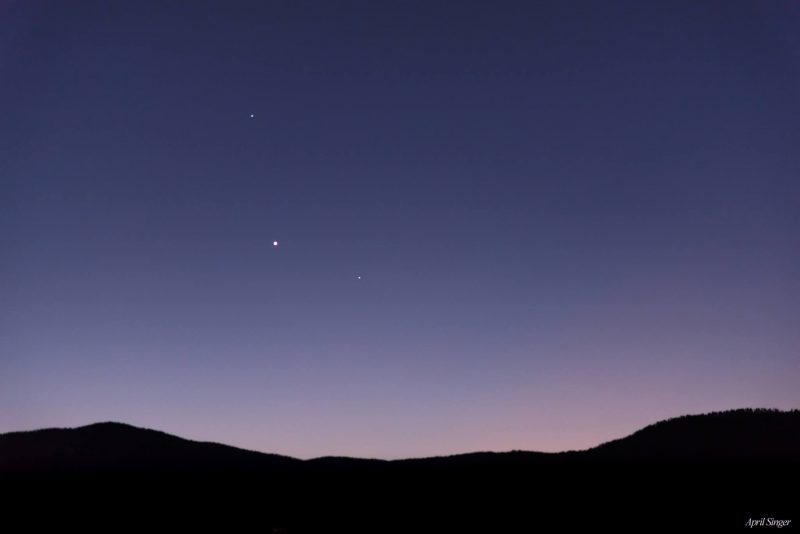
April Singer in Santa Fe, New Mexico also caught bright Venus on November 8, 2018.

Because Venus is so bright, you can see it in bright twilight. You might even spot Venus only half an hour (or less) before sunrise.

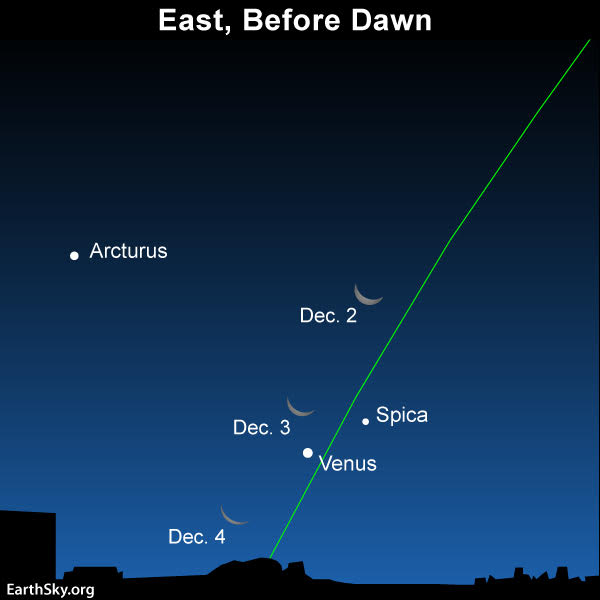
But if you’re up an hour or more before the sun, you can catch the bright star Arcturus to the north (left) of Venus. And if you’re up even earlier, you may also see Spica, the constellations Virgo’ brightest star, pairing up with Venus on the sky’s dome. See the chart below.

Although Spica rates as a 1st-magnitude star, Venus shines some 30 times more brilliantly than Spica. If you can’t spot Spica with the eye alone, try your luck with binoculars. Venus and Spica are so close together on the sky’s dome that the two will take stage in the same binocular field for the upcoming week.

Wake up before dawn to see Spica, the constellation Virgo’s brightest star, coupling up with Venus in the November 2018 morning sky.

Do you have a telescope? If so, this upcoming month presents a fine time for watching Venus’ waxing crescent phase through the telescope. Tomorrow morning – November 14, 2018 – Venus’ disk will be about 10% illuminated by sunshine. Day by day, as Venus travels farther away from Earth, Venus is nonetheless brightening in the morning sky. That’s because Venus’ phase is actually waxing (widening), and by the month’s end, Venus’ disk will be 25% illuminated in sunshine.

Want to know Venus’ present phase? Click here and choose Venus as the object of interest.

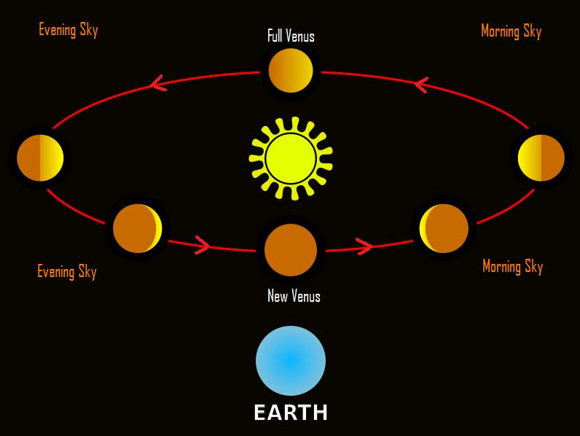
Venus transitions to the morning sky at new phase and into the evening sky at full phase. Venus and all the solar system planets go counterclockwise around the sun as seen from the north side of the solar system plane, as in this diagram.

Venus shines at its brightest as the morning “star” whenever Venus’ disk is about 25% illuminated by sunshine. This always happens some 36 days after Venus reaches new phase at inferior conjunction. Therefore, Venus will reach its greatest illuminated extent in early December 2018, or 36 days after Venus reached inferior conjunction on October 26, 2018. At greatest illuminated extent, the illuminated portion of Venus covers the most square area of sky, and it’s at and around this time that Venus shines most brightly in the morning sky.

After reaching greatest illuminated extent on December 2, 2018, Venus’ phase will widen but its disk size will shrink, so Venus’ overall brightness will slowly but surely decline. Even so, Venus will remain the 2nd-brightest celestial object to grace the morning sky (after the moon) until Venus transitions out of the morning sky into the evening sky at full phase (or superior conjunction) on August 14, 2019.

As Venus comes closer to Earth in the evening sky, its phase shrinks but its disk size enlarges. The converse is also true. Whenever Venus gets farther away from Earth in the morning sky, its phase increases but its disk size diminishes. Image credit: Statis Kalyvis

Bottom line: Get up early, and see why the planet Venus is named for a goddess of love and beauty. Then watch Venus – the sky’s brightest planet – as it brightens even more throughout November, 2018.


from EarthSky https://ift.tt/2Fkun25

Photo at top: Venus in the east before sunrise – November 8, 2018 – via Brett Joseph in San Anselmo, California

In late October 2018, the planet Venus transitioned out of the evening sky and into the morning sky. Now that it’s well into November 2018, this dazzling world has reclaimed its position as the morning “star” and will be shining at its brightest best in the morning sky in late November and early December.

Given an unobstructed horizon in the direction of sunrise, you’ll easily see Venus blazing away in the east an hour before sunrise. After all, Venus ranks the 3rd-brightest celestial body to light up the sky, after the sun and moon.

April Singer in Santa Fe, New Mexico also caught bright Venus on November 8, 2018.

Because Venus is so bright, you can see it in bright twilight. You might even spot Venus only half an hour (or less) before sunrise.

But if you’re up an hour or more before the sun, you can catch the bright star Arcturus to the north (left) of Venus. And if you’re up even earlier, you may also see Spica, the constellations Virgo’ brightest star, pairing up with Venus on the sky’s dome. See the chart below.

Although Spica rates as a 1st-magnitude star, Venus shines some 30 times more brilliantly than Spica. If you can’t spot Spica with the eye alone, try your luck with binoculars. Venus and Spica are so close together on the sky’s dome that the two will take stage in the same binocular field for the upcoming week.

Wake up before dawn to see Spica, the constellation Virgo’s brightest star, coupling up with Venus in the November 2018 morning sky.

Do you have a telescope? If so, this upcoming month presents a fine time for watching Venus’ waxing crescent phase through the telescope. Tomorrow morning – November 14, 2018 – Venus’ disk will be about 10% illuminated by sunshine. Day by day, as Venus travels farther away from Earth, Venus is nonetheless brightening in the morning sky. That’s because Venus’ phase is actually waxing (widening), and by the month’s end, Venus’ disk will be 25% illuminated in sunshine.

Want to know Venus’ present phase? Click here and choose Venus as the object of interest.

Venus transitions to the morning sky at new phase and into the evening sky at full phase. Venus and all the solar system planets go counterclockwise around the sun as seen from the north side of the solar system plane, as in this diagram.

Venus shines at its brightest as the morning “star” whenever Venus’ disk is about 25% illuminated by sunshine. This always happens some 36 days after Venus reaches new phase at inferior conjunction. Therefore, Venus will reach its greatest illuminated extent in early December 2018, or 36 days after Venus reached inferior conjunction on October 26, 2018. At greatest illuminated extent, the illuminated portion of Venus covers the most square area of sky, and it’s at and around this time that Venus shines most brightly in the morning sky.

After reaching greatest illuminated extent on December 2, 2018, Venus’ phase will widen but its disk size will shrink, so Venus’ overall brightness will slowly but surely decline. Even so, Venus will remain the 2nd-brightest celestial object to grace the morning sky (after the moon) until Venus transitions out of the morning sky into the evening sky at full phase (or superior conjunction) on August 14, 2019.

As Venus comes closer to Earth in the evening sky, its phase shrinks but its disk size enlarges. The converse is also true. Whenever Venus gets farther away from Earth in the morning sky, its phase increases but its disk size diminishes. Image credit: Statis Kalyvis

Bottom line: Get up early, and see why the planet Venus is named for a goddess of love and beauty. Then watch Venus – the sky’s brightest planet – as it brightens even more throughout November, 2018.


from EarthSky https://ift.tt/2Fkun25

adds 2