aads

A Dragon and a former pole star

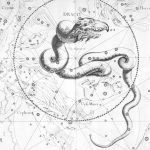
Tonight, if you have a dark sky, you’ll be able to pick the constellation Draco the Dragon winding around the North Star, Polaris. The image at the top of this post shows Draco as depicted in an old star atlas by Johannes Hevelius in 1690. See the circle around it? That circle indicates stars that are circumpolar, or always visible somewhere in the northern sky. As you can see, the constellation of the Dragon winds around the sky’s north celestial pole.

How can you see the Dragon? The Big Dipper can help guide you. Just remember … the entire Dragon requires a dark sky to be seen. You’ll find the Big Dipper high in the north on June evenings. The two outer stars in the Dipper’s bowl point to Polaris, the North Star, which marks the end of the Little Dipper’s handle.

The Dragon winds between the Big and Little Dippers, as shown on the chart below:
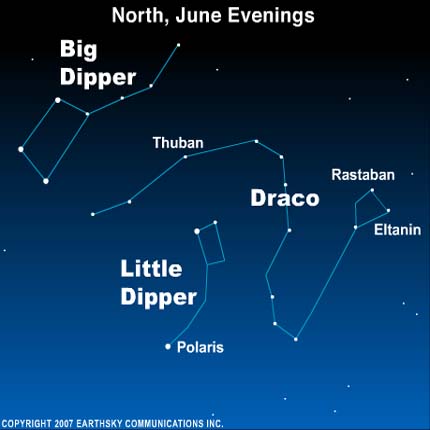
If you can find the Big and Little Dippers, you can find the constellation Draco the Dragon.

Help EarthSky keep going! Please donate what you can to our annual crowd-funding campaign.

About EarthSky

The Little Dipper is relatively faint. If you can find both Dippers, then your sky is probably pretty dark. And you’ll need that dark sky to see Draco. You’ll have to let your eyes and imagination drift a bit to see the entire winding shape of the Dragon in the northern heavens.

Also – if you can find both Dippers, and if your sky is relatively dark – you can easily pick out another noteworthy star in Draco. This star is Thuban, easy to find by looking between the Dippers. Thuban is famous for having served as a pole star around 3000 B.C. This date coincides with the beginning of the building of the pyramids in Egypt. It’s said that the descending passage of the Great Pyramid of Khufu at Gizeh was built to point directly at Thuban. So our ancestors knew and celebrated this star.

Read more about Thuban, a former pole star

There are two more prominent stars to look for in the Dragon. These stars are Eltanin and Rastaban, and they lie in the head of Draco. They represent the Dragon’s Eyes.

For years, I’ve glanced randomly up in the north at this time of year and noticed these two stars, Eltanin and Rastaban, in Draco. They’re noticeable because they’re relatively bright and near each other. There’s always that split-second when I ask myself with some excitement what two stars are those? It’s then that my eyes drift to blue-white Vega nearby . . . and I know, by Vega’s nearness, that they are the Dragon’s Eyes. Notice the relationship between Vega and the Dragon’s Eyes on the chart below:
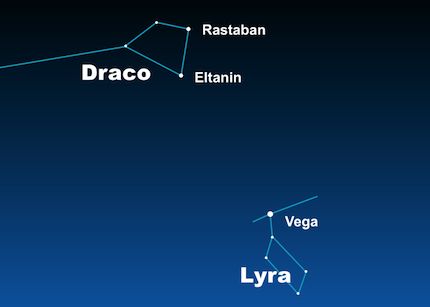
Stars Eltanin and Rastaban, near bright star Vega

Eltanin and Rastaban are fun to pick out, and, what’s more, they nearly mark the radiant point for the annual October Draconid meteor shower. Double bonus!

From tropical and subtropical latitudes in the Southern Hemisphere, the stars Rastaban and Eltanin shine quite low in the northern sky (below Vega). In either hemisphere, at all time zones, the Dragon’s eyes climb highest up in the sky around midnight (1 a.m. daylight time) in mid-June, 11 p.m. (midnight daylight time) in early July, and 9 p.m. (10 p.m. daylight time) in early August.

From temperate latitudes in the Southern Hemisphere (southern Australia and New Zealand), the Dragon’s eyes never climb above your horizon (but you can catch the star Vega way low in your northern sky).

Meanwhile, people at mid-northern latitudes get to view the Dragon’s eyes all night long! Circumpolar … remember?

Read more about Eltanin and Rastaban

Draco and its stars Rastaban and Eltanin, as captured from Indonesia by Martin Marthadinata in May 2017.

Bottom line: Let your eyes and imagination drift a bit to see the entire winding shape of Draco the Dragon in the northern sky. If you do spot it, be sure to pick out Thuban, a former pole star, and the Dragon’s Eyes!

Read more: How to find the Big Dipper


from EarthSky https://ift.tt/1RXaMB9

Tonight, if you have a dark sky, you’ll be able to pick the constellation Draco the Dragon winding around the North Star, Polaris. The image at the top of this post shows Draco as depicted in an old star atlas by Johannes Hevelius in 1690. See the circle around it? That circle indicates stars that are circumpolar, or always visible somewhere in the northern sky. As you can see, the constellation of the Dragon winds around the sky’s north celestial pole.

How can you see the Dragon? The Big Dipper can help guide you. Just remember … the entire Dragon requires a dark sky to be seen. You’ll find the Big Dipper high in the north on June evenings. The two outer stars in the Dipper’s bowl point to Polaris, the North Star, which marks the end of the Little Dipper’s handle.

The Dragon winds between the Big and Little Dippers, as shown on the chart below:

If you can find the Big and Little Dippers, you can find the constellation Draco the Dragon.

Help EarthSky keep going! Please donate what you can to our annual crowd-funding campaign.

About EarthSky

The Little Dipper is relatively faint. If you can find both Dippers, then your sky is probably pretty dark. And you’ll need that dark sky to see Draco. You’ll have to let your eyes and imagination drift a bit to see the entire winding shape of the Dragon in the northern heavens.

Also – if you can find both Dippers, and if your sky is relatively dark – you can easily pick out another noteworthy star in Draco. This star is Thuban, easy to find by looking between the Dippers. Thuban is famous for having served as a pole star around 3000 B.C. This date coincides with the beginning of the building of the pyramids in Egypt. It’s said that the descending passage of the Great Pyramid of Khufu at Gizeh was built to point directly at Thuban. So our ancestors knew and celebrated this star.

Read more about Thuban, a former pole star

There are two more prominent stars to look for in the Dragon. These stars are Eltanin and Rastaban, and they lie in the head of Draco. They represent the Dragon’s Eyes.

For years, I’ve glanced randomly up in the north at this time of year and noticed these two stars, Eltanin and Rastaban, in Draco. They’re noticeable because they’re relatively bright and near each other. There’s always that split-second when I ask myself with some excitement what two stars are those? It’s then that my eyes drift to blue-white Vega nearby . . . and I know, by Vega’s nearness, that they are the Dragon’s Eyes. Notice the relationship between Vega and the Dragon’s Eyes on the chart below:

Stars Eltanin and Rastaban, near bright star Vega

Eltanin and Rastaban are fun to pick out, and, what’s more, they nearly mark the radiant point for the annual October Draconid meteor shower. Double bonus!

From tropical and subtropical latitudes in the Southern Hemisphere, the stars Rastaban and Eltanin shine quite low in the northern sky (below Vega). In either hemisphere, at all time zones, the Dragon’s eyes climb highest up in the sky around midnight (1 a.m. daylight time) in mid-June, 11 p.m. (midnight daylight time) in early July, and 9 p.m. (10 p.m. daylight time) in early August.

From temperate latitudes in the Southern Hemisphere (southern Australia and New Zealand), the Dragon’s eyes never climb above your horizon (but you can catch the star Vega way low in your northern sky).

Meanwhile, people at mid-northern latitudes get to view the Dragon’s eyes all night long! Circumpolar … remember?

Read more about Eltanin and Rastaban

Draco and its stars Rastaban and Eltanin, as captured from Indonesia by Martin Marthadinata in May 2017.

Bottom line: Let your eyes and imagination drift a bit to see the entire winding shape of Draco the Dragon in the northern sky. If you do spot it, be sure to pick out Thuban, a former pole star, and the Dragon’s Eyes!

Read more: How to find the Big Dipper


from EarthSky https://ift.tt/1RXaMB9

Climate Science blogs around the world

After recently publishing an article about Climate Science websites around the world, some suggestions came in via comments or emails to add more sites to the post. But, these were mostly for blogs instead of full-fledged websites so they didn't quite fit the focus of that earlier post. So, here is the counterpart article introducing non-English blogs focused on climate science around the world.

Dutch - The Netherlands

Klimaatverandering

KlimaatveranderingThe Dutch blog "Klimaatverandering" (climate change) was started in 2008 by Bart Verheggen as the Dutch counterpart to his English blog “Our Changing Climate”. When confronted with certain myths he started to search the web for information, only to find that misinformation was often crowding out scientifically credible voices. This, combined with the large gap between public and scientific understanding of the issue, led him to start his own blog. His aim is to inject a scientifically grounded voice to the public debate about climate change.

Since 2012 Jos Hagelaars, Hans Custers en Bob Brand have joined his Dutch blog. Together they try to maintain a high quality blog by critiquing each other’s writings before publication, as an internal review procedure as it were (similar to what’s done at SkS). Some of their pieces have been featured at SkS as well, including e.g. the graph that Jos Hagelaars made about global average temperatures from the Last Glacial Maximum all the way to the projections for 2100. This figure has made its way to many different publications, sometimes in a slightly adapted form.

Bart Verheggen's student Max von Geuns recently published the aptly named article "Blogging as an Allergic Reaction to Climate Bullshit" in which Bart's motivation to blog gets explained in more detail.

Finland - Finnish

Ilmastotiedo

IlmastotietoIlmastotieto is a Finnish climate blog that started in 2010 when several individual bloggers decided to start a group blog. Subject areas covered are practically anything relating to climate and climate change. Among published articles are climate news pieces, feature articles on wide range of topics (basic climate science, climate change impacts, mitigation, etc.), and myth debunking. Ilmastotieto is closely tied to Skeptical Science, as the blog authors are the ones that have done the Finnish translations of some Skeptical Science articles. The Finnish translations, by the way, were the first published translations on Skeptical Science as announced in this blog post.

German - Germany

Klimalounge

KlimalougeStefan Rahmstorf started his German-language blog Klimalounge (originally together with two colleagues) in 2008, because he sees it as part of his duty as a climate scientist to engage with the public about this important topic. His own research focus is on changes in the climate system both modern and in Earth's history. He has worked e.g. on the role of the oceans in climate change (including sea level rise and the Atlantic ocean circulation), on weather extremes and on changes in atmospheric dynamics including the jet stream. Some of his blog posts he publishes both in German at Klimalounge and in English on RealClimate, a blog he co-founded with other climate scientists in 2004. But many posts at KlimaLounge are focused on climate change in Germany and/or the public and policy debates in Germany - which was a key motivation for starting a German blog alongside Realclimate. In 2017 Rahmstorf was awarded the Climate Communication Prize of the American Geophysical Union, as the first scientist working outside the US. He also won the German Umweltmedienpreis.

If you know of any other similar non-English blogs focused on climate change, please let us know either in the comments or via the contact form. We'll add them to the post once we've verified that the content is science-based.


from Skeptical Science https://ift.tt/2kTGVR6

After recently publishing an article about Climate Science websites around the world, some suggestions came in via comments or emails to add more sites to the post. But, these were mostly for blogs instead of full-fledged websites so they didn't quite fit the focus of that earlier post. So, here is the counterpart article introducing non-English blogs focused on climate science around the world.

Dutch - The Netherlands

Klimaatverandering

KlimaatveranderingThe Dutch blog "Klimaatverandering" (climate change) was started in 2008 by Bart Verheggen as the Dutch counterpart to his English blog “Our Changing Climate”. When confronted with certain myths he started to search the web for information, only to find that misinformation was often crowding out scientifically credible voices. This, combined with the large gap between public and scientific understanding of the issue, led him to start his own blog. His aim is to inject a scientifically grounded voice to the public debate about climate change.

Since 2012 Jos Hagelaars, Hans Custers en Bob Brand have joined his Dutch blog. Together they try to maintain a high quality blog by critiquing each other’s writings before publication, as an internal review procedure as it were (similar to what’s done at SkS). Some of their pieces have been featured at SkS as well, including e.g. the graph that Jos Hagelaars made about global average temperatures from the Last Glacial Maximum all the way to the projections for 2100. This figure has made its way to many different publications, sometimes in a slightly adapted form.

Bart Verheggen's student Max von Geuns recently published the aptly named article "Blogging as an Allergic Reaction to Climate Bullshit" in which Bart's motivation to blog gets explained in more detail.

Finland - Finnish

Ilmastotiedo

IlmastotietoIlmastotieto is a Finnish climate blog that started in 2010 when several individual bloggers decided to start a group blog. Subject areas covered are practically anything relating to climate and climate change. Among published articles are climate news pieces, feature articles on wide range of topics (basic climate science, climate change impacts, mitigation, etc.), and myth debunking. Ilmastotieto is closely tied to Skeptical Science, as the blog authors are the ones that have done the Finnish translations of some Skeptical Science articles. The Finnish translations, by the way, were the first published translations on Skeptical Science as announced in this blog post.

German - Germany

Klimalounge

KlimalougeStefan Rahmstorf started his German-language blog Klimalounge (originally together with two colleagues) in 2008, because he sees it as part of his duty as a climate scientist to engage with the public about this important topic. His own research focus is on changes in the climate system both modern and in Earth's history. He has worked e.g. on the role of the oceans in climate change (including sea level rise and the Atlantic ocean circulation), on weather extremes and on changes in atmospheric dynamics including the jet stream. Some of his blog posts he publishes both in German at Klimalounge and in English on RealClimate, a blog he co-founded with other climate scientists in 2004. But many posts at KlimaLounge are focused on climate change in Germany and/or the public and policy debates in Germany - which was a key motivation for starting a German blog alongside Realclimate. In 2017 Rahmstorf was awarded the Climate Communication Prize of the American Geophysical Union, as the first scientist working outside the US. He also won the German Umweltmedienpreis.

If you know of any other similar non-English blogs focused on climate change, please let us know either in the comments or via the contact form. We'll add them to the post once we've verified that the content is science-based.


from Skeptical Science https://ift.tt/2kTGVR6

Sharks’ 6th sense tuned to attack

Shark contemplating prey? Via HowStuffWorks.

Sharks are known to have some of the most sensitive electroreceptors in the animal world. That is, special pores around a shark’s face can detect the electrical currents which emanate from undersea organisms and which are carried with great efficiency through salt water. It’s as if sharks have a special sixth sense, which lets them hunt underwater, despite the fact that they don’t see very well. In late May 2018, physiologists at the Julius Lab at University of California, San Francisco, announced their new work comparing the electroreception abilities of sharks versus fish called skates. David Julius, a senior author on the new study, said:

Sharks have this incredible ability to pick up nanoscopic currents while swimming through a blizzard of electric noise. Our results suggest that a shark’s electrosensing organ is tuned to react to any of these changes in a sudden, all-or-none manner, as if to say, ‘attack now.’

Post-docs Nicholas W. Bellono and Duncan B. Leitch led the work, with Julius acting as a senior advisor. The team showed that the shark’s responses to electric fields propogating through sea water appear to be very different from that of skates, which are cousins of sorts to sharks and sting rays. This response might help explain why sharks appear to use electric fields strictly to locate prey.

Skates, on the other hand, use them to find food, friends, and mates.

Help EarthSky keep going! Please donate what you can to our annual crowd-funding campaign.

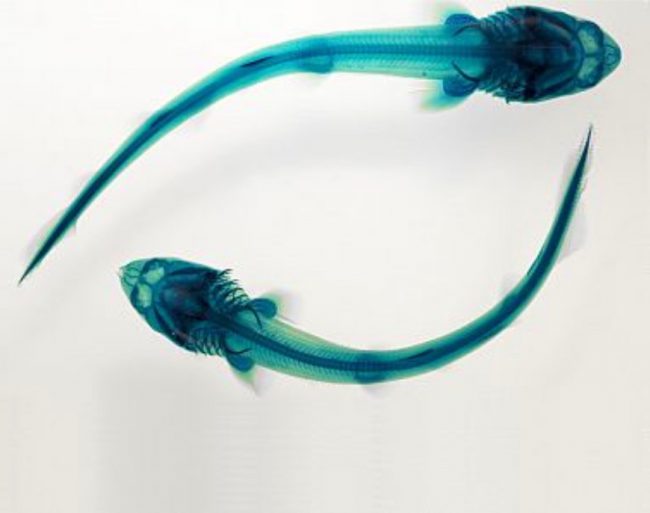
In the study, researchers compared responses to weak electrical currents carried in salt water between chain catsharks (Scyliorhinus retifer) and skates. Image via Julius lab/NIH.

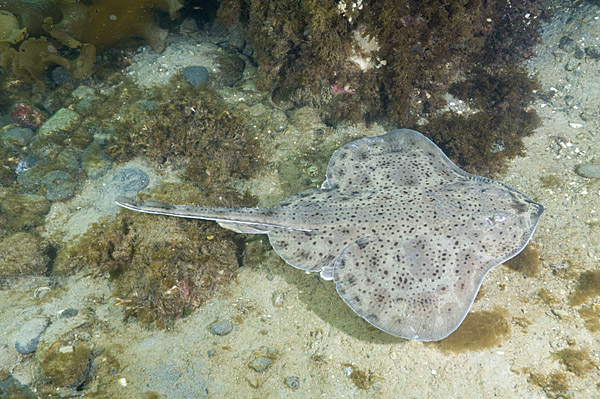
Male little skate, Leucoraja erinacea, in the North Atlantic, off the coast of the U.S. state of Massachusetts. Image via Elasmodiver.

These scientists are physiologists; they study how the bodies of sharks, or skates, or humans, do what they do. Their recent work also delved into the genetics and specific body chemicals underlying shark’s unique sixth sense. Their statement explained:

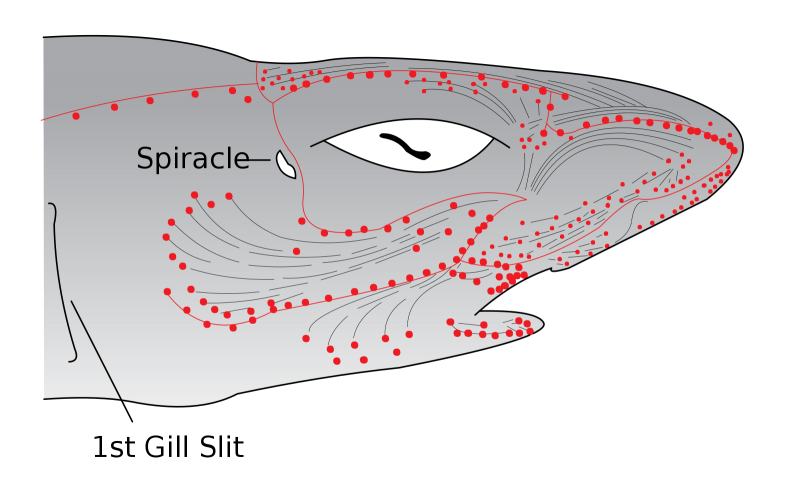
In both [sharks and skates], networks of organs, called ampullae of Lorenzini, constantly survey the electric fields they swim through. Electricity enters the organs through pores that surround the animals’ mouths and form intricate patterns on the bottom of their snouts. Once inside, it is carried via a special gel through a grapevine of canals, ending in bunches of spherical cells that can sense the fields, called electroreceptors.

Finally, the cells relay this information onto the nervous system by releasing packets of chemical messengers, called neurotransmitters

In sharks, the electroreceptors are pore-like structures called ampullae of Lorenzini, shown here as red dots. Illustration via Chris_huh on Wikimedia Commons.

In this study, the team compared underwater electric currents in little skates versus a shark species known as a catshark. electroreceptor cells with those from the chain catshark. They found that although both cells were sensitive to the same narrow range of voltage zaps, the responses were very different. Shark currents were much bigger than skate currents and they were the same size and waviness for each zap. In contrast, the skate cells responded with currents that varied in both size and waviness to each zap.

Further experiments suggested that these contrasting responses may be due to different ion channels genes, which encode proteins that form tunnels in a cell’s membrane, or skin. When activated the tunnels open and create electrical currents by allowing ions, or charged molecules, to flow in and out of the cell.

Nicholas Bellono commented:

In almost every way, the shark electrosensory system looks like the skate’s and so we expected the shark cells to respond in a graded manner. We were very surprised when we found that the shark system reacts completely differently to stimuli.

Ultimately, these differences affected how sharks and skates reacted to electric fields that mimicked those produced by prey. To test this, the researchers exposed sharks and skates swimming alone in tanks to a wide range of low voltage electric field frequencies and then measured their breathing rates. As anticipated, the skates had a variety of reactions. Some frequencies caused their breathing rates to rise above rest while others produced minimal changes. The results may help explain why a previous study found that skates may use their electrosensory perceptions to detect both prey and mates.

And the sharks? They basically had one simple reaction. Almost every field raised their breathing rates to a level seen when they smelled food, suggesting their system is tuned for one thing: catching prey.

By the way, last year, David Julius led a study showing the physiology behind how sharks and skates sense electric fields. At the time, he’d explained explained:

Understanding how this works is like understanding how proteins in the eye sense light — it gives us insight into a whole new sensory world.

And, in case you’re wondering, yes, the human body also creates electrical impulses. It happens when our muscles contract. When we’re on land, the open air doesn’t conduct our electrical impulses away from our bodies. But salt water is a good conductor of electricity.

Bottom line: Researchers compared responses of sharks and skates to weak electrical fields carried in salt water. The sharks had a simple reaction to a wide range of fields, suggesting their system is tuned for one thing: catching prey.

Source: Molecular tuning of electroreception in sharks and skates

Via NIH

Help EarthSky keep going! Please donate what you can to our annual crowd-funding campaign.


from EarthSky https://ift.tt/2M1WW3K

Shark contemplating prey? Via HowStuffWorks.

Sharks are known to have some of the most sensitive electroreceptors in the animal world. That is, special pores around a shark’s face can detect the electrical currents which emanate from undersea organisms and which are carried with great efficiency through salt water. It’s as if sharks have a special sixth sense, which lets them hunt underwater, despite the fact that they don’t see very well. In late May 2018, physiologists at the Julius Lab at University of California, San Francisco, announced their new work comparing the electroreception abilities of sharks versus fish called skates. David Julius, a senior author on the new study, said:

Sharks have this incredible ability to pick up nanoscopic currents while swimming through a blizzard of electric noise. Our results suggest that a shark’s electrosensing organ is tuned to react to any of these changes in a sudden, all-or-none manner, as if to say, ‘attack now.’

Post-docs Nicholas W. Bellono and Duncan B. Leitch led the work, with Julius acting as a senior advisor. The team showed that the shark’s responses to electric fields propogating through sea water appear to be very different from that of skates, which are cousins of sorts to sharks and sting rays. This response might help explain why sharks appear to use electric fields strictly to locate prey.

Skates, on the other hand, use them to find food, friends, and mates.

Help EarthSky keep going! Please donate what you can to our annual crowd-funding campaign.

In the study, researchers compared responses to weak electrical currents carried in salt water between chain catsharks (Scyliorhinus retifer) and skates. Image via Julius lab/NIH.

Male little skate, Leucoraja erinacea, in the North Atlantic, off the coast of the U.S. state of Massachusetts. Image via Elasmodiver.

These scientists are physiologists; they study how the bodies of sharks, or skates, or humans, do what they do. Their recent work also delved into the genetics and specific body chemicals underlying shark’s unique sixth sense. Their statement explained:

In both [sharks and skates], networks of organs, called ampullae of Lorenzini, constantly survey the electric fields they swim through. Electricity enters the organs through pores that surround the animals’ mouths and form intricate patterns on the bottom of their snouts. Once inside, it is carried via a special gel through a grapevine of canals, ending in bunches of spherical cells that can sense the fields, called electroreceptors.

Finally, the cells relay this information onto the nervous system by releasing packets of chemical messengers, called neurotransmitters

In sharks, the electroreceptors are pore-like structures called ampullae of Lorenzini, shown here as red dots. Illustration via Chris_huh on Wikimedia Commons.

In this study, the team compared underwater electric currents in little skates versus a shark species known as a catshark. electroreceptor cells with those from the chain catshark. They found that although both cells were sensitive to the same narrow range of voltage zaps, the responses were very different. Shark currents were much bigger than skate currents and they were the same size and waviness for each zap. In contrast, the skate cells responded with currents that varied in both size and waviness to each zap.

Further experiments suggested that these contrasting responses may be due to different ion channels genes, which encode proteins that form tunnels in a cell’s membrane, or skin. When activated the tunnels open and create electrical currents by allowing ions, or charged molecules, to flow in and out of the cell.

Nicholas Bellono commented:

In almost every way, the shark electrosensory system looks like the skate’s and so we expected the shark cells to respond in a graded manner. We were very surprised when we found that the shark system reacts completely differently to stimuli.

Ultimately, these differences affected how sharks and skates reacted to electric fields that mimicked those produced by prey. To test this, the researchers exposed sharks and skates swimming alone in tanks to a wide range of low voltage electric field frequencies and then measured their breathing rates. As anticipated, the skates had a variety of reactions. Some frequencies caused their breathing rates to rise above rest while others produced minimal changes. The results may help explain why a previous study found that skates may use their electrosensory perceptions to detect both prey and mates.

And the sharks? They basically had one simple reaction. Almost every field raised their breathing rates to a level seen when they smelled food, suggesting their system is tuned for one thing: catching prey.

By the way, last year, David Julius led a study showing the physiology behind how sharks and skates sense electric fields. At the time, he’d explained explained:

Understanding how this works is like understanding how proteins in the eye sense light — it gives us insight into a whole new sensory world.

And, in case you’re wondering, yes, the human body also creates electrical impulses. It happens when our muscles contract. When we’re on land, the open air doesn’t conduct our electrical impulses away from our bodies. But salt water is a good conductor of electricity.

Bottom line: Researchers compared responses of sharks and skates to weak electrical fields carried in salt water. The sharks had a simple reaction to a wide range of fields, suggesting their system is tuned for one thing: catching prey.

Source: Molecular tuning of electroreception in sharks and skates

Via NIH

Help EarthSky keep going! Please donate what you can to our annual crowd-funding campaign.


from EarthSky https://ift.tt/2M1WW3K

When did humans learn to count?

Where did our written numbers come from? Image via Nikita Rogul/shutterstock.com.

Help EarthSky keep going! Please donate what you can to our annual crowd-funding campaign.

By Peter Schumer, Middlebury College

The history of math is murky, predating any written records. When did humans first grasp the basic concept of a number? What about size and magnitude, or form and shape?

In my math history courses and my research travels in Guatemala, Egypt and Japan, I’ve been especially interested in the commonality and differences of mathematics from various cultures.

Although no one knows math’s exact origins, modern mathematicians like myself know that spoken language precedes written language by scores of millennia. Linguistic clues show how people around the world must have first developed mathematical thought.

Early clues

Differences are easier to comprehend than similarities. The ability to distinguish more versus less, male versus female or short versus tall must be very ancient concepts. But the concept of different objects sharing a common attribute – such as being green or round or the idea that a single rabbit, a solitary bird and one moon all share the attribute of uniqueness – is far subtler.

In English, there are many different words for two, like “duo,” “pair” and “couple,” as well as very particular phrases such as “team of horses” or “brace of partridge.” This suggests that the mathematical concept of twoness developed well after humans had a highly developed and rich language.

By the way, the word “two” probably was once pronounced closer to the way it’s spelled, based on the modern pronunciation of twin, between, twain (two fathoms), twilight (where day meets night), twine (the twisting of two strands) and twig (where a tree branch splits in two).

Written language developed much later than spoken language. Unfortunately, much was recorded on perishable media, which have long since decayed. But some ancient artifacts that have survived do exhibit some mathematical sophistication.

For example, prehistoric tally sticks – notches incised on animal bones – are found in many locations around the world. Though these might not be proof of actual counting, they do suggest some sense of numerical record keeping. Certainly people were making one-to-one comparisons between the notches and external collections of objects – perhaps stones, fruits or animals.

A tally stick found in Scandinavia. Image via The British Museum.

Counting objects

The study of modern “primitive” cultures offers another window into human mathematical development. By “primitive,” I mean cultures that lack a written language or the use of modern tools and technology. Many “primitive” societies have well-developed arts and a deep sense of ethics and morals, and they live within sophisticated societies with complex rules and expectations.

In these cultures, counting is often done silently by bending down fingers or pointing to specific parts of the body. A Papuan tribe of New Guinea can count from 1 to 22 by pointing to various fingers as well as to their elbows, shoulders, mouth and nose.

Most primitive cultures use object-specific counting, depending on what’s prevalent in their environment. For example, the Aztecs would count one stone, two stone, three stone and so on. Five fish would be “five stone fish.” Counting by a native tribe in Java begins with one grain. The Nicie tribe of the South Pacific counts by fruit.

English number words were probably object-specific as well, but their meanings have long been lost. The word “five” probably has something to do with “hand.” Eleven and 12 meant something akin to “one over” and “two over” – over a full count of 10 fingers.

The math Americans use today is a decimal, or base 10, system. We inherited it from the ancient Greeks. However, other cultures show a great deal of variety. Some ancient Chinese, as well as a tribe in South Africa, used a base 2 system. Base 3 is rare, but not unheard of among Native American tribes.

The ancient Babylonians used a sexagesimal, or base 60, system. Many vestiges of that system remain today. That’s why we have 60 minutes in an hour and 360 degrees in a circle.

Written numbers

What about written numbers?

Ancient Mesopotamia had a very simple numerical system. It used just two symbols: a vertical wedge (v) to represent 1 and a horizontal wedge (<) to represent 10. So <<vvv could represent 23.

Plimpton 322: The world’s first trigonometric table. Image via the Rare Book and Manuscript Library, Columbia University. Historia Mathematica.

But the Mesopotamians had no concept of zero either as a number or as a place holder. By way of analogy, it would be as if a modern person were unable to distinguish between 5.03, 53 and 503. Context was essential.

The ancient Egyptians used different hieroglyphs for each power of 10. The number one was a vertical stroke, just as we currently use. But 10 was a heel bone, 100 a scroll or coiled rope, 1000 a lotus flower, 10,000 a pointed finger, 100,000 a tadpole and 1,000,000 the god Heh holding up the universe.

The numerals most of us know today developed over time in India, where computation and algebra were of utmost importance. It was also here that many modern rules for multiplication, division, square roots and the like were first born. These ideas were further developed and gradually transmitted to the Western world via Islamic scholars. That’s why we now refer to our numerals as the Hindu-Arabic numeral system.

The ConversationIt’s good for a young struggling math student to realize that it took thousands of years to progress from counting “one, two, many” to our modern mathematical world.

Peter Schumer, Professor of Mathematics and Natural Philosophy, Middlebury College

This article was originally published on The Conversation. Read the original article.

Help EarthSky keep going! Please donate what you can to our annual crowd-funding campaign.


from EarthSky https://ift.tt/2JeCG0P

Where did our written numbers come from? Image via Nikita Rogul/shutterstock.com.

Help EarthSky keep going! Please donate what you can to our annual crowd-funding campaign.

By Peter Schumer, Middlebury College

The history of math is murky, predating any written records. When did humans first grasp the basic concept of a number? What about size and magnitude, or form and shape?

In my math history courses and my research travels in Guatemala, Egypt and Japan, I’ve been especially interested in the commonality and differences of mathematics from various cultures.

Although no one knows math’s exact origins, modern mathematicians like myself know that spoken language precedes written language by scores of millennia. Linguistic clues show how people around the world must have first developed mathematical thought.

Early clues

Differences are easier to comprehend than similarities. The ability to distinguish more versus less, male versus female or short versus tall must be very ancient concepts. But the concept of different objects sharing a common attribute – such as being green or round or the idea that a single rabbit, a solitary bird and one moon all share the attribute of uniqueness – is far subtler.

In English, there are many different words for two, like “duo,” “pair” and “couple,” as well as very particular phrases such as “team of horses” or “brace of partridge.” This suggests that the mathematical concept of twoness developed well after humans had a highly developed and rich language.

By the way, the word “two” probably was once pronounced closer to the way it’s spelled, based on the modern pronunciation of twin, between, twain (two fathoms), twilight (where day meets night), twine (the twisting of two strands) and twig (where a tree branch splits in two).

Written language developed much later than spoken language. Unfortunately, much was recorded on perishable media, which have long since decayed. But some ancient artifacts that have survived do exhibit some mathematical sophistication.

For example, prehistoric tally sticks – notches incised on animal bones – are found in many locations around the world. Though these might not be proof of actual counting, they do suggest some sense of numerical record keeping. Certainly people were making one-to-one comparisons between the notches and external collections of objects – perhaps stones, fruits or animals.

A tally stick found in Scandinavia. Image via The British Museum.

Counting objects

The study of modern “primitive” cultures offers another window into human mathematical development. By “primitive,” I mean cultures that lack a written language or the use of modern tools and technology. Many “primitive” societies have well-developed arts and a deep sense of ethics and morals, and they live within sophisticated societies with complex rules and expectations.

In these cultures, counting is often done silently by bending down fingers or pointing to specific parts of the body. A Papuan tribe of New Guinea can count from 1 to 22 by pointing to various fingers as well as to their elbows, shoulders, mouth and nose.

Most primitive cultures use object-specific counting, depending on what’s prevalent in their environment. For example, the Aztecs would count one stone, two stone, three stone and so on. Five fish would be “five stone fish.” Counting by a native tribe in Java begins with one grain. The Nicie tribe of the South Pacific counts by fruit.

English number words were probably object-specific as well, but their meanings have long been lost. The word “five” probably has something to do with “hand.” Eleven and 12 meant something akin to “one over” and “two over” – over a full count of 10 fingers.

The math Americans use today is a decimal, or base 10, system. We inherited it from the ancient Greeks. However, other cultures show a great deal of variety. Some ancient Chinese, as well as a tribe in South Africa, used a base 2 system. Base 3 is rare, but not unheard of among Native American tribes.

The ancient Babylonians used a sexagesimal, or base 60, system. Many vestiges of that system remain today. That’s why we have 60 minutes in an hour and 360 degrees in a circle.

Written numbers

What about written numbers?

Ancient Mesopotamia had a very simple numerical system. It used just two symbols: a vertical wedge (v) to represent 1 and a horizontal wedge (<) to represent 10. So <<vvv could represent 23.

Plimpton 322: The world’s first trigonometric table. Image via the Rare Book and Manuscript Library, Columbia University. Historia Mathematica.

But the Mesopotamians had no concept of zero either as a number or as a place holder. By way of analogy, it would be as if a modern person were unable to distinguish between 5.03, 53 and 503. Context was essential.

The ancient Egyptians used different hieroglyphs for each power of 10. The number one was a vertical stroke, just as we currently use. But 10 was a heel bone, 100 a scroll or coiled rope, 1000 a lotus flower, 10,000 a pointed finger, 100,000 a tadpole and 1,000,000 the god Heh holding up the universe.

The numerals most of us know today developed over time in India, where computation and algebra were of utmost importance. It was also here that many modern rules for multiplication, division, square roots and the like were first born. These ideas were further developed and gradually transmitted to the Western world via Islamic scholars. That’s why we now refer to our numerals as the Hindu-Arabic numeral system.

The ConversationIt’s good for a young struggling math student to realize that it took thousands of years to progress from counting “one, two, many” to our modern mathematical world.
Peter Schumer, Professor of Mathematics and Natural Philosophy, Middlebury College

This article was originally published on The Conversation. Read the original article.

Help EarthSky keep going! Please donate what you can to our annual crowd-funding campaign.


from EarthSky https://ift.tt/2JeCG0P

Vesturhorn reflection

Image via Grafixart Sam.

Steep and dramatic, Vestrahorn – sometimes called Vesturhorn – overlooks the Atlantic Ocean at the southeastern corner of Iceland. The mountain’s steep cliffs meet a flat, black sand beach.

Help EarthSky keep going! Please donate what you can to our annual crowd-funding campaign.


from EarthSky https://ift.tt/2xOzbci

Image via Grafixart Sam.

Steep and dramatic, Vestrahorn – sometimes called Vesturhorn – overlooks the Atlantic Ocean at the southeastern corner of Iceland. The mountain’s steep cliffs meet a flat, black sand beach.

Help EarthSky keep going! Please donate what you can to our annual crowd-funding campaign.


from EarthSky https://ift.tt/2xOzbci

Southern Cross: A southern sky signpost

Tonight, we’re paying tribute to the Southern Cross, also known as the constellation Crux, for our friends in the Southern Hemisphere. No matter where you live in the Southern Hemisphere, look in your southern sky for the Southern Cross as soon as darkness falls.

At temperate latitudes in the Southern Hemisphere, where it’s now the winter season, we astronomers say the Southern Cross swings to upper meridian transit – its high point in the sky – at early evening, or roughly 7 p.m. local time.

Image top of post is the Southern Cross as seen from Manila – latitude 14 degrees N. of the equator – in 2012. The photo is from EarthSky Facebook friend Jv Noriega. View it larger.

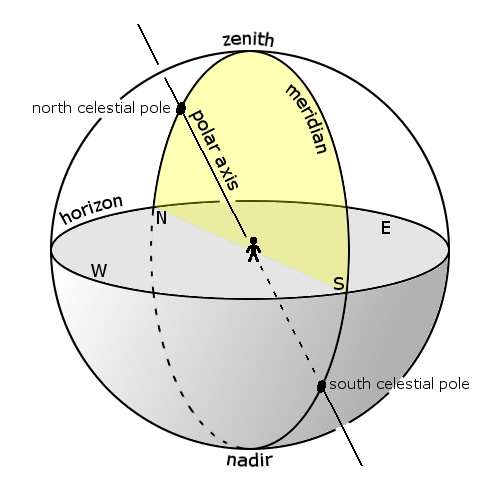
The meridian is the imaginary semi-circle that divides your sky into its eastern and western hemispheres. A star reaches it highest point when it crosses the meridian at upper transit, and its lowest point when it crosses the meridian at lower transit.

The meridian is the imaginary semi-circle that divides your sky into its eastern and western hemispheres. A star reaches it highest point when it crosses the meridian at upper transit, and its lowest point when it crosses the meridian at lower transit.

Because the Southern Cross is circumpolar – always above the horizon – at all places south of 35o south latitude, people at mid-southern latitudes can count on seeing the Southern Cross all night long, every night of the year. Watch for the Southern Cross to move like a great big hour hand, circling around the south celestial pole in a clockwise direction throughout the night. The Southern Cross will sweep to lower meridian transit – its low point in the sky – around 7 a.m. local time tomorrow.

Star-hopping to south celestial pole via the Southern Cross and the bright stars Alpha Centauri and Hadar.

Star-hopping to south celestial pole via the Southern Cross and the bright stars Alpha Centauri and Hadar.

If the Southern Cross is circumpolar in your sky, then the Big Dipper never climbs above your horizon.

Conversely, if the Big Dipper is circumpolar in your sky, then the Southern Cross never climbs above your horizon. Additionally, the W or M-shaped constellation Cassiopeia is also circumpolar at northerly latitudes. See the animation below.

However, if you live in the tropics, there are times when you can actually see the Big Dipper and the Southern Cross in the same sky together. In early June, for instance, the Southern Cross and Big Dipper reach upper transit – their high point – at virtually the same time, or around 7 p.m. local time.

You have a better chance of seeing the Southern Cross and the Big Dipper in the same sky right now from the southern tropics. That’s because the winter season in the Southern Hemisphere ushers in an earlier sunset time than at comparable latitudes in the northern tropics, where it is now summer.

The Big Dipper and the W-shaped constellation Cassiopeia circle around Polaris, the North Star, in a period of 23 hours and 56 minutes. The Big Dipper is circumpolar at 41o N. latitude, and all latitudes farther north.

The Big Dipper and the W-shaped constellation Cassiopeia circle around Polaris, the North Star, in a period of 23 hours and 56 minutes. The Big Dipper is circumpolar at 41o N. latitude, and all latitudes farther north.

Bottom line: A tribute to the Southern Cross, also known as the constellation Crux.


from EarthSky https://ift.tt/28PkOW0

Tonight, we’re paying tribute to the Southern Cross, also known as the constellation Crux, for our friends in the Southern Hemisphere. No matter where you live in the Southern Hemisphere, look in your southern sky for the Southern Cross as soon as darkness falls.

At temperate latitudes in the Southern Hemisphere, where it’s now the winter season, we astronomers say the Southern Cross swings to upper meridian transit – its high point in the sky – at early evening, or roughly 7 p.m. local time.

Image top of post is the Southern Cross as seen from Manila – latitude 14 degrees N. of the equator – in 2012. The photo is from EarthSky Facebook friend Jv Noriega. View it larger.

The meridian is the imaginary semi-circle that divides your sky into its eastern and western hemispheres. A star reaches it highest point when it crosses the meridian at upper transit, and its lowest point when it crosses the meridian at lower transit.

The meridian is the imaginary semi-circle that divides your sky into its eastern and western hemispheres. A star reaches it highest point when it crosses the meridian at upper transit, and its lowest point when it crosses the meridian at lower transit.

Because the Southern Cross is circumpolar – always above the horizon – at all places south of 35o south latitude, people at mid-southern latitudes can count on seeing the Southern Cross all night long, every night of the year. Watch for the Southern Cross to move like a great big hour hand, circling around the south celestial pole in a clockwise direction throughout the night. The Southern Cross will sweep to lower meridian transit – its low point in the sky – around 7 a.m. local time tomorrow.

Star-hopping to south celestial pole via the Southern Cross and the bright stars Alpha Centauri and Hadar.

Star-hopping to south celestial pole via the Southern Cross and the bright stars Alpha Centauri and Hadar.

If the Southern Cross is circumpolar in your sky, then the Big Dipper never climbs above your horizon.

Conversely, if the Big Dipper is circumpolar in your sky, then the Southern Cross never climbs above your horizon. Additionally, the W or M-shaped constellation Cassiopeia is also circumpolar at northerly latitudes. See the animation below.

However, if you live in the tropics, there are times when you can actually see the Big Dipper and the Southern Cross in the same sky together. In early June, for instance, the Southern Cross and Big Dipper reach upper transit – their high point – at virtually the same time, or around 7 p.m. local time.

You have a better chance of seeing the Southern Cross and the Big Dipper in the same sky right now from the southern tropics. That’s because the winter season in the Southern Hemisphere ushers in an earlier sunset time than at comparable latitudes in the northern tropics, where it is now summer.

The Big Dipper and the W-shaped constellation Cassiopeia circle around Polaris, the North Star, in a period of 23 hours and 56 minutes. The Big Dipper is circumpolar at 41o N. latitude, and all latitudes farther north.

The Big Dipper and the W-shaped constellation Cassiopeia circle around Polaris, the North Star, in a period of 23 hours and 56 minutes. The Big Dipper is circumpolar at 41o N. latitude, and all latitudes farther north.

Bottom line: A tribute to the Southern Cross, also known as the constellation Crux.


from EarthSky https://ift.tt/28PkOW0

Physicists devise method to reveal how light affects materials

"Our finding may pave the way for improvements in devices such as optical sensors and photovoltaic cells," says Emory physicist Hayk Harutyunyan.

By Carol Clark

Physicists developed a way to determine the electronic properties of thin gold films after they interact with light. Nature Communications published the new method, which adds to the understanding of the fundamental laws that govern the interaction of electrons and light.

“Surprisingly, up to now there have been very limited ways of determining what exactly happens with materials after we shine light on them,” says Hayk Harutyunyan, an assistant professor of physics at Emory University and lead author of the research. “Our finding may pave the way for improvements in devices such as optical sensors and photovoltaic cells.”

From solar panels to cameras and cell phones — to seeing with our eyes — the interaction of photons of light with atoms and electrons is ubiquitous. “Optical phenomenon is such a fundamental process that we take it for granted, and yet it’s not fully understood how light interacts with materials,” Harutyunyan says.

One obstacle to understanding the details of these interactions is their complexity. When the energy of a light photon is transferred to an electron in a light-absorbing material, the photon is destroyed and the electron is excited from one level to another. But so many photons, atoms and electrons are involved — and the process happens so quickly — that laboratory modeling of the process is computationally challenging.

For the Nature Communications paper, the physicists started with a relatively simple material system — ultra-thin gold layers — and conducted experiments on it.

“We did not use brute computational power,” Harutyunyan says. “We started with experimental data and developed an analytical and theoretical model that allowed us to use pen and paper to decode the data.”

Harutyunyan and Manoj Manjare, a post-doctoral fellow in his lab, designed and conducted the experiments. Stephen Gray, Gary Wiederrecht and Tal Heipern — from the Argonne National Laboratory — came up with the mathematical tools needed. The Argonne physicists also worked on the theoretical model, along with Alexander Govorov from Ohio University.

For the experiments, the nanolayers of gold were positioned at particular angles. Light was then shined on the gold in two, sequential pulses. “These laser light pulses were very short in time — thousands of billions of times shorter than a second,” Harutyunyan says. “The first pulse was absorbed by the gold. The second pulse of light measured the results of that absorption, showing how the electrons changed from a ground to excited state.”

Typically, gold absorbs light at green frequencies, reflecting all the other colors of the spectrum, which makes the metal appear yellow. In the form of nanolayers, however, gold can absorb light at longer wave lengths, in the infrared part of the spectrum.

“At a certain excitation angle, we were able to induce electronic transitions that were not just a different frequency but a different physical process,” Harutyunyan says. “We were able to track the evolution of that process over time and demonstrate why and how those transitions happen.”

Using the method to better understand the interactions underlying light absorption by a material may lead to ways to tune and manage these interactions.

Photovoltaic solar energy cells, for instance, are currently only capable of absorbing a small percentage of the light that hits them. Optical sensors used in biomedicine and photo catalysts used in chemistry are other examples of devices that could potentially be improved by the new method. 

While the Nature Communications paper offers proof of concept, the researchers plan to continue to refine the method’s use with gold while also experimenting with a range of other materials. 

“Ultimately, we want to demonstrate that this is a broad method that could be applied to many useful materials,” Harutyunyan says.

Related:
$2 million NSF grant funds physicists' quest for optical transistors

from eScienceCommons https://ift.tt/2xImhfK
"Our finding may pave the way for improvements in devices such as optical sensors and photovoltaic cells," says Emory physicist Hayk Harutyunyan.

By Carol Clark

Physicists developed a way to determine the electronic properties of thin gold films after they interact with light. Nature Communications published the new method, which adds to the understanding of the fundamental laws that govern the interaction of electrons and light.

“Surprisingly, up to now there have been very limited ways of determining what exactly happens with materials after we shine light on them,” says Hayk Harutyunyan, an assistant professor of physics at Emory University and lead author of the research. “Our finding may pave the way for improvements in devices such as optical sensors and photovoltaic cells.”

From solar panels to cameras and cell phones — to seeing with our eyes — the interaction of photons of light with atoms and electrons is ubiquitous. “Optical phenomenon is such a fundamental process that we take it for granted, and yet it’s not fully understood how light interacts with materials,” Harutyunyan says.

One obstacle to understanding the details of these interactions is their complexity. When the energy of a light photon is transferred to an electron in a light-absorbing material, the photon is destroyed and the electron is excited from one level to another. But so many photons, atoms and electrons are involved — and the process happens so quickly — that laboratory modeling of the process is computationally challenging.

For the Nature Communications paper, the physicists started with a relatively simple material system — ultra-thin gold layers — and conducted experiments on it.

“We did not use brute computational power,” Harutyunyan says. “We started with experimental data and developed an analytical and theoretical model that allowed us to use pen and paper to decode the data.”

Harutyunyan and Manoj Manjare, a post-doctoral fellow in his lab, designed and conducted the experiments. Stephen Gray, Gary Wiederrecht and Tal Heipern — from the Argonne National Laboratory — came up with the mathematical tools needed. The Argonne physicists also worked on the theoretical model, along with Alexander Govorov from Ohio University.

For the experiments, the nanolayers of gold were positioned at particular angles. Light was then shined on the gold in two, sequential pulses. “These laser light pulses were very short in time — thousands of billions of times shorter than a second,” Harutyunyan says. “The first pulse was absorbed by the gold. The second pulse of light measured the results of that absorption, showing how the electrons changed from a ground to excited state.”

Typically, gold absorbs light at green frequencies, reflecting all the other colors of the spectrum, which makes the metal appear yellow. In the form of nanolayers, however, gold can absorb light at longer wave lengths, in the infrared part of the spectrum.

“At a certain excitation angle, we were able to induce electronic transitions that were not just a different frequency but a different physical process,” Harutyunyan says. “We were able to track the evolution of that process over time and demonstrate why and how those transitions happen.”

Using the method to better understand the interactions underlying light absorption by a material may lead to ways to tune and manage these interactions.

Photovoltaic solar energy cells, for instance, are currently only capable of absorbing a small percentage of the light that hits them. Optical sensors used in biomedicine and photo catalysts used in chemistry are other examples of devices that could potentially be improved by the new method. 

While the Nature Communications paper offers proof of concept, the researchers plan to continue to refine the method’s use with gold while also experimenting with a range of other materials. 

“Ultimately, we want to demonstrate that this is a broad method that could be applied to many useful materials,” Harutyunyan says.

Related:
$2 million NSF grant funds physicists' quest for optical transistors

from eScienceCommons https://ift.tt/2xImhfK

adds 2