aads

Top 10 new species 2018

To celebrate the discovery of new species of animals, plants and microbes, the International Institute for Species Exploration (IISE) compiles an annual top 10 new species list from the approximately 18,000 new species named the previous year.

The first list was compiled in 2008. The list is released each year around May 23 to honor of the birthday of Carl Linnaeus, the 18th century Swedish botanist who is considered the father of modern taxonomy – our modern binomial classification system for naming organisms.

Here are the top 10 for 2018:
(In alphabetical order by scientific name)

Protist (Ancoracysta twista) Location: Unknown
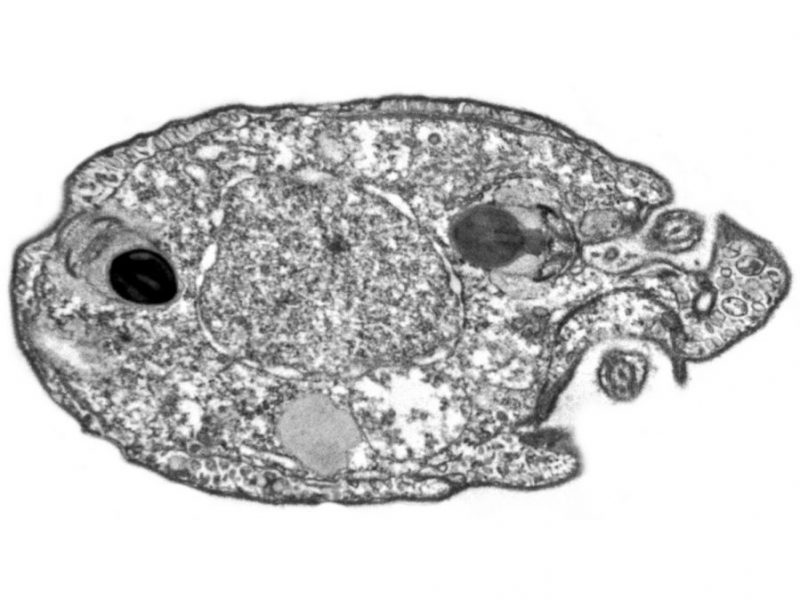
Discovered in an aquarium in San Diego, California, this new single-celled protist has challenged scientists to determine its nearest relatives. It does not fit neatly within any known group and appears to be a previously undiscovered early lineage of Eukaryota with a uniquely rich mitochondrial genome. Eukaryotes are organisms with cells in which genetic material is organized in a membrane-bound nucleus. The geographic origin of the species in the wild is not known. It was found in a tropical aquarium at the Scripps Institution of Oceanography on a brain coral. Image via IISE.

Atlantic Forest Tree (Dinizia jueirana-facao) Location: Brazil
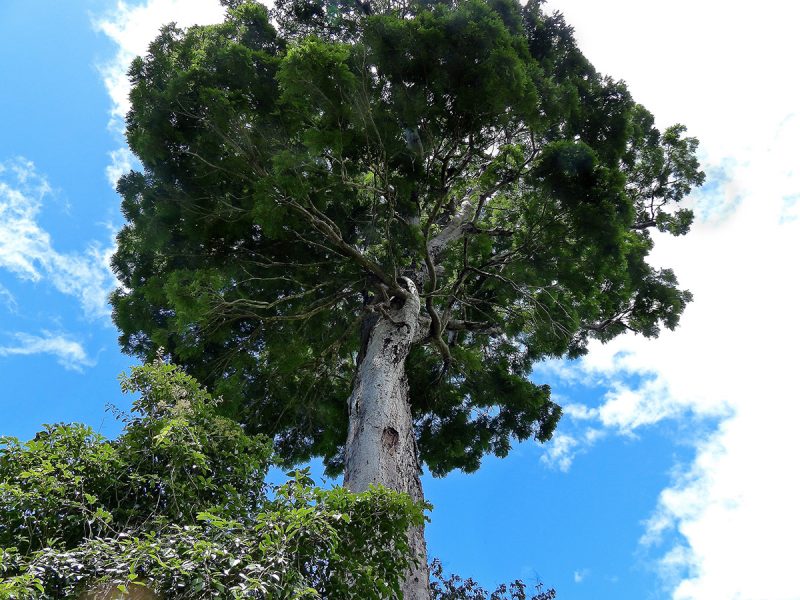
Dinizia jueirana-facao, up to 130 feet (40 m) in height, emerges above the canopy of the semi-deciduous, riparian, pristine Atlantic forest in Brazil where it is found. This massive tree, weighs an estimated 62 tons (56,000 kg). While large in dimension, the tree is limited in numbers – it is known from only 25 individuals, about half of which are in the protected area, making it critically endangered. Image via IISE.

Amphipod (Epimeria quasimodo) Location: Antarctic Ocean
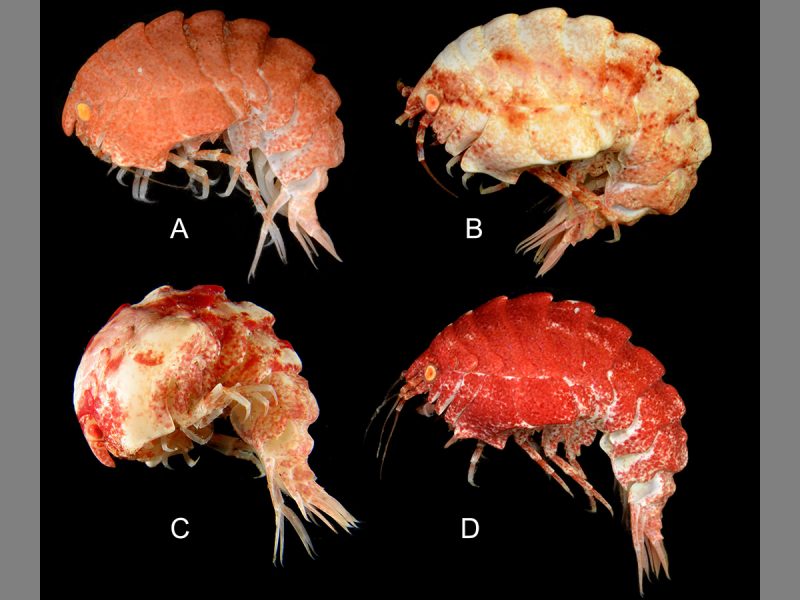
Here’s a new species whose name might ring a bell. This amphipod, about 2 inches (50mm) in length, Epimeria quasimodo, is named for Victor Hugo’s character, Quasimodo the hunchback, in reference to its somewhat humped back. It is one of 26 new species of amphipods of the genus Epimeria from the Southern Ocean with incredible spines and vivid colors. Image via IISE.

Baffling Beetle: (Nymphister kronaueri). Location: Costa Rica
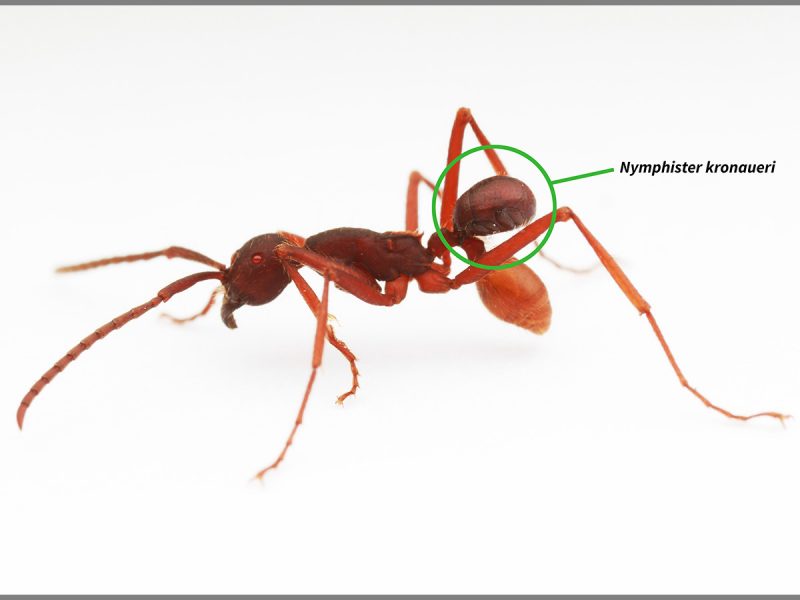
This tiny beetle that lives among ants. At about 1.5 mm in length, 16 of them could line up head-to-tail in the space of an inch (2.5 cm). But their story gets much better. They live exclusively among one species of army ant. The host ants, as with other army ants, do not construct permanent nests but are nomadic. The beetle’s body is the precise size, shape and color of the abdomen of a worker ant. The beetle uses its mouthparts to grab the skinny portion of the host abdomen and hang on, letting the ant do the walking. Image via IISE.

Tapanuli Orangutan: Pongo tapanuliensis Location: Sumatra, Indonesia
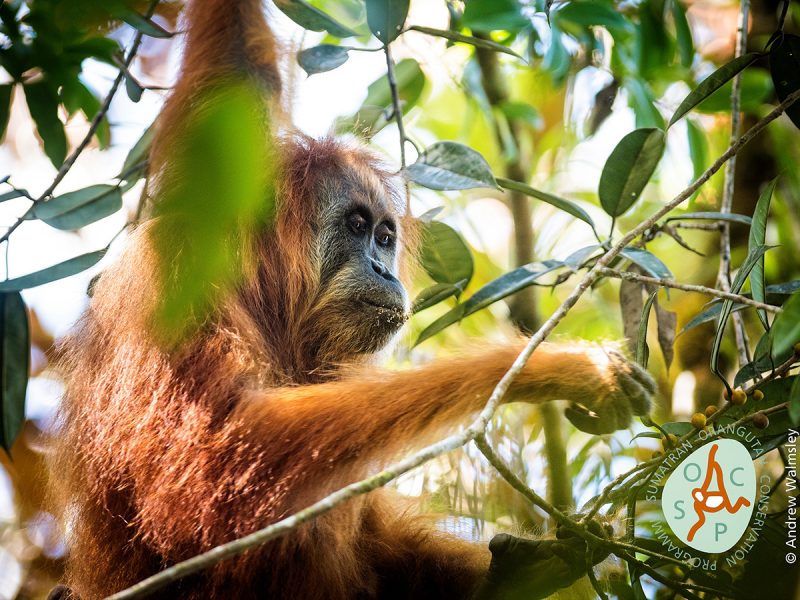
This is the most imperiled great ape in the world. Only an estimated 800 individuals exist in fragmented habitat spread over about 250,000 acres (about 1,000 square kilometers) on medium elevation hills and submontane forests from about 1,000 to 4,000 feet (300 to 1,300 m) above sea level, with densest populations in primary forest. Size is similar to other orangutans, with females under 4 feet (1.21 m) in height and males under 5 feet (1.53 m). Image via IISE.

Swire’s Snailfish (Pseudoliparis swirei) Location: Western Pacific Ocean
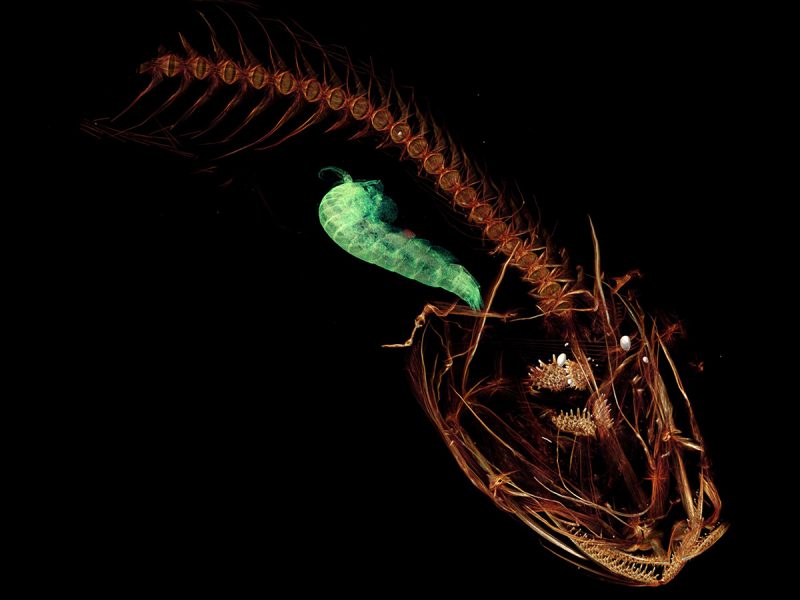
In the dark abyss of the Mariana Trench in the western Pacific lies the deepest spot in the world’s oceans and the deepest-dwelling fish ever discovered with verified depth. Large numbers of the new species were attracted to traps baited with mackerel. Pseudoliparis swirei is a small, tadpole-like fish measuring a little over four inches in length (112 mm) yet appears to be the top predator in its benthic community at the bottom of this particularly deep sea. Image via IISE.

Heterotrophic Flower (Sciaphila sugimotoi) Location: Ishigaki Island, Japan
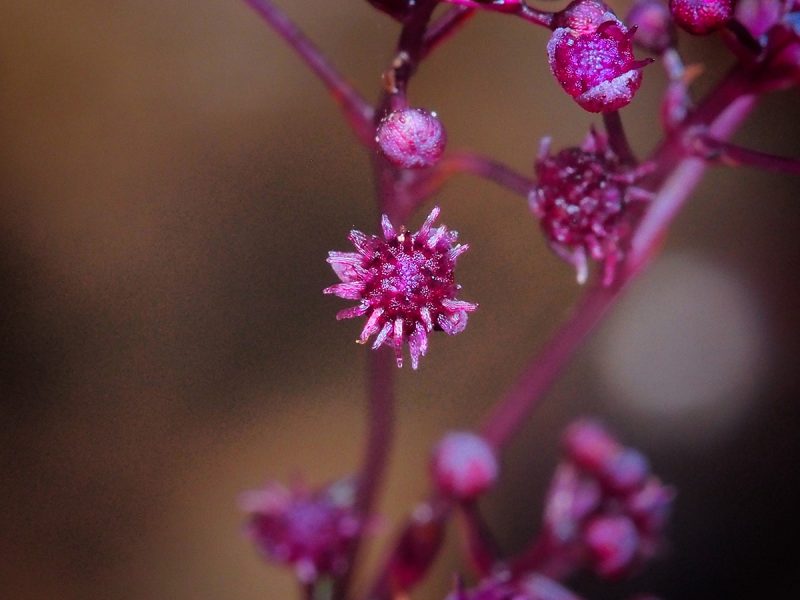
Most plants are autotrophic, capturing solar energy to feed themselves by means of photosynthesis. A few, like the newly discovered Sciaphila sugimotoi, are heterotrophic, deriving their sustenance from other organisms. In this case, the plant is symbiotic with a fungus from which it derives nutrition without harm to the partner. Image via IISE.

Volcanic Bacterium (Thiolava veneris) Location: Canary Islands
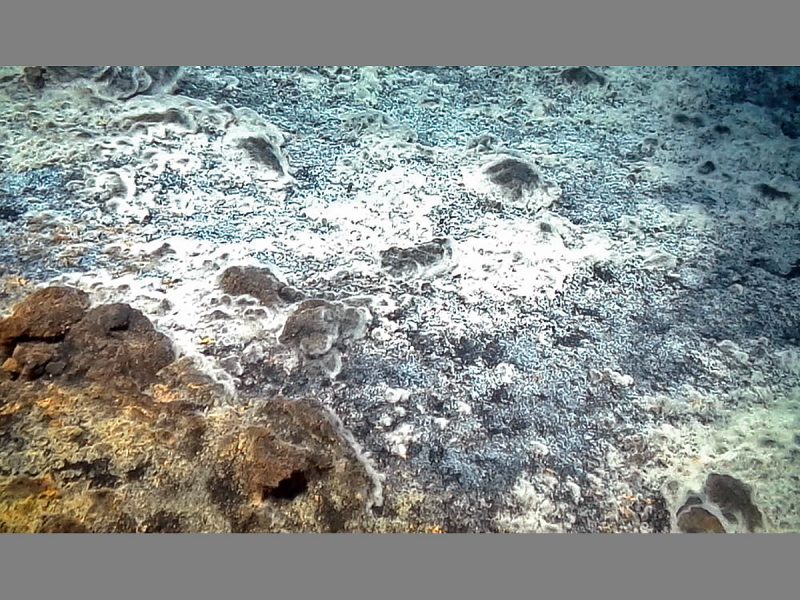
When the submarine volcano Tagoro erupted off the coast of El Hierro in the Canary Islands in 2011, it abruptly increased water temperature, decreased oxygen and released massive quantities of carbon dioxide and hydrogen sulfide, wiping out much of the existing marine ecosystem. Three years later, scientists found the first colonizers of this newly deposited area – a new species of proteobacteria producing long, hair-like structures composed of bacterial cells within a sheath. The bacteria formed a massive white mat, extending for nearly half an acre (about 2,000 square meters) around the summit of the newly formed Tagoro volcanic cone at depths of about 430 feet (129-132 m). Image via IISE.

Marsupial Lion (Wakaleo schouteni) Location: Australia
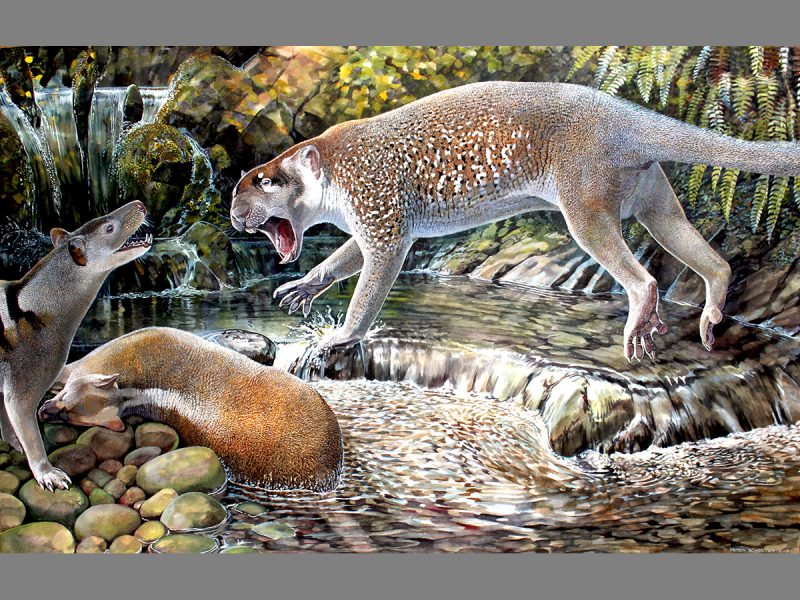
In the late Oligocene, which ended about 23 million years ago as the Miocene arrived, a marsupial lion, Wakaleo schouteni, roamed Australia’s open forest habitat in northwestern Queensland, stalking its prey. Scientists recovered fossils in Queensland that proved to be a previously unknown fossil marsupial lion. Weighing in at about 50 pounds, more or less the size of a Siberian husky dog, this predator spent part of its time in trees. Its teeth suggest that it was not completely reliant on meat but was, rather, an omnivore. Image via IISE.

Cave Beetle (Xuedytes bellus) Location: China
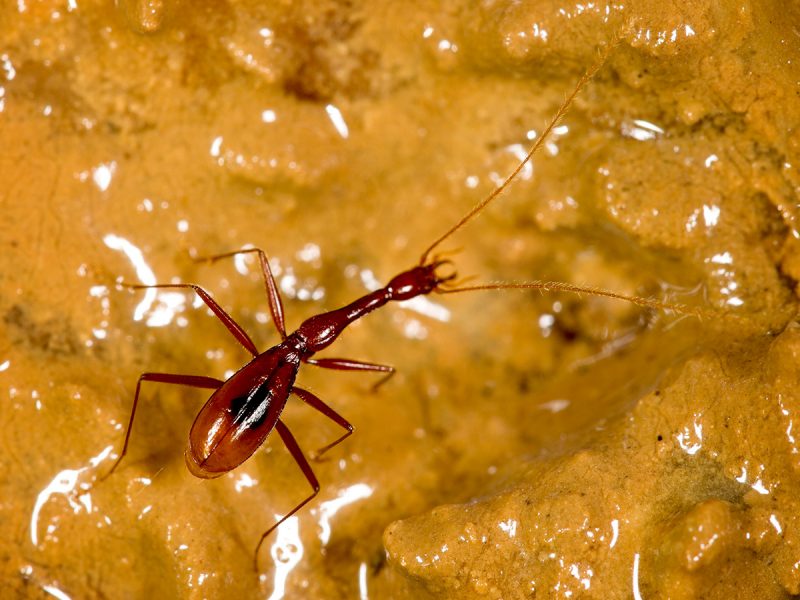
Beetles that become adapted to life in the permanent darkness of caves often resemble one another in a whole suite of characteristics including a compact body, greatly elongated, spider-like appendages, and loss of flight wings, eyes and pigmentation. Xuedytes bellus was discovered in a cave in Du’an, Guangxi Province, China. Image via IISE.

Bottom line: List of top 10 new species 2018.

Read more from IISE


from EarthSky https://ift.tt/2ssN0Yb
To celebrate the discovery of new species of animals, plants and microbes, the International Institute for Species Exploration (IISE) compiles an annual top 10 new species list from the approximately 18,000 new species named the previous year.

The first list was compiled in 2008. The list is released each year around May 23 to honor of the birthday of Carl Linnaeus, the 18th century Swedish botanist who is considered the father of modern taxonomy – our modern binomial classification system for naming organisms.

Here are the top 10 for 2018:
(In alphabetical order by scientific name)

Protist (Ancoracysta twista) Location: Unknown

Discovered in an aquarium in San Diego, California, this new single-celled protist has challenged scientists to determine its nearest relatives. It does not fit neatly within any known group and appears to be a previously undiscovered early lineage of Eukaryota with a uniquely rich mitochondrial genome. Eukaryotes are organisms with cells in which genetic material is organized in a membrane-bound nucleus. The geographic origin of the species in the wild is not known. It was found in a tropical aquarium at the Scripps Institution of Oceanography on a brain coral. Image via IISE.

Atlantic Forest Tree (Dinizia jueirana-facao) Location: Brazil

Dinizia jueirana-facao, up to 130 feet (40 m) in height, emerges above the canopy of the semi-deciduous, riparian, pristine Atlantic forest in Brazil where it is found. This massive tree, weighs an estimated 62 tons (56,000 kg). While large in dimension, the tree is limited in numbers – it is known from only 25 individuals, about half of which are in the protected area, making it critically endangered. Image via IISE.

Amphipod (Epimeria quasimodo) Location: Antarctic Ocean

Here’s a new species whose name might ring a bell. This amphipod, about 2 inches (50mm) in length, Epimeria quasimodo, is named for Victor Hugo’s character, Quasimodo the hunchback, in reference to its somewhat humped back. It is one of 26 new species of amphipods of the genus Epimeria from the Southern Ocean with incredible spines and vivid colors. Image via IISE.

Baffling Beetle: (Nymphister kronaueri). Location: Costa Rica

This tiny beetle that lives among ants. At about 1.5 mm in length, 16 of them could line up head-to-tail in the space of an inch (2.5 cm). But their story gets much better. They live exclusively among one species of army ant. The host ants, as with other army ants, do not construct permanent nests but are nomadic. The beetle’s body is the precise size, shape and color of the abdomen of a worker ant. The beetle uses its mouthparts to grab the skinny portion of the host abdomen and hang on, letting the ant do the walking. Image via IISE.

Tapanuli Orangutan: Pongo tapanuliensis Location: Sumatra, Indonesia

This is the most imperiled great ape in the world. Only an estimated 800 individuals exist in fragmented habitat spread over about 250,000 acres (about 1,000 square kilometers) on medium elevation hills and submontane forests from about 1,000 to 4,000 feet (300 to 1,300 m) above sea level, with densest populations in primary forest. Size is similar to other orangutans, with females under 4 feet (1.21 m) in height and males under 5 feet (1.53 m). Image via IISE.

Swire’s Snailfish (Pseudoliparis swirei) Location: Western Pacific Ocean

In the dark abyss of the Mariana Trench in the western Pacific lies the deepest spot in the world’s oceans and the deepest-dwelling fish ever discovered with verified depth. Large numbers of the new species were attracted to traps baited with mackerel. Pseudoliparis swirei is a small, tadpole-like fish measuring a little over four inches in length (112 mm) yet appears to be the top predator in its benthic community at the bottom of this particularly deep sea. Image via IISE.

Heterotrophic Flower (Sciaphila sugimotoi) Location: Ishigaki Island, Japan

Most plants are autotrophic, capturing solar energy to feed themselves by means of photosynthesis. A few, like the newly discovered Sciaphila sugimotoi, are heterotrophic, deriving their sustenance from other organisms. In this case, the plant is symbiotic with a fungus from which it derives nutrition without harm to the partner. Image via IISE.

Volcanic Bacterium (Thiolava veneris) Location: Canary Islands

When the submarine volcano Tagoro erupted off the coast of El Hierro in the Canary Islands in 2011, it abruptly increased water temperature, decreased oxygen and released massive quantities of carbon dioxide and hydrogen sulfide, wiping out much of the existing marine ecosystem. Three years later, scientists found the first colonizers of this newly deposited area – a new species of proteobacteria producing long, hair-like structures composed of bacterial cells within a sheath. The bacteria formed a massive white mat, extending for nearly half an acre (about 2,000 square meters) around the summit of the newly formed Tagoro volcanic cone at depths of about 430 feet (129-132 m). Image via IISE.

Marsupial Lion (Wakaleo schouteni) Location: Australia

In the late Oligocene, which ended about 23 million years ago as the Miocene arrived, a marsupial lion, Wakaleo schouteni, roamed Australia’s open forest habitat in northwestern Queensland, stalking its prey. Scientists recovered fossils in Queensland that proved to be a previously unknown fossil marsupial lion. Weighing in at about 50 pounds, more or less the size of a Siberian husky dog, this predator spent part of its time in trees. Its teeth suggest that it was not completely reliant on meat but was, rather, an omnivore. Image via IISE.

Cave Beetle (Xuedytes bellus) Location: China

Beetles that become adapted to life in the permanent darkness of caves often resemble one another in a whole suite of characteristics including a compact body, greatly elongated, spider-like appendages, and loss of flight wings, eyes and pigmentation. Xuedytes bellus was discovered in a cave in Du’an, Guangxi Province, China. Image via IISE.

Bottom line: List of top 10 new species 2018.

Read more from IISE


from EarthSky https://ift.tt/2ssN0Yb

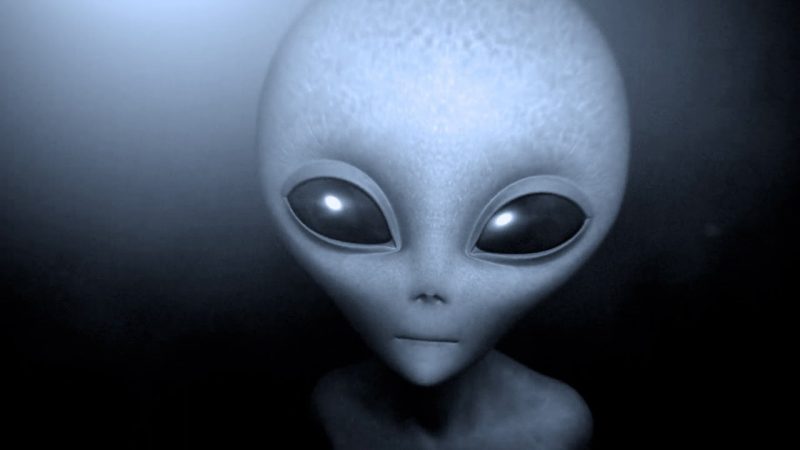
Could we learn E.T.’s language?

Can you understand me? Video still via Thinking on YouTube.

This past weekend (May 26, 2018), an organization called Messaging Extraterrestrial Intelligence (METI) brought linguists and other researchers together in Los Angeles, California, to explore the question of whether and how we might communicate with an extraterrestrial civilization, if we should ever encounter one. The workshop – called Language in the Cosmos – was organized by METI as part of this year’s National Space Society International Space Development Conference (ISDC 2018).

In the past, messages targeting possible extraterrestrials – for example, the 1974 radio message beamed to space from Arecibo, or the Pioneer plaque, or Voyager Golden Record – have typically been encoded with principles of math and science, with the hope that they are universal subjects.

But this daylong workshop wasn’t about that form of communication. It was about language.

The Pioneer plaque, placed aboard the 1st 2 spacecraft ever to leave Earth for interstellar space, Pioneer 10 in 1972 and Pioneer 11 in 1973. SETI scientists have scoffed at using language to create interstellar messages, preferring instead to use images and the principles of math and science, but linguists think language might indeed be a possibility. Image via Wikimedia Commons. Click for an explanation of the Pioneer plaque.

For some decades, linguists have spoken of a universal grammar connecting the varied languages we find on Earth. The idea of a universal grammar is usually credited to Noam Chomsky, sometimes called the father of modern linguistics. Douglas Vakoch, president of METI, commented:

Chomsky has often said that if a Martian visited Earth, it would think we all speak dialects of the same language, because all terrestrial languages share a common underlying structure. But if aliens have language, would it be similar to ours? That’s the big question.

At METI’s workshop, two of the presentations – including a paper co-authored by Noam Chomsky – were optimistic that extraterrestrial languages might have a universal grammar with virtually the same architecture that we find on Earth. Vakoch said:

That’s a radical shift for SETI scientists, who have scoffed at the idea of creating interstellar messages inspired by natural languages.

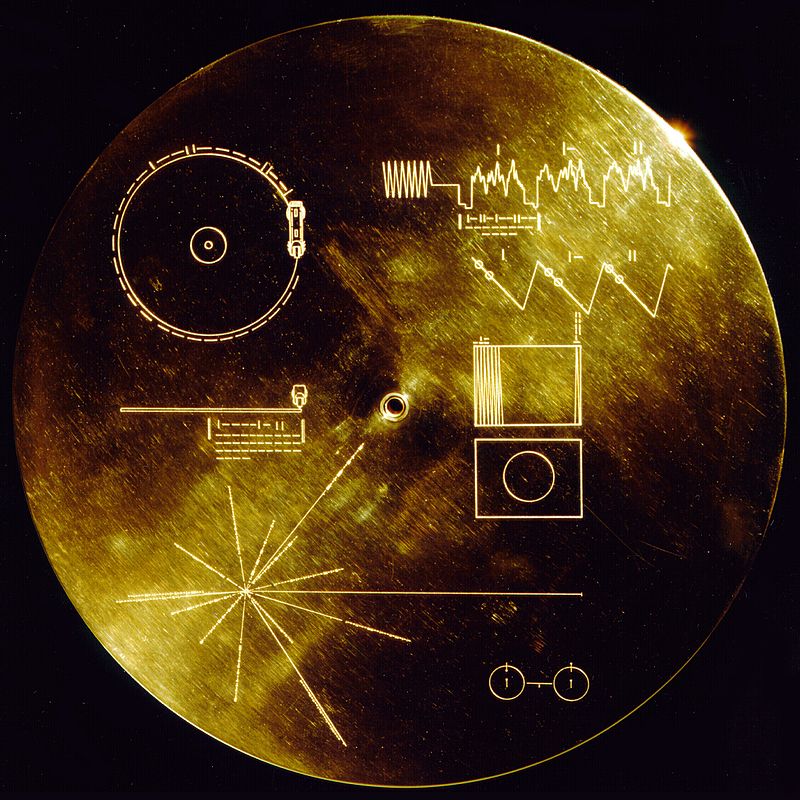
Other papers from the workshop showed that even carefully built messages, such as the Voyager Golden Record, can easily be misinterpreted because the assumptions of humans and aliens might diverge wildly from one another.

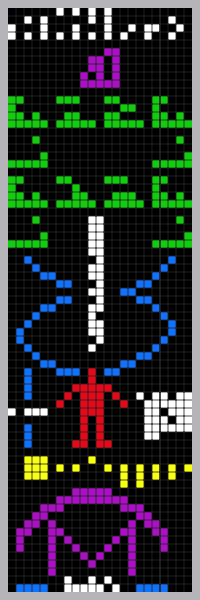
The Arecibo message as sent 1974 from the Arecibo Observatory. Via Wikimedia Commons.

The Arecibo radio message as sent 1974 from the Arecibo Observatory. It was the first intentional radio message beamed to space. Image via Wikimedia Commons. Click for an explanation of the 1974 message.

Prior to the workshop, Sheri Wells-Jensen, chair of the workshop and member of the Board of Directors of METI, wrote a very interesting series of blog posts at METI’s website on this subject. In the first post, she expressed the optimism of some linguists about using language to communicate with E.T.s:

Unless all the beings on [a distant] planet are linked into some kind of hive mind, their language situation could be very much like our own.

Why? She pointed out that:

There’s some evidence that the way our bodies are built (standing erect with two hands to manipulate objects and our particular standard set of sensing organs) has a lot to do with what kind of language we speak. If that’s true, we might be able to manage the language of aliens who are roughly humanoid, but the language spoken by sentient gas bags or intelligent snails would be forever beyond us.

The Voyagers’ Golden Record, launched from Earth in 1977. Image via Wikimedia Commons. Click for an explanation of the Golden Record message.

She also said that, after all:

Despite … arbitrary surface variation, human languages have an awful lot in common. Here’s a partial list. All languages have something like verbs and something like nouns (No, they don’t all have adjectives).

All languages have ways of talking about the past and about the future.

All languages have pronouns.

All languages have rules that we obey when making sentences.

The Parkes radio telescope in New South Wales, Australia, is one of the radio telescopes on Earth currently listening for radio signals from extraterrestrials. Image via CSIRO/Space.com.

As of this moment, we know of no inhabited exoplanets. Yet thousands of exoplanets are known now, in contrast to several decades ago, when the only planets we knew for certain existed were those in our own solar system. The TESS planet-hunter spacecraft – launched in April 2018 – will be scanning the nearest and brightest stars for signs of yet more exoplanets. What’s more, NASA has given a high priority to the search for habitable exoplanets, although, in NASA’s case, the word habitable most often refers to microbes.

Still, the idea of E.T.s is fascinating to all of us, and astronomers engaged in SETI (the Search for Extraterrestrial Intelligence) continue to be optimistic we might someday hear a radio signal from intelligent aliens. If so, linguists like those at METI are trying to lay some groundwork for bridging the language differences, assuming the E.T.s have a language.

In her blog posts, Wells-Jensen concluded:

So, the cumulative answer to the original question – would we be able to learn an alien language?’ — is ‘Probably not / maybe / I don’t even want to / I think so / who knows? / some of them, probably.’ And that’s about the best we can do for now.

Read Sheri Wells-Jensen’s 3 blog posts at METI:

Could we learn E.T.’s language – Part 1

Could we learn E.T.’s language – Part 2

Could we learn E.T.’s language – Part 3

Bottom line: Would there be commonalities between the language of extraterrestrials and our earthly languages? Could we eventually communicate? At a May 26, 2018, meeting of linguists and other experts in Los Angeles, some explained why they think it’s possible.


from EarthSky https://ift.tt/2sndwSn

Can you understand me? Video still via Thinking on YouTube.

This past weekend (May 26, 2018), an organization called Messaging Extraterrestrial Intelligence (METI) brought linguists and other researchers together in Los Angeles, California, to explore the question of whether and how we might communicate with an extraterrestrial civilization, if we should ever encounter one. The workshop – called Language in the Cosmos – was organized by METI as part of this year’s National Space Society International Space Development Conference (ISDC 2018).

In the past, messages targeting possible extraterrestrials – for example, the 1974 radio message beamed to space from Arecibo, or the Pioneer plaque, or Voyager Golden Record – have typically been encoded with principles of math and science, with the hope that they are universal subjects.

But this daylong workshop wasn’t about that form of communication. It was about language.

The Pioneer plaque, placed aboard the 1st 2 spacecraft ever to leave Earth for interstellar space, Pioneer 10 in 1972 and Pioneer 11 in 1973. SETI scientists have scoffed at using language to create interstellar messages, preferring instead to use images and the principles of math and science, but linguists think language might indeed be a possibility. Image via Wikimedia Commons. Click for an explanation of the Pioneer plaque.

For some decades, linguists have spoken of a universal grammar connecting the varied languages we find on Earth. The idea of a universal grammar is usually credited to Noam Chomsky, sometimes called the father of modern linguistics. Douglas Vakoch, president of METI, commented:

Chomsky has often said that if a Martian visited Earth, it would think we all speak dialects of the same language, because all terrestrial languages share a common underlying structure. But if aliens have language, would it be similar to ours? That’s the big question.

At METI’s workshop, two of the presentations – including a paper co-authored by Noam Chomsky – were optimistic that extraterrestrial languages might have a universal grammar with virtually the same architecture that we find on Earth. Vakoch said:

That’s a radical shift for SETI scientists, who have scoffed at the idea of creating interstellar messages inspired by natural languages.

Other papers from the workshop showed that even carefully built messages, such as the Voyager Golden Record, can easily be misinterpreted because the assumptions of humans and aliens might diverge wildly from one another.

The Arecibo message as sent 1974 from the Arecibo Observatory. Via Wikimedia Commons.

The Arecibo radio message as sent 1974 from the Arecibo Observatory. It was the first intentional radio message beamed to space. Image via Wikimedia Commons. Click for an explanation of the 1974 message.

Prior to the workshop, Sheri Wells-Jensen, chair of the workshop and member of the Board of Directors of METI, wrote a very interesting series of blog posts at METI’s website on this subject. In the first post, she expressed the optimism of some linguists about using language to communicate with E.T.s:

Unless all the beings on [a distant] planet are linked into some kind of hive mind, their language situation could be very much like our own.

Why? She pointed out that:

There’s some evidence that the way our bodies are built (standing erect with two hands to manipulate objects and our particular standard set of sensing organs) has a lot to do with what kind of language we speak. If that’s true, we might be able to manage the language of aliens who are roughly humanoid, but the language spoken by sentient gas bags or intelligent snails would be forever beyond us.

The Voyagers’ Golden Record, launched from Earth in 1977. Image via Wikimedia Commons. Click for an explanation of the Golden Record message.

She also said that, after all:

Despite … arbitrary surface variation, human languages have an awful lot in common. Here’s a partial list. All languages have something like verbs and something like nouns (No, they don’t all have adjectives).

All languages have ways of talking about the past and about the future.

All languages have pronouns.

All languages have rules that we obey when making sentences.

The Parkes radio telescope in New South Wales, Australia, is one of the radio telescopes on Earth currently listening for radio signals from extraterrestrials. Image via CSIRO/Space.com.

As of this moment, we know of no inhabited exoplanets. Yet thousands of exoplanets are known now, in contrast to several decades ago, when the only planets we knew for certain existed were those in our own solar system. The TESS planet-hunter spacecraft – launched in April 2018 – will be scanning the nearest and brightest stars for signs of yet more exoplanets. What’s more, NASA has given a high priority to the search for habitable exoplanets, although, in NASA’s case, the word habitable most often refers to microbes.

Still, the idea of E.T.s is fascinating to all of us, and astronomers engaged in SETI (the Search for Extraterrestrial Intelligence) continue to be optimistic we might someday hear a radio signal from intelligent aliens. If so, linguists like those at METI are trying to lay some groundwork for bridging the language differences, assuming the E.T.s have a language.

In her blog posts, Wells-Jensen concluded:

So, the cumulative answer to the original question – would we be able to learn an alien language?’ — is ‘Probably not / maybe / I don’t even want to / I think so / who knows? / some of them, probably.’ And that’s about the best we can do for now.

Read Sheri Wells-Jensen’s 3 blog posts at METI:

Could we learn E.T.’s language – Part 1

Could we learn E.T.’s language – Part 2

Could we learn E.T.’s language – Part 3

Bottom line: Would there be commonalities between the language of extraterrestrials and our earthly languages? Could we eventually communicate? At a May 26, 2018, meeting of linguists and other experts in Los Angeles, some explained why they think it’s possible.


from EarthSky https://ift.tt/2sndwSn

Science surgery: “What’s the difference between the words genome, gene and chromosome?”

DNA

This entry is part 9 of 9 in the series Science Surgery

Our Science Surgery series answers your cancer science questions.

If you have a question that you’d like us to answer, send it to us using the email address at the bottom of this post.

Patrick asked: “What’s the difference between the words genome, gene and chromosome?”

To answer this question it’s best to start small and zoom out. Genes, genomes and chromosomes are each made up of the most important molecule to life on earth: DNA. 

The difference between these three DNA structures is how much DNA they contain.

What is DNA?

DNA is a string of complex molecules called nucleotides. It contains the genetic information of life and acts as a set of instructions for how to build and maintain you.

DNA is found in the heart of almost every human cell, in an area called the nucleus.

Our DNA is unique, unless you’re an identical twin.

Definitions

Gene: a short section of DNA

Chromosome: a package of genes and other bits of DNA and proteins

Genome: an organism’s complete set of DNA

What is a gene?

The DNA found in our cells forms a molecular instruction book, but it isn’t just a set of random letters with no order or punctuation. It’s organised into little chunks, or paragraphs of information, that each carry a specific set of instructions for how to make a certain aspect of you.

This little paragraph is a short section of DNA known as a gene.

Scientists think our genetic code contains around 23,000 genes.

Genes are instructions that our cells use to make molecules called proteins. Proteins have lots of different roles. They form the scaffolding of cells, as well as helping them to function and communicate.

Some genes tell cells how to make proteins involved in cell growth and division. If these genes go wrong, they can develop into cancer genes and cause cells to grow out of control.

What is a cancer gene?

When a cell divides it has to make a copy of every DNA molecule so it can be exactly split between the two new cells. We have around 3 billion individual DNA molecules (nucleotides) in each cell. That’s a lot of work to carry out error-free.

Sometimes copying mistakes happen in a part of the genetic code that doesn’t carry the instructions for a protein, and so nothing really happens. In other instances, the cell’s DNA repair machinery fixes the faulty DNA chain.

Occasionally errors happen in genes that control a cell’s growth and so can lead to cancer.

People can inherit errors in genes from their parents, which can give them an increased risk of cancer. Other factors that damage DNA, such as tobacco smoke or alcohol, can also create faulty genes.

Gene tests can sometimes pick out which faulty genes might be helping a person’s cancer cells grow. Knowing these specific genetic faults can sometimes help doctors decide which treatment is best for a patient. This is called personalised medicine.

For more on personalised medicine read this science surgery post: Science Surgery: ‘Is the one-size-fits-all treatment approach obsolete?’

What is a chromosome?

DNA strands are both important and delicate, so it’s essential that they’re packaged carefully and protected during the cell division process. To strengthen them and keep them safe DNA is looped and coiled into a structure called a chromosome.

If a gene is a specific paragraph that contains details on how to make one single building block of you, then a chromosome is a chapter in this instruction book.

There are 46 chapters in the instruction manual of you, or 46 chromosomes in total: 23 from your mum and 23 from your dad.

Chromosomes are formed before cells divide. Research suggests that errors in chromosome copying could be one of the first few changes in a cell that gives it the potential to turn cancerous.

What is a genome?

A genome is an organism’s complete set of DNA.

If the DNA code is a set of instructions that’s carefully organised into paragraphs (genes) and chapters (chromosomes), then the entire manual from start to finish would be the genome.

Almost every human’s genome, chromosomes and genes are organised in the same way. It’s the DNA code, the words on the page, that are slightly different. That’s what makes us unique.

The human genome was first sequenced in 2003. During this project scientists read all the letters that make up our genome, but this is useless if we don’t understand what it means.

Scientists are now working on this. Piece by piece they’re learning more about each part of our genome.

Unfortunately, understanding what each of our 23,000 genes does, and how they interact with each other, will take some time. But doing this is important for cancer research because if we completely understand how we’re put together, we can work out why things go wrong. And if we know why cells go wrong and how they turn into cancer cells, it could give us clues on how to beat them.

Gabi

We’d like to thank Patrick for asking us this question. If you’d like to ask us something, email sciencesurgery@cancer.org.uk, leaving your first name and location (optional).


from Cancer Research UK – Science blog https://ift.tt/2sn5U2h
DNA

This entry is part 9 of 9 in the series Science Surgery

Our Science Surgery series answers your cancer science questions.

If you have a question that you’d like us to answer, send it to us using the email address at the bottom of this post.

Patrick asked: “What’s the difference between the words genome, gene and chromosome?”

To answer this question it’s best to start small and zoom out. Genes, genomes and chromosomes are each made up of the most important molecule to life on earth: DNA. 

The difference between these three DNA structures is how much DNA they contain.

What is DNA?

DNA is a string of complex molecules called nucleotides. It contains the genetic information of life and acts as a set of instructions for how to build and maintain you.

DNA is found in the heart of almost every human cell, in an area called the nucleus.

Our DNA is unique, unless you’re an identical twin.

Definitions

Gene: a short section of DNA

Chromosome: a package of genes and other bits of DNA and proteins

Genome: an organism’s complete set of DNA

What is a gene?

The DNA found in our cells forms a molecular instruction book, but it isn’t just a set of random letters with no order or punctuation. It’s organised into little chunks, or paragraphs of information, that each carry a specific set of instructions for how to make a certain aspect of you.

This little paragraph is a short section of DNA known as a gene.

Scientists think our genetic code contains around 23,000 genes.

Genes are instructions that our cells use to make molecules called proteins. Proteins have lots of different roles. They form the scaffolding of cells, as well as helping them to function and communicate.

Some genes tell cells how to make proteins involved in cell growth and division. If these genes go wrong, they can develop into cancer genes and cause cells to grow out of control.

What is a cancer gene?

When a cell divides it has to make a copy of every DNA molecule so it can be exactly split between the two new cells. We have around 3 billion individual DNA molecules (nucleotides) in each cell. That’s a lot of work to carry out error-free.

Sometimes copying mistakes happen in a part of the genetic code that doesn’t carry the instructions for a protein, and so nothing really happens. In other instances, the cell’s DNA repair machinery fixes the faulty DNA chain.

Occasionally errors happen in genes that control a cell’s growth and so can lead to cancer.

People can inherit errors in genes from their parents, which can give them an increased risk of cancer. Other factors that damage DNA, such as tobacco smoke or alcohol, can also create faulty genes.

Gene tests can sometimes pick out which faulty genes might be helping a person’s cancer cells grow. Knowing these specific genetic faults can sometimes help doctors decide which treatment is best for a patient. This is called personalised medicine.

For more on personalised medicine read this science surgery post: Science Surgery: ‘Is the one-size-fits-all treatment approach obsolete?’

What is a chromosome?

DNA strands are both important and delicate, so it’s essential that they’re packaged carefully and protected during the cell division process. To strengthen them and keep them safe DNA is looped and coiled into a structure called a chromosome.

If a gene is a specific paragraph that contains details on how to make one single building block of you, then a chromosome is a chapter in this instruction book.

There are 46 chapters in the instruction manual of you, or 46 chromosomes in total: 23 from your mum and 23 from your dad.

Chromosomes are formed before cells divide. Research suggests that errors in chromosome copying could be one of the first few changes in a cell that gives it the potential to turn cancerous.

What is a genome?

A genome is an organism’s complete set of DNA.

If the DNA code is a set of instructions that’s carefully organised into paragraphs (genes) and chapters (chromosomes), then the entire manual from start to finish would be the genome.

Almost every human’s genome, chromosomes and genes are organised in the same way. It’s the DNA code, the words on the page, that are slightly different. That’s what makes us unique.

The human genome was first sequenced in 2003. During this project scientists read all the letters that make up our genome, but this is useless if we don’t understand what it means.

Scientists are now working on this. Piece by piece they’re learning more about each part of our genome.

Unfortunately, understanding what each of our 23,000 genes does, and how they interact with each other, will take some time. But doing this is important for cancer research because if we completely understand how we’re put together, we can work out why things go wrong. And if we know why cells go wrong and how they turn into cancer cells, it could give us clues on how to beat them.

Gabi

We’d like to thank Patrick for asking us this question. If you’d like to ask us something, email sciencesurgery@cancer.org.uk, leaving your first name and location (optional).


from Cancer Research UK – Science blog https://ift.tt/2sn5U2h

On and in extinction

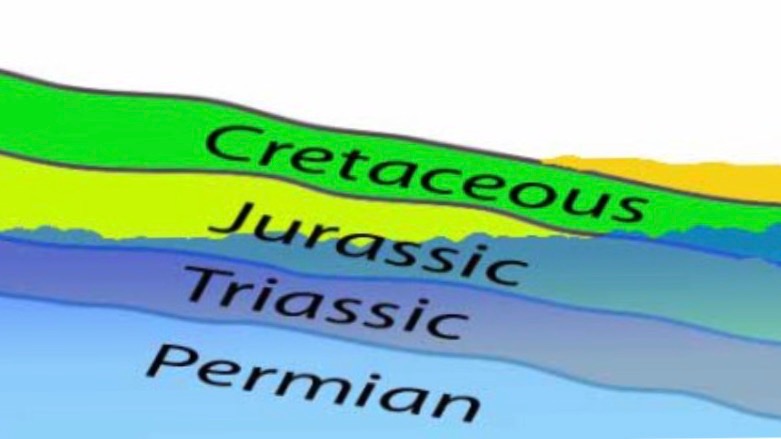
We study Earth’s history by studying the record of past events that is preserved in the rocks. Image via Guy Ottewell.

Re-printed with permission from Guy Ottewell’s blog; click here to visit him.

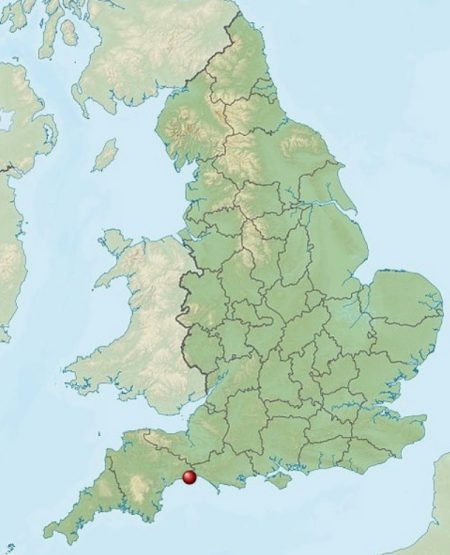
We are now on what is called the Jurassic Coast, on the English Channel coast of southern England. It was given this title after it became a UNESCO World Heritage Site in 2001. Jurassic is the name of just one of a group of three geological layers, but it’s the one more popularly known because of the 1993 film Jurassic Park, so is good for tourism.

The three layers – Triassic, Jurassic, and Cretaceous – underlie much of England, and became tilted so that they slope gently down toward the east. They are collectively called the Mesozoic (which means middle life); the era in which they were laid down is also known as the Age of Dinosaurs. It lasted from about 250 million to about 65 million years ago. The three layers outcrop along this coast in cliffs, from which fossils are loosened by tides and landslips, so Lyme Regis, in the middle of the Jurassic Coast, is a mecca for geologists.

Location of the Jurassic Coast in England, via Wikipedia.

What happened 250 million years ago to begin the Mesozoic? The time period is known as the Permian-Triassic extinction, when 70 percent of all life on land, and 90 percent of all life in the oceans, was wiped out. The causes aren’t known precisely, but massive volcanic eruptions in what is now Siberia were involved. Carbon dioxide was forced into the oceans, and oxygen forced out. Marine life asphyxiated.

Life had previously been diverse. It had radiated in the Cambrian explosion – an event some 541 million years ago, when most major animal phyla appeared in the fossil record – into all the lineages that still exist and many that do not.

Perhaps, if the great extinction hadn’t happened, we would be 250 million years more advanced than we now are.

Life began thriving and diversifying again, through the Triassic, Jurassic, and Cretaceous periods. Then about 65 million years ago came another extinction, called the Cretaceous-Paleogene. It was more scary than Jurassic Park but maybe not quite as drastic as the earlier event: it extinguished three quarters of species. It is thought to have been caused by an asteroid that hit the Yucatán, and is more popularly known, because it killed all dinosaurs except the birds.

We are living spatially above the traces of those global extinctions, and, in time, within another, between the recent geological period called the Holocene and what is coming to be called a new one, the Anthropocene. It began with agriculture, and has been accelerating since the industrial revolution. Carbon dioxide is again being forced into the oceans, so that corals are dying.

Of the world’s mammals, 36 percent, by mass, are now of one species, the human. I’ve read that 60 percent are livestock grown for human use (cattle, sheep, pigs). Wild mammals (everything from whales to elephants to lions to lemurs to mice) are reduced to 4 percent. Of birds, 70 percent by mass are livestock (poultry); wild birds are down to 30 percent. These are among the findings of the first thorough assessment of the world’s biomass, reported on May 21, 2018 in the Proceedings of the National Academy of Sciences of the U.S.A.

No need to repeat the statistics of the declines of fish, amphibians, bees, of which you’ve doubtless read. A recent shock was the decimation in European countries, probably extrapolable to others, of all flying insects, on which the higher food chain depends.

I’m not sure how the ongoing extinction event compares with the Permian-Triassic one in speed and scale. But it shouldn’t be as bad. Its cause is not a blind volcanic force but a cognitive species, which will presumably understand and change its behavior before those percentages reach their worst.

Image from a film called Welcome to the Anthropocene, commissioned by the Planet Under Pressure conference, London, March, 2012.

Bottom line: There have been multiple mass extinctions in Earth’s history. Signs point to our living in the midst of one now?

Source: The biomass distribution on Earth

Read more: The Anthropocene has begun

Watch: The Jurassic Coast, a 5-minute film below by Tim Britton


from EarthSky https://ift.tt/2IXlNDR

We study Earth’s history by studying the record of past events that is preserved in the rocks. Image via Guy Ottewell.

Re-printed with permission from Guy Ottewell’s blog; click here to visit him.

We are now on what is called the Jurassic Coast, on the English Channel coast of southern England. It was given this title after it became a UNESCO World Heritage Site in 2001. Jurassic is the name of just one of a group of three geological layers, but it’s the one more popularly known because of the 1993 film Jurassic Park, so is good for tourism.

The three layers – Triassic, Jurassic, and Cretaceous – underlie much of England, and became tilted so that they slope gently down toward the east. They are collectively called the Mesozoic (which means middle life); the era in which they were laid down is also known as the Age of Dinosaurs. It lasted from about 250 million to about 65 million years ago. The three layers outcrop along this coast in cliffs, from which fossils are loosened by tides and landslips, so Lyme Regis, in the middle of the Jurassic Coast, is a mecca for geologists.

Location of the Jurassic Coast in England, via Wikipedia.

What happened 250 million years ago to begin the Mesozoic? The time period is known as the Permian-Triassic extinction, when 70 percent of all life on land, and 90 percent of all life in the oceans, was wiped out. The causes aren’t known precisely, but massive volcanic eruptions in what is now Siberia were involved. Carbon dioxide was forced into the oceans, and oxygen forced out. Marine life asphyxiated.

Life had previously been diverse. It had radiated in the Cambrian explosion – an event some 541 million years ago, when most major animal phyla appeared in the fossil record – into all the lineages that still exist and many that do not.

Perhaps, if the great extinction hadn’t happened, we would be 250 million years more advanced than we now are.

Life began thriving and diversifying again, through the Triassic, Jurassic, and Cretaceous periods. Then about 65 million years ago came another extinction, called the Cretaceous-Paleogene. It was more scary than Jurassic Park but maybe not quite as drastic as the earlier event: it extinguished three quarters of species. It is thought to have been caused by an asteroid that hit the Yucatán, and is more popularly known, because it killed all dinosaurs except the birds.

We are living spatially above the traces of those global extinctions, and, in time, within another, between the recent geological period called the Holocene and what is coming to be called a new one, the Anthropocene. It began with agriculture, and has been accelerating since the industrial revolution. Carbon dioxide is again being forced into the oceans, so that corals are dying.

Of the world’s mammals, 36 percent, by mass, are now of one species, the human. I’ve read that 60 percent are livestock grown for human use (cattle, sheep, pigs). Wild mammals (everything from whales to elephants to lions to lemurs to mice) are reduced to 4 percent. Of birds, 70 percent by mass are livestock (poultry); wild birds are down to 30 percent. These are among the findings of the first thorough assessment of the world’s biomass, reported on May 21, 2018 in the Proceedings of the National Academy of Sciences of the U.S.A.

No need to repeat the statistics of the declines of fish, amphibians, bees, of which you’ve doubtless read. A recent shock was the decimation in European countries, probably extrapolable to others, of all flying insects, on which the higher food chain depends.

I’m not sure how the ongoing extinction event compares with the Permian-Triassic one in speed and scale. But it shouldn’t be as bad. Its cause is not a blind volcanic force but a cognitive species, which will presumably understand and change its behavior before those percentages reach their worst.

Image from a film called Welcome to the Anthropocene, commissioned by the Planet Under Pressure conference, London, March, 2012.

Bottom line: There have been multiple mass extinctions in Earth’s history. Signs point to our living in the midst of one now?

Source: The biomass distribution on Earth

Read more: The Anthropocene has begun

Watch: The Jurassic Coast, a 5-minute film below by Tim Britton


from EarthSky https://ift.tt/2IXlNDR

3rd of this season’s 3 full moons May 29

Above: Moon set over La Paz, capital city of Bolivia, on April 30, 2018 from Max Glaser.

May 29, 2018 ushers in the third of this season’s three full moons. In this case, when we say season, we mean the time period between an equinox and solstice. The March equinox was March 20. We had full moons on March 31, and April 30, and now this May 29 full moon. Most seasons, in fact, do have three full moons, and all full moons have names. Every so often, there’s a season with four full moons, and then a full moon lacks a moon name. In that case, one of those full moons carries the name Blue Moon. More about that below.

In the Northern Hemisphere, we call the May full moon a Flower Moon, Planting Moon or Milk Moon. In the Southern Hemisphere, this same full moon is the Hunter’s Moon, Beaver Moon or Frost Moon.

For the Northern Hemisphere, this May 2018 full moon counts as the final full moon of spring.

For the Southern Hemisphere, this May 2018 full moon is the final full moon of autumn.

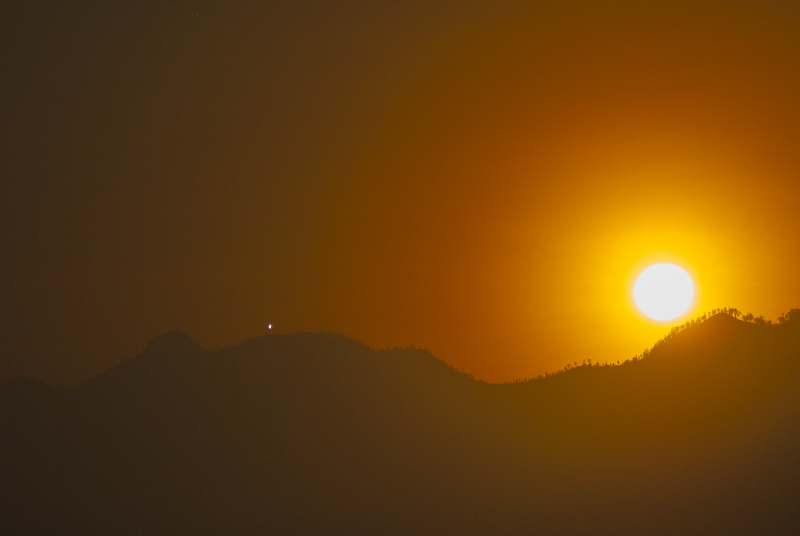
The moon wasn’t quite full, but it looked nearly round and full in the sky – near the planet Jupiter, visible here just above the ridge of the mountain – in this May 28, 2018 photo (3:40 a.m.) by Asthadi Setyawan in Malang, East Java, Indonesia.

What about next year? Checking the moon phase almanac, we find that – a year from now – a full moon happens on May 18, 2019. There’s another full moon on June 17, 2019. Throughout the 21st century (2001 to 2100) the June solstice falls on June 20 or 21. For that reason, we know that the 2019 June full moon will happen before the June 2019 solstice.

As it turns out, the 2019 May full moon will be the third of four full moons in between the March 2019 equinox and June 2019 solstice. The June 2019 full moon will be the fourth of that season’s four full moons. As mentioned above, most seasons have three full moons. But not so between the March equinox and June solstice of 2019:

Equinox: March 20, 2019
Full moon: March 21, 2019
Full moon: April 19, 2019
Full moon: May 18, 2019
Full moon: June 17, 2019
Solstice: June 21, 2019

By tradition, the third of a season’s four full moons is sometimes called a Blue Moon. Four full moons in one season is relatively rare. In a period of 19 calendar years, there are 76 seasons (19 x 4 = 76), yet only 7 of these 76 seasons have four full moons.

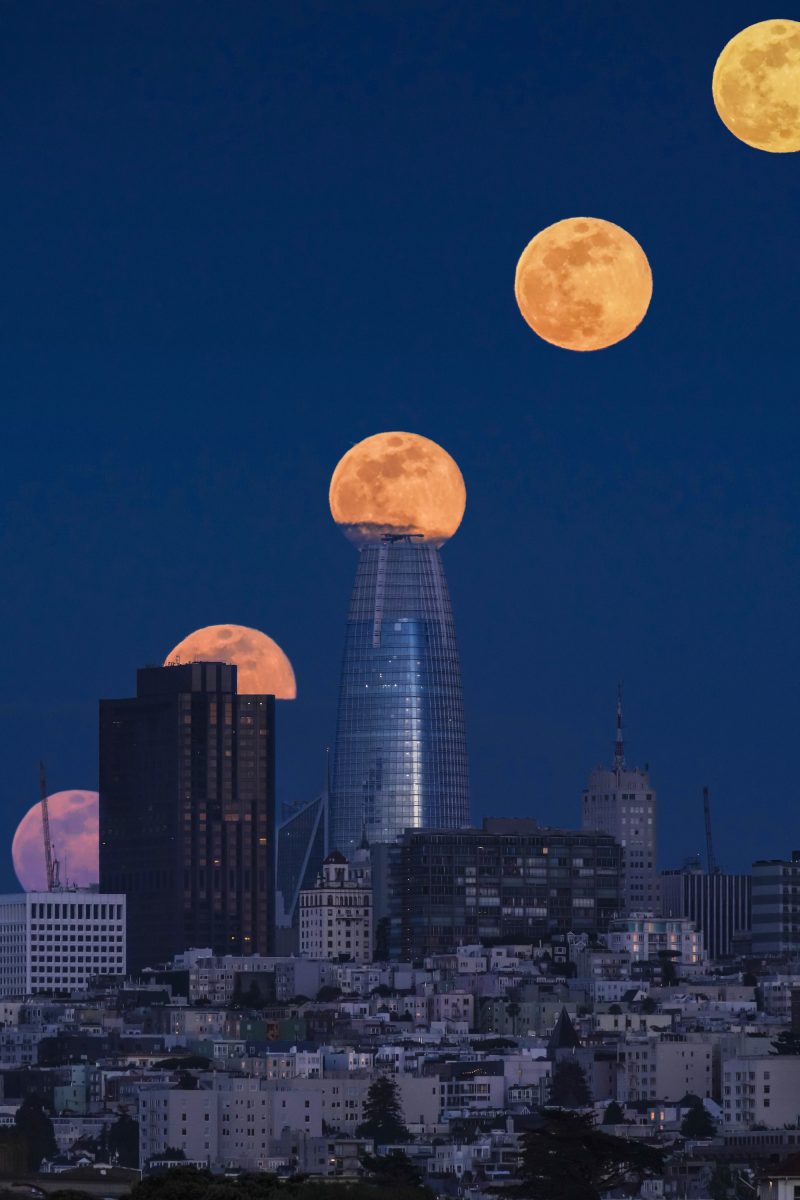
This was the April 2018 full moon. Kwong Liew composed this image of 5 shots taken on April 29 over Salesforce Tower in San Francisco.

Bottom line: In 2018, we have 3 full moons between the March equinox and June solstice. Exactly 12 full moons from now – in May 2019 – we’ll be enjoying the 3rd of 4 full moons of this season. People will call it a Blue Moon.

Resources:

Phases of the moon: 2001 to 2100

Solstices and equinoxes: 2001 to 2100


from EarthSky https://ift.tt/2xvTnjd

Above: Moon set over La Paz, capital city of Bolivia, on April 30, 2018 from Max Glaser.

May 29, 2018 ushers in the third of this season’s three full moons. In this case, when we say season, we mean the time period between an equinox and solstice. The March equinox was March 20. We had full moons on March 31, and April 30, and now this May 29 full moon. Most seasons, in fact, do have three full moons, and all full moons have names. Every so often, there’s a season with four full moons, and then a full moon lacks a moon name. In that case, one of those full moons carries the name Blue Moon. More about that below.

In the Northern Hemisphere, we call the May full moon a Flower Moon, Planting Moon or Milk Moon. In the Southern Hemisphere, this same full moon is the Hunter’s Moon, Beaver Moon or Frost Moon.

For the Northern Hemisphere, this May 2018 full moon counts as the final full moon of spring.

For the Southern Hemisphere, this May 2018 full moon is the final full moon of autumn.

The moon wasn’t quite full, but it looked nearly round and full in the sky – near the planet Jupiter, visible here just above the ridge of the mountain – in this May 28, 2018 photo (3:40 a.m.) by Asthadi Setyawan in Malang, East Java, Indonesia.

What about next year? Checking the moon phase almanac, we find that – a year from now – a full moon happens on May 18, 2019. There’s another full moon on June 17, 2019. Throughout the 21st century (2001 to 2100) the June solstice falls on June 20 or 21. For that reason, we know that the 2019 June full moon will happen before the June 2019 solstice.

As it turns out, the 2019 May full moon will be the third of four full moons in between the March 2019 equinox and June 2019 solstice. The June 2019 full moon will be the fourth of that season’s four full moons. As mentioned above, most seasons have three full moons. But not so between the March equinox and June solstice of 2019:

Equinox: March 20, 2019
Full moon: March 21, 2019
Full moon: April 19, 2019
Full moon: May 18, 2019
Full moon: June 17, 2019
Solstice: June 21, 2019

By tradition, the third of a season’s four full moons is sometimes called a Blue Moon. Four full moons in one season is relatively rare. In a period of 19 calendar years, there are 76 seasons (19 x 4 = 76), yet only 7 of these 76 seasons have four full moons.

This was the April 2018 full moon. Kwong Liew composed this image of 5 shots taken on April 29 over Salesforce Tower in San Francisco.

Bottom line: In 2018, we have 3 full moons between the March equinox and June solstice. Exactly 12 full moons from now – in May 2019 – we’ll be enjoying the 3rd of 4 full moons of this season. People will call it a Blue Moon.

Resources:

Phases of the moon: 2001 to 2100

Solstices and equinoxes: 2001 to 2100


from EarthSky https://ift.tt/2xvTnjd

Learning from a cancer’s past could predict its future

Complaining about the weather is a favourite pastime for many. And while we can’t change it, the forecast gives us the opportunity to think ahead, plan and make sensible choices. Whether that’s a change of outfit or using a different mode of transport, knowing what might lie ahead allows us to be prepared for what’s predicted.

This is exactly where we want to be with cancer. Except that if we can predict how a cancer will behave over time, perhaps we can change its future, for the better.

We’re looking into the future, to know what a tumour will look like next week, month or even year.

– Professor Graham

A new study led by Cancer Research UK scientists takes us a step towards that goal. Published in Nature Genetics, they’ve used computers and genetic data to piece together a cancer’s history, allowing them to develop a way to predict the next steps that the tumour will likely take as it progresses.

“We’re revealing the secret history of a tumour, which we were never able to observe before,” says lead researcher Professor Trevor Graham, from the Barts Cancer Institute in London.

“But the biggest thing about this work is that we’re looking into the future, to know what a tumour will look like next week, month or even year.”

That offers the chance that doctors could one day tailor treatment options in individual patients based on the predictions, keeping them one step ahead of the game. That’s a distant goal, but this work helps carve a path to get there.

Past, present, and future

It’s no surprise that this research has its roots in Charles Darwin’s theory of evolution. Just like how a species changes as it adapts to its environment, so too does a growing tumour.

Scientists have been studying this process in species for many years. Thanks to sophisticated technology that reads an organism’s DNA – alongside the computers and equations that quickly analyse the data – researchers can look back in time at a species’ evolutionary history, and its relationship with others.

And it’s the same tools that make this possible for cancer too.

“We haven’t invented new maths,” says co-leading author Dr Andrea Sottoriva, a Cancer Research UK Fellow from the Institute of Cancer Research, London. “We’ve taken what others have built over the past few decades to study various populations, and applied this maths to cancer.”

By unravelling a tumour’s past, the team hoped to understand more about what its future may hold. But as tumours are often studied at a single point in time, using a biopsy sample taken from a cancer that has already developed, the team needed to come up with a way to turn back the clock.

“The processes that took place before it was removed, how it grew, were previously invisible to us,” says Graham.

So, the team turned their attention to existing data, making use of detailed genetic samples taken from tumours. They first began with DNA code read from just three patients – one with breast cancer, one with leukaemia, and one with lung cancer.

Cancer’s secret diary

When a cancer grows its cells develop new genetic changes, meaning that one part of a tumour could have different genetic patterns to another. Studying this variety in the samples was key to this work.

“The question we wanted to answer was: ‘how did that variety arise in the first place? Did it grow this way, or did it grow that way?’” Graham says.

Using maths that plots how a species evolves over time, the researchers built a computer simulation for the tumours. They then compared these different evolutionary scenarios to the genetic data from the patients, matching the scenarios that gave the same result.

A cancer’s genetic information… is like a secret diary that records the dynamics that have happened over time.

– Professor Graham

From these matches, the researchers found the evolutionary path the cancers had likely taken, giving rise to the diversity that was found in each biopsy sample.

Next, they looked at 4 large groups of patient samples, spanning bowel, stomach and lung cancers, and also samples taken from cancer that had spread. These showed that genetic changes which give a cancer cell an advantage, such as being able to grow faster, emerge early in the tumour’s development. But they also found that this process was still taking place in tumours that had spread, which could be caused by cells adapting to cancer treatment.

“A cancer’s genetic information is a snapshot in time, telling you what the tumour looks like today,” says Graham. “But it’s also like a secret diary that records the dynamics that have happened over time.

“We’re using this to learn something about the rules of cancer evolution.”

Written in the rules

The team realised they could turn these rules into a way to predict how the cancers may evolve in the future. By running millions of simulations of tumour growth on computers, and seeing if their rules could forecast how these virtual cancers progressed, Graham is building confidence in their predictions.

“Once you know the rules, you can play the game,” Sottoriva says.

Once you know the rules, you can play the game.

– Dr Andrea Sottoriva

“What we’ve done is enable predictions about cancer progression to hopefully be made in patients, so that treatment decisions could be made based on what the tumour will look like in the future, rather than today.

“But we haven’t yet proven that’s possible.”

Next, they need to prove this technique’s accuracy. And to do that, the researchers need to be able to track cancer evolution over time in the lab, and see if it matches their forecasts. And there’s another key aspect that’s so far missing from this work: how treatment might impact a cancer’s evolutionary path. Finding that out is also next on their to-do list.

Research is like the weather. We don’t know what the future holds. But in making predictions based on the evidence we have, an exciting and important journey of discovery awaits.

Justine

Williams, M. J. et al. Quantification of subclonal selection in cancer from bulk sequencing data. Nature Genetics. https://ift.tt/2kwCdZn.


from Cancer Research UK – Science blog https://ift.tt/2IUFqjR

Complaining about the weather is a favourite pastime for many. And while we can’t change it, the forecast gives us the opportunity to think ahead, plan and make sensible choices. Whether that’s a change of outfit or using a different mode of transport, knowing what might lie ahead allows us to be prepared for what’s predicted.

This is exactly where we want to be with cancer. Except that if we can predict how a cancer will behave over time, perhaps we can change its future, for the better.

We’re looking into the future, to know what a tumour will look like next week, month or even year.

– Professor Graham

A new study led by Cancer Research UK scientists takes us a step towards that goal. Published in Nature Genetics, they’ve used computers and genetic data to piece together a cancer’s history, allowing them to develop a way to predict the next steps that the tumour will likely take as it progresses.

“We’re revealing the secret history of a tumour, which we were never able to observe before,” says lead researcher Professor Trevor Graham, from the Barts Cancer Institute in London.

“But the biggest thing about this work is that we’re looking into the future, to know what a tumour will look like next week, month or even year.”

That offers the chance that doctors could one day tailor treatment options in individual patients based on the predictions, keeping them one step ahead of the game. That’s a distant goal, but this work helps carve a path to get there.

Past, present, and future

It’s no surprise that this research has its roots in Charles Darwin’s theory of evolution. Just like how a species changes as it adapts to its environment, so too does a growing tumour.

Scientists have been studying this process in species for many years. Thanks to sophisticated technology that reads an organism’s DNA – alongside the computers and equations that quickly analyse the data – researchers can look back in time at a species’ evolutionary history, and its relationship with others.

And it’s the same tools that make this possible for cancer too.

“We haven’t invented new maths,” says co-leading author Dr Andrea Sottoriva, a Cancer Research UK Fellow from the Institute of Cancer Research, London. “We’ve taken what others have built over the past few decades to study various populations, and applied this maths to cancer.”

By unravelling a tumour’s past, the team hoped to understand more about what its future may hold. But as tumours are often studied at a single point in time, using a biopsy sample taken from a cancer that has already developed, the team needed to come up with a way to turn back the clock.

“The processes that took place before it was removed, how it grew, were previously invisible to us,” says Graham.

So, the team turned their attention to existing data, making use of detailed genetic samples taken from tumours. They first began with DNA code read from just three patients – one with breast cancer, one with leukaemia, and one with lung cancer.

Cancer’s secret diary

When a cancer grows its cells develop new genetic changes, meaning that one part of a tumour could have different genetic patterns to another. Studying this variety in the samples was key to this work.

“The question we wanted to answer was: ‘how did that variety arise in the first place? Did it grow this way, or did it grow that way?’” Graham says.

Using maths that plots how a species evolves over time, the researchers built a computer simulation for the tumours. They then compared these different evolutionary scenarios to the genetic data from the patients, matching the scenarios that gave the same result.

A cancer’s genetic information… is like a secret diary that records the dynamics that have happened over time.

– Professor Graham

From these matches, the researchers found the evolutionary path the cancers had likely taken, giving rise to the diversity that was found in each biopsy sample.

Next, they looked at 4 large groups of patient samples, spanning bowel, stomach and lung cancers, and also samples taken from cancer that had spread. These showed that genetic changes which give a cancer cell an advantage, such as being able to grow faster, emerge early in the tumour’s development. But they also found that this process was still taking place in tumours that had spread, which could be caused by cells adapting to cancer treatment.

“A cancer’s genetic information is a snapshot in time, telling you what the tumour looks like today,” says Graham. “But it’s also like a secret diary that records the dynamics that have happened over time.

“We’re using this to learn something about the rules of cancer evolution.”

Written in the rules

The team realised they could turn these rules into a way to predict how the cancers may evolve in the future. By running millions of simulations of tumour growth on computers, and seeing if their rules could forecast how these virtual cancers progressed, Graham is building confidence in their predictions.

“Once you know the rules, you can play the game,” Sottoriva says.

Once you know the rules, you can play the game.

– Dr Andrea Sottoriva

“What we’ve done is enable predictions about cancer progression to hopefully be made in patients, so that treatment decisions could be made based on what the tumour will look like in the future, rather than today.

“But we haven’t yet proven that’s possible.”

Next, they need to prove this technique’s accuracy. And to do that, the researchers need to be able to track cancer evolution over time in the lab, and see if it matches their forecasts. And there’s another key aspect that’s so far missing from this work: how treatment might impact a cancer’s evolutionary path. Finding that out is also next on their to-do list.

Research is like the weather. We don’t know what the future holds. But in making predictions based on the evidence we have, an exciting and important journey of discovery awaits.

Justine

Williams, M. J. et al. Quantification of subclonal selection in cancer from bulk sequencing data. Nature Genetics. https://ift.tt/2kwCdZn.


from Cancer Research UK – Science blog https://ift.tt/2IUFqjR

Lightning sprites over Oklahoma

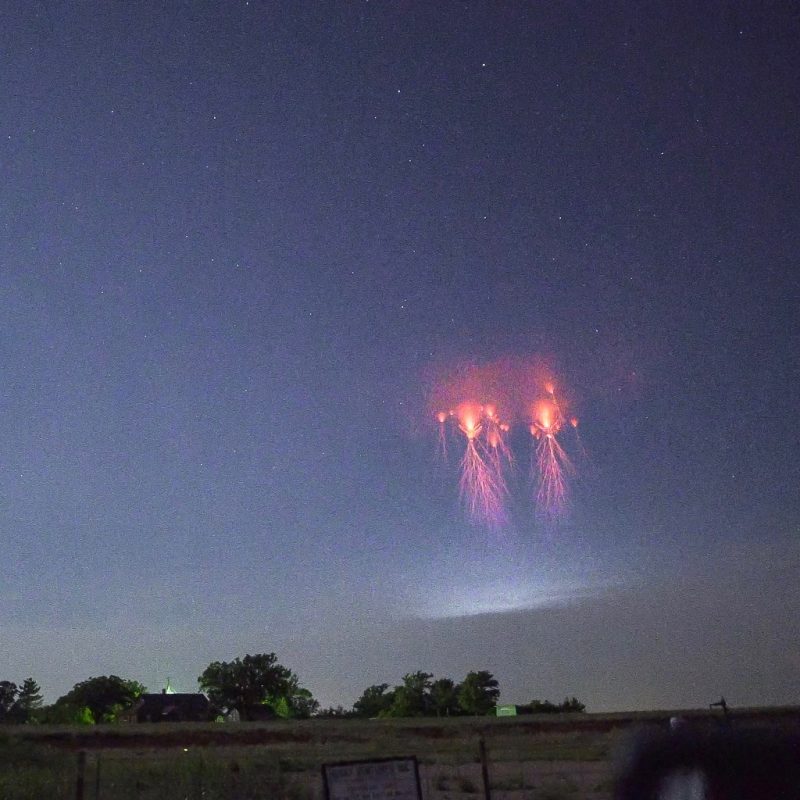
Lightning sprite over Oklahoma. My Best srite lightning capture to date, said photographer Paul Smith.

Paul Smith said this image is a still from a video.

Lightning sprites are offshoots of large-scale electrical discharges taking place high in Earth’s atmosphere, above thunderstorms. They’re often red in color, and so they’re sometimes called red sprites. They can be tens of miles high, but last only a few tens of milliseconds. Oklahoma – which lies within an area of the Great Plains known as Tornado Alley – is a good place to see lightning sprites. Paul Smith in Edmond, Oklahoma of a longtime observer of them, and he captured this image on May 24, 2018. He told EarthSky:

My best sprite lightning capture to date. A beautiful jellyfish, close range from Highway 33 East of Kingfisher, Oklahoma on the morning of May 24 at 12:55 a.m. local time, looking northwest towards Alva, Oklahoma.

You can even see the color change in the tendrils going into the lower atmosphere.

Thank you, Paul!

Read more about lightning sprites at Wikipedia

Want to see lightning sprites in real time? The video below, from Thomas Ashcraft in New Mexico – another veteran lighting sprite observer – captured it on June 23, 2014.

Sequence 01 from Thomas Ashcraft on Vimeo.

Bottom line: May 2018 example of sprite lightning over Oklahoma.


from EarthSky https://ift.tt/2JaWvp7
Lightning sprite over Oklahoma. My Best srite lightning capture to date, said photographer Paul Smith.

Paul Smith said this image is a still from a video.

Lightning sprites are offshoots of large-scale electrical discharges taking place high in Earth’s atmosphere, above thunderstorms. They’re often red in color, and so they’re sometimes called red sprites. They can be tens of miles high, but last only a few tens of milliseconds. Oklahoma – which lies within an area of the Great Plains known as Tornado Alley – is a good place to see lightning sprites. Paul Smith in Edmond, Oklahoma of a longtime observer of them, and he captured this image on May 24, 2018. He told EarthSky:

My best sprite lightning capture to date. A beautiful jellyfish, close range from Highway 33 East of Kingfisher, Oklahoma on the morning of May 24 at 12:55 a.m. local time, looking northwest towards Alva, Oklahoma.

You can even see the color change in the tendrils going into the lower atmosphere.

Thank you, Paul!

Read more about lightning sprites at Wikipedia

Want to see lightning sprites in real time? The video below, from Thomas Ashcraft in New Mexico – another veteran lighting sprite observer – captured it on June 23, 2014.

Sequence 01 from Thomas Ashcraft on Vimeo.

Bottom line: May 2018 example of sprite lightning over Oklahoma.


from EarthSky https://ift.tt/2JaWvp7

adds 2