aads

When was Earth’s 1st snow?

Image via quotesgram.

Earth’s first snow might have fallen after large masses of land rose swiftly from the sea and set off dramatic changes on our planet 2.4 billion years ago. That’s according to a study published May 24, 2018, in the peer-reviewed journal Nature.

Geologist Ilya Bindeman is a professor in the Department of Earth Sciences at University of Oregon and the study lead author. He said in a statement:

What we speculate is that once large continents emerged, light would have been reflected back into space and that would have initiated runaway glaciation. Earth would have seen its first snowfall.
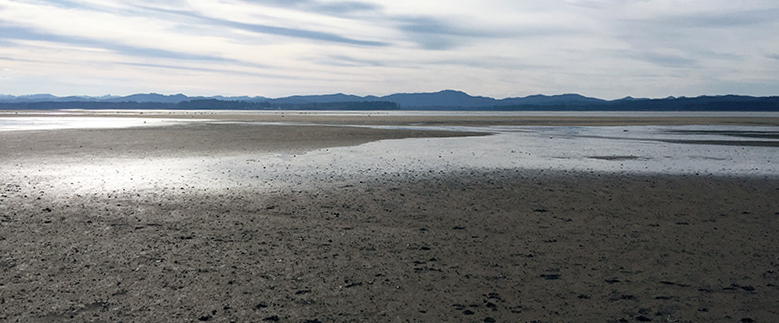
Previously submerged surfaces become exposed to weathering, leading to the accumulation of mudrocks and shales. In this scene, winter drainage at Fern Ridge Reservoir west of Eugene, Oregon, exposes mudrocks, providing an example of how newly risen land is exposed to weathering forces. Image via Ilya Bindeman.

The research team studied shale, Earth’s most abundant sedimentary rock. Shale rocks are formed by the weathering of crust. Bindeman said:

They tell you a lot about the exposure to air and light and precipitation. The process of forming shale captures organic products and eventually helps to generate oil. Shales provide us with a continuous record of weathering.

Using shale samples from every continent, the scientists looked at ratios of three common oxygen isotopes, or chemical signatures. They found evidence from as far back as 3.5 billion years ago showing traces of rainwater that caused weathering of land.

Bindeman and his team detected a major shift in the chemical makeup of 278 shale samples at the 2.4-billion-year mark. Their research suggests that those changes began when Earth was much hotter than today, when the newly-surfaced land rose rapidly and was exposed to weathering. Bindeman said the total landmass of the planet 2.4 billion years ago may have reached about two-thirds of what is seen today.

The emergence of so much land changed the flow of atmospheric gases and other chemical and physical processes, say the researchers, primarily between 2.4 billion and 2.2 billion years ago, he said.

The chemical changes recorded in the rocks coincide with the theorized timing of land collisions that formed one of Earth’s first supercontinents, Kenorland, and the planet’s first high mountain ranges and plateaus. Bindeman said:

Land rising from water changes the albedo of the planet. Initially, Earth would have been dark blue with some white clouds when viewed from space. Early continents added to reflection.

Earth’s albedo is the proportion of sunlight that’s reflected by the planet’s surface.
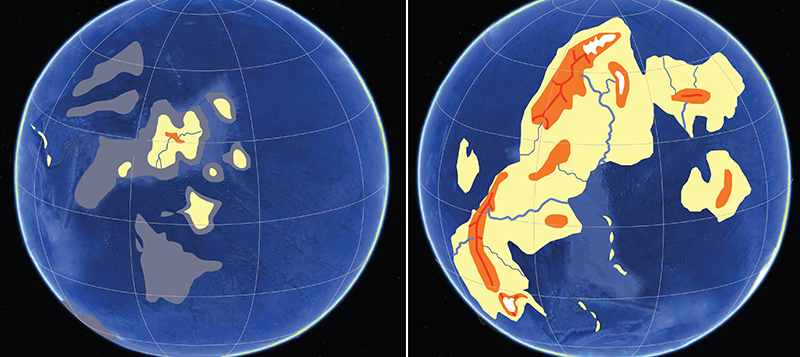
Before and after: How Earth’s land elevations may have looked before and after the Great Oxygenation Event. Image via Ilya Bindeman.

The rapid changes, the researchers noted, may have triggered what scientists call the Great Oxygenation Event, in which atmospheric changes brought significant amounts of free oxygen into the air.

Bottom line: A new study suggests Earth got its first snowfall 2.4 billion years ago.

Read more from the University of Oregon


from EarthSky https://ift.tt/2IQres8

Image via quotesgram.

Earth’s first snow might have fallen after large masses of land rose swiftly from the sea and set off dramatic changes on our planet 2.4 billion years ago. That’s according to a study published May 24, 2018, in the peer-reviewed journal Nature.

Geologist Ilya Bindeman is a professor in the Department of Earth Sciences at University of Oregon and the study lead author. He said in a statement:

What we speculate is that once large continents emerged, light would have been reflected back into space and that would have initiated runaway glaciation. Earth would have seen its first snowfall.

Previously submerged surfaces become exposed to weathering, leading to the accumulation of mudrocks and shales. In this scene, winter drainage at Fern Ridge Reservoir west of Eugene, Oregon, exposes mudrocks, providing an example of how newly risen land is exposed to weathering forces. Image via Ilya Bindeman.

The research team studied shale, Earth’s most abundant sedimentary rock. Shale rocks are formed by the weathering of crust. Bindeman said:

They tell you a lot about the exposure to air and light and precipitation. The process of forming shale captures organic products and eventually helps to generate oil. Shales provide us with a continuous record of weathering.

Using shale samples from every continent, the scientists looked at ratios of three common oxygen isotopes, or chemical signatures. They found evidence from as far back as 3.5 billion years ago showing traces of rainwater that caused weathering of land.

Bindeman and his team detected a major shift in the chemical makeup of 278 shale samples at the 2.4-billion-year mark. Their research suggests that those changes began when Earth was much hotter than today, when the newly-surfaced land rose rapidly and was exposed to weathering. Bindeman said the total landmass of the planet 2.4 billion years ago may have reached about two-thirds of what is seen today.

The emergence of so much land changed the flow of atmospheric gases and other chemical and physical processes, say the researchers, primarily between 2.4 billion and 2.2 billion years ago, he said.

The chemical changes recorded in the rocks coincide with the theorized timing of land collisions that formed one of Earth’s first supercontinents, Kenorland, and the planet’s first high mountain ranges and plateaus. Bindeman said:

Land rising from water changes the albedo of the planet. Initially, Earth would have been dark blue with some white clouds when viewed from space. Early continents added to reflection.

Earth’s albedo is the proportion of sunlight that’s reflected by the planet’s surface.

Before and after: How Earth’s land elevations may have looked before and after the Great Oxygenation Event. Image via Ilya Bindeman.

The rapid changes, the researchers noted, may have triggered what scientists call the Great Oxygenation Event, in which atmospheric changes brought significant amounts of free oxygen into the air.

Bottom line: A new study suggests Earth got its first snowfall 2.4 billion years ago.

Read more from the University of Oregon


from EarthSky https://ift.tt/2IQres8

Does Planet Nine exist? Astronomers point to new evidence

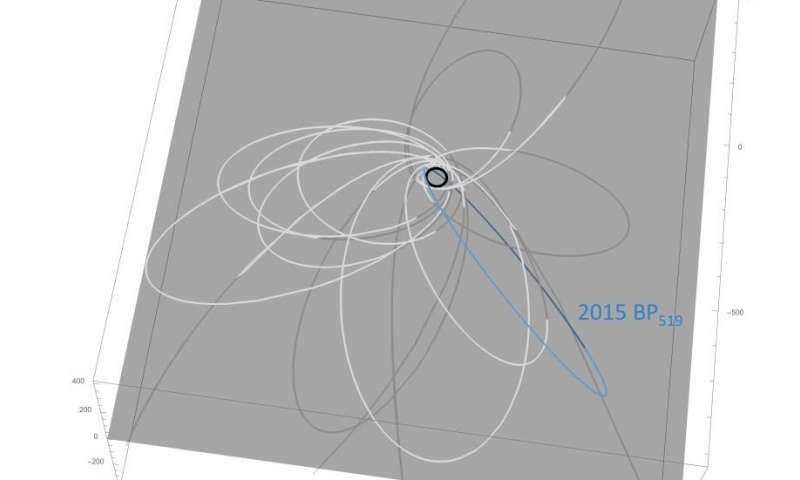
Diagram depicting the orbit of 2015 BP519 (Caju), which has the highest inclination of any extreme trans-Neptunian object discovered to date. Its unusual perpendicular orbit may be evidence for Planet Nine. Image via Phys.Org.

Is there a ninth major planet lurking in the outer reaches of our solar system? This question has become one of the most hotly debated in planetary science. The idea of a large, unknown Planet Nine residing so far from the sun that it hasn’t yet been discovered is certainly tantalizing. So far, there’ve been hints as to its existence, but no confirmation yet. We might be getting closer to finding it, however. Last week, an international team of researchers presented additional evidence, detailed in a new study, suggesting that Planet Nine is influencing the behavior of an oddball object – 2015 BP519 (aka Caju) – in the outer solar system.

Astronomers at Caltech had previously calculated the likely existence of a large ninth planet (sorry, Pluto) in the outer fringes of the solar system, based on the orbits of smaller icy objects. Their orbits were being perturbed by the gravitational influence of … something.

According to the astronomers’ calculations, the as-yet-undiscovered planet should be about four times the size of Earth and 10 times its mass. That would make it similar to super-Earth exoplanets found orbiting other stars. And that would be interesting, since many super-Earths have now been discovered, although there were none to be seen in our own solar system. But maybe there is one after all, so far from the sun that it has remained hidden.

Such a discovery would be very exciting, since super-Earths are larger than Earth but smaller than Uranus or Neptune, different from anything else in our solar system. If a large Planet Nine is there, it is very far away, much farther than Pluto. If it exists, it likely takes about 10,000 to 20,000 years to complete one orbit around the sun.

Planet Nine may be a super-Earth, a type of exoplanet found orbiting many stars. They are rocky and larger than Earth, but smaller than Uranus or Neptune. Image via NASA/JPL.

Astronomers first discovered 2015 BP519 (Caju) three years ago. It is a trans-Neptunian object (TNO), which, generally speaking, are minor planets orbiting the sun beyond the orbit of Neptune. Caju is one of only a dozen or so known objects that are categorized as extreme trans-Neptunian objects (ETNOs). Such objects have a semi-major axis greater than 150 astronomical units (AU) and a perihelion – closest point to the sun – greater than 30 AU. Caju’s estimated diameter is 248-434 miles (400-700 km), making it a potential dwarf planet. So it is a very interesting object.

What’s more, since its discovery, further analysis has shown that Caju has an unusual orbit, which lies almost perpendicular to all the known planets. In fact, Caju has the highest inclination of any TNO discovered so far.

Amazingly, just such an object had been predicted by computer models performed by the team searching for Planet Nine. Caltech astronomer Mike Brown, who wasn’t part of the new study, but who is active in Planet Nine research, told PopSci.com on May 22, 2018:

I’m pretty excited about the new object. It is the predicted link between the very distant elongated orbits that we’ve known about and the much closer tilted orbits that we’ve seen.

Thus Caju adds to a growing body of evidence for the elusive Planet Nine, which – if really there – still remains out of sight for astronomers. Astronomer Konstantin Batygin – who, along with Brown, first gave Planet Nine a name, size and distance – told Space.com on May 21 that, as of October 2017, there were at least five lines of evidence pointing to Planet Nine’s existence. Earlier, in 2017, astronomers had found evidence that 22 other TNOs seemed to have their orbits perturbed by another large unseen planet. Batygin said:

If you were to remove this explanation and imagine Planet Nine does not exist, then you generate more problems than you solve. All of a sudden, you have five different puzzles, and you must come up with five different theories to explain them.

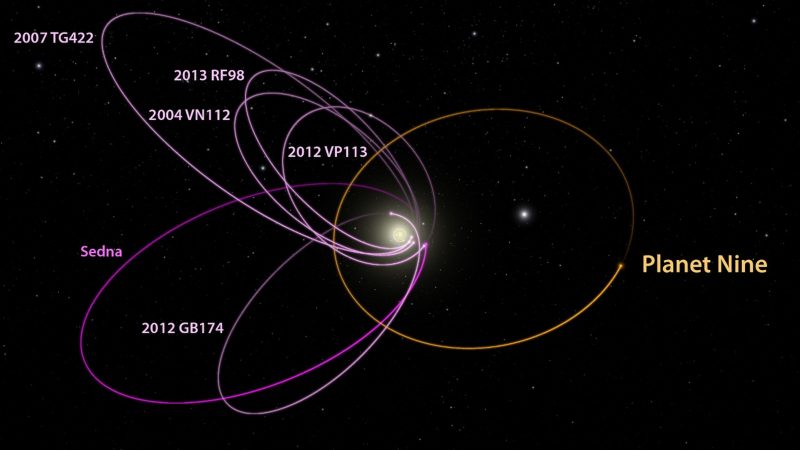
Illustration showing the hypothesized orbit of Planet Nine along with the known orbits of several TNOs. Image via R. Hurt/JPL-Caltech.

Bottom line: While Planet Nine still hasn’t been confirmed, the evidence is growing that just maybe, an as-yet-unseen large planet does indeed prowl the desolate outer fringes of our solar system.

Source: Discovery and Dynamical Analysis of an Extreme Trans-Neptunian Object with a High Orbital Inclination

Via Phys.org


from EarthSky https://ift.tt/2sdmXoh

Diagram depicting the orbit of 2015 BP519 (Caju), which has the highest inclination of any extreme trans-Neptunian object discovered to date. Its unusual perpendicular orbit may be evidence for Planet Nine. Image via Phys.Org.

Is there a ninth major planet lurking in the outer reaches of our solar system? This question has become one of the most hotly debated in planetary science. The idea of a large, unknown Planet Nine residing so far from the sun that it hasn’t yet been discovered is certainly tantalizing. So far, there’ve been hints as to its existence, but no confirmation yet. We might be getting closer to finding it, however. Last week, an international team of researchers presented additional evidence, detailed in a new study, suggesting that Planet Nine is influencing the behavior of an oddball object – 2015 BP519 (aka Caju) – in the outer solar system.

Astronomers at Caltech had previously calculated the likely existence of a large ninth planet (sorry, Pluto) in the outer fringes of the solar system, based on the orbits of smaller icy objects. Their orbits were being perturbed by the gravitational influence of … something.

According to the astronomers’ calculations, the as-yet-undiscovered planet should be about four times the size of Earth and 10 times its mass. That would make it similar to super-Earth exoplanets found orbiting other stars. And that would be interesting, since many super-Earths have now been discovered, although there were none to be seen in our own solar system. But maybe there is one after all, so far from the sun that it has remained hidden.

Such a discovery would be very exciting, since super-Earths are larger than Earth but smaller than Uranus or Neptune, different from anything else in our solar system. If a large Planet Nine is there, it is very far away, much farther than Pluto. If it exists, it likely takes about 10,000 to 20,000 years to complete one orbit around the sun.

Planet Nine may be a super-Earth, a type of exoplanet found orbiting many stars. They are rocky and larger than Earth, but smaller than Uranus or Neptune. Image via NASA/JPL.

Astronomers first discovered 2015 BP519 (Caju) three years ago. It is a trans-Neptunian object (TNO), which, generally speaking, are minor planets orbiting the sun beyond the orbit of Neptune. Caju is one of only a dozen or so known objects that are categorized as extreme trans-Neptunian objects (ETNOs). Such objects have a semi-major axis greater than 150 astronomical units (AU) and a perihelion – closest point to the sun – greater than 30 AU. Caju’s estimated diameter is 248-434 miles (400-700 km), making it a potential dwarf planet. So it is a very interesting object.

What’s more, since its discovery, further analysis has shown that Caju has an unusual orbit, which lies almost perpendicular to all the known planets. In fact, Caju has the highest inclination of any TNO discovered so far.

Amazingly, just such an object had been predicted by computer models performed by the team searching for Planet Nine. Caltech astronomer Mike Brown, who wasn’t part of the new study, but who is active in Planet Nine research, told PopSci.com on May 22, 2018:

I’m pretty excited about the new object. It is the predicted link between the very distant elongated orbits that we’ve known about and the much closer tilted orbits that we’ve seen.

Thus Caju adds to a growing body of evidence for the elusive Planet Nine, which – if really there – still remains out of sight for astronomers. Astronomer Konstantin Batygin – who, along with Brown, first gave Planet Nine a name, size and distance – told Space.com on May 21 that, as of October 2017, there were at least five lines of evidence pointing to Planet Nine’s existence. Earlier, in 2017, astronomers had found evidence that 22 other TNOs seemed to have their orbits perturbed by another large unseen planet. Batygin said:

If you were to remove this explanation and imagine Planet Nine does not exist, then you generate more problems than you solve. All of a sudden, you have five different puzzles, and you must come up with five different theories to explain them.

Illustration showing the hypothesized orbit of Planet Nine along with the known orbits of several TNOs. Image via R. Hurt/JPL-Caltech.

Bottom line: While Planet Nine still hasn’t been confirmed, the evidence is growing that just maybe, an as-yet-unseen large planet does indeed prowl the desolate outer fringes of our solar system.

Source: Discovery and Dynamical Analysis of an Extreme Trans-Neptunian Object with a High Orbital Inclination

Via Phys.org


from EarthSky https://ift.tt/2sdmXoh

Waiting for tomorrow

Image via Tommy Richardsen.

Tommy told us:

I shot this in June last year. After having spent hours on a beach nearby trying to get a shot with rather boring clouds, it finally started to break up once I got here. The Skjervøy area has a lot of interesting mountains, rivers, lakes and even glaciers. Finding an interesting place is not hard, getting interesting weather may be hard at times.

Bottom line: Photo of Skjervøy in northern Norway.


from EarthSky https://ift.tt/2ISwjjW

Image via Tommy Richardsen.

Tommy told us:

I shot this in June last year. After having spent hours on a beach nearby trying to get a shot with rather boring clouds, it finally started to break up once I got here. The Skjervøy area has a lot of interesting mountains, rivers, lakes and even glaciers. Finding an interesting place is not hard, getting interesting weather may be hard at times.

Bottom line: Photo of Skjervøy in northern Norway.


from EarthSky https://ift.tt/2ISwjjW

2018 SkS Weekly Climate Change & Global Warming News Roundup #21

A chronological listing of news articles posted on the Skeptical Science Facebook Page during the past week.

Editor's Pick

Climate change may lead to bigger atmospheric rivers

Atmospheric River 2017 NASA/JPL-Caltech

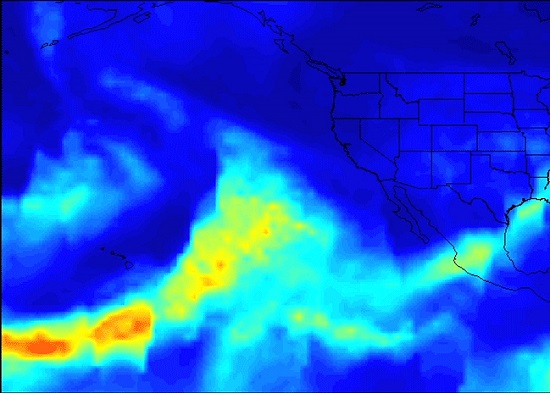
In early 2017, the Western United States experienced rain and flooding from a series of storms flowing to America on multiple streams of moist air, each individually known as an atmospheric river. Image credit: NASA/JPL-Caltech 

A new NASA-led study shows that climate change is likely to intensify extreme weather events known as atmospheric rivers across most of the globe by the end of this century, while slightly reducing their number.

The new study projects atmospheric rivers will be significantly longer and wider than the ones we observe today, leading to more frequent atmospheric river conditions in affected areas.

"The results project that in a scenario where greenhouse gas emissions continue at the current rate, there will be about 10 percent fewer atmospheric rivers globally by the end of the 21st century," said the study's lead author, Duane Waliser, of NASA's Jet Propulsion Laboratory in Pasadena, California. "However, because the findings project that the atmospheric rivers will be, on average, about 25 percent wider and longer, the global frequency of atmospheric river conditions — like heavy rain and strong winds — will actually increase by about 50 percent."

The results also show that the frequency of the most intense atmospheric river storms is projected to nearly double.

Atmospheric rivers are long, narrow jets of air that carry huge amounts of water vapor from the tropics to Earth's continents and polar regions. These "rivers in the sky" typically range from 250 to 375 miles (400 to 600 kilometers) wide and carry as much water — in the form of water vapor — as about 25 Mississippi Rivers. When an atmospheric river makes landfall, particularly against mountainous terrain (such as the Sierra Nevada and the Andes), it releases much of that water vapor in the form of rain or snow.

These storm systems are common — on average, there are about 11 present on Earth at any time. In many areas of the globe, they bring much-needed precipitation and are an important contribution to annual freshwater supplies. However, stronger atmospheric rivers — especially those that stall at landfall or that produce rain on top of snowpack — can cause disastrous flooding.

Atmospheric rivers show up on satellite imagery, including in data from a series of actual atmospheric river storms that drenched the U.S. West Coast and caused severe flooding in early 2017.

Climate change may lead to bigger atmospheric rivers by Esprit Smith, NASA's Jet Propulsion Laboratory, May 24, 2018


Links posted on Facebook

Sun May 20, 2018

Mon May 21, 2018

Tue May 22, 2018

Wed May 23, 2018

Thu May 24, 2018

Fri May 25, 2018

Sat May 26, 2018


from Skeptical Science https://ift.tt/2ISYWcI
A chronological listing of news articles posted on the Skeptical Science Facebook Page during the past week.

Editor's Pick

Climate change may lead to bigger atmospheric rivers

Atmospheric River 2017 NASA/JPL-Caltech

In early 2017, the Western United States experienced rain and flooding from a series of storms flowing to America on multiple streams of moist air, each individually known as an atmospheric river. Image credit: NASA/JPL-Caltech 

A new NASA-led study shows that climate change is likely to intensify extreme weather events known as atmospheric rivers across most of the globe by the end of this century, while slightly reducing their number.

The new study projects atmospheric rivers will be significantly longer and wider than the ones we observe today, leading to more frequent atmospheric river conditions in affected areas.

"The results project that in a scenario where greenhouse gas emissions continue at the current rate, there will be about 10 percent fewer atmospheric rivers globally by the end of the 21st century," said the study's lead author, Duane Waliser, of NASA's Jet Propulsion Laboratory in Pasadena, California. "However, because the findings project that the atmospheric rivers will be, on average, about 25 percent wider and longer, the global frequency of atmospheric river conditions — like heavy rain and strong winds — will actually increase by about 50 percent."

The results also show that the frequency of the most intense atmospheric river storms is projected to nearly double.

Atmospheric rivers are long, narrow jets of air that carry huge amounts of water vapor from the tropics to Earth's continents and polar regions. These "rivers in the sky" typically range from 250 to 375 miles (400 to 600 kilometers) wide and carry as much water — in the form of water vapor — as about 25 Mississippi Rivers. When an atmospheric river makes landfall, particularly against mountainous terrain (such as the Sierra Nevada and the Andes), it releases much of that water vapor in the form of rain or snow.

These storm systems are common — on average, there are about 11 present on Earth at any time. In many areas of the globe, they bring much-needed precipitation and are an important contribution to annual freshwater supplies. However, stronger atmospheric rivers — especially those that stall at landfall or that produce rain on top of snowpack — can cause disastrous flooding.

Atmospheric rivers show up on satellite imagery, including in data from a series of actual atmospheric river storms that drenched the U.S. West Coast and caused severe flooding in early 2017.

Climate change may lead to bigger atmospheric rivers by Esprit Smith, NASA's Jet Propulsion Laboratory, May 24, 2018


Links posted on Facebook

Sun May 20, 2018

Mon May 21, 2018

Tue May 22, 2018

Wed May 23, 2018

Thu May 24, 2018

Fri May 25, 2018

Sat May 26, 2018


from Skeptical Science https://ift.tt/2ISYWcI

News digest – childhood leukaemia theory, AI diagnosis, junk food ads and ‘cancer-killing viruses’

Infection theory for childhood leukaemia proposed

A senior UK scientist has reviewed 30 years of research, suggesting a possible cause for the most common type of childhood leukaemia. The BBC reports his theory for a three-step process that could lead to children developing acute lymphoblastic leukaemia. Professor Mel Greaves says it starts with a genetic fault that happens in the womb, followed by a lack of exposure to germs in the first year of life, and proposes that an infection might push primed cells to becoming cancerous. But this full sequence of events is rare, and there’s no way to prevent these cases of leukaemia just yet. Our blog post digs into the details of the study.

Government will fund AI research to diagnose diseases earlier

The Prime Minister has promised millions of pounds to develop artificial intelligence systems that could analyse large quantities of NHS data. Theresa May hopes industries and charities will work with the NHS to develop algorithms that could scour patient data and lifestyle information and warn GPs when a patient should be referred to a specialist. The Guardian has more on this initiative that aims to diagnose diseases, including cancer, earlier.

England’s sugar crack down makes slow progress

Public Health England set out its sugar reduction programme last year, but according to the Huffington Post, many food companies have failed to make progress in reducing the amount of sugar in their products. Those making foods like yoghurt and cereal have manged to hit the programme’s sugar reduction target of 5%, but biscuit and chocolate makers have been slow to act.

Junk food ads fuel obesity

The Telegraph and The Sun pointed out the clear link between advertising junk food on TV and obesity in kids. Our study, that was discussed at an obesity research conference this week, shows that exposing children to just one more junk food ad a week can cause up to 5lbs in weight gain a year. Read our press release for more.

‘Water resistant’ sunscreens are far less effective after swimming

A new report suggests sunscreens that claim to be water resistant work far less well after taking a swim. It underlines that no sunscreen is 100% effective, and should be used alongside shade and clothing. The BBC covered the story, and here are our tips for staying safe in the sun.

WCRF’s tips to cut cancer risk

The World Cancer Research Fund announced updated recommendations on how to cut cancer risk through diet and being active. And they’re unlikely to come as a surprise. The Mail Online covered the 10-point plan that includes keeping a healthy weight, limiting red and processed meat, drinking fewer sugary drinks and cutting down on alcohol. Our experts say the occasional bacon butty or the odd glass of wine are nothing to stress over, it’s what you do most days that matters. Small changes that you can stick to can help stack the odds in your favour.

And finally

Our scientists in Cardiff have engineered a common respiratory virus to kill ovarian cancer cells in mice. The virus homes in on a molecule on the surface of ovarian cancer cells and infects them, while leaving healthy ones alone. The BBC makes it clear that the virus is some way off being used to treat cancer patients. Next, rigorous tests are needed to see if the virus is safe to use in people. Our scientists in Oxford are doing a similar thing with the same virus but are modifying it to attack lung cancer cells in mice. Read more about cancer-killing viruses here.

Gabi


from Cancer Research UK – Science blog https://ift.tt/2J6pUAW

Infection theory for childhood leukaemia proposed

A senior UK scientist has reviewed 30 years of research, suggesting a possible cause for the most common type of childhood leukaemia. The BBC reports his theory for a three-step process that could lead to children developing acute lymphoblastic leukaemia. Professor Mel Greaves says it starts with a genetic fault that happens in the womb, followed by a lack of exposure to germs in the first year of life, and proposes that an infection might push primed cells to becoming cancerous. But this full sequence of events is rare, and there’s no way to prevent these cases of leukaemia just yet. Our blog post digs into the details of the study.

Government will fund AI research to diagnose diseases earlier

The Prime Minister has promised millions of pounds to develop artificial intelligence systems that could analyse large quantities of NHS data. Theresa May hopes industries and charities will work with the NHS to develop algorithms that could scour patient data and lifestyle information and warn GPs when a patient should be referred to a specialist. The Guardian has more on this initiative that aims to diagnose diseases, including cancer, earlier.

England’s sugar crack down makes slow progress

Public Health England set out its sugar reduction programme last year, but according to the Huffington Post, many food companies have failed to make progress in reducing the amount of sugar in their products. Those making foods like yoghurt and cereal have manged to hit the programme’s sugar reduction target of 5%, but biscuit and chocolate makers have been slow to act.

Junk food ads fuel obesity

The Telegraph and The Sun pointed out the clear link between advertising junk food on TV and obesity in kids. Our study, that was discussed at an obesity research conference this week, shows that exposing children to just one more junk food ad a week can cause up to 5lbs in weight gain a year. Read our press release for more.

‘Water resistant’ sunscreens are far less effective after swimming

A new report suggests sunscreens that claim to be water resistant work far less well after taking a swim. It underlines that no sunscreen is 100% effective, and should be used alongside shade and clothing. The BBC covered the story, and here are our tips for staying safe in the sun.

WCRF’s tips to cut cancer risk

The World Cancer Research Fund announced updated recommendations on how to cut cancer risk through diet and being active. And they’re unlikely to come as a surprise. The Mail Online covered the 10-point plan that includes keeping a healthy weight, limiting red and processed meat, drinking fewer sugary drinks and cutting down on alcohol. Our experts say the occasional bacon butty or the odd glass of wine are nothing to stress over, it’s what you do most days that matters. Small changes that you can stick to can help stack the odds in your favour.

And finally

Our scientists in Cardiff have engineered a common respiratory virus to kill ovarian cancer cells in mice. The virus homes in on a molecule on the surface of ovarian cancer cells and infects them, while leaving healthy ones alone. The BBC makes it clear that the virus is some way off being used to treat cancer patients. Next, rigorous tests are needed to see if the virus is safe to use in people. Our scientists in Oxford are doing a similar thing with the same virus but are modifying it to attack lung cancer cells in mice. Read more about cancer-killing viruses here.

Gabi


from Cancer Research UK – Science blog https://ift.tt/2J6pUAW

New Evaluation System Helps Air Force Better Understand Corrosion

Air Force scientists are developing an improved system for coating materials performance evaluations that will accelerate the implementation of new aircraft coatings.

from https://ift.tt/2IKxdPe
Air Force scientists are developing an improved system for coating materials performance evaluations that will accelerate the implementation of new aircraft coatings.

from https://ift.tt/2IKxdPe

New research, May 14-20, 2018

A selection of new climate related research articles is shown below.

Climate change impacts

Mankind

Assessing the Impacts of Extreme Agricultural Droughts in China Under Climate and Socioeconomic Changes (open access)

"Our simulations project a rise of 2.5~3.3% in average rice, maize, and wheat productivity before 2050 but decrease thereafter if climate warming continues."

Climate change adaptation strategies and food productivity in Nepal: a counterfactual analysis

"Based on a survey of 720 farming households in Nepal, our results show that adoption of adaptation strategies has significantly increased food productivity. Among the adaptation strategies, soil and water management are shown to have the largest impact on food productivity followed by adjustments to the timing of farm operations and crop and varietal adjustment."

Strengthening climate change adaptation capacity in Africa- case studies from six major African cities and policy implications

Adaptation to climate change at local level in Europe: An overview

The changing sensitivity of power systems to meteorological drivers: a case study of Great Britain (open access)

Interpreting nonlinear semi-elasticities in reduced-form climate damage estimation

The economic impacts of ocean acidification on shellfish fisheries and aquaculture in the United Kingdom

Human damage assessments of coastal flooding for Hong Kong and the Pearl River Delta due to climate change-related sea level rise in the twenty-first century

Global exposure and vulnerability to multi-sector development and climate change hotspots (open access)

Evaluating climate change adaptation efforts on the US 50 states’ hazard mitigation plans

Coastal hazard risk assessment for small islands: assessing the impact of climate change and disaster reduction measures on Ebeye (Marshall Islands)

Differences between low-end and high-end climate change impacts in Europe across multiple sectors (open access)

"For example, for the 2080s, mitigation consistent with the Paris Agreement would reduce aggregate Europe-wide impacts on the area of intensive agriculture by 21% (on average across climate models), on the area of managed forests by 34%, on water stress by 14%, on people flooded by 10% and on biodiversity vulnerability by 16%."

The effect of meteorological conditions and air pollution on the occurrence of type A and B acute aortic dissections

Biosphere

Phytoplankton Do Not Produce Carbon‐Rich Organic Matter in High CO2 Oceans

How training citizen scientists affects the accuracy and precision of phenological data

21st century tundra shrubification could enhance net carbon uptake of North America Arctic tundra under an RCP8.5 climate trajectory (open access)

Plant cuticle under global change: Biophysical implications

Ecological genomics predicts climate vulnerability in an endangered southwestern songbird

Explaining European fungal fruiting phenology with climate variability

Roles of climate niche conservatism and range dynamics in woody plant diversity patterns through the Cenozoic

Coupled climate–forest growth shifts in the Chilean Patagonia are decoupled from trends in water–use efficiency

As temperature increases, predator attack rate is more important to survival than a smaller window of prey vulnerability

Catalytic power of enzymes decreases with temperature: New insights for understanding soil C cycling and microbial ecology under warming

Heat waves and their significance for a temperate benthic community: A near‐natural experimental approach

Spring phenology at different altitudes is becoming more uniform under global warming in Europe

Metapopulation dynamics in a changing climate: Increasing spatial synchrony in weather conditions drives metapopulation synchrony of a butterfly inhabiting a fragmented landscape (open access)

Global importance of large‐diameter trees

Other impacts

Climate Change Projected to Exacerbate Impacts of Coastal Eutrophication in the Northern Gulf of Mexico

Climate change mitigation

Energy production

Clean vehicles as an enabler for a clean electricity grid (open access)

Changes in European wind energy generation potential within a 1.5 °C warmer world (open access)

Climate, air quality and human health benefits of various solar photovoltaic deployment scenarios in China in 2030 (open access)

Climate Policy

Research on carbon market price mechanism and influencing factors: a literature review

Regional Climate Change Policy Under Positive Feedbacks and Strategic Interactions

Climate change

Temperature, precipitation, wind

Identification and analysis of recent temporal temperature trends for Dehradun, Uttarakhand, India

Preceding winter La Niña reduces Indian summer monsoon rainfall (open access)

Potential impact of 1.5 °C and 2 °C global warming on consecutive dry and wet days over West Africa (open access)

Global Character of Latent Heat Release in Oceanic Warm Rain Systems

Reduced Urban Heat Island intensity under warmer conditions (open access)

Extreme events

Risks from climate extremes change differently from 1.5°C to 2.0°C depending on rarity (open access)

A comprehensive flash flood defense system in China: overview, achievements, and outlook

Future heat waves and surface ozone (open access)

Can Regional Climate Modeling Capture the Observed Changes in Spatial Organization of Extreme Storms at Higher Temperatures?

Cloud Feedback Key to Marine Heatwave off Baja California

Forcings and feedbacks

Observations of Local Positive Low Cloud Feedback Patterns and Their Role in Internal Variability and Climate Sensitivity (open access)

"Objective analysis of two long‐term satellite cloud fraction data sets together with observed sea surface temperature (SST) during the same periods suggest strong patterned SST‐low cloud fraction feedback. Internal modes of variability, the Interdecadal Pacific Oscillation and the Atlantic Multidecadal Oscillation, emerge from this analysis, and associated with these SST variability modes are corresponding low cloud fraction patterns that suggest a strong and positive local low cloud feedback to the SST anomalies. Such SST‐LCC feedback is important for both internal variability and future climate change. We find that such feedback is too weak in current models, which implies stronger than expected future latent warming and possibly higher climate sensitivity."

Decadal evolution of the surface energy budget during the fast warming and global warming hiatus periods in the ERA-interim (open access)

The Combined Influence of Observed Southern Ocean Clouds and Sea Ice on Top‐of‐Atmosphere Albedo

Feedback mechanisms of shallow convective clouds in a warmer climate as demonstrated by changes in buoyancy (open access)

Global distribution of aerosol optical depth in 2015 using CALIPSO level 3 data

Improved Global Net Surface Heat Flux

Attribution of Local Temperature Response to Deforestation

Cryosphere

Impacts of extratropical storm tracks on Arctic sea ice export through Fram Strait

Links between the Amundsen Sea Low and sea ice in the Ross Sea: seasonal and interannual relationships

Intense Winter Surface Melt on an Antarctic Ice Shelf (open access)

"The station recorded temperatures well above the melting point even in winter. The occurrence of winter melt is confirmed by satellite images and by thermometers buried in the snow, which measured a warming of the snow even at 3 m depth. Between 2014 and 2017, about 23% of all melt in Cabinet Inlet occurred in winter. Winter melt is due to warm winds that descend from the mountains, known as föhn. We have not seen the amount of winter melt increasing since 2000. However, we expect winter melt to happen more frequently if greenhouse gas continues to accumulate in the atmosphere."

Topographic Steering of Enhanced Ice Flow at the Bottleneck Between East and West Antarctica (open access)

The Inferred Formation of a Subice Platelet Layer Below the Multiyear Landfast Sea Ice in the Wandel Sea (NE Greenland) Induced by Meltwater Drainage

Statistical Forecasting of Current and Future Circum‐Arctic Ground Temperatures and Active Layer Thickness

Bedrock Erosion Surfaces Record Former East Antarctic Ice Sheet Extent (open access)

Hydrosphere

Future hydroclimatological changes in South America based on an ensemble of regional climate models

Atmospheric and oceanic circulation

Underestimated AMOC Variability and Implications for AMV and Predictability in CMIP Models

Coherent Circulation Changes in the Deep North Atlantic from 16°N and 26°N Transport Arrays (open access)

The El Niño-Southern Oscillation and associated climatic conditions around the world during the latter half of the 21st century

Ocean circulation drifts in multi-millennial climate simulations: the role of salinity corrections and climate feedbacks (open access)

The Sensitivity of Future Ocean Oxygen to Changes in Ocean Circulation

Carbon cycle

Climate Sensitivity Controls Uncertainty in Future Terrestrial Carbon Sink

The Ephemeral Signature of Permafrost Carbon in an Arctic Fluvial Network

Dominant regions and drivers of the variability of the global land carbon sink across timescales

Plant Regrowth as a Driver of Recent Enhancement of Terrestrial CO2 Uptake

"Here using multiple terrestrial biosphere models, we demonstrate that despite a large contribution from CO2 fertilization, the enhanced CO2 uptake in the 2000s cannot be fully explained without an increasing uptake by land use change, in particular, plant regrowth. The regrowth effect is most pronounced in North America, Europe, and temperate Eurasia, and they account for 94% of the global total CO2 uptake enhancement by plant regrowth. The strengthening trends in both CO2 fertilization and plant regrowth suggest that the deceleration of the atmospheric CO2 increase continues in the future."

Characterizing biospheric carbon balance using CO2 observations from the OCO-2 satellite (open access)

Other papers

Palaeoclimatology

Where is the 1-million-year-old ice at Dome A? (open access)

Random and externally controlled occurrences of Dansgaard–Oeschger events (open access)


from Skeptical Science https://ift.tt/2sdnHJp

A selection of new climate related research articles is shown below.

Climate change impacts

Mankind

Assessing the Impacts of Extreme Agricultural Droughts in China Under Climate and Socioeconomic Changes (open access)

"Our simulations project a rise of 2.5~3.3% in average rice, maize, and wheat productivity before 2050 but decrease thereafter if climate warming continues."

Climate change adaptation strategies and food productivity in Nepal: a counterfactual analysis

"Based on a survey of 720 farming households in Nepal, our results show that adoption of adaptation strategies has significantly increased food productivity. Among the adaptation strategies, soil and water management are shown to have the largest impact on food productivity followed by adjustments to the timing of farm operations and crop and varietal adjustment."

Strengthening climate change adaptation capacity in Africa- case studies from six major African cities and policy implications

Adaptation to climate change at local level in Europe: An overview

The changing sensitivity of power systems to meteorological drivers: a case study of Great Britain (open access)

Interpreting nonlinear semi-elasticities in reduced-form climate damage estimation

The economic impacts of ocean acidification on shellfish fisheries and aquaculture in the United Kingdom

Human damage assessments of coastal flooding for Hong Kong and the Pearl River Delta due to climate change-related sea level rise in the twenty-first century

Global exposure and vulnerability to multi-sector development and climate change hotspots (open access)

Evaluating climate change adaptation efforts on the US 50 states’ hazard mitigation plans

Coastal hazard risk assessment for small islands: assessing the impact of climate change and disaster reduction measures on Ebeye (Marshall Islands)

Differences between low-end and high-end climate change impacts in Europe across multiple sectors (open access)

"For example, for the 2080s, mitigation consistent with the Paris Agreement would reduce aggregate Europe-wide impacts on the area of intensive agriculture by 21% (on average across climate models), on the area of managed forests by 34%, on water stress by 14%, on people flooded by 10% and on biodiversity vulnerability by 16%."

The effect of meteorological conditions and air pollution on the occurrence of type A and B acute aortic dissections

Biosphere

Phytoplankton Do Not Produce Carbon‐Rich Organic Matter in High CO2 Oceans

How training citizen scientists affects the accuracy and precision of phenological data

21st century tundra shrubification could enhance net carbon uptake of North America Arctic tundra under an RCP8.5 climate trajectory (open access)

Plant cuticle under global change: Biophysical implications

Ecological genomics predicts climate vulnerability in an endangered southwestern songbird

Explaining European fungal fruiting phenology with climate variability

Roles of climate niche conservatism and range dynamics in woody plant diversity patterns through the Cenozoic

Coupled climate–forest growth shifts in the Chilean Patagonia are decoupled from trends in water–use efficiency

As temperature increases, predator attack rate is more important to survival than a smaller window of prey vulnerability

Catalytic power of enzymes decreases with temperature: New insights for understanding soil C cycling and microbial ecology under warming

Heat waves and their significance for a temperate benthic community: A near‐natural experimental approach

Spring phenology at different altitudes is becoming more uniform under global warming in Europe

Metapopulation dynamics in a changing climate: Increasing spatial synchrony in weather conditions drives metapopulation synchrony of a butterfly inhabiting a fragmented landscape (open access)

Global importance of large‐diameter trees

Other impacts

Climate Change Projected to Exacerbate Impacts of Coastal Eutrophication in the Northern Gulf of Mexico

Climate change mitigation

Energy production

Clean vehicles as an enabler for a clean electricity grid (open access)

Changes in European wind energy generation potential within a 1.5 °C warmer world (open access)

Climate, air quality and human health benefits of various solar photovoltaic deployment scenarios in China in 2030 (open access)

Climate Policy

Research on carbon market price mechanism and influencing factors: a literature review

Regional Climate Change Policy Under Positive Feedbacks and Strategic Interactions

Climate change

Temperature, precipitation, wind

Identification and analysis of recent temporal temperature trends for Dehradun, Uttarakhand, India

Preceding winter La Niña reduces Indian summer monsoon rainfall (open access)

Potential impact of 1.5 °C and 2 °C global warming on consecutive dry and wet days over West Africa (open access)

Global Character of Latent Heat Release in Oceanic Warm Rain Systems

Reduced Urban Heat Island intensity under warmer conditions (open access)

Extreme events

Risks from climate extremes change differently from 1.5°C to 2.0°C depending on rarity (open access)

A comprehensive flash flood defense system in China: overview, achievements, and outlook

Future heat waves and surface ozone (open access)

Can Regional Climate Modeling Capture the Observed Changes in Spatial Organization of Extreme Storms at Higher Temperatures?

Cloud Feedback Key to Marine Heatwave off Baja California

Forcings and feedbacks

Observations of Local Positive Low Cloud Feedback Patterns and Their Role in Internal Variability and Climate Sensitivity (open access)

"Objective analysis of two long‐term satellite cloud fraction data sets together with observed sea surface temperature (SST) during the same periods suggest strong patterned SST‐low cloud fraction feedback. Internal modes of variability, the Interdecadal Pacific Oscillation and the Atlantic Multidecadal Oscillation, emerge from this analysis, and associated with these SST variability modes are corresponding low cloud fraction patterns that suggest a strong and positive local low cloud feedback to the SST anomalies. Such SST‐LCC feedback is important for both internal variability and future climate change. We find that such feedback is too weak in current models, which implies stronger than expected future latent warming and possibly higher climate sensitivity."

Decadal evolution of the surface energy budget during the fast warming and global warming hiatus periods in the ERA-interim (open access)

The Combined Influence of Observed Southern Ocean Clouds and Sea Ice on Top‐of‐Atmosphere Albedo

Feedback mechanisms of shallow convective clouds in a warmer climate as demonstrated by changes in buoyancy (open access)

Global distribution of aerosol optical depth in 2015 using CALIPSO level 3 data

Improved Global Net Surface Heat Flux

Attribution of Local Temperature Response to Deforestation

Cryosphere

Impacts of extratropical storm tracks on Arctic sea ice export through Fram Strait

Links between the Amundsen Sea Low and sea ice in the Ross Sea: seasonal and interannual relationships

Intense Winter Surface Melt on an Antarctic Ice Shelf (open access)

"The station recorded temperatures well above the melting point even in winter. The occurrence of winter melt is confirmed by satellite images and by thermometers buried in the snow, which measured a warming of the snow even at 3 m depth. Between 2014 and 2017, about 23% of all melt in Cabinet Inlet occurred in winter. Winter melt is due to warm winds that descend from the mountains, known as föhn. We have not seen the amount of winter melt increasing since 2000. However, we expect winter melt to happen more frequently if greenhouse gas continues to accumulate in the atmosphere."

Topographic Steering of Enhanced Ice Flow at the Bottleneck Between East and West Antarctica (open access)

The Inferred Formation of a Subice Platelet Layer Below the Multiyear Landfast Sea Ice in the Wandel Sea (NE Greenland) Induced by Meltwater Drainage

Statistical Forecasting of Current and Future Circum‐Arctic Ground Temperatures and Active Layer Thickness

Bedrock Erosion Surfaces Record Former East Antarctic Ice Sheet Extent (open access)

Hydrosphere

Future hydroclimatological changes in South America based on an ensemble of regional climate models

Atmospheric and oceanic circulation

Underestimated AMOC Variability and Implications for AMV and Predictability in CMIP Models

Coherent Circulation Changes in the Deep North Atlantic from 16°N and 26°N Transport Arrays (open access)

The El Niño-Southern Oscillation and associated climatic conditions around the world during the latter half of the 21st century

Ocean circulation drifts in multi-millennial climate simulations: the role of salinity corrections and climate feedbacks (open access)

The Sensitivity of Future Ocean Oxygen to Changes in Ocean Circulation

Carbon cycle

Climate Sensitivity Controls Uncertainty in Future Terrestrial Carbon Sink

The Ephemeral Signature of Permafrost Carbon in an Arctic Fluvial Network

Dominant regions and drivers of the variability of the global land carbon sink across timescales

Plant Regrowth as a Driver of Recent Enhancement of Terrestrial CO2 Uptake

"Here using multiple terrestrial biosphere models, we demonstrate that despite a large contribution from CO2 fertilization, the enhanced CO2 uptake in the 2000s cannot be fully explained without an increasing uptake by land use change, in particular, plant regrowth. The regrowth effect is most pronounced in North America, Europe, and temperate Eurasia, and they account for 94% of the global total CO2 uptake enhancement by plant regrowth. The strengthening trends in both CO2 fertilization and plant regrowth suggest that the deceleration of the atmospheric CO2 increase continues in the future."

Characterizing biospheric carbon balance using CO2 observations from the OCO-2 satellite (open access)

Other papers

Palaeoclimatology

Where is the 1-million-year-old ice at Dome A? (open access)

Random and externally controlled occurrences of Dansgaard–Oeschger events (open access)


from Skeptical Science https://ift.tt/2sdnHJp

adds 2