aads

Jupiter rising, Venus setting

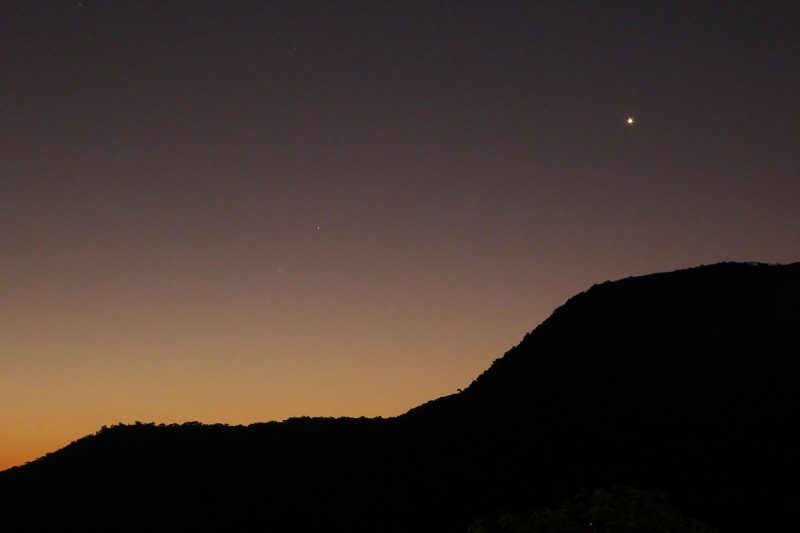
As seen from around the globe, Venus – the brightest planet – is in the west after sunset now. The star to the left of Venus in this photo is Aldebaran, brightest star in Taurus the Bull. Photo taken May 9, 2018 by Peter Lowenstein in Mutare, Zimbabwe.

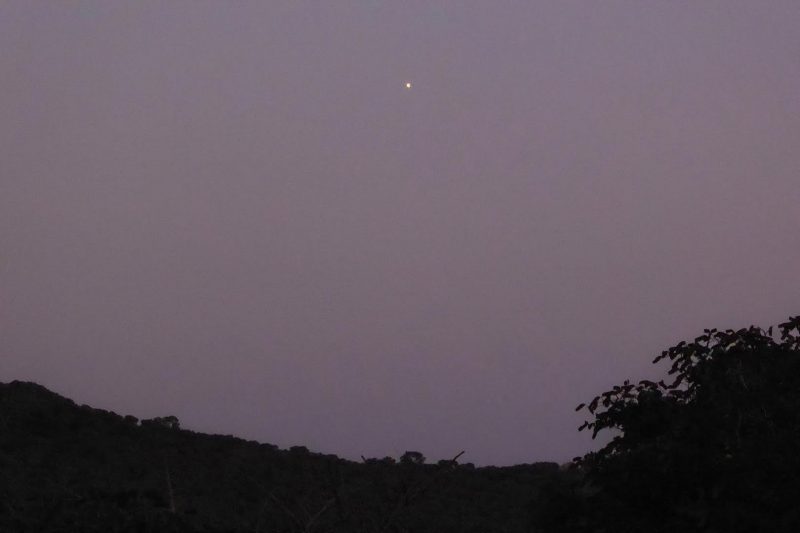
At the same time you’re seeing Venus in the west, you can also see Jupiter – the second-brightest planet – ascending in the east after sunset. As if on 2 ends of a seesaw, Jupiter rises, while Venus sets. Photo taken May 9, 2018 by Peter Lowenstein in Mutare, Zimbabwe.

Read more: EarthSky’s guide to the bright planets


from EarthSky https://ift.tt/2KU4N2T

As seen from around the globe, Venus – the brightest planet – is in the west after sunset now. The star to the left of Venus in this photo is Aldebaran, brightest star in Taurus the Bull. Photo taken May 9, 2018 by Peter Lowenstein in Mutare, Zimbabwe.

At the same time you’re seeing Venus in the west, you can also see Jupiter – the second-brightest planet – ascending in the east after sunset. As if on 2 ends of a seesaw, Jupiter rises, while Venus sets. Photo taken May 9, 2018 by Peter Lowenstein in Mutare, Zimbabwe.

Read more: EarthSky’s guide to the bright planets


from EarthSky https://ift.tt/2KU4N2T

This weekend … Moon and Mercury

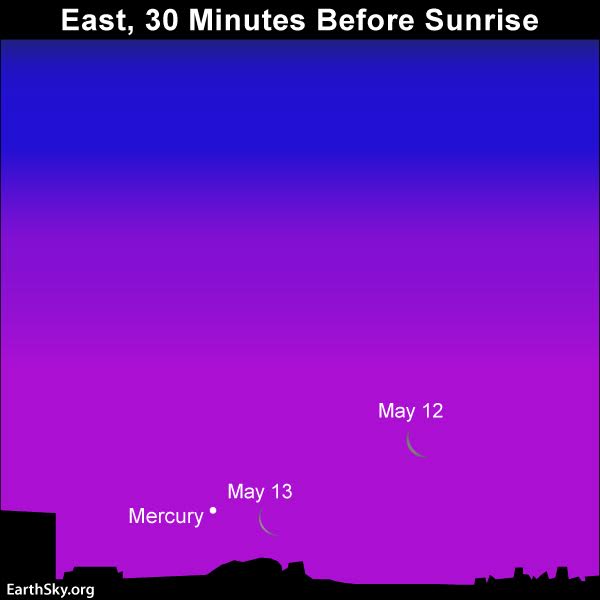
People in the Southern Hemisphere have the big advantage for catching the crescent moon and the planet Mercury in the eastern sky before sunrise on May 12 and 13, 2018. In fact, our featured chart at top is for Cape Town, South Africa (roughly the same latitude as Sydney, Australia; Auckland, New Zealand; Santiago, Chile). Given an unobstructed horizon and clear sky, the old waning crescent moon and planet Mercury will be easy to spot in the Southern Hemisphere (and the northern tropics) with the eye alone.

For the Southern Hemisphere, this morning apparition of Mercury is the best of 2018.

For us at mid-northern latitudes (U.S., Canada, Europe and Asia), the moon and Mercury will be much, much harder to spot in the glow of morning dawn. For us in the Northern Hemisphere, this is the poorest morning apparition of Mercury for the year. At mid-northern latitudes, Mercury rises less than one hour before the sun. The chart below well illustrates our dim prospects at northerly latitudes.

Here’s the Northern Hemisphere view on May 12 and 13, 2018. The moon and Mercury will be much harder to catch at northerly latitudes.

As seen from the entire Earth, we’re nearing the end of Mercury’s showing in the morning sky. No matter where you live worldwide, it’s to your advantage to find an unobstructed horizon in the direction of sunrise for any Mercury quest. Before sunrise on May 12, the lighted portion of the waning crescent moon will be pointing toward Mercury. On May 13, the moon will be closer to Mercury.

Just remember … binoculars come in handy for any Mercury search.

Bottom line: On May 12 and 13, 2018, look for the waning crescent moon and Mercury, the innermost planet of the solar system, in the eastern sky before sunrise.


from EarthSky https://ift.tt/2IwanKg

People in the Southern Hemisphere have the big advantage for catching the crescent moon and the planet Mercury in the eastern sky before sunrise on May 12 and 13, 2018. In fact, our featured chart at top is for Cape Town, South Africa (roughly the same latitude as Sydney, Australia; Auckland, New Zealand; Santiago, Chile). Given an unobstructed horizon and clear sky, the old waning crescent moon and planet Mercury will be easy to spot in the Southern Hemisphere (and the northern tropics) with the eye alone.

For the Southern Hemisphere, this morning apparition of Mercury is the best of 2018.

For us at mid-northern latitudes (U.S., Canada, Europe and Asia), the moon and Mercury will be much, much harder to spot in the glow of morning dawn. For us in the Northern Hemisphere, this is the poorest morning apparition of Mercury for the year. At mid-northern latitudes, Mercury rises less than one hour before the sun. The chart below well illustrates our dim prospects at northerly latitudes.

Here’s the Northern Hemisphere view on May 12 and 13, 2018. The moon and Mercury will be much harder to catch at northerly latitudes.

As seen from the entire Earth, we’re nearing the end of Mercury’s showing in the morning sky. No matter where you live worldwide, it’s to your advantage to find an unobstructed horizon in the direction of sunrise for any Mercury quest. Before sunrise on May 12, the lighted portion of the waning crescent moon will be pointing toward Mercury. On May 13, the moon will be closer to Mercury.

Just remember … binoculars come in handy for any Mercury search.

Bottom line: On May 12 and 13, 2018, look for the waning crescent moon and Mercury, the innermost planet of the solar system, in the eastern sky before sunrise.


from EarthSky https://ift.tt/2IwanKg

Global warming is melting Antarctic ice from below

We all know intuitively that in a warmer world there will be less ice. And, since the North and South Pole regions contain lots of ice, anyone who wants to see evidence of climate change can look there.

But beyond this simplistic view, things can get pretty complex. First, it’s important to recognize that the Arctic and the Antarctic are very different places. In the Arctic, almost all the ice is floating on water – there is very little land. So, we talk about ‘sea ice’ in the north, formed from frozen sea water. On the other hand, Antarctica is a massive land mass that is covered by ice formed from snowfall (called an ‘ice sheet’). There is some floating ice around the perimeter of the land, but the vast majority of Antarctic ice is on land.

This difference not only affects how these regions response to climate change, but it also impacts their importance. We know that when floating ice melts, the ocean levels will not rise, because the ice was already floating in the water. But, when land ice melts, the liquid water flows into the ocean and causes the water levels to rise. So, at least from a sea-level perspective, land ice is more important than floating ice.

There are other differences between the north and south. One feature of the south is that there is a strong current that travels around Antarctica and partially shields it from waters elsewhere in the ocean. The Nasa Jet Propulsion Laboratory provides a good summary of some of the differences between the poles.

With global warming, both of the poles are warming quite quickly, and this warming is causing ice to melt in both regions. When we think of ice melting, we may think of it melting from above, as the ice is heated from the air, from sunlight, or from infrared energy from the atmosphere. But in truth, a lot of the melting comes from below. For instance, in the Antarctic, the ice shelves extend from the land out over the water. The bottom of the ice shelf is exposed to the ocean. If the ocean warms up, it can melt the underside of the shelf and cause it to thin or break off into the ocean.

A new study, recently published in Science Advances, looked at these issues. One of the goals of this study was to better understand whether and how the waters underneath the shelf are changing. They had to deal with the buoyancy of the waters. We know that the saltier and colder water is, the denser it is. 

Around Antarctica, water at the ocean surface cools down and becomes saltier. These combined effects make the surface waters sink down to the sea floor. But as ice melt increases, fresh water flows into the ocean and interrupts this buoyancy effect. This “freshening” of the water can slow down or shut down the vertical mixing of the ocean. When this happens, the cold waters at the surface cannot sink. The deeper waters retain their heat and melt the ice from below.

The study incorporated measurements of both temperature and salinity (saltiness) at three locations near the Dalton Iceberg Tongue on the Sabrina Coast in East Antarctica. The measurements covered approximately an entire year and gave direct evidence of seasonal variations to the buoyancy of the waters. The researchers showed that a really important component to water-flow patterns were ‘polynyas.’ These are regions of open water that are surrounded by ice, typically by land ice on one side and sea ice on the other side.

A satellite photograph of a polynya is shown below. 

Click here to read the rest


from Skeptical Science https://ift.tt/2wyfF3e

We all know intuitively that in a warmer world there will be less ice. And, since the North and South Pole regions contain lots of ice, anyone who wants to see evidence of climate change can look there.

But beyond this simplistic view, things can get pretty complex. First, it’s important to recognize that the Arctic and the Antarctic are very different places. In the Arctic, almost all the ice is floating on water – there is very little land. So, we talk about ‘sea ice’ in the north, formed from frozen sea water. On the other hand, Antarctica is a massive land mass that is covered by ice formed from snowfall (called an ‘ice sheet’). There is some floating ice around the perimeter of the land, but the vast majority of Antarctic ice is on land.

This difference not only affects how these regions response to climate change, but it also impacts their importance. We know that when floating ice melts, the ocean levels will not rise, because the ice was already floating in the water. But, when land ice melts, the liquid water flows into the ocean and causes the water levels to rise. So, at least from a sea-level perspective, land ice is more important than floating ice.

There are other differences between the north and south. One feature of the south is that there is a strong current that travels around Antarctica and partially shields it from waters elsewhere in the ocean. The Nasa Jet Propulsion Laboratory provides a good summary of some of the differences between the poles.

With global warming, both of the poles are warming quite quickly, and this warming is causing ice to melt in both regions. When we think of ice melting, we may think of it melting from above, as the ice is heated from the air, from sunlight, or from infrared energy from the atmosphere. But in truth, a lot of the melting comes from below. For instance, in the Antarctic, the ice shelves extend from the land out over the water. The bottom of the ice shelf is exposed to the ocean. If the ocean warms up, it can melt the underside of the shelf and cause it to thin or break off into the ocean.

A new study, recently published in Science Advances, looked at these issues. One of the goals of this study was to better understand whether and how the waters underneath the shelf are changing. They had to deal with the buoyancy of the waters. We know that the saltier and colder water is, the denser it is. 

Around Antarctica, water at the ocean surface cools down and becomes saltier. These combined effects make the surface waters sink down to the sea floor. But as ice melt increases, fresh water flows into the ocean and interrupts this buoyancy effect. This “freshening” of the water can slow down or shut down the vertical mixing of the ocean. When this happens, the cold waters at the surface cannot sink. The deeper waters retain their heat and melt the ice from below.

The study incorporated measurements of both temperature and salinity (saltiness) at three locations near the Dalton Iceberg Tongue on the Sabrina Coast in East Antarctica. The measurements covered approximately an entire year and gave direct evidence of seasonal variations to the buoyancy of the waters. The researchers showed that a really important component to water-flow patterns were ‘polynyas.’ These are regions of open water that are surrounded by ice, typically by land ice on one side and sea ice on the other side.

A satellite photograph of a polynya is shown below. 

Click here to read the rest


from Skeptical Science https://ift.tt/2wyfF3e

North Pole gets a heat wave

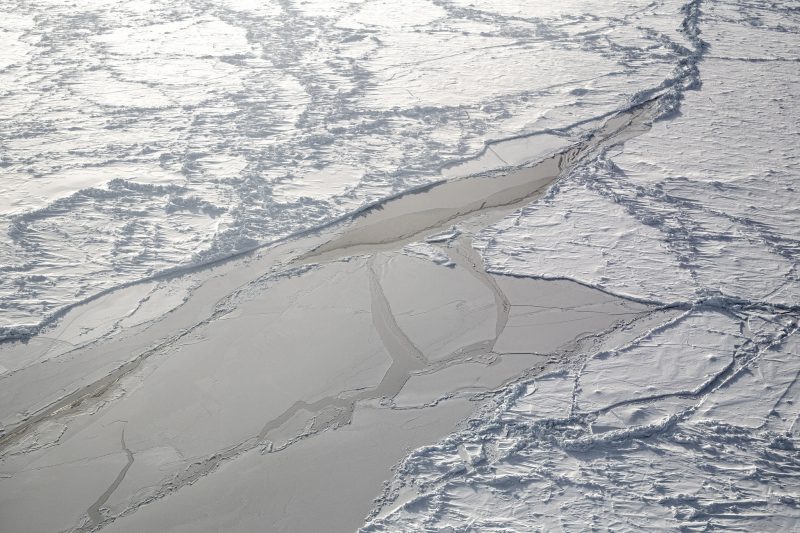
While visiting the Arctic last month, Eliot Herman photographed this large crack in the ice (refrozen again) above 89 degrees north latitude, not far from the North Pole. The date of the photo is April 18, 2018. Read more about this photo on Flickr.

A weather reporter that I trust – Jason Samenow of the Capital Weather Gang at the Washington Post – wrote on May 7, 2018 that temperatures in the Arctic have been unusually high. He wrote:

In four of the past five winters, the North Pole has witnessed dramatic temperatures spikes, which previously were rare. Now, in the lead up to summer, the temperature has again shot up to unusually high levels at the tip of the planet.

Scientists say this warming could hasten the melt of Arctic sea ice, which is already near record low levels.

In just the past few days, the temperature at the North Pole has soared to the melting point of 32 degrees, which is about 30-35 degrees (17-19 Celsius) above normal.

Much of the entire Arctic north of 80 degrees latitude is abnormally warm. The temperature averaged over the whole region appears to be the warmest on record for the time of year, dating back to at least 1958. It is about 18 degrees (10 Celsius) above the normal of 4 degrees (minus 16 Celsius).

As the warm air intruded the Arctic, sea ice melted suddenly. The Norway Ice Service tweeted the sea ice area near Svalbard, the small island chain between Norway and the North Pole, fell by about 32,000 square miles (82,000 square km) to the second lowest area on record. The amount of ice lost is enough to cover the entire state of South Carolina.

Jason Samenow had much more to say, and you can read more via the Capital Weather Gang at the Washington Post.

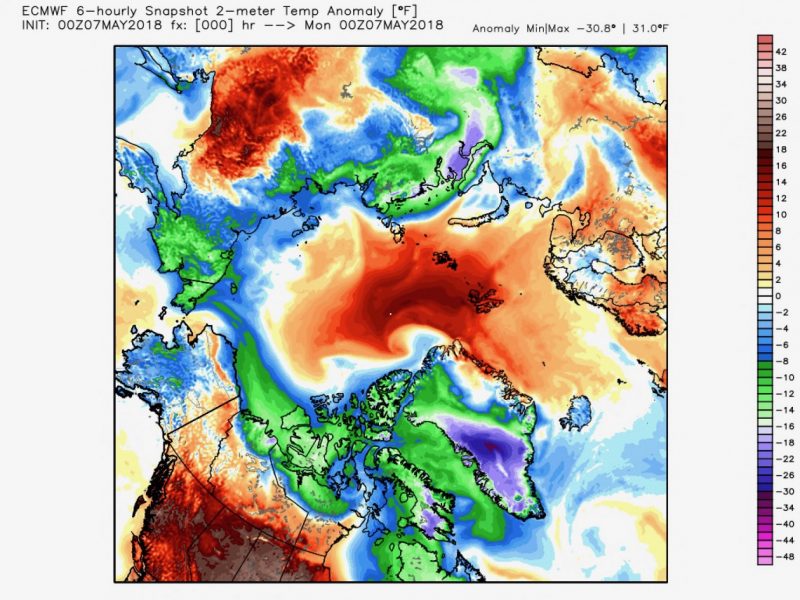
Temperature difference from normal over the Arctic analyzed by European model on May 7. Chart via WeatherBell.com/Washington Post.

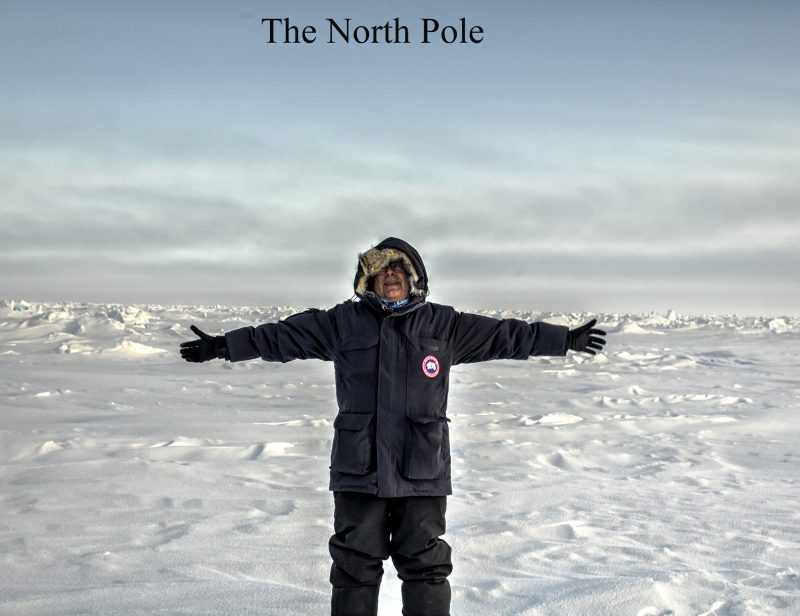
A valued EarthSky community member, Eliot Herman of Tucson, whose photo of the Arctic is at the top of this article, recently returned from the North Pole. Visiting there had always been a dream of his, he said. He reported that the 2017-2018 winter season at the North Pole was the shortest season ever for visitors, due to the thin ice. Remember that unlike the Antarctic, which is a continent, the Arctic is an ocean. When you go there, and land in an airplane there, you’re on sea ice with no solid ground underneath. Eliot – who is a biologist and a professor in the School of Plant Sciences at the University of Arizona – sent along a story from the Independent Barents Observer titled:

North Pole campers pack up after shortest ice drift ever

Eliot also commented:

… on the ground, as the story relates, they had a difficult time finding a flow above 89 N to place the temporary ice base on, and, after established, there was a runway crack on April 16 that aborted flights. They then extended the runway to enable more flights including my visit, but, only a few days later, they had to abandon the ice camp.

What I think this tells us is that the macro view from satellites says the ice at the top of the world is thick, but at the close in view there is much more turmoil. For me, I am glad I did this, this year, because I am wondering whether it will be possible in years to come. Will anyone be able to stand on the top of the world?

Eliot Herman at the North Pole in April, 2018. Will future generations get to stand there? Photo via Eliot Herman on Flickr.

Bottom line: In the lead-up to summer, the temperature in the Arctic has again shot up to unusually high levels.


from EarthSky https://ift.tt/2wvADzL

While visiting the Arctic last month, Eliot Herman photographed this large crack in the ice (refrozen again) above 89 degrees north latitude, not far from the North Pole. The date of the photo is April 18, 2018. Read more about this photo on Flickr.

A weather reporter that I trust – Jason Samenow of the Capital Weather Gang at the Washington Post – wrote on May 7, 2018 that temperatures in the Arctic have been unusually high. He wrote:

In four of the past five winters, the North Pole has witnessed dramatic temperatures spikes, which previously were rare. Now, in the lead up to summer, the temperature has again shot up to unusually high levels at the tip of the planet.

Scientists say this warming could hasten the melt of Arctic sea ice, which is already near record low levels.

In just the past few days, the temperature at the North Pole has soared to the melting point of 32 degrees, which is about 30-35 degrees (17-19 Celsius) above normal.

Much of the entire Arctic north of 80 degrees latitude is abnormally warm. The temperature averaged over the whole region appears to be the warmest on record for the time of year, dating back to at least 1958. It is about 18 degrees (10 Celsius) above the normal of 4 degrees (minus 16 Celsius).

As the warm air intruded the Arctic, sea ice melted suddenly. The Norway Ice Service tweeted the sea ice area near Svalbard, the small island chain between Norway and the North Pole, fell by about 32,000 square miles (82,000 square km) to the second lowest area on record. The amount of ice lost is enough to cover the entire state of South Carolina.

Jason Samenow had much more to say, and you can read more via the Capital Weather Gang at the Washington Post.

Temperature difference from normal over the Arctic analyzed by European model on May 7. Chart via WeatherBell.com/Washington Post.

A valued EarthSky community member, Eliot Herman of Tucson, whose photo of the Arctic is at the top of this article, recently returned from the North Pole. Visiting there had always been a dream of his, he said. He reported that the 2017-2018 winter season at the North Pole was the shortest season ever for visitors, due to the thin ice. Remember that unlike the Antarctic, which is a continent, the Arctic is an ocean. When you go there, and land in an airplane there, you’re on sea ice with no solid ground underneath. Eliot – who is a biologist and a professor in the School of Plant Sciences at the University of Arizona – sent along a story from the Independent Barents Observer titled:

North Pole campers pack up after shortest ice drift ever

Eliot also commented:

… on the ground, as the story relates, they had a difficult time finding a flow above 89 N to place the temporary ice base on, and, after established, there was a runway crack on April 16 that aborted flights. They then extended the runway to enable more flights including my visit, but, only a few days later, they had to abandon the ice camp.

What I think this tells us is that the macro view from satellites says the ice at the top of the world is thick, but at the close in view there is much more turmoil. For me, I am glad I did this, this year, because I am wondering whether it will be possible in years to come. Will anyone be able to stand on the top of the world?

Eliot Herman at the North Pole in April, 2018. Will future generations get to stand there? Photo via Eliot Herman on Flickr.

Bottom line: In the lead-up to summer, the temperature in the Arctic has again shot up to unusually high levels.


from EarthSky https://ift.tt/2wvADzL

What’s a safe distance between us and a supernova?

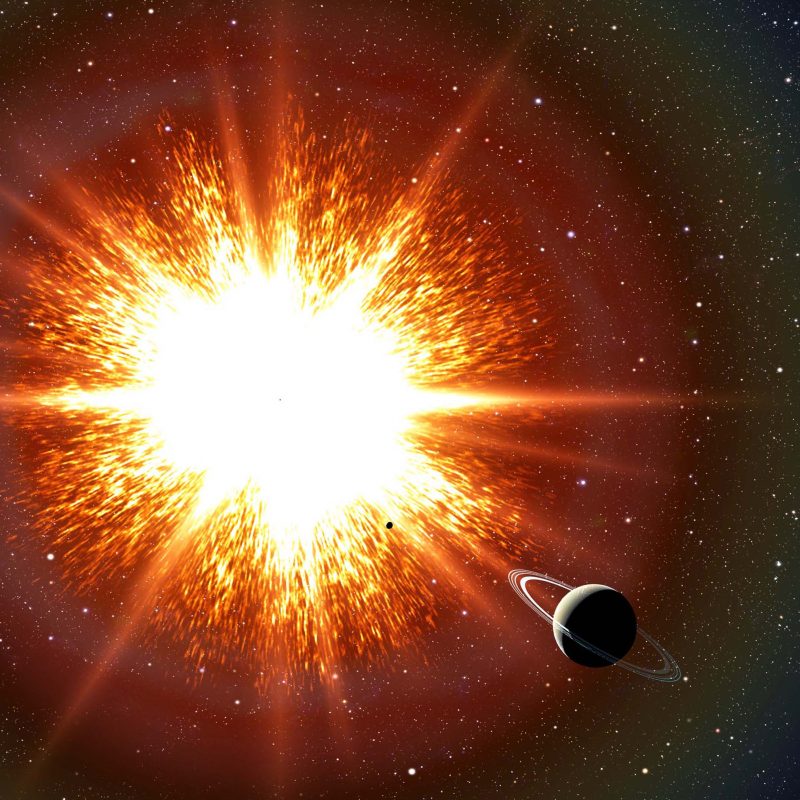
Artist’s illusration of a supernova, or exploding star, via SmithsonianScience.org

A supernova is a star explosion – destructive on a scale almost beyond human imagining. If our sun exploded as a supernova, the resulting shock wave probably wouldn’t destroy the whole Earth, but the side of Earth facing the sun would boil away. Scientists estimate that the planet as a whole would increase in temperature to roughly 15 times hotter than our normal sun’s surface. What’s more, Earth wouldn’t stay put in orbit. The sudden decrease in the sun’s mass might free the planet to wander off into space. Clearly, the sun’s distance – 8 light-minutes away – isn’t safe. Fortunately, our sun isn’t the sort of star destined to explode as a supernova. But other stars, beyond our solar system, will. What is the closest safe distance? Scientific literature cites 50 to 100 years as the closest safe distance between Earth and a supernova.

Image of remnant of Supernova 1987A as seen at optical wavelengths with the Hubble Space Telescope in 2011. Via NASA, ESA, and P. Challis (Harvard-Smithsonian Center for Astrophysics).

Image of remnant of Supernova 1987A as seen at optical wavelengths with the Hubble Space Telescope in 2011. This supernova was the closest in centuries, and it was visible to the eye alone. It was located on the outskirts of the Tarantula Nebula in the Large Magellanic Cloud, a satellite galaxy to our Milky Way. It was located approximately 168,000 light-years from Earth. Image via NASA, ESA, and P. Challis (Harvard-Smithsonian Center for Astrophysics).

What would happen if a supernova exploded near Earth? Let’s consider the explosion of a star besides our sun, but still at an unsafe distance. Say, the supernova is 30 light-years away. Dr. Mark Reid, a senior astronomer at the Harvard-Smithsonian Center for Astrophysics, has said:

… were a supernova to go off within about 30 light-years of us, that would lead to major effects on the Earth, possibly mass extinctions. X-rays and more energetic gamma-rays from the supernova could destroy the ozone layer that protects us from solar ultraviolet rays. It also could ionize nitrogen and oxygen in the atmosphere, leading to the formation of large amounts of smog-like nitrous oxide in the atmosphere.

What’s more, if a supernova exploded within 30 light-years, phytoplankton and reef communities would be particularly affected. Such an event severely deplete the base of the ocean food chain.

Suppose the explosion were slightly more distant. An explosion of a nearby star might leave Earth and its surface and ocean life relatively intact. But any relatively nearby explosion would still shower us with gamma rays and other high-energy radiation. This radiation could cause mutations in earthly life. Also, the radiation from a nearby supernova could change our climate.

No supernova has been known to erupt at this close distance in the known history of humankind. The most recent supernova visible to the eye was Supernova 1987A, in the year 1987. It was approximately 168,000 light-years away.

Before that, the last supernova visible to the eye was was documented by Johannes Kepler in 1604. At about 20,000 light years, it shone more brightly than any star in the night sky. It was even visible in daylight! But it didn’t cause earthly effects, as far as we know.

relative dimensions of IK Pegasi A (left), B (lower center) and the Sun (right). Image via RJHall on Wikimedia Commons

Relative dimensions of IK Pegasi A (left), IK Pegasi B (lower center) and our sun (right). The smallest star here is the nearest known supernova progenitor candidate, at 150 light-years away. Image via RJHall on Wikimedia Commons

How many potential supernovae are located closer to us than 50 to 100 light-years? The answer depends on the kind of supernova.

A Type II supernova is an aging massive star that collapses. There are no stars massive enough to do this located within 50 light-years of Earth.

But there are also Type I supernovae – caused by the collapse of a small faint white dwarf star. These stars are dim and hard to find, so we can’t be sure just how many are around. There are probably a few hundred of these stars within 50 light-years.

The star IK Pegasi B is the nearest known supernova progenitor candidate. It’s part of a binary star system, located about 150 light years from our sun and solar system.

The main star in the system – IK Pegasi A – is an ordinary main sequence star, not unlike our sun. The potential Type I supernova is the other star – IK Pegasi B – a massive white dwarf that’s extremely small and dense. When the A star begins to evolve into a red giant, it’s expected to grow to a radius where the white dwarf can accrete, or take on, matter from A’s expanded gaseous envelope. When the B star gets massive enough, it might collapse on itself, in the process exploding as a supernova. Read more about the IK Pegasi system from Phil Plait at Bad Astronomy.
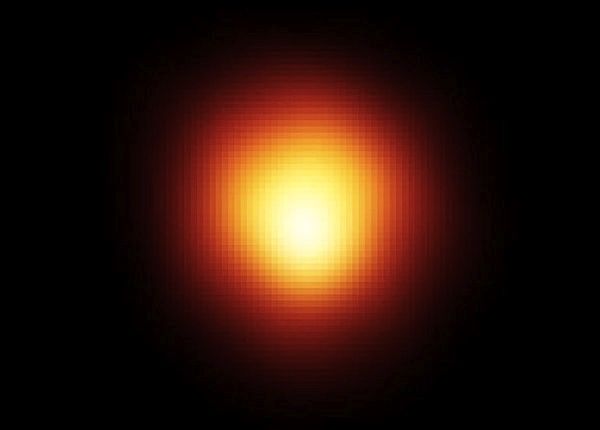
Betelgeuse imaged in ultraviolet light by the Hubble Space Telescope and subsequently enhanced by NASA. The bright white spot is likely one of this star's poles. Image via NASA/ESA.

What about Betelgeuse? Another star often mentioned in the supernova story is Betelgeuse, one of the brightest stars in our sky, part of the famous constellation Orion. Betelgeuse is a supergiant star. It is intrinsically very brilliant.

Such brilliance comes at a price, however. Betelgeuse is one of the most famous stars in the sky because it’s due to explode someday. Betelgeuse’s enormous energy requires that the fuel be expended quickly (relatively speaking), and in fact Betelgeuse is now near the end of its lifetime. Someday soon (astronomically speaking), it will run out of fuel, collapse under its own weight, and then rebound in a spectacular Type II supernova explosion. When this happens, Betelgeuse will brighten enormously for a few weeks or months, perhaps as bright as the full moon and visible in broad daylight.

When will it happen? Probably not in our lifetimes, but no one really knowns. It could be tomorrow or a million years in the future. When it does happen, any beings on Earth will witness a spectacular event in the night sky, but earthly life won’t be harmed. That’s because Betelgeuse is 430 light-years away. Read more about Betelgeuse as a supernova.

Artist’s concept of a supernova via NASA/CXC/M.Weiss

How often do supernovae erupt in our galaxy? No one knows. Scientists have speculated that the high-energy radiation from supernovae has already caused mutations in earthly species, maybe even human beings.

One estimate suggests there might be one dangerous supernova event in Earth’s vicinity every 15 million years. Another says that, on average, a supernova explosion occurs within 10 parsecs (33 light-years) of the Earth every 240 million years. So you see we really don’t know. But you can contrast those numbers to a few million years for the time humans are thought to have existed on the planet – and four-and-a-half billion years for the age of Earth itself.

And, if you do that, you’ll see that a supernova is certain to occur near Earth – but probably not in the foreseeable future of humanity.

Bottom line: Scientific literature cites 50 to 100 years as the closest safe distance between Earth and a supernova.


from EarthSky https://ift.tt/2qGNR8F

Artist’s illusration of a supernova, or exploding star, via SmithsonianScience.org

A supernova is a star explosion – destructive on a scale almost beyond human imagining. If our sun exploded as a supernova, the resulting shock wave probably wouldn’t destroy the whole Earth, but the side of Earth facing the sun would boil away. Scientists estimate that the planet as a whole would increase in temperature to roughly 15 times hotter than our normal sun’s surface. What’s more, Earth wouldn’t stay put in orbit. The sudden decrease in the sun’s mass might free the planet to wander off into space. Clearly, the sun’s distance – 8 light-minutes away – isn’t safe. Fortunately, our sun isn’t the sort of star destined to explode as a supernova. But other stars, beyond our solar system, will. What is the closest safe distance? Scientific literature cites 50 to 100 years as the closest safe distance between Earth and a supernova.

Image of remnant of Supernova 1987A as seen at optical wavelengths with the Hubble Space Telescope in 2011. Via NASA, ESA, and P. Challis (Harvard-Smithsonian Center for Astrophysics).

Image of remnant of Supernova 1987A as seen at optical wavelengths with the Hubble Space Telescope in 2011. This supernova was the closest in centuries, and it was visible to the eye alone. It was located on the outskirts of the Tarantula Nebula in the Large Magellanic Cloud, a satellite galaxy to our Milky Way. It was located approximately 168,000 light-years from Earth. Image via NASA, ESA, and P. Challis (Harvard-Smithsonian Center for Astrophysics).

What would happen if a supernova exploded near Earth? Let’s consider the explosion of a star besides our sun, but still at an unsafe distance. Say, the supernova is 30 light-years away. Dr. Mark Reid, a senior astronomer at the Harvard-Smithsonian Center for Astrophysics, has said:

… were a supernova to go off within about 30 light-years of us, that would lead to major effects on the Earth, possibly mass extinctions. X-rays and more energetic gamma-rays from the supernova could destroy the ozone layer that protects us from solar ultraviolet rays. It also could ionize nitrogen and oxygen in the atmosphere, leading to the formation of large amounts of smog-like nitrous oxide in the atmosphere.

What’s more, if a supernova exploded within 30 light-years, phytoplankton and reef communities would be particularly affected. Such an event severely deplete the base of the ocean food chain.

Suppose the explosion were slightly more distant. An explosion of a nearby star might leave Earth and its surface and ocean life relatively intact. But any relatively nearby explosion would still shower us with gamma rays and other high-energy radiation. This radiation could cause mutations in earthly life. Also, the radiation from a nearby supernova could change our climate.

No supernova has been known to erupt at this close distance in the known history of humankind. The most recent supernova visible to the eye was Supernova 1987A, in the year 1987. It was approximately 168,000 light-years away.

Before that, the last supernova visible to the eye was was documented by Johannes Kepler in 1604. At about 20,000 light years, it shone more brightly than any star in the night sky. It was even visible in daylight! But it didn’t cause earthly effects, as far as we know.

relative dimensions of IK Pegasi A (left), B (lower center) and the Sun (right). Image via RJHall on Wikimedia Commons

Relative dimensions of IK Pegasi A (left), IK Pegasi B (lower center) and our sun (right). The smallest star here is the nearest known supernova progenitor candidate, at 150 light-years away. Image via RJHall on Wikimedia Commons

How many potential supernovae are located closer to us than 50 to 100 light-years? The answer depends on the kind of supernova.

A Type II supernova is an aging massive star that collapses. There are no stars massive enough to do this located within 50 light-years of Earth.

But there are also Type I supernovae – caused by the collapse of a small faint white dwarf star. These stars are dim and hard to find, so we can’t be sure just how many are around. There are probably a few hundred of these stars within 50 light-years.

The star IK Pegasi B is the nearest known supernova progenitor candidate. It’s part of a binary star system, located about 150 light years from our sun and solar system.

The main star in the system – IK Pegasi A – is an ordinary main sequence star, not unlike our sun. The potential Type I supernova is the other star – IK Pegasi B – a massive white dwarf that’s extremely small and dense. When the A star begins to evolve into a red giant, it’s expected to grow to a radius where the white dwarf can accrete, or take on, matter from A’s expanded gaseous envelope. When the B star gets massive enough, it might collapse on itself, in the process exploding as a supernova. Read more about the IK Pegasi system from Phil Plait at Bad Astronomy.

Betelgeuse imaged in ultraviolet light by the Hubble Space Telescope and subsequently enhanced by NASA. The bright white spot is likely one of this star's poles. Image via NASA/ESA.

What about Betelgeuse? Another star often mentioned in the supernova story is Betelgeuse, one of the brightest stars in our sky, part of the famous constellation Orion. Betelgeuse is a supergiant star. It is intrinsically very brilliant.

Such brilliance comes at a price, however. Betelgeuse is one of the most famous stars in the sky because it’s due to explode someday. Betelgeuse’s enormous energy requires that the fuel be expended quickly (relatively speaking), and in fact Betelgeuse is now near the end of its lifetime. Someday soon (astronomically speaking), it will run out of fuel, collapse under its own weight, and then rebound in a spectacular Type II supernova explosion. When this happens, Betelgeuse will brighten enormously for a few weeks or months, perhaps as bright as the full moon and visible in broad daylight.

When will it happen? Probably not in our lifetimes, but no one really knowns. It could be tomorrow or a million years in the future. When it does happen, any beings on Earth will witness a spectacular event in the night sky, but earthly life won’t be harmed. That’s because Betelgeuse is 430 light-years away. Read more about Betelgeuse as a supernova.

Artist’s concept of a supernova via NASA/CXC/M.Weiss

How often do supernovae erupt in our galaxy? No one knows. Scientists have speculated that the high-energy radiation from supernovae has already caused mutations in earthly species, maybe even human beings.

One estimate suggests there might be one dangerous supernova event in Earth’s vicinity every 15 million years. Another says that, on average, a supernova explosion occurs within 10 parsecs (33 light-years) of the Earth every 240 million years. So you see we really don’t know. But you can contrast those numbers to a few million years for the time humans are thought to have existed on the planet – and four-and-a-half billion years for the age of Earth itself.

And, if you do that, you’ll see that a supernova is certain to occur near Earth – but probably not in the foreseeable future of humanity.

Bottom line: Scientific literature cites 50 to 100 years as the closest safe distance between Earth and a supernova.


from EarthSky https://ift.tt/2qGNR8F
Bright star Vega on May evenings

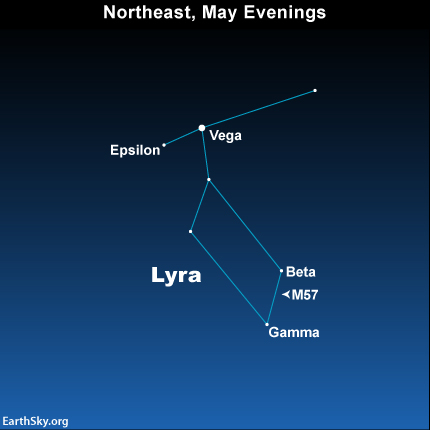
Tonight, look for the star Vega, the fifth brightest star in the sky. If you’re in the Northern Hemisphere, you’ll find this beautiful bluish star easily, simply by looking northeastward at mid-evening in May.

Try it! Just look northeast in mid-evening in May. You’ll see this bright bluish star shining above that horizon. From far south in the Southern Hemisphere, you can’t see this star until late at night in May because Vega is located so far north on the sky’s dome. Vega will reach its high point for the night around 3 to 4 hours after midnight, at which time people in the Southern Hemisphere can see this star in the northern sky. As seen from mid-northern latitudes, the star shines high overhead at this early morning hour.

Because it’s the brightest star in the constellation Lyra the Harp, Vega is sometimes called the Harp Star.

Enjoying EarthSky so far? Sign up for our free daily newsletter today!

The constellation Lyra the Harp, with its brightest star Vega and other interesting stars or objects within its boundaries.

Vega is a lovely star to come to know. When I was first learning the night sky, nearly 40 years ago, I spent hours, days, weeks, months poring over charts and books. So I sometimes came to know the names and whereabouts of certain stars before seeing them in the night sky. One soft May evening, I happened to glance toward the northeast. I was thrilled at the sight of Vega – gleaming, sapphire-blue – and surprisingly bright for being so low in the sky.

Like all stars, Vega rises some four minutes earlier each day as Earth moves around the sun. So Vega will ornament our evening sky throughout the summer and fall.

Although Vega is considered a late spring or summer star, it’s actually so far north on the sky’s dome that you can find it at some time during the night, nearly every night of the year at mid-northern latitudes.

Bottom line: It’s easy to identify the star Vega in the constellation Lyra at this time of year. Just look northeast in the evening for a bright, bluish star above the northeastern horizon.

A planisphere is virtually indispensable for beginning stargazers. Order your EarthSky planisphere today.


from EarthSky https://ift.tt/1cl6OCD

Tonight, look for the star Vega, the fifth brightest star in the sky. If you’re in the Northern Hemisphere, you’ll find this beautiful bluish star easily, simply by looking northeastward at mid-evening in May.

Try it! Just look northeast in mid-evening in May. You’ll see this bright bluish star shining above that horizon. From far south in the Southern Hemisphere, you can’t see this star until late at night in May because Vega is located so far north on the sky’s dome. Vega will reach its high point for the night around 3 to 4 hours after midnight, at which time people in the Southern Hemisphere can see this star in the northern sky. As seen from mid-northern latitudes, the star shines high overhead at this early morning hour.

Because it’s the brightest star in the constellation Lyra the Harp, Vega is sometimes called the Harp Star.

Enjoying EarthSky so far? Sign up for our free daily newsletter today!

The constellation Lyra the Harp, with its brightest star Vega and other interesting stars or objects within its boundaries.

Vega is a lovely star to come to know. When I was first learning the night sky, nearly 40 years ago, I spent hours, days, weeks, months poring over charts and books. So I sometimes came to know the names and whereabouts of certain stars before seeing them in the night sky. One soft May evening, I happened to glance toward the northeast. I was thrilled at the sight of Vega – gleaming, sapphire-blue – and surprisingly bright for being so low in the sky.

Like all stars, Vega rises some four minutes earlier each day as Earth moves around the sun. So Vega will ornament our evening sky throughout the summer and fall.

Although Vega is considered a late spring or summer star, it’s actually so far north on the sky’s dome that you can find it at some time during the night, nearly every night of the year at mid-northern latitudes.

Bottom line: It’s easy to identify the star Vega in the constellation Lyra at this time of year. Just look northeast in the evening for a bright, bluish star above the northeastern horizon.

A planisphere is virtually indispensable for beginning stargazers. Order your EarthSky planisphere today.


from EarthSky https://ift.tt/1cl6OCD

Hawaii eruption highlights volcano dangers

adds 2