aads

Pegasus the Flying Horse, and the best sky story ever

Pegasus the Flying Horse

Pegasus the Flying Horse rises in the east on autumn evenings in the Northern Hemisphere (spring evenings in the Southern Hemisphere). It dominates the sky with its giant square asterism, fittingly called the Great Square. In mythology, Pegasus figured into the greatest – surely the most elaborate – of all sky myths. This one is from ancient Greece some 3,000 years ago. According to the myth, Pegasus was the flying horse ridden by Perseus the Hero, as he swooped in to save Princess Andromeda from a sea monster. There’s more to the story, which you’ll find in the video at the top of this page.

Today, we see Pegasus as the 7th-largest of the 88 official constellations. And Pegasus is easy to find. On fall evenings in the Northern Hemisphere, this constellation climbs above the eastern horizon, reaching a spot nearly overhead by late fall.

Its asterism – the Great Square of Pegasus – is huge. The square alone is 20 degrees wide from top to bottom. That’s the span of two fist-widths held at arm’s length.
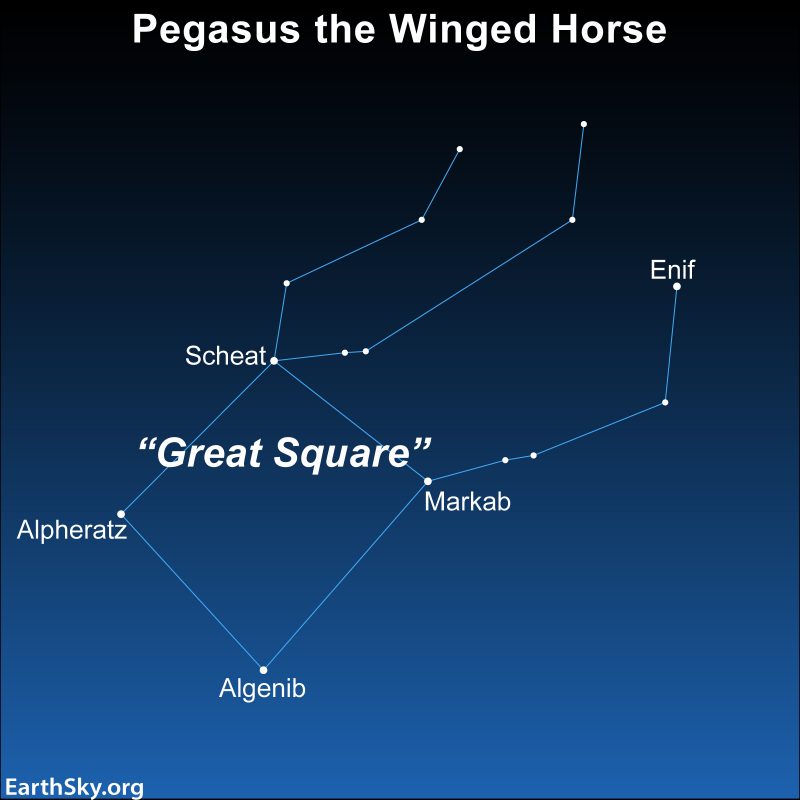
Sky chart with numerous labeled stars and lines between them making a large square with legs.
On autumn evenings in the Northern Hemisphere – spring evenings in the Southern Hemisphere – Pegasus the Flying Horse is ascending in the east in the evening hours. You’ll most easily notice the giant, square-shaped asterism within Pegasus, called the Great Square.

The 2025 EarthSky Lunar Calendar presale is here! The first 100 purchases are signed by the legendary Deborah Byrd as a thank you. Get yours today!

Stars of Pegasus

As it rises in the evening, the star in the Great Square closest to the horizon is Algenib, with a magnitude of 2.8. It lies 390 light-years away. The star on the opposite corner of the square from Algenib is Scheat, a magnitude 2.4 star lying 199 light-years away. The star to the south in the square is Markab, a magnitude 2.5 star at a distance of 140 light-years. And the final star in the square is Alpheratz. Technically, Alpheratz lies just across the border of Pegasus and is actually a member of the constellation Andromeda. Alpheratz is the brightest of the four stars at magnitude 2.1 and lies 97 light-years away.

The Great Square marks the body of the flying horse. Trails leading off the west side of the square mark the front legs and head of Pegasus. Extending out from Markab, two stars at magnitude 3.4 and 3.5, Homam and Biham, lead the way to the head star, magnitude 2.4 star Enif. This star is helpful in finding the globular cluster M15.

Find the forelegs of Pegasus off of Scheat. Five degrees west of Scheat is 3rd magnitude star Matar. As the brightest leg star in Pegasus, it’s helpful in finding a couple of notable galaxies.
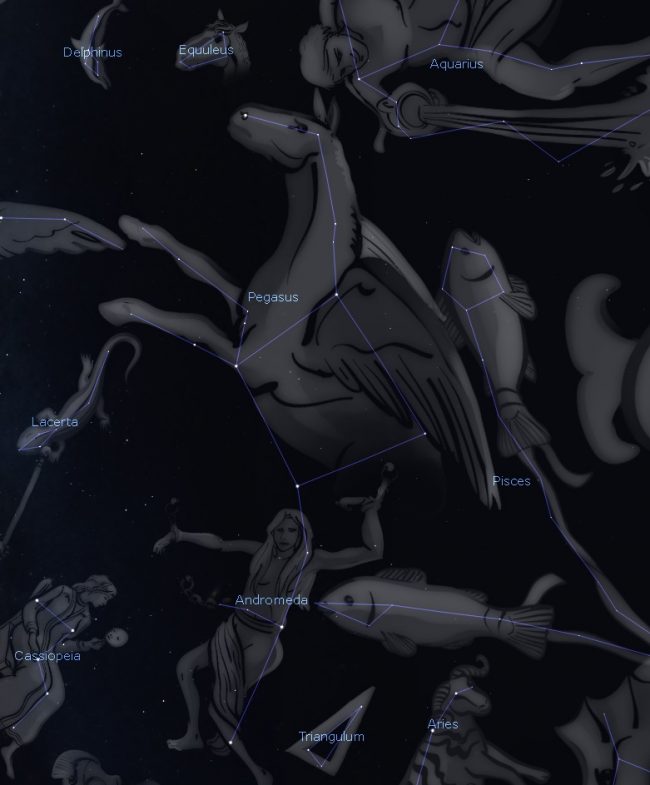
Star chart with pictures of Pegasus the Flying Horse and neighboring constellations.
Pegasus the Flying Horse is a giant constellation that rises in the east on October evenings. Image via Stellarium. Used with permission.

The asterism of the Great Square

The Great Square of Pegasus can look like a huge diamond. Think of it as a giant baseball diamond rising during playoffs month in the east after dark. Asterisms, such as the Great Square, are groups of stars that aren’t labeled as constellations but are easy to recognize.
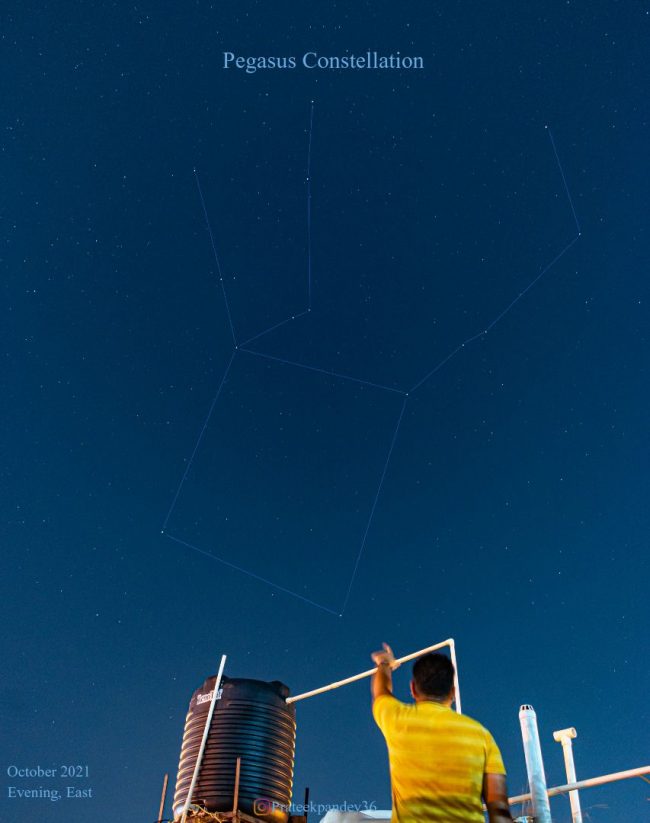
Night sky photo with lines between stars and a man pointing up at the constellation.
View at EarthSky Community Photos. | Prateek Pandey in Bhopal, India, captured this photo of Pegasus. He wrote: “Pegasus is named after the winged horse in Greek mythology. Curiously, the constellation Pegasus only represents the top half of the horse. In some depictions, the horse is shown rising out of the water. Viewed best in autumn, turn your eyes to the east as the night falls, and see the winged horse rising high up in the sky.” Thank you, Prateek!

Using Pegasus to find the Andromeda Galaxy

Pegasus is close to the constellation Andromeda, so it’s useful for star-hopping to the Andromeda galaxy. You’ll need a dark-sky site to track down Andromeda without optical aid. It’s much easier to spot with binoculars or a telescope. Follow this link for more information on how to use Pegasus to find Andromeda.
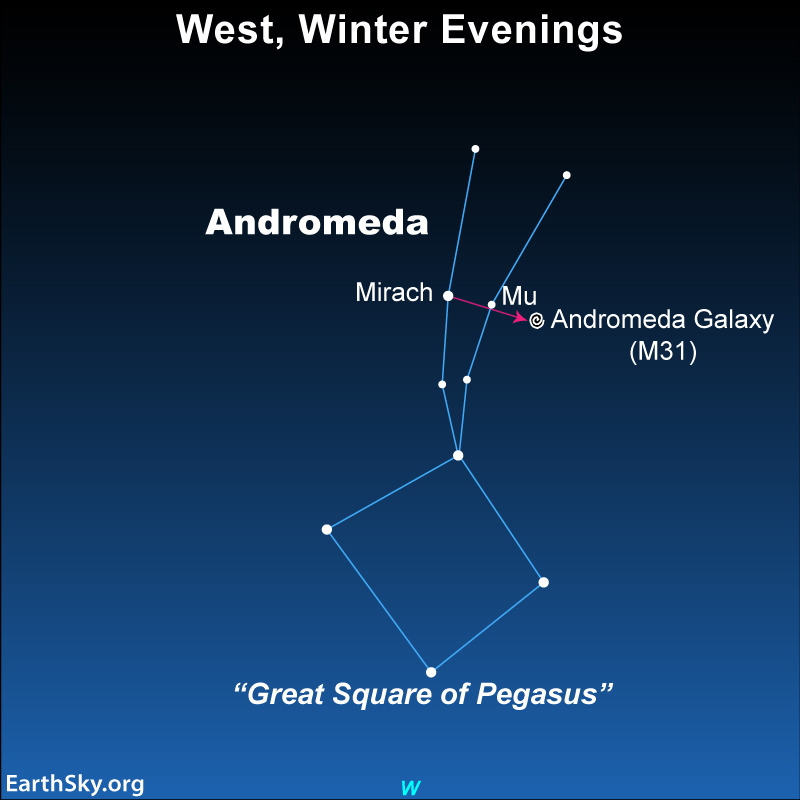
Star chart: Lines showing constellations with large square and arrow pointing to galaxy symbol.
Find the Andromeda Galaxy (M31) by star-hopping from the Great Square of Pegasus. Chart via EarthSky.
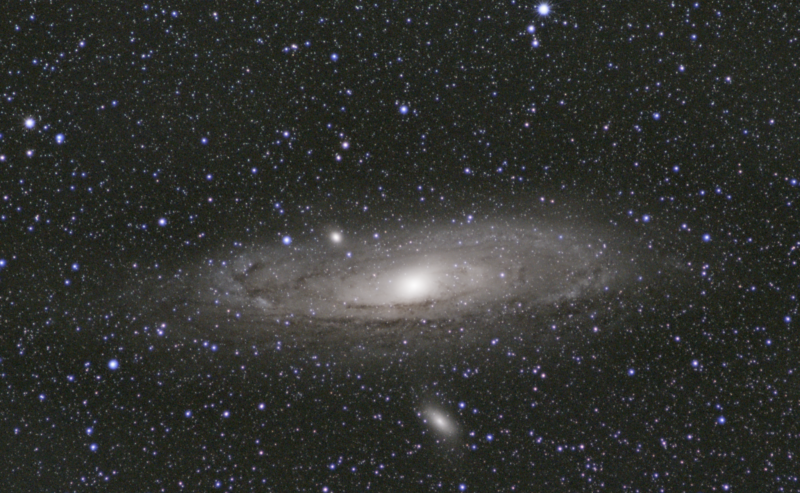
Oblique view of a large spiral galaxy with a bright nucleus, dark lanes and thousands of foreground stars.
View at EarthSky Community Photos. | Jan Curtis in Cheyenne, Wyoming, caught Messier 31, the Andromeda Galaxy, on September 25, 2024. Jan wrote: “M31 is well-placed this time of year for all-night viewing.” Thank you, Jan!

Stephan’s Quintet

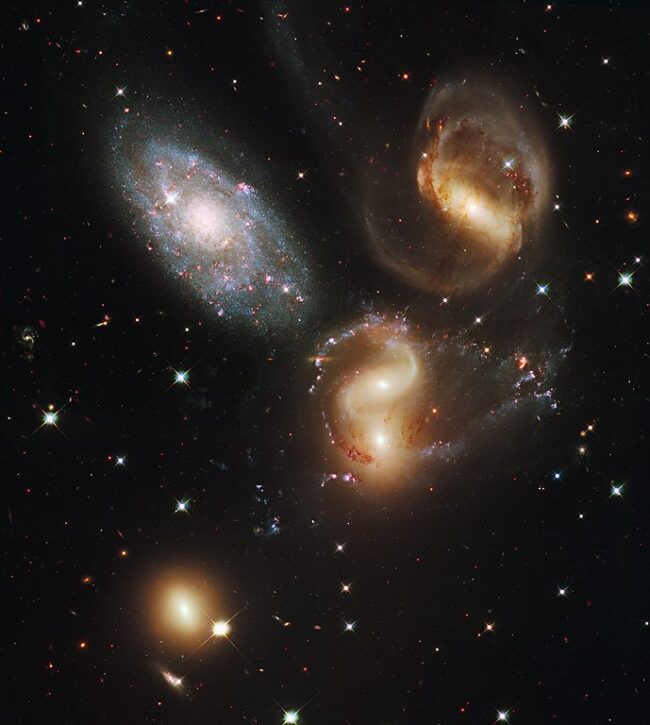
Pegasus is home to many galaxy clusters. The most famous is probably Stephan’s Quintet, a favorite target among astrophotographers. This tight gathering of five galaxies has a faint magnitude of 13.6. The largest and brightest, NGC 7320, has a small redshift compared to the other four, revealing that it is probably not a physical member of the group and just a line-of-sight coincidence.

Fun fact: In the 1946 movie It’s a Wonderful Life, angels in heaven discussing George Bailey are depicted as the galaxies in Stephan’s Quintet.

A large spiral with multiple small, nebulous objects, over a rich background of stars.
View at EarthSky Community Photos. | Andy Dungan near Cotopaxi, Colorado, captured two galaxy groups, namely Stephan’s Quintet and the Deer Lick Group, both in the constellation Pegasus, on October 27, 2024. Andy wrote: “Over the years I have run into pictures and discussions of these two objects. Both are rather small and close together. Their data and histories are fun too. Both of these would be seen better with a 2,000 mm telescope and my 600 mm telescope with a small format camera takes a pretty good pic. What fun exploring the universe is. I seem to be on a roll lately, lots of clear skies and a motivated photographer.” Thank you, Andy!
A cluster of galaxies including large colorful spirals and two galaxies merging.
This image of Stephan’s Quintet is from 2009, courtesy of the Hubble Space Telescope. Image via Wikimedia Commons (public domain)/ NASA/ ESA/ and the Hubble SM4 ERO Team.

Other galaxies in Pegasus the Flying Horse

Three other notable galaxy clusters lie in Pegasus. The brightest is magnitude 9.5 and is just half a degree from Stephan’s Quintet. The cluster has the curious name Deer Lick Group. Follow Scheat to Matar and then about 4.5 degrees farther and slightly north of the direction you were heading. This will bring you to the Deer Lick Group, NGC 7331. Here you’ll find one large spiral galaxy and a spattering of smaller ones.
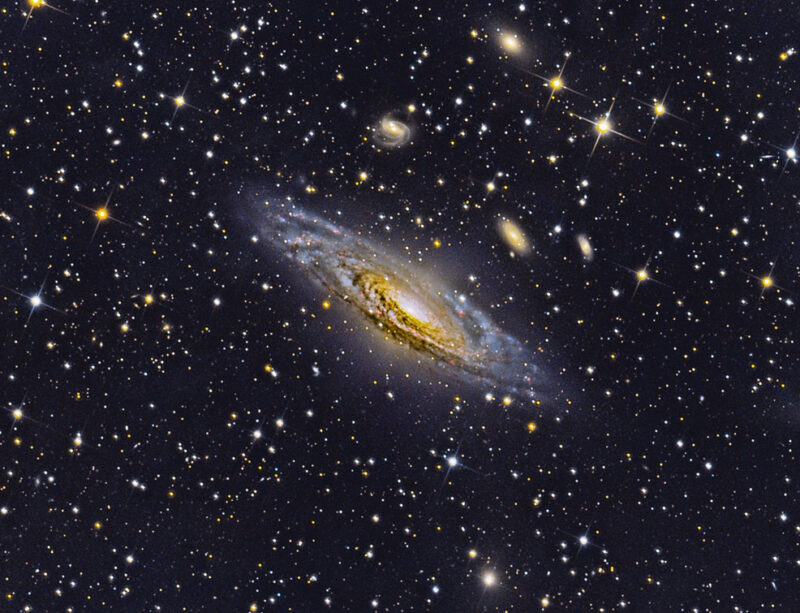
Large, oblique spiral galaxy and some smaller spiral and elliptical galaxies nearby in star field.
The Deer Lick Group contains one large spiral galaxy and other smaller galaxies. It lies in the constellation Pegasus. Image via W4sm astro/ Wikimedia Commons (CC BY-SA 4.0).

The Pegasus I Cluster lies on the southern edge of the constellation not far from the circlet of Pisces. At a distance of 8 degrees from Markab on the sky’s dome, the Pegasus I Cluster is a grouping with a magnitude of 11.1. The galaxy cluster requires a large telescope to see or a long-exposure photograph, but it reveals a beautiful and striking number of galaxies.

The Pegasus II Cluster lies back within the square of Pegasus. Halfway between Alpheratz and Scheat, it lies just inside the border of a line that would be drawn connecting these two stars. A bit dimmer at magnitude 12.6, the Pegasus II Cluster (NGC 7720) is a powerful radio source, the target of much scientific study.

Globular Cluster M15 in Pegasus the Flying Horse

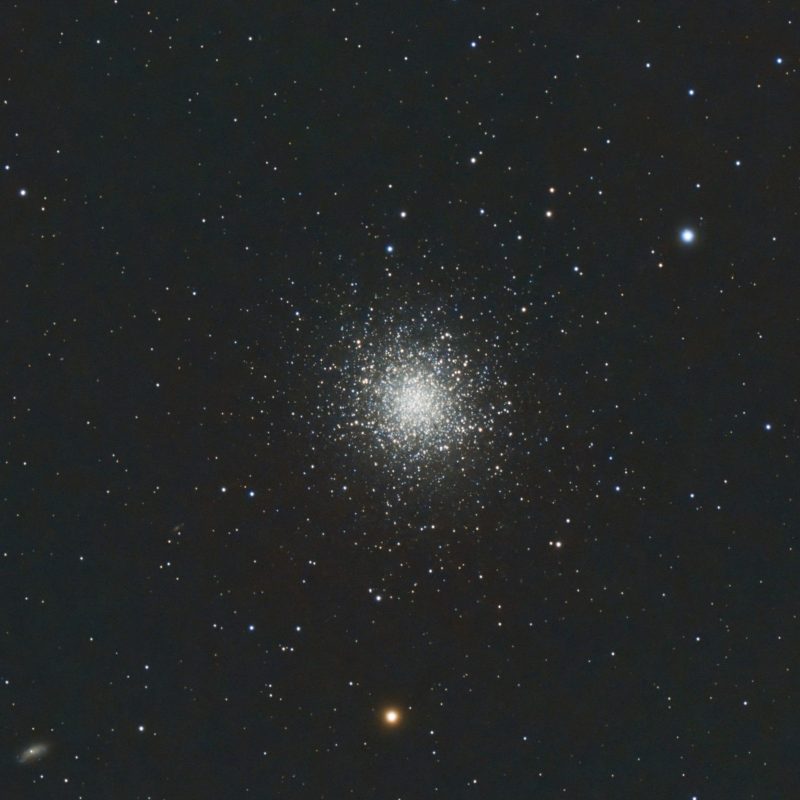
One other deep-sky object of note in Pegasus is the globular cluster M15. You can find M15 easily using the head and neck stars of Pegasus. Start with the star Markab and go to the two dimmer stars that mark the neck. From the last star of the neck (Biham) to the brighter head star Enif, continue a line straight out for a little more than 4 degrees. Here you will find the magnitude 6.4 globular cluster M15. It lies about 33,600 light-years away and will show up nicely in a pair of binoculars.
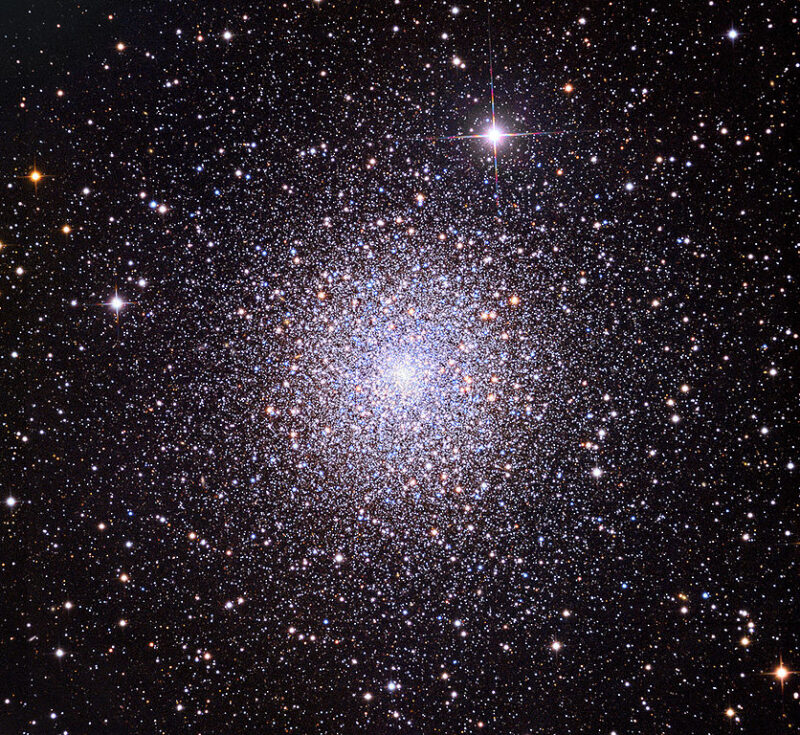
Countless colorful points of light clustered together with a bright center and spilling outward into a starfield.
You can find the globular cluster M15 in the constellation Pegasus. It shines at magnitude 6.4. Image via Mount Lemmon SkyCenter Schulman Telescope/ Adam Block/ Wikimedia Commons (CC BY-SA 4.0).

First exoplanet around a sun-like star

Astronomers discovered the first exoplanet orbiting a sun-like star in the constellation Pegasus. They named the planet 51 Pegasi b after the star it orbits. Didier Queloz and Michel Mayor discovered the planet in 1995 and received the Nobel Prize in Physics for their discovery in 2019.
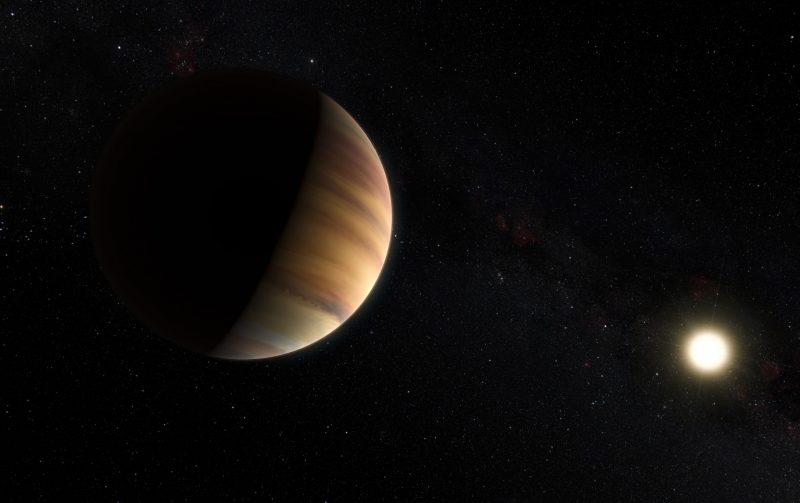
Yellow, brown, and tan striped planet with distant yellowish-white star.
Artist’s concept of the hot Jupiter exoplanet 51 Pegasi b. The first planet discovered around a sun-like star, 51 Pegasi b lies about 50 light-years from Earth in the constellation Pegasus the Flying Horse. Image via ESO/ M. Kornmesser/ Nick Risinger/ Wikimedia Commons (CC BY 4.0).

Bottom line: Pegasus the Flying Horse is a giant constellation that dominates autumn skies in the Northern Hemisphere (spring skies in the Southern Hemisphere). The constellation contains a famous asterism called the Great Square.

The post Pegasus the Flying Horse, and the best sky story ever first appeared on EarthSky.


from EarthSky https://ift.tt/rFLQO0l

Pegasus the Flying Horse

Pegasus the Flying Horse rises in the east on autumn evenings in the Northern Hemisphere (spring evenings in the Southern Hemisphere). It dominates the sky with its giant square asterism, fittingly called the Great Square. In mythology, Pegasus figured into the greatest – surely the most elaborate – of all sky myths. This one is from ancient Greece some 3,000 years ago. According to the myth, Pegasus was the flying horse ridden by Perseus the Hero, as he swooped in to save Princess Andromeda from a sea monster. There’s more to the story, which you’ll find in the video at the top of this page.

Today, we see Pegasus as the 7th-largest of the 88 official constellations. And Pegasus is easy to find. On fall evenings in the Northern Hemisphere, this constellation climbs above the eastern horizon, reaching a spot nearly overhead by late fall.

Its asterism – the Great Square of Pegasus – is huge. The square alone is 20 degrees wide from top to bottom. That’s the span of two fist-widths held at arm’s length.

Sky chart with numerous labeled stars and lines between them making a large square with legs.
On autumn evenings in the Northern Hemisphere – spring evenings in the Southern Hemisphere – Pegasus the Flying Horse is ascending in the east in the evening hours. You’ll most easily notice the giant, square-shaped asterism within Pegasus, called the Great Square.

The 2025 EarthSky Lunar Calendar presale is here! The first 100 purchases are signed by the legendary Deborah Byrd as a thank you. Get yours today!

Stars of Pegasus

As it rises in the evening, the star in the Great Square closest to the horizon is Algenib, with a magnitude of 2.8. It lies 390 light-years away. The star on the opposite corner of the square from Algenib is Scheat, a magnitude 2.4 star lying 199 light-years away. The star to the south in the square is Markab, a magnitude 2.5 star at a distance of 140 light-years. And the final star in the square is Alpheratz. Technically, Alpheratz lies just across the border of Pegasus and is actually a member of the constellation Andromeda. Alpheratz is the brightest of the four stars at magnitude 2.1 and lies 97 light-years away.

The Great Square marks the body of the flying horse. Trails leading off the west side of the square mark the front legs and head of Pegasus. Extending out from Markab, two stars at magnitude 3.4 and 3.5, Homam and Biham, lead the way to the head star, magnitude 2.4 star Enif. This star is helpful in finding the globular cluster M15.

Find the forelegs of Pegasus off of Scheat. Five degrees west of Scheat is 3rd magnitude star Matar. As the brightest leg star in Pegasus, it’s helpful in finding a couple of notable galaxies.

Star chart with pictures of Pegasus the Flying Horse and neighboring constellations.
Pegasus the Flying Horse is a giant constellation that rises in the east on October evenings. Image via Stellarium. Used with permission.

The asterism of the Great Square

The Great Square of Pegasus can look like a huge diamond. Think of it as a giant baseball diamond rising during playoffs month in the east after dark. Asterisms, such as the Great Square, are groups of stars that aren’t labeled as constellations but are easy to recognize.

Night sky photo with lines between stars and a man pointing up at the constellation.
View at EarthSky Community Photos. | Prateek Pandey in Bhopal, India, captured this photo of Pegasus. He wrote: “Pegasus is named after the winged horse in Greek mythology. Curiously, the constellation Pegasus only represents the top half of the horse. In some depictions, the horse is shown rising out of the water. Viewed best in autumn, turn your eyes to the east as the night falls, and see the winged horse rising high up in the sky.” Thank you, Prateek!

Using Pegasus to find the Andromeda Galaxy

Pegasus is close to the constellation Andromeda, so it’s useful for star-hopping to the Andromeda galaxy. You’ll need a dark-sky site to track down Andromeda without optical aid. It’s much easier to spot with binoculars or a telescope. Follow this link for more information on how to use Pegasus to find Andromeda.

Star chart: Lines showing constellations with large square and arrow pointing to galaxy symbol.
Find the Andromeda Galaxy (M31) by star-hopping from the Great Square of Pegasus. Chart via EarthSky.
Oblique view of a large spiral galaxy with a bright nucleus, dark lanes and thousands of foreground stars.
View at EarthSky Community Photos. | Jan Curtis in Cheyenne, Wyoming, caught Messier 31, the Andromeda Galaxy, on September 25, 2024. Jan wrote: “M31 is well-placed this time of year for all-night viewing.” Thank you, Jan!

Stephan’s Quintet

Pegasus is home to many galaxy clusters. The most famous is probably Stephan’s Quintet, a favorite target among astrophotographers. This tight gathering of five galaxies has a faint magnitude of 13.6. The largest and brightest, NGC 7320, has a small redshift compared to the other four, revealing that it is probably not a physical member of the group and just a line-of-sight coincidence.

Fun fact: In the 1946 movie It’s a Wonderful Life, angels in heaven discussing George Bailey are depicted as the galaxies in Stephan’s Quintet.

A large spiral with multiple small, nebulous objects, over a rich background of stars.
View at EarthSky Community Photos. | Andy Dungan near Cotopaxi, Colorado, captured two galaxy groups, namely Stephan’s Quintet and the Deer Lick Group, both in the constellation Pegasus, on October 27, 2024. Andy wrote: “Over the years I have run into pictures and discussions of these two objects. Both are rather small and close together. Their data and histories are fun too. Both of these would be seen better with a 2,000 mm telescope and my 600 mm telescope with a small format camera takes a pretty good pic. What fun exploring the universe is. I seem to be on a roll lately, lots of clear skies and a motivated photographer.” Thank you, Andy!
A cluster of galaxies including large colorful spirals and two galaxies merging.
This image of Stephan’s Quintet is from 2009, courtesy of the Hubble Space Telescope. Image via Wikimedia Commons (public domain)/ NASA/ ESA/ and the Hubble SM4 ERO Team.

Other galaxies in Pegasus the Flying Horse

Three other notable galaxy clusters lie in Pegasus. The brightest is magnitude 9.5 and is just half a degree from Stephan’s Quintet. The cluster has the curious name Deer Lick Group. Follow Scheat to Matar and then about 4.5 degrees farther and slightly north of the direction you were heading. This will bring you to the Deer Lick Group, NGC 7331. Here you’ll find one large spiral galaxy and a spattering of smaller ones.

Large, oblique spiral galaxy and some smaller spiral and elliptical galaxies nearby in star field.
The Deer Lick Group contains one large spiral galaxy and other smaller galaxies. It lies in the constellation Pegasus. Image via W4sm astro/ Wikimedia Commons (CC BY-SA 4.0).

The Pegasus I Cluster lies on the southern edge of the constellation not far from the circlet of Pisces. At a distance of 8 degrees from Markab on the sky’s dome, the Pegasus I Cluster is a grouping with a magnitude of 11.1. The galaxy cluster requires a large telescope to see or a long-exposure photograph, but it reveals a beautiful and striking number of galaxies.

The Pegasus II Cluster lies back within the square of Pegasus. Halfway between Alpheratz and Scheat, it lies just inside the border of a line that would be drawn connecting these two stars. A bit dimmer at magnitude 12.6, the Pegasus II Cluster (NGC 7720) is a powerful radio source, the target of much scientific study.

Globular Cluster M15 in Pegasus the Flying Horse

One other deep-sky object of note in Pegasus is the globular cluster M15. You can find M15 easily using the head and neck stars of Pegasus. Start with the star Markab and go to the two dimmer stars that mark the neck. From the last star of the neck (Biham) to the brighter head star Enif, continue a line straight out for a little more than 4 degrees. Here you will find the magnitude 6.4 globular cluster M15. It lies about 33,600 light-years away and will show up nicely in a pair of binoculars.

Countless colorful points of light clustered together with a bright center and spilling outward into a starfield.
You can find the globular cluster M15 in the constellation Pegasus. It shines at magnitude 6.4. Image via Mount Lemmon SkyCenter Schulman Telescope/ Adam Block/ Wikimedia Commons (CC BY-SA 4.0).

First exoplanet around a sun-like star

Astronomers discovered the first exoplanet orbiting a sun-like star in the constellation Pegasus. They named the planet 51 Pegasi b after the star it orbits. Didier Queloz and Michel Mayor discovered the planet in 1995 and received the Nobel Prize in Physics for their discovery in 2019.

Yellow, brown, and tan striped planet with distant yellowish-white star.
Artist’s concept of the hot Jupiter exoplanet 51 Pegasi b. The first planet discovered around a sun-like star, 51 Pegasi b lies about 50 light-years from Earth in the constellation Pegasus the Flying Horse. Image via ESO/ M. Kornmesser/ Nick Risinger/ Wikimedia Commons (CC BY 4.0).

Bottom line: Pegasus the Flying Horse is a giant constellation that dominates autumn skies in the Northern Hemisphere (spring skies in the Southern Hemisphere). The constellation contains a famous asterism called the Great Square.

The post Pegasus the Flying Horse, and the best sky story ever first appeared on EarthSky.


from EarthSky https://ift.tt/rFLQO0l
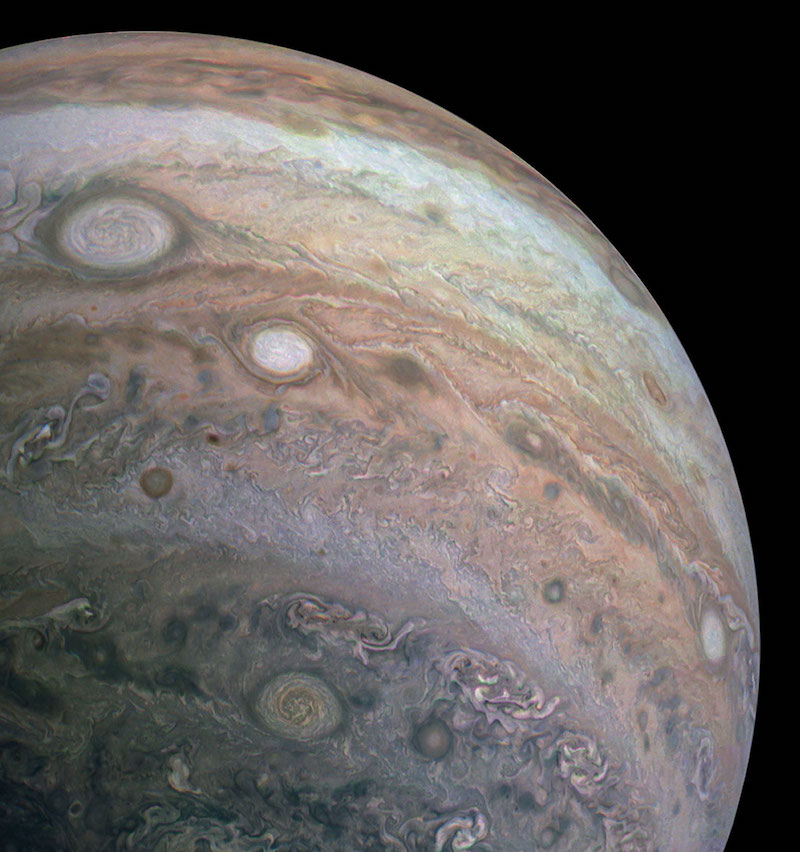
Jupiter doesn’t have a surface. How is that possible?

Jupiter doesn't have a surface: Gray ball on a black background.
NASA’s Juno spacecraft captured this image of Jupiter in 2020. How is it possible that Jupiter doesn’t have a surface? Image via NASA/ JPL-Caltech/ SwRI/ MSSS/ David Marriott.
  • Jupiter is a giant gas planet and the largest planet in our solar system.
  • But Jupiter has no surface. It’s made of gases that get increasingly dense as you head toward the center. Its interior is extremely inhospitable.
  • If Jupiter didn’t exist, life on Earth probably wouldn’t exist either. That’s because Jupiter protects us from incoming asteroids and comets.

By Benjamin Roulston, Clarkson University

Jupiter doesn’t have a surface. But how?

The planet Jupiter has no solid ground or surface, like the grass or dirt you tread here on Earth. There’s nothing to walk on, and no place to land a spaceship. But how can that be? If Jupiter doesn’t have a surface, what does it have? How can it hold together?

Even as a professor of physics who studies all kinds of unusual phenomena, I realize the concept of a world without a surface is difficult to fathom. Yet much about Jupiter remains a mystery, even as NASA’s robotic probe Juno begins its 9th year orbiting this strange planet.

Jupiter’s mass is 2 1/2 times that of all the other planets in the solar system combined.

The 2025 EarthSky Lunar Calendar presale is here! The first 100 purchases are signed by the legendary Deborah Byrd as a thank you. Get yours today!

First, some facts

Jupiter, the fifth planet from the sun, is between Mars and Saturn. It’s the largest planet in the solar system, big enough for more than 1,000 Earths to fit inside, with room to spare.

While the four inner planets of the solar system – Mercury, Venus, Earth and Mars – are all made of solid, rocky material, Jupiter is a gas giant with a composition similar to the sun. It’s a roiling, stormy, wildly turbulent ball of gas. Some places on Jupiter have winds of more than 400 mph (640 km per hour), about three times faster than a Category 5 hurricane on Earth.

A photograph of the planet Jupiter swathed in blue, brown and gold bands.
NASA’s Juno spacecraft took this image of the southern hemisphere of Jupiter in 2017. Image via NASA/ JPL-Caltech/ SwRI/ MSSS/ Gerald Eichstadt/ Sean Doran.

Searching for solid ground

Start from the top of Earth’s atmosphere, go down about 60 miles (roughly 100 km), and the air pressure continuously increases. Ultimately you hit Earth’s surface, either land or water.

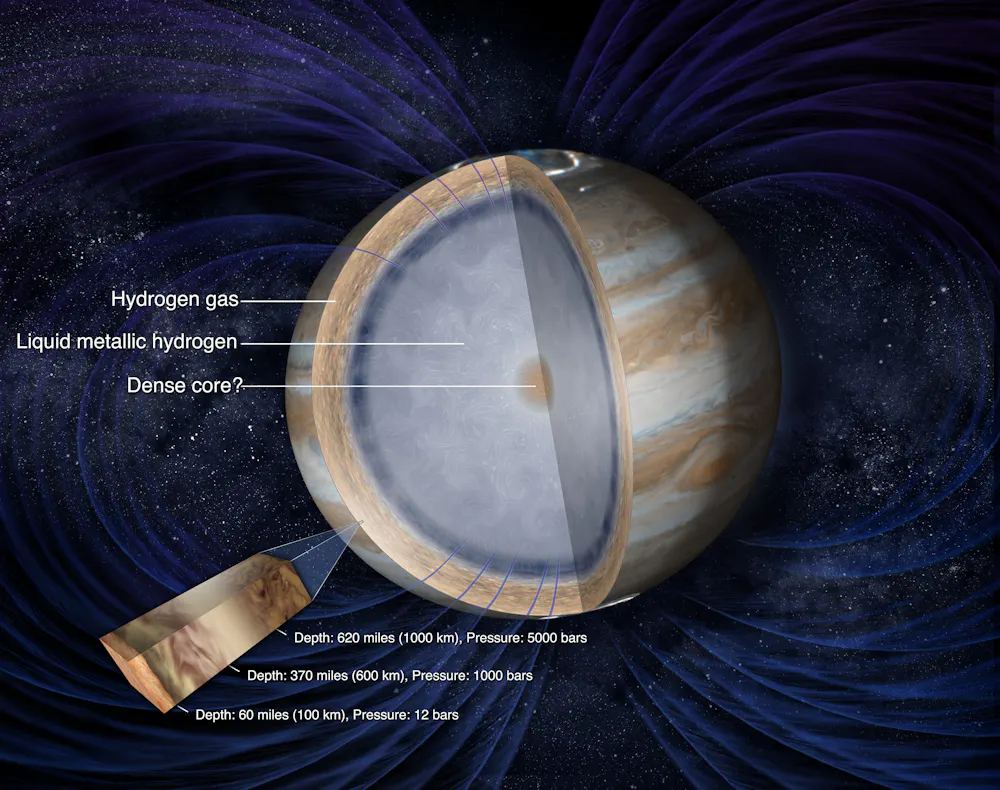
Compare that with Jupiter: Start near the top of its mostly hydrogen and helium atmosphere, and like on Earth, the pressure increases the deeper you go. But on Jupiter, the pressure is immense.

As the layers of gas above you push down more and more, it’s like being at the bottom of the ocean. But instead of water, you’re surrounded by gas. The pressure becomes so intense that the human body would implode: You would be squashed.

Go down 1,000 miles (1,600 km), and the hot, dense gas begins to behave strangely. Eventually, the gas turns into a form of liquid hydrogen, creating what can be thought of as the largest ocean in the solar system, albeit an ocean without water.

Go down another 20,000 miles (about 32,000 km), and the hydrogen becomes more like flowing liquid metal, a material so exotic that only recently, and with great difficulty, have scientists reproduced it in the laboratory. The atoms in this liquid metallic hydrogen are squeezed so tightly that its electrons are free to roam.

Keep in mind that these layer transitions are gradual, not abrupt. The transition from normal hydrogen gas to liquid hydrogen and then to metallic hydrogen happens slowly and smoothly. At no point is there a sharp boundary, solid material or surface.

An illustration that shows the interior layers of Jupiter, including its core.
An illustration of Jupiter’s interior layers. One bar is approximately equal to the air pressure at sea level on Earth. Image via NASA/ JPL-Caltech.

Scary to the core

Ultimately, you’d reach the core of Jupiter. This is the central region of Jupiter’s interior, and not to be confused with a surface.

Scientists are still debating the exact nature of the core’s material. The most favored model: It’s not solid, like rock, but more like a hot, dense and possibly metallic mixture of liquid and solid.

The pressure at Jupiter’s core is so immense it would be like 100 million Earth atmospheres pressing down on you. Or two Empire State buildings on top of each square inch of your body.

But pressure wouldn’t be your only problem. A spacecraft trying to reach Jupiter’s core would be melted by the extreme heat: 35,000 degrees Fahrenheit (20,000 C). That’s three times hotter than the surface of the sun.

An image of Jupiter featuring brown, beige and orange belts along with the Great Red Spot.
Voyager 1 took this image taken of Jupiter. Note the Great Red Spot, a storm large enough to hold 3 Earths. Image via NASA/ JPL.

Jupiter helps Earth

Jupiter is a weird and forbidding place. But if Jupiter weren’t around, it’s possible human beings might not exist.

That’s because Jupiter acts as a shield for the inner planets of the solar system, including Earth. With its massive gravitational pull, Jupiter has altered the orbit of asteroids and comets for billions of years.

Without Jupiter’s intervention, some of that space debris could have crashed into Earth. If one had been a cataclysmic collision, it could have caused an extinction-level event. Just look at what happened to the dinosaurs.

Maybe Jupiter gave an assist to our existence, but the planet itself is extraordinarily inhospitable to life. At least, life as we know it.

The same is not the case with a Jupiter moon, Europa, perhaps our best chance to find life elsewhere in the solar system.

NASA’s Europa Clipper, a robotic probe that launched in October 2024, will do about 50 flybys over that moon to study its enormous underground ocean.

Could something be living in Europa’s water? Scientists won’t know for a while. Because of Jupiter’s distance from Earth, the probe won’t arrive until April 2030.

The Conversation

Benjamin Roulston, Clarkson University

This article is republished from The Conversation under a Creative Commons license. Read the original article.

Bottom line: Jupiter doesn’t have a surface. It’s a gas giant planet with a hostile interior. But if Jupiter didn’t exist, life would probably not exist on Earth.

The post Jupiter doesn’t have a surface. How is that possible? first appeared on EarthSky.


from EarthSky https://ift.tt/l9aIYJS
Jupiter doesn't have a surface: Gray ball on a black background.
NASA’s Juno spacecraft captured this image of Jupiter in 2020. How is it possible that Jupiter doesn’t have a surface? Image via NASA/ JPL-Caltech/ SwRI/ MSSS/ David Marriott.
  • Jupiter is a giant gas planet and the largest planet in our solar system.
  • But Jupiter has no surface. It’s made of gases that get increasingly dense as you head toward the center. Its interior is extremely inhospitable.
  • If Jupiter didn’t exist, life on Earth probably wouldn’t exist either. That’s because Jupiter protects us from incoming asteroids and comets.

By Benjamin Roulston, Clarkson University

Jupiter doesn’t have a surface. But how?

The planet Jupiter has no solid ground or surface, like the grass or dirt you tread here on Earth. There’s nothing to walk on, and no place to land a spaceship. But how can that be? If Jupiter doesn’t have a surface, what does it have? How can it hold together?

Even as a professor of physics who studies all kinds of unusual phenomena, I realize the concept of a world without a surface is difficult to fathom. Yet much about Jupiter remains a mystery, even as NASA’s robotic probe Juno begins its 9th year orbiting this strange planet.

Jupiter’s mass is 2 1/2 times that of all the other planets in the solar system combined.

The 2025 EarthSky Lunar Calendar presale is here! The first 100 purchases are signed by the legendary Deborah Byrd as a thank you. Get yours today!

First, some facts

Jupiter, the fifth planet from the sun, is between Mars and Saturn. It’s the largest planet in the solar system, big enough for more than 1,000 Earths to fit inside, with room to spare.

While the four inner planets of the solar system – Mercury, Venus, Earth and Mars – are all made of solid, rocky material, Jupiter is a gas giant with a composition similar to the sun. It’s a roiling, stormy, wildly turbulent ball of gas. Some places on Jupiter have winds of more than 400 mph (640 km per hour), about three times faster than a Category 5 hurricane on Earth.

A photograph of the planet Jupiter swathed in blue, brown and gold bands.
NASA’s Juno spacecraft took this image of the southern hemisphere of Jupiter in 2017. Image via NASA/ JPL-Caltech/ SwRI/ MSSS/ Gerald Eichstadt/ Sean Doran.

Searching for solid ground

Start from the top of Earth’s atmosphere, go down about 60 miles (roughly 100 km), and the air pressure continuously increases. Ultimately you hit Earth’s surface, either land or water.

Compare that with Jupiter: Start near the top of its mostly hydrogen and helium atmosphere, and like on Earth, the pressure increases the deeper you go. But on Jupiter, the pressure is immense.

As the layers of gas above you push down more and more, it’s like being at the bottom of the ocean. But instead of water, you’re surrounded by gas. The pressure becomes so intense that the human body would implode: You would be squashed.

Go down 1,000 miles (1,600 km), and the hot, dense gas begins to behave strangely. Eventually, the gas turns into a form of liquid hydrogen, creating what can be thought of as the largest ocean in the solar system, albeit an ocean without water.

Go down another 20,000 miles (about 32,000 km), and the hydrogen becomes more like flowing liquid metal, a material so exotic that only recently, and with great difficulty, have scientists reproduced it in the laboratory. The atoms in this liquid metallic hydrogen are squeezed so tightly that its electrons are free to roam.

Keep in mind that these layer transitions are gradual, not abrupt. The transition from normal hydrogen gas to liquid hydrogen and then to metallic hydrogen happens slowly and smoothly. At no point is there a sharp boundary, solid material or surface.

An illustration that shows the interior layers of Jupiter, including its core.
An illustration of Jupiter’s interior layers. One bar is approximately equal to the air pressure at sea level on Earth. Image via NASA/ JPL-Caltech.

Scary to the core

Ultimately, you’d reach the core of Jupiter. This is the central region of Jupiter’s interior, and not to be confused with a surface.

Scientists are still debating the exact nature of the core’s material. The most favored model: It’s not solid, like rock, but more like a hot, dense and possibly metallic mixture of liquid and solid.

The pressure at Jupiter’s core is so immense it would be like 100 million Earth atmospheres pressing down on you. Or two Empire State buildings on top of each square inch of your body.

But pressure wouldn’t be your only problem. A spacecraft trying to reach Jupiter’s core would be melted by the extreme heat: 35,000 degrees Fahrenheit (20,000 C). That’s three times hotter than the surface of the sun.

An image of Jupiter featuring brown, beige and orange belts along with the Great Red Spot.
Voyager 1 took this image taken of Jupiter. Note the Great Red Spot, a storm large enough to hold 3 Earths. Image via NASA/ JPL.

Jupiter helps Earth

Jupiter is a weird and forbidding place. But if Jupiter weren’t around, it’s possible human beings might not exist.

That’s because Jupiter acts as a shield for the inner planets of the solar system, including Earth. With its massive gravitational pull, Jupiter has altered the orbit of asteroids and comets for billions of years.

Without Jupiter’s intervention, some of that space debris could have crashed into Earth. If one had been a cataclysmic collision, it could have caused an extinction-level event. Just look at what happened to the dinosaurs.

Maybe Jupiter gave an assist to our existence, but the planet itself is extraordinarily inhospitable to life. At least, life as we know it.

The same is not the case with a Jupiter moon, Europa, perhaps our best chance to find life elsewhere in the solar system.

NASA’s Europa Clipper, a robotic probe that launched in October 2024, will do about 50 flybys over that moon to study its enormous underground ocean.

Could something be living in Europa’s water? Scientists won’t know for a while. Because of Jupiter’s distance from Earth, the probe won’t arrive until April 2030.

The Conversation

Benjamin Roulston, Clarkson University

This article is republished from The Conversation under a Creative Commons license. Read the original article.

Bottom line: Jupiter doesn’t have a surface. It’s a gas giant planet with a hostile interior. But if Jupiter didn’t exist, life would probably not exist on Earth.

The post Jupiter doesn’t have a surface. How is that possible? first appeared on EarthSky.


from EarthSky https://ift.tt/l9aIYJS

Black hole went on a feeding frenzy in the early universe


In this 1-minute video, EarthSky’s Will Triggs tells you about a newly discovered black hole that’s consuming matter 40 times faster than scientists thought was possible.

The 2025 EarthSky Lunar Calendar presale is here! The first 100 purchases are signed by the legendary Deborah Byrd as a thank you. Get yours today!

Supermassive black hole on a feeding frenzy

Supermassive black holes can be some billions of times the mass of our sun. They lie at the center of most galaxies and grow by feeding on nearby stars. But there’s a puzzle. How did supermassive black holes in the early universe get to be so big so fast? On November 4, 2024, astronomers at NOIRLab said they found a distant supermassive black hole consuming material 40 times faster than scientists believed was possible. This feeding frenzy might help explain why supermassive black holes could grow so big early in the age of the universe.

The scientists published their peer-reviewed paper in the journal Nature Astronomy on November 4, 2024.

Artwork of a whirling gas in red and white with a dark spot at center as the black hole and a beam of white light projecting outward.
View larger. | Artist’s concept of a supermassive black hole consuming huge amounts of matter and emitting a powerful outflow of gas. A new study found a supermassive black hole in the early universe experienced a feeding frenzy, consuming material 40 times faster than scientists thought was possible. This discovery could help astronomers understand how supermassive black holes grew so quickly in the early universe. Image via NOIRLab/ NSF/ AURA/ J. da Silva/ M. Zamani.

Meet the hungry black hole

LID-568 is the name of the supermassive black hole that lies at the center of a dwarf galaxy existing just 1.5 billion years after the Big Bang. Lead author Hyewon Suh of NOIRLab and team used the Webb space telescope to peer closely at this supermassive black hole. It showed up intensely in X-rays during a Chandra survey.

Webb’s NIRSpec camera can produce an entire spectrum from each individual pixel. This was crucial in getting data from the early universe. Co-author Emanuele Farina at Gemini International Observatory and NOIRLab said:

Owing to its faint nature, the detection of LID-568 would be impossible without JWST. Using the integral field spectrograph was innovative and necessary for getting our observation.

Thus, these observations allowed the team to discover strong gas outflows at the central black hole. These were likely due to a single episode of rapid accretion. Suh said:

This serendipitous result added a new dimension to our understanding of the system and opened up exciting avenues for investigation.

Dwarf galaxy with a closeup inset showing a spinning cloud of dust and a dark spot with a jet.
View larger. | In this artist’s concept we see a dwarf galaxy in the early universe. The inset shows the supermassive black hole at its center that is undergoing a feeding frenzy, gorging on gas and emitting a powerful jet. This supermassive black hole and its dwarf galaxy existed just 1.5 billion years after the Big Bang. Image via NOIRLab/ NSF/ AURA/ J. da Silva/ M. Zamani.

The Eddington limit is not the limit

Previously, astronomers used the Eddington limit to explain the balance between the inward pull of gravity and the outward push of radiation. A black hole can push enough material away that it will cut off its own supply and therefore stop its growth. But LID-568 seems to be consuming matter at 40 times its Eddington limit.

Co-author Julia Scharwächter of NOIRLab said:

This black hole is having a feast. This extreme case shows that a fast-feeding mechanism above the Eddington limit is one of the possible explanations for why we see these very heavy black holes so early in the universe.

So the Eddington limit is not always the limit. LID-568 has shown that black holes can go on feeding frenzies. Suh said:

The discovery of a super-Eddington accreting black hole suggests that a significant portion of mass growth can occur during a single episode of rapid feeding.

So now astronomers will look for more supermassive black holes undergoing feeding frenzies in the early universe. They will appear as nothing more than a few pixels on the best images of the sky available.

Bottom line: A supermassive black hole in the early universe went on a feeding frenzy. It consumied 40 times more material than astronomers thought was possible. This discovery could help answer the puzzle as to why supermassive holes could grow so big so early on in the history of our universe.

Source: A super-Eddington-accreting black hole ~1.5?Gyr after the Big Bang observed with JWST

Via NOIRLab

The post Black hole went on a feeding frenzy in the early universe first appeared on EarthSky.


from EarthSky https://ift.tt/XP3IE9q


In this 1-minute video, EarthSky’s Will Triggs tells you about a newly discovered black hole that’s consuming matter 40 times faster than scientists thought was possible.

The 2025 EarthSky Lunar Calendar presale is here! The first 100 purchases are signed by the legendary Deborah Byrd as a thank you. Get yours today!

Supermassive black hole on a feeding frenzy

Supermassive black holes can be some billions of times the mass of our sun. They lie at the center of most galaxies and grow by feeding on nearby stars. But there’s a puzzle. How did supermassive black holes in the early universe get to be so big so fast? On November 4, 2024, astronomers at NOIRLab said they found a distant supermassive black hole consuming material 40 times faster than scientists believed was possible. This feeding frenzy might help explain why supermassive black holes could grow so big early in the age of the universe.

The scientists published their peer-reviewed paper in the journal Nature Astronomy on November 4, 2024.

Artwork of a whirling gas in red and white with a dark spot at center as the black hole and a beam of white light projecting outward.
View larger. | Artist’s concept of a supermassive black hole consuming huge amounts of matter and emitting a powerful outflow of gas. A new study found a supermassive black hole in the early universe experienced a feeding frenzy, consuming material 40 times faster than scientists thought was possible. This discovery could help astronomers understand how supermassive black holes grew so quickly in the early universe. Image via NOIRLab/ NSF/ AURA/ J. da Silva/ M. Zamani.

Meet the hungry black hole

LID-568 is the name of the supermassive black hole that lies at the center of a dwarf galaxy existing just 1.5 billion years after the Big Bang. Lead author Hyewon Suh of NOIRLab and team used the Webb space telescope to peer closely at this supermassive black hole. It showed up intensely in X-rays during a Chandra survey.

Webb’s NIRSpec camera can produce an entire spectrum from each individual pixel. This was crucial in getting data from the early universe. Co-author Emanuele Farina at Gemini International Observatory and NOIRLab said:

Owing to its faint nature, the detection of LID-568 would be impossible without JWST. Using the integral field spectrograph was innovative and necessary for getting our observation.

Thus, these observations allowed the team to discover strong gas outflows at the central black hole. These were likely due to a single episode of rapid accretion. Suh said:

This serendipitous result added a new dimension to our understanding of the system and opened up exciting avenues for investigation.

Dwarf galaxy with a closeup inset showing a spinning cloud of dust and a dark spot with a jet.
View larger. | In this artist’s concept we see a dwarf galaxy in the early universe. The inset shows the supermassive black hole at its center that is undergoing a feeding frenzy, gorging on gas and emitting a powerful jet. This supermassive black hole and its dwarf galaxy existed just 1.5 billion years after the Big Bang. Image via NOIRLab/ NSF/ AURA/ J. da Silva/ M. Zamani.

The Eddington limit is not the limit

Previously, astronomers used the Eddington limit to explain the balance between the inward pull of gravity and the outward push of radiation. A black hole can push enough material away that it will cut off its own supply and therefore stop its growth. But LID-568 seems to be consuming matter at 40 times its Eddington limit.

Co-author Julia Scharwächter of NOIRLab said:

This black hole is having a feast. This extreme case shows that a fast-feeding mechanism above the Eddington limit is one of the possible explanations for why we see these very heavy black holes so early in the universe.

So the Eddington limit is not always the limit. LID-568 has shown that black holes can go on feeding frenzies. Suh said:

The discovery of a super-Eddington accreting black hole suggests that a significant portion of mass growth can occur during a single episode of rapid feeding.

So now astronomers will look for more supermassive black holes undergoing feeding frenzies in the early universe. They will appear as nothing more than a few pixels on the best images of the sky available.

Bottom line: A supermassive black hole in the early universe went on a feeding frenzy. It consumied 40 times more material than astronomers thought was possible. This discovery could help answer the puzzle as to why supermassive holes could grow so big so early on in the history of our universe.

Source: A super-Eddington-accreting black hole ~1.5?Gyr after the Big Bang observed with JWST

Via NOIRLab

The post Black hole went on a feeding frenzy in the early universe first appeared on EarthSky.


from EarthSky https://ift.tt/XP3IE9q

See the Summer Triangle in the northern autumn sky

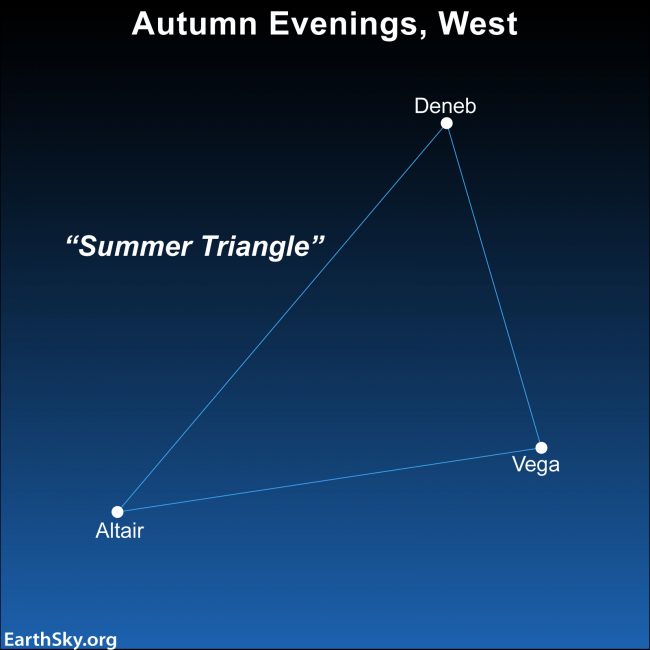
Star chart showing the Summer Triangle with 3 labeled stars.
The Summer Triangle is a famous asterism, consisting of 3 bright stars overhead in northern summer. But you can also easily see it through the northern autumn, and even into winter. Chart via EarthSky.

The 2025 EarthSky Lunar Calendar presale is here! The first 100 purchases are signed by the legendary Deborah Byrd as a thank you. Get yours today!

The Summer Triangle and its 3 stars

The Summer Triangle is the signature star formation in the Northern Hemisphere’s summer sky. However, as the September equinox comes and goes – and as the weeks of autumn begin to slide by – you’ll still notice this famous trio of stars. So, look for the Summer Triangle after dark in early November. It will actually continue to shine after dark in November and December, and is even visible still in January. Look for it tonight in the early evening, high in your western sky.

By the way, the Summer Triangle isn’t a constellation. It’s an asterism, or an obvious pattern or group of stars with a popular name. In fact, the Summer Triangle consists of three bright stars in three separate constellations. The bright star Vega is in Lyra the Harp. Deneb is in Cygnus the Swan. And Altair is in Aquila the Eagle.

In the month of June – around the June solstice – the Summer Triangle pops out in the east as darkness falls and shines all night long. But now – after sunset in November – the Summer Triangle appears high in the western evening sky. As evening deepens, the Summer Triangle descends westward, with all three of its stars staying above the horizon until mid-to-late evening.

Altair – the Summer Triangle’s southernmost star – will set around 10 to 11 p.m. tonight at mid-northern latitudes. Notice where you see the Summer Triangle at a given time this evening. The Summer Triangle will return to this same place in the sky some four minutes earlier with each passing day, or two hours earlier with each passing month.

Look for Orion, too

Then as the Summer Triangle sinks close to the western horizon around mid-evening, turn around to see Orion the Hunter – the signpost constellation of winter – rising in the east.

Bottom line: Look westward this evening for the three brilliant stars of the humongous Summer Triangle: Vega, Deneb and Altair. In fact, you can still see the Summer Triangle through January.

EarthSky astronomy kits are perfect for beginners. Order yours from the EarthSky store.

The post See the Summer Triangle in the northern autumn sky first appeared on EarthSky.


from EarthSky https://ift.tt/UAenhbm
Star chart showing the Summer Triangle with 3 labeled stars.
The Summer Triangle is a famous asterism, consisting of 3 bright stars overhead in northern summer. But you can also easily see it through the northern autumn, and even into winter. Chart via EarthSky.

The 2025 EarthSky Lunar Calendar presale is here! The first 100 purchases are signed by the legendary Deborah Byrd as a thank you. Get yours today!

The Summer Triangle and its 3 stars

The Summer Triangle is the signature star formation in the Northern Hemisphere’s summer sky. However, as the September equinox comes and goes – and as the weeks of autumn begin to slide by – you’ll still notice this famous trio of stars. So, look for the Summer Triangle after dark in early November. It will actually continue to shine after dark in November and December, and is even visible still in January. Look for it tonight in the early evening, high in your western sky.

By the way, the Summer Triangle isn’t a constellation. It’s an asterism, or an obvious pattern or group of stars with a popular name. In fact, the Summer Triangle consists of three bright stars in three separate constellations. The bright star Vega is in Lyra the Harp. Deneb is in Cygnus the Swan. And Altair is in Aquila the Eagle.

In the month of June – around the June solstice – the Summer Triangle pops out in the east as darkness falls and shines all night long. But now – after sunset in November – the Summer Triangle appears high in the western evening sky. As evening deepens, the Summer Triangle descends westward, with all three of its stars staying above the horizon until mid-to-late evening.

Altair – the Summer Triangle’s southernmost star – will set around 10 to 11 p.m. tonight at mid-northern latitudes. Notice where you see the Summer Triangle at a given time this evening. The Summer Triangle will return to this same place in the sky some four minutes earlier with each passing day, or two hours earlier with each passing month.

Look for Orion, too

Then as the Summer Triangle sinks close to the western horizon around mid-evening, turn around to see Orion the Hunter – the signpost constellation of winter – rising in the east.

Bottom line: Look westward this evening for the three brilliant stars of the humongous Summer Triangle: Vega, Deneb and Altair. In fact, you can still see the Summer Triangle through January.

EarthSky astronomy kits are perfect for beginners. Order yours from the EarthSky store.

The post See the Summer Triangle in the northern autumn sky first appeared on EarthSky.


from EarthSky https://ift.tt/UAenhbm

Jupiter’s moons: How to see and enjoy them

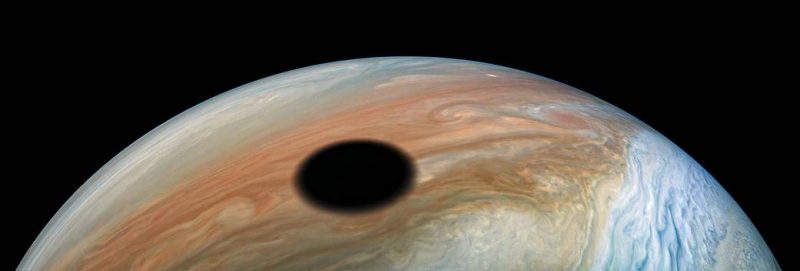
Closeup of part of Jupiter, with a large, black, oval shadow on its colorful bands.
The shadow of Io, one of Jupiter’s moons, is cast on the giant planet’s cloud tops. This image was captured by the JunoCam camera aboard NASA’s Juno spacecraft, currently orbiting Jupiter. The image was acquired on September 19, 2019. Image via NASA/ JPL-Caltech/ SwRI/ MSSS/ Kevin M. Gill (public domain).

Jupiter will be brightest in early December, so now is a good time to look for its 4 largest moons. For more events, visit EarthSky’s night sky guide.

Exciting news, EarthSky family! The 2025 Lunar Calendar Presale is live!

How to see Jupiter’s moons

All you need is a good pair of binoculars (or a telescope) to see the four largest moons of the biggest planet in our solar system, Jupiter.

Three of the four moons are bigger than Earth’s moon. And one – Ganymede – is the largest moon in the solar system. These four satellites are collectively called the Galilean moons to honor the Italian astronomer Galileo, who discovered them in 1610. November 2024 is a great month to look for Jupiter’s four large moons. That’s because the king of planets is nearing opposition – when Earth will sweep between it and the sun – in early December. So the distance between Earth and Jupiter is now less than usual. And Jupiter is bright!

From Earth, through a small telescope or strong binoculars, the moons of Jupiter look like tiny starlike pinpricks of light. But you’ll know they’re not stars because you’ll see them stretched out in a line that bisects the giant planet.

Depending on what sort of optical aid you use, you might glimpse just one moon or see all four. If you see fewer than four moons, that might be because a moon is behind – or in front of – Jupiter. If a moon is in front of the planet, you probably can’t see it. The moon is too tiny and gets lost from our view. But observers do sometimes see a moon shadow crossing Jupiter’s cloud-tops. That event is called a transit.

Going from the moon closest to Jupiter to the outermost, their order going outward from Jupiter is Io, Europa, Ganymede and Callisto.

What you’ll see

Writing at SkyandTelescope.com, Bob King has said:

Etched in my brain cells is an image of a sharp, gleaming disk striped with two dark belts and accompanied by four starlike moons through my 2.4-inch [6 cm] refractor in the winter of 1966. A 6-inch [15 cm] reflector will make you privy to nearly all of the planet’s secrets …

When magnified at 150x or higher [Jupiter’s 4 largest moons] lose their starlike appearance and show disks that range in size from 1.0″ to 1.7″ (arcseconds). Europa is the smallest and Ganymede the largest.

Ganymede also casts the largest shadow on the planet’s cloud tops when it transits in front of Jupiter. Shadow transits are visible at least once a week with ‘double transits’ – two moons casting shadows simultaneously – occurring once or twice a month. Ganymede’s shadow looks like a bullet hole, while little Europa’s more resembles a pinprick. Moons also fade away and then reappear over several minutes when they enter and exit Jupiter’s shadow during eclipse. Or a moon may be occulted by the Jovian disk and hover at the planet’s edge like a pearl before fading from sight.

Images of Jupiter’s moons from the EarthSky community

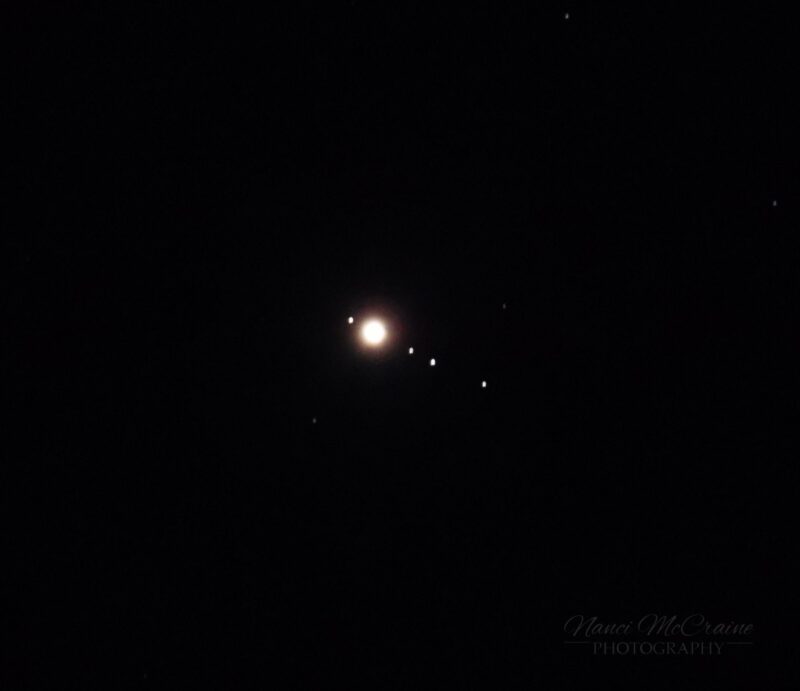
Five white dots in a line on black background, with one of them very much bigger and brighter.
View at EarthSky Community Photos. | Nanci McCraine at Finger Lakes, New York, took this photo on September 30, 2023, and wrote: “I noticed craggy edges around Jupiter. Zooming in, I spotted this line of 4 straight lights across the planet that I assume are satellites.” That is correct! Binoculars or a small telescope will show Jupiter’s moons.
Jupiter's moons: Large banded planet with two labeled dots of light, one on each side.
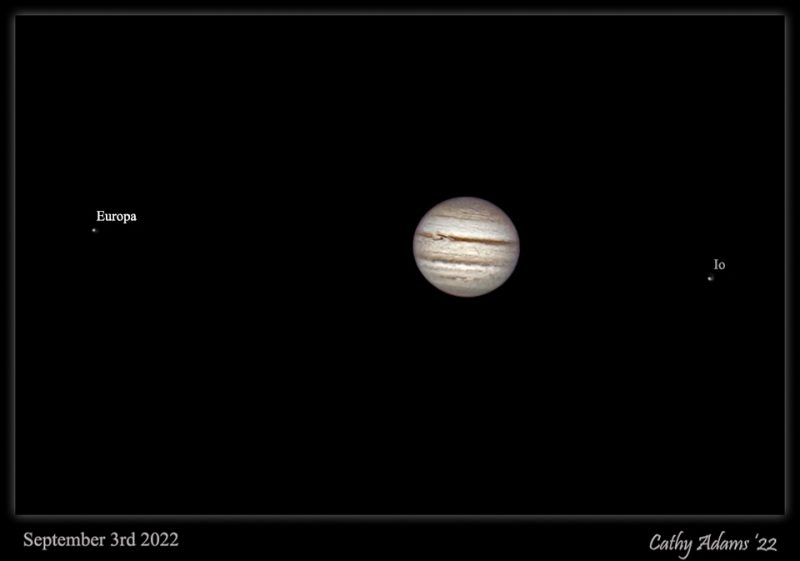
View at EarthSky Community Photos. | Cathy Adams in St. Stephen, New Brunswick, Canada, captured 2 of Jupiter’s moons and giant Jupiter itself on September 3, 2022. Cathy wrote: “After so many cloudy nights I was fortunate to get a beautiful clear one! And it was absolutely wonderful to enjoy a night out observing, and imaging our neighboring planets!!” Thank you, Cathy!
Jupiter with detailed bands and red spot, with 2 little dots of light (its moons) nearby.
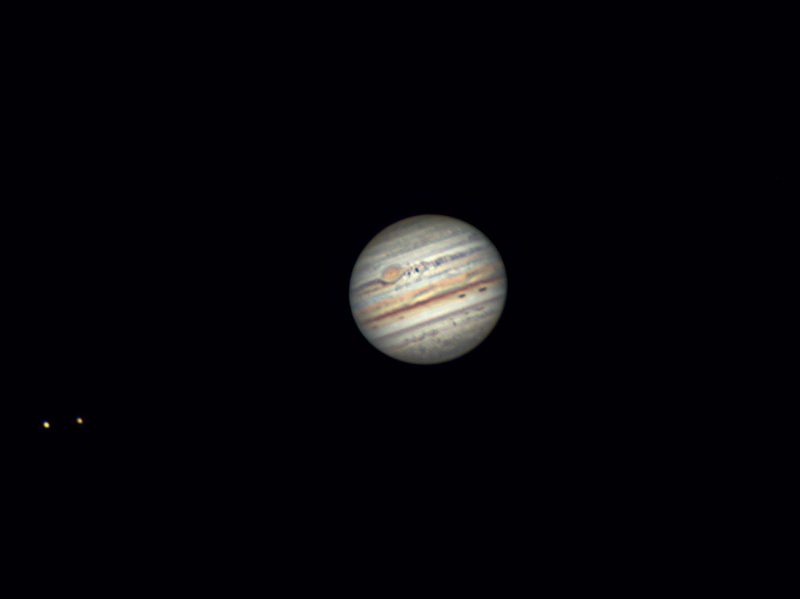
View at EarthSky Community Photos. | Around the time of its yearly opposition, Jupiter is brightest in our sky, best through a telescope, and visible all night. Michael Terhune in Lunenburg, Massachusetts, captured Jupiter in August 2021. He wrote: “My sharpest image of Jupiter! Showing 2 of its Galilean satellites, Io and Europa. The Great Red Spot is also visible.” Thank you, Michael.

More images

3 images with large dot for Jupiter, and 4 small labeled dots in line, for its moons in different positions.
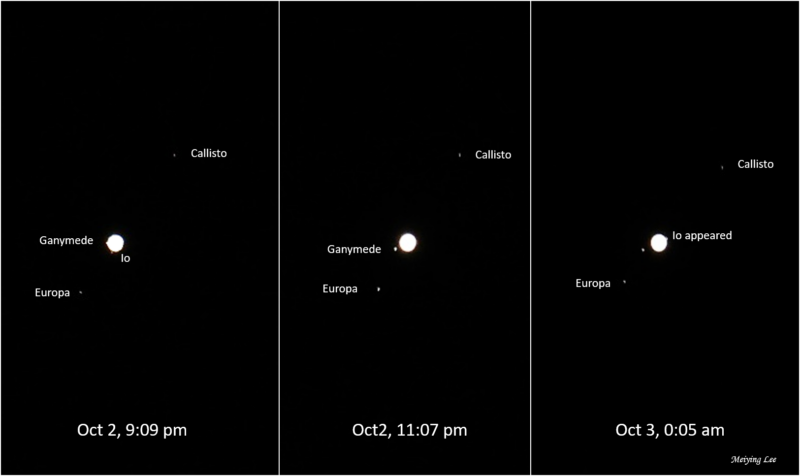
View at EarthSky Community Photos. | Meiying Lee in Taipei, Taiwan, took these images of Jupiter’s 4 largest moons over the course of a single night. She wrote: “I always thought that to see obvious changes in the 4 major satellites of Jupiter would take several nights of continuous observation. Later, I discovered that the Galilean satellites move very fast around Jupiter.” See the volcanic moon Io move behind Jupiter and emerge on the other side just a few hours later? Amazing! Thanks, Meiying.
14 views of Jupiter with little dots for its moons in different positions, with time of night noted.
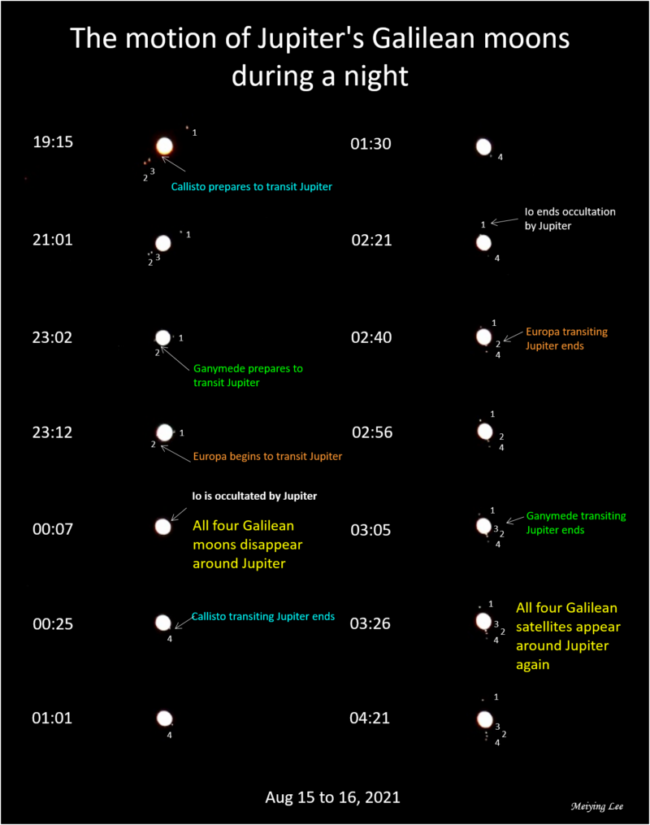
Meiying Lee in Taipei, Taiwan, shared this chart with us on October 6, 2023, and wrote: “From the evening of August 15 to the early morning of August 16, 2021, the Galilean satellites experienced very exciting changes. Callisto, Ganymede, and Europa passed through the surface of Jupiter one after another, while Io was occulted by Jupiter. This resulted in the rare phenomenon that there were no Galilean satellites around Jupiter for 20 minutes late at night on August 16th. Finally, before dawn, the 4 satellites appeared around Jupiter one after another. I watched the Galilean satellites show all night, it was really exciting!” Thank you, Meiying.
Left: A full Jupiter with a black spot. Right: close-up of the moon and its shadow over swirly bands.
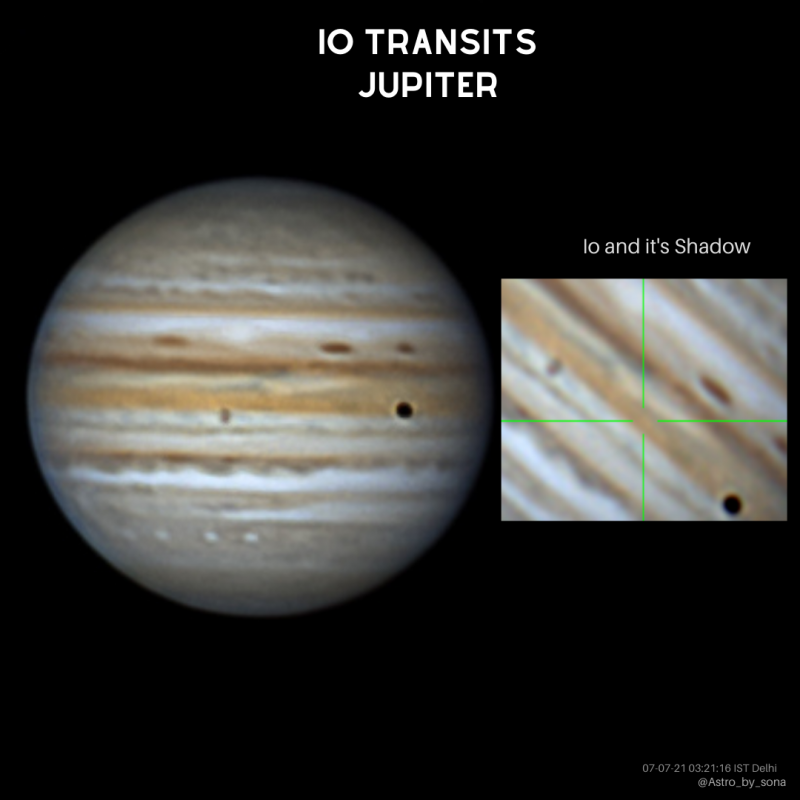
View at EarthSky Community Photos. | Sona Shahani Shukla in New Delhi, India, caught a transit of the innermost Galilean moon, Io, across the face of Jupiter on July 7, 2021, and wrote: “Io appears to be skimming Jupiter’s cloud tops, but it’s actually 310,000 miles (500,000 km) from Jupiter. Io zips around Jupiter in 1.8 days, whereas our moon circles Earth every 28 days. The conspicuous black spot on Jupiter is Io’s shadow and is about the size of the moon itself (2,262 miles or 3,640 km across). This shadow sails across the face of Jupiter at 38,000 mph (17 km per second).” Thank you, Sona!

Special viewings of Jupiter’s moons

As with most moons and planets, the Galilean moons orbit Jupiter around its equator. We do see their orbits almost exactly edge-on, but, as with so much in astronomy, there’s a cycle for viewing the edge-on-ness of Jupiter’s moons. This particular cycle is six years long. So every six years we view Jupiter’s equator – and the moons orbiting above its equator – at the most edge-on. During these special times, we can see the moons eclipse and cast shadows on not just giant Jupiter but on each other.

In 2021 we were able to view a number of mutual events (eclipses and shadow transits) involving Jupiter’s moons. The next cycle of mutual events will be in 2027.

Another special event, a rare triple transit, occurs on October 18, 2025, when three of Jupiter’s moons will pass in front of the giant planet at once. The last time Earth could witness a triple transit was in 2021. Triple transits are not visible from all parts of the globe, however.

You can find information here for dates and times to observe the Galilean moons

Part of Jupiter with Great Red Spot and photos of 4 largest moons, enlarged and colorful, on black background.
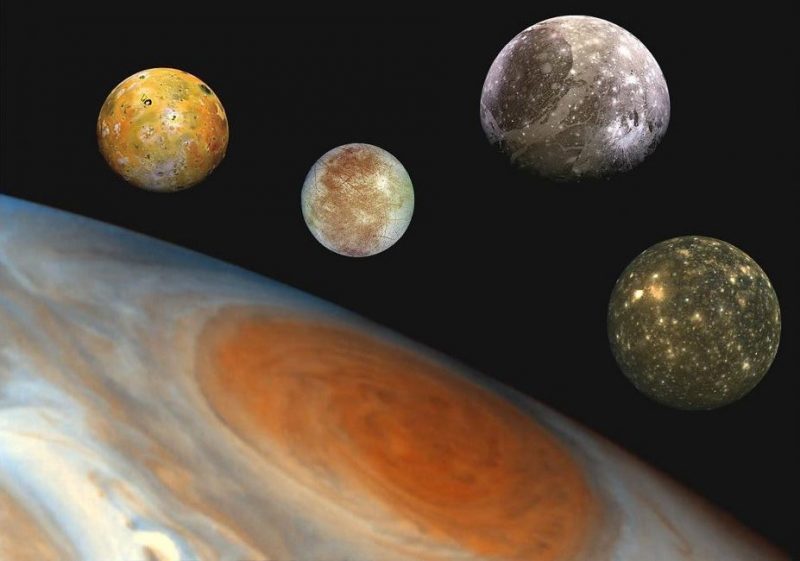
Composite image of Jupiter and its 4 Galilean moons. From left to right the moons are Io, Europa, Ganymede and Callisto. The Galileo spacecraft obtained the images to make this composite in 1996. Image via NASA Photojournal.

Jupiter at opposition in December 2024

On December 7, 2024, Jupiter is at opposition, when the planet is opposite the sun in the sky as seen from Earth. When Earth passes directly between Jupiter and the sun, we’ll see Jupiter rise at sunset and set at sunrise. Opposition is the middle of the best time of the year to see a planet, since that’s when the planet is up and viewable all night and is generally closest for the year. But any time Jupiter is visible in your sky, you can view Jupiter’s four major moons.

So if you get a chance, grab some binoculars or a small telescope and go see Jupiter’s Galilean moons with your own eyes!

Click here for recommended sky almanacs; they can tell you Jupiter’s rising time in your sky.

Diagram: sun and Jupiter with Earth exactly lined up between them.
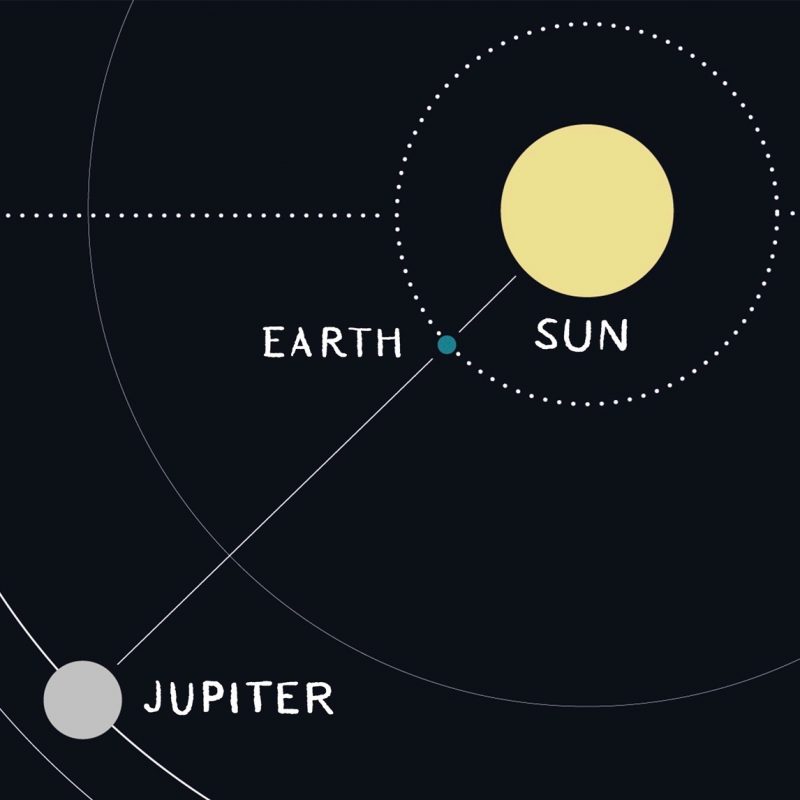
Opposition – when Earth is directly between Jupiter and the sun – is the best time to observe the largest planet and its 4 Galilean moons. In 2024, Jupiter’s opposition is December 7. Image via EarthSky.

Bottom line: November and December 2024 are great months for seeing Jupiter’s moons Io, Europa, Ganymede and Callisto with binoculars or a small telescope.

Check here for dates and times to observe the Great Red Spot

The post Jupiter’s moons: How to see and enjoy them first appeared on EarthSky.


from EarthSky https://ift.tt/ZEqRD8v
Closeup of part of Jupiter, with a large, black, oval shadow on its colorful bands.
The shadow of Io, one of Jupiter’s moons, is cast on the giant planet’s cloud tops. This image was captured by the JunoCam camera aboard NASA’s Juno spacecraft, currently orbiting Jupiter. The image was acquired on September 19, 2019. Image via NASA/ JPL-Caltech/ SwRI/ MSSS/ Kevin M. Gill (public domain).

Jupiter will be brightest in early December, so now is a good time to look for its 4 largest moons. For more events, visit EarthSky’s night sky guide.

Exciting news, EarthSky family! The 2025 Lunar Calendar Presale is live!

How to see Jupiter’s moons

All you need is a good pair of binoculars (or a telescope) to see the four largest moons of the biggest planet in our solar system, Jupiter.

Three of the four moons are bigger than Earth’s moon. And one – Ganymede – is the largest moon in the solar system. These four satellites are collectively called the Galilean moons to honor the Italian astronomer Galileo, who discovered them in 1610. November 2024 is a great month to look for Jupiter’s four large moons. That’s because the king of planets is nearing opposition – when Earth will sweep between it and the sun – in early December. So the distance between Earth and Jupiter is now less than usual. And Jupiter is bright!

From Earth, through a small telescope or strong binoculars, the moons of Jupiter look like tiny starlike pinpricks of light. But you’ll know they’re not stars because you’ll see them stretched out in a line that bisects the giant planet.

Depending on what sort of optical aid you use, you might glimpse just one moon or see all four. If you see fewer than four moons, that might be because a moon is behind – or in front of – Jupiter. If a moon is in front of the planet, you probably can’t see it. The moon is too tiny and gets lost from our view. But observers do sometimes see a moon shadow crossing Jupiter’s cloud-tops. That event is called a transit.

Going from the moon closest to Jupiter to the outermost, their order going outward from Jupiter is Io, Europa, Ganymede and Callisto.

What you’ll see

Writing at SkyandTelescope.com, Bob King has said:

Etched in my brain cells is an image of a sharp, gleaming disk striped with two dark belts and accompanied by four starlike moons through my 2.4-inch [6 cm] refractor in the winter of 1966. A 6-inch [15 cm] reflector will make you privy to nearly all of the planet’s secrets …

When magnified at 150x or higher [Jupiter’s 4 largest moons] lose their starlike appearance and show disks that range in size from 1.0″ to 1.7″ (arcseconds). Europa is the smallest and Ganymede the largest.

Ganymede also casts the largest shadow on the planet’s cloud tops when it transits in front of Jupiter. Shadow transits are visible at least once a week with ‘double transits’ – two moons casting shadows simultaneously – occurring once or twice a month. Ganymede’s shadow looks like a bullet hole, while little Europa’s more resembles a pinprick. Moons also fade away and then reappear over several minutes when they enter and exit Jupiter’s shadow during eclipse. Or a moon may be occulted by the Jovian disk and hover at the planet’s edge like a pearl before fading from sight.

Images of Jupiter’s moons from the EarthSky community

Five white dots in a line on black background, with one of them very much bigger and brighter.
View at EarthSky Community Photos. | Nanci McCraine at Finger Lakes, New York, took this photo on September 30, 2023, and wrote: “I noticed craggy edges around Jupiter. Zooming in, I spotted this line of 4 straight lights across the planet that I assume are satellites.” That is correct! Binoculars or a small telescope will show Jupiter’s moons.
Jupiter's moons: Large banded planet with two labeled dots of light, one on each side.
View at EarthSky Community Photos. | Cathy Adams in St. Stephen, New Brunswick, Canada, captured 2 of Jupiter’s moons and giant Jupiter itself on September 3, 2022. Cathy wrote: “After so many cloudy nights I was fortunate to get a beautiful clear one! And it was absolutely wonderful to enjoy a night out observing, and imaging our neighboring planets!!” Thank you, Cathy!
Jupiter with detailed bands and red spot, with 2 little dots of light (its moons) nearby.
View at EarthSky Community Photos. | Around the time of its yearly opposition, Jupiter is brightest in our sky, best through a telescope, and visible all night. Michael Terhune in Lunenburg, Massachusetts, captured Jupiter in August 2021. He wrote: “My sharpest image of Jupiter! Showing 2 of its Galilean satellites, Io and Europa. The Great Red Spot is also visible.” Thank you, Michael.

More images

3 images with large dot for Jupiter, and 4 small labeled dots in line, for its moons in different positions.
View at EarthSky Community Photos. | Meiying Lee in Taipei, Taiwan, took these images of Jupiter’s 4 largest moons over the course of a single night. She wrote: “I always thought that to see obvious changes in the 4 major satellites of Jupiter would take several nights of continuous observation. Later, I discovered that the Galilean satellites move very fast around Jupiter.” See the volcanic moon Io move behind Jupiter and emerge on the other side just a few hours later? Amazing! Thanks, Meiying.
14 views of Jupiter with little dots for its moons in different positions, with time of night noted.
Meiying Lee in Taipei, Taiwan, shared this chart with us on October 6, 2023, and wrote: “From the evening of August 15 to the early morning of August 16, 2021, the Galilean satellites experienced very exciting changes. Callisto, Ganymede, and Europa passed through the surface of Jupiter one after another, while Io was occulted by Jupiter. This resulted in the rare phenomenon that there were no Galilean satellites around Jupiter for 20 minutes late at night on August 16th. Finally, before dawn, the 4 satellites appeared around Jupiter one after another. I watched the Galilean satellites show all night, it was really exciting!” Thank you, Meiying.
Left: A full Jupiter with a black spot. Right: close-up of the moon and its shadow over swirly bands.
View at EarthSky Community Photos. | Sona Shahani Shukla in New Delhi, India, caught a transit of the innermost Galilean moon, Io, across the face of Jupiter on July 7, 2021, and wrote: “Io appears to be skimming Jupiter’s cloud tops, but it’s actually 310,000 miles (500,000 km) from Jupiter. Io zips around Jupiter in 1.8 days, whereas our moon circles Earth every 28 days. The conspicuous black spot on Jupiter is Io’s shadow and is about the size of the moon itself (2,262 miles or 3,640 km across). This shadow sails across the face of Jupiter at 38,000 mph (17 km per second).” Thank you, Sona!

Special viewings of Jupiter’s moons

As with most moons and planets, the Galilean moons orbit Jupiter around its equator. We do see their orbits almost exactly edge-on, but, as with so much in astronomy, there’s a cycle for viewing the edge-on-ness of Jupiter’s moons. This particular cycle is six years long. So every six years we view Jupiter’s equator – and the moons orbiting above its equator – at the most edge-on. During these special times, we can see the moons eclipse and cast shadows on not just giant Jupiter but on each other.

In 2021 we were able to view a number of mutual events (eclipses and shadow transits) involving Jupiter’s moons. The next cycle of mutual events will be in 2027.

Another special event, a rare triple transit, occurs on October 18, 2025, when three of Jupiter’s moons will pass in front of the giant planet at once. The last time Earth could witness a triple transit was in 2021. Triple transits are not visible from all parts of the globe, however.

You can find information here for dates and times to observe the Galilean moons

Part of Jupiter with Great Red Spot and photos of 4 largest moons, enlarged and colorful, on black background.
Composite image of Jupiter and its 4 Galilean moons. From left to right the moons are Io, Europa, Ganymede and Callisto. The Galileo spacecraft obtained the images to make this composite in 1996. Image via NASA Photojournal.

Jupiter at opposition in December 2024

On December 7, 2024, Jupiter is at opposition, when the planet is opposite the sun in the sky as seen from Earth. When Earth passes directly between Jupiter and the sun, we’ll see Jupiter rise at sunset and set at sunrise. Opposition is the middle of the best time of the year to see a planet, since that’s when the planet is up and viewable all night and is generally closest for the year. But any time Jupiter is visible in your sky, you can view Jupiter’s four major moons.

So if you get a chance, grab some binoculars or a small telescope and go see Jupiter’s Galilean moons with your own eyes!

Click here for recommended sky almanacs; they can tell you Jupiter’s rising time in your sky.

Diagram: sun and Jupiter with Earth exactly lined up between them.
Opposition – when Earth is directly between Jupiter and the sun – is the best time to observe the largest planet and its 4 Galilean moons. In 2024, Jupiter’s opposition is December 7. Image via EarthSky.

Bottom line: November and December 2024 are great months for seeing Jupiter’s moons Io, Europa, Ganymede and Callisto with binoculars or a small telescope.

Check here for dates and times to observe the Great Red Spot

The post Jupiter’s moons: How to see and enjoy them first appeared on EarthSky.


from EarthSky https://ift.tt/ZEqRD8v

Final Parker Solar Probe flyby of Venus today

Parker solar probe flyby: Large, crisp white-edged orb with mottled surface, and short thin white lines against star field.
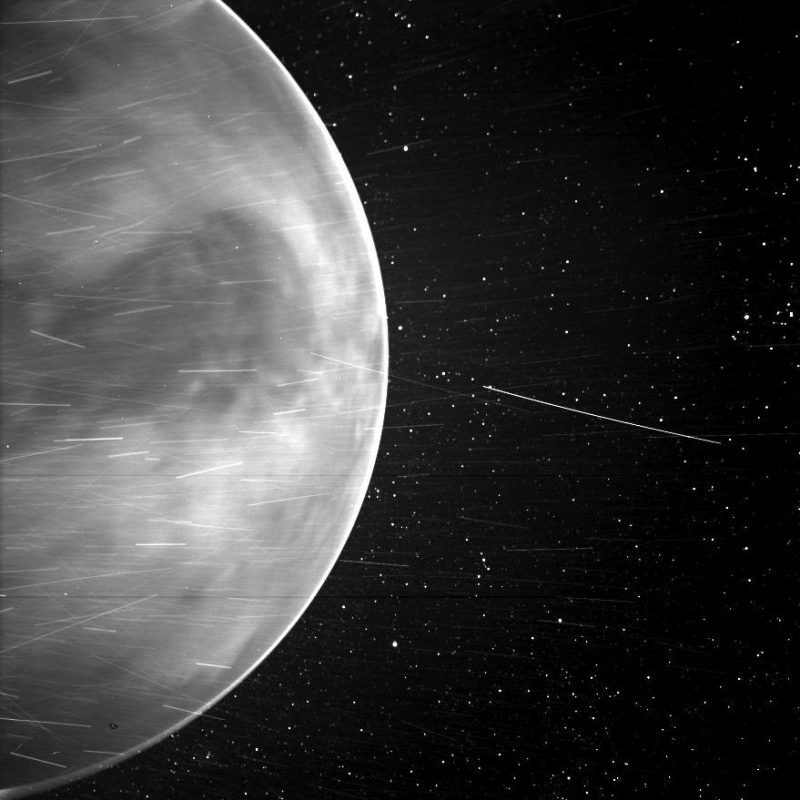
The Parker Solar Probe has been studying the sun since its launch in 2018. The mission has used a series of 7 flybys of Venus to get it in the proper positions. This view of Venus is from the July 2020 Venus flyby. It shows the closest planet to Earth with streaking cosmic rays, dust and background stars. The final Parker Solar Probe flyby of Venus is today, November 6, 2024. Image via NASA.
  • Parker Solar Probe is a mission to study the sun. In 2021 it became the first spacecraft to “touch” the sun, when it flew though our sun’s wispy atmosphere.
  • Parker will flyby Venus today, November 6, 2024, in order to get it into position for its final studies of the sun.
  • The flyby will also allow Parker to see Venus’ surface, even through the thick cloud cover. Previous flybys have shown differences in the Venusian surface from the Magellan mission in the 1990s.

Miles Hatfield wrote this original article for NASA on November 4, 2024. Edits by EarthSky.

Join the 2025 Lunar Calendar presale today to snag a copy signed by the visionary Deborah Byrd herself.

Final Parker Solar Probe flyby of Venus

Today, November 6, 2024, NASA’s Parker Solar Probe will complete its final Venus gravity assist maneuver, passing within 233 miles (375 km) of Venus’ surface. The flyby will adjust Parker’s trajectory into its final orbital configuration, bringing the spacecraft to within an unprecedented 3.8 million miles (6.2 million km) of the solar surface on December 24, 2024. It will be the closest any human-made object has been to the sun.

Parker’s Venus flybys have become boons for new Venus science, thanks to a chance discovery from its Wide-Field Imager for Parker Solar Probe, or WISPR. The instrument peers out from Parker and away from the sun to see fine details in the solar wind. But on July 11, 2020, during Parker’s third Venus flyby, scientists turned WISPR toward Venus in hopes of tracking changes in the planet’s thick cloud cover. The images revealed a surprise: A portion of WISPR’s data, which captures visible and near infrared light, seemed to see all the way through the clouds to the Venusian surface below.

Noam Izenberg, a space scientist at the Johns Hopkins Applied Physics Laboratory in Laurel, Maryland, said:

The WISPR cameras can see through the clouds to the surface of Venus, which glows in the near-infrared because it’s so hot.

Venus, sizzling at approximately 869 degrees Fahrenheit (about 465 C), was radiating through the clouds.

The WISPR images from the 2020 flyby, as well as the next flyby in 2021, revealed Venus’ surface in a new light. But they also raised puzzling questions, and scientists have devised the November 6 flyby to help answer them.

Seeing Venus’ surface

The Venus images correspond well with data from the Magellan spacecraft. The images show dark and light patterns that line up with surface regions Magellan captured when it mapped Venus’ surface using radar from 1990 to 1994. Yet some parts of the WISPR images appear brighter than expected, hinting at extra information captured by WISPR’s data. Is WISPR picking up on chemical differences on the surface, where the ground is made of different material? Perhaps it’s seeing variations in age, where more recent lava flows added a fresh coat to the Venusian surface.

Izenberg said:

Because it flies over a number of similar and different landforms than the previous Venus flybys, the November 6 flyby will give us more context to evaluate whether WISPR can help us distinguish physical or even chemical properties of Venus’ surface.

Left side gray-scale hemisphere with large patches, colorful right side hemisphere with similar patches.
WISPR images from the Parker Solar Probe show the surface of Venus with features in the same places where the Magellan mission from the 1990s revealed topography with its radar. However, some parts of the WISPR images appear brighter than expected. The November 6 flyby will offer more details. Image via NASA.

Next up: Parker’s final explorations of the sun

After the November 6 flyby, Parker will be on course to swoop within 3.8 million miles (6.2 million km) of the solar surface, the final objective of the historic mission first conceived over 65 years ago. No human-made object has ever passed this close to a star, so Parker’s data will be charting as-yet uncharted territory. In this hyper-close regime, Parker will cut through plumes of plasma still connected to the sun. It is close enough to pass inside a solar eruption, like a surfer diving under a crashing ocean wave.

Adam Szabo, project scientist for Parker Solar Probe at NASA’s Goddard Space Flight Center in Greenbelt, Maryland, said:

This is a major engineering accomplishment.

The closest approach to the sun, or perihelion, will occur on December 24, 2024. At that time, mission control will be out of contact with the spacecraft. Parker will send a beacon tone on December 27, 2024, to confirm its success and the spacecraft’s health. Parker will remain in this orbit for the remainder of its mission, completing two more perihelia at the same distance.

Bottom line: The final Parker Solar Probe flyby of Venus happens on November 6, 2024. Previous flybys of Venus have shown surface features beneath the planet’s thick clouds. What will the final flyby reveal?

Via NASA

Read more: Parker Solar Probe: 1st spacecraft to touch sun

Read more: Parker Solar Probe captures a glimpse of Venus

The post Final Parker Solar Probe flyby of Venus today first appeared on EarthSky.


from EarthSky https://ift.tt/vfFLeyl
Parker solar probe flyby: Large, crisp white-edged orb with mottled surface, and short thin white lines against star field.
The Parker Solar Probe has been studying the sun since its launch in 2018. The mission has used a series of 7 flybys of Venus to get it in the proper positions. This view of Venus is from the July 2020 Venus flyby. It shows the closest planet to Earth with streaking cosmic rays, dust and background stars. The final Parker Solar Probe flyby of Venus is today, November 6, 2024. Image via NASA.
  • Parker Solar Probe is a mission to study the sun. In 2021 it became the first spacecraft to “touch” the sun, when it flew though our sun’s wispy atmosphere.
  • Parker will flyby Venus today, November 6, 2024, in order to get it into position for its final studies of the sun.
  • The flyby will also allow Parker to see Venus’ surface, even through the thick cloud cover. Previous flybys have shown differences in the Venusian surface from the Magellan mission in the 1990s.

Miles Hatfield wrote this original article for NASA on November 4, 2024. Edits by EarthSky.

Join the 2025 Lunar Calendar presale today to snag a copy signed by the visionary Deborah Byrd herself.

Final Parker Solar Probe flyby of Venus

Today, November 6, 2024, NASA’s Parker Solar Probe will complete its final Venus gravity assist maneuver, passing within 233 miles (375 km) of Venus’ surface. The flyby will adjust Parker’s trajectory into its final orbital configuration, bringing the spacecraft to within an unprecedented 3.8 million miles (6.2 million km) of the solar surface on December 24, 2024. It will be the closest any human-made object has been to the sun.

Parker’s Venus flybys have become boons for new Venus science, thanks to a chance discovery from its Wide-Field Imager for Parker Solar Probe, or WISPR. The instrument peers out from Parker and away from the sun to see fine details in the solar wind. But on July 11, 2020, during Parker’s third Venus flyby, scientists turned WISPR toward Venus in hopes of tracking changes in the planet’s thick cloud cover. The images revealed a surprise: A portion of WISPR’s data, which captures visible and near infrared light, seemed to see all the way through the clouds to the Venusian surface below.

Noam Izenberg, a space scientist at the Johns Hopkins Applied Physics Laboratory in Laurel, Maryland, said:

The WISPR cameras can see through the clouds to the surface of Venus, which glows in the near-infrared because it’s so hot.

Venus, sizzling at approximately 869 degrees Fahrenheit (about 465 C), was radiating through the clouds.

The WISPR images from the 2020 flyby, as well as the next flyby in 2021, revealed Venus’ surface in a new light. But they also raised puzzling questions, and scientists have devised the November 6 flyby to help answer them.

Seeing Venus’ surface

The Venus images correspond well with data from the Magellan spacecraft. The images show dark and light patterns that line up with surface regions Magellan captured when it mapped Venus’ surface using radar from 1990 to 1994. Yet some parts of the WISPR images appear brighter than expected, hinting at extra information captured by WISPR’s data. Is WISPR picking up on chemical differences on the surface, where the ground is made of different material? Perhaps it’s seeing variations in age, where more recent lava flows added a fresh coat to the Venusian surface.

Izenberg said:

Because it flies over a number of similar and different landforms than the previous Venus flybys, the November 6 flyby will give us more context to evaluate whether WISPR can help us distinguish physical or even chemical properties of Venus’ surface.

Left side gray-scale hemisphere with large patches, colorful right side hemisphere with similar patches.
WISPR images from the Parker Solar Probe show the surface of Venus with features in the same places where the Magellan mission from the 1990s revealed topography with its radar. However, some parts of the WISPR images appear brighter than expected. The November 6 flyby will offer more details. Image via NASA.

Next up: Parker’s final explorations of the sun

After the November 6 flyby, Parker will be on course to swoop within 3.8 million miles (6.2 million km) of the solar surface, the final objective of the historic mission first conceived over 65 years ago. No human-made object has ever passed this close to a star, so Parker’s data will be charting as-yet uncharted territory. In this hyper-close regime, Parker will cut through plumes of plasma still connected to the sun. It is close enough to pass inside a solar eruption, like a surfer diving under a crashing ocean wave.

Adam Szabo, project scientist for Parker Solar Probe at NASA’s Goddard Space Flight Center in Greenbelt, Maryland, said:

This is a major engineering accomplishment.

The closest approach to the sun, or perihelion, will occur on December 24, 2024. At that time, mission control will be out of contact with the spacecraft. Parker will send a beacon tone on December 27, 2024, to confirm its success and the spacecraft’s health. Parker will remain in this orbit for the remainder of its mission, completing two more perihelia at the same distance.

Bottom line: The final Parker Solar Probe flyby of Venus happens on November 6, 2024. Previous flybys of Venus have shown surface features beneath the planet’s thick clouds. What will the final flyby reveal?

Via NASA

Read more: Parker Solar Probe: 1st spacecraft to touch sun

Read more: Parker Solar Probe captures a glimpse of Venus

The post Final Parker Solar Probe flyby of Venus today first appeared on EarthSky.


from EarthSky https://ift.tt/vfFLeyl

First 3D view of globular cluster formation and evolution

3D view of globular cluster: 16 boxes with images of ball-shaped star clusters dense at center and looser at edges.
Scientists analyzed the motion of how stars move inside these 16 globular clusters that orbit our Milky Way galaxy. The result was the first 3D view of globular cluster formation and evolution. Image via ESA/ Hubble/ ESO/ SDSS/ INAF.

First 3D view of globular cluster formation and evolution

Globular clusters are giant balls of millions of stars held together by gravity and orbiting in the halo of our Milky Way galaxy. On November 5, 2024, scientists from the National Institute for Astrophysics (INAF), the University of Bologna and Indiana University said they’ve conducted the first 3D analysis of how stars move within 16 globular clusters. Their study adds to the understanding of the formation and evolution of these massive stellar groups.

The scientists published their study in the peer-reviewed journal Astronomy & Astrophysics on November 5, 2024.

Lead author Emanuele Dalessandro of INAF said:

Understanding the physical processes behind the formation and early evolution of globular clusters is one of the most fascinating and debated astrophysical questions of the past 20 to 25 years. The results of our study provide the first solid evidence that globular clusters formed through multiple star formation events. And it places fundamental constraints on the dynamical path followed by the clusters throughout their evolution. These results were possible thanks to a multi-diagnostic approach and the combination of state-of-the-art observations and dynamic simulations.

Understanding globular clusters

Globular clusters contain the most ancient stars in our Milky Way. They can be 12 to 13 billion years old. And stars in globular clusters probably formed first, as our galaxy was forming. But globular clusters aren’t just residents of our galaxy. We’ve seen them even in distant galaxies. In fact, globular clusters were probably some of the first systems to evolve as the universe began. But how they came to be is still a mystery.

Dalessandro said:

Their astrophysical significance is huge because they not only help us to test cosmological models of the formation of the universe due to their age but also provide natural laboratories for studying the formation, evolution and chemical enrichment of galaxies.

Co-author Mario Cadelano of the University of Bologna and INAF associate added:

Results obtained in the last two decades have unexpectedly shown that globular clusters consist of more than one stellar population: a primordial one, with chemical properties similar to other stars in the galaxy, and another with anomalous chemical abundances of light elements such as helium, oxygen, sodium and nitrogen. Despite the large number of observations and theoretical models aimed at characterizing these populations, the mechanisms regulating their formation are still not understood.

Milky Way background with dish-shaped spacecraft in the foreground with large protrusion.
ESA’s Gaia mapping the stars of the Milky Way. Image via ESA/ ATG medialab. Background ESO/ S. Brunier.

Obtaining the 3D view of globular cluster motions

The scientists looked at the proper motion of stars in globular clusters, along with their radial velocities. To do so, they used data from telescopes such as ESA’s Gaia and ESO’s VLT. Co-author Alessandro Della Croce of INAF said:

In this work, we analyzed in detail the motion of thousands of stars within each cluster. It quickly became clear that stars belonging to different populations have distinct kinematic properties [or movements]: stars with anomalous chemical composition tend to rotate faster than the others within the cluster and progressively spread from the central regions to the outer ones.

Croce added:

These results are consistent with the long-term dynamical evolution of stellar systems, in which stars with anomalous chemical abundances form more centrally concentrated and rotate more rapidly than the standard ones. This, in turn, suggests that globular clusters formed through multiple star formation episodes and provides an important piece of information in defining the physical processes and timescales underlying the formation and evolution of massive stellar clusters.

These new insights help astronomers better understand how these ancient globular clusters formed and evolved and fit into the history of our galaxy and the wider universe.

Four observatories under a starry sky, one with an orange laser pointing heavenward.
The ESO Very Large Telescope (VLT) during observations. Image via ESO/ S. Brunier.

Bottom line: For the first time, astronomers have analyzed a 3D view of globular cluster formation and evolution by tracking the motions of the star systems within.

Source: A 3D view of multiple populations kinematics in Galactic globular clusters

Via INAF

The post First 3D view of globular cluster formation and evolution first appeared on EarthSky.


from EarthSky https://ift.tt/QgZRAF7
3D view of globular cluster: 16 boxes with images of ball-shaped star clusters dense at center and looser at edges.
Scientists analyzed the motion of how stars move inside these 16 globular clusters that orbit our Milky Way galaxy. The result was the first 3D view of globular cluster formation and evolution. Image via ESA/ Hubble/ ESO/ SDSS/ INAF.

First 3D view of globular cluster formation and evolution

Globular clusters are giant balls of millions of stars held together by gravity and orbiting in the halo of our Milky Way galaxy. On November 5, 2024, scientists from the National Institute for Astrophysics (INAF), the University of Bologna and Indiana University said they’ve conducted the first 3D analysis of how stars move within 16 globular clusters. Their study adds to the understanding of the formation and evolution of these massive stellar groups.

The scientists published their study in the peer-reviewed journal Astronomy & Astrophysics on November 5, 2024.

Lead author Emanuele Dalessandro of INAF said:

Understanding the physical processes behind the formation and early evolution of globular clusters is one of the most fascinating and debated astrophysical questions of the past 20 to 25 years. The results of our study provide the first solid evidence that globular clusters formed through multiple star formation events. And it places fundamental constraints on the dynamical path followed by the clusters throughout their evolution. These results were possible thanks to a multi-diagnostic approach and the combination of state-of-the-art observations and dynamic simulations.

Understanding globular clusters

Globular clusters contain the most ancient stars in our Milky Way. They can be 12 to 13 billion years old. And stars in globular clusters probably formed first, as our galaxy was forming. But globular clusters aren’t just residents of our galaxy. We’ve seen them even in distant galaxies. In fact, globular clusters were probably some of the first systems to evolve as the universe began. But how they came to be is still a mystery.

Dalessandro said:

Their astrophysical significance is huge because they not only help us to test cosmological models of the formation of the universe due to their age but also provide natural laboratories for studying the formation, evolution and chemical enrichment of galaxies.

Co-author Mario Cadelano of the University of Bologna and INAF associate added:

Results obtained in the last two decades have unexpectedly shown that globular clusters consist of more than one stellar population: a primordial one, with chemical properties similar to other stars in the galaxy, and another with anomalous chemical abundances of light elements such as helium, oxygen, sodium and nitrogen. Despite the large number of observations and theoretical models aimed at characterizing these populations, the mechanisms regulating their formation are still not understood.

Milky Way background with dish-shaped spacecraft in the foreground with large protrusion.
ESA’s Gaia mapping the stars of the Milky Way. Image via ESA/ ATG medialab. Background ESO/ S. Brunier.

Obtaining the 3D view of globular cluster motions

The scientists looked at the proper motion of stars in globular clusters, along with their radial velocities. To do so, they used data from telescopes such as ESA’s Gaia and ESO’s VLT. Co-author Alessandro Della Croce of INAF said:

In this work, we analyzed in detail the motion of thousands of stars within each cluster. It quickly became clear that stars belonging to different populations have distinct kinematic properties [or movements]: stars with anomalous chemical composition tend to rotate faster than the others within the cluster and progressively spread from the central regions to the outer ones.

Croce added:

These results are consistent with the long-term dynamical evolution of stellar systems, in which stars with anomalous chemical abundances form more centrally concentrated and rotate more rapidly than the standard ones. This, in turn, suggests that globular clusters formed through multiple star formation episodes and provides an important piece of information in defining the physical processes and timescales underlying the formation and evolution of massive stellar clusters.

These new insights help astronomers better understand how these ancient globular clusters formed and evolved and fit into the history of our galaxy and the wider universe.

Four observatories under a starry sky, one with an orange laser pointing heavenward.
The ESO Very Large Telescope (VLT) during observations. Image via ESO/ S. Brunier.

Bottom line: For the first time, astronomers have analyzed a 3D view of globular cluster formation and evolution by tracking the motions of the star systems within.

Source: A 3D view of multiple populations kinematics in Galactic globular clusters

Via INAF

The post First 3D view of globular cluster formation and evolution first appeared on EarthSky.


from EarthSky https://ift.tt/QgZRAF7

Could we find dark matter in clouds around neutron stars?

Dark matter: Many twisting, delicate threads of dark matter material in blue, with glowing nodes, on black background.
Artist’s concept of dark matter, as if we could easily see it. A new study says we might be able to see dark matter in the form of axions – hypothetical subatomic particles – clouding around neutron stars. Image via United States Department of Energy/ Wikimedia Commons (public domain).

The 2025 EarthSky Lunar Calendar presale is here! First 100 purchases signed by the legendary Deborah Byrd as a thank you. Get yours today!

Looking for dark matter

It’s thought that around 85% of all matter in the universe is dark matter. We can’t see this mysterious substance, or detect it with any currently known method … but we think it exists because we can measure its gravitational effects on normal matter. A leading theory says that dark matter could be composed of axions: hypothetical subatomic particles that have not yet been detected.

On October 17, 2024, a team of physicists from the universities of Amsterdam, Princeton and Oxford said that axions should form dense clouds around neutron stars. And if so, we might be able to observe these dark matter candidates through today’s telescopes.

In October 2023, the same researchers theorized that it’s possible to detect axions that have escaped from a neutron star. Now, their followup study focuses on the axions that wouldn’t be able to escape the star’s gravity. They published their peer-reviewed findings in the journal Physical Review X on October 17, 2024.

Diagram with blue sphere in the center surrounded by magnetic lines and arrows representing escaping axions.
A hypothetical axion cloud around a neutron star. The team’s previous study focused on the axions leaving the neutron star, but now they’re considering the axions that would be stuck within the star’s intense magnetic field. Image via D. Noordhuis et al./ University of Amsterdam.

Dark matter: A missing piece

When faced with a gap in our theories about how the universe works, physicists sometimes come up with something entirely new to fill the hole. In the early 20th century, various astronomers found that the universe must contain more mass than we can see. And in the 1960s, astronomer Vera Rubin discovered that galaxies rotate so fast their mass shouldn’t prevent them from flying apart.

The only way to explain these discrepancies was to hypothesize the existence of a new, unseen form of matter: dark matter. This unknown and strange substance has not yet been found, but if it is discovered, it would solve a long list of problems.

In the 1970s, scientists came up with axions to explain an inconsistency in the way neutrons should function according to the Standard Model of particle physics. The Standard Model is our best guess at how the universe works at a fundamental level, but it’s not perfect. And the existence of axions would help clean up one of its mysteries, which is why they were named after a brand of soap!

Another intriguing thing about axions is that they might also solve the conundrum of what is dark matter. Dark matter is seemingly invisible because it doesn’t interact with light or matter. But there’s a chance it does interact with axions, just incredibly weakly. And axions also seem to be invisible and would also interact incredibly weakly with other particles. Coincidence? Some scientists think not. So they believe axions could be an explanation for dark matter.

Observing axions

If axions do exist, how can scientists observe them? The solution, according to the researchers, lies with neutron stars.

Neutron stars are some of the most bizarre phenomena in the known universe. They’re the small, super-dense objects left over when massive stars explode as supernovae and their cores collapse. They typically have about 1.4 times our sun’s mass that’s squeezed into a sphere roughly 12-25 miles (20-40 kilometers) across. So they’re incredibly dense. In fact, a teaspoon of neutron star material weighs more than Mount Everest.

When a star’s core collapses down to form a neutron star, its magnetic field lines compress. That makes its magnetism stronger. A neutron star’s magnetic field is one of the strongest in the universe, billions of times stronger than any on Earth.

That’s important, because scientists believe axions should transform into light particles when exposed to a strong-enough magnetic field. The amount of light that a single axion could produce would barely register. But a huge amount of axions – in contact with a hugely powerful magnetic field – should produce enough light that today’s radio telescopes could see it.

Glowing aqua sphere superimposed over satellite view of Manhattan.
This illustration compares the size of a neutron star to Manhattan Island in New York, which is about 13 miles (21 km) long. Image via NASA/ Goddard Space Flight Center.

Clouds of dark matter?

And it turns out neutron stars could produce a lot of axions. In their original October 2023 study, the researchers found that pulsars – rapidly spinning neutron stars – could produce a 50-digit number of axions every second. They went on to explore the possibility of detecting some of these axions as they escape the neutron star.

Their new study focuses on the axions that stay behind. This idea relies on another extreme property of neutron stars: their immense gravity. As you might expect given their density, neutron stars have an incredibly strong gravitational pull. And, since axions interact with gravity, that makes neutron stars excellent axion traps.

For the same reason, black holes are also thought to collect huge numbers of axions. But the gravity of black holes is so much that they would also absorb what they capture. Neutron stars are thought to have just the right gravitational force to capture and hold axions around them. And since axions interact very weakly with other particles, the researchers think they would simply accumulate around the neutron star. Over millions of years, they would theoretically form a dense cloud, providing the perfect opportunity for scientists to detect them.

Making the detection

There are two main ways that scientists could detect light from axion clouds. It could be visible as a continuous signal emitted during much of a neutron star’s lifetime. Or it could appear as a one-time burst of light at the end of the neutron star’s life.

Importantly, the researchers said that axion clouds would be generic and should theoretically occur around any neutron star.

So far, axion clouds have not been observed. But the researchers now know what they’re looking for. And if they find direct evidence of axions, it will be a major step in answering several of physics’ biggest problems.

Bottom line: Researchers say that we might be able to detect dark matter clouding around neutron stars in the form of axions, a hypothetical subatomic particle.

Source: Axion Clouds around Neutron Stars

Via University of Amsterdam

Read more: Can we detect dark matter using light from pulsars?

Dark matter black holes could make Mars wobble

The post Could we find dark matter in clouds around neutron stars? first appeared on EarthSky.


from EarthSky https://ift.tt/WJgdUc4
Dark matter: Many twisting, delicate threads of dark matter material in blue, with glowing nodes, on black background.
Artist’s concept of dark matter, as if we could easily see it. A new study says we might be able to see dark matter in the form of axions – hypothetical subatomic particles – clouding around neutron stars. Image via United States Department of Energy/ Wikimedia Commons (public domain).

The 2025 EarthSky Lunar Calendar presale is here! First 100 purchases signed by the legendary Deborah Byrd as a thank you. Get yours today!

Looking for dark matter

It’s thought that around 85% of all matter in the universe is dark matter. We can’t see this mysterious substance, or detect it with any currently known method … but we think it exists because we can measure its gravitational effects on normal matter. A leading theory says that dark matter could be composed of axions: hypothetical subatomic particles that have not yet been detected.

On October 17, 2024, a team of physicists from the universities of Amsterdam, Princeton and Oxford said that axions should form dense clouds around neutron stars. And if so, we might be able to observe these dark matter candidates through today’s telescopes.

In October 2023, the same researchers theorized that it’s possible to detect axions that have escaped from a neutron star. Now, their followup study focuses on the axions that wouldn’t be able to escape the star’s gravity. They published their peer-reviewed findings in the journal Physical Review X on October 17, 2024.

Diagram with blue sphere in the center surrounded by magnetic lines and arrows representing escaping axions.
A hypothetical axion cloud around a neutron star. The team’s previous study focused on the axions leaving the neutron star, but now they’re considering the axions that would be stuck within the star’s intense magnetic field. Image via D. Noordhuis et al./ University of Amsterdam.

Dark matter: A missing piece

When faced with a gap in our theories about how the universe works, physicists sometimes come up with something entirely new to fill the hole. In the early 20th century, various astronomers found that the universe must contain more mass than we can see. And in the 1960s, astronomer Vera Rubin discovered that galaxies rotate so fast their mass shouldn’t prevent them from flying apart.

The only way to explain these discrepancies was to hypothesize the existence of a new, unseen form of matter: dark matter. This unknown and strange substance has not yet been found, but if it is discovered, it would solve a long list of problems.

In the 1970s, scientists came up with axions to explain an inconsistency in the way neutrons should function according to the Standard Model of particle physics. The Standard Model is our best guess at how the universe works at a fundamental level, but it’s not perfect. And the existence of axions would help clean up one of its mysteries, which is why they were named after a brand of soap!

Another intriguing thing about axions is that they might also solve the conundrum of what is dark matter. Dark matter is seemingly invisible because it doesn’t interact with light or matter. But there’s a chance it does interact with axions, just incredibly weakly. And axions also seem to be invisible and would also interact incredibly weakly with other particles. Coincidence? Some scientists think not. So they believe axions could be an explanation for dark matter.

Observing axions

If axions do exist, how can scientists observe them? The solution, according to the researchers, lies with neutron stars.

Neutron stars are some of the most bizarre phenomena in the known universe. They’re the small, super-dense objects left over when massive stars explode as supernovae and their cores collapse. They typically have about 1.4 times our sun’s mass that’s squeezed into a sphere roughly 12-25 miles (20-40 kilometers) across. So they’re incredibly dense. In fact, a teaspoon of neutron star material weighs more than Mount Everest.

When a star’s core collapses down to form a neutron star, its magnetic field lines compress. That makes its magnetism stronger. A neutron star’s magnetic field is one of the strongest in the universe, billions of times stronger than any on Earth.

That’s important, because scientists believe axions should transform into light particles when exposed to a strong-enough magnetic field. The amount of light that a single axion could produce would barely register. But a huge amount of axions – in contact with a hugely powerful magnetic field – should produce enough light that today’s radio telescopes could see it.

Glowing aqua sphere superimposed over satellite view of Manhattan.
This illustration compares the size of a neutron star to Manhattan Island in New York, which is about 13 miles (21 km) long. Image via NASA/ Goddard Space Flight Center.

Clouds of dark matter?

And it turns out neutron stars could produce a lot of axions. In their original October 2023 study, the researchers found that pulsars – rapidly spinning neutron stars – could produce a 50-digit number of axions every second. They went on to explore the possibility of detecting some of these axions as they escape the neutron star.

Their new study focuses on the axions that stay behind. This idea relies on another extreme property of neutron stars: their immense gravity. As you might expect given their density, neutron stars have an incredibly strong gravitational pull. And, since axions interact with gravity, that makes neutron stars excellent axion traps.

For the same reason, black holes are also thought to collect huge numbers of axions. But the gravity of black holes is so much that they would also absorb what they capture. Neutron stars are thought to have just the right gravitational force to capture and hold axions around them. And since axions interact very weakly with other particles, the researchers think they would simply accumulate around the neutron star. Over millions of years, they would theoretically form a dense cloud, providing the perfect opportunity for scientists to detect them.

Making the detection

There are two main ways that scientists could detect light from axion clouds. It could be visible as a continuous signal emitted during much of a neutron star’s lifetime. Or it could appear as a one-time burst of light at the end of the neutron star’s life.

Importantly, the researchers said that axion clouds would be generic and should theoretically occur around any neutron star.

So far, axion clouds have not been observed. But the researchers now know what they’re looking for. And if they find direct evidence of axions, it will be a major step in answering several of physics’ biggest problems.

Bottom line: Researchers say that we might be able to detect dark matter clouding around neutron stars in the form of axions, a hypothetical subatomic particle.

Source: Axion Clouds around Neutron Stars

Via University of Amsterdam

Read more: Can we detect dark matter using light from pulsars?

Dark matter black holes could make Mars wobble

The post Could we find dark matter in clouds around neutron stars? first appeared on EarthSky.


from EarthSky https://ift.tt/WJgdUc4

Open star clusters are loose groups of stars

Open star clusters: Light blue clouds in space with bright stars immersed within and many background stars.
View at EarthSky Community Photos. | Jeremy Likness in Newport, Oregon, captured the Pleiades star cluster on January 16, 2024. Jeremy wrote: “Can’t get enough of these winter sapphires.” Thank you, Jeremy! Reflection nebulae around the hot blue luminous stars of the Pleiades give them an eerie and spectacular glow. Read more about open star clusters below.

The 2025 EarthSky Lunar Calendar presale is here! First 100 purchases signed by the legendary Deborah Byrd as a thank you. Get yours today!

Open star clusters

Open star clusters are young, loosely bound gatherings of stars. The stars in these clusters were born together. They’re still sometimes moving within the nebula, or cosmic cloud, of their creation. They’re occasionally called galactic clusters. Scientists have discovered more than 1,100 open clusters around us in space. They may contain a handful of stars or thousands of stars. Most likely won’t survive more than several orbits around our galaxy’s center before being disrupted and dispersed. You can see many open star clusters with the eye alone! Or you can aim binoculars or telescopes their way …

Pleiades is a gem among open star clusters

The Pleiades cluster (M45) is a wonderful open cluster in the constellation Taurus the Bull. A favorite observing target, the Pleiades stands out to the eye alone as a fuzzy patch that resembles a tiny dipper. About six stars are visible with the unaided eye. Through binoculars, the view explodes into dozens of stars.

The Pleiades – aka the Seven Sisters – may have dimmed enough since its naming, because only six stars are now readily visible. The word Pleiades translates to Subaru in Japanese, and you might recognize the grouping of six stars from the car-maker’s logo. The stars in the Pleiades were born together about 100 million years ago. And the open cluster itself lies about 440 light-years away.

What about globular star clusters?

By the way, open star clusters are not to be confused with tightly bound globular star clusters. Globular clusters are ancient and far away, orbiting in the halo of the Milky Way. In fact, globular clusters formed about 13 billion years, when the Milky Way was forming. In contrast, open clusters are typically only millions of years old.

One of the best-known globular clusters seen from the Northern Hemisphere is the Great Cluster in Hercules (M13). It’s about 25,000 light-years away. Contrast the M13’s large distance to that of the relatively nearby Pleiades (444 light-years).

Read more: The Pleiades or 7 Sisters

Dark sky with large circular bunch of thousands of stars in the center. There is an oval smudge to one side.
Not an open cluster. View at EarthSky Community Photos. | Mario Rana in Hampton, Virginia, captured globular cluster M13 on June 10, 2023. He wrote: “Globular cluster M13 in the constellation Hercules. The object at the bottom left corner is spiral galaxy NGC 6207.” Thank you, Mario!

Distance to open star clusters makes a difference

The distance to a star cluster will affect its appearance to us on Earth. Open star clusters are recognizable as a concentration of stars in one area of the sky. These conglomerations of light – such as the Pleiades or the Wild Duck Cluster (M11) – are obvious to telescope and binocular users. Many are obvious through binoculars when you are skimming along the Milky Way.

But what about star clusters that are closer to Earth?

Some Big Dipper stars are members of an open cluster

The familiar Big Dipper asterism is part of an open cluster. These stars are all about 80 light-years away and belong to a loosely assembled open star cluster known as the Ursa Major Moving Group. The Big Dipper is an example of a cluster that’s so close that it wasn’t immediately identifiable as a cluster. First, astronomers had to learn about the motions of stars in various parts of the sky. Then, they understood the Ursa Major Moving Group was an open cluster.

The Big Dipper, just like other open clusters, will grow apart as it ages. Alkaid and Dubhe, two stars in the Big Dipper, are not part of the Ursa Major Moving Group. Those two stars will stretch away from the rest and the dipper shape will become obscured, forming a new shape, just as many thousands of years ago the stars looked more like a kite with a long tail than its current dipper shape.

Dark sky with stars, the Big Dipper and long, thin green glowing streak.
View at EarthSky Community Photos. | Some of the stars of the Big Dipper are part of an open cluster called the Ursa Major Moving Group. Susan Jensen captured this image on September 6, 2024, and wrote: “Right place, right time! Standing on a gravel road in the middle of nowhere, looking across a stubble field. This slow-moving, vibrant meteor stopped me in my tracks! I was shooting the Big Dipper with the shutter locked to catch multiple frames for stacking when this monster did a slow flyby. How lucky that I was able to capture it!” Thank you, Susan!

Watch how the Big Dipper changes over time

Hyades is another star cluster in Taurus

The V-shaped Hyades star cluster in the constellation Taurus the Bull is another excellent open cluster to target with the eye alone. The Hyades is so large you could not hope to capture the entire cluster within the field of view of binoculars or a telescope. Instead, binocular and telescope-users examine the cluster bit by bit.

The Hyades marks the head of Taurus the Bull. It is a large open star cluster in the shape of the letter V and is visible during northern winter (southern summer). This open star cluster is a group of 300 to 400 stars that lie about 151 light-years away from us, thus making it one of the nearest open clusters to Earth. With the unaided eye under moderately good seeing conditions, an observer should be able to see five stars that mark the two sides and juncture of the V.

The stars of Hyades

The five brightest stars in the Hyades are all red giants, but you’ll notice one shines much more brightly than the others. The brightest star in Hyades – and in the constellation Taurus – is Aldebaran. Aldebaran marks the top left side of the bull’s head. If Aldebaran is also a red giant star, why does it look so much brighter than the rest of the group? The reason is that it’s not a member of the Hyades cluster. It just happens to lie in the same line of sight. At 65 light-years distant, Aldebaran is 2 1/2 times closer than the rest of the cluster.

Two-pronged fork made with dots and lines, small dot cluster at top right.
The Hyades open star cluster forms the V-shaped face of the Bull in Taurus. The bright red star Aldebaran isn’t a true cluster member. Another open star cluster, the Pleiades, is nearby. Image via EarthSky.

The busy Beehive cluster

The Beehive star cluster is another famous example of an easy-to-see open star cluster. The Beehive lies at the center of the constellation Cancer the Crab and is also known by the names M44 or Praesepe, which is Latin for manger.

At magnitude 3.7, the Beehive Cluster can be tricky to spot from a light-polluted area because of how diffuse it is; it’s spread out more than twice the size of a full moon. Using only your eyes, the open cluster will appear as a misty patch of light. Binoculars will help you focus in on a handful of stars. If you’re using a telescope, make sure to use a low-power eyepiece because the stars will spill out of your field of view.

Astronomers have found that the Beehive Cluster contains at least 1,000 stars, but only a fraction of them are visible with amateur equipment. By the way, Galileo saw 40 with his rudimentary telescope. Also, at least two planets are now known to be orbiting stars in the Beehive Cluster.

The cluster is about 730 million years old and lies approximately 577 light-years away from us. The Beehive’s age and direction of proper motion through space are similar to the Hyades cluster. This suggests that these two clusters probably had a common origin in a nebula that existed 800 million years ago.

The Beehive finder chart

Star chart: upside down Y shaped constellation, with other labeled stars and small dots for cluster.
Look for the Beehive open star cluster between the 2 brightest stars of the constellation Gemini the Twins, Castor and Pollux, and the star Regulus in the constellation Leo. Image via EarthSky.
A large, sparse grouping of a few dozen bright stars with a multitude of background stars.
View at EarthSky Community Photos. | David Hoskin in Halifax, Nova Scotia, Canada, captured the star cluster Messier 44 in the constellation Cancer on December 9, 2023. David wrote: “The Beehive is an open star cluster in the constellation Cancer. It consists of about 1,000 stars and is one of the nearest open clusters to Earth.” Thank you, David!

Bottom line: Open clusters are loosely bound gatherings of stars that may be so young that the nebulae they were born in is still visible. The Pleiades, Hyades, and the Beehive are well-known examples of open clusters.

A different kind of cluster: What’s a globular cluster?

The post Open star clusters are loose groups of stars first appeared on EarthSky.


from EarthSky https://ift.tt/2P4cERf
Open star clusters: Light blue clouds in space with bright stars immersed within and many background stars.
View at EarthSky Community Photos. | Jeremy Likness in Newport, Oregon, captured the Pleiades star cluster on January 16, 2024. Jeremy wrote: “Can’t get enough of these winter sapphires.” Thank you, Jeremy! Reflection nebulae around the hot blue luminous stars of the Pleiades give them an eerie and spectacular glow. Read more about open star clusters below.

The 2025 EarthSky Lunar Calendar presale is here! First 100 purchases signed by the legendary Deborah Byrd as a thank you. Get yours today!

Open star clusters

Open star clusters are young, loosely bound gatherings of stars. The stars in these clusters were born together. They’re still sometimes moving within the nebula, or cosmic cloud, of their creation. They’re occasionally called galactic clusters. Scientists have discovered more than 1,100 open clusters around us in space. They may contain a handful of stars or thousands of stars. Most likely won’t survive more than several orbits around our galaxy’s center before being disrupted and dispersed. You can see many open star clusters with the eye alone! Or you can aim binoculars or telescopes their way …

Pleiades is a gem among open star clusters

The Pleiades cluster (M45) is a wonderful open cluster in the constellation Taurus the Bull. A favorite observing target, the Pleiades stands out to the eye alone as a fuzzy patch that resembles a tiny dipper. About six stars are visible with the unaided eye. Through binoculars, the view explodes into dozens of stars.

The Pleiades – aka the Seven Sisters – may have dimmed enough since its naming, because only six stars are now readily visible. The word Pleiades translates to Subaru in Japanese, and you might recognize the grouping of six stars from the car-maker’s logo. The stars in the Pleiades were born together about 100 million years ago. And the open cluster itself lies about 440 light-years away.

What about globular star clusters?

By the way, open star clusters are not to be confused with tightly bound globular star clusters. Globular clusters are ancient and far away, orbiting in the halo of the Milky Way. In fact, globular clusters formed about 13 billion years, when the Milky Way was forming. In contrast, open clusters are typically only millions of years old.

One of the best-known globular clusters seen from the Northern Hemisphere is the Great Cluster in Hercules (M13). It’s about 25,000 light-years away. Contrast the M13’s large distance to that of the relatively nearby Pleiades (444 light-years).

Read more: The Pleiades or 7 Sisters

Dark sky with large circular bunch of thousands of stars in the center. There is an oval smudge to one side.
Not an open cluster. View at EarthSky Community Photos. | Mario Rana in Hampton, Virginia, captured globular cluster M13 on June 10, 2023. He wrote: “Globular cluster M13 in the constellation Hercules. The object at the bottom left corner is spiral galaxy NGC 6207.” Thank you, Mario!

Distance to open star clusters makes a difference

The distance to a star cluster will affect its appearance to us on Earth. Open star clusters are recognizable as a concentration of stars in one area of the sky. These conglomerations of light – such as the Pleiades or the Wild Duck Cluster (M11) – are obvious to telescope and binocular users. Many are obvious through binoculars when you are skimming along the Milky Way.

But what about star clusters that are closer to Earth?

Some Big Dipper stars are members of an open cluster

The familiar Big Dipper asterism is part of an open cluster. These stars are all about 80 light-years away and belong to a loosely assembled open star cluster known as the Ursa Major Moving Group. The Big Dipper is an example of a cluster that’s so close that it wasn’t immediately identifiable as a cluster. First, astronomers had to learn about the motions of stars in various parts of the sky. Then, they understood the Ursa Major Moving Group was an open cluster.

The Big Dipper, just like other open clusters, will grow apart as it ages. Alkaid and Dubhe, two stars in the Big Dipper, are not part of the Ursa Major Moving Group. Those two stars will stretch away from the rest and the dipper shape will become obscured, forming a new shape, just as many thousands of years ago the stars looked more like a kite with a long tail than its current dipper shape.

Dark sky with stars, the Big Dipper and long, thin green glowing streak.
View at EarthSky Community Photos. | Some of the stars of the Big Dipper are part of an open cluster called the Ursa Major Moving Group. Susan Jensen captured this image on September 6, 2024, and wrote: “Right place, right time! Standing on a gravel road in the middle of nowhere, looking across a stubble field. This slow-moving, vibrant meteor stopped me in my tracks! I was shooting the Big Dipper with the shutter locked to catch multiple frames for stacking when this monster did a slow flyby. How lucky that I was able to capture it!” Thank you, Susan!

Watch how the Big Dipper changes over time

Hyades is another star cluster in Taurus

The V-shaped Hyades star cluster in the constellation Taurus the Bull is another excellent open cluster to target with the eye alone. The Hyades is so large you could not hope to capture the entire cluster within the field of view of binoculars or a telescope. Instead, binocular and telescope-users examine the cluster bit by bit.

The Hyades marks the head of Taurus the Bull. It is a large open star cluster in the shape of the letter V and is visible during northern winter (southern summer). This open star cluster is a group of 300 to 400 stars that lie about 151 light-years away from us, thus making it one of the nearest open clusters to Earth. With the unaided eye under moderately good seeing conditions, an observer should be able to see five stars that mark the two sides and juncture of the V.

The stars of Hyades

The five brightest stars in the Hyades are all red giants, but you’ll notice one shines much more brightly than the others. The brightest star in Hyades – and in the constellation Taurus – is Aldebaran. Aldebaran marks the top left side of the bull’s head. If Aldebaran is also a red giant star, why does it look so much brighter than the rest of the group? The reason is that it’s not a member of the Hyades cluster. It just happens to lie in the same line of sight. At 65 light-years distant, Aldebaran is 2 1/2 times closer than the rest of the cluster.

Two-pronged fork made with dots and lines, small dot cluster at top right.
The Hyades open star cluster forms the V-shaped face of the Bull in Taurus. The bright red star Aldebaran isn’t a true cluster member. Another open star cluster, the Pleiades, is nearby. Image via EarthSky.

The busy Beehive cluster

The Beehive star cluster is another famous example of an easy-to-see open star cluster. The Beehive lies at the center of the constellation Cancer the Crab and is also known by the names M44 or Praesepe, which is Latin for manger.

At magnitude 3.7, the Beehive Cluster can be tricky to spot from a light-polluted area because of how diffuse it is; it’s spread out more than twice the size of a full moon. Using only your eyes, the open cluster will appear as a misty patch of light. Binoculars will help you focus in on a handful of stars. If you’re using a telescope, make sure to use a low-power eyepiece because the stars will spill out of your field of view.

Astronomers have found that the Beehive Cluster contains at least 1,000 stars, but only a fraction of them are visible with amateur equipment. By the way, Galileo saw 40 with his rudimentary telescope. Also, at least two planets are now known to be orbiting stars in the Beehive Cluster.

The cluster is about 730 million years old and lies approximately 577 light-years away from us. The Beehive’s age and direction of proper motion through space are similar to the Hyades cluster. This suggests that these two clusters probably had a common origin in a nebula that existed 800 million years ago.

The Beehive finder chart

Star chart: upside down Y shaped constellation, with other labeled stars and small dots for cluster.
Look for the Beehive open star cluster between the 2 brightest stars of the constellation Gemini the Twins, Castor and Pollux, and the star Regulus in the constellation Leo. Image via EarthSky.
A large, sparse grouping of a few dozen bright stars with a multitude of background stars.
View at EarthSky Community Photos. | David Hoskin in Halifax, Nova Scotia, Canada, captured the star cluster Messier 44 in the constellation Cancer on December 9, 2023. David wrote: “The Beehive is an open star cluster in the constellation Cancer. It consists of about 1,000 stars and is one of the nearest open clusters to Earth.” Thank you, David!

Bottom line: Open clusters are loosely bound gatherings of stars that may be so young that the nebulae they were born in is still visible. The Pleiades, Hyades, and the Beehive are well-known examples of open clusters.

A different kind of cluster: What’s a globular cluster?

The post Open star clusters are loose groups of stars first appeared on EarthSky.


from EarthSky https://ift.tt/2P4cERf

adds 2