aads

Pufferfish are cool but deadly: Lifeform of the week


Image via Jeffry Surianto/ Pexels.

The 2025 EarthSky Lunar Calendar presale is here! First 100 purchases signed by the legendary Deborah Byrd as a thank you. Get yours today!

Pufferfish may be used as comic relief in cartoons, swelling to three times their size when scared. But pufferfish are deadly. The poison in a single pufferfish can kill up to 30 humans. Yet in some countries, the careful preparation of this fish makes it a delicacy.

What do pufferfish look like?

Pufferfish have the shape of an ordinary fish when calm, but when they feel attacked, their extremely flexible stomachs swell with air or water. Additionally, most pufferfish have sharp spines all over their bodies, except for the eyes and mouth.

There are more than 120 species of pufferfish worldwide, and each has different morphological characteristics. But in general, you can observe patterns such as stripes and dots. As for color, pufferfish can be gray, blue, yellow, brown and white. It is curious to see the large number of interesting combinations they present.

The size of these fish varies depending on the species. The smallest in the world is the dwarf or pygmy pufferfish, which does not even reach 1.2 inches (3 cm) in length. The largest is the giant freshwater pufferfish, which is approximately 26 inches (67 cm) long.

Another distinctive feature is their four teeth, located right at the end of the mouth, two above and two below. These teeth never stop growing, so they must wear them down. To do so, they have a hard diet.

Pufferfish: Almost spherical fish covered with long spines, with a yellow body and black stripes on its head.
Pufferfish show stunning patterns such as stripes and dots. They can be gray, blue, yellow, brown and white. Image via Jeffry Surianto/ Pexels.

Where do they live?

You will never find them in cold waters. Pufferfish live in tropical and temperate waters around the world, and generally in shallow waters, no deeper than 980 feet (300 meters). Most species are saltwater, although there are some freshwater species.

These fish live near the coast, and their habitat consists of areas covered with algae, aquatic plants and coral reefs. In the case of freshwater species, you can find them in rivers, streams and swamps.

White fish with blue face, black stripes on its back and yellow fins and tail. Its body is swollen nearly round.
Pufferfish live in tropical and temperate waters around the world. Image via Jeffry Surianto/ Pexels.

How do pufferfish swell?

Pufferfish live in places frequented by larger animals. Unfortunately, pufferfish are neither agile nor fast, which is why they developed a good defense.

Pufferfish change considerably when they’re in a state of alert. At rest, they have a rounded and elongated body with a slight bulge in the lower or ventral area. When they are scared, their stomachs inflate with water if they are submerged, or with air if someone has taken them outside. They form a balloon that in most cases is protected by pointed spines. They can reach 3.3 times their resting body volume.

The pufferfish does not have scales, but it does have rough and flexible skin so that it can inflate easily. In addition, depending on the species, they are covered in different sized spikes. However, not all pufferfish have protective spines, and if they do, sometimes they are not that noticeable.

It is normal for these fish to flee when they feel threatened. They only resort to this strategy when there is no other choice, because swelling expends a lot of energy. They can remain inflated for around 15 minutes.

Almost spherical white fish with very long spikes around its body.
When they are scared, their stomachs inflate with water or air, forming a balloon protected by spines. They can reach 3.3 times their resting body volume. Image via Kevin Yi/ Pixabay.

Pufferfish are extremely poisonous

Pufferfish have two lines of defense. They can swell up to look bigger, and in many cases possess sharp spikes, but most pufferfish are also extremely poisonous. Plus, the deadly poison has an unpleasant taste. So, the pufferfish is unappetizing both to the eye and to the taste of its predators.

They are poisonous because they contain tetrodotoxin, a deadly neurotoxin that’s much stronger and faster-acting than cyanide. In fact, pufferfish are one of the most dangerous fish on the planet with this toxin that is 1,200 times more powerful than cyanide. Thus, they can kill not only animals but humans as well. One pufferfish contains enough poison to kill up to 30 adult humans.

Small fish with a bigger head than tail. It is white and has blue stripes, with spines folded to its body.
Pufferfish are extremely poisonous. Their toxin is more powerful and faster than cyanide. Pufferfish are one of the most dangerous fish on the planet. One pufferfish contains enough poison to kill up to 30 adult humans. Image via Jack Davis/ Pexels.

Poisonous but edible?

Despite being extremely dangerous, there are humans who find its meat a delicacy. This poisonous fish is popular in Japan. But it’s only prepared by specialists. Chefs possess a special license that is difficult to obtain, after five years of experience. A slight error in its cutting and handling, and this dish could cause the death of the diners.

The poisonous parts vary depending on the type of fugu (Japanese for the pufferfish dish). For some species the skin and many parts of the meat are poisonous too!

In general, the most poisonous parts are the ovaries, liver and intestines, but an untrained chef can contaminate the entire interior during preparation. The symptoms of poisoning begin with a burning sensation in the mouth, then dizziness, numbness, body itching, rapid heart rate, low blood pressure, vomiting and, finally, muscle paralysis.

The toxin acts on the diaphragm muscle, paralyzing breathing, which leads to death. And in case you were wondering: No, there is no antidote, nor does the poison disappear after boiling or cooking the fish. You can only resort to supportive treatment when the damage has already been done. Due to its deadly nature, it is illegal to eat this fish in many countries.

White fish, not puffed out, with small black dots and yellow fins. It has white spines folded against its body.
Pufferfish are deadly. Even after dying and being ingested, the pufferfish is still poisonous. Only specialists can manipulate it. Image via Anastasia Pirri/ Unsplash.

What does a puffer fish feed on?

We have already talked about what happens if you try to eat pufferfish, but what does this fish feed on? Well, it feeds at night on anything it finds. However, its favorite food is small invertebrates, such as snails, clams, mussels and urchins.

The pufferfish’s four teeth are fused together and are used to break through hard surfaces. So while they can also eat algae, sponges and corals, they need hard objects to wear down their teeth. So foods like shellfish, shrimp and snails are key.

Gray fish covered in black dots and with almost invisible spines, swimming amid coral.
These fish feed at night and eat mostly small invertebrates, such as snails, clams, mussels and urchins. Image via Francesco Ungaro/ Pexels.

Males build sandcastles

Another interesting fact about these fish is that males are capable of building “sand castles” on the seabed to impress females. Thus, the males dig with their fins and bodies until they build beautiful geometric rings that are true works of art. To do this, the pufferfish works tirelessly for more than a week.

When the female approaches the circle, she is attracted by the spectacular drawing and decides to deposit her eggs in the center of the structure, at which time the male will be able to fertilize them.

In some pufferfish species it is the males who protect their eggs. Their job is to keep them in good condition and protected from predators until they hatch and the babies are born, after about four days. How romantic!

Conservation status of pufferfish

The International Union for Conservation of Nature Endangered lists some pufferfish species are endangered or critically endangered due to overfishing, habitat loss and pollution.

Sometimes people take these fish out of the water and leave them on the beach to die and dry, just to earn a souvenir. Remember that no matter how entertaining these animals look, they are not toys or ornaments.

What if people just want to touch them and then put them back into water? It’s dangerous to us, but also – when we touch them – we scare and stress them. When they inflate, they use up a lot of energy and become exhausted. So please, respect wildlife.

Brown fish with intricate pattern of light stripes and dots, including a large false eyespot near its tail.
Some species are endangered or critically endangered. Image via Michael Arvedlund/ Pixabay.
Spherical fish with white dots at top and black and white stripes on its puffed body.
Remember that no matter how entertaining these animals look, they are not toys or ornaments. Please, respect wildlife. Image via Jeffry Surianto/ Pexels.

Bottom line: Pufferfish have a cool but deadly defense. When threatened, they swell with air or water and most are covered in sharp spines. They also contain a toxin much stronger and faster-acting than cyanide.

Read more: Sea urchins are colorful and resistant: Lifeform of the week

Read more: Anglerfish are our mysterious, deep-sea lifeform of the week

The post Pufferfish are cool but deadly: Lifeform of the week first appeared on EarthSky.


from EarthSky https://ift.tt/J5cepAV


Image via Jeffry Surianto/ Pexels.

The 2025 EarthSky Lunar Calendar presale is here! First 100 purchases signed by the legendary Deborah Byrd as a thank you. Get yours today!

Pufferfish may be used as comic relief in cartoons, swelling to three times their size when scared. But pufferfish are deadly. The poison in a single pufferfish can kill up to 30 humans. Yet in some countries, the careful preparation of this fish makes it a delicacy.

What do pufferfish look like?

Pufferfish have the shape of an ordinary fish when calm, but when they feel attacked, their extremely flexible stomachs swell with air or water. Additionally, most pufferfish have sharp spines all over their bodies, except for the eyes and mouth.

There are more than 120 species of pufferfish worldwide, and each has different morphological characteristics. But in general, you can observe patterns such as stripes and dots. As for color, pufferfish can be gray, blue, yellow, brown and white. It is curious to see the large number of interesting combinations they present.

The size of these fish varies depending on the species. The smallest in the world is the dwarf or pygmy pufferfish, which does not even reach 1.2 inches (3 cm) in length. The largest is the giant freshwater pufferfish, which is approximately 26 inches (67 cm) long.

Another distinctive feature is their four teeth, located right at the end of the mouth, two above and two below. These teeth never stop growing, so they must wear them down. To do so, they have a hard diet.

Pufferfish: Almost spherical fish covered with long spines, with a yellow body and black stripes on its head.
Pufferfish show stunning patterns such as stripes and dots. They can be gray, blue, yellow, brown and white. Image via Jeffry Surianto/ Pexels.

Where do they live?

You will never find them in cold waters. Pufferfish live in tropical and temperate waters around the world, and generally in shallow waters, no deeper than 980 feet (300 meters). Most species are saltwater, although there are some freshwater species.

These fish live near the coast, and their habitat consists of areas covered with algae, aquatic plants and coral reefs. In the case of freshwater species, you can find them in rivers, streams and swamps.

White fish with blue face, black stripes on its back and yellow fins and tail. Its body is swollen nearly round.
Pufferfish live in tropical and temperate waters around the world. Image via Jeffry Surianto/ Pexels.

How do pufferfish swell?

Pufferfish live in places frequented by larger animals. Unfortunately, pufferfish are neither agile nor fast, which is why they developed a good defense.

Pufferfish change considerably when they’re in a state of alert. At rest, they have a rounded and elongated body with a slight bulge in the lower or ventral area. When they are scared, their stomachs inflate with water if they are submerged, or with air if someone has taken them outside. They form a balloon that in most cases is protected by pointed spines. They can reach 3.3 times their resting body volume.

The pufferfish does not have scales, but it does have rough and flexible skin so that it can inflate easily. In addition, depending on the species, they are covered in different sized spikes. However, not all pufferfish have protective spines, and if they do, sometimes they are not that noticeable.

It is normal for these fish to flee when they feel threatened. They only resort to this strategy when there is no other choice, because swelling expends a lot of energy. They can remain inflated for around 15 minutes.

Almost spherical white fish with very long spikes around its body.
When they are scared, their stomachs inflate with water or air, forming a balloon protected by spines. They can reach 3.3 times their resting body volume. Image via Kevin Yi/ Pixabay.

Pufferfish are extremely poisonous

Pufferfish have two lines of defense. They can swell up to look bigger, and in many cases possess sharp spikes, but most pufferfish are also extremely poisonous. Plus, the deadly poison has an unpleasant taste. So, the pufferfish is unappetizing both to the eye and to the taste of its predators.

They are poisonous because they contain tetrodotoxin, a deadly neurotoxin that’s much stronger and faster-acting than cyanide. In fact, pufferfish are one of the most dangerous fish on the planet with this toxin that is 1,200 times more powerful than cyanide. Thus, they can kill not only animals but humans as well. One pufferfish contains enough poison to kill up to 30 adult humans.

Small fish with a bigger head than tail. It is white and has blue stripes, with spines folded to its body.
Pufferfish are extremely poisonous. Their toxin is more powerful and faster than cyanide. Pufferfish are one of the most dangerous fish on the planet. One pufferfish contains enough poison to kill up to 30 adult humans. Image via Jack Davis/ Pexels.

Poisonous but edible?

Despite being extremely dangerous, there are humans who find its meat a delicacy. This poisonous fish is popular in Japan. But it’s only prepared by specialists. Chefs possess a special license that is difficult to obtain, after five years of experience. A slight error in its cutting and handling, and this dish could cause the death of the diners.

The poisonous parts vary depending on the type of fugu (Japanese for the pufferfish dish). For some species the skin and many parts of the meat are poisonous too!

In general, the most poisonous parts are the ovaries, liver and intestines, but an untrained chef can contaminate the entire interior during preparation. The symptoms of poisoning begin with a burning sensation in the mouth, then dizziness, numbness, body itching, rapid heart rate, low blood pressure, vomiting and, finally, muscle paralysis.

The toxin acts on the diaphragm muscle, paralyzing breathing, which leads to death. And in case you were wondering: No, there is no antidote, nor does the poison disappear after boiling or cooking the fish. You can only resort to supportive treatment when the damage has already been done. Due to its deadly nature, it is illegal to eat this fish in many countries.

White fish, not puffed out, with small black dots and yellow fins. It has white spines folded against its body.
Pufferfish are deadly. Even after dying and being ingested, the pufferfish is still poisonous. Only specialists can manipulate it. Image via Anastasia Pirri/ Unsplash.

What does a puffer fish feed on?

We have already talked about what happens if you try to eat pufferfish, but what does this fish feed on? Well, it feeds at night on anything it finds. However, its favorite food is small invertebrates, such as snails, clams, mussels and urchins.

The pufferfish’s four teeth are fused together and are used to break through hard surfaces. So while they can also eat algae, sponges and corals, they need hard objects to wear down their teeth. So foods like shellfish, shrimp and snails are key.

Gray fish covered in black dots and with almost invisible spines, swimming amid coral.
These fish feed at night and eat mostly small invertebrates, such as snails, clams, mussels and urchins. Image via Francesco Ungaro/ Pexels.

Males build sandcastles

Another interesting fact about these fish is that males are capable of building “sand castles” on the seabed to impress females. Thus, the males dig with their fins and bodies until they build beautiful geometric rings that are true works of art. To do this, the pufferfish works tirelessly for more than a week.

When the female approaches the circle, she is attracted by the spectacular drawing and decides to deposit her eggs in the center of the structure, at which time the male will be able to fertilize them.

In some pufferfish species it is the males who protect their eggs. Their job is to keep them in good condition and protected from predators until they hatch and the babies are born, after about four days. How romantic!

Conservation status of pufferfish

The International Union for Conservation of Nature Endangered lists some pufferfish species are endangered or critically endangered due to overfishing, habitat loss and pollution.

Sometimes people take these fish out of the water and leave them on the beach to die and dry, just to earn a souvenir. Remember that no matter how entertaining these animals look, they are not toys or ornaments.

What if people just want to touch them and then put them back into water? It’s dangerous to us, but also – when we touch them – we scare and stress them. When they inflate, they use up a lot of energy and become exhausted. So please, respect wildlife.

Brown fish with intricate pattern of light stripes and dots, including a large false eyespot near its tail.
Some species are endangered or critically endangered. Image via Michael Arvedlund/ Pixabay.
Spherical fish with white dots at top and black and white stripes on its puffed body.
Remember that no matter how entertaining these animals look, they are not toys or ornaments. Please, respect wildlife. Image via Jeffry Surianto/ Pexels.

Bottom line: Pufferfish have a cool but deadly defense. When threatened, they swell with air or water and most are covered in sharp spines. They also contain a toxin much stronger and faster-acting than cyanide.

Read more: Sea urchins are colorful and resistant: Lifeform of the week

Read more: Anglerfish are our mysterious, deep-sea lifeform of the week

The post Pufferfish are cool but deadly: Lifeform of the week first appeared on EarthSky.


from EarthSky https://ift.tt/J5cepAV

Giant rats could help detect illegal wildlife trade

Giant rats: A rat with a harness and a leash stands up by a box with its nose near the box.
A new study shows that African giant pouched rats can detect illegally trafficked wildlife, even when it has been concealed among other substances. Giant rats could be a new line of defense against the illegal wildlife trade. Image via APOPO/ Frontiers. Used with permission.

The 2025 EarthSky Lunar Calendar presale is here! First 100 purchases signed by the legendary Deborah Byrd as a thank you. Get yours today!

  • African giant pouched rats have a keen sense of smell. They’ve been used in the past to sniff out explosives and more.
  • Now giant rats are learning to sniff out illegally trafficked wildlife, such as pangolin scales, elephant tusks, rhino horn and rare wood.
  • Smugglers who deal in illegal wildlife are also often involved in other illegal activities, including human, drug and arms trafficking. So the rats could assist with the global fight against networks that exploit humans and nature.

Frontiers published this original article on October 29, 2024. Edits by EarthSky.

Giant rats could help detect illegal wildlife trade

Pangolin scales, elephant tusks, rhino horn and a rare wood are preferred objects in the illegal wildlife trade. African giant pouched rats, with their keen sense of smell, however, could soon help to intercept this trade. Researchers showed the rats can successfully sniff out parts of endangered animals and remember the scent months after training. Employing them in the field could increase pressure on wildlife smugglers and add a flexibly deployable tool to screen cargo, the researchers said.

In the past, African giant pouched rats have learned to detect explosives and the tuberculosis-causing pathogen. Now, a team of researchers have trained these rats to pick up the scent of pangolin scales, elephant ivory, rhino horn and African blackwood. These animals and plants are threatened and at high danger of extinction.

Isabelle Szott, a researcher at the Okeanos Foundation, is the first co-author of the study published in Frontiers in Conservation Science. Szott said:

Our study shows that we can train African giant pouched rats to detect illegally trafficked wildlife, even when it has been concealed among other substances.

First co-author Kate Webb, an assistant professor at Duke University, added:

The rats also continued to detect the wildlife targets after not encountering that species for a long period.

The researchers conducted their study at APOPO, a Tanzania-based, non-profit organization that provides a low-tech, cost-efficient solutions to pressing humanitarian challenges.

Ratting out wildlife trafficking

The rats – Kirsty, Marty, Attenborough, Irwin, Betty, Teddy, Ivory, Ebony, Desmond, Thoreau and Fossey, some of them named after conservationists and advocates against wildlife trafficking – underwent several training stages. During indication training, the rats learned to hold their noses for several seconds in a hole where the target was. When they correctly performed this ‘nose poke,’ they received a reward with flavored rodent pellets.

In the next step, researchers introduced the rats to non-target odors. These included electric cables, coffee beans and washing powder. Smugglers frequently use these objects to mask the scent of wildlife in real-life trafficking operations. Szott said:

During the discrimination stage, rats learn to only signal the odors of the wildlife targets, while ignoring non-targets.

Researchers also trained the rats to remember smells. At the end of their retention training, they were reintroduced to scents they’d not encountered for five and eight months, respectively. Despite months of non-exposure, the rats showed perfect retention scores, suggesting that their cognitive retention performance resembles that of dogs.

By the end of the training, eight rats were able to identify four commonly smuggled wildlife species among 146 non-target substances.

Good giant rats!

A rat in a clear-walled cage with its nose in a hole in the floor.
During indication training, rats received rewards when they correctly performed a ‘nose poke’ in a hole containing a target. Image via APOPO/ Frontiers. Used with permission.
A rat with its mouth on the syringe that a woman is holding.
During their training, the rats received rewards with flavored rodent pellets. Image via APOPO/ Frontiers. Used with permission.
A rat in a clear-glass cage.
The researchers used a custom-built semi-automated line cage to train the rats. It has 10 holes along the floor, spaced 4 inches (10 cm) apart. Scent samples, in aluminum cassettes, were underneath the floor. Metal sliding plates in the floor can open and close for access to scent samples. Pictured here is the similar fully automated cage. Image via APOPO/ Frontiers. Used with permission.

Rats in action

Szott explained:

Existing screening tools are expensive and time intensive, and there is an urgent need to increase cargo screening. APOPO’s rats are cost-efficient scent detection tools. They can easily access tight spaces like cargo in packed shipping containers or be lifted up high to screen the ventilation systems of sealed containers.

The next step, the scientists said, is to develop ways for the rats to work within ports through which smugglers trafficked wildlife. For this purpose, researchers will outfit the rats with custom-made vests. With their front paws, they will be able to pull a small ball attached at the chest of their vest, which emits a beeping sound. This way rats will be able to alert their handlers when they detect a target. Webb said:

The vests are a great example of developing hardware that could be useful across different settings and tasks, including at a shipping port to detect smuggled wildlife.

This proof-of-principle study demonstrates that rats can successfully identify trafficked wildlife. This does not mean that it comes without limitations, the researchers said. For example, they conducted the study in a controlled environment, which is not reflective of the settings in which wildlife is commonly trafficked or screened by scent-detection animals. To deploy rats for this task, the researchers said they would need to develop new methods.

Webb concluded:

Wildlife smuggling is often conducted by individuals engaged in other illegal activities, including human, drug and arms trafficking. Therefore, deploying rats to combat wildlife trafficking may assist with the global fight against networks that exploit humans and nature.

Giant rats learning their roles

A rat with a red harness-type jacket holding something in its paws.
In real-life settings, rats will be able to pull a small ball attached at the chest of their vest, which emits a beeping sound. This way rats will be able to alert their handlers when they detect a target. Image via APOPO/ Frontiers. Used with permission.
A gloved hand holding a small white bowl with dark chips of something inside.
The rats learned to identify and remember the scent of 4 wildlife samples. These are samples of pangolin scales. All pangolin species are on the threatened tier of the IUCN Red List. Image via APOPO/ Frontiers. Used with permission.
A bald black man holding a rat on his shoulder.
Giant African pouched rat with trainer. Image via APOPO/ Frontiers. Used with permission.

Bottom line: Researchers are training giant rats to sniff out illegal wildlife samples in an effort to curb the trade of these materials.

Via Frontiers

Read more: Kangaroo rats are desert dwellers: Lifeform of the week

Read more: How naked mole rats stay cancer-free

The post Giant rats could help detect illegal wildlife trade first appeared on EarthSky.


from EarthSky https://ift.tt/YIxPn8i
Giant rats: A rat with a harness and a leash stands up by a box with its nose near the box.
A new study shows that African giant pouched rats can detect illegally trafficked wildlife, even when it has been concealed among other substances. Giant rats could be a new line of defense against the illegal wildlife trade. Image via APOPO/ Frontiers. Used with permission.

The 2025 EarthSky Lunar Calendar presale is here! First 100 purchases signed by the legendary Deborah Byrd as a thank you. Get yours today!

  • African giant pouched rats have a keen sense of smell. They’ve been used in the past to sniff out explosives and more.
  • Now giant rats are learning to sniff out illegally trafficked wildlife, such as pangolin scales, elephant tusks, rhino horn and rare wood.
  • Smugglers who deal in illegal wildlife are also often involved in other illegal activities, including human, drug and arms trafficking. So the rats could assist with the global fight against networks that exploit humans and nature.

Frontiers published this original article on October 29, 2024. Edits by EarthSky.

Giant rats could help detect illegal wildlife trade

Pangolin scales, elephant tusks, rhino horn and a rare wood are preferred objects in the illegal wildlife trade. African giant pouched rats, with their keen sense of smell, however, could soon help to intercept this trade. Researchers showed the rats can successfully sniff out parts of endangered animals and remember the scent months after training. Employing them in the field could increase pressure on wildlife smugglers and add a flexibly deployable tool to screen cargo, the researchers said.

In the past, African giant pouched rats have learned to detect explosives and the tuberculosis-causing pathogen. Now, a team of researchers have trained these rats to pick up the scent of pangolin scales, elephant ivory, rhino horn and African blackwood. These animals and plants are threatened and at high danger of extinction.

Isabelle Szott, a researcher at the Okeanos Foundation, is the first co-author of the study published in Frontiers in Conservation Science. Szott said:

Our study shows that we can train African giant pouched rats to detect illegally trafficked wildlife, even when it has been concealed among other substances.

First co-author Kate Webb, an assistant professor at Duke University, added:

The rats also continued to detect the wildlife targets after not encountering that species for a long period.

The researchers conducted their study at APOPO, a Tanzania-based, non-profit organization that provides a low-tech, cost-efficient solutions to pressing humanitarian challenges.

Ratting out wildlife trafficking

The rats – Kirsty, Marty, Attenborough, Irwin, Betty, Teddy, Ivory, Ebony, Desmond, Thoreau and Fossey, some of them named after conservationists and advocates against wildlife trafficking – underwent several training stages. During indication training, the rats learned to hold their noses for several seconds in a hole where the target was. When they correctly performed this ‘nose poke,’ they received a reward with flavored rodent pellets.

In the next step, researchers introduced the rats to non-target odors. These included electric cables, coffee beans and washing powder. Smugglers frequently use these objects to mask the scent of wildlife in real-life trafficking operations. Szott said:

During the discrimination stage, rats learn to only signal the odors of the wildlife targets, while ignoring non-targets.

Researchers also trained the rats to remember smells. At the end of their retention training, they were reintroduced to scents they’d not encountered for five and eight months, respectively. Despite months of non-exposure, the rats showed perfect retention scores, suggesting that their cognitive retention performance resembles that of dogs.

By the end of the training, eight rats were able to identify four commonly smuggled wildlife species among 146 non-target substances.

Good giant rats!

A rat in a clear-walled cage with its nose in a hole in the floor.
During indication training, rats received rewards when they correctly performed a ‘nose poke’ in a hole containing a target. Image via APOPO/ Frontiers. Used with permission.
A rat with its mouth on the syringe that a woman is holding.
During their training, the rats received rewards with flavored rodent pellets. Image via APOPO/ Frontiers. Used with permission.
A rat in a clear-glass cage.
The researchers used a custom-built semi-automated line cage to train the rats. It has 10 holes along the floor, spaced 4 inches (10 cm) apart. Scent samples, in aluminum cassettes, were underneath the floor. Metal sliding plates in the floor can open and close for access to scent samples. Pictured here is the similar fully automated cage. Image via APOPO/ Frontiers. Used with permission.

Rats in action

Szott explained:

Existing screening tools are expensive and time intensive, and there is an urgent need to increase cargo screening. APOPO’s rats are cost-efficient scent detection tools. They can easily access tight spaces like cargo in packed shipping containers or be lifted up high to screen the ventilation systems of sealed containers.

The next step, the scientists said, is to develop ways for the rats to work within ports through which smugglers trafficked wildlife. For this purpose, researchers will outfit the rats with custom-made vests. With their front paws, they will be able to pull a small ball attached at the chest of their vest, which emits a beeping sound. This way rats will be able to alert their handlers when they detect a target. Webb said:

The vests are a great example of developing hardware that could be useful across different settings and tasks, including at a shipping port to detect smuggled wildlife.

This proof-of-principle study demonstrates that rats can successfully identify trafficked wildlife. This does not mean that it comes without limitations, the researchers said. For example, they conducted the study in a controlled environment, which is not reflective of the settings in which wildlife is commonly trafficked or screened by scent-detection animals. To deploy rats for this task, the researchers said they would need to develop new methods.

Webb concluded:

Wildlife smuggling is often conducted by individuals engaged in other illegal activities, including human, drug and arms trafficking. Therefore, deploying rats to combat wildlife trafficking may assist with the global fight against networks that exploit humans and nature.

Giant rats learning their roles

A rat with a red harness-type jacket holding something in its paws.
In real-life settings, rats will be able to pull a small ball attached at the chest of their vest, which emits a beeping sound. This way rats will be able to alert their handlers when they detect a target. Image via APOPO/ Frontiers. Used with permission.
A gloved hand holding a small white bowl with dark chips of something inside.
The rats learned to identify and remember the scent of 4 wildlife samples. These are samples of pangolin scales. All pangolin species are on the threatened tier of the IUCN Red List. Image via APOPO/ Frontiers. Used with permission.
A bald black man holding a rat on his shoulder.
Giant African pouched rat with trainer. Image via APOPO/ Frontiers. Used with permission.

Bottom line: Researchers are training giant rats to sniff out illegal wildlife samples in an effort to curb the trade of these materials.

Via Frontiers

Read more: Kangaroo rats are desert dwellers: Lifeform of the week

Read more: How naked mole rats stay cancer-free

The post Giant rats could help detect illegal wildlife trade first appeared on EarthSky.


from EarthSky https://ift.tt/YIxPn8i

The crater-dome illusion: When your brain inverts the image

Crater-dome illusion: Side by side of the same crater, with one rotated so it looks like a dome.
This is Victoria Crater on Mars. It’s 2 images of the same crater, with one of the images rotated. Do you see a dome and a crater, 2 domes, or 2 craters? These images help demonstrate the crater-dome illusion, which also goes by the name of relief inversion. Image via MRO/ NASA PhotoJournal.

What is the crater-dome illusion?

When you’re looking at images of cratered worlds taken from spacecraft, do you see domes, bumps or mounds instead of craters? That’s because our brains are used to perceiving images as lit from above. This optical illusion is called the crater-dome illusion, or relief inversion. One quick way to try to get the images to “pop” into their correct relief is to rotate the two-dimensional images until the light source is from above.

In the example above, do you see the two images of Victoria Crater on Mars as a dome in one and a crater in the other? Or maybe two craters or two domes? Perhaps they even switch while you’re looking at them. The Mars Reconnaissance Orbiter captured these images of the 1/2 mile-wide crater in 2006. It’s an impact crater with sand dunes on the crater floor.

Inverted view of Earth

The same illusion happens when we look at satellite images from Earth as well. We often see images of Earth with north at the top. But when the image is of the Northern Hemisphere, the angle of sunlight is coming from below, and we can experience relief inversion. So it can happen with more than just craters. Below is an image of the vast canyonland area of Grand Staircase-Escalante National Monument in the United States. The first shows the view with north up, like you would see on a map. But the view is lit from below.

Does the second image, rotated so that north is down, look more like a canyon system to you?

Side-by-side images of the same canyon network, with one looking inverted.
This is a satellite view of the Grand Staircase-Escalante National Monument in the United States. Does the north-up version on the left look like a raised branch instead of carved valley? That’s because the light source is from below. Image via NASA EO-1 Team.

Tricky landscape

Usually we know if something is a crater versus, say, a volcano. But bizarre landscapes can be misleading. The image below shows pink sand dunes and white salt flats. But at first blush, with north up, it looks as if it’s pinkish canyons.

Side-by-side of rows of furrowed pink with light colors in between.
This landscape is in the Arabian Peninsula’s Empty Quarter, or Rub’ al Khali. This unusual landscape may look like rows of canyons, but it’s actually pinkish sand dunes interspersed with lighter-colored salt flats. Image via NASA/ USGS.

The crater-dome illusion on the moon

Below is a relatively recent crater on the moon. Again, we see the image on the left looks more like a raised dome, possibly a volcanic feature. But in reality, the landform is a crater.

Side-by-side image of a crater, with the one on the left looking more like a peaked hump.
Here’s a crater on the moon. Does the image on the left look like a raised landform to you? Image via NASA/ GSFC/ Arizona State University.

More examples

Here are two more examples. Remember, if you want to invert the view, try rotating it!

2 views of the same dark crater with a bright center, one rotated.
This is Occator Crater on the dwarf planet Ceres. Do they look like craters or domes to you? Or can you see one of each? Image via NASA/ JPL-Caltech/ UCLA/ MPS/ DLR/ IDA.

Try the next one yourself. Don’t feel bad if you can’t make it stop looking like a bump. Once your brain sees it as such, it will try to hold onto that view!

View looking down at a crater with a road and building near the top edge.
This is Barringer Crater in Arizona, aka Meteor Crater, viewed from above. Image via NASA Earth Observatory.

Bottom line: The crater-dome illusion happens when you look at an image of a crater and the angle of the light causes it to appear as a dome, bump or mound instead of a crater.

The post The crater-dome illusion: When your brain inverts the image first appeared on EarthSky.


from EarthSky https://ift.tt/fS64skI
Crater-dome illusion: Side by side of the same crater, with one rotated so it looks like a dome.
This is Victoria Crater on Mars. It’s 2 images of the same crater, with one of the images rotated. Do you see a dome and a crater, 2 domes, or 2 craters? These images help demonstrate the crater-dome illusion, which also goes by the name of relief inversion. Image via MRO/ NASA PhotoJournal.

What is the crater-dome illusion?

When you’re looking at images of cratered worlds taken from spacecraft, do you see domes, bumps or mounds instead of craters? That’s because our brains are used to perceiving images as lit from above. This optical illusion is called the crater-dome illusion, or relief inversion. One quick way to try to get the images to “pop” into their correct relief is to rotate the two-dimensional images until the light source is from above.

In the example above, do you see the two images of Victoria Crater on Mars as a dome in one and a crater in the other? Or maybe two craters or two domes? Perhaps they even switch while you’re looking at them. The Mars Reconnaissance Orbiter captured these images of the 1/2 mile-wide crater in 2006. It’s an impact crater with sand dunes on the crater floor.

Inverted view of Earth

The same illusion happens when we look at satellite images from Earth as well. We often see images of Earth with north at the top. But when the image is of the Northern Hemisphere, the angle of sunlight is coming from below, and we can experience relief inversion. So it can happen with more than just craters. Below is an image of the vast canyonland area of Grand Staircase-Escalante National Monument in the United States. The first shows the view with north up, like you would see on a map. But the view is lit from below.

Does the second image, rotated so that north is down, look more like a canyon system to you?

Side-by-side images of the same canyon network, with one looking inverted.
This is a satellite view of the Grand Staircase-Escalante National Monument in the United States. Does the north-up version on the left look like a raised branch instead of carved valley? That’s because the light source is from below. Image via NASA EO-1 Team.

Tricky landscape

Usually we know if something is a crater versus, say, a volcano. But bizarre landscapes can be misleading. The image below shows pink sand dunes and white salt flats. But at first blush, with north up, it looks as if it’s pinkish canyons.

Side-by-side of rows of furrowed pink with light colors in between.
This landscape is in the Arabian Peninsula’s Empty Quarter, or Rub’ al Khali. This unusual landscape may look like rows of canyons, but it’s actually pinkish sand dunes interspersed with lighter-colored salt flats. Image via NASA/ USGS.

The crater-dome illusion on the moon

Below is a relatively recent crater on the moon. Again, we see the image on the left looks more like a raised dome, possibly a volcanic feature. But in reality, the landform is a crater.

Side-by-side image of a crater, with the one on the left looking more like a peaked hump.
Here’s a crater on the moon. Does the image on the left look like a raised landform to you? Image via NASA/ GSFC/ Arizona State University.

More examples

Here are two more examples. Remember, if you want to invert the view, try rotating it!

2 views of the same dark crater with a bright center, one rotated.
This is Occator Crater on the dwarf planet Ceres. Do they look like craters or domes to you? Or can you see one of each? Image via NASA/ JPL-Caltech/ UCLA/ MPS/ DLR/ IDA.

Try the next one yourself. Don’t feel bad if you can’t make it stop looking like a bump. Once your brain sees it as such, it will try to hold onto that view!

View looking down at a crater with a road and building near the top edge.
This is Barringer Crater in Arizona, aka Meteor Crater, viewed from above. Image via NASA Earth Observatory.

Bottom line: The crater-dome illusion happens when you look at an image of a crater and the angle of the light causes it to appear as a dome, bump or mound instead of a crater.

The post The crater-dome illusion: When your brain inverts the image first appeared on EarthSky.


from EarthSky https://ift.tt/fS64skI

Famous disk around Vega shows no sign of planets

A hazy solid orange circle on a black background, with a black dot where the star Vega would be in the middle.
A Webb Space Telescope image of the nearly 100-billion-mile-diameter (160 billion km) disk of dust and debris surrounding the star Vega. The black spot covers the bright star itself. In 1984, this became the first debris disk to be observed. New observations have found the disk is surprisingly smooth, with no sign of any planets. Image via NASA Hubblesite/ ESA/ CSA/ STScI/ S. Wolff (University of Arizona)/ K. Su (University of Arizona)/ A. Gáspár (University of Arizona).
  • Vega provided our first visual evidence of a debris disk, or a disk of dust and debris spinning around a star from which planets can form.
  • New observations of Vega’s disk have found it’s surprisingly smooth, which indicates no large planets orbit Vega.
  • Scientists are unsure why Vega’s disk is smooth, while similar stars have distinct rings in their disks.

NASA published this original story on November 1, 2024. Edits by EarthSky.

No planets for Vega?

Planets form in spinning disks of gas and dust around stars as material slowly clumps together. Scientists predicted this as early as the 18th century, but observational evidence didn’t arrive until 1984, when astronomers using the Infrared Astronomical Satellite (IRAS) spotted a strange excess of infrared light surrounding the bright star Vega. They interpreted this as a disk of planet-forming material. It was the first of many debris disks now identified around stars. Many of these disks contain ring-shaped gaps, likely carved out by exoplanets. Now, astronomers at the University of Arizona have used the Webb and Hubble space telescopes to study Vega’s legendary debris disk. Surprisingly, the disk is almost totally smooth: they found no evidence of any planets.

Andras Gáspár, a member of the research team from the University of Arizona, said:

Between the Hubble and Webb telescopes, you get this very clear view of Vega. It’s a mysterious system because it’s unlike other circumstellar disks we’ve looked at. The Vega disk is smooth, ridiculously smooth.

The team has written up the findings in two peer-reviewed papers – one for Hubble’s investigation, the other for Webb’s – which will be published in The Astrophysical Journal.

Vega’s dust disk is smooth

Newly forming stars accrete material from a disk of dust and gas around them. That disk is the flattened remnant of the cloud from which they are forming. In the mid-1990s, Hubble found disks around many newly forming stars. The disks are likely sites of planet formation, migration and sometimes destruction.

Fully matured stars like Vega have dusty disks enriched by ongoing “bumper car” collisions among orbiting asteroids and debris from evaporating comets. These are primordial bodies that have survived up to the present 450-million-year age of Vega (our sun is approximately 10 times older than Vega).

Dust within our solar system also gets replenished by minor orbiting bodies, which eject dust at a rate of about 10 tons per second.

Planets shove around this dust. This provides a strategy for detecting planets around other stars without seeing them directly. We just have to look for the effects they have on the dust.

But the scientists didn’t see these effects around Vega. Schuyler Wolff of the University of Arizona, lead author of the paper presenting the Hubble findings, said:

The architecture of the Vega system is markedly different from our own solar system, where giant planets like Jupiter and Saturn are keeping the dust from spreading the way it does with Vega.

A smooth disk suggests no planets

For comparison, nearby star Fomalhaut is about the same distance, age and temperature as Vega. But Fomalhaut’s disk is very different from Vega’s. Fomalhaut has three distinct belts of debris, which scientists think were carved out by the gravity of orbiting planets. Though no planets have been positively identified yet around Fomalhaut, it’s thought planets must have shepherded the dust into these rings.

No such rings can be seen around Vega, apart from a subtle gap around 60 times farther from the star as Earth is from the sun. The Vega disk is very smooth all the way in, until the glare of the star obscures it. According to the researchers, this shows there are no planets down to at least Neptune’s mass (17 times the mass of Earth) circulating in large orbits around the star.

The discovery has only spawned more questions. Research team member George Rieke of the University of Arizona said:

Given the physical similarity between the stars of Vega and Fomalhaut, why does Fomalhaut seem to have been able to form planets and Vega didn’t?

And Wolff added:

What’s the difference? Did the circumstellar environment, or the star itself, create that difference? What’s puzzling is that the same physics is at work in both.

Oblique view of distinct, wide orange rings around a black dot on a black background.
This is Webb’s view of the star Fomalhaut. See the difference? The 3 bright belts of dust were likely carved by the gravitational forces of unseen planets. Image via NASA/ ESA/ CSA/ András Gáspár (University of Arizona)/ Alyssa Pagan (STScI).

Hubble and Webb both observed Vega

Why did it take both Hubble and Webb to make these observations? Webb observed the infrared glow from a disk of particles the size of sand grains swirling around Vega. Hubble, on the other hand, captured an outer halo of this disk, where debris the size of smoke particles are reflecting starlight.

The dust in Vega’s debris disk is distributed in this order because the pressure of starlight pushes out the smaller grains faster than larger grains. Wolff explained:

Different types of physics will locate different-sized particles at different locations. The fact that we’re seeing dust particle sizes sorted out can help us understand the underlying dynamics in circumstellar disks.

Together, the telescopes provided an unprecedentedly detailed view of Vega’s dust disk. Kate Su of the University of Arizona, lead author of the paper presenting the Webb findings, said:

We’re seeing in detail how much variety there is among circumstellar disks, and how that variety is tied into the underlying planetary systems. We’re finding a lot out about the planetary systems – even when we can’t see what might be hidden planets.

On a dark background, scratchy blue and white lines point in towards a circle, like the iris of an eye. Concentric circles are visible around the centre, where a small plain dark circle blocks the light.
The Hubble Space Telescope’s false-color view of Vega’s debris disk. Hubble detects reflected light from dust the size of smoke particles, largely in a halo on the periphery of the disk. The disk is very smooth, with no evidence of embedded large planets. The black spot at the center blocks out the bright glow of the hot young star. Image via NASA/ ESA/ STScI/ S. Wolff (University of Arizona).

Bottom line: Scientists studying the disk of debris around bright star Vega have found it to be almost totally smooth, with no signs of any planets.

The post Famous disk around Vega shows no sign of planets first appeared on EarthSky.


from EarthSky https://ift.tt/i0xl53h
A hazy solid orange circle on a black background, with a black dot where the star Vega would be in the middle.
A Webb Space Telescope image of the nearly 100-billion-mile-diameter (160 billion km) disk of dust and debris surrounding the star Vega. The black spot covers the bright star itself. In 1984, this became the first debris disk to be observed. New observations have found the disk is surprisingly smooth, with no sign of any planets. Image via NASA Hubblesite/ ESA/ CSA/ STScI/ S. Wolff (University of Arizona)/ K. Su (University of Arizona)/ A. Gáspár (University of Arizona).
  • Vega provided our first visual evidence of a debris disk, or a disk of dust and debris spinning around a star from which planets can form.
  • New observations of Vega’s disk have found it’s surprisingly smooth, which indicates no large planets orbit Vega.
  • Scientists are unsure why Vega’s disk is smooth, while similar stars have distinct rings in their disks.

NASA published this original story on November 1, 2024. Edits by EarthSky.

No planets for Vega?

Planets form in spinning disks of gas and dust around stars as material slowly clumps together. Scientists predicted this as early as the 18th century, but observational evidence didn’t arrive until 1984, when astronomers using the Infrared Astronomical Satellite (IRAS) spotted a strange excess of infrared light surrounding the bright star Vega. They interpreted this as a disk of planet-forming material. It was the first of many debris disks now identified around stars. Many of these disks contain ring-shaped gaps, likely carved out by exoplanets. Now, astronomers at the University of Arizona have used the Webb and Hubble space telescopes to study Vega’s legendary debris disk. Surprisingly, the disk is almost totally smooth: they found no evidence of any planets.

Andras Gáspár, a member of the research team from the University of Arizona, said:

Between the Hubble and Webb telescopes, you get this very clear view of Vega. It’s a mysterious system because it’s unlike other circumstellar disks we’ve looked at. The Vega disk is smooth, ridiculously smooth.

The team has written up the findings in two peer-reviewed papers – one for Hubble’s investigation, the other for Webb’s – which will be published in The Astrophysical Journal.

Vega’s dust disk is smooth

Newly forming stars accrete material from a disk of dust and gas around them. That disk is the flattened remnant of the cloud from which they are forming. In the mid-1990s, Hubble found disks around many newly forming stars. The disks are likely sites of planet formation, migration and sometimes destruction.

Fully matured stars like Vega have dusty disks enriched by ongoing “bumper car” collisions among orbiting asteroids and debris from evaporating comets. These are primordial bodies that have survived up to the present 450-million-year age of Vega (our sun is approximately 10 times older than Vega).

Dust within our solar system also gets replenished by minor orbiting bodies, which eject dust at a rate of about 10 tons per second.

Planets shove around this dust. This provides a strategy for detecting planets around other stars without seeing them directly. We just have to look for the effects they have on the dust.

But the scientists didn’t see these effects around Vega. Schuyler Wolff of the University of Arizona, lead author of the paper presenting the Hubble findings, said:

The architecture of the Vega system is markedly different from our own solar system, where giant planets like Jupiter and Saturn are keeping the dust from spreading the way it does with Vega.

A smooth disk suggests no planets

For comparison, nearby star Fomalhaut is about the same distance, age and temperature as Vega. But Fomalhaut’s disk is very different from Vega’s. Fomalhaut has three distinct belts of debris, which scientists think were carved out by the gravity of orbiting planets. Though no planets have been positively identified yet around Fomalhaut, it’s thought planets must have shepherded the dust into these rings.

No such rings can be seen around Vega, apart from a subtle gap around 60 times farther from the star as Earth is from the sun. The Vega disk is very smooth all the way in, until the glare of the star obscures it. According to the researchers, this shows there are no planets down to at least Neptune’s mass (17 times the mass of Earth) circulating in large orbits around the star.

The discovery has only spawned more questions. Research team member George Rieke of the University of Arizona said:

Given the physical similarity between the stars of Vega and Fomalhaut, why does Fomalhaut seem to have been able to form planets and Vega didn’t?

And Wolff added:

What’s the difference? Did the circumstellar environment, or the star itself, create that difference? What’s puzzling is that the same physics is at work in both.

Oblique view of distinct, wide orange rings around a black dot on a black background.
This is Webb’s view of the star Fomalhaut. See the difference? The 3 bright belts of dust were likely carved by the gravitational forces of unseen planets. Image via NASA/ ESA/ CSA/ András Gáspár (University of Arizona)/ Alyssa Pagan (STScI).

Hubble and Webb both observed Vega

Why did it take both Hubble and Webb to make these observations? Webb observed the infrared glow from a disk of particles the size of sand grains swirling around Vega. Hubble, on the other hand, captured an outer halo of this disk, where debris the size of smoke particles are reflecting starlight.

The dust in Vega’s debris disk is distributed in this order because the pressure of starlight pushes out the smaller grains faster than larger grains. Wolff explained:

Different types of physics will locate different-sized particles at different locations. The fact that we’re seeing dust particle sizes sorted out can help us understand the underlying dynamics in circumstellar disks.

Together, the telescopes provided an unprecedentedly detailed view of Vega’s dust disk. Kate Su of the University of Arizona, lead author of the paper presenting the Webb findings, said:

We’re seeing in detail how much variety there is among circumstellar disks, and how that variety is tied into the underlying planetary systems. We’re finding a lot out about the planetary systems – even when we can’t see what might be hidden planets.

On a dark background, scratchy blue and white lines point in towards a circle, like the iris of an eye. Concentric circles are visible around the centre, where a small plain dark circle blocks the light.
The Hubble Space Telescope’s false-color view of Vega’s debris disk. Hubble detects reflected light from dust the size of smoke particles, largely in a halo on the periphery of the disk. The disk is very smooth, with no evidence of embedded large planets. The black spot at the center blocks out the bright glow of the hot young star. Image via NASA/ ESA/ STScI/ S. Wolff (University of Arizona).

Bottom line: Scientists studying the disk of debris around bright star Vega have found it to be almost totally smooth, with no signs of any planets.

The post Famous disk around Vega shows no sign of planets first appeared on EarthSky.


from EarthSky https://ift.tt/i0xl53h

Deep-sky photos for October 2024: Editor’s picks

Deep-sky photos: Large swirls of mixed orange and blue nebulosity over a background of prolific stars.
View at EarthSky Community Photos. | Jeremy Likness in Newport, Oregon, captured this view of the Orion Nebula on October 2, 2024. The Orion Nebula is a region of star birth visible to the unaided eye just below the 3 stars of Orion’s Belt. Outstanding work. Thank you, Jeremy! See more deep-sky photos from October below.

Stunning deep-sky photos from our community

The EarthSky community has many talented astrophotographers who capture stunning images of the deep sky. We gathered some of our favorite deep-sky photos we received in October 2024 for you to enjoy. Do you have some of your own deep-sky images to share? You can submit them to us here. We love to see them!

Deep-sky photos of diffuse nebulae

A reddish Pacman-shaped area of nebulosity, with bright stars immersed within and many fainter stars.
View at EarthSky Community Photos. | Andy Dungan near Cotopaxi, Colorado, captured NGC 281, the Pacman Nebula in the constellation Cassiopeia, on October 4, 2024. Andy wrote: “From a distance this object really looks like Pacman. For some reason I really like this nebula.” Thank you, Andy!
A large, distinct loop of green and yellow nebulosity with dozens of foreground stars.
View at EarthSky Community Photos. | Jelieta Walinski in southeastern Arizona captured the eastern part of the Veil Nebula, in the constellation Cygnus, on October 28, 2024. Jelieta wrote: “A breathtaking, delicate nebula remnant of a massive star explosion. The Eastern Veil Nebula’s swirling clouds of ionized gas and dust span approximately 60 light-years. It lies in the constellation Cygnus, approximately 2,400 light-years from Earth. And it was discovered by William Herschel in 1784, a renowned British astronomer.” Thank you, Jelieta!
Expansive swirl of mixed red nebulosity with blue highlights over a multitude of stars.
View at EarthSky Community Photos. | Andy Dungan near Cotopaxi, Colorado, captured IC 405, the Flaming Star Nebula in the constellation Auriga, on October 7, 2024. Andy wrote: “I have never worked on this object before. So glad I finally did. It does look like flames. Beautiful. So many cool things in space. Wish I could fly by. It would only take 1,500 years if I could go the speed of light.” Thank you, Andy!

The Orion Nebula

Large swirls of bright red nebulosity over a background of distant stars.
View at EarthSky Community Photos. | Jelieta Walinski in St. David, Arizona, captured the Orion Nebula on October 29, 2024. Jelieta wrote: “M42, the Orion Nebula, is the jewel of the winter sky. It mesmerizes astrophotographers and astronomers alike!” Thank you, Jelieta!
Large swirls of mixed purple and blue nebulosity over a background of prolific stars.
View at EarthSky Community Photos. | Andy Dungan near Cotopaxi, Colorado, captured the Orion Nebula on October 4, 2024. Andy wrote: “Orion is such a wonderful object to explore.” Thank you, Andy!

Deep-sky photos of star clusters

Two rich groupings of stars with numerous fainter stars in the background.
View at EarthSky Community Photos. | Guido Santacana in San Juan, Puerto Rico, captured the Double Cluster in Perseus on October 11, 2024. Thank you, Guido!
Two rich groupings of colorful stars, overlaid with prolific red clouds and numerous stars.
View at EarthSky Community Photos. | Makrem Larnaout in Tunisia made this 34-hour exposure of the Double Cluster in Perseus with surrounding nebulosity on October 1, 2024. Makrem wrote: “This pair of open clusters shines with young, blue stars surrounded by subtle red hues. Each imaging session brought out more depth and brilliance, highlighting the richness of this region of the sky.” That’s impressive. Thank you, Makrem!

And a handful of external galaxies

Large, bluish, spiral-shaped object with foreground stars.
View at EarthSky Community Photos. | Catherine Hyde in Cambria, California, captured Messier 33, the Triangulum Galaxy, on October 1, 2024. Thank you, Catherine!
A large spiral with multiple small, nebulous objects, over a rich background of stars.
View at EarthSky Community Photos. | Andy Dungan near Cotopaxi, Colorado, captured 2 galaxy groups – Stephan’s Quintet of galaxies and the Deer Lick Group, both in the constellation Pegasus – on October 27, 2024. Andy wrote: “Both are rather small and close together. Their data and histories are fun too. What fun exploring the universe is. I seem to be on a roll lately, lots of clear skies and a motivated photographer.” Thank you, Andy!
Large yellowish spiral with prominent dark lanes and numerous foreground stars.
View at EarthSky Community Photos. | Ernest Jacobs in North Java, New York, captured galaxy NGC 7331 and the Deer Lick Group in Pegasus on October 7, 2024. He took this image as part of his club’s imaging group. Ernest wrote: “NGC 7331 is the prominent spiral galaxy in the image. It lies in Pegasus and is 47 million light-years from Earth. NGC 7331 is about 127,800 light-years across. The group contains 4 other members also known as ‘The Fleas,’ or NGC 7335, NGC 7336, NGC 7337 and NGC 7340.” Thank you, Ernest!
A bright, whitish, irregular-shaped object with very sparse foreground stars.
View at EarthSky Community Photos. | Catherine Hyde in Cambria, California, captured the Flying Ghost Galaxy in the constellation Pisces on October 30, 2024. Catherine wrote: “Just in time for Halloween, this is NGC 520, the Flying Ghost Galaxy. It’s actually a stack from 149 300-second images, captured over 3 nights.” Thank you, Catherine!

Deep-sky video for October

Bottom line: Enjoy this gallery of deep-sky photos for October 2024 from our EarthSky community. If you have a great photo to share, send it in, too. We love to see them!

Share your recent Earth or sky photo at EarthSky Community Photos.

The post Deep-sky photos for October 2024: Editor’s picks first appeared on EarthSky.


from EarthSky https://ift.tt/M5DmxZk
Deep-sky photos: Large swirls of mixed orange and blue nebulosity over a background of prolific stars.
View at EarthSky Community Photos. | Jeremy Likness in Newport, Oregon, captured this view of the Orion Nebula on October 2, 2024. The Orion Nebula is a region of star birth visible to the unaided eye just below the 3 stars of Orion’s Belt. Outstanding work. Thank you, Jeremy! See more deep-sky photos from October below.

Stunning deep-sky photos from our community

The EarthSky community has many talented astrophotographers who capture stunning images of the deep sky. We gathered some of our favorite deep-sky photos we received in October 2024 for you to enjoy. Do you have some of your own deep-sky images to share? You can submit them to us here. We love to see them!

Deep-sky photos of diffuse nebulae

A reddish Pacman-shaped area of nebulosity, with bright stars immersed within and many fainter stars.
View at EarthSky Community Photos. | Andy Dungan near Cotopaxi, Colorado, captured NGC 281, the Pacman Nebula in the constellation Cassiopeia, on October 4, 2024. Andy wrote: “From a distance this object really looks like Pacman. For some reason I really like this nebula.” Thank you, Andy!
A large, distinct loop of green and yellow nebulosity with dozens of foreground stars.
View at EarthSky Community Photos. | Jelieta Walinski in southeastern Arizona captured the eastern part of the Veil Nebula, in the constellation Cygnus, on October 28, 2024. Jelieta wrote: “A breathtaking, delicate nebula remnant of a massive star explosion. The Eastern Veil Nebula’s swirling clouds of ionized gas and dust span approximately 60 light-years. It lies in the constellation Cygnus, approximately 2,400 light-years from Earth. And it was discovered by William Herschel in 1784, a renowned British astronomer.” Thank you, Jelieta!
Expansive swirl of mixed red nebulosity with blue highlights over a multitude of stars.
View at EarthSky Community Photos. | Andy Dungan near Cotopaxi, Colorado, captured IC 405, the Flaming Star Nebula in the constellation Auriga, on October 7, 2024. Andy wrote: “I have never worked on this object before. So glad I finally did. It does look like flames. Beautiful. So many cool things in space. Wish I could fly by. It would only take 1,500 years if I could go the speed of light.” Thank you, Andy!

The Orion Nebula

Large swirls of bright red nebulosity over a background of distant stars.
View at EarthSky Community Photos. | Jelieta Walinski in St. David, Arizona, captured the Orion Nebula on October 29, 2024. Jelieta wrote: “M42, the Orion Nebula, is the jewel of the winter sky. It mesmerizes astrophotographers and astronomers alike!” Thank you, Jelieta!
Large swirls of mixed purple and blue nebulosity over a background of prolific stars.
View at EarthSky Community Photos. | Andy Dungan near Cotopaxi, Colorado, captured the Orion Nebula on October 4, 2024. Andy wrote: “Orion is such a wonderful object to explore.” Thank you, Andy!

Deep-sky photos of star clusters

Two rich groupings of stars with numerous fainter stars in the background.
View at EarthSky Community Photos. | Guido Santacana in San Juan, Puerto Rico, captured the Double Cluster in Perseus on October 11, 2024. Thank you, Guido!
Two rich groupings of colorful stars, overlaid with prolific red clouds and numerous stars.
View at EarthSky Community Photos. | Makrem Larnaout in Tunisia made this 34-hour exposure of the Double Cluster in Perseus with surrounding nebulosity on October 1, 2024. Makrem wrote: “This pair of open clusters shines with young, blue stars surrounded by subtle red hues. Each imaging session brought out more depth and brilliance, highlighting the richness of this region of the sky.” That’s impressive. Thank you, Makrem!

And a handful of external galaxies

Large, bluish, spiral-shaped object with foreground stars.
View at EarthSky Community Photos. | Catherine Hyde in Cambria, California, captured Messier 33, the Triangulum Galaxy, on October 1, 2024. Thank you, Catherine!
A large spiral with multiple small, nebulous objects, over a rich background of stars.
View at EarthSky Community Photos. | Andy Dungan near Cotopaxi, Colorado, captured 2 galaxy groups – Stephan’s Quintet of galaxies and the Deer Lick Group, both in the constellation Pegasus – on October 27, 2024. Andy wrote: “Both are rather small and close together. Their data and histories are fun too. What fun exploring the universe is. I seem to be on a roll lately, lots of clear skies and a motivated photographer.” Thank you, Andy!
Large yellowish spiral with prominent dark lanes and numerous foreground stars.
View at EarthSky Community Photos. | Ernest Jacobs in North Java, New York, captured galaxy NGC 7331 and the Deer Lick Group in Pegasus on October 7, 2024. He took this image as part of his club’s imaging group. Ernest wrote: “NGC 7331 is the prominent spiral galaxy in the image. It lies in Pegasus and is 47 million light-years from Earth. NGC 7331 is about 127,800 light-years across. The group contains 4 other members also known as ‘The Fleas,’ or NGC 7335, NGC 7336, NGC 7337 and NGC 7340.” Thank you, Ernest!
A bright, whitish, irregular-shaped object with very sparse foreground stars.
View at EarthSky Community Photos. | Catherine Hyde in Cambria, California, captured the Flying Ghost Galaxy in the constellation Pisces on October 30, 2024. Catherine wrote: “Just in time for Halloween, this is NGC 520, the Flying Ghost Galaxy. It’s actually a stack from 149 300-second images, captured over 3 nights.” Thank you, Catherine!

Deep-sky video for October

Bottom line: Enjoy this gallery of deep-sky photos for October 2024 from our EarthSky community. If you have a great photo to share, send it in, too. We love to see them!

Share your recent Earth or sky photo at EarthSky Community Photos.

The post Deep-sky photos for October 2024: Editor’s picks first appeared on EarthSky.


from EarthSky https://ift.tt/M5DmxZk

Taurid meteors in 2024: All you need to know

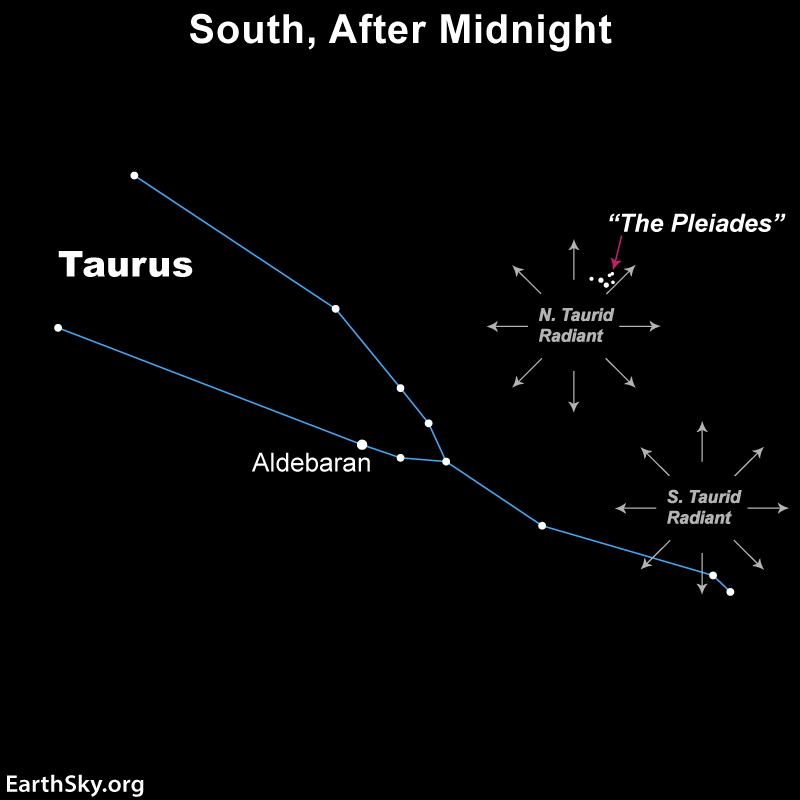
Taurid meteors: Star chart showing constellation Taurus with 2 sets of radial arrows, 1 near the Pleiades.
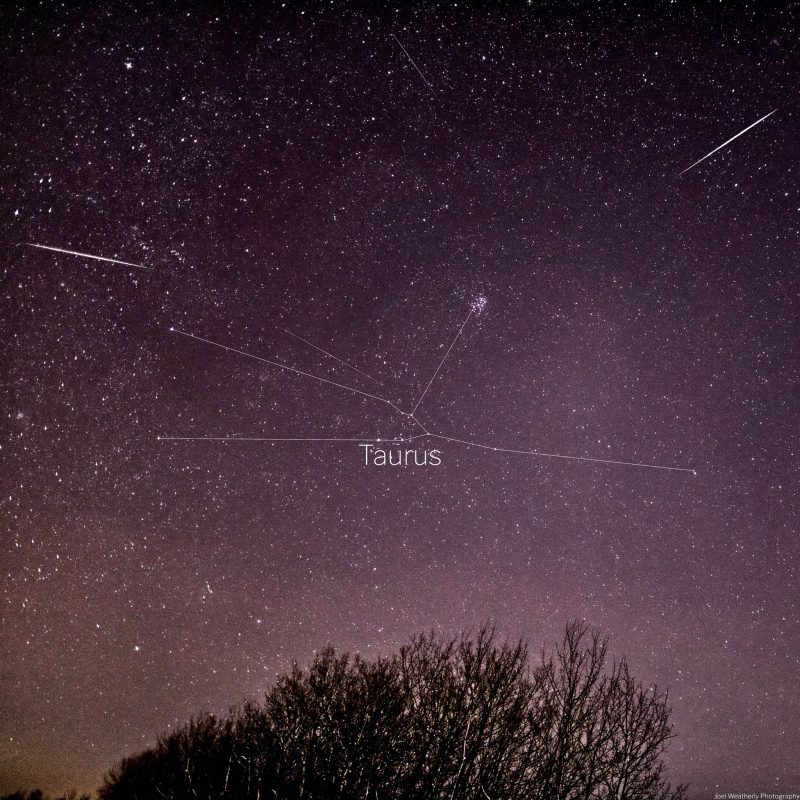
Taurid meteors consist of 2 streams, the South Taurids and North Taurids. Both streams radiate from the constellation Taurus the Bull, not far from the bright star Aldebaran and the tiny, misty, dipper-shaped Pleiades. Taurus is high in the sky in the middle of the night now. So the hours around midnight are a good time to watch for Taurid meteors and fireballs, as they appear to originate from the constellation Taurus. In October and November, this constellation is highest in the sky in the middle of the night.

Taurid meteors in 2024

You might see South Taurid meteors anytime from about September 10 to November 20. The North Taurids stem from a nearby, but slightly different stream. They’re active from about October 20 to December 10. Both showers produce about five meteors per hour (10 total when they overlap) and some of them are fireballs.

Predicted peak: The South Taurids’ predicted** peak is 7 UTC on November 5, 2024. The North Taurids’ predicted** peak is November 12, 2024, at 6 UTC. Both the South and North Taurids don’t have very definite peaks. They ramble along in October and November and are especially noticeable from late October into early November, when they overlap.
When to watch: Best around midnight, and on the days around November 5 when the moon won’t interfere.
Overall duration of shower: The South Taurids run from about September 23 to November 12. North Taurids are active from about October 13 to December 2.
Radiant: Rises in early evening, highest in the sky around midnight. See chart below.
Nearest moon phases: In 2024, the first quarter moon falls at 5:55 UTC on November 9. The new moon is at 12:47 UTC on November 1, and it’s before the predicted peak of the South Taurids on November 5, so the days around then will be the best days to watch for Taurid meteors. However, the waxing gibbous moon – 3 days before a full moon at 21:29 UTC on November 15 – will interfere with most meteors around the November 12 peak of the North Taurids. You’ll catch Taurid meteors throughout October and November. Visit Sunrise Sunset Calendars to see moon rising times for your location. Be sure to check the moon rising time box.
Expected meteors at peak, under ideal conditions: Under dark skies with no moon, both the South and North Taurid meteor showers produce about five meteors per hour (10 total when they overlap). Also, watch for fireballs.
Note: Taurid meteors tend to be slow-moving but sometimes very bright. The showers sometimes produce fireballs, which made their cyclical reappearance in 2022. The American Meteor Society pointed to “a seven-year periodicity” with Taurid fireballs. 2008 and 2015 both produced them. 2022 did as well. The Taurid fireball display, in 2015, was really fun! Photos and video of 2015 Taurid fireballs here.

Read more about Taurid fireballs in 2022

Photos and video of 2015 Taurid fireballs here

Report a fireball (very bright meteor) to the American Meteor Society: it’s fun and easy!

The Northern Taurids parent comet

This section is by the late, great Don Machholz (1952-2022), who discovered 12 comets …

The object responsible for the Northern Taurid meteor shower is believed to be an asteroid. And that asteroid is related to a comet.

The asteroid is named 2004 TG10. The Spacewatch program discovered it on October 8, 2004. Its orbit around the sun closely matches that of periodic Comet Encke (officially known as 2P/Encke). Scientists believe this asteroid was once part of a much larger object known as the Encke Complex.

The most widely accepted theory is that about 20,000 years ago, a much larger object broke up, creating Comet Encke and several asteroids and meteor showers. Scientists named this group of resultant objects after the most prominent member of the group: Comet Encke. Hence, the Encke Complex.

No single asteroid produces Taurid meteors

A recent study indicates that the asteroid 2004 TG10 is only one of 10 related asteroids that may be responsible for this meteor shower. If that is true, then no single asteroid is producing the material causing the Northern Taurid meteors.

How is a mystery like this solved? Time and teamwork. Special night-time video cameras record incoming meteors, and computers calculate the orbit almost immediately. Scientists compare these orbits to known objects, such as comets and asteroids. A direct match is unlikely, because any piece of material ejected from a comet or asteroid – perhaps hundreds of years ago – has been subjected to solar radiation and planetary perturbations, changing its path around the sun. So, its final orbit, just before it enters our atmosphere, is likely different than the orbit it originated from. Astronomers who specialize in celestial mechanics will be the ones to bring us the solution.

Cameras and computers are likely to give us a better picture and a more thorough understanding of the Northern Taurids meteor shower.

The Southern Taurids parent comet

From Don Machholz

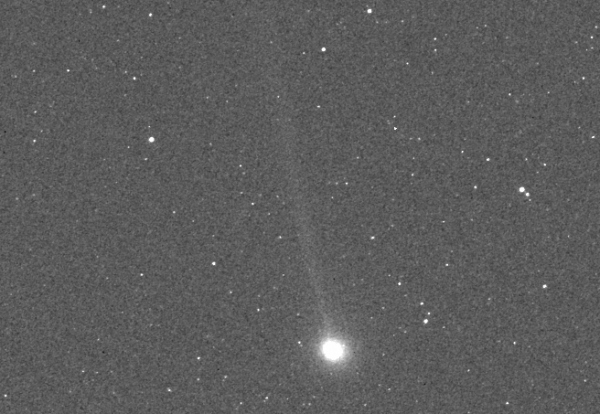
The material we see as meteors from the Southern Taurids radiant comes from the comet known as Encke’s Comet. Officially known as 2P/Encke, this comet was discovered four times before it received its name.

The French comet hunter Pierre Mechian discovered it on January 17, 1786. He observed the comet for only three days and did not calculate its orbit. Next up was Caroline Herschel of England, who found it on November 7, 1795, 10 years later. She tracked it for 23 days but did not calculate an accurate orbit. Ten years later, Frenchman Jean-Louis Pons, the greatest visual comet hunter of all time, picked it up on October 20, 1805. Within hours of Pons’ discovery, Hofrath Huth of Germany and Bovard in Paris picked it up too. This time they followed it for 32 days.

Enter Johann Franz Encke. Using these positions, he calculated an orbit for this comet and predicted that it would return. End of story? No, because he predicted it would return in 12.12 years. And it didn’t.

Tracking a new comet

Then, on November 26, 1818, Pons picked up a comet and tracked it for 48 days. Encke calculated an orbit for this one, and using some new computing techniques, came up with an orbital solution suggesting the comet takes only 3.3 years to go around the sun once. After six weeks of work, he was also able to link this comet to the comets of 1786, 1795 and 1805. He then correctly predicted that it would return in 1822. Based upon his work correctly calculating the comet’s orbit, the comet received the name Encke.

Comet Encke has the shortest orbital period of any major comet in our solar system. At its closest, it gets as close to the sun as does the planet Mercury, the planet closest to the sun. The orbit is stable, and the comet has probably been in the same orbit for thousands of years.

Was Comet Encke once part of a larger comet?

A recent theory is that Comet Encke was once part of a larger comet that broke up about 20,000 years ago. This event produced several small asteroids and debris that now forms this meteor shower. And there are more. Scientists attribute at least three other meteor showers to Comet Encke. One stream of material might have delivered the object responsible for the Tunguska meteor event of 1908. This whole system is known as the Encke Complex.

Fuzzy, bright round ball with long faint tail against star field.
Comet Encke, parent of the Taurid meteor showers. Image via NASA.

The next return of Comet Encke will be in October 2023. Observers in the Northern Hemisphere will have a good view of the comet in the morning sky, where it might get as bright as magnitude seven, meaning you will need binoculars to see it. The fireballs left behind by the comet are much brighter and much more interesting.

What about Taurid fireballs?

The American Meteor Society said in 2022:

When the two showers are active simultaneously in late October and early November, there is sometimes a notable increase in the fireball activity. There seems to be a seven-year periodicity with these fireballs. 2008 and 2015 both produced remarkable fireball activity. 2022 may be the next opportunity.

And they were right! There were lots of fireball sightings in 2022. The next opportunity may be in 2029.

Why don’t the dates agree for Taurid meteors?

The story of the predicted peaks for the Taurids – which vary from place to place across the internet – is interesting.

For the most part, we count on the American Meteor Society and the Observer’s Handbook, from the Royal Astronomical Society of Canada, to provide us with the peak dates for the year’s major meteor showers.

The Observer’s Handbook 2023 lists 1 UTC on November 6 as the peak for the South Taurids, for example. And the American Meteor Society (AMS) lists the peak overnight on November 5-6.

Yet another trusted source gives a different date for the South Taurids peak. The International Meteor Organization (IMO) lists the peak in 2023 as overnight on October 9-10.

Best time to watch South Taurid meteors

It’s not super important because, as mentioned above, the best time to watch the South Taurids in 2024 is probably late October into early November. That’s partly because the 1st quarter moon falls on November 9, 2024. And it’s partly because the South and North Taurids overlap in late October and early November, so you’re likely to see more of them then.

Different peak dates

But why are the listed peak dates different? A big reason is that astronomers are always learning new things. In 2021, for example, the American Meteor Society listed the peak date of the South Taurids in early November. But evidence from the IMO – based on observed and reported rates by amateur astronomers – suggested for some years that the South Taurids, rather than reaching a peak in early November (as long believed), has its peak in October instead. And apparently the AMS has finally decided to agree.

See what we mean? There are subtleties here. It’s nature! We don’t have it entirely pinned down.

Composite image showing constellation Taurus and several meteors radiating from it.
View at EarthSky Community Photos. | Joel Weatherly in Edmonton, Alberta, Canada, created this composite from images captured on the morning of November 11, 2020. He wrote, “This is a composite image featuring Taurus and 4 meteors that I observed while out for the Northern Taurids meteor shower. The 2 brightest meteors left behind dust trails.” Thank you, Joel!

Bottom line: You might see a South Taurid meteor anytime from about September 10 to November 20. That’s when Earth is plowing through the meteor stream – the stream of comet debris in space – that creates this meteor shower. The North Taurids stem from a nearby, but slightly different stream. They’re active from about October 20 to December 10. Both showers produce about five meteors per hour (10 total when they overlap).

**Predicted peak times and dates for 2024 meteor showers are from the American Meteor Society. Note that meteor shower peak times can vary.

Meteor showers: Tips for watching the show

EarthSky’s meteor shower guide

The post Taurid meteors in 2024: All you need to know first appeared on EarthSky.


from EarthSky https://ift.tt/g06Ec8z
Taurid meteors: Star chart showing constellation Taurus with 2 sets of radial arrows, 1 near the Pleiades.
Taurid meteors consist of 2 streams, the South Taurids and North Taurids. Both streams radiate from the constellation Taurus the Bull, not far from the bright star Aldebaran and the tiny, misty, dipper-shaped Pleiades. Taurus is high in the sky in the middle of the night now. So the hours around midnight are a good time to watch for Taurid meteors and fireballs, as they appear to originate from the constellation Taurus. In October and November, this constellation is highest in the sky in the middle of the night.

Taurid meteors in 2024

You might see South Taurid meteors anytime from about September 10 to November 20. The North Taurids stem from a nearby, but slightly different stream. They’re active from about October 20 to December 10. Both showers produce about five meteors per hour (10 total when they overlap) and some of them are fireballs.

Predicted peak: The South Taurids’ predicted** peak is 7 UTC on November 5, 2024. The North Taurids’ predicted** peak is November 12, 2024, at 6 UTC. Both the South and North Taurids don’t have very definite peaks. They ramble along in October and November and are especially noticeable from late October into early November, when they overlap.
When to watch: Best around midnight, and on the days around November 5 when the moon won’t interfere.
Overall duration of shower: The South Taurids run from about September 23 to November 12. North Taurids are active from about October 13 to December 2.
Radiant: Rises in early evening, highest in the sky around midnight. See chart below.
Nearest moon phases: In 2024, the first quarter moon falls at 5:55 UTC on November 9. The new moon is at 12:47 UTC on November 1, and it’s before the predicted peak of the South Taurids on November 5, so the days around then will be the best days to watch for Taurid meteors. However, the waxing gibbous moon – 3 days before a full moon at 21:29 UTC on November 15 – will interfere with most meteors around the November 12 peak of the North Taurids. You’ll catch Taurid meteors throughout October and November. Visit Sunrise Sunset Calendars to see moon rising times for your location. Be sure to check the moon rising time box.
Expected meteors at peak, under ideal conditions: Under dark skies with no moon, both the South and North Taurid meteor showers produce about five meteors per hour (10 total when they overlap). Also, watch for fireballs.
Note: Taurid meteors tend to be slow-moving but sometimes very bright. The showers sometimes produce fireballs, which made their cyclical reappearance in 2022. The American Meteor Society pointed to “a seven-year periodicity” with Taurid fireballs. 2008 and 2015 both produced them. 2022 did as well. The Taurid fireball display, in 2015, was really fun! Photos and video of 2015 Taurid fireballs here.

Read more about Taurid fireballs in 2022

Photos and video of 2015 Taurid fireballs here

Report a fireball (very bright meteor) to the American Meteor Society: it’s fun and easy!

The Northern Taurids parent comet

This section is by the late, great Don Machholz (1952-2022), who discovered 12 comets …

The object responsible for the Northern Taurid meteor shower is believed to be an asteroid. And that asteroid is related to a comet.

The asteroid is named 2004 TG10. The Spacewatch program discovered it on October 8, 2004. Its orbit around the sun closely matches that of periodic Comet Encke (officially known as 2P/Encke). Scientists believe this asteroid was once part of a much larger object known as the Encke Complex.

The most widely accepted theory is that about 20,000 years ago, a much larger object broke up, creating Comet Encke and several asteroids and meteor showers. Scientists named this group of resultant objects after the most prominent member of the group: Comet Encke. Hence, the Encke Complex.

No single asteroid produces Taurid meteors

A recent study indicates that the asteroid 2004 TG10 is only one of 10 related asteroids that may be responsible for this meteor shower. If that is true, then no single asteroid is producing the material causing the Northern Taurid meteors.

How is a mystery like this solved? Time and teamwork. Special night-time video cameras record incoming meteors, and computers calculate the orbit almost immediately. Scientists compare these orbits to known objects, such as comets and asteroids. A direct match is unlikely, because any piece of material ejected from a comet or asteroid – perhaps hundreds of years ago – has been subjected to solar radiation and planetary perturbations, changing its path around the sun. So, its final orbit, just before it enters our atmosphere, is likely different than the orbit it originated from. Astronomers who specialize in celestial mechanics will be the ones to bring us the solution.

Cameras and computers are likely to give us a better picture and a more thorough understanding of the Northern Taurids meteor shower.

The Southern Taurids parent comet

From Don Machholz

The material we see as meteors from the Southern Taurids radiant comes from the comet known as Encke’s Comet. Officially known as 2P/Encke, this comet was discovered four times before it received its name.

The French comet hunter Pierre Mechian discovered it on January 17, 1786. He observed the comet for only three days and did not calculate its orbit. Next up was Caroline Herschel of England, who found it on November 7, 1795, 10 years later. She tracked it for 23 days but did not calculate an accurate orbit. Ten years later, Frenchman Jean-Louis Pons, the greatest visual comet hunter of all time, picked it up on October 20, 1805. Within hours of Pons’ discovery, Hofrath Huth of Germany and Bovard in Paris picked it up too. This time they followed it for 32 days.

Enter Johann Franz Encke. Using these positions, he calculated an orbit for this comet and predicted that it would return. End of story? No, because he predicted it would return in 12.12 years. And it didn’t.

Tracking a new comet

Then, on November 26, 1818, Pons picked up a comet and tracked it for 48 days. Encke calculated an orbit for this one, and using some new computing techniques, came up with an orbital solution suggesting the comet takes only 3.3 years to go around the sun once. After six weeks of work, he was also able to link this comet to the comets of 1786, 1795 and 1805. He then correctly predicted that it would return in 1822. Based upon his work correctly calculating the comet’s orbit, the comet received the name Encke.

Comet Encke has the shortest orbital period of any major comet in our solar system. At its closest, it gets as close to the sun as does the planet Mercury, the planet closest to the sun. The orbit is stable, and the comet has probably been in the same orbit for thousands of years.

Was Comet Encke once part of a larger comet?

A recent theory is that Comet Encke was once part of a larger comet that broke up about 20,000 years ago. This event produced several small asteroids and debris that now forms this meteor shower. And there are more. Scientists attribute at least three other meteor showers to Comet Encke. One stream of material might have delivered the object responsible for the Tunguska meteor event of 1908. This whole system is known as the Encke Complex.

Fuzzy, bright round ball with long faint tail against star field.
Comet Encke, parent of the Taurid meteor showers. Image via NASA.

The next return of Comet Encke will be in October 2023. Observers in the Northern Hemisphere will have a good view of the comet in the morning sky, where it might get as bright as magnitude seven, meaning you will need binoculars to see it. The fireballs left behind by the comet are much brighter and much more interesting.

What about Taurid fireballs?

The American Meteor Society said in 2022:

When the two showers are active simultaneously in late October and early November, there is sometimes a notable increase in the fireball activity. There seems to be a seven-year periodicity with these fireballs. 2008 and 2015 both produced remarkable fireball activity. 2022 may be the next opportunity.

And they were right! There were lots of fireball sightings in 2022. The next opportunity may be in 2029.

Why don’t the dates agree for Taurid meteors?

The story of the predicted peaks for the Taurids – which vary from place to place across the internet – is interesting.

For the most part, we count on the American Meteor Society and the Observer’s Handbook, from the Royal Astronomical Society of Canada, to provide us with the peak dates for the year’s major meteor showers.

The Observer’s Handbook 2023 lists 1 UTC on November 6 as the peak for the South Taurids, for example. And the American Meteor Society (AMS) lists the peak overnight on November 5-6.

Yet another trusted source gives a different date for the South Taurids peak. The International Meteor Organization (IMO) lists the peak in 2023 as overnight on October 9-10.

Best time to watch South Taurid meteors

It’s not super important because, as mentioned above, the best time to watch the South Taurids in 2024 is probably late October into early November. That’s partly because the 1st quarter moon falls on November 9, 2024. And it’s partly because the South and North Taurids overlap in late October and early November, so you’re likely to see more of them then.

Different peak dates

But why are the listed peak dates different? A big reason is that astronomers are always learning new things. In 2021, for example, the American Meteor Society listed the peak date of the South Taurids in early November. But evidence from the IMO – based on observed and reported rates by amateur astronomers – suggested for some years that the South Taurids, rather than reaching a peak in early November (as long believed), has its peak in October instead. And apparently the AMS has finally decided to agree.

See what we mean? There are subtleties here. It’s nature! We don’t have it entirely pinned down.

Composite image showing constellation Taurus and several meteors radiating from it.
View at EarthSky Community Photos. | Joel Weatherly in Edmonton, Alberta, Canada, created this composite from images captured on the morning of November 11, 2020. He wrote, “This is a composite image featuring Taurus and 4 meteors that I observed while out for the Northern Taurids meteor shower. The 2 brightest meteors left behind dust trails.” Thank you, Joel!

Bottom line: You might see a South Taurid meteor anytime from about September 10 to November 20. That’s when Earth is plowing through the meteor stream – the stream of comet debris in space – that creates this meteor shower. The North Taurids stem from a nearby, but slightly different stream. They’re active from about October 20 to December 10. Both showers produce about five meteors per hour (10 total when they overlap).

**Predicted peak times and dates for 2024 meteor showers are from the American Meteor Society. Note that meteor shower peak times can vary.

Meteor showers: Tips for watching the show

EarthSky’s meteor shower guide

The post Taurid meteors in 2024: All you need to know first appeared on EarthSky.


from EarthSky https://ift.tt/g06Ec8z

Daylight Time ends Sunday: 7 tips to help you adjust

Daylight time ends: Closeup of a soundly sleeping baby's face.
Daylight time ends Sunday, November 3, 2024. You can sleep like a baby one hour longer! Image via Joni Stewart. Used with permission.

Daylight Time ends

Are you a fan of daylight saving time? Ready or not, the U.S. and Canada continue to use daylight saving time. So at 2 a.m. on Sunday November 3, 2024, clocks in most U.S. states and Canadian provinces are due to be turned back one hour (European countries already changed last weekend). So, fall back, clock-watchers!

And, once again, Daylight Time ends for many of us. It’ll begin again on Sunday, March 9, 2025.

The memory tool for your clocks is spring forward, fall back. Easy to do with clocks. Less easy – for many – with our own bodies. According to WebMD, in general, “gaining” an hour in the fall is easier than “losing” an hour in the spring. But many report feeling groggy or off kilter in the week following both the spring and fall time changes.

Didn’t the U.S. Congress vote on to change that?

Also you may remember, a bill to make daylight saving time permanent was passed by the U.S. Senate in 2022. However, it was never voted on by the U.S. House of Representatives.

And the bill was introduced again in 2023, Reuters said:

The legislation, introduced by a bipartisan group of senators, was passed by the Senate in 2022 but stalled in the U.S. House of Representatives because lawmakers could not agree on whether to keep standard time or permanent daylight saving time.

So until congress addresses what to do about daylight saving time, here are seven tips to help you adjust to the time change.

7 tips to help you adjust

Here are some tips that might help you adjust, mostly adapted from a November 4, 2022, post by the American Academy of Sleep Medicine:

1. Get at least seven hours of sleep (for adults) or eight hours of sleep (for teens) per night before and after the time change. You can use the American Academy of Sleep Medicine’s bedtime calculator to identify an appropriate nightly bedtime.

2. Gradually adjust your sleep and wake times. Shift your bedtime 15 to 20 minutes earlier each night for a few nights before the spring time change, or 15 to 20 minutes later each night for a few nights before the fall time change. (If you are experiencing chronic insufficient sleep, you should avoid shifting your bedtime later before the fall time change; you will benefit from getting an “extra” hour of sleep on the night when you “fall back” to standard time.)

3. Adjust other daily routines – such as mealtimes – to match your new schedule prior to the time change.

4. Set your clocks to the new time on Saturday evening, and go to bed at your normal bedtime.

5. Use light and darkness to help your body adjust. In the spring, head outside for some sunlight on Sunday morning and dim the lights in the evening. In the fall, minimize light exposure until your target morning wake time.

6. Adjusting your exposure to light and darkness will help set your body clock, which regulates the timing of sleep and alertness.

7. Get plenty of sleep on Sunday night to ensure you’re rested and ready for the week ahead.

Good luck!

Bottom line: Daylight Time ends on November 3, 2024, in North America. Here are 7 tips from the American Academy of Sleep Medicine to help you adjust.

Read more: Daylight saving time: 10 tips to make it easier

The post Daylight Time ends Sunday: 7 tips to help you adjust first appeared on EarthSky.


from EarthSky https://ift.tt/Bmo3n4q
Daylight time ends: Closeup of a soundly sleeping baby's face.
Daylight time ends Sunday, November 3, 2024. You can sleep like a baby one hour longer! Image via Joni Stewart. Used with permission.

Daylight Time ends

Are you a fan of daylight saving time? Ready or not, the U.S. and Canada continue to use daylight saving time. So at 2 a.m. on Sunday November 3, 2024, clocks in most U.S. states and Canadian provinces are due to be turned back one hour (European countries already changed last weekend). So, fall back, clock-watchers!

And, once again, Daylight Time ends for many of us. It’ll begin again on Sunday, March 9, 2025.

The memory tool for your clocks is spring forward, fall back. Easy to do with clocks. Less easy – for many – with our own bodies. According to WebMD, in general, “gaining” an hour in the fall is easier than “losing” an hour in the spring. But many report feeling groggy or off kilter in the week following both the spring and fall time changes.

Didn’t the U.S. Congress vote on to change that?

Also you may remember, a bill to make daylight saving time permanent was passed by the U.S. Senate in 2022. However, it was never voted on by the U.S. House of Representatives.

And the bill was introduced again in 2023, Reuters said:

The legislation, introduced by a bipartisan group of senators, was passed by the Senate in 2022 but stalled in the U.S. House of Representatives because lawmakers could not agree on whether to keep standard time or permanent daylight saving time.

So until congress addresses what to do about daylight saving time, here are seven tips to help you adjust to the time change.

7 tips to help you adjust

Here are some tips that might help you adjust, mostly adapted from a November 4, 2022, post by the American Academy of Sleep Medicine:

1. Get at least seven hours of sleep (for adults) or eight hours of sleep (for teens) per night before and after the time change. You can use the American Academy of Sleep Medicine’s bedtime calculator to identify an appropriate nightly bedtime.

2. Gradually adjust your sleep and wake times. Shift your bedtime 15 to 20 minutes earlier each night for a few nights before the spring time change, or 15 to 20 minutes later each night for a few nights before the fall time change. (If you are experiencing chronic insufficient sleep, you should avoid shifting your bedtime later before the fall time change; you will benefit from getting an “extra” hour of sleep on the night when you “fall back” to standard time.)

3. Adjust other daily routines – such as mealtimes – to match your new schedule prior to the time change.

4. Set your clocks to the new time on Saturday evening, and go to bed at your normal bedtime.

5. Use light and darkness to help your body adjust. In the spring, head outside for some sunlight on Sunday morning and dim the lights in the evening. In the fall, minimize light exposure until your target morning wake time.

6. Adjusting your exposure to light and darkness will help set your body clock, which regulates the timing of sleep and alertness.

7. Get plenty of sleep on Sunday night to ensure you’re rested and ready for the week ahead.

Good luck!

Bottom line: Daylight Time ends on November 3, 2024, in North America. Here are 7 tips from the American Academy of Sleep Medicine to help you adjust.

Read more: Daylight saving time: 10 tips to make it easier

The post Daylight Time ends Sunday: 7 tips to help you adjust first appeared on EarthSky.


from EarthSky https://ift.tt/Bmo3n4q

2024 Antarctic ozone hole 7th-smallest since recovery began

2024 Antarctic ozone hole: A snowy landscape with big industrial-looking buildings, and a man pulling on a big balloon.
Scientists launch a NOAA ozonesonde, frostpoint hygrometer, and POPS aerosol particle counter on a balloon to help monitor the Antarctic Ozone Hole on October 5, 2024, at the Amundsen-Scott South Pole Station. Image via William Brotman/ United States Antarctic Program/ NOAA Climate.gov.

NOAA Climate.gov originally published this story on October 30, 2024. Edits by EarthSky.

Ozone layer could ‘fully recover’ by 2066

Healing continues in the atmosphere over the Antarctic. A hole that opens annually in the ozone layer over Earth’s southern pole was relatively small in 2024 in contrast to other years. NOAA and NASA scientists project the ozone layer could fully recover by 2066.

During the peak of ozone depletion season from September 7 through October 13, the 2024 area of the ozone hole ranked the 7th-smallest since recovery began in 1992. That’s when the Montreal Protocol, a landmark international agreement to phase out ozone-depleting chemicals, started to take effect.

At almost 8 million square miles (20 million square kilometers), the monthly average ozone-depleted region in the Antarctic this year was nearly three times the size of the contiguous U.S. The hole reached its greatest one-day extent for the year on September 28 at 8.5 million square miles (22.4 million square kilometers).

Top-down view of map of Antarctica, with ozone hole outline.
The Antarctic ozone hole on September 28, 2024. The ozone hole (dark blue region) is the total area where the amount of ozone in the stratosphere is less than 220 Dobson Units. Image via NOAA Climate.gov.

2024 Antarctic ozone hole

The improvement this year is due to a combination of continuing declines in chlorofluorocarbons, an ozone-depleting chemical phased out by the Montreal Protocol. Plus, there was an unexpected infusion of ozone carried by air currents from north of the Antarctic, scientists said. Paul Newman, leader of NASA’s ozone research team and chief scientist for Earth sciences at NASA’s Goddard Space Flight Center in Greenbelt, Maryland, said:

The 2024 Antarctic hole is smaller than ozone holes seen in the early 2000s. The gradual improvement we’ve seen in the past two decades shows that international efforts that curbed ozone-destroying chemicals are working.

In previous years, NOAA and NASA have reported the ozone hole ranking using a time period dating back to 1979, when scientists started tracking Antarctic ozone levels with satellite data. Using that longer record, which includes the years prior to recovery spurred by the Montreal Protocol, this year’s hole ranked 20th-smallest in area across 45 years of observations.

We need Earth’s ozone layer

The ozone-rich layer high in the atmosphere acts as a planetary sunscreen that helps shield us from harmful ultraviolet (UV) radiation from the sun. Areas with depleted ozone allow more UV radiation through, resulting in increased cases of skin cancer and cataracts. Excessive exposure to UV light can also reduce agricultural yields as well as damage aquatic plants and animals in vital ecosystems.

Scientists were alarmed in the 1970s at the prospect that chlorofluorocarbon (CFC) chemicals could eat away at atmospheric ozone. By the mid-1980s, the ozone layer had been depleted so much that a broad swath of the Antarctic stratosphere was essentially devoid of ozone by early October each year. Sources of damaging CFCs included coolants in refrigerators and air conditioners, as well as aerosols in hairspray, antiperspirant and spray paint. CFCs were also released in the manufacture of insulating foams and as components of industrial fire suppression systems.

The Montreal Protocol was signed in 1987 to phase out CFC-based products and processes. Countries worldwide agreed to replace the chemicals with more environmentally-friendly alternatives by 2010. The release of CFC compounds has dramatically decreased due to the Montreal Protocol. But CFCs already in the air will take many decades to break down. As existing CFC levels gradually decline, ozone in the upper atmosphere will rebound globally, and ozone holes will shrink. Stephen Montzka, senior scientist with NOAA’s Global Monitoring Laboratory, said:

For 2024, we can see that the ozone hole’s severity is below average compared to other years in the past three decades, but the ozone layer is still far from being fully healed.

What will happen next?

Scientists expect atmospheric ozone to return to levels that eliminate holes over the poles in the second half of this century.

Researchers rely on a combination of systems to monitor the ozone layer. They include instruments on NASA’s Aura satellite, and NOAA’s polar orbiting satellites.

NOAA scientists also release instrumented weather balloons from the South Pole Baseline Atmospheric Observatory. They observe ozone concentrations directly overhead in a measurement called Dobson Units. The 2024 concentration reached its lowest value of 109 Dobson Units on October 5. The lowest value ever recorded over the South Pole was 92 Dobson Units in October 2006.

NASA and NOAA satellite observations of ozone concentrations cover the entire ozone hole, which can produce a slightly smaller value for the lowest Dobson Unit measurement. Bryan Johnson, a NOAA Research Chemist, said:

This is well below the 225 Dobson Units that was typical of the ozone cover above the Antarctic in 1979. So, there’s still a long way to go before atmospheric ozone is back to the levels before the advent of widespread CFC pollution.

Bottom line: Scientists reported this week on the extent of the 2024 Antarctic ozone hole, saying it was the 7th-smallest since recovery began in 1992.

Via NOAA

The post 2024 Antarctic ozone hole 7th-smallest since recovery began first appeared on EarthSky.


from EarthSky https://ift.tt/orJpKZR
2024 Antarctic ozone hole: A snowy landscape with big industrial-looking buildings, and a man pulling on a big balloon.
Scientists launch a NOAA ozonesonde, frostpoint hygrometer, and POPS aerosol particle counter on a balloon to help monitor the Antarctic Ozone Hole on October 5, 2024, at the Amundsen-Scott South Pole Station. Image via William Brotman/ United States Antarctic Program/ NOAA Climate.gov.

NOAA Climate.gov originally published this story on October 30, 2024. Edits by EarthSky.

Ozone layer could ‘fully recover’ by 2066

Healing continues in the atmosphere over the Antarctic. A hole that opens annually in the ozone layer over Earth’s southern pole was relatively small in 2024 in contrast to other years. NOAA and NASA scientists project the ozone layer could fully recover by 2066.

During the peak of ozone depletion season from September 7 through October 13, the 2024 area of the ozone hole ranked the 7th-smallest since recovery began in 1992. That’s when the Montreal Protocol, a landmark international agreement to phase out ozone-depleting chemicals, started to take effect.

At almost 8 million square miles (20 million square kilometers), the monthly average ozone-depleted region in the Antarctic this year was nearly three times the size of the contiguous U.S. The hole reached its greatest one-day extent for the year on September 28 at 8.5 million square miles (22.4 million square kilometers).

Top-down view of map of Antarctica, with ozone hole outline.
The Antarctic ozone hole on September 28, 2024. The ozone hole (dark blue region) is the total area where the amount of ozone in the stratosphere is less than 220 Dobson Units. Image via NOAA Climate.gov.

2024 Antarctic ozone hole

The improvement this year is due to a combination of continuing declines in chlorofluorocarbons, an ozone-depleting chemical phased out by the Montreal Protocol. Plus, there was an unexpected infusion of ozone carried by air currents from north of the Antarctic, scientists said. Paul Newman, leader of NASA’s ozone research team and chief scientist for Earth sciences at NASA’s Goddard Space Flight Center in Greenbelt, Maryland, said:

The 2024 Antarctic hole is smaller than ozone holes seen in the early 2000s. The gradual improvement we’ve seen in the past two decades shows that international efforts that curbed ozone-destroying chemicals are working.

In previous years, NOAA and NASA have reported the ozone hole ranking using a time period dating back to 1979, when scientists started tracking Antarctic ozone levels with satellite data. Using that longer record, which includes the years prior to recovery spurred by the Montreal Protocol, this year’s hole ranked 20th-smallest in area across 45 years of observations.

We need Earth’s ozone layer

The ozone-rich layer high in the atmosphere acts as a planetary sunscreen that helps shield us from harmful ultraviolet (UV) radiation from the sun. Areas with depleted ozone allow more UV radiation through, resulting in increased cases of skin cancer and cataracts. Excessive exposure to UV light can also reduce agricultural yields as well as damage aquatic plants and animals in vital ecosystems.

Scientists were alarmed in the 1970s at the prospect that chlorofluorocarbon (CFC) chemicals could eat away at atmospheric ozone. By the mid-1980s, the ozone layer had been depleted so much that a broad swath of the Antarctic stratosphere was essentially devoid of ozone by early October each year. Sources of damaging CFCs included coolants in refrigerators and air conditioners, as well as aerosols in hairspray, antiperspirant and spray paint. CFCs were also released in the manufacture of insulating foams and as components of industrial fire suppression systems.

The Montreal Protocol was signed in 1987 to phase out CFC-based products and processes. Countries worldwide agreed to replace the chemicals with more environmentally-friendly alternatives by 2010. The release of CFC compounds has dramatically decreased due to the Montreal Protocol. But CFCs already in the air will take many decades to break down. As existing CFC levels gradually decline, ozone in the upper atmosphere will rebound globally, and ozone holes will shrink. Stephen Montzka, senior scientist with NOAA’s Global Monitoring Laboratory, said:

For 2024, we can see that the ozone hole’s severity is below average compared to other years in the past three decades, but the ozone layer is still far from being fully healed.

What will happen next?

Scientists expect atmospheric ozone to return to levels that eliminate holes over the poles in the second half of this century.

Researchers rely on a combination of systems to monitor the ozone layer. They include instruments on NASA’s Aura satellite, and NOAA’s polar orbiting satellites.

NOAA scientists also release instrumented weather balloons from the South Pole Baseline Atmospheric Observatory. They observe ozone concentrations directly overhead in a measurement called Dobson Units. The 2024 concentration reached its lowest value of 109 Dobson Units on October 5. The lowest value ever recorded over the South Pole was 92 Dobson Units in October 2006.

NASA and NOAA satellite observations of ozone concentrations cover the entire ozone hole, which can produce a slightly smaller value for the lowest Dobson Unit measurement. Bryan Johnson, a NOAA Research Chemist, said:

This is well below the 225 Dobson Units that was typical of the ozone cover above the Antarctic in 1979. So, there’s still a long way to go before atmospheric ozone is back to the levels before the advent of widespread CFC pollution.

Bottom line: Scientists reported this week on the extent of the 2024 Antarctic ozone hole, saying it was the 7th-smallest since recovery began in 1992.

Via NOAA

The post 2024 Antarctic ozone hole 7th-smallest since recovery began first appeared on EarthSky.


from EarthSky https://ift.tt/orJpKZR

adds 2