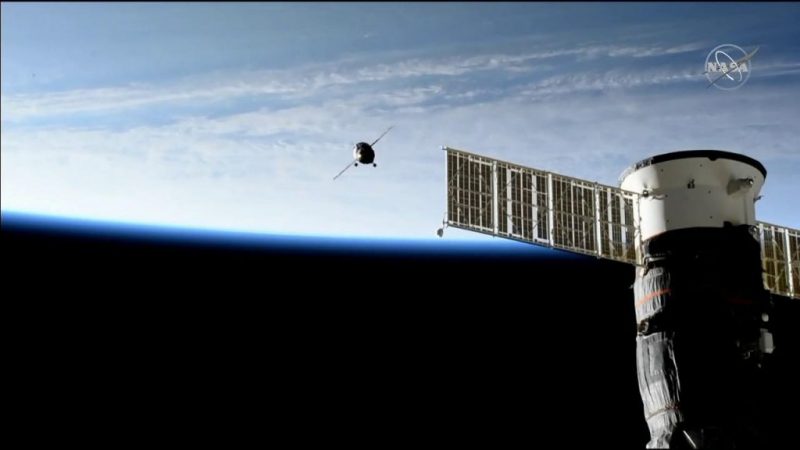
The Soyuz MS-14 spacecraft is pictured during its approach. The Soyuz MS-13 is seen in the foreground. Via NASA.
Roscosmos – the Russian space agency – launched its Soyuz MS-14 spacecraft on August 22, 2019, to the International Space Station (ISS). The mission was initially scheduled to dock at the station’s space-facing Poisk module on August 24, 2019. However, the spacecraft was commanded to back away when a malfunction of equipment on the ISS prevented it from locking on to the module. A successful second docking attempt was executed on August 26, 2019, and has now been successful. The Soyuz carries 1,450 pounds of cargo containing food and medical supplies, equipment to aid scientific experiments. Plus it carries Skybot F-850 – a humanoid robot – that will be tested for its functional capabilities in microgravity. The ISS took to Twitter to confirm Soyuz MS-14’s arrival:
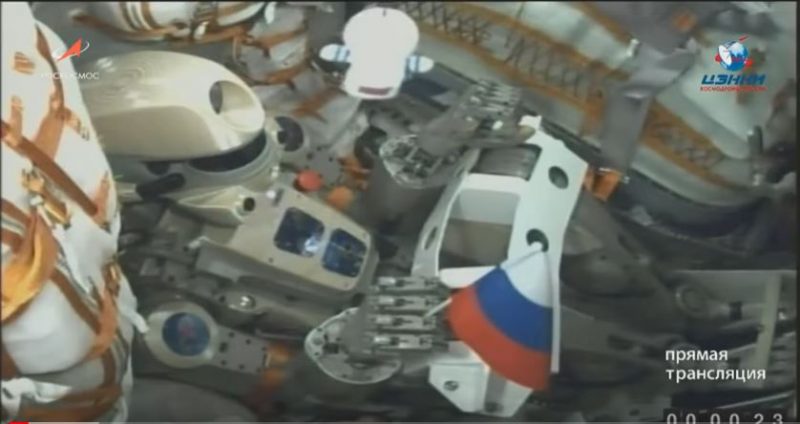
Skybot is seen sitting in the commander’s seat of the Soyuz MS-14 spacecraft. It also holds Russia’s flag in its hand. Image via Roscosmos.
Soyuz MS-14’s successful launch
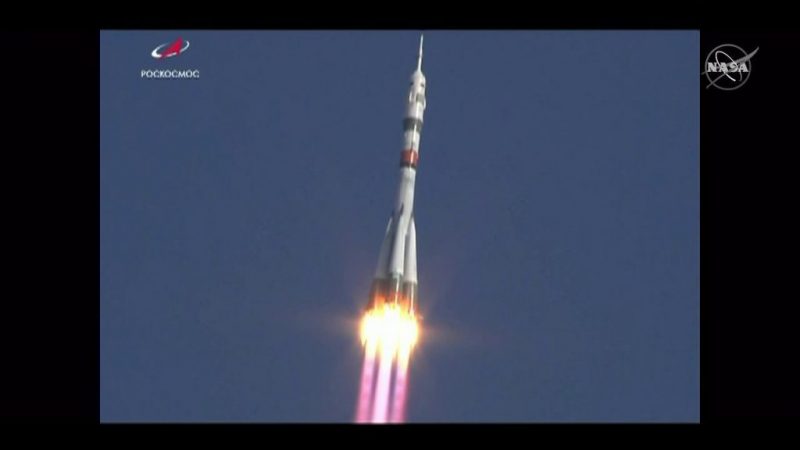
The unmanned spacecraft lifted off without any hitches onboard the Soyuz 2.1a rocket booster from the Baikonur Cosmodrome in Kazakhstan. In addition to testing the humanoid robot Skybot, the mission also aims to assess the spacecraft’s new motion control and navigation systems. The spacecraft’s compatibility with the 2.1a rocket will also be studied since Roscosmos aims to use the rocket to launch Russian crew beginning in spring 2020.
The Soyuz MS-14 spacecraft launches from the Baikonur Cosmodrome in Kazakhstan. Image via NASA.
Two smooth days into its journey, it was only when the spacecraft was within about 300 feet (100 meters) of its original target – the ISS’ Poisk module – on August 24 that the fault in the station’s telemetry was realized. To ensure the safety to the crew aboard the ISS, the docking of Soyuz MS-14 was called off and moved a safe distance away.
In order to attempt docking a second time, the Russian cosmonauts manually detached the Soyuz MS-13 from the Zvezda module on August 26, 2019. This 25-minute long Soyuz MS-13’s relocation from the Zvezda module to the Poisk module opened up the former for Soyuz MS-14, where it is currently latched on.
Bottom line: Russia’s Soyuz MS-14 spacecraft has docked safely at the station’s Zvezda module. It carries supplies for the crew and a humanoid robot.
The Soyuz MS-14 spacecraft is pictured during its approach. The Soyuz MS-13 is seen in the foreground. Via NASA.
Roscosmos – the Russian space agency – launched its Soyuz MS-14 spacecraft on August 22, 2019, to the International Space Station (ISS). The mission was initially scheduled to dock at the station’s space-facing Poisk module on August 24, 2019. However, the spacecraft was commanded to back away when a malfunction of equipment on the ISS prevented it from locking on to the module. A successful second docking attempt was executed on August 26, 2019, and has now been successful. The Soyuz carries 1,450 pounds of cargo containing food and medical supplies, equipment to aid scientific experiments. Plus it carries Skybot F-850 – a humanoid robot – that will be tested for its functional capabilities in microgravity. The ISS took to Twitter to confirm Soyuz MS-14’s arrival:
Skybot is seen sitting in the commander’s seat of the Soyuz MS-14 spacecraft. It also holds Russia’s flag in its hand. Image via Roscosmos.
Soyuz MS-14’s successful launch
The unmanned spacecraft lifted off without any hitches onboard the Soyuz 2.1a rocket booster from the Baikonur Cosmodrome in Kazakhstan. In addition to testing the humanoid robot Skybot, the mission also aims to assess the spacecraft’s new motion control and navigation systems. The spacecraft’s compatibility with the 2.1a rocket will also be studied since Roscosmos aims to use the rocket to launch Russian crew beginning in spring 2020.
The Soyuz MS-14 spacecraft launches from the Baikonur Cosmodrome in Kazakhstan. Image via NASA.
Two smooth days into its journey, it was only when the spacecraft was within about 300 feet (100 meters) of its original target – the ISS’ Poisk module – on August 24 that the fault in the station’s telemetry was realized. To ensure the safety to the crew aboard the ISS, the docking of Soyuz MS-14 was called off and moved a safe distance away.
In order to attempt docking a second time, the Russian cosmonauts manually detached the Soyuz MS-13 from the Zvezda module on August 26, 2019. This 25-minute long Soyuz MS-13’s relocation from the Zvezda module to the Poisk module opened up the former for Soyuz MS-14, where it is currently latched on.
Bottom line: Russia’s Soyuz MS-14 spacecraft has docked safely at the station’s Zvezda module. It carries supplies for the crew and a humanoid robot.
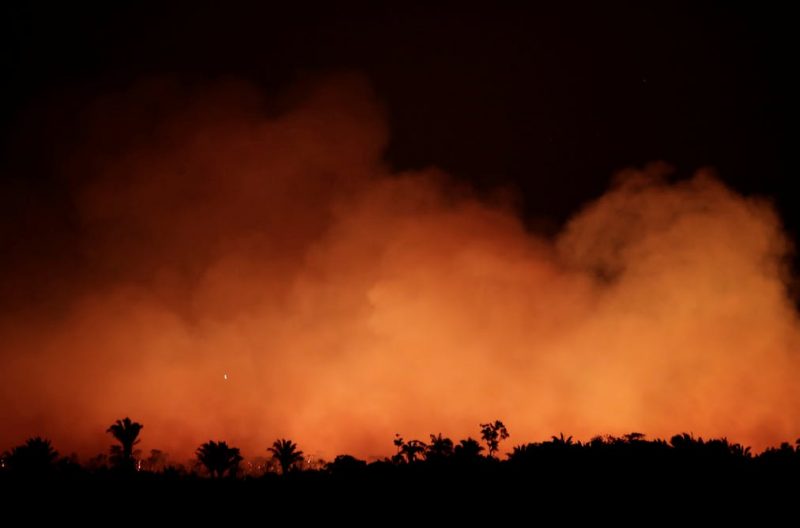
Nearly 40,000 fires are incinerating Brazil’s Amazon rainforest, the latest outbreak in an overactive fire season that has charred 1,330 square miles (2,927 square km) of the rainforest this year.
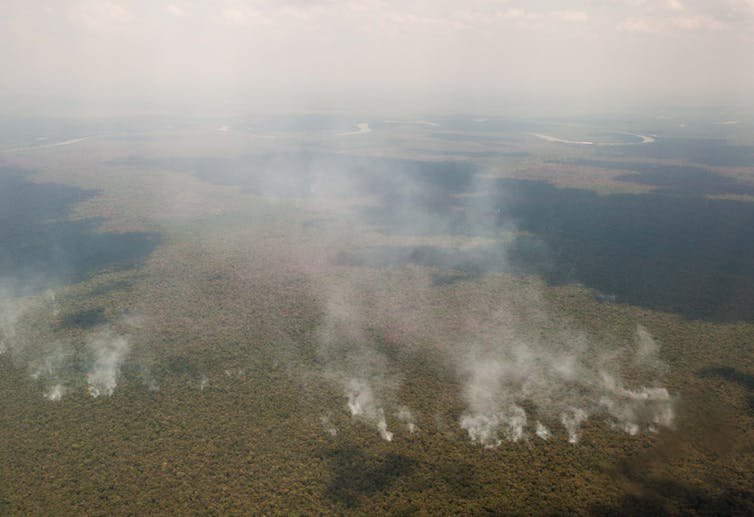
Don’t blame dry weather for the swift destruction of the world’s largest tropical forest, say environmentalists. These Amazonian wildfires are a human-made disaster, set by loggers and cattle ranchers who use a “slash and burn” method to clear land. Feeding off very dry conditions, some of those fires have spread out of control.
Brazil has long struggled to preserve the Amazon, sometimes called the “lungs of the world” because it produces 20% of the world’s oxygen. Despite the increasingly strict environmental protections of recent decades, about a quarter of this massive rainforest is already gone – an area the size of Texas.
Deforestation in the Amazon has spiked since the election last year of the far-right President Jair Bolsonaro. Arguing that federal conservation zones and hefty fines for cutting down trees hinder economic growth, Bolsonaro has slashed Brazil’s strict environmental regulations.
There’s no evidence to support Bolsonaro’s view, Garrett says. She said:
Food production in the Amazon has substantially increased since 2004.
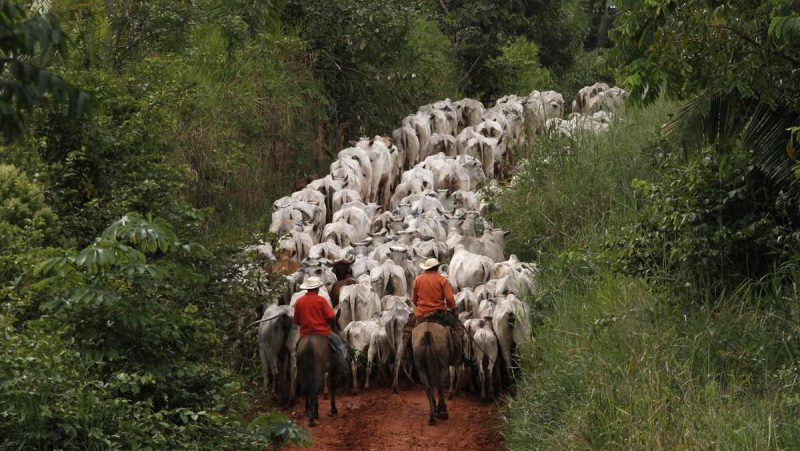
The increased production has been pushed by federal policies meant to discourage land clearing, such as hefty fines for deforestation and low-interest loans for investing in sustainable agricultural practices. Farmers are now planting and harvesting two crops – mostly soybean and corn – each year, rather than just one.
Garrett’s research found that improved pasture management in line with stricter federal land use policies led the number of cattle slaughtered annually per acre to double. She wrote:
Farmers are producing more meat – and therefore earning more money – with their land.
2. Infrastructure development and deforestation
President Bolsonaro is also pushing forward an ambitious infrastructure development plan that would turn the Amazon’s many waterways into electricity generators.
The Brazilian government has long wanted to build a series of big new hydroelectric dams, including on the Tapajós River, the Amazon’s only remaining undammed river. But the indigenous Munduruku people, who live near around the Tapajós River, have stridently opposed this idea.
According to Robert T. Walker, a University of Florida professor who has conducted environmental research in the Amazon for 25 years:
The Munduruku have until now successfully slowed down and seemingly halted many efforts to profit off the Tapajós.
But Bolsonaro’s government is less likely than his predecessors to respect indigenous rights. One of his first moves in office was to transfer responsibilities for demarcating indigenous lands from the Brazilian Ministry of Justice to the decidedly pro-development Ministry of Agriculture.
And, Walker notes, Bolsonaro’s Amazon development plans are part of a broader South American project, conceived in 2000, to build continental infrastructure that provides electricity for industrialization and facilitates trade across the region.
For the Brazilian Amazon, that means not just new dams but also “webs of waterways, rail lines, ports and roads” that will get products like soybeans, corn and beef to market, according to Walker. He said:
This plan is far more ambitious than earlier infrastructure projects that damaged the Amazon.
If Bolsonaro’s plan moves forward, he estimates that fully 40% of the Amazon could be deforested.
3. Road-choked streams
Roads, most of them dirt, already criss-cross the Amazon.
That came as a surprise to Cecilia Gontijo Leal, a Brazilian researcher who studies tropical fish habitats. She wrote:
I imagined that my field work would be all boat rides on immense rivers and long jungle hikes. In fact, all my research team needed was a car.
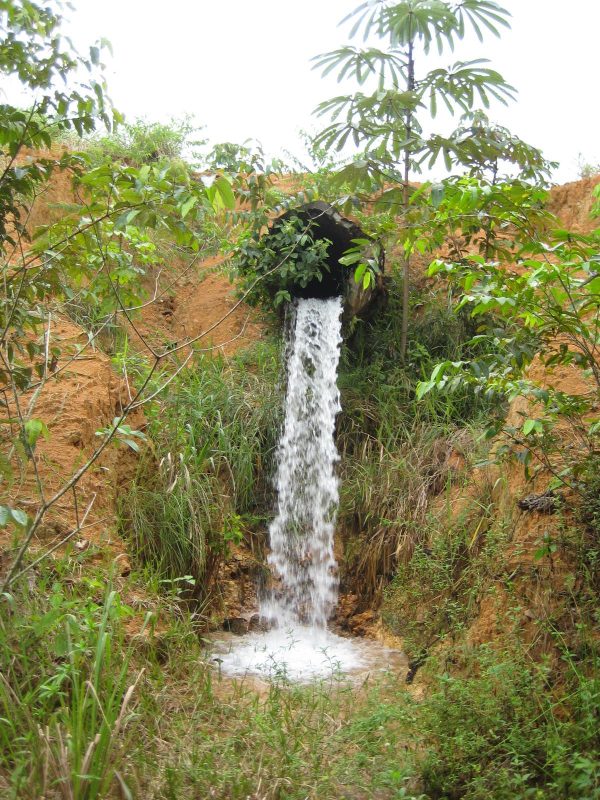
Perched culverts disrupt the water flow of Amazonian streams, isolating fish. Image via the author.
Traveling on rutted mud roads to take water samples from streams across Brazil’s Pará state, Leal realized that the informal “bridges” of this locally built transportation network must be impacting Amazonian waterways. So she decided to study that, too. She said:
We found that makeshift road crossings cause both shore erosion and silt buildup in streams. This worsens water quality, hurting the fish that thrive in this delicately balanced habitat.
The ill-designed road crossings – which feature perched culverts that disrupt water flow – also act as barriers to movement, preventing fish from finding places to feed, breed and take shelter.
4. Rewilding tropical forests
The fires now consuming vast swaths of the Amazon are the latest repercussion of development in the Amazon.
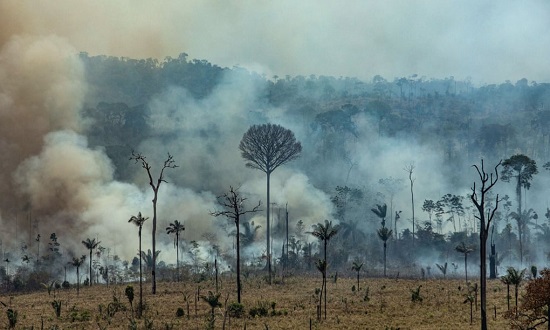
Set by farmers likely emboldened by their president’s anti-conservation stance, the blazes emit so much smoke that on August 20 it blotted out the midday sun in the city of São Paulo, 1,700 miles (2,736 km) away. The fires are still multiplying, and peak dry season is still a month away.
Apocalyptic as this sounds, science suggests it’s not too late to save the Amazon.
Tropical forests destroyed by fire, logging, land-clearing and roads can be replanted, say ecologists Robin Chazdon and Pedro Brancalion.
Using satellite imagery and the latest peer-reviewed research on biodiversity, climate change and water security, Chazdon and Brancalion identified 385,000 square miles (997,145 square km) of “restoration hotspots” – areas where restoring tropical forests would be most beneficial, least costly and lowest risk. Chazon wrote:
Although these second-growth forests will never perfectly replace the older forests that have been lost, planting carefully selected trees and assisting natural recovery processes can restore many of their former properties and functions.
The five countries with the most tropical restoration potential are Brazil, Indonesia, India, Madagascar and Colombia.
Editor’s note: This story is a roundup of articles from The Conversation’s archives.
Nearly 40,000 fires are incinerating Brazil’s Amazon rainforest, the latest outbreak in an overactive fire season that has charred 1,330 square miles (2,927 square km) of the rainforest this year.
Don’t blame dry weather for the swift destruction of the world’s largest tropical forest, say environmentalists. These Amazonian wildfires are a human-made disaster, set by loggers and cattle ranchers who use a “slash and burn” method to clear land. Feeding off very dry conditions, some of those fires have spread out of control.
Brazil has long struggled to preserve the Amazon, sometimes called the “lungs of the world” because it produces 20% of the world’s oxygen. Despite the increasingly strict environmental protections of recent decades, about a quarter of this massive rainforest is already gone – an area the size of Texas.
Deforestation in the Amazon has spiked since the election last year of the far-right President Jair Bolsonaro. Arguing that federal conservation zones and hefty fines for cutting down trees hinder economic growth, Bolsonaro has slashed Brazil’s strict environmental regulations.
There’s no evidence to support Bolsonaro’s view, Garrett says. She said:
Food production in the Amazon has substantially increased since 2004.
The increased production has been pushed by federal policies meant to discourage land clearing, such as hefty fines for deforestation and low-interest loans for investing in sustainable agricultural practices. Farmers are now planting and harvesting two crops – mostly soybean and corn – each year, rather than just one.
Garrett’s research found that improved pasture management in line with stricter federal land use policies led the number of cattle slaughtered annually per acre to double. She wrote:
Farmers are producing more meat – and therefore earning more money – with their land.
2. Infrastructure development and deforestation
President Bolsonaro is also pushing forward an ambitious infrastructure development plan that would turn the Amazon’s many waterways into electricity generators.
The Brazilian government has long wanted to build a series of big new hydroelectric dams, including on the Tapajós River, the Amazon’s only remaining undammed river. But the indigenous Munduruku people, who live near around the Tapajós River, have stridently opposed this idea.
According to Robert T. Walker, a University of Florida professor who has conducted environmental research in the Amazon for 25 years:
The Munduruku have until now successfully slowed down and seemingly halted many efforts to profit off the Tapajós.
But Bolsonaro’s government is less likely than his predecessors to respect indigenous rights. One of his first moves in office was to transfer responsibilities for demarcating indigenous lands from the Brazilian Ministry of Justice to the decidedly pro-development Ministry of Agriculture.
And, Walker notes, Bolsonaro’s Amazon development plans are part of a broader South American project, conceived in 2000, to build continental infrastructure that provides electricity for industrialization and facilitates trade across the region.
For the Brazilian Amazon, that means not just new dams but also “webs of waterways, rail lines, ports and roads” that will get products like soybeans, corn and beef to market, according to Walker. He said:
This plan is far more ambitious than earlier infrastructure projects that damaged the Amazon.
If Bolsonaro’s plan moves forward, he estimates that fully 40% of the Amazon could be deforested.
3. Road-choked streams
Roads, most of them dirt, already criss-cross the Amazon.
That came as a surprise to Cecilia Gontijo Leal, a Brazilian researcher who studies tropical fish habitats. She wrote:
I imagined that my field work would be all boat rides on immense rivers and long jungle hikes. In fact, all my research team needed was a car.
Perched culverts disrupt the water flow of Amazonian streams, isolating fish. Image via the author.
Traveling on rutted mud roads to take water samples from streams across Brazil’s Pará state, Leal realized that the informal “bridges” of this locally built transportation network must be impacting Amazonian waterways. So she decided to study that, too. She said:
We found that makeshift road crossings cause both shore erosion and silt buildup in streams. This worsens water quality, hurting the fish that thrive in this delicately balanced habitat.
The ill-designed road crossings – which feature perched culverts that disrupt water flow – also act as barriers to movement, preventing fish from finding places to feed, breed and take shelter.
4. Rewilding tropical forests
The fires now consuming vast swaths of the Amazon are the latest repercussion of development in the Amazon.
Set by farmers likely emboldened by their president’s anti-conservation stance, the blazes emit so much smoke that on August 20 it blotted out the midday sun in the city of São Paulo, 1,700 miles (2,736 km) away. The fires are still multiplying, and peak dry season is still a month away.
Apocalyptic as this sounds, science suggests it’s not too late to save the Amazon.
Tropical forests destroyed by fire, logging, land-clearing and roads can be replanted, say ecologists Robin Chazdon and Pedro Brancalion.
Using satellite imagery and the latest peer-reviewed research on biodiversity, climate change and water security, Chazdon and Brancalion identified 385,000 square miles (997,145 square km) of “restoration hotspots” – areas where restoring tropical forests would be most beneficial, least costly and lowest risk. Chazon wrote:
Although these second-growth forests will never perfectly replace the older forests that have been lost, planting carefully selected trees and assisting natural recovery processes can restore many of their former properties and functions.
The five countries with the most tropical restoration potential are Brazil, Indonesia, India, Madagascar and Colombia.
Editor’s note: This story is a roundup of articles from The Conversation’s archives.
I noticed on your site that Orion returned to the predawn sky in late July. You called it the ‘ghost of the summer dawn.’ Due to cloudy skies and other conditions, I was not able to see it until August 6. When will Orion return to the evening sky?
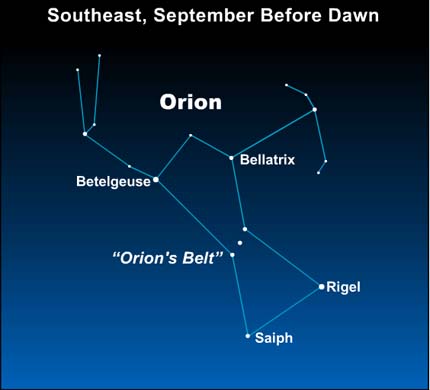
Mike, Orion the Hunter – one of most noticeable constellations, with a short, straight row of three medium-bright stars at its mid-section – is always behind the sun as seen from Earth in June. It comes back to the predawn sky every year in late July or early August. By late August and early September, Orion is rising in the wee hours and is well up in the dawn sky, an hour before dawn, as shown on today’s chart.
Orion will soon be up by midnight, then 10 p.m. … and by December you’ll find it rising in early evening.
There’s nothing unusual about Orion’s shift from the predawn to the evening sky. This constellation is simply following the westward shift of all the stars, caused by Earth’s orbit around the sun. As we orbit the sun, our night sky points toward an ever-changing panorama of the Milky Way galaxy. Our orbit causes all the stars to rise approximately 4 minutes earlier each day.
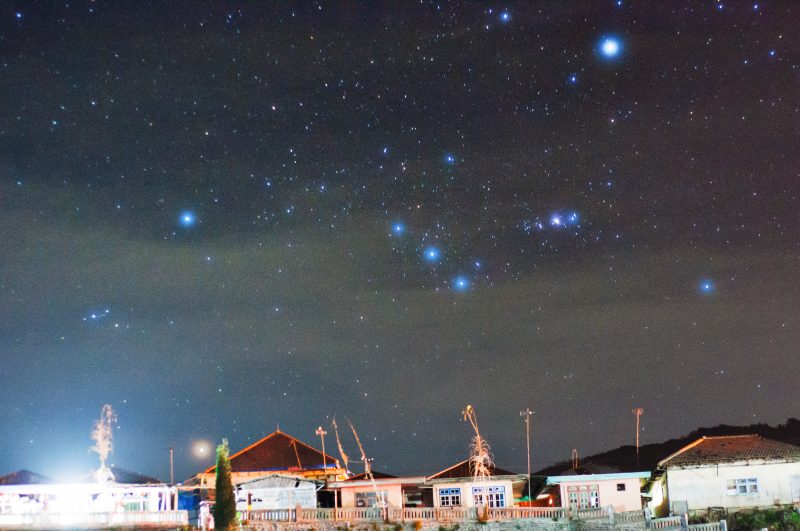
Martin Marthadinata in East Java, Indonesia, caught this photo on September 11, 2016. It’s Orion rising behind the rooftops. Notice Orion’s Belt of 3 stars.
Bottom line: If you’re an early riser, look to the southeast and spot Orion the Hunter roaming the September predawn sky.
I noticed on your site that Orion returned to the predawn sky in late July. You called it the ‘ghost of the summer dawn.’ Due to cloudy skies and other conditions, I was not able to see it until August 6. When will Orion return to the evening sky?
Mike, Orion the Hunter – one of most noticeable constellations, with a short, straight row of three medium-bright stars at its mid-section – is always behind the sun as seen from Earth in June. It comes back to the predawn sky every year in late July or early August. By late August and early September, Orion is rising in the wee hours and is well up in the dawn sky, an hour before dawn, as shown on today’s chart.
Orion will soon be up by midnight, then 10 p.m. … and by December you’ll find it rising in early evening.
There’s nothing unusual about Orion’s shift from the predawn to the evening sky. This constellation is simply following the westward shift of all the stars, caused by Earth’s orbit around the sun. As we orbit the sun, our night sky points toward an ever-changing panorama of the Milky Way galaxy. Our orbit causes all the stars to rise approximately 4 minutes earlier each day.
Martin Marthadinata in East Java, Indonesia, caught this photo on September 11, 2016. It’s Orion rising behind the rooftops. Notice Orion’s Belt of 3 stars.
Bottom line: If you’re an early riser, look to the southeast and spot Orion the Hunter roaming the September predawn sky.
Please let us know if you're aware of an article you think may be of interest for Skeptical Science research news, or if we've missed something that may be important. Send your input to Skeptical Science via our contact form.
The previous edition of Skeptical Science new research may be found here.
from Skeptical Science https://ift.tt/2zps0FC
44 items this week, with 9 available as open access.
Please let us know if you're aware of an article you think may be of interest for Skeptical Science research news, or if we've missed something that may be important. Send your input to Skeptical Science via our contact form.
The previous edition of Skeptical Science new research may be found here.
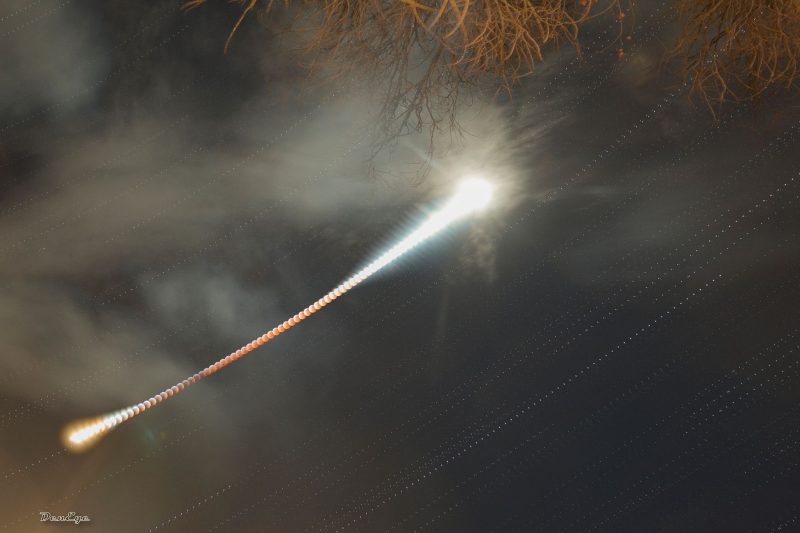
View at EarthSky Community Photos. | The first supermoon of 2019 – on January 21 – underwent a total eclipse. Here’s a marvelous time-lapse image of that eclipse from Dennis Schoenfelder in Alamosa, Colorado. One frame every three minutes. Thanks, Dennis!
A supermoon is a new or full moon closely coinciding with perigee, the moon’s closest point to Earth in its monthly orbit. According to the original definition of supermoon – coined by astrologer Richard Nolle in 1979 – a full moon or new moon has to come within 90 percent of its closest approach to Earth to be dubbed a supermoon. In other words, any full moon or new moon that comes to within 224,775 miles or 361,740 km (or less) of our planet, as measured from the centers of the moon and Earth, can be called a supermoon, according to Nolle’s original and extremely generous definition. That’s why you might hear about a number of supermoons in any given year.
So, by Nolle’s definition, when are the supermoons of 2019? We have six of them, three full moons and three new moons.
We had the year’s first supermoon with the January 21, 2019, full moon, which, moreover, staged a total lunar eclipse. The year’s second supermoon – also a full moon – was February 19. The year’s third supermoon – also full – was March 21. Of these, the February 19 full moon showcased the closest and largest full supermoon of 2019.
Now we’re in the midst of a series of new moon supermoons, when the new moon – or moon closest to being between the sun and Earth for any given month – is particularly close. There was one August 1. There are two more coming up on August 30 and September 28.
The second of these three new moon supermoons – on August 30, 2019 – will present the closest new moon supermoon of 2019. Of course, these new moons will be invisible to the eye, crossing the sky with the sun during the day. But they will cause larger-than-usual perigean spring tides, which people living near the coast will surely see and discuss.
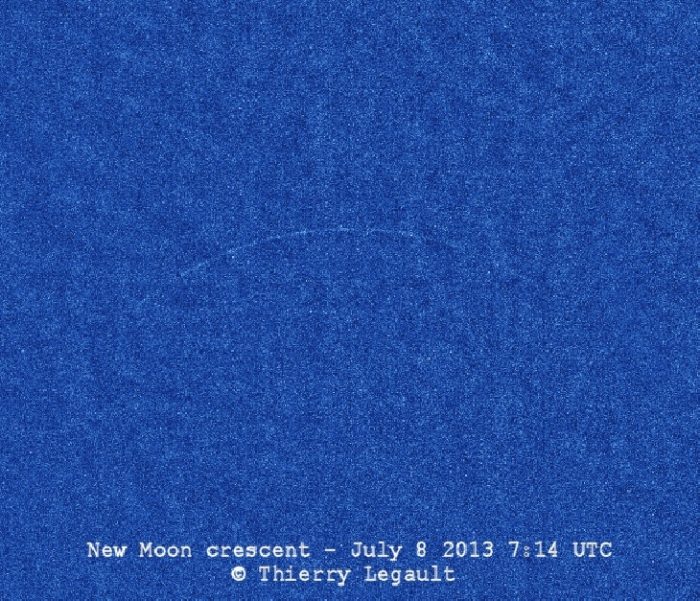
View larger. | You can’t see a new moon in the sky. It’s more or less between the sun and Earth for that monthly orbit and crosses the sky with the sun during the day. Here’s a cool photo taken at the instant of new moon – 07:14 UTC on July 8, 2013 – by Thierry Legault. Read more about this image.
Some astronomers complain about the name supermoon. They call it “hype.” But it’s not hype; it’s just a name that many people now use. We notice even some diehards are starting to use it now. Such is the power of folklore.
Before we called them supermoons, we in astronomy called these moons perigean full moons, or perigean new moons. Perigee just means near Earth.
The moon is full, or opposite Earth from the sun, once each month. It’s new, or more or less between the Earth and sun, once each month. And, every month, as it orbits Earth, the moon comes closest to Earth, or to perigee. The moon naturally swings farthest away once each month, too; that point is called apogee.
No doubt about it. Supermoon is a catchier term than perigean new moon or perigean full moon. That’s probably why the term supermoon has entered the popular culture. For example, Supermoon is the title track of Sophie Hunger’s 2015 album. It’s a nice song! Check it out in the video below.
The “hype” aspect of supermoons probably stems from an erroneous impression people had when the word supermoon came into popular usage … maybe a decade or so ago? Some people mistakenly believed a full supermoon would look much, much bigger to the eye. It doesn’t. Full supermoons don’t look bigger to the eye than ordinary full moons, although experienced observers say they can detect a difference.
But supermoons do look brighter than ordinary full moons! The angular diameter of a supermoon is about 7 percent greater than that of the average-size full moon and 14 percent greater than the angular diameter of a micro-moon (year’s farthest and smallest full moon). Yet, a supermoon exceeds the area (disk size) and brightness of an average-size full moon by some 15 percent – and the micro-moon by some 30 percent. For a visual reference, the size difference between a supermoon and micro-moon is proportionally similar to that of a U.S. quarter versus a U.S. nickel. So go outside on the night of a full supermoon, and – if you’re a regular observer of nature – you’ll surely notice the supermoon is exceptionally bright!
What’s more, Earth’s oceans feel the extra pull of supermoons. All full moons (and new moons) combine with the sun to create larger-than-usual tides, called spring tides. But closer-than-average full moons (or closer-than-average new moons) – that is, supermoons – elevate the tides even more. These extra-high spring tides are wide ranging. High tides climb up especially high, and, on the same day, low tides plunge especially low. Experts call these perigean spring tides, in honor of the moon’s nearness. If you live along an ocean coastline, watch for them! They typically follow the supermoon by a day or two.
Do extra-high supermoon tides cause flooding? Maybe yes, and maybe no. Flooding typically occurs when a strong weather system accompanies an especially high spring tide.
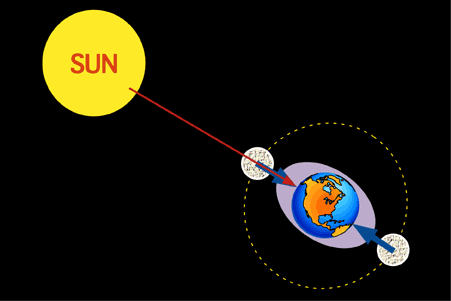
Around each new moon (left) and full moon (right) – when the sun, Earth, and moon are located more or less on a line in space – the range between high and low tides is greatest. These are called spring tides. A supermoon – new or full moon at its closest to Earth – accentuates these tides. Image via physicalgeography.net.
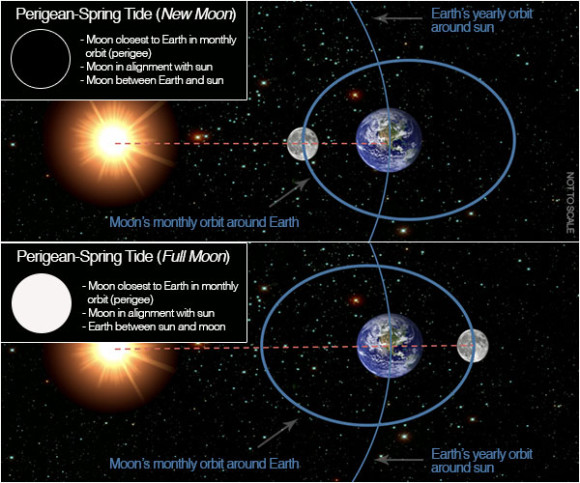
About 3 or 4 times a year, or more often, a new or full moon coincides with the moon’s closest point to Earth, or perigee. There’s usually only a small difference – typically a couple of inches (or centimeters) – between these “perigean spring tides” and normal tidal ranges. But, at these times, if a storm strikes along a coastline, flooding can occur. Image via NOAA.
How often do we have supermoons? Often! But of course it depends on your definition of supermoon. Here’s a list of the year’s closest supermoons from 2010 to 2020 (they all came closer than 357,000 kilometers or 221,830 miles):
January 30, 2010 (356,593 km or 221,577 mi)
March 19, 2011 (356,575 km or 221,565 miles)
May 6, 2012 (356,955 km or 221,802 miles)
June 23, 2013 (356,991 km or 221,824 miles)
August 10, 2014 (356,896 km or 221,765 miles)
September 28, 2015 (356,877 km or 221,753 miles)
November 14, 2016 (356,509 km or 221,524 miles)
January 2, 2018 (356,565 km or 221,559 miles)
February 19, 2019 (356,761 km or 221,681 miles)
April 8, 2020 (356,907 km or 221,772 miles)
There wasn’t an extra-close perigee full moon – a closest full supermoon – in 2017 (by “extra-close,” we’re considering moons less than 357,000 kilometers or 221,830 miles from Earth). After November 14, 2016, the extra-close coincidence of full moon and perigee didn’t happen again until January 1-2, 2018.
Looking farther into the future, the perigee full moon will come closer than 356,500 kilometers (221,519 miles) for the first time in the 21st century (2001-2100) on November 25, 2034 (356,446 km or 221,485 mi). The closest full moon of the 21st century will fall on December 6, 2052 (356,425 km or 221,472 mi).
By the way, some astronomers call the full moons listed above proxigee full moons. The word proxigee just means an extra-close perigee.
But, like many of you, we’ll have fun just calling ’em supermoons.
Happy supermoons, y’all! This great moon photo comes from EarthSky Facebook friend Rebecca Lacey in Cambridge, Idaho.
So, just how much closer are these close full and new moons? This year, 2019, the moon at its closest point to Earth resides 221,681 miles (356,761 km) away. At this juncture, the moon is said to be at 100 percent of its closest approach for the year.
In 2019, the moon at its farthest point swings out to 252,622 miles (406,555 km) from Earth. At that time, the moon is said to be at 0 percent of its closest approach.
At its closest point for the year, the moon is approximately 30,000 miles or 50,000 km closer than when the moon is most distant.
The full moon supermoon series of 2019 will recur after 14 lunar months (14 returns to full moon). That’s because 14 returns to full moon almost exactly equal 15 returns to perigee, a period of about one year, one month, and 18 days:
Full moon distance (March 9, 2020): 222,081 miles or 357,404 km
Full moon distance (April 8, 2020): 221,851 miles or 357,035 km
Full moon distance (May 7, 2020): 224,429 miles or 361,184 km
The new moon supermoon series will also recur after 14 lunar months (14 returns to new moon). Thus, we’ll have new supermoons on September 17, October 16 and November 15, 2020.
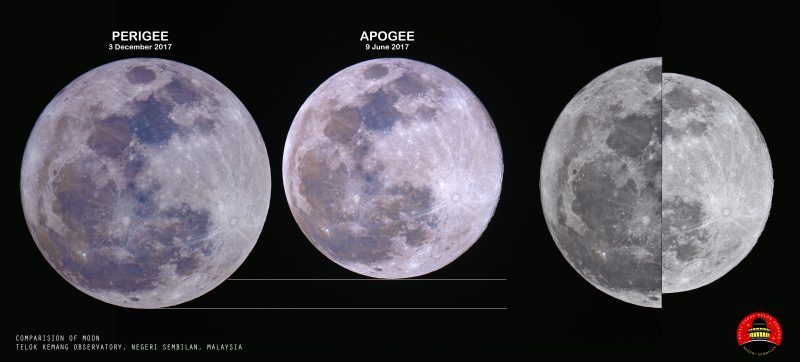
Here’s a comparison between the December 3, 2017, full moon at perigee (closest to Earth for the month) and the year’s farthest full moon in June 2017 at apogee (farthest from Earth for the month) by Muzamir Mazlan at Telok Kemang Observatory, Port Dickson, Malaysia. More photos of the December 2017 supermoon.
Bottom line: The first three full moons of 2019 are supermoons. The next supermoons of 2019 will be the new moons of August 1 and 30 plus September 28.
View at EarthSky Community Photos. | The first supermoon of 2019 – on January 21 – underwent a total eclipse. Here’s a marvelous time-lapse image of that eclipse from Dennis Schoenfelder in Alamosa, Colorado. One frame every three minutes. Thanks, Dennis!
A supermoon is a new or full moon closely coinciding with perigee, the moon’s closest point to Earth in its monthly orbit. According to the original definition of supermoon – coined by astrologer Richard Nolle in 1979 – a full moon or new moon has to come within 90 percent of its closest approach to Earth to be dubbed a supermoon. In other words, any full moon or new moon that comes to within 224,775 miles or 361,740 km (or less) of our planet, as measured from the centers of the moon and Earth, can be called a supermoon, according to Nolle’s original and extremely generous definition. That’s why you might hear about a number of supermoons in any given year.
So, by Nolle’s definition, when are the supermoons of 2019? We have six of them, three full moons and three new moons.
We had the year’s first supermoon with the January 21, 2019, full moon, which, moreover, staged a total lunar eclipse. The year’s second supermoon – also a full moon – was February 19. The year’s third supermoon – also full – was March 21. Of these, the February 19 full moon showcased the closest and largest full supermoon of 2019.
Now we’re in the midst of a series of new moon supermoons, when the new moon – or moon closest to being between the sun and Earth for any given month – is particularly close. There was one August 1. There are two more coming up on August 30 and September 28.
The second of these three new moon supermoons – on August 30, 2019 – will present the closest new moon supermoon of 2019. Of course, these new moons will be invisible to the eye, crossing the sky with the sun during the day. But they will cause larger-than-usual perigean spring tides, which people living near the coast will surely see and discuss.
View larger. | You can’t see a new moon in the sky. It’s more or less between the sun and Earth for that monthly orbit and crosses the sky with the sun during the day. Here’s a cool photo taken at the instant of new moon – 07:14 UTC on July 8, 2013 – by Thierry Legault. Read more about this image.
Some astronomers complain about the name supermoon. They call it “hype.” But it’s not hype; it’s just a name that many people now use. We notice even some diehards are starting to use it now. Such is the power of folklore.
Before we called them supermoons, we in astronomy called these moons perigean full moons, or perigean new moons. Perigee just means near Earth.
The moon is full, or opposite Earth from the sun, once each month. It’s new, or more or less between the Earth and sun, once each month. And, every month, as it orbits Earth, the moon comes closest to Earth, or to perigee. The moon naturally swings farthest away once each month, too; that point is called apogee.
No doubt about it. Supermoon is a catchier term than perigean new moon or perigean full moon. That’s probably why the term supermoon has entered the popular culture. For example, Supermoon is the title track of Sophie Hunger’s 2015 album. It’s a nice song! Check it out in the video below.
The “hype” aspect of supermoons probably stems from an erroneous impression people had when the word supermoon came into popular usage … maybe a decade or so ago? Some people mistakenly believed a full supermoon would look much, much bigger to the eye. It doesn’t. Full supermoons don’t look bigger to the eye than ordinary full moons, although experienced observers say they can detect a difference.
But supermoons do look brighter than ordinary full moons! The angular diameter of a supermoon is about 7 percent greater than that of the average-size full moon and 14 percent greater than the angular diameter of a micro-moon (year’s farthest and smallest full moon). Yet, a supermoon exceeds the area (disk size) and brightness of an average-size full moon by some 15 percent – and the micro-moon by some 30 percent. For a visual reference, the size difference between a supermoon and micro-moon is proportionally similar to that of a U.S. quarter versus a U.S. nickel. So go outside on the night of a full supermoon, and – if you’re a regular observer of nature – you’ll surely notice the supermoon is exceptionally bright!
What’s more, Earth’s oceans feel the extra pull of supermoons. All full moons (and new moons) combine with the sun to create larger-than-usual tides, called spring tides. But closer-than-average full moons (or closer-than-average new moons) – that is, supermoons – elevate the tides even more. These extra-high spring tides are wide ranging. High tides climb up especially high, and, on the same day, low tides plunge especially low. Experts call these perigean spring tides, in honor of the moon’s nearness. If you live along an ocean coastline, watch for them! They typically follow the supermoon by a day or two.
Do extra-high supermoon tides cause flooding? Maybe yes, and maybe no. Flooding typically occurs when a strong weather system accompanies an especially high spring tide.
Around each new moon (left) and full moon (right) – when the sun, Earth, and moon are located more or less on a line in space – the range between high and low tides is greatest. These are called spring tides. A supermoon – new or full moon at its closest to Earth – accentuates these tides. Image via physicalgeography.net.
About 3 or 4 times a year, or more often, a new or full moon coincides with the moon’s closest point to Earth, or perigee. There’s usually only a small difference – typically a couple of inches (or centimeters) – between these “perigean spring tides” and normal tidal ranges. But, at these times, if a storm strikes along a coastline, flooding can occur. Image via NOAA.
How often do we have supermoons? Often! But of course it depends on your definition of supermoon. Here’s a list of the year’s closest supermoons from 2010 to 2020 (they all came closer than 357,000 kilometers or 221,830 miles):
January 30, 2010 (356,593 km or 221,577 mi)
March 19, 2011 (356,575 km or 221,565 miles)
May 6, 2012 (356,955 km or 221,802 miles)
June 23, 2013 (356,991 km or 221,824 miles)
August 10, 2014 (356,896 km or 221,765 miles)
September 28, 2015 (356,877 km or 221,753 miles)
November 14, 2016 (356,509 km or 221,524 miles)
January 2, 2018 (356,565 km or 221,559 miles)
February 19, 2019 (356,761 km or 221,681 miles)
April 8, 2020 (356,907 km or 221,772 miles)
There wasn’t an extra-close perigee full moon – a closest full supermoon – in 2017 (by “extra-close,” we’re considering moons less than 357,000 kilometers or 221,830 miles from Earth). After November 14, 2016, the extra-close coincidence of full moon and perigee didn’t happen again until January 1-2, 2018.
Looking farther into the future, the perigee full moon will come closer than 356,500 kilometers (221,519 miles) for the first time in the 21st century (2001-2100) on November 25, 2034 (356,446 km or 221,485 mi). The closest full moon of the 21st century will fall on December 6, 2052 (356,425 km or 221,472 mi).
By the way, some astronomers call the full moons listed above proxigee full moons. The word proxigee just means an extra-close perigee.
But, like many of you, we’ll have fun just calling ’em supermoons.
Happy supermoons, y’all! This great moon photo comes from EarthSky Facebook friend Rebecca Lacey in Cambridge, Idaho.
So, just how much closer are these close full and new moons? This year, 2019, the moon at its closest point to Earth resides 221,681 miles (356,761 km) away. At this juncture, the moon is said to be at 100 percent of its closest approach for the year.
In 2019, the moon at its farthest point swings out to 252,622 miles (406,555 km) from Earth. At that time, the moon is said to be at 0 percent of its closest approach.
At its closest point for the year, the moon is approximately 30,000 miles or 50,000 km closer than when the moon is most distant.
The full moon supermoon series of 2019 will recur after 14 lunar months (14 returns to full moon). That’s because 14 returns to full moon almost exactly equal 15 returns to perigee, a period of about one year, one month, and 18 days:
Full moon distance (March 9, 2020): 222,081 miles or 357,404 km
Full moon distance (April 8, 2020): 221,851 miles or 357,035 km
Full moon distance (May 7, 2020): 224,429 miles or 361,184 km
The new moon supermoon series will also recur after 14 lunar months (14 returns to new moon). Thus, we’ll have new supermoons on September 17, October 16 and November 15, 2020.
Here’s a comparison between the December 3, 2017, full moon at perigee (closest to Earth for the month) and the year’s farthest full moon in June 2017 at apogee (farthest from Earth for the month) by Muzamir Mazlan at Telok Kemang Observatory, Port Dickson, Malaysia. More photos of the December 2017 supermoon.
Bottom line: The first three full moons of 2019 are supermoons. The next supermoons of 2019 will be the new moons of August 1 and 30 plus September 28.
Youngest possible lunar crescent, with the moon’s age being exactly zero when this photo was taken — at the instant of new moon – 07:14 UTC on July 8, 2013. Image by Thierry Legault.
When the moon is new, it’s most nearly between the Earth and sun for any particular month. There’s a new moon about once a month, because the moon takes about a month to orbit Earth. Most of the time, the new moon passes not in front of the sun, but simply near it in our sky. That’s why, in most months, there’s no solar eclipse.
On the other hand, the moon must be at the new phase in order for a solar eclipse to take place.
The photo of a new moon at the top of this page shows the moon as it passed near the sun on July 8, 2013. There was no eclipse that day; it was an ordinary new moon. New moons typically can’t be seen, or at least they can’t without special equipment and a lot of moon-photography experience. Thierry Legault was able to catch the photo at top – the moon at the instant it was new – because the moon that month passed to one side of the sun, and the faintest of lunar crescents was visible.
Either way – in front of the sun or just near it – on the day of new moon, the moon travels across the sky with the sun during the day, hidden in the sun’s glare.
Some people use the term new moon for a thin crescent moon visible in the west after sunset. You always see these little crescents – which set shortly after the sun – a day or two after each month’s new moon. Astronomers don’t call these little crescent moons new moons, however. In the language of astronomy, this slim crescent is called a young moon.
New moons, and young moons, are fascinating to many. The Farmer’s Almanac, for example, still offers information on gardening by the moon. And many cultures have holidays based on moon phases.
Start looking for the young moon – a slim crescent visible in the west after sunset – around August 31, 2019. Read more.
Bottom line: When astronomers say the moon is new, they mean it’s crossing the sky with the sun during the day. New moons generally can’t be seen.
Youngest possible lunar crescent, with the moon’s age being exactly zero when this photo was taken — at the instant of new moon – 07:14 UTC on July 8, 2013. Image by Thierry Legault.
When the moon is new, it’s most nearly between the Earth and sun for any particular month. There’s a new moon about once a month, because the moon takes about a month to orbit Earth. Most of the time, the new moon passes not in front of the sun, but simply near it in our sky. That’s why, in most months, there’s no solar eclipse.
On the other hand, the moon must be at the new phase in order for a solar eclipse to take place.
The photo of a new moon at the top of this page shows the moon as it passed near the sun on July 8, 2013. There was no eclipse that day; it was an ordinary new moon. New moons typically can’t be seen, or at least they can’t without special equipment and a lot of moon-photography experience. Thierry Legault was able to catch the photo at top – the moon at the instant it was new – because the moon that month passed to one side of the sun, and the faintest of lunar crescents was visible.
Either way – in front of the sun or just near it – on the day of new moon, the moon travels across the sky with the sun during the day, hidden in the sun’s glare.
Some people use the term new moon for a thin crescent moon visible in the west after sunset. You always see these little crescents – which set shortly after the sun – a day or two after each month’s new moon. Astronomers don’t call these little crescent moons new moons, however. In the language of astronomy, this slim crescent is called a young moon.
New moons, and young moons, are fascinating to many. The Farmer’s Almanac, for example, still offers information on gardening by the moon. And many cultures have holidays based on moon phases.
Start looking for the young moon – a slim crescent visible in the west after sunset – around August 31, 2019. Read more.
Bottom line: When astronomers say the moon is new, they mean it’s crossing the sky with the sun during the day. New moons generally can’t be seen.
Story of the Week... Toon of the Week... Coming Soon on SkS... Climate Feedback Reviews... SkS Week in Review... Poster of the Week...
Story of the Week...
G7 can’t turn a blind eye to ecocide in the Amazon
Leaders must ask themselves if Jair Bolsonaro’s destructive attitude to the forest and its peoples should be considered a crime
The fires in the world’s largest rainforest have triggered a global outcry and are dominating the G7 meeting in Biarritz in southern France. Photograph: Victor Moriyama/Getty
hen G7 leaders sit in judgment on Brazilian president Jair Bolsonaro this weekend, the question they should ask themselves is whether the rape of the natural world should finally be treated as a crime. The language of sexual violence will be familiar to the former army captain, who publicly admires the sadistic torturers of the dictatorship era and once said to a congresswoman, “I would never rape you because you are not worth it.” Last month, after Pope Francis and European leaders expressed concern about the Amazon, Bolsonaro lashed back by claiming: “Brazil is a virgin that every foreign pervert desires.”
As a nationalist, the president sees the Amazon in terms of ownership and sovereignty. As a chauvinist, he sees the region as a possession to be exploited and opened up, rather than cherished and nurtured.
Since taking power eight months ago, Bolsonaro has, layer by layer, stripped the rainforest of protections. First, he weakened the environment ministry and put it in the hands of a minister convicted of environmental fraud. Second, he undermined the agency responsible for monitoring the forest, Ibama. Third, he alienated Norway and Germany, the main donors to forest-protection causes. Fourth, he tried to hide what was happening by sacking the head of the space agency responsible for satellite data on destruction. Fifth, he accused environmental charities of starting fires and working for foreign interests. And sixth, he verbally attacked Amazon dwellers – the indigenous and Quilombola communities who depend on a healthy forest.
With these defences down, the president has encouraged outsiders from the mining, logging and farming industries to take advantage of economic opportunities. The results have been brutal. Last month, deforestation surged by 278%. This month is almost certain to be a record for August under the current monitoring system. The wounds are impossible to cover up. The Amazon’s fires are now burning on front pages, news broadcasts and social networks across the world.
Story of the Week... Toon of the Week... Coming Soon on SkS... Climate Feedback Reviews... SkS Week in Review... Poster of the Week...
Story of the Week...
G7 can’t turn a blind eye to ecocide in the Amazon
Leaders must ask themselves if Jair Bolsonaro’s destructive attitude to the forest and its peoples should be considered a crime
The fires in the world’s largest rainforest have triggered a global outcry and are dominating the G7 meeting in Biarritz in southern France. Photograph: Victor Moriyama/Getty
hen G7 leaders sit in judgment on Brazilian president Jair Bolsonaro this weekend, the question they should ask themselves is whether the rape of the natural world should finally be treated as a crime. The language of sexual violence will be familiar to the former army captain, who publicly admires the sadistic torturers of the dictatorship era and once said to a congresswoman, “I would never rape you because you are not worth it.” Last month, after Pope Francis and European leaders expressed concern about the Amazon, Bolsonaro lashed back by claiming: “Brazil is a virgin that every foreign pervert desires.”
As a nationalist, the president sees the Amazon in terms of ownership and sovereignty. As a chauvinist, he sees the region as a possession to be exploited and opened up, rather than cherished and nurtured.
Since taking power eight months ago, Bolsonaro has, layer by layer, stripped the rainforest of protections. First, he weakened the environment ministry and put it in the hands of a minister convicted of environmental fraud. Second, he undermined the agency responsible for monitoring the forest, Ibama. Third, he alienated Norway and Germany, the main donors to forest-protection causes. Fourth, he tried to hide what was happening by sacking the head of the space agency responsible for satellite data on destruction. Fifth, he accused environmental charities of starting fires and working for foreign interests. And sixth, he verbally attacked Amazon dwellers – the indigenous and Quilombola communities who depend on a healthy forest.
With these defences down, the president has encouraged outsiders from the mining, logging and farming industries to take advantage of economic opportunities. The results have been brutal. Last month, deforestation surged by 278%. This month is almost certain to be a record for August under the current monitoring system. The wounds are impossible to cover up. The Amazon’s fires are now burning on front pages, news broadcasts and social networks across the world.
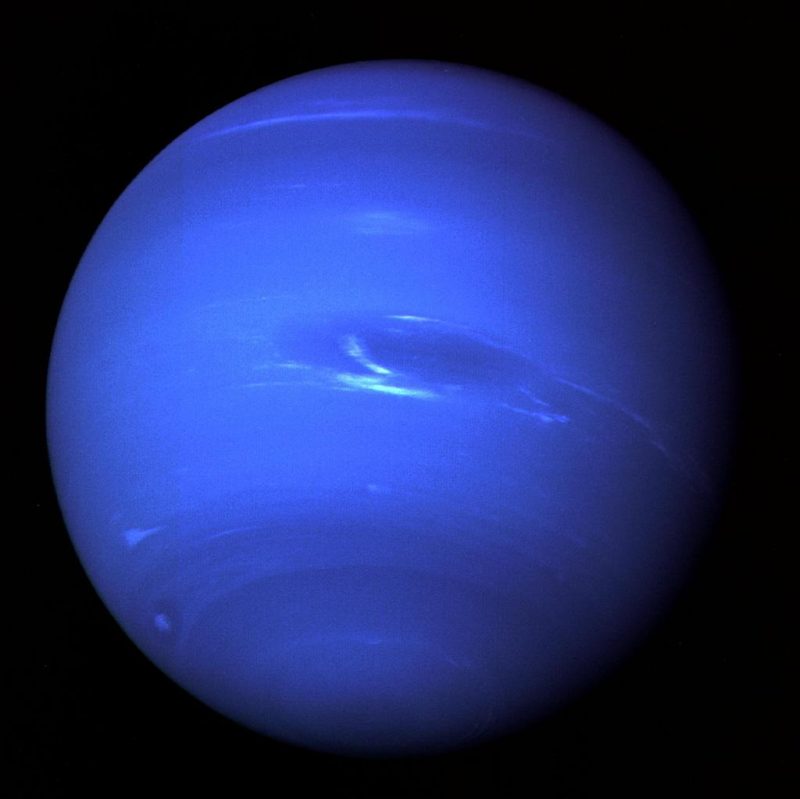
Voyager 2 acquired this image fewer than 5 days before its closest approach to Neptune on August 25, 1989. You can see Neptune’s Great Dark Spot – a storm in its atmosphere – and the bright, light-blue smudge of clouds that accompanies the storm. Read more about this image via NASA/JPL-Caltech.
Thirty years ago, on August 25, 1989, NASA’s Voyager 2 spacecraft made a close flyby of Neptune, giving humanity its first close-up of our solar system’s eighth planet. Marking the end of the Voyager mission’s Grand Tour of the solar system’s four giant planets – Jupiter, Saturn, Uranus and Neptune – that first was also a last: No other spacecraft has visited Neptune since. Ed Stone, a professor of physics at Caltech and Voyager’s project scientist since 1975, said:
The Voyager planetary program really was an opportunity to show the public what science is all about. Every day we learned something new.
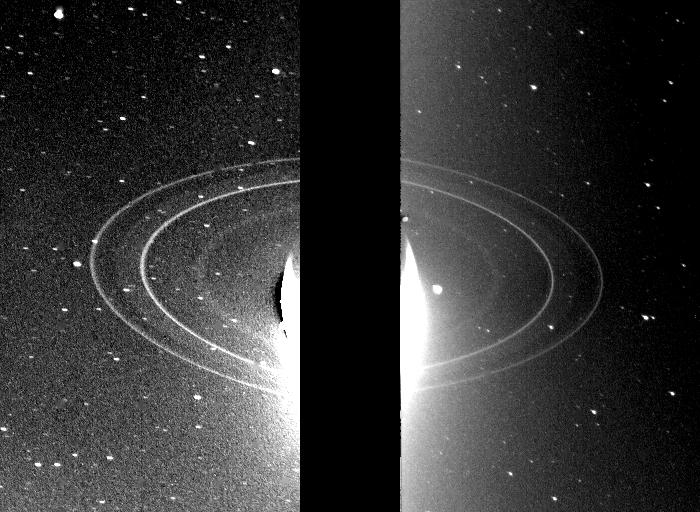
Wrapped in teal- and cobalt-colored bands of clouds, the planet that Voyager 2 revealed looked like a blue-hued sibling to Jupiter and Saturn, the blue indicating the presence of methane. A massive, slate-colored storm was dubbed the Great Dark Spot, similar to Jupiter’s Great Red Spot. Six new moons and four rings were discovered.
Voyager 2 took these 2 images of the rings of Neptune on August 26, 1989, just after closest approach. Neptune’s 2 main rings are clearly visible; 2 fainter rings are visible with the help of long exposure times and backlighting from the sun. Read more about this image via NASA PhotoJournal.
During the encounter, the engineering team carefully changed the probe’s direction and speed so that it could do a close flyby of the planet’s largest moon, Triton. The flyby showed evidence of geologically young surfaces and active geysers spewing material skyward. This indicated that Triton was not simply a solid ball of ice, even though it had the lowest surface temperature of any natural body observed by Voyager: minus 391 degrees Fahrenheit (minus 235 degrees Celsius).
The conclusion of the Neptune flyby marked the beginning of the Voyager Interstellar Mission, which continues today, 42 years after launch. Voyager 2 and its twin, Voyager 1 (which had also flown by Jupiter and Saturn), continue to send back dispatches from the outer reaches of our solar system. At the time of the Neptune encounter, Voyager 2 was about 2.9 billion miles (4.7 billion km) from Earth; today it is 11 billion miles (18 billion km) from us. The faster-moving Voyager 1 is 13 billion miles (21 billion km) from Earth.
Getting There
By the time Voyager 2 reached Neptune, the Voyager mission team had completed five planetary encounters. But the big blue planet still posed unique challenges.
About 30 times farther from the sun than Earth is, the icy giant receives only about 0.001 times the amount of sunlight that Earth does. In such low light, Voyager 2’s camera required longer exposures to get quality images. But because the spacecraft would reach a maximum speed of about 60,000 mph (90,000 kph) relative to Earth, a long exposure time would make the image blurry. (Imagine trying to take a picture of a roadside sign from the window of a speeding car.)
So the team programmed Voyager 2’s thrusters to fire gently during the close approach, rotating the spacecraft to keep the camera focused on its target without interrupting the spacecraft’s overall speed and direction.
The probe’s great distance also meant that by the time radio signals from Voyager 2 reached Earth, they were weaker than those of other flybys. But the spacecraft had the advantage of time: The Voyagers communicate with Earth via the Deep Space Network, or DSN, which utilizes radio antennas at sites in Madrid, Spain; Canberra, Australia; and Goldstone, California. During Voyager 2’s Uranus encounter in 1986, the three largest DSN antennas were 64 meters (210 feet) wide. To assist with the Neptune encounter, the DSN expanded the dishes to 70 meters (230 feet). They also included nearby non-DSN antennas to collect data, including another 64-meter (210 feet) dish in Parkes, Australia, and multiple 25-meter (82 feet) antennas at the Very Large Array in New Mexico.
The effort ensured that engineers could hear Voyager loud and clear. It also increased how much data could be sent back to Earth in a given period, enabling the spacecraft to send back more pictures from the flyby.
Being There
In the week leading up to that August 1989 close encounter, the atmosphere was electric at NASA’s Jet Propulsion Laboratory in Pasadena, California, which manages the Voyager mission. As images taken by Voyager 2 during its Neptune approach made the four-hour journey to Earth, Voyager team members would crowd around computer monitors around the Lab to see. Stone said:
One of the things that made the Voyager planetary encounters different from missions today is that there was no internet that would have allowed the whole team and the whole world to see the pictures at the same time. The images were available in real time at a limited number of locations.
But the team was committed to giving the public updates as quickly as possible, so from August 21 to August 29, they would share their discoveries with the world during daily press conferences. On August 24, a program called Voyager All Night broadcast regular updates from the probe’s closest encounter with the planet, which took place at 4 a.m. GMT (9 p.m. in California on August 24).
The next morning, Vice President Dan Quayle visited the Lab to commend the Voyager team. That night, Chuck Berry, whose song Johnny B. Goode was included on the Golden Record that flew with both Voyagers, played at JPL’s celebration of the feat.
Chuck Berry (l) and Carl Sagan (r) at a Voyager 2 Neptune flyby celebration in August 1989. Berry’s song Johnny B. Goode is the only rock ‘n’ roll song on the Golden Records currently traveling into interstellar space aboard Voyagers 1 and 2. Image via NASA.
Of course, the Voyagers’ achievements extend far beyond that historic week three decades ago. Both probes have now entered interstellar space after exiting the heliosphere – the protective bubble around the planets created by a high-speed flow of particles and magnetic fields spewed outward by our sun.
They are reporting back to Earth on the “weather” and conditions from this region filled with the debris from stars that exploded elsewhere in our galaxy. They have taken humanity’s first tenuous step into the cosmic ocean where no other operating probes have flown.
Voyager data also complement other missions, including NASA’s Interstellar Boundary Explorer (IBEX), which is remotely sensing that boundary where particles from our sun collide with material from the rest of the galaxy. And NASA is preparing the Interstellar Mapping and Acceleration Probe (IMAP), due to launch in 2024, to capitalize on Voyager observations.
The Voyagers send their findings back to DSN antennas with 13-watt transmitters – about enough power to run a refrigerator light bulb. Stone said:
Every day they travel somewhere that human probes have never been before. Forty-two years after launch, and they’re still exploring.
Bottom line: It’s been 30 years since Voyager 2 visited Neptune, as part of the Voyagers’ Grand Tour of our solar system’s four giant planets. As of today, no other earthly spacecraft has returned to Neptune.
Voyager 2 acquired this image fewer than 5 days before its closest approach to Neptune on August 25, 1989. You can see Neptune’s Great Dark Spot – a storm in its atmosphere – and the bright, light-blue smudge of clouds that accompanies the storm. Read more about this image via NASA/JPL-Caltech.
Thirty years ago, on August 25, 1989, NASA’s Voyager 2 spacecraft made a close flyby of Neptune, giving humanity its first close-up of our solar system’s eighth planet. Marking the end of the Voyager mission’s Grand Tour of the solar system’s four giant planets – Jupiter, Saturn, Uranus and Neptune – that first was also a last: No other spacecraft has visited Neptune since. Ed Stone, a professor of physics at Caltech and Voyager’s project scientist since 1975, said:
The Voyager planetary program really was an opportunity to show the public what science is all about. Every day we learned something new.
Wrapped in teal- and cobalt-colored bands of clouds, the planet that Voyager 2 revealed looked like a blue-hued sibling to Jupiter and Saturn, the blue indicating the presence of methane. A massive, slate-colored storm was dubbed the Great Dark Spot, similar to Jupiter’s Great Red Spot. Six new moons and four rings were discovered.
Voyager 2 took these 2 images of the rings of Neptune on August 26, 1989, just after closest approach. Neptune’s 2 main rings are clearly visible; 2 fainter rings are visible with the help of long exposure times and backlighting from the sun. Read more about this image via NASA PhotoJournal.
During the encounter, the engineering team carefully changed the probe’s direction and speed so that it could do a close flyby of the planet’s largest moon, Triton. The flyby showed evidence of geologically young surfaces and active geysers spewing material skyward. This indicated that Triton was not simply a solid ball of ice, even though it had the lowest surface temperature of any natural body observed by Voyager: minus 391 degrees Fahrenheit (minus 235 degrees Celsius).
The conclusion of the Neptune flyby marked the beginning of the Voyager Interstellar Mission, which continues today, 42 years after launch. Voyager 2 and its twin, Voyager 1 (which had also flown by Jupiter and Saturn), continue to send back dispatches from the outer reaches of our solar system. At the time of the Neptune encounter, Voyager 2 was about 2.9 billion miles (4.7 billion km) from Earth; today it is 11 billion miles (18 billion km) from us. The faster-moving Voyager 1 is 13 billion miles (21 billion km) from Earth.
Getting There
By the time Voyager 2 reached Neptune, the Voyager mission team had completed five planetary encounters. But the big blue planet still posed unique challenges.
About 30 times farther from the sun than Earth is, the icy giant receives only about 0.001 times the amount of sunlight that Earth does. In such low light, Voyager 2’s camera required longer exposures to get quality images. But because the spacecraft would reach a maximum speed of about 60,000 mph (90,000 kph) relative to Earth, a long exposure time would make the image blurry. (Imagine trying to take a picture of a roadside sign from the window of a speeding car.)
So the team programmed Voyager 2’s thrusters to fire gently during the close approach, rotating the spacecraft to keep the camera focused on its target without interrupting the spacecraft’s overall speed and direction.
The probe’s great distance also meant that by the time radio signals from Voyager 2 reached Earth, they were weaker than those of other flybys. But the spacecraft had the advantage of time: The Voyagers communicate with Earth via the Deep Space Network, or DSN, which utilizes radio antennas at sites in Madrid, Spain; Canberra, Australia; and Goldstone, California. During Voyager 2’s Uranus encounter in 1986, the three largest DSN antennas were 64 meters (210 feet) wide. To assist with the Neptune encounter, the DSN expanded the dishes to 70 meters (230 feet). They also included nearby non-DSN antennas to collect data, including another 64-meter (210 feet) dish in Parkes, Australia, and multiple 25-meter (82 feet) antennas at the Very Large Array in New Mexico.
The effort ensured that engineers could hear Voyager loud and clear. It also increased how much data could be sent back to Earth in a given period, enabling the spacecraft to send back more pictures from the flyby.
Being There
In the week leading up to that August 1989 close encounter, the atmosphere was electric at NASA’s Jet Propulsion Laboratory in Pasadena, California, which manages the Voyager mission. As images taken by Voyager 2 during its Neptune approach made the four-hour journey to Earth, Voyager team members would crowd around computer monitors around the Lab to see. Stone said:
One of the things that made the Voyager planetary encounters different from missions today is that there was no internet that would have allowed the whole team and the whole world to see the pictures at the same time. The images were available in real time at a limited number of locations.
But the team was committed to giving the public updates as quickly as possible, so from August 21 to August 29, they would share their discoveries with the world during daily press conferences. On August 24, a program called Voyager All Night broadcast regular updates from the probe’s closest encounter with the planet, which took place at 4 a.m. GMT (9 p.m. in California on August 24).
The next morning, Vice President Dan Quayle visited the Lab to commend the Voyager team. That night, Chuck Berry, whose song Johnny B. Goode was included on the Golden Record that flew with both Voyagers, played at JPL’s celebration of the feat.
Chuck Berry (l) and Carl Sagan (r) at a Voyager 2 Neptune flyby celebration in August 1989. Berry’s song Johnny B. Goode is the only rock ‘n’ roll song on the Golden Records currently traveling into interstellar space aboard Voyagers 1 and 2. Image via NASA.
Of course, the Voyagers’ achievements extend far beyond that historic week three decades ago. Both probes have now entered interstellar space after exiting the heliosphere – the protective bubble around the planets created by a high-speed flow of particles and magnetic fields spewed outward by our sun.
They are reporting back to Earth on the “weather” and conditions from this region filled with the debris from stars that exploded elsewhere in our galaxy. They have taken humanity’s first tenuous step into the cosmic ocean where no other operating probes have flown.
Voyager data also complement other missions, including NASA’s Interstellar Boundary Explorer (IBEX), which is remotely sensing that boundary where particles from our sun collide with material from the rest of the galaxy. And NASA is preparing the Interstellar Mapping and Acceleration Probe (IMAP), due to launch in 2024, to capitalize on Voyager observations.
The Voyagers send their findings back to DSN antennas with 13-watt transmitters – about enough power to run a refrigerator light bulb. Stone said:
Every day they travel somewhere that human probes have never been before. Forty-two years after launch, and they’re still exploring.
Bottom line: It’s been 30 years since Voyager 2 visited Neptune, as part of the Voyagers’ Grand Tour of our solar system’s four giant planets. As of today, no other earthly spacecraft has returned to Neptune.
Artist’s concept of India’s lunar spacecraft, Chandrayaan-2.
On August 20, 2019, a 29-minute-long Lunar Orbit Insertion (LOI) successfully placed Chandrayaan-2 into an orbit around the moon. The LOI was an important step forward in the mission because it decreased the spacecraft’s speed from 5,368 miles per hour (2.4 km per second) to 4,697 miles per hour (2.1 km per second). If the spacecraft had not slowed to that speed, its trajectory would have flung it away from the Earth-moon system. The Indian Space Research Organisation (ISRO) announced the update on Twitter:
#ISRO
Today (August 20, 2019) after the Lunar Orbit Insertion (LOI), #Chandrayaan2 is now in Lunar orbit. Lander Vikram will soft land on Moon on September 7, 2019 pic.twitter.com/6mS84pP6RD
ISRO is now decreasing the spacecraft’s orbit using the onboard propulsion system until it reaches 62 miles (100 km) above the moon’s surface. A second such maneuver was performed on August 21, 2019, to shorten the spacecraft’s current elliptical orbit to a circular one. According to a statement from ISRO:
Second lunar bound orbit maneuver for Chandrayaan-2 spacecraft was performed successfully today (August 21, 2019) beginning at 1250 hrs IST [07:20 UTC] as planned, using the onboard propulsion system. The duration of the maneuver was 1228 seconds. The orbit achieved is 118 km x 4412 km [73 x 2,741 miles]. All spacecraft parameters are normal.
The next lunar-bound orbit maneuver is scheduled on August 28, 2019, between 0530-0630 hrs IST.
Chandrayaan-2 is scheduled to enter its final circular orbit around the moon on September 1, 2019. This orbit will pass over the lunar poles, one of which will be the landing site for Vikram – Chandrayaan-2’s lander that aims to soft-land on the moon’s south pole. The orbiter will orbit at a 62 miles (100 km) distance from the moon’s surface for a period of one year, making a pass over both of the moon’s poles with each revolution.
Here is the first image of the moon captured by Chandrayaan-2 on August 21, 2019, using its LI4 camera:
The moon as viewed by Chandrayaan-2 on August 21, 2019. This image was taken at a height of 1646 miles (2650 km) above the lunar surface. The dark patch at the top is the Mare Orientale basin, theorized to have formed due to the impact of an asteroid-sized object. Also seen is the double-ringed Apollo crater towards the left. Image via ISRO.
Key dates:
September 1, 2019: Fifth and final lunar bound maneuver after which an orbit of 70 to 80 miles (114 to 128 km) is expected to be achieved.
September 2, 2019: The lander Vikram along with the rover Pragyan will separate from the orbiter and begin its powered descent towards the moon’s surface. Complex braking mechanisms will be in place to ensure a soft landing.
September 7, 2019: Vikram will soft-land on the lunar south pole. A few hours later, Pragyan will roll out to perform in-situ experiments for one lunar day (14 Earth days).
Artist’s concept of India’s lunar spacecraft, Chandrayaan-2.
On August 20, 2019, a 29-minute-long Lunar Orbit Insertion (LOI) successfully placed Chandrayaan-2 into an orbit around the moon. The LOI was an important step forward in the mission because it decreased the spacecraft’s speed from 5,368 miles per hour (2.4 km per second) to 4,697 miles per hour (2.1 km per second). If the spacecraft had not slowed to that speed, its trajectory would have flung it away from the Earth-moon system. The Indian Space Research Organisation (ISRO) announced the update on Twitter:
#ISRO
Today (August 20, 2019) after the Lunar Orbit Insertion (LOI), #Chandrayaan2 is now in Lunar orbit. Lander Vikram will soft land on Moon on September 7, 2019 pic.twitter.com/6mS84pP6RD
ISRO is now decreasing the spacecraft’s orbit using the onboard propulsion system until it reaches 62 miles (100 km) above the moon’s surface. A second such maneuver was performed on August 21, 2019, to shorten the spacecraft’s current elliptical orbit to a circular one. According to a statement from ISRO:
Second lunar bound orbit maneuver for Chandrayaan-2 spacecraft was performed successfully today (August 21, 2019) beginning at 1250 hrs IST [07:20 UTC] as planned, using the onboard propulsion system. The duration of the maneuver was 1228 seconds. The orbit achieved is 118 km x 4412 km [73 x 2,741 miles]. All spacecraft parameters are normal.
The next lunar-bound orbit maneuver is scheduled on August 28, 2019, between 0530-0630 hrs IST.
Chandrayaan-2 is scheduled to enter its final circular orbit around the moon on September 1, 2019. This orbit will pass over the lunar poles, one of which will be the landing site for Vikram – Chandrayaan-2’s lander that aims to soft-land on the moon’s south pole. The orbiter will orbit at a 62 miles (100 km) distance from the moon’s surface for a period of one year, making a pass over both of the moon’s poles with each revolution.
Here is the first image of the moon captured by Chandrayaan-2 on August 21, 2019, using its LI4 camera:
The moon as viewed by Chandrayaan-2 on August 21, 2019. This image was taken at a height of 1646 miles (2650 km) above the lunar surface. The dark patch at the top is the Mare Orientale basin, theorized to have formed due to the impact of an asteroid-sized object. Also seen is the double-ringed Apollo crater towards the left. Image via ISRO.
Key dates:
September 1, 2019: Fifth and final lunar bound maneuver after which an orbit of 70 to 80 miles (114 to 128 km) is expected to be achieved.
September 2, 2019: The lander Vikram along with the rover Pragyan will separate from the orbiter and begin its powered descent towards the moon’s surface. Complex braking mechanisms will be in place to ensure a soft landing.
September 7, 2019: Vikram will soft-land on the lunar south pole. A few hours later, Pragyan will roll out to perform in-situ experiments for one lunar day (14 Earth days).
The inhabitants of the moon (Vespertilio-homo or bat-men), via Wikimedia Commons.
August 25, 1835. On this date, a New York newspaper, The Sun, published the first article in what’s come to be called The Great Moon Hoax. It was a series of six articles alleging the discovery of life on the moon – including bat-men and unicorns – supposedly made by famous astronomer Sir John Herschel while on a trip to the Cape of Good Hope in South Africa. Richard Adams Locke, a reporter for The Sun, is said to have written the article, although he never publicly admitted it.
According to the articles, a Dr. Andrew Grant, Herschel’s (fictitious) companion, was the author. The articles also referred to the Edinburgh Journal of Science, which had been out of commission for some years. Yet, for most readers, the author and the source made the articles seem credible.
The articles were reprinted in papers throughout Europe.
The first article described, among other things, a super-powerful telescope built by Herschel.
The weight of this ponderous lens was 14,826 pounds [6,700 kilograms] or nearly seven tons after being polished; and its estimated magnifying power 42,000 times. It was therefore presumed to be capable of representing objects in our lunar satellite of little more than eighteen inches [46 cm] in diameter, providing its focal image of them could be rendered distinct by the transfusion of article light.
The huge telescope supposedly allowed Herschel to make his fantastic discoveries. One of the articles said, for example:
It was one of the noble valleys at the foot of this mountain that we found the very superior species of the Vespertilio-homo (bat-men) … They were of infinitely greater personal beauty, and appeared in our eyes scarcely less lovely than the general representations of angels by the more imaginative schools of painters.
Bat-women and bat-men (under tree) and bipedal beavers (right).
From the very first article, vigilant readers might have guessed it was a hoax. Two scientists from Yale are said to have tried to find the Edinburgh Journal of Science in Yale’s library. An unsuccessful search led them to travel all the way to The Sun‘s office in New York, where they were told that the original journal article was still at the printers.
The second article described many other fascinating lunar findings such as beautiful basaltic formations, cliffs, great oceans, and lunar forests. It also described many animals, one similar to a bison, and another that resembled a goat:
The next animal perceived would be classed on Earth as a monster. It was of a bluish lead color, about the size of a goat, with a head and beard like him, and a single horn, slightly inclined forward from the perpendicular. The female was destitute of horn and beard, but had a much longer tail. It was gregarious, and chiefly abounded on the acclivitous glades of the woods. In elegance of symmetry it rivalled the antelope, and like him it seemed an agile sprightly creature, running with great speed, and springing from the green turf with all the unaccountable antics of a young lamb or kitten. This beautiful creature afforded us the most exquisite amusement.
It was in the last of the series of six articles that the existence of Vespertilio-homo or bat-men was divulged.
Sir John Herschel at first accepted the story with a sense of humour, saying:
It is too bad my real discoveries here won’t be that exciting.
The author must have underestimated the gullibility of the people, since the news spread very quickly. Herschel began receiving lots of correspondence regarding his “discoveries” and eventually was not so jolly about it:
I have been pestered from all quarters with that ridiculous hoax about the moon – in English, French, Italian, and German!
The Sun, which had begun publishing just two years earlier, had a reason for publishing the Great Moon Hoax. It dramatically increased the paper’s popularity.
Also, the author appeared to have been seeking to satirize a scientist and science fiction author of the day, Thomas Dick, who mixed fact with fiction in his novels.
The Great Moon Hoax showed how gullible people can be. It may still serve as a reminder that not everything we read is true, even if the authors – whoever they may be – couch their words in the language of science in order to appear credible.
Vespertilio-homo, the bat-men of the moon. Image via Wikimedia Commons, New York Public Library.
Bottom line: On August 25, 1835, the first of the six Great Moon Hoax articles was published. It described sensational discoveries of the famous astronomer John Herschel, who supposedly observed life on the moon.
from EarthSky https://ift.tt/2ZtEXg1
The inhabitants of the moon (Vespertilio-homo or bat-men), via Wikimedia Commons.
August 25, 1835. On this date, a New York newspaper, The Sun, published the first article in what’s come to be called The Great Moon Hoax. It was a series of six articles alleging the discovery of life on the moon – including bat-men and unicorns – supposedly made by famous astronomer Sir John Herschel while on a trip to the Cape of Good Hope in South Africa. Richard Adams Locke, a reporter for The Sun, is said to have written the article, although he never publicly admitted it.
According to the articles, a Dr. Andrew Grant, Herschel’s (fictitious) companion, was the author. The articles also referred to the Edinburgh Journal of Science, which had been out of commission for some years. Yet, for most readers, the author and the source made the articles seem credible.
The articles were reprinted in papers throughout Europe.
The first article described, among other things, a super-powerful telescope built by Herschel.
The weight of this ponderous lens was 14,826 pounds [6,700 kilograms] or nearly seven tons after being polished; and its estimated magnifying power 42,000 times. It was therefore presumed to be capable of representing objects in our lunar satellite of little more than eighteen inches [46 cm] in diameter, providing its focal image of them could be rendered distinct by the transfusion of article light.
The huge telescope supposedly allowed Herschel to make his fantastic discoveries. One of the articles said, for example:
It was one of the noble valleys at the foot of this mountain that we found the very superior species of the Vespertilio-homo (bat-men) … They were of infinitely greater personal beauty, and appeared in our eyes scarcely less lovely than the general representations of angels by the more imaginative schools of painters.
Bat-women and bat-men (under tree) and bipedal beavers (right).
From the very first article, vigilant readers might have guessed it was a hoax. Two scientists from Yale are said to have tried to find the Edinburgh Journal of Science in Yale’s library. An unsuccessful search led them to travel all the way to The Sun‘s office in New York, where they were told that the original journal article was still at the printers.
The second article described many other fascinating lunar findings such as beautiful basaltic formations, cliffs, great oceans, and lunar forests. It also described many animals, one similar to a bison, and another that resembled a goat:
The next animal perceived would be classed on Earth as a monster. It was of a bluish lead color, about the size of a goat, with a head and beard like him, and a single horn, slightly inclined forward from the perpendicular. The female was destitute of horn and beard, but had a much longer tail. It was gregarious, and chiefly abounded on the acclivitous glades of the woods. In elegance of symmetry it rivalled the antelope, and like him it seemed an agile sprightly creature, running with great speed, and springing from the green turf with all the unaccountable antics of a young lamb or kitten. This beautiful creature afforded us the most exquisite amusement.
It was in the last of the series of six articles that the existence of Vespertilio-homo or bat-men was divulged.
Sir John Herschel at first accepted the story with a sense of humour, saying:
It is too bad my real discoveries here won’t be that exciting.
The author must have underestimated the gullibility of the people, since the news spread very quickly. Herschel began receiving lots of correspondence regarding his “discoveries” and eventually was not so jolly about it:
I have been pestered from all quarters with that ridiculous hoax about the moon – in English, French, Italian, and German!
The Sun, which had begun publishing just two years earlier, had a reason for publishing the Great Moon Hoax. It dramatically increased the paper’s popularity.
Also, the author appeared to have been seeking to satirize a scientist and science fiction author of the day, Thomas Dick, who mixed fact with fiction in his novels.
The Great Moon Hoax showed how gullible people can be. It may still serve as a reminder that not everything we read is true, even if the authors – whoever they may be – couch their words in the language of science in order to appear credible.
Vespertilio-homo, the bat-men of the moon. Image via Wikimedia Commons, New York Public Library.
Bottom line: On August 25, 1835, the first of the six Great Moon Hoax articles was published. It described sensational discoveries of the famous astronomer John Herschel, who supposedly observed life on the moon.
On the mornings of August 26 and 27, 2019, you’ll find the waning crescent moon in front of the constellation Gemini the Twins. Gemini’s two brightest stars, Castor and Pollux, represent twin brothers in Greek mythology, despite the fact that these two stars don’t look alike. If you look closely, you’ll see that Pollux is slightly brighter than Castor. Pollux is also more golden in color.
There are multiple versions of the ancient tale of the Twins. In Greek mythology, both Castor and Pollux were born from the same mortal mother, Leda, with different fathers. Castor, the mortal brother, was sired by Tyndareus, a mortal king of Sparta. Pollux, the immortal brother, was the son of Zeus, the king of the gods, who seduced Leda in the form of a swan.
It’s said that – when the mortal brother Castor was slain in battle – his immortal brother Pollux was inconsolable. He begged his father Zeus to relieve him of the bonds of immortality. Zeus granted his request, and so Pollux joined his brother in death, choosing togetherness with his brother over eternal life. According to the legend, Zeus allowed the brothers to live together in the heavens as the constellation Gemini the Twins.
Castor and Pollux, the Twins of Greek mythology.
But, it’s said, the heavenly twins must spend a portion of the year in Hades, the underworld and land of the dead in Greek mythology.
And indeed – from the vantage point of Earth – the sun annually passes in front of the constellation Gemini from about June 21 to July 21 each year. Gemini is lost in the sun’s glare for that month at least, and is not visible in our nighttime sky. Thus it could be said that the heavenly twins dwell in the underworld during that time of year.
Of course, it’s really Earth that’s doing the moving. The Earth’s yearly orbit around the sun causes the sun in our sky to travel full circle in front of the constellations of the zodiac every year.
Still, at this time of year – as we look eastward before sunrise for Gemini’s return – it’s easy to imagine the fond brothers returning from the underworld as a tribute to the redemptive power of brotherly love.
Bottom line: The moon has now waned to a slim crescent phase. It’s near the stars Castor and Pollux – the legendary Gemini “twins” – on August 26 and 27, 2019.
from EarthSky https://ift.tt/2Znitt7
On the mornings of August 26 and 27, 2019, you’ll find the waning crescent moon in front of the constellation Gemini the Twins. Gemini’s two brightest stars, Castor and Pollux, represent twin brothers in Greek mythology, despite the fact that these two stars don’t look alike. If you look closely, you’ll see that Pollux is slightly brighter than Castor. Pollux is also more golden in color.
There are multiple versions of the ancient tale of the Twins. In Greek mythology, both Castor and Pollux were born from the same mortal mother, Leda, with different fathers. Castor, the mortal brother, was sired by Tyndareus, a mortal king of Sparta. Pollux, the immortal brother, was the son of Zeus, the king of the gods, who seduced Leda in the form of a swan.
It’s said that – when the mortal brother Castor was slain in battle – his immortal brother Pollux was inconsolable. He begged his father Zeus to relieve him of the bonds of immortality. Zeus granted his request, and so Pollux joined his brother in death, choosing togetherness with his brother over eternal life. According to the legend, Zeus allowed the brothers to live together in the heavens as the constellation Gemini the Twins.
Castor and Pollux, the Twins of Greek mythology.
But, it’s said, the heavenly twins must spend a portion of the year in Hades, the underworld and land of the dead in Greek mythology.
And indeed – from the vantage point of Earth – the sun annually passes in front of the constellation Gemini from about June 21 to July 21 each year. Gemini is lost in the sun’s glare for that month at least, and is not visible in our nighttime sky. Thus it could be said that the heavenly twins dwell in the underworld during that time of year.
Of course, it’s really Earth that’s doing the moving. The Earth’s yearly orbit around the sun causes the sun in our sky to travel full circle in front of the constellations of the zodiac every year.
Still, at this time of year – as we look eastward before sunrise for Gemini’s return – it’s easy to imagine the fond brothers returning from the underworld as a tribute to the redemptive power of brotherly love.
Bottom line: The moon has now waned to a slim crescent phase. It’s near the stars Castor and Pollux – the legendary Gemini “twins” – on August 26 and 27, 2019.