aads

Full Sturgeon (or Snow) Moon on August 14 and 15

Above: A lovely shot of a full moon in 2017 from Peter Ryan in East Greenwich, Rhode Island.

On August 14 and 15, 2019, everyone around the world (except far-northern Arctic latitudes) will see a full-looking moon lighting up the nighttime from dusk until dawn. In North America, we often call the August full moon the Sturgeon Moon, Green Corn Moon or Grain Moon. For the Northern Hemisphere, this August full moon ushers in the second of three full moons of the summer season.

By season, we are referring to the time period between the June solstice and the September equinox.

In the Southern Hemisphere, where it’s the opposite season, this is second of three winter full moons. August full moons names for the Southern Hemisphere include the Snow Moon, Storm Moon, Hunger Moon and Wolf Moon.

It’s very hard to tell when a moon is precisely full just by looking at it. This month’s moon turns precisely full on August 15 at 12:29 UTC, At US time zones, that translates to 8:29 a.m. EDT, 7:29 a.m. CDT, 6:29 a.m. MDT, 5:29 a.m. PST, 4:29 a.m. AKDT, and 2:29 a.m. HST (translate UTC to your time). But those times indicate only the crest of the moon’s full phase. They indicate when the moon is most opposite the sun for this month (180 degrees from the sun in ecliptic longitude).

Post your full moon photo at EarthSky Community Photos

Completely dark Earth from the vantage point of the full moon.

Guess what? When the moon appears full (totally illuminated) in our sky, the Earth would appear new (totally dark) in the moon’s sky. This is a simulation of the new Earth as seen from the August 2019 full moon (August 15, 2019, at 12:29 UTC). Image via U.S. Naval Observatory.

To the eye, on the other hand, the moon appears over 99 percent illuminated for about a day before and after full moon. People around the world will regard the moon as full on both August 14 and August 15.

Click here or here to know how much of the moon’s face is illuminated in sunlight for right now or any chosen time.

At about the time of the full moon, the moon rises in the east around sunset, climbs highest up for the night around midnight and sets in the west around sunrise. So these next few nights, look for the moon in your eastern sky at dusk and your western sky at dawn.

Want to know the exact time for the full moon at your locality, plus the moonrise and moonset times? Click here and remember to check the Moon phases and Moonrise and moonset boxes.

This August 2019 full moon does not pass through the antisolar point – the point that’s exactly opposite the sun – or else this full moon would undergo a total lunar eclipse. The last time the full moon passed through the antisolar point and through the center of the Earth’s dark umbral shadow was over a year ago, when it staged the longest total lunar eclipse of the 21st century (2001 to 2100) on July 27, 2018.
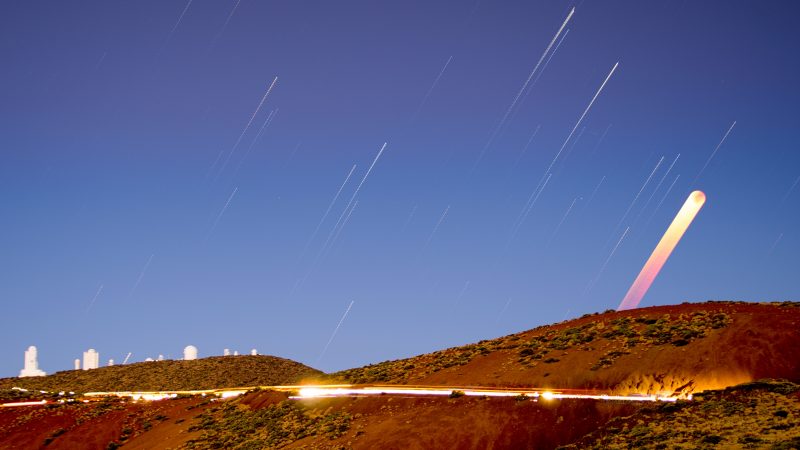
Yellow-orange wide streak with white star trails, observatory in background.

The July 27, 2018, eclipsed moon rises over the observatories of Instituto Astrofisica de Canarias, In Tenerife. Roberto Porto acquired 200 images to make this star trail composite. See more photos of the July 27, 2018, lunar eclipse.

Last month, in July 2019, the full moon missed the anti-solar point. Yet the moon did clip the southern portion of the Earth’s umbral dark shadow to showcase a partial lunar eclipse on July 16, 2019.

The full moon won’t sweep through the Earth’s umbra again until May 26, 2021. But the moon will swing well north of the anti-solar point, to display the second-shortest total lunar eclipse of the 21st century (2001 to 2100).

The full moon won’t meet up with the antisolar point until it barely grazes the center of the Earth’s shadow during the total lunar eclipse of May 16, 2022.

The worldwide map below shows the day and night sides of Earth at the instant of the August 2019 full moon (August 15, 2019, at 12:29 UTC). The shadow line at left (running through North America) represents sunrise August 15 whereas the shadow line at the right (crossing Asia) depicts sunset August 15.

You have to be on the nighttime side of Earth to see the moon at the instant it turns full.

Day and night sides of Earth at full moon.

Worldwide map via the U.S. Naval Observatory shows the day and night sides of Earth at the instant of the August 2019 full moon (August 15, 2019, at 12:29 UTC). The shadow line at left (running through North America) represents sunrise August 15 whereas the shadow line at the right (crossing Asia) depicts sunset August 15.

Bottom line: On both August 14 and 15, 2019, the brilliant full moon drenches the nighttime with moonlight from dusk until dawn.


from EarthSky https://ift.tt/2YXLxHv

Above: A lovely shot of a full moon in 2017 from Peter Ryan in East Greenwich, Rhode Island.

On August 14 and 15, 2019, everyone around the world (except far-northern Arctic latitudes) will see a full-looking moon lighting up the nighttime from dusk until dawn. In North America, we often call the August full moon the Sturgeon Moon, Green Corn Moon or Grain Moon. For the Northern Hemisphere, this August full moon ushers in the second of three full moons of the summer season.

By season, we are referring to the time period between the June solstice and the September equinox.

In the Southern Hemisphere, where it’s the opposite season, this is second of three winter full moons. August full moons names for the Southern Hemisphere include the Snow Moon, Storm Moon, Hunger Moon and Wolf Moon.

It’s very hard to tell when a moon is precisely full just by looking at it. This month’s moon turns precisely full on August 15 at 12:29 UTC, At US time zones, that translates to 8:29 a.m. EDT, 7:29 a.m. CDT, 6:29 a.m. MDT, 5:29 a.m. PST, 4:29 a.m. AKDT, and 2:29 a.m. HST (translate UTC to your time). But those times indicate only the crest of the moon’s full phase. They indicate when the moon is most opposite the sun for this month (180 degrees from the sun in ecliptic longitude).

Post your full moon photo at EarthSky Community Photos

Completely dark Earth from the vantage point of the full moon.

Guess what? When the moon appears full (totally illuminated) in our sky, the Earth would appear new (totally dark) in the moon’s sky. This is a simulation of the new Earth as seen from the August 2019 full moon (August 15, 2019, at 12:29 UTC). Image via U.S. Naval Observatory.

To the eye, on the other hand, the moon appears over 99 percent illuminated for about a day before and after full moon. People around the world will regard the moon as full on both August 14 and August 15.

Click here or here to know how much of the moon’s face is illuminated in sunlight for right now or any chosen time.

At about the time of the full moon, the moon rises in the east around sunset, climbs highest up for the night around midnight and sets in the west around sunrise. So these next few nights, look for the moon in your eastern sky at dusk and your western sky at dawn.

Want to know the exact time for the full moon at your locality, plus the moonrise and moonset times? Click here and remember to check the Moon phases and Moonrise and moonset boxes.

This August 2019 full moon does not pass through the antisolar point – the point that’s exactly opposite the sun – or else this full moon would undergo a total lunar eclipse. The last time the full moon passed through the antisolar point and through the center of the Earth’s dark umbral shadow was over a year ago, when it staged the longest total lunar eclipse of the 21st century (2001 to 2100) on July 27, 2018.

Yellow-orange wide streak with white star trails, observatory in background.

The July 27, 2018, eclipsed moon rises over the observatories of Instituto Astrofisica de Canarias, In Tenerife. Roberto Porto acquired 200 images to make this star trail composite. See more photos of the July 27, 2018, lunar eclipse.

Last month, in July 2019, the full moon missed the anti-solar point. Yet the moon did clip the southern portion of the Earth’s umbral dark shadow to showcase a partial lunar eclipse on July 16, 2019.

The full moon won’t sweep through the Earth’s umbra again until May 26, 2021. But the moon will swing well north of the anti-solar point, to display the second-shortest total lunar eclipse of the 21st century (2001 to 2100).

The full moon won’t meet up with the antisolar point until it barely grazes the center of the Earth’s shadow during the total lunar eclipse of May 16, 2022.

The worldwide map below shows the day and night sides of Earth at the instant of the August 2019 full moon (August 15, 2019, at 12:29 UTC). The shadow line at left (running through North America) represents sunrise August 15 whereas the shadow line at the right (crossing Asia) depicts sunset August 15.

You have to be on the nighttime side of Earth to see the moon at the instant it turns full.

Day and night sides of Earth at full moon.

Worldwide map via the U.S. Naval Observatory shows the day and night sides of Earth at the instant of the August 2019 full moon (August 15, 2019, at 12:29 UTC). The shadow line at left (running through North America) represents sunrise August 15 whereas the shadow line at the right (crossing Asia) depicts sunset August 15.

Bottom line: On both August 14 and 15, 2019, the brilliant full moon drenches the nighttime with moonlight from dusk until dawn.


from EarthSky https://ift.tt/2YXLxHv

What is the moon illusion?

We’ve all seen a full moon looming large shortly after it rises, when it’s still hugging the horizon. Scientists say that large moon is an illusion, a trick your brain is playing. It’s called the moon illusion. Its causes aren’t precisely known, but the video above, from AsapSCIENCE, offers some explanation. The main one is that, when the moon is near the4 horizon, you’re gazing at it in the company of many familiar visual reference points: trees, buildings, mountains and so on. Your brain automatically compares the moon to these reference points. But when the moon is higher up, there’s nothing to compare it to, and, as ASAPScience says:

The moon seems smaller against the vastness of the night sky.

By the way, there’s a second phenomenon that the moon is subject to when it’s seen near the horizon. That is, a low moon often appears red or orange in color. That reddish color is not an illusion. It’s a true physical effect, caused by the fact that – when the moon is low in the sky – you’re seeing it through a greater thickness of Earth’s atmosphere than when it’s overhead. The atmosphere filters out the bluer wavelengths of white moonlight (which is really reflected sunlight). Meanwhile, it allows the red component of moonlight to travel straight through to your eyes. So a low moon is likely to look red or orange to you.

How do people get those photos of extra big moons seen near a horizon? They’re the result of photographic tricks and techniques, which you can read about here.

More photography tips: Super moon photography

Bottom line: A full moon, in particular, might look big seen near a horizon. But all full moons seen near a horizon look big, due to a psychological effect called the moon illusion.

Can you tell me the full moon names?


from EarthSky https://ift.tt/2YNfoac

We’ve all seen a full moon looming large shortly after it rises, when it’s still hugging the horizon. Scientists say that large moon is an illusion, a trick your brain is playing. It’s called the moon illusion. Its causes aren’t precisely known, but the video above, from AsapSCIENCE, offers some explanation. The main one is that, when the moon is near the4 horizon, you’re gazing at it in the company of many familiar visual reference points: trees, buildings, mountains and so on. Your brain automatically compares the moon to these reference points. But when the moon is higher up, there’s nothing to compare it to, and, as ASAPScience says:

The moon seems smaller against the vastness of the night sky.

By the way, there’s a second phenomenon that the moon is subject to when it’s seen near the horizon. That is, a low moon often appears red or orange in color. That reddish color is not an illusion. It’s a true physical effect, caused by the fact that – when the moon is low in the sky – you’re seeing it through a greater thickness of Earth’s atmosphere than when it’s overhead. The atmosphere filters out the bluer wavelengths of white moonlight (which is really reflected sunlight). Meanwhile, it allows the red component of moonlight to travel straight through to your eyes. So a low moon is likely to look red or orange to you.

How do people get those photos of extra big moons seen near a horizon? They’re the result of photographic tricks and techniques, which you can read about here.

More photography tips: Super moon photography

Bottom line: A full moon, in particular, might look big seen near a horizon. But all full moons seen near a horizon look big, due to a psychological effect called the moon illusion.

Can you tell me the full moon names?


from EarthSky https://ift.tt/2YNfoac

Skeptical Science New Research for Week #32, 2019

Clinical speech

From Barber and Burgiess' Scarcity and Safe Operating Spaces: The Example of Natural Forests

Scientists suggest placing planetary boundaries on human-induced threats to key Earth system sinks and resources. Such boundaries define a “safe operating space” on depletion and pollution. Treating any remaining “space” as a depletable economic asset allows derivation of optimal and actual rules for depletion. We apply this analysis to natural forests, and find that the critical asset is tropical forests. The size of the safe operating space and assumptions about the annual rate of tropical deforestation matter significantly. In the most critical scenario, actual depletion could occur in 11–21 years, whereas optimal depletion is 65 years. The optimal unit rental tax equates the actual price with the optimal price path. The tax rate and its amount vary with the depletion scenario and increases over time. However, if the environmental benefits of tropical forests are sufficiently large, the remaining safe operating space should be preserved indefinitely.

Hence we learn that "optimal depletion" of natural forests is best scheduled over 63 years. The specification of "optimal" in this case teeters on the summit of a mountain rooted in an orogeny of possibly adequate inference and deduction incorporating necessarily highly simplified models of human behavior and real world features. Errors in this vertiginous mental model are potentially quite costly. 

Outside of formal economic concepts our notions of "optimal" continued existence vary by local culture and local exigencies.  Discontinuities of cultural identity and immediate physical resource requirements, expectations and priorities are often found at international borders.

Meanwhile the term "planetary boundary" is not primarily about lines on a map circumscribing political units but refers to necessary limits on human behavior in order for Earth to continue functioning well enough for us not to experience a notably sub-optimal future. Thinking of Earth as a life support system (which it of course is), it's not really controversial to suggest that as a piece of machinery it has limited capacity, with various subsystems residing within brackets of maximum sustained performance. These are not radical concepts, not to we humans who are after all skilled builders and operators of machinery. Planetary boundaries are simply logical extension and application of what we already know about the successful maintenance of important equipment. Machinery has limits and needs to be attended.

Mutual agreement and acceptance of what are obviously mandatory planetary boundaries will succeed to the extent that international boundaries are softened and adapted for the specific purpose of mutually assured non-destruction. Operation of Earth within planetary boundaries will require some degree of relaxation and subordination of sovereign autonomy for every country on the planet; effective maintenance of the planet as an optimal living space will require building a planetary regulatory system, one resembling a conventional governmental system in some features as a matter of practical necessity. The need for operational technical systems governance of the planet's life support mechanisms is an inevitable conclusion arising from recognition of planetary boundaries, and such governance is implausible as a spontaneous emerged feature of a disorganized rabble of fully autonomous nation states.

We may either pull together a little more and have an easier future or we instead may choose the hard way. 

Articles:

43 titles, 32 open access.

Physical science

Midlatitudes unaffected by sea ice loss (open access)

Minimal influence of reduced Arctic sea ice on coincident cold winters in mid-latitudes (open access)

Persistent acceleration in global sea-level rise since the 1960s (open access)

Tropical cyclone sensitivities to CO 2 doubling: roles of atmospheric resolution, synoptic variability and background climate changes (open access)

Decadal global temperature variability increases strongly with climate sensitivity (open access)

Contrasting ice algae and snow‐dependent irradiance relationships between landfast first‐year and multi‐year sea ice (open access)

Relationships between tropical ascent and high cloud fraction changes with warming revealed by perturbation physics experiments in CESM (open access)

The Relationship between United States East Coast Sea Level and the Atlantic Meridional Overturning Circulation: a Review (open access)

Brief communication: On calculating the sea-level contribution inmarine ice-sheet models

Projected Changes in Interannual Variability of Peak Snowpack Amount and Timing in the Western United States (open access)

Recent contributions of theory to our understanding of the Atlantic Meridional Overturning Circulation (open access)

No proportional increase of terrestrial gross carbon sequestration from the greening Earth (open access)

Future hot and dry years worsen Nile Basin water scarcity despite projected precipitation increases (open access)

Climate Response to Pulse Versus Sustained Stratospheric Aerosol Forcing (open access)

Pliocene warmth consistent with greenhouse gas forcing (open access)

An improved estimate of the coupled Arctic energy budget

Weakened impact of the developing El Niño on tropical Indian Ocean climate variability under global warming

Why Does Global Warming Weaken the Gulf Stream but Intensify the Kuroshio?

Ecological water stress under projected climate change across hydroclimate gradients in the north central United States

Evaluating model outputs using integrated global speleothem records of climate change since the last glacial

Design and evaluation of CO2 observation network to optimize surface CO2 fluxes in Asia using observation system simulation experiments

A new approach for assessing climate change impacts in ecotron experiments

Deep soil inventories reveal that impacts of cover crops and compost on soil carbon sequestration differ in surface and subsurface soils

Drivers and modelling of blue carbon stock variability

Role of climate model dynamics in estimated climate responses to anthropogenic aerosols

Quantifying the contribution of anthropogenic influence to the East Asian winter monsoon in 1960–2012

Projections of climate changes over mid-high latitudes of Eurasia during boreal spring: uncertainty due to internal variability (open access)

Extreme Precipitation Events under Climate Change in the Iberian Peninsula (open access)

118‐year climate and extreme weather events of Metropolitan Manila in the Philippines (open access)

Biological science

Ocean acidification and high irradiance stimulate the photo-physiological fitness, growth and carbon production of the Antarctic cryptophyte Geminigera cryophila

Global warming promotes biological invasion of a honey bee pest

Flexibility in a changing arctic food web: can rough‐legged buzzards cope with changing small rodent communities?

Back home? Uncertainties for returning seized animals to the source‐areas under climate change

Human affairs and climate change

Climate and society in long‐term perspective: Opportunities and pitfalls in the use of historical datasets (open access)

Linking residential saltwater intrusion risk perceptions to physical exposure of climate change impacts in rural coastal communities of North Carolina (open access)

Is hope good for motivating collective action in the context of climate change? Differentiating hope’s emotion- and problem-focused coping functions

Synergistic and antagonistic effects of land use and non‐native species on community responses to climate change

 Scarcity and Safe Operating Spaces: The Example of Natural Forests

Evidence-informed climate policy: mobilising strategic research and pooling expertise for rapid evidence generation (open access)

The climate mitigation opportunity behind global power transmission and distribution (open access)

California climate adaptation trust fund: exploring the leveraging of cap-and-trade proceeds (open access)

Impacts of climate change on tomato, a notorious pest and its natural enemy: small scale agriculture at higher risk (open access)

Climate-driven changes in CO 2 emissions associated with residential heating and cooling demand by end-century in China (open access)

Suggestions

Please let us know if you're aware of an article you think may be of interest for Skeptical Science research news, or if we've missed something that may be important. Send your input to Skeptical Science via our contact form.

The previous edition of Skeptical Science new research may be found here. 


from Skeptical Science https://ift.tt/2YFXfeq

Clinical speech

From Barber and Burgiess' Scarcity and Safe Operating Spaces: The Example of Natural Forests

Scientists suggest placing planetary boundaries on human-induced threats to key Earth system sinks and resources. Such boundaries define a “safe operating space” on depletion and pollution. Treating any remaining “space” as a depletable economic asset allows derivation of optimal and actual rules for depletion. We apply this analysis to natural forests, and find that the critical asset is tropical forests. The size of the safe operating space and assumptions about the annual rate of tropical deforestation matter significantly. In the most critical scenario, actual depletion could occur in 11–21 years, whereas optimal depletion is 65 years. The optimal unit rental tax equates the actual price with the optimal price path. The tax rate and its amount vary with the depletion scenario and increases over time. However, if the environmental benefits of tropical forests are sufficiently large, the remaining safe operating space should be preserved indefinitely.

Hence we learn that "optimal depletion" of natural forests is best scheduled over 63 years. The specification of "optimal" in this case teeters on the summit of a mountain rooted in an orogeny of possibly adequate inference and deduction incorporating necessarily highly simplified models of human behavior and real world features. Errors in this vertiginous mental model are potentially quite costly. 

Outside of formal economic concepts our notions of "optimal" continued existence vary by local culture and local exigencies.  Discontinuities of cultural identity and immediate physical resource requirements, expectations and priorities are often found at international borders.

Meanwhile the term "planetary boundary" is not primarily about lines on a map circumscribing political units but refers to necessary limits on human behavior in order for Earth to continue functioning well enough for us not to experience a notably sub-optimal future. Thinking of Earth as a life support system (which it of course is), it's not really controversial to suggest that as a piece of machinery it has limited capacity, with various subsystems residing within brackets of maximum sustained performance. These are not radical concepts, not to we humans who are after all skilled builders and operators of machinery. Planetary boundaries are simply logical extension and application of what we already know about the successful maintenance of important equipment. Machinery has limits and needs to be attended.

Mutual agreement and acceptance of what are obviously mandatory planetary boundaries will succeed to the extent that international boundaries are softened and adapted for the specific purpose of mutually assured non-destruction. Operation of Earth within planetary boundaries will require some degree of relaxation and subordination of sovereign autonomy for every country on the planet; effective maintenance of the planet as an optimal living space will require building a planetary regulatory system, one resembling a conventional governmental system in some features as a matter of practical necessity. The need for operational technical systems governance of the planet's life support mechanisms is an inevitable conclusion arising from recognition of planetary boundaries, and such governance is implausible as a spontaneous emerged feature of a disorganized rabble of fully autonomous nation states.

We may either pull together a little more and have an easier future or we instead may choose the hard way. 

Articles:

43 titles, 32 open access.

Physical science

Midlatitudes unaffected by sea ice loss (open access)

Minimal influence of reduced Arctic sea ice on coincident cold winters in mid-latitudes (open access)

Persistent acceleration in global sea-level rise since the 1960s (open access)

Tropical cyclone sensitivities to CO 2 doubling: roles of atmospheric resolution, synoptic variability and background climate changes (open access)

Decadal global temperature variability increases strongly with climate sensitivity (open access)

Contrasting ice algae and snow‐dependent irradiance relationships between landfast first‐year and multi‐year sea ice (open access)

Relationships between tropical ascent and high cloud fraction changes with warming revealed by perturbation physics experiments in CESM (open access)

The Relationship between United States East Coast Sea Level and the Atlantic Meridional Overturning Circulation: a Review (open access)

Brief communication: On calculating the sea-level contribution inmarine ice-sheet models

Projected Changes in Interannual Variability of Peak Snowpack Amount and Timing in the Western United States (open access)

Recent contributions of theory to our understanding of the Atlantic Meridional Overturning Circulation (open access)

No proportional increase of terrestrial gross carbon sequestration from the greening Earth (open access)

Future hot and dry years worsen Nile Basin water scarcity despite projected precipitation increases (open access)

Climate Response to Pulse Versus Sustained Stratospheric Aerosol Forcing (open access)

Pliocene warmth consistent with greenhouse gas forcing (open access)

An improved estimate of the coupled Arctic energy budget

Weakened impact of the developing El Niño on tropical Indian Ocean climate variability under global warming

Why Does Global Warming Weaken the Gulf Stream but Intensify the Kuroshio?

Ecological water stress under projected climate change across hydroclimate gradients in the north central United States

Evaluating model outputs using integrated global speleothem records of climate change since the last glacial

Design and evaluation of CO2 observation network to optimize surface CO2 fluxes in Asia using observation system simulation experiments

A new approach for assessing climate change impacts in ecotron experiments

Deep soil inventories reveal that impacts of cover crops and compost on soil carbon sequestration differ in surface and subsurface soils

Drivers and modelling of blue carbon stock variability

Role of climate model dynamics in estimated climate responses to anthropogenic aerosols

Quantifying the contribution of anthropogenic influence to the East Asian winter monsoon in 1960–2012

Projections of climate changes over mid-high latitudes of Eurasia during boreal spring: uncertainty due to internal variability (open access)

Extreme Precipitation Events under Climate Change in the Iberian Peninsula (open access)

118‐year climate and extreme weather events of Metropolitan Manila in the Philippines (open access)

Biological science

Ocean acidification and high irradiance stimulate the photo-physiological fitness, growth and carbon production of the Antarctic cryptophyte Geminigera cryophila

Global warming promotes biological invasion of a honey bee pest

Flexibility in a changing arctic food web: can rough‐legged buzzards cope with changing small rodent communities?

Back home? Uncertainties for returning seized animals to the source‐areas under climate change

Human affairs and climate change

Climate and society in long‐term perspective: Opportunities and pitfalls in the use of historical datasets (open access)

Linking residential saltwater intrusion risk perceptions to physical exposure of climate change impacts in rural coastal communities of North Carolina (open access)

Is hope good for motivating collective action in the context of climate change? Differentiating hope’s emotion- and problem-focused coping functions

Synergistic and antagonistic effects of land use and non‐native species on community responses to climate change

 Scarcity and Safe Operating Spaces: The Example of Natural Forests

Evidence-informed climate policy: mobilising strategic research and pooling expertise for rapid evidence generation (open access)

The climate mitigation opportunity behind global power transmission and distribution (open access)

California climate adaptation trust fund: exploring the leveraging of cap-and-trade proceeds (open access)

Impacts of climate change on tomato, a notorious pest and its natural enemy: small scale agriculture at higher risk (open access)

Climate-driven changes in CO 2 emissions associated with residential heating and cooling demand by end-century in China (open access)

Suggestions

Please let us know if you're aware of an article you think may be of interest for Skeptical Science research news, or if we've missed something that may be important. Send your input to Skeptical Science via our contact form.

The previous edition of Skeptical Science new research may be found here. 


from Skeptical Science https://ift.tt/2YFXfeq

Science Snaps: solving the mystery of an oddly-shaped tumour

Snapshot of the pancreas.

It had been puzzling scientists for decades. Looking at pancreatic tumour samples under the microscope, all they could see were a variety of unexplainable shapes.

A big problem was that the techniques available didn’t capture the whole tumour. Scientists usually study cancer samples by cutting them into very thin slices and taking pictures of the microscopic detail. This can give them a snapshot of the cancer, but it’s hard to build a complete picture.

To help solve this mystery, researchers at the Francis Crick Institute in London developed an entirely new way to look at tumours.

“Nothing like it had existed before and we did see a big need for this,” says Dr Hendrik Messal, who led the project to not just look at cancer piece by piece, but also as an entire organ.

It took the team six years, but eventually they found a way.

A diagram showing the two ways tumour can grow - in our out of the duct.

Tumours can only grow in one of two ways: out of the duct (exophytic) or into the duct (endophytic). Credit: Dr Hendrik Messal.

A FLASH of inspiration

The trick was to make the entire tissue completely transparent while keeping the structure intact. They could then zoom in on particular parts of the tumour by staining them in different colours.

The new technique, which the team called FLASH, allows the researchers to take a closer look at the odd-shaped tumours found in the pancreas of mice. And what they found surprised them.

As part of the digestive system, the pancreas relies on a network of tubes called ducts that transport its digestive secretions to the small intestine. These types of tubes exist in many organs and are common areas for cancer to develop.

And it turns out, despite the dizzying array of shapes that were previously seen under the microscope, these tumours grow in only one of two ways: into the centre of the duct, or out of it. To figure out why these cancers grow in this way, the scientists teamed up with biophysicists to create sophisticated computer models of the tumours.

Geometry not biology

The computer simulations revealed the deciding factor in whether a tumour grows outwards or inwards wasn’t biology, but simple geometry. It all depended on how big the duct was.

When a duct was smaller than 20 micrometres across (about a fiftieth of a millimetre) the cancer would grow outwards. If it was larger, the tumour would grow inwards.

Tumour growing into a pancreatic duct.

Image of a tumour, shown in red, growing into a pancreatic duct. An example of an “endophytic tumour”. Credit: Dr Hendrik Messal.

“As a biologist, you think it’s going to be something to do with the basic biology of the cancer, and of course it plays a role, but the fundamental, important factor that determines how the cancer develops is the tissue geometry,” says Messal.

They found this to be the case not only in pancreatic cancers in mice, but in other organs like the lungs and liver too, giving further support to their theory.

But while the team have begun to figure out what causes tumours to grow in a certain way, there are more questions to answer. The big one being – does it matter which way these tumours grow? They’ve begun to make some progress here too.

The team found that tumours that grow outwards in mice invade the surrounding tissue earlier and can more easily recruit cells that can help the cancer grow and spread to other parts of the body.

What’s next?

For Messal, this work shows the importance of biologists working with experts in other fields – pathologists, physicists, mathematicians, computer scientists – as they can provide valuable insights that biologists just can’t do alone.

The two teams are continuing to work together along with researchers from Imperial College London in a new project looking at breast cancer. They’ll study how the decisions a cancer stem cell makes will affect the how it grows and what shape it becomes.

And as for Messal, he’s now working in the Netherlands Cancer Institute on even more innovative ways to view cancer – not just in 3D, but live. Some processes are dynamic, and these techniques are needed so we can see what’s really happening.

On his experience of this work and his time at the Francis Crick Institute, Messal says: “I’m very much in favour of interdisciplinary science, it was one of the reasons that I wanted to work at an institute like the Crick. The collaboration opportunities these research institutes provide are key to this kind of research.”

Harry Jenkins is a research communications and marketing executive at Cancer Research UK 

Reference

Messal, H et al. (2019) Tissue curvature and apicobasal mechanical tension imbalance instruct cancer morphogenesis. Nature. DOI: 10.1038/s41586-019-0891-2


from Cancer Research UK – Science blog https://ift.tt/31wDJOu
Snapshot of the pancreas.

It had been puzzling scientists for decades. Looking at pancreatic tumour samples under the microscope, all they could see were a variety of unexplainable shapes.

A big problem was that the techniques available didn’t capture the whole tumour. Scientists usually study cancer samples by cutting them into very thin slices and taking pictures of the microscopic detail. This can give them a snapshot of the cancer, but it’s hard to build a complete picture.

To help solve this mystery, researchers at the Francis Crick Institute in London developed an entirely new way to look at tumours.

“Nothing like it had existed before and we did see a big need for this,” says Dr Hendrik Messal, who led the project to not just look at cancer piece by piece, but also as an entire organ.

It took the team six years, but eventually they found a way.

A diagram showing the two ways tumour can grow - in our out of the duct.

Tumours can only grow in one of two ways: out of the duct (exophytic) or into the duct (endophytic). Credit: Dr Hendrik Messal.

A FLASH of inspiration

The trick was to make the entire tissue completely transparent while keeping the structure intact. They could then zoom in on particular parts of the tumour by staining them in different colours.

The new technique, which the team called FLASH, allows the researchers to take a closer look at the odd-shaped tumours found in the pancreas of mice. And what they found surprised them.

As part of the digestive system, the pancreas relies on a network of tubes called ducts that transport its digestive secretions to the small intestine. These types of tubes exist in many organs and are common areas for cancer to develop.

And it turns out, despite the dizzying array of shapes that were previously seen under the microscope, these tumours grow in only one of two ways: into the centre of the duct, or out of it. To figure out why these cancers grow in this way, the scientists teamed up with biophysicists to create sophisticated computer models of the tumours.

Geometry not biology

The computer simulations revealed the deciding factor in whether a tumour grows outwards or inwards wasn’t biology, but simple geometry. It all depended on how big the duct was.

When a duct was smaller than 20 micrometres across (about a fiftieth of a millimetre) the cancer would grow outwards. If it was larger, the tumour would grow inwards.

Tumour growing into a pancreatic duct.

Image of a tumour, shown in red, growing into a pancreatic duct. An example of an “endophytic tumour”. Credit: Dr Hendrik Messal.

“As a biologist, you think it’s going to be something to do with the basic biology of the cancer, and of course it plays a role, but the fundamental, important factor that determines how the cancer develops is the tissue geometry,” says Messal.

They found this to be the case not only in pancreatic cancers in mice, but in other organs like the lungs and liver too, giving further support to their theory.

But while the team have begun to figure out what causes tumours to grow in a certain way, there are more questions to answer. The big one being – does it matter which way these tumours grow? They’ve begun to make some progress here too.

The team found that tumours that grow outwards in mice invade the surrounding tissue earlier and can more easily recruit cells that can help the cancer grow and spread to other parts of the body.

What’s next?

For Messal, this work shows the importance of biologists working with experts in other fields – pathologists, physicists, mathematicians, computer scientists – as they can provide valuable insights that biologists just can’t do alone.

The two teams are continuing to work together along with researchers from Imperial College London in a new project looking at breast cancer. They’ll study how the decisions a cancer stem cell makes will affect the how it grows and what shape it becomes.

And as for Messal, he’s now working in the Netherlands Cancer Institute on even more innovative ways to view cancer – not just in 3D, but live. Some processes are dynamic, and these techniques are needed so we can see what’s really happening.

On his experience of this work and his time at the Francis Crick Institute, Messal says: “I’m very much in favour of interdisciplinary science, it was one of the reasons that I wanted to work at an institute like the Crick. The collaboration opportunities these research institutes provide are key to this kind of research.”

Harry Jenkins is a research communications and marketing executive at Cancer Research UK 

Reference

Messal, H et al. (2019) Tissue curvature and apicobasal mechanical tension imbalance instruct cancer morphogenesis. Nature. DOI: 10.1038/s41586-019-0891-2


from Cancer Research UK – Science blog https://ift.tt/31wDJOu

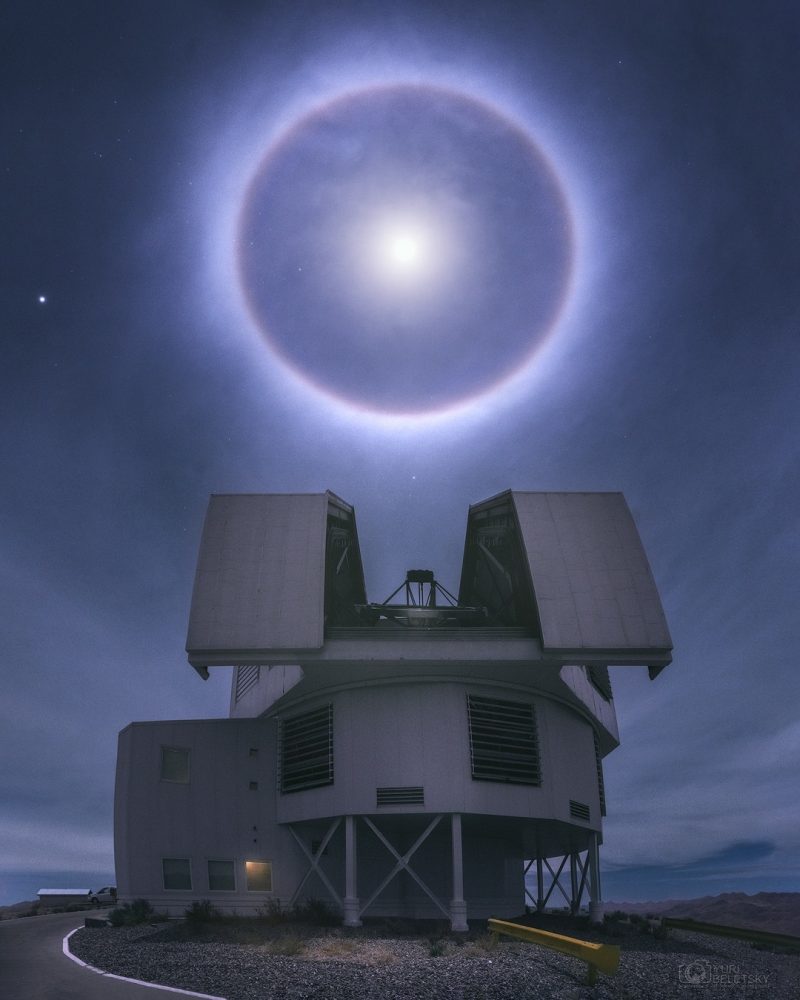
Moon halo over Magellan telescope

Bright moon halo above large, professional, open telescope dome.

View on Facebook. | Spectacular moon halo above a 6.5-meter Magellan telescope in Chile, August, 2019. The bright object on the far left, midway up, is Jupiter. Photo by Yuri Beletsky.

Yuri Beletsky works for the Carnegie Observatories, based at Las Campanas in northern Chile, home to the twin Magellan telescopes, and site of the future Giant Magellan Telescope. Yuri is a fantastic nature photographer; you can follow his Nightscapes on Facebook. He posted this image on Facebook on August 10, 2019 and wrote:

Even when the weather is bad, we, astronomers, never lose hope. Cloudy weather, it’s the worst nightmare for us. But at the same time the nature can surprise us with stunning views during those nights. Here is an amazing 22° halo around the moon just above the Magellan telescope :) The brightest ‘star’ on the left is the planet Jupiter. Besides, you can see some stars through the clouds. I hope you’ll enjoy the view.

Thank you, Yuri!

Read more about 22° halos at Atmospheric Optics.

Bottom line: Moon halo above the Magellan telescope in northern Chile.


from EarthSky https://ift.tt/2ZWewN1
Bright moon halo above large, professional, open telescope dome.

View on Facebook. | Spectacular moon halo above a 6.5-meter Magellan telescope in Chile, August, 2019. The bright object on the far left, midway up, is Jupiter. Photo by Yuri Beletsky.

Yuri Beletsky works for the Carnegie Observatories, based at Las Campanas in northern Chile, home to the twin Magellan telescopes, and site of the future Giant Magellan Telescope. Yuri is a fantastic nature photographer; you can follow his Nightscapes on Facebook. He posted this image on Facebook on August 10, 2019 and wrote:

Even when the weather is bad, we, astronomers, never lose hope. Cloudy weather, it’s the worst nightmare for us. But at the same time the nature can surprise us with stunning views during those nights. Here is an amazing 22° halo around the moon just above the Magellan telescope :) The brightest ‘star’ on the left is the planet Jupiter. Besides, you can see some stars through the clouds. I hope you’ll enjoy the view.

Thank you, Yuri!

Read more about 22° halos at Atmospheric Optics.

Bottom line: Moon halo above the Magellan telescope in northern Chile.


from EarthSky https://ift.tt/2ZWewN1

2019 SkS Weekly Climate Change & Global Warming Digest #32

Story of the Week... Editorial of the Week... El Niño/La Niña Update... Toon of the Week... SkS in the News... Coming Soon on SkS... Poster of the Week... SkS Week in Review...

Story of the Week...

Change food production and stop abusing land, major climate report warns

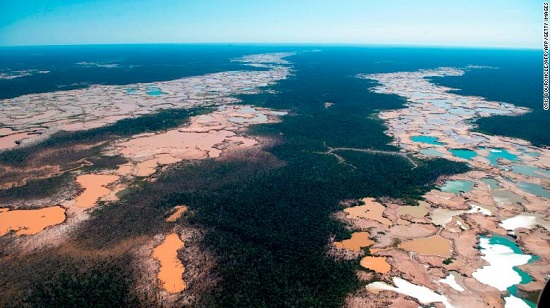
Amazon deforestation due to Illegal mining in activities in the river basin of the Madre de Dios region in southeast Peru, on May 17, 2019

Land degradation, including deforestation, produces almost a quarter of the world's greenhouse gas emissions. Pictured: An aerial view over a chemically deforested area of the Amazon jungle caused by illegal mining activities in the river basin of the Madre de Dios region in southeast Peru, on May 17, 2019. 

Humans have damaged around a quarter of ice-free land on Earth, United Nations scientists warned in a major report* Thursday, stressing that further degradation must be stopped to prevent catastrophic global warming.

The warning comes almost a year after the Intergovernmental Panel on Climate Change (IPCC)concluded in a landmark report that we only have until 2030 to drastically reduce our dependence on fossil fuels and prevent the planet from reaching the crucial threshold of 1.5 degrees Celsius above pre-industrial levels.

The second IPCC report highlights the vicious cycle of climate change and land degradation.

"We humans affect more than 70% of ice-free land, a quarter of this land is degraded. The way we produce food and what we eat contributes to the loss of natural ecosystems and declining biodiversity," said Valérie Masson-Delmotte, co-chair of the IPCC. 

Change food production and stop abusing land, major climate report warns by Isabelle Gerretsen, World, CNN, Aug 8, 2019

*Climate Change and Land: An IPCC special report on climate change, desertification, land degradation, sustainable land management, food security, and greenhouse gas fluxes in terrestrial ecosystems


Editorial of the Week...

Climate change is sapping nutrients from our food — and it could become a global crisis

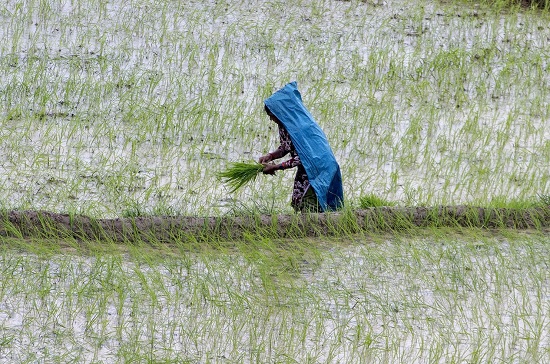
Farmer Planting Rice Seedlings in Nepal

A farmer plants rice seedlings in a paddy field during a monsoon rainfall in Nuwakot village, Nepal, in July. (Narendra Shrestha/EPA-EFE/REX/Shutterstock) 

Feeding a planet inhabited by 10 billion people by mid-century — already a daunting task — is getting harder due to a little-known impact of global warming: the decline of essential nutrients in the world’s staple foods that exist in almost every single person’s diet around the world.

The mechanism by which rising carbon dioxide saps nutrients from our food crops remains somewhat unclear, but the effect is consistent across most plant types from trees to grasses to edible crops: It is reducing the availability of zinc, iron, protein and key vitamins in wheat, rice and several other fundamental grains and legumes.

The implications are huge: By 2050, hundreds of millions of people could slip below the minimum thresholds of these nutrients needed for good health, and more than 2 billion already deficient could see their conditions worsen. And it extends well beyond human nutrition as every animal in the biosphere depends, directly or indirectly, on plant consumption for nutrients.

These findings, which will appear this week as part of the most comprehensive review ever compiled on the two-way relationship between global warming and land use, highlight the urgent need to slash the greenhouse gas emissions that drive climate change. Human activity has increased atmospheric carbon more than 40 percent since the mid-19th century, enough to unleash a deadly onslaught of extreme weather made more destructive by rising seas. Without a drastic drop in emissions, those levels will climb even more quickly over the coming decades.

Climate change is sapping nutrients from our food — and it could become a global crisis, Opinion by Samuel Meyers*, Washington Post, Aug 5, 2019

*Samuel Myers is a principal research scientist at the Harvard T.H. Chan School of Public Health and director of the Planetary Health Alliance.


El Niño/La Niña Update...

August 2019 El Niño Update: Stick a fork in it

The El Niño of 2019 is officially done. Near-average conditions in the tropical Pacific indicate that we have returned to ENSO-neutral conditions (neither El Niño or La Niña is present). Forecasters continue to favor ENSO-neutral (50-55% chance) through the Northern Hemisphere winter.  

August 2019 El Niño Update: Stick a fork in it by Nat Johnson, ENSO Blog, NOAA's  Climate.gov, Aug 8, 2019


Toon of the Week...

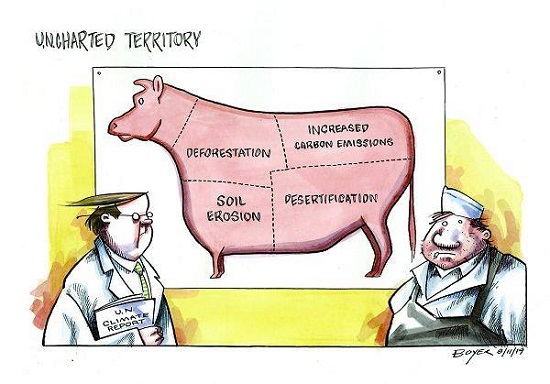
2019 Toon 32 Hat tip to the Stop Climate Science Denial Facebook page.


SkS in the News...

[To be added.] 


Coming Soon on SkS...

  • State of the climate: 2019 set to be second or third warmest year (Zeke Hausfather)
  • New Research Reloaded (Doug Bostrom)
  • Market Forces and Coal (Riduna)
  • Why German coal power is falling fast in 2019 (Karsten Capion)
  • What psychotherapy can do for the climate and biodiversity crises (Caroline Hickman)
  • 2019 SkS Weekly Climate Change & Global Warming News Roundup #33 (John Hartz)
  • 2019 SkS Weekly Climate Change & Global Warming Digest #33 (John Hartz)

Climate Feedback Reviews...


Poster of the Week...

2019 Poster 32 


SkS Week in Review... 


from Skeptical Science https://ift.tt/2YEQcmh
Story of the Week... Editorial of the Week... El Niño/La Niña Update... Toon of the Week... SkS in the News... Coming Soon on SkS... Poster of the Week... SkS Week in Review...

Story of the Week...

Change food production and stop abusing land, major climate report warns

Amazon deforestation due to Illegal mining in activities in the river basin of the Madre de Dios region in southeast Peru, on May 17, 2019

Land degradation, including deforestation, produces almost a quarter of the world's greenhouse gas emissions. Pictured: An aerial view over a chemically deforested area of the Amazon jungle caused by illegal mining activities in the river basin of the Madre de Dios region in southeast Peru, on May 17, 2019. 

Humans have damaged around a quarter of ice-free land on Earth, United Nations scientists warned in a major report* Thursday, stressing that further degradation must be stopped to prevent catastrophic global warming.

The warning comes almost a year after the Intergovernmental Panel on Climate Change (IPCC)concluded in a landmark report that we only have until 2030 to drastically reduce our dependence on fossil fuels and prevent the planet from reaching the crucial threshold of 1.5 degrees Celsius above pre-industrial levels.

The second IPCC report highlights the vicious cycle of climate change and land degradation.

"We humans affect more than 70% of ice-free land, a quarter of this land is degraded. The way we produce food and what we eat contributes to the loss of natural ecosystems and declining biodiversity," said Valérie Masson-Delmotte, co-chair of the IPCC. 

Change food production and stop abusing land, major climate report warns by Isabelle Gerretsen, World, CNN, Aug 8, 2019

*Climate Change and Land: An IPCC special report on climate change, desertification, land degradation, sustainable land management, food security, and greenhouse gas fluxes in terrestrial ecosystems


Editorial of the Week...

Climate change is sapping nutrients from our food — and it could become a global crisis

Farmer Planting Rice Seedlings in Nepal

A farmer plants rice seedlings in a paddy field during a monsoon rainfall in Nuwakot village, Nepal, in July. (Narendra Shrestha/EPA-EFE/REX/Shutterstock) 

Feeding a planet inhabited by 10 billion people by mid-century — already a daunting task — is getting harder due to a little-known impact of global warming: the decline of essential nutrients in the world’s staple foods that exist in almost every single person’s diet around the world.

The mechanism by which rising carbon dioxide saps nutrients from our food crops remains somewhat unclear, but the effect is consistent across most plant types from trees to grasses to edible crops: It is reducing the availability of zinc, iron, protein and key vitamins in wheat, rice and several other fundamental grains and legumes.

The implications are huge: By 2050, hundreds of millions of people could slip below the minimum thresholds of these nutrients needed for good health, and more than 2 billion already deficient could see their conditions worsen. And it extends well beyond human nutrition as every animal in the biosphere depends, directly or indirectly, on plant consumption for nutrients.

These findings, which will appear this week as part of the most comprehensive review ever compiled on the two-way relationship between global warming and land use, highlight the urgent need to slash the greenhouse gas emissions that drive climate change. Human activity has increased atmospheric carbon more than 40 percent since the mid-19th century, enough to unleash a deadly onslaught of extreme weather made more destructive by rising seas. Without a drastic drop in emissions, those levels will climb even more quickly over the coming decades.

Climate change is sapping nutrients from our food — and it could become a global crisis, Opinion by Samuel Meyers*, Washington Post, Aug 5, 2019

*Samuel Myers is a principal research scientist at the Harvard T.H. Chan School of Public Health and director of the Planetary Health Alliance.


El Niño/La Niña Update...

August 2019 El Niño Update: Stick a fork in it

The El Niño of 2019 is officially done. Near-average conditions in the tropical Pacific indicate that we have returned to ENSO-neutral conditions (neither El Niño or La Niña is present). Forecasters continue to favor ENSO-neutral (50-55% chance) through the Northern Hemisphere winter.  

August 2019 El Niño Update: Stick a fork in it by Nat Johnson, ENSO Blog, NOAA's  Climate.gov, Aug 8, 2019


Toon of the Week...

2019 Toon 32 Hat tip to the Stop Climate Science Denial Facebook page.


SkS in the News...

[To be added.] 


Coming Soon on SkS...

  • State of the climate: 2019 set to be second or third warmest year (Zeke Hausfather)
  • New Research Reloaded (Doug Bostrom)
  • Market Forces and Coal (Riduna)
  • Why German coal power is falling fast in 2019 (Karsten Capion)
  • What psychotherapy can do for the climate and biodiversity crises (Caroline Hickman)
  • 2019 SkS Weekly Climate Change & Global Warming News Roundup #33 (John Hartz)
  • 2019 SkS Weekly Climate Change & Global Warming Digest #33 (John Hartz)

Climate Feedback Reviews...


Poster of the Week...

2019 Poster 32 


SkS Week in Review... 


from Skeptical Science https://ift.tt/2YEQcmh

Can snowball planets support life?

White, ice-covered planet with a few narrow, irregular dark streaks.

Artist’s concept of a snowball planet, with its surface completely or almost completely covered in ice. Image via NASA/AGU/GeoSpace.

When it comes to searching for life outside the solar system – at least life as we know it – the focus tends to be on exoplanets that are neither too hot or too cold. Rocky planets in their star’s habitable zone have the best chance of having water on their surfaces. Until now, it’s been thought that similar worlds covered in ice would likely be too cold for life. But now new research suggests that might not always be the case, and that some of those planets could have habitable land areas.

The new peer-reviewed findings were published in the Journal of Geophysical Research Planets on July 18, 2019.

The study focuses on snowball planets – rocky planets like Earth with their oceans frozen – that scientists had thought were probably too cold for life. Such worlds would have no liquid water on their surfaces, just ice, and little to no land areas.

But the new research finds that the situation might not always be so dire after all, as Adiv Paradise, an astronomer and physicist at the University of Toronto, stated:

You have these planets that traditionally you might consider not habitable and this suggests that maybe they can be.

White planet with wide blue strip of water at equator with tan land areas in it.

According to the new study, some snowball planets could still have land areas and water around their equators. Image via Gfycat.

The findings suggest that some snowball planets could still have land areas near their equators, with temperatures in those regions warm enough to make them more habitable. The researchers used a computer program to simulate different climate variables, accounting for conditions like the amount of sunlight available and configuration of the land areas.

According to these scientists, one of the key variables is carbon dioxide. As we know from climate change studies, carbon dioxide is great at trapping heat in a planet’s atmosphere. When there’s enough of it, a planet can remain warm enough for liquid water. But if there’s too little of this gas, a planet will freeze. Mars is a good example; its atmosphere is primarily composed of carbon dioxide, but the atmosphere itself is too thin to retain much heat. So now the planet is cold and dry.

Snowball planets are thought to form when the level of carbon dioxide in their atmospheres drops too low due to rainfall and erosion. The water from rainfall absorbs the carbon dioxide, converting it to carbonic acid. That acid reacts with rocks, breaking down the carbonic acid even further. It then binds with minerals, which are carried to the oceans and stored in the seafloors.

Graph with rising dotted line intersecting with rising straight line, areas labeled.

Graph depicting the relationship between carbon dioxide produced by volcanic activity and carbon dioxide removed from rainfall and erosion for both temperate and snowball climates. Planets can become stuck in a snowball state when volcanic activity and weathering rates balance each other out. Image via AGU/GeoSpace.

When all or most of the carbon dioxide is removed from the atmosphere, the planet will freeze, turning into a snowball planet. These planets would now be utterly cold and barren on their surfaces, not the best places for life to evolve.

But if the new study is correct, there is some good news.

Scientists had thought that the removal of carbon dioxide stopped during the snowball phase, since all the surface water would be frozen. However, the findings indicate that some snowball planets will continue to lose carbon dioxide after they have frozen. Why is that good? It means that those planets would need to still have some non-frozen ground and occasional rainfall for water to continue to remove carbon dioxide from the atmosphere.

The researchers found that land areas in the centers of continents, away from the frozen oceans, could remain warm enough for liquid water. Temperatures in those regions could reach above 50 degrees Fahrenheit (10 degrees Celsius). The lowest temperature that life as we know it can reproduce is minus 4 degrees Fahrenheit (minus 20 degrees Celsius).

Another question is if a planet becomes a snowball planet, does it always remain that way? Or can it change again? Scientists have theorized that usually a planet would eventually exit the snowball phase, if additional carbon dioxide was released through volcanoes. Earth itself is thought to have has gone through its own snowball planet phases.

That might not always be true either, however, according to the new study. Under certain conditions, a planet might become stuck in a snowball planet state. If enough carbon dioxide continued to be removed from the atmosphere through weathering, that could balance out the carbon dioxide emitted by volcanoes. As a result, the planet would never fully thaw out again.

All-white planet with ice-covered continents in solid ice seas.

Scientists think that Earth itself has gone through at least one to three snowball planet phases during its existence. This artist’s concept depicts it 720 million years ago. Image via Mikkel Juul Jensen/Spl/Cosmos/CNRS News.

A major implication of these findings is that the line between what we think of as a habitable planet and a non-habitable planet may be a lot less clear than once thought. As Paradise noted:

What we find is actually that line is a bit fuzzy.

There’s also another possibility to consider. What if a planet had an ocean frozen on the surface but still liquid below? There aren’t any planets like that in our solar system, but there are moons. Europa and Enceladus in particular, that have global oceans covered by a crust of ice. The more we learn about them, the more it seems that they are indeed capable of supporting life. Both oceans appear to be similar to Earth’s oceans in composition, and have enough heat, energy and chemical nutrients. We don’t know yet if there actually is any life in either place, but the prospects are promising.

We don’t know how many snowball planets are out there, but we do already know that rocky planets the size of Earth and larger appear to be common in our galaxy, based on findings from the Kepler Space Telescope and other telescopes. That in itself is promising in the search for life elsewhere. And now the results of this new study show how that, even if some of these planets are very cold, they could still be potentially habitable.

Bottom line: New research shows that some frozen snowball planets may still be capable of supporting life.

Source: Habitable Snowballs: Temperate Land Conditions, Liquid Water, and Implications for CO2 Weathering

Via GeoSpace


from EarthSky https://ift.tt/2GX3KOX
White, ice-covered planet with a few narrow, irregular dark streaks.

Artist’s concept of a snowball planet, with its surface completely or almost completely covered in ice. Image via NASA/AGU/GeoSpace.

When it comes to searching for life outside the solar system – at least life as we know it – the focus tends to be on exoplanets that are neither too hot or too cold. Rocky planets in their star’s habitable zone have the best chance of having water on their surfaces. Until now, it’s been thought that similar worlds covered in ice would likely be too cold for life. But now new research suggests that might not always be the case, and that some of those planets could have habitable land areas.

The new peer-reviewed findings were published in the Journal of Geophysical Research Planets on July 18, 2019.

The study focuses on snowball planets – rocky planets like Earth with their oceans frozen – that scientists had thought were probably too cold for life. Such worlds would have no liquid water on their surfaces, just ice, and little to no land areas.

But the new research finds that the situation might not always be so dire after all, as Adiv Paradise, an astronomer and physicist at the University of Toronto, stated:

You have these planets that traditionally you might consider not habitable and this suggests that maybe they can be.

White planet with wide blue strip of water at equator with tan land areas in it.

According to the new study, some snowball planets could still have land areas and water around their equators. Image via Gfycat.

The findings suggest that some snowball planets could still have land areas near their equators, with temperatures in those regions warm enough to make them more habitable. The researchers used a computer program to simulate different climate variables, accounting for conditions like the amount of sunlight available and configuration of the land areas.

According to these scientists, one of the key variables is carbon dioxide. As we know from climate change studies, carbon dioxide is great at trapping heat in a planet’s atmosphere. When there’s enough of it, a planet can remain warm enough for liquid water. But if there’s too little of this gas, a planet will freeze. Mars is a good example; its atmosphere is primarily composed of carbon dioxide, but the atmosphere itself is too thin to retain much heat. So now the planet is cold and dry.

Snowball planets are thought to form when the level of carbon dioxide in their atmospheres drops too low due to rainfall and erosion. The water from rainfall absorbs the carbon dioxide, converting it to carbonic acid. That acid reacts with rocks, breaking down the carbonic acid even further. It then binds with minerals, which are carried to the oceans and stored in the seafloors.

Graph with rising dotted line intersecting with rising straight line, areas labeled.

Graph depicting the relationship between carbon dioxide produced by volcanic activity and carbon dioxide removed from rainfall and erosion for both temperate and snowball climates. Planets can become stuck in a snowball state when volcanic activity and weathering rates balance each other out. Image via AGU/GeoSpace.

When all or most of the carbon dioxide is removed from the atmosphere, the planet will freeze, turning into a snowball planet. These planets would now be utterly cold and barren on their surfaces, not the best places for life to evolve.

But if the new study is correct, there is some good news.

Scientists had thought that the removal of carbon dioxide stopped during the snowball phase, since all the surface water would be frozen. However, the findings indicate that some snowball planets will continue to lose carbon dioxide after they have frozen. Why is that good? It means that those planets would need to still have some non-frozen ground and occasional rainfall for water to continue to remove carbon dioxide from the atmosphere.

The researchers found that land areas in the centers of continents, away from the frozen oceans, could remain warm enough for liquid water. Temperatures in those regions could reach above 50 degrees Fahrenheit (10 degrees Celsius). The lowest temperature that life as we know it can reproduce is minus 4 degrees Fahrenheit (minus 20 degrees Celsius).

Another question is if a planet becomes a snowball planet, does it always remain that way? Or can it change again? Scientists have theorized that usually a planet would eventually exit the snowball phase, if additional carbon dioxide was released through volcanoes. Earth itself is thought to have has gone through its own snowball planet phases.

That might not always be true either, however, according to the new study. Under certain conditions, a planet might become stuck in a snowball planet state. If enough carbon dioxide continued to be removed from the atmosphere through weathering, that could balance out the carbon dioxide emitted by volcanoes. As a result, the planet would never fully thaw out again.

All-white planet with ice-covered continents in solid ice seas.

Scientists think that Earth itself has gone through at least one to three snowball planet phases during its existence. This artist’s concept depicts it 720 million years ago. Image via Mikkel Juul Jensen/Spl/Cosmos/CNRS News.

A major implication of these findings is that the line between what we think of as a habitable planet and a non-habitable planet may be a lot less clear than once thought. As Paradise noted:

What we find is actually that line is a bit fuzzy.

There’s also another possibility to consider. What if a planet had an ocean frozen on the surface but still liquid below? There aren’t any planets like that in our solar system, but there are moons. Europa and Enceladus in particular, that have global oceans covered by a crust of ice. The more we learn about them, the more it seems that they are indeed capable of supporting life. Both oceans appear to be similar to Earth’s oceans in composition, and have enough heat, energy and chemical nutrients. We don’t know yet if there actually is any life in either place, but the prospects are promising.

We don’t know how many snowball planets are out there, but we do already know that rocky planets the size of Earth and larger appear to be common in our galaxy, based on findings from the Kepler Space Telescope and other telescopes. That in itself is promising in the search for life elsewhere. And now the results of this new study show how that, even if some of these planets are very cold, they could still be potentially habitable.

Bottom line: New research shows that some frozen snowball planets may still be capable of supporting life.

Source: Habitable Snowballs: Temperate Land Conditions, Liquid Water, and Implications for CO2 Weathering

Via GeoSpace


from EarthSky https://ift.tt/2GX3KOX

Two sweet Indian white-eyes

Two fuzzy yellow birds with white eye markings facing each other among leaves and twigs.

Indian white-eyes (Zosterops palpebrosus) are small birds, about 4-6 inches (10-15 cm) long. They’re sometimes kept as pets. Our friend Swami Krishnananda sent this series of images of these birds on August 8, 2019, and wrote, “Yesterday a flock of white-eyes landed on a tree below my room. Two of them started grooming themselves, grooming each other, sharing some sweet words of love …”

Two fuzzy yellow birds cuddling among leafy branches.

Photo by Swami Krishnananda.

Two fuzzy yellow birds with long pointed black beaks and white marks around their eyes.

“While there two birds called white-eye, there are four white eyes looking at you!!” wrote Swami Krishnananda.

Two yellow fuzzy birds with white marking around their eyes looking straight at you.

And he wrote: “They were also looking at me as if to ask why I was intruding on them and what I was up to!! JAI GURU!!”

Bottom line: Photo from India of two Indian white-eyes, formerly called Oriental white-eyes.


from EarthSky https://ift.tt/33qkgAT
Two fuzzy yellow birds with white eye markings facing each other among leaves and twigs.

Indian white-eyes (Zosterops palpebrosus) are small birds, about 4-6 inches (10-15 cm) long. They’re sometimes kept as pets. Our friend Swami Krishnananda sent this series of images of these birds on August 8, 2019, and wrote, “Yesterday a flock of white-eyes landed on a tree below my room. Two of them started grooming themselves, grooming each other, sharing some sweet words of love …”

Two fuzzy yellow birds cuddling among leafy branches.

Photo by Swami Krishnananda.

Two fuzzy yellow birds with long pointed black beaks and white marks around their eyes.

“While there two birds called white-eye, there are four white eyes looking at you!!” wrote Swami Krishnananda.

Two yellow fuzzy birds with white marking around their eyes looking straight at you.

And he wrote: “They were also looking at me as if to ask why I was intruding on them and what I was up to!! JAI GURU!!”

Bottom line: Photo from India of two Indian white-eyes, formerly called Oriental white-eyes.


from EarthSky https://ift.tt/33qkgAT

2019 SkS Weekly Climate Change & Global Warming News Roundup #32

A chronological listing of news articles posted on the Skeptical Science Facebook Page during the past week, i.e., Sun, Aug 4 through Sat, Aug 10, 2019

Editor's Pick

This Land Is the Only Land There Is

Here are seven ways of understanding the IPCC’s newest climate warning.

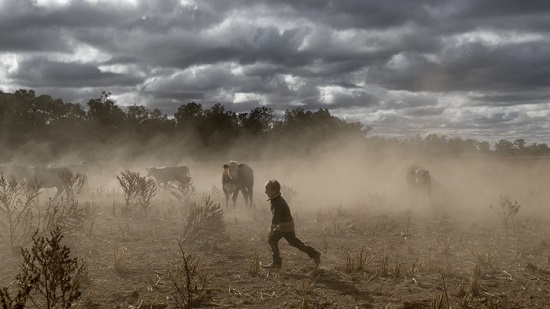
Drought in Australia

Climate change could make water even more scarce in naturally dry areas, the report warns. Australia’s ranchers have struggled under a drought for years. BROOK MITCHELL / GETTY

1. There is no shortage of scary facts in the major new report on climate change and land, a summary of which was released today by a United Nations–led scientific panel. Chief among them: For everyone who lives on land, the planet’s dangerously warmed future is already here. Earth’s land has already warmed more than 1.5 degrees Celsius (2.6 degrees Fahrenheit) since the industrial revolution, according to the Intergovernmental Panel on Climate Change. That’s the same amount of warming that climate activists are hoping to prevent on a global scale.

This spike makes sense, scientifically: Land warms twice as fast as the planet overall. Earth as a whole has warmed by only 0.87 degrees Celsius (1.5 degrees Fahrenheit) during the same period. But this increase makes the stakes of climate change clear: When scientists discuss preventing “1.5 degrees Celsius of global warming,” they are really talking about forestalling 3 degrees Celsius—or 5.1 degrees Fahrenheit—of higher land temperatures.

And land temperatures are what humanity usually cares about. Land, really, is what humanity cares about. That’s the point. 

This Land Is the Only Land There Is by Robinson Meyer, Science, The Atlantic, Aug 8, 2019


Links posted on Facebook

Sun Aug 4, 2019

Mon Aug 5, 2019

Tue Aug 6, 2019

Wed Aug 7, 2019

Thu Aug 8, 2019

Fri Aug 9, 2019

Sat Aug 10, 2019


from Skeptical Science https://ift.tt/2N3fPq3
A chronological listing of news articles posted on the Skeptical Science Facebook Page during the past week, i.e., Sun, Aug 4 through Sat, Aug 10, 2019

Editor's Pick

This Land Is the Only Land There Is

Here are seven ways of understanding the IPCC’s newest climate warning.

Drought in Australia

Climate change could make water even more scarce in naturally dry areas, the report warns. Australia’s ranchers have struggled under a drought for years. BROOK MITCHELL / GETTY

1. There is no shortage of scary facts in the major new report on climate change and land, a summary of which was released today by a United Nations–led scientific panel. Chief among them: For everyone who lives on land, the planet’s dangerously warmed future is already here. Earth’s land has already warmed more than 1.5 degrees Celsius (2.6 degrees Fahrenheit) since the industrial revolution, according to the Intergovernmental Panel on Climate Change. That’s the same amount of warming that climate activists are hoping to prevent on a global scale.

This spike makes sense, scientifically: Land warms twice as fast as the planet overall. Earth as a whole has warmed by only 0.87 degrees Celsius (1.5 degrees Fahrenheit) during the same period. But this increase makes the stakes of climate change clear: When scientists discuss preventing “1.5 degrees Celsius of global warming,” they are really talking about forestalling 3 degrees Celsius—or 5.1 degrees Fahrenheit—of higher land temperatures.

And land temperatures are what humanity usually cares about. Land, really, is what humanity cares about. That’s the point. 

This Land Is the Only Land There Is by Robinson Meyer, Science, The Atlantic, Aug 8, 2019


Links posted on Facebook

Sun Aug 4, 2019

Mon Aug 5, 2019

Tue Aug 6, 2019

Wed Aug 7, 2019

Thu Aug 8, 2019

Fri Aug 9, 2019

Sat Aug 10, 2019


from Skeptical Science https://ift.tt/2N3fPq3

IAU approves 2nd round of names for Pluto features

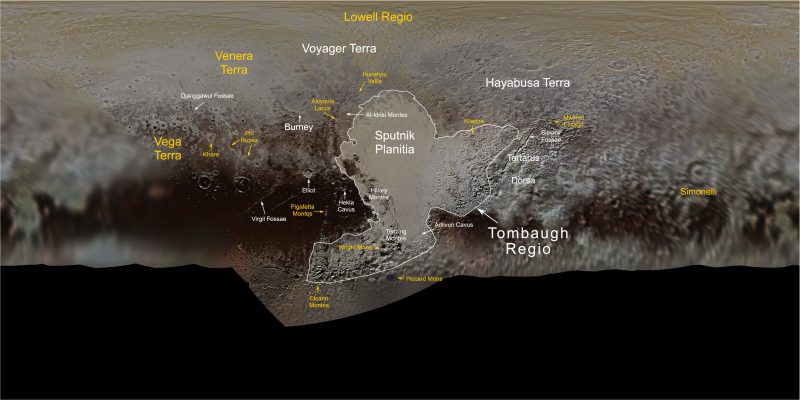
Map with Pluto feature names marked.

View larger. | This map, compiled from images and data gathered by NASA’s New Horizons spacecraft during its flight through the Pluto system in 2015, contains Pluto feature names approved by the International Astronomical Union. Names from the newest round of nominations, approved in 2019, are in yellow. Image via Credit: NASA/JHUAPL/Southwest Research Institute/Ross Beyer.

NASA’s New Horizons team – which sent the New Horizons spacecraft sweeping past Pluto and its moons in 2015 – said on August 8, 2019 that the International Astronomical Union (IAU) has now formally approved a list of new names for features on this outer world. The IAU has claimed for itself the authority to name planets, dwarf planets, moons, asteroids and planetary features in our solar system since its inaugural meeting in Rome in 1922. It named the new features on Pluto for people and missions who, it said, “paved the way” for New Horizons’ visit. The new names describe regions, mountain ranges, plains, valleys and craters seen for the first time by human eyes thanks to New Horizons. Missions like New Horizons take decades to propose, plan and carry out, and no new Pluto mission is in the offing. For many alive today, the New Horizons’ mission has provided our only close-up glimpse of Pluto and its moons.

See what NASA chose as New Horizons’ top 10 Pluto pics

These are the second set of Pluto feature names; the IAU approved the first set of 14 feature names for Pluto in 2017, as well as a set of names for Pluto’s largest moon, Charon, in 2018. The team gathered many of the naming ideas during an online campaign in 2015. I didn’t follow the new naming process closely, but, I have to admit, I’m saddened there are no women mentioned among these new names. Not even one? The 14 newest Pluto feature names are listed alphabetically below. The scientists’ statement said:

The names pay homage to underworld mythology, pioneering space missions that led to the capability to conduct New Horizons, historic pioneers who crossed new horizons in the exploration of Earth, and scientists and engineers associated with the study and exploration of Pluto and the Kuiper Belt.

Alcyonia Lacus, a possible frozen nitrogen lake on Pluto’s surface, is named for the bottomless lake in or in the vicinity of Lerna, a region of Greece known for springs and swamps; the Alcyonian lake was one of the entrances to the underworld in Greek mythology.

Elcano Montes is a mountain range honoring Juan Sebastián Elcano (1476 – 1526), the Spanish explorer who in 1522 completed the first circumnavigation of the Earth (a voyage started in 1519 by Magellan).

Hunahpu Valles is a system of canyons named for one of the Hero Twins in Mayan mythology, who defeated the lords of the underworld in a ball game.

Khare crater honors planetary scientist Bishun Khare (1933 – 2013), an expert on the chemistry of planetary atmospheres who did laboratory work leading to several seminal papers on tholins — the organic molecules that probably account for the darkest and reddest regions on Pluto.

Kiladze crater honors Rolan Kiladze (1931 – 2010), the Georgian (Caucasus) astronomer who made pioneering early investigations the dynamics, astrometry and photometry of Pluto.

Lowell Regio is a large region honoring Percival Lowell (1855 – 1916), the American astronomer who founded Lowell Observatory and organized a systematic search for a planet beyond Neptune.

Mwindo Fossae is a network of long, narrow depressions named for the Nyanga (Eastern Dem. Rep. Congo/Zaire) epic hero who traveled to the underworld and after returning home became a wise and powerful king.

Piccard Mons is a mountain and suspected cryovolcano that honors Auguste Piccard (1884 – 1962), a 20th century inventor and physicist best known for his pioneering balloon flights into Earth’s upper atmosphere.

Pigafetta Montes honors Antonio Pigafetta (c. 1491 – c. 1531), the Italian scholar and explorer who chronicled the discoveries made during the first circumnavigation of the Earth, aboard Magellan’s ships.

Piri Rupes is a long cliff honoring Ahmed Muhiddin Piri (c. 1470 – 1553), also known as Piri Reis, an Ottoman navigator and cartographer known for his world map. He also drew some of the earliest existing maps of North and Central America.

Simonelli crater honors astronomer Damon Simonelli (1959 – 2004), whose wide-ranging research included the formation history of Pluto.

Wright Mons honors the Wright brothers, Orville (1871 – 1948) and Wilbur (1867 – 1912), American aviation pioneers credited with building and flying the world’s first successful airplane.

Vega Terra is a large land mass named for the Soviet Vega 1 and 2 missions, the first spacecraft to fly balloons on another planet (Venus) and to image the nucleus of a comet (1P/Halley).

Venera Terra is named for the Venera missions sent to Venus by the Soviet Union from 1961 to 1984; they included the first human-made device to enter the atmosphere of another planet, to make a soft landing on another planet and to return images from another planetary surface.

According to the statement:

The New Horizons spacecraft — built and operated at the Johns Hopkins Applied Physics Laboratory in Laurel, Maryland, with a payload and science investigation led by Southwest Research Institute — is nearly 4.1 billion miles (6.6 billion km) from Earth. The spacecraft is in good health and is currently transmitting data recorded from its New Year’s 2019 encounter with the Kuiper Belt object 2014 MU69, the farthest and most primitive object ever explored.

Diagram showing Pluto's location past Pluto, and past MU69.

Computer-generated image showing New Horizons’ location in our solar system on August 10, 2019. To update, visit JHUAPl’s page Where Is New Horizons?

Bottom line: The pioneering New Horizons spacecraft photographed Pluto as it swept past in 2015. The new feature names recognize giants in Earth and space mythology and history, upon whose shoulders the New Horizon mission stands.

Via JHUAPL


from EarthSky https://ift.tt/2TncAe2
Map with Pluto feature names marked.

View larger. | This map, compiled from images and data gathered by NASA’s New Horizons spacecraft during its flight through the Pluto system in 2015, contains Pluto feature names approved by the International Astronomical Union. Names from the newest round of nominations, approved in 2019, are in yellow. Image via Credit: NASA/JHUAPL/Southwest Research Institute/Ross Beyer.

NASA’s New Horizons team – which sent the New Horizons spacecraft sweeping past Pluto and its moons in 2015 – said on August 8, 2019 that the International Astronomical Union (IAU) has now formally approved a list of new names for features on this outer world. The IAU has claimed for itself the authority to name planets, dwarf planets, moons, asteroids and planetary features in our solar system since its inaugural meeting in Rome in 1922. It named the new features on Pluto for people and missions who, it said, “paved the way” for New Horizons’ visit. The new names describe regions, mountain ranges, plains, valleys and craters seen for the first time by human eyes thanks to New Horizons. Missions like New Horizons take decades to propose, plan and carry out, and no new Pluto mission is in the offing. For many alive today, the New Horizons’ mission has provided our only close-up glimpse of Pluto and its moons.

See what NASA chose as New Horizons’ top 10 Pluto pics

These are the second set of Pluto feature names; the IAU approved the first set of 14 feature names for Pluto in 2017, as well as a set of names for Pluto’s largest moon, Charon, in 2018. The team gathered many of the naming ideas during an online campaign in 2015. I didn’t follow the new naming process closely, but, I have to admit, I’m saddened there are no women mentioned among these new names. Not even one? The 14 newest Pluto feature names are listed alphabetically below. The scientists’ statement said:

The names pay homage to underworld mythology, pioneering space missions that led to the capability to conduct New Horizons, historic pioneers who crossed new horizons in the exploration of Earth, and scientists and engineers associated with the study and exploration of Pluto and the Kuiper Belt.

Alcyonia Lacus, a possible frozen nitrogen lake on Pluto’s surface, is named for the bottomless lake in or in the vicinity of Lerna, a region of Greece known for springs and swamps; the Alcyonian lake was one of the entrances to the underworld in Greek mythology.

Elcano Montes is a mountain range honoring Juan Sebastián Elcano (1476 – 1526), the Spanish explorer who in 1522 completed the first circumnavigation of the Earth (a voyage started in 1519 by Magellan).

Hunahpu Valles is a system of canyons named for one of the Hero Twins in Mayan mythology, who defeated the lords of the underworld in a ball game.

Khare crater honors planetary scientist Bishun Khare (1933 – 2013), an expert on the chemistry of planetary atmospheres who did laboratory work leading to several seminal papers on tholins — the organic molecules that probably account for the darkest and reddest regions on Pluto.

Kiladze crater honors Rolan Kiladze (1931 – 2010), the Georgian (Caucasus) astronomer who made pioneering early investigations the dynamics, astrometry and photometry of Pluto.

Lowell Regio is a large region honoring Percival Lowell (1855 – 1916), the American astronomer who founded Lowell Observatory and organized a systematic search for a planet beyond Neptune.

Mwindo Fossae is a network of long, narrow depressions named for the Nyanga (Eastern Dem. Rep. Congo/Zaire) epic hero who traveled to the underworld and after returning home became a wise and powerful king.

Piccard Mons is a mountain and suspected cryovolcano that honors Auguste Piccard (1884 – 1962), a 20th century inventor and physicist best known for his pioneering balloon flights into Earth’s upper atmosphere.

Pigafetta Montes honors Antonio Pigafetta (c. 1491 – c. 1531), the Italian scholar and explorer who chronicled the discoveries made during the first circumnavigation of the Earth, aboard Magellan’s ships.

Piri Rupes is a long cliff honoring Ahmed Muhiddin Piri (c. 1470 – 1553), also known as Piri Reis, an Ottoman navigator and cartographer known for his world map. He also drew some of the earliest existing maps of North and Central America.

Simonelli crater honors astronomer Damon Simonelli (1959 – 2004), whose wide-ranging research included the formation history of Pluto.

Wright Mons honors the Wright brothers, Orville (1871 – 1948) and Wilbur (1867 – 1912), American aviation pioneers credited with building and flying the world’s first successful airplane.

Vega Terra is a large land mass named for the Soviet Vega 1 and 2 missions, the first spacecraft to fly balloons on another planet (Venus) and to image the nucleus of a comet (1P/Halley).

Venera Terra is named for the Venera missions sent to Venus by the Soviet Union from 1961 to 1984; they included the first human-made device to enter the atmosphere of another planet, to make a soft landing on another planet and to return images from another planetary surface.

According to the statement:

The New Horizons spacecraft — built and operated at the Johns Hopkins Applied Physics Laboratory in Laurel, Maryland, with a payload and science investigation led by Southwest Research Institute — is nearly 4.1 billion miles (6.6 billion km) from Earth. The spacecraft is in good health and is currently transmitting data recorded from its New Year’s 2019 encounter with the Kuiper Belt object 2014 MU69, the farthest and most primitive object ever explored.

Diagram showing Pluto's location past Pluto, and past MU69.

Computer-generated image showing New Horizons’ location in our solar system on August 10, 2019. To update, visit JHUAPl’s page Where Is New Horizons?

Bottom line: The pioneering New Horizons spacecraft photographed Pluto as it swept past in 2015. The new feature names recognize giants in Earth and space mythology and history, upon whose shoulders the New Horizon mission stands.

Via JHUAPL


from EarthSky https://ift.tt/2TncAe2

adds 2