aads

Table salt compound spotted on Jupiter’s moon Europa

2 photos of moon with tan markings, more pronounced in photo on right.

Natural color (left) and enhanced color (right) views of Europa from the Galileo mission in June 1997. The yellowish regions are now known to be caused by sodium chloride, also known as table salt, the principal component of sea salt. Image via NASA JPL-Caltech/University of Arizona.

Europa’s subsurface ocean might be even more similar to Earth’s oceans than previously realized. NASA said on June 12, 2019, that a new study reveals evidence of sodium chloride – a major component of table salt and sea salt – on the icy surface of this large moon of Jupiter. If, as thought, the salt originates from Europa’s ocean, hidden beneath its icy crust, that would mean Europa’s ocean water is very similar to that in oceans on Earth. That, of course, would have obvious implications for the possibility of life on this fascinating little world.

The intriguing new peer-reviewed findings were published in the journal Science Advances on June 12, 2019.

The fact that sodium chloride is also a principal component of sea salt is particularly fascinating. Its discovery on Europa supports previous suggestions that this moon’s ocean is chemically very similar to Earth’s oceans.

Even though Europa’s ocean isn’t on its surface – but instead below its surface ice, surrounded by the icy shell of Europa’s crust – traces of minerals can be found on the little moon’s surface. The surface salt is thought to be due to upwelling through cracks and possibly geysers. Previous studies of the surface, including from NASA’s Voyager and Galileo spacecraft, had focused on infrared spectroscopy, since it is ideal for detecting the kinds of molecules that scientists are usually looking for. According to Mike Brown, an astronomer at Caltech:

People have traditionally assumed that all of the interesting spectroscopy is in the infrared on planetary surfaces, because that’s where most of the molecules that scientists are looking for have their fundamental features.

Complicated machine holding small patch of yellow salt in laboratory.

In a test lab at the Jet Propulsion Laboratory, table salt – sodium chloride – turned yellow when subjected to similar radiation conditions as those on the surface of Europa. Image via NASA JPL-Caltech.

These types of chlorides can’t be seen with infrared spectroscopy, however, as Caltech student Samantha Trumbo explained:

No one has taken visible-wavelength spectra of Europa before that had this sort of spatial and spectral resolution. The Galileo spacecraft didn’t have a visible spectrometer. It just had a near-infrared spectrometer, and in the near-infrared, chlorides are featureless.

But when viewed in visible-wavelength spectroscopy, the sodium chloride signature popped out.

Previously, it was thought that magnesium sulfates had been found on the surface, but when additional higher quality observations were conducted with the W. M. Keck Observatory in Hawaii, there was no sign of them. The data pointed more towards sodium chlorides instead, and those don’t show up in infrared. As Brown also noted:

We thought that we might be seeing sodium chlorides, but they are essentially featureless in an infrared spectrum.

Jupiter's moon Europa showing pattern of brown lines on whitish surface.

Europa’s cracked icy surface as seen by NASA’s Galileo spacecraft in the late 1990s. Yellowish regions on the moon’s surface have now been confirmed to be irradiated sodium chloride, aka table salt. Image via NASA/JPL-Caltech/SETI Institute.

Greenish map of Europa with blue areas outlined in black.

Map showing the areas where the sodium chloride salts are found on Europa’s surface. The highest concentrations are in the Tara Regio region. Image via NASA/JPL/Björn Jónsson/Steve Albers/Science Advances.

Proving that the salts were sodium chloride still required a bit more work, however. Samples of similar ocean salts were tested on Earth by Kevin Hand at JPL. He subjected them to similar radiation conditions found on Europa’s airless surface. He found that they changed colors in a manner very similar to what is actually seen on Europa itself. The sodium chloride turned a shade of yellow similar to that seen in a geologically young area of Europa known as Tara Regio. According to Hand:

Sodium chloride is a bit like invisible ink on Europa’s surface. Before irradiation you can’t tell it’s there, but after irradiation the color jumps right out at you.

The research team then studied Europa’s surface with the Hubble Space Telescope, and found a distinct absorption signature in the visible spectrum at 450 nanometers. This matched exactly the irradiated form of sodium chloride, confirming that the yellow color of Tara Regio showed the presence of the salt on the surface. So why wasn’t this found already? As Brown said:

We’ve had the capacity to do this analysis with the Hubble Space Telescope for the past 20 years. It’s just that nobody thought to look.

There’s still one caveat – the sodium chloride might be evidence of different types of materials stratified – formed in layers – in the moon’s icy shell, rather than originating from the ocean. The finding, however, is enough to warrant a reevaluation of the geochemistry of Europa as a whole. If indeed the sodium chloride does originate from the ocean, it would be evidence that the ocean floor is still hydrothermally active. According to Trumbo:

Magnesium sulfate would simply have leached into the ocean from rocks on the ocean floor, but sodium chloride may indicate the ocean floor is hydrothermally active. That would mean Europa is a more geologically interesting planetary body than previously believed.

Diagram of icy layer with water below spurting from vents through the ice.

Illustration of Europa’s outer ice crust. It’s thought that water from the ocean below can reach the surface through cracks or volcanic vents. This is the salts are most likely deposited onto the surface. Image via NASA/JPL-Caltech/Geology.com.

If the ocean floor on Europa does have active hydrothermal vents like in Earth’s oceans, that would boost the chances for some kind of life to exist there. On Earth, such “hotspots” in the deep oceans are oases for living organisms.

Saturn’s ocean moon Enceladus is also now thought to have hydrothermal vents on its ocean bottom, based on data from NASA’s Cassini mission, which ended in late 2017. Scientists now know that Enceladus’ ocean contains salts and a variety of organic molecules, thanks to Cassini being able to fly through and directly sample some of the huge water vapor plumes that erupt from cracks in the moon’s icy surface and originate from the ocean deep below. Cassini couldn’t detect life itself, even if it was there, but future missions will search for that evidence at both Enceladus and Europa.

Bottom line: The discovery of sodium chloride salts on Europa provides compelling evidence that the moon’s subsurface ocean is very similar to Earth’s oceans, increasing the chances for life.

Source: Sodium chloride on the surface of Europa

Via NASA


from EarthSky http://bit.ly/2Fuf6tf
2 photos of moon with tan markings, more pronounced in photo on right.

Natural color (left) and enhanced color (right) views of Europa from the Galileo mission in June 1997. The yellowish regions are now known to be caused by sodium chloride, also known as table salt, the principal component of sea salt. Image via NASA JPL-Caltech/University of Arizona.

Europa’s subsurface ocean might be even more similar to Earth’s oceans than previously realized. NASA said on June 12, 2019, that a new study reveals evidence of sodium chloride – a major component of table salt and sea salt – on the icy surface of this large moon of Jupiter. If, as thought, the salt originates from Europa’s ocean, hidden beneath its icy crust, that would mean Europa’s ocean water is very similar to that in oceans on Earth. That, of course, would have obvious implications for the possibility of life on this fascinating little world.

The intriguing new peer-reviewed findings were published in the journal Science Advances on June 12, 2019.

The fact that sodium chloride is also a principal component of sea salt is particularly fascinating. Its discovery on Europa supports previous suggestions that this moon’s ocean is chemically very similar to Earth’s oceans.

Even though Europa’s ocean isn’t on its surface – but instead below its surface ice, surrounded by the icy shell of Europa’s crust – traces of minerals can be found on the little moon’s surface. The surface salt is thought to be due to upwelling through cracks and possibly geysers. Previous studies of the surface, including from NASA’s Voyager and Galileo spacecraft, had focused on infrared spectroscopy, since it is ideal for detecting the kinds of molecules that scientists are usually looking for. According to Mike Brown, an astronomer at Caltech:

People have traditionally assumed that all of the interesting spectroscopy is in the infrared on planetary surfaces, because that’s where most of the molecules that scientists are looking for have their fundamental features.

Complicated machine holding small patch of yellow salt in laboratory.

In a test lab at the Jet Propulsion Laboratory, table salt – sodium chloride – turned yellow when subjected to similar radiation conditions as those on the surface of Europa. Image via NASA JPL-Caltech.

These types of chlorides can’t be seen with infrared spectroscopy, however, as Caltech student Samantha Trumbo explained:

No one has taken visible-wavelength spectra of Europa before that had this sort of spatial and spectral resolution. The Galileo spacecraft didn’t have a visible spectrometer. It just had a near-infrared spectrometer, and in the near-infrared, chlorides are featureless.

But when viewed in visible-wavelength spectroscopy, the sodium chloride signature popped out.

Previously, it was thought that magnesium sulfates had been found on the surface, but when additional higher quality observations were conducted with the W. M. Keck Observatory in Hawaii, there was no sign of them. The data pointed more towards sodium chlorides instead, and those don’t show up in infrared. As Brown also noted:

We thought that we might be seeing sodium chlorides, but they are essentially featureless in an infrared spectrum.

Jupiter's moon Europa showing pattern of brown lines on whitish surface.

Europa’s cracked icy surface as seen by NASA’s Galileo spacecraft in the late 1990s. Yellowish regions on the moon’s surface have now been confirmed to be irradiated sodium chloride, aka table salt. Image via NASA/JPL-Caltech/SETI Institute.

Greenish map of Europa with blue areas outlined in black.

Map showing the areas where the sodium chloride salts are found on Europa’s surface. The highest concentrations are in the Tara Regio region. Image via NASA/JPL/Björn Jónsson/Steve Albers/Science Advances.

Proving that the salts were sodium chloride still required a bit more work, however. Samples of similar ocean salts were tested on Earth by Kevin Hand at JPL. He subjected them to similar radiation conditions found on Europa’s airless surface. He found that they changed colors in a manner very similar to what is actually seen on Europa itself. The sodium chloride turned a shade of yellow similar to that seen in a geologically young area of Europa known as Tara Regio. According to Hand:

Sodium chloride is a bit like invisible ink on Europa’s surface. Before irradiation you can’t tell it’s there, but after irradiation the color jumps right out at you.

The research team then studied Europa’s surface with the Hubble Space Telescope, and found a distinct absorption signature in the visible spectrum at 450 nanometers. This matched exactly the irradiated form of sodium chloride, confirming that the yellow color of Tara Regio showed the presence of the salt on the surface. So why wasn’t this found already? As Brown said:

We’ve had the capacity to do this analysis with the Hubble Space Telescope for the past 20 years. It’s just that nobody thought to look.

There’s still one caveat – the sodium chloride might be evidence of different types of materials stratified – formed in layers – in the moon’s icy shell, rather than originating from the ocean. The finding, however, is enough to warrant a reevaluation of the geochemistry of Europa as a whole. If indeed the sodium chloride does originate from the ocean, it would be evidence that the ocean floor is still hydrothermally active. According to Trumbo:

Magnesium sulfate would simply have leached into the ocean from rocks on the ocean floor, but sodium chloride may indicate the ocean floor is hydrothermally active. That would mean Europa is a more geologically interesting planetary body than previously believed.

Diagram of icy layer with water below spurting from vents through the ice.

Illustration of Europa’s outer ice crust. It’s thought that water from the ocean below can reach the surface through cracks or volcanic vents. This is the salts are most likely deposited onto the surface. Image via NASA/JPL-Caltech/Geology.com.

If the ocean floor on Europa does have active hydrothermal vents like in Earth’s oceans, that would boost the chances for some kind of life to exist there. On Earth, such “hotspots” in the deep oceans are oases for living organisms.

Saturn’s ocean moon Enceladus is also now thought to have hydrothermal vents on its ocean bottom, based on data from NASA’s Cassini mission, which ended in late 2017. Scientists now know that Enceladus’ ocean contains salts and a variety of organic molecules, thanks to Cassini being able to fly through and directly sample some of the huge water vapor plumes that erupt from cracks in the moon’s icy surface and originate from the ocean deep below. Cassini couldn’t detect life itself, even if it was there, but future missions will search for that evidence at both Enceladus and Europa.

Bottom line: The discovery of sodium chloride salts on Europa provides compelling evidence that the moon’s subsurface ocean is very similar to Earth’s oceans, increasing the chances for life.

Source: Sodium chloride on the surface of Europa

Via NASA


from EarthSky http://bit.ly/2Fuf6tf

Screams contain a 'calling card' for the vocalizer's identity

"Our findings add to our understanding of how screams are evolutionarily important," says Emory psychologist Harold Gouzoules, senior author of the paper.

By Carol Clark

Human screams convey a level of individual identity that may help explain their evolutionary origins, finds a study by scientists at Emory University.

PeerJ published the research, showing that listeners can correctly identify whether pairs of screams were produced by the same person or two different people — a critical prerequisite to individual recognition.

“Our findings add to our understanding of how screams are evolutionarily important,” says Harold Gouzoules, senior author of the paper and an Emory professor of psychology. “The ability to identify who is screaming is likely an adaptive mechanism. The idea is that you wouldn’t respond equally to just anyone’s scream. You would likely respond more urgently to a scream from your child, or from someone else important to you.”

Jonathan Engelberg is first author of the paper and Jay Schwartz is a co-author. They are both Emory PhD candidates in Gouzoules’ Bioacoustics Lab.

The ability to recognize individuals by distinctive cues or signals is essential to the organization of social behavior, the authors note, and humans are adept at making identity-related judgements based on speech — even when the speech is heavily altered. Less is known, however, about identity cues in nonlinguistic vocalizations, such as screams.

Gouzoules first began researching monkey screams in 1980, before becoming one of the few scientists studying human screams about 10 years ago.

“The origin of screams was likely to startle a predator and make it jump, perhaps allowing the prey a small chance to escape,” Gouzoules says. “That’s very different from calling out for help.”

He theorizes that as some species became more social, including monkeys and other primates, screams became a way to recruit help from relatives and friends when someone got into trouble.

Previous research by Gouzoules and others suggests that non-human primates are able to identify whether a scream is coming from an individual that is important to them. Some researchers, however, have disputed the evidence, arguing that the chaotic and inconsistent nature of screams does not make them likely conduits for individual recognition.

Gouzoules wanted to test whether humans could determine if two fairly similar screams were made by the same person or a different person. His Bioacoustics Lab has amassed an impressive library of high-intensity, visceral sounds — from TV and movie performances to the screams of non-actors reacting to actual events on YouTube videos.

For the PeerJ paper, the lab ran experiments that included 104 participants. The participants listened to audio files of pairs of screams on a computer, without any visual cues for context. Each pair was presented two seconds apart and participants were asked to determine if the screams came from the same person or a different person.

In some trials, the two screams came from two different callers, but were matched by age, gender and the context of the scream. In other trials, the screams came from the same caller but were two different screams matched for context. And in a third trial, the stimulus pairs consisted of a scream and a slightly modified version of itself, to make it longer or shorter than the original.

For all three of the experiments, most of the participants were able to correctly judge most of the time whether the screams were from the same person or not.

“Our results provide empirical evidence that screams carry enough information for listeners to discriminate between different callers,” Gouzoules says. “Although screams may not be acoustically ideal for signaling a caller’s identity, natural selection appears to have adequately shaped them so they are good enough to do the job.”

The PeerJ paper is part of an extensive program of research into screams by Gouzoules. In previous work, his lab has found that listeners cannot distinguish acted screams from naturally occurring screams.

In upcoming papers, he is zeroing in on how people determine whether they are hearing a scream or some other vocalization and how they perceive the emotional context of a scream — judging whether it’s due to happiness, anger, fear or pain.

Photo: Getty Images

Related:
The psychology of screams

from eScienceCommons http://bit.ly/2WZApZJ
"Our findings add to our understanding of how screams are evolutionarily important," says Emory psychologist Harold Gouzoules, senior author of the paper.

By Carol Clark

Human screams convey a level of individual identity that may help explain their evolutionary origins, finds a study by scientists at Emory University.

PeerJ published the research, showing that listeners can correctly identify whether pairs of screams were produced by the same person or two different people — a critical prerequisite to individual recognition.

“Our findings add to our understanding of how screams are evolutionarily important,” says Harold Gouzoules, senior author of the paper and an Emory professor of psychology. “The ability to identify who is screaming is likely an adaptive mechanism. The idea is that you wouldn’t respond equally to just anyone’s scream. You would likely respond more urgently to a scream from your child, or from someone else important to you.”

Jonathan Engelberg is first author of the paper and Jay Schwartz is a co-author. They are both Emory PhD candidates in Gouzoules’ Bioacoustics Lab.

The ability to recognize individuals by distinctive cues or signals is essential to the organization of social behavior, the authors note, and humans are adept at making identity-related judgements based on speech — even when the speech is heavily altered. Less is known, however, about identity cues in nonlinguistic vocalizations, such as screams.

Gouzoules first began researching monkey screams in 1980, before becoming one of the few scientists studying human screams about 10 years ago.

“The origin of screams was likely to startle a predator and make it jump, perhaps allowing the prey a small chance to escape,” Gouzoules says. “That’s very different from calling out for help.”

He theorizes that as some species became more social, including monkeys and other primates, screams became a way to recruit help from relatives and friends when someone got into trouble.

Previous research by Gouzoules and others suggests that non-human primates are able to identify whether a scream is coming from an individual that is important to them. Some researchers, however, have disputed the evidence, arguing that the chaotic and inconsistent nature of screams does not make them likely conduits for individual recognition.

Gouzoules wanted to test whether humans could determine if two fairly similar screams were made by the same person or a different person. His Bioacoustics Lab has amassed an impressive library of high-intensity, visceral sounds — from TV and movie performances to the screams of non-actors reacting to actual events on YouTube videos.

For the PeerJ paper, the lab ran experiments that included 104 participants. The participants listened to audio files of pairs of screams on a computer, without any visual cues for context. Each pair was presented two seconds apart and participants were asked to determine if the screams came from the same person or a different person.

In some trials, the two screams came from two different callers, but were matched by age, gender and the context of the scream. In other trials, the screams came from the same caller but were two different screams matched for context. And in a third trial, the stimulus pairs consisted of a scream and a slightly modified version of itself, to make it longer or shorter than the original.

For all three of the experiments, most of the participants were able to correctly judge most of the time whether the screams were from the same person or not.

“Our results provide empirical evidence that screams carry enough information for listeners to discriminate between different callers,” Gouzoules says. “Although screams may not be acoustically ideal for signaling a caller’s identity, natural selection appears to have adequately shaped them so they are good enough to do the job.”

The PeerJ paper is part of an extensive program of research into screams by Gouzoules. In previous work, his lab has found that listeners cannot distinguish acted screams from naturally occurring screams.

In upcoming papers, he is zeroing in on how people determine whether they are hearing a scream or some other vocalization and how they perceive the emotional context of a scream — judging whether it’s due to happiness, anger, fear or pain.

Photo: Getty Images

Related:
The psychology of screams

from eScienceCommons http://bit.ly/2WZApZJ

Science Snaps: seeing the effects of proteins we know nothing about

Image of cancer cell.

Anh Hoang Le, a PhD student at the Cancer Research UK Beatson Institute in Glasgow, studies two proteins that we know curiously little about: CYRI-A and CYRI-B.

“We have some hints that they might be involved in cancer, and it’s my teams’ job to find out if it’s true.”

Le has been growing batches of cancer cells in the lab that have one key difference: some can produce the CYRI proteins, while others can’t. He then looks for differences between the cells using tools similar to microscopes.

And so far, the most striking of these has been changes in cell shape, which can have an important effect on how the cell behaves.

“I have four different stains on these cells so you can see four different things. The nucleus is the round blue balls in the middle of each cell, which contains DNA. The cytoskeleton, which essentially is the skeleton of the cell, is in magenta. The yellow is a protein called ArpC2, and the green is a protein called integrin,” he explains.

The molecules aren’t usually those colours. Le sticks a different fluorescent dye to each molecule to make them glow. It’s a standard technique in cell biology if you want to look at things inside a cell. And it produces some beautiful images while you’re at it.

Supporting roles – integrin and ArpC2

Image of cancer cells.

The image on the left is a regular cancer cell. Whereas the cell on the right is a cancer cell that has had the proteins CYRI-A and CYRI-B removed. The cell’s shape has changed dramatically and a protein called integrin (green) changes location inside the cell. A molecule called ArpC2 (yellow) becomes concentrated around the edges of the cell, meaning the cell may be more likely to move. Image credit: Anh Hoang Le, CRUK Beatson Institute.

Integrin, in green, has multiple jobs. But one of its most important roles is sticking the cell to its surroundings, like an anchor. It’s known to be key in deciding the shape of the cell. And it’s been linked to the spread of cancer cells around the body.

In an earlier experiment, Le found that when he removed the CYRI proteins from cells, they became stickier. But they also moved faster than cells with the CYRI proteins. As integrin is known to be involved in both these processes, Le decided to look at the location and amount of integrin inside the cells.

The image above shows a regular cancer cell on the left, and one that been engineered so it doesn’t produce the CYRI proteins, on the right.

“When I removed the proteins from the cell, it changes shape. And you can see that when they are present, the integrin is very spread inside the cell. But without, you can suddenly see all of those green stripes that align with the cell. So without the CYRI proteins, integrin is more prominent and is perhaps helping the cell to move.”

Another protein called ArpC2, marked yellow in the image, is also important in cell movement. The protein collects at the edges of the cell when it wants to move, which is what happens in cells without the CYRI proteins.

Overall, Le thinks CYRI-A and CYRI-B may be changing the distribution of integrin and ArpC2 inside cells, which leads to the change in shape. And this could trigger cancer cells to move.

Shaping up nicely

Comparing cancer cells.

Again, The image on the left is a regular cancer cell. The cell on the right has had the CYRI proteins removed. The cell has changed shape and integrin (green) is aligned throughout the cell, while ArpC2 (yellow) are concentrated around the edge of the cell. Image Credit: Anh Hoang Le, CRUK Beatson Institute.

The shape of a cell is important because it indicates what the cell may be likely to do, whether that be multiply, move or die.

“The cell with the proteins has very spiky protrusions,” says Le. “Those spikes are called filopodia, which we think are for the cell to sense its environment.”

Cancer cells without the CYRI proteins have less obvious protrusions. In the right-hand image above, they’re the small bumps around the edge of the cell. “We call that lamellipodia, which we think is more for a cell to ‘crawl’,” says Le.

Le’s lab research suggests that if cancer cells lose the ability to make the CYRI proteins they may be more likely to move, which could be linked to cancer spread (metastasis). But it’s early days.

“There is a lot of debate,” warns Le. “So it is difficult to firmly say that if you have more lamellipodia the cell is going to metastasise, because inside the actual cancer there are a lot of interactions and factors that we don’t have enough knowledge about yet.”

According to Le, which structures are important for cancer to progress may actually differ depending on the cancer type.

For now, Le’s work is helping uncover the roles of these mysterious proteins in cancer. And he’s produced some great images along the way.

“My favourite? I think it’s the ‘fan-shaped’ one. Because, compared to the spiky one, it gives you a striking look at how different the cell shape is when the proteins are not there.”

Ethan

Reference

Fort et. al. (2018). Fam49/CYRI interacts with Rac1 and locally suppresses protrusions. Nature. DOI: 10.1038/s41556-018-0198-9


from Cancer Research UK – Science blog http://bit.ly/2IGcESy
Image of cancer cell.

Anh Hoang Le, a PhD student at the Cancer Research UK Beatson Institute in Glasgow, studies two proteins that we know curiously little about: CYRI-A and CYRI-B.

“We have some hints that they might be involved in cancer, and it’s my teams’ job to find out if it’s true.”

Le has been growing batches of cancer cells in the lab that have one key difference: some can produce the CYRI proteins, while others can’t. He then looks for differences between the cells using tools similar to microscopes.

And so far, the most striking of these has been changes in cell shape, which can have an important effect on how the cell behaves.

“I have four different stains on these cells so you can see four different things. The nucleus is the round blue balls in the middle of each cell, which contains DNA. The cytoskeleton, which essentially is the skeleton of the cell, is in magenta. The yellow is a protein called ArpC2, and the green is a protein called integrin,” he explains.

The molecules aren’t usually those colours. Le sticks a different fluorescent dye to each molecule to make them glow. It’s a standard technique in cell biology if you want to look at things inside a cell. And it produces some beautiful images while you’re at it.

Supporting roles – integrin and ArpC2

Image of cancer cells.

The image on the left is a regular cancer cell. Whereas the cell on the right is a cancer cell that has had the proteins CYRI-A and CYRI-B removed. The cell’s shape has changed dramatically and a protein called integrin (green) changes location inside the cell. A molecule called ArpC2 (yellow) becomes concentrated around the edges of the cell, meaning the cell may be more likely to move. Image credit: Anh Hoang Le, CRUK Beatson Institute.

Integrin, in green, has multiple jobs. But one of its most important roles is sticking the cell to its surroundings, like an anchor. It’s known to be key in deciding the shape of the cell. And it’s been linked to the spread of cancer cells around the body.

In an earlier experiment, Le found that when he removed the CYRI proteins from cells, they became stickier. But they also moved faster than cells with the CYRI proteins. As integrin is known to be involved in both these processes, Le decided to look at the location and amount of integrin inside the cells.

The image above shows a regular cancer cell on the left, and one that been engineered so it doesn’t produce the CYRI proteins, on the right.

“When I removed the proteins from the cell, it changes shape. And you can see that when they are present, the integrin is very spread inside the cell. But without, you can suddenly see all of those green stripes that align with the cell. So without the CYRI proteins, integrin is more prominent and is perhaps helping the cell to move.”

Another protein called ArpC2, marked yellow in the image, is also important in cell movement. The protein collects at the edges of the cell when it wants to move, which is what happens in cells without the CYRI proteins.

Overall, Le thinks CYRI-A and CYRI-B may be changing the distribution of integrin and ArpC2 inside cells, which leads to the change in shape. And this could trigger cancer cells to move.

Shaping up nicely

Comparing cancer cells.

Again, The image on the left is a regular cancer cell. The cell on the right has had the CYRI proteins removed. The cell has changed shape and integrin (green) is aligned throughout the cell, while ArpC2 (yellow) are concentrated around the edge of the cell. Image Credit: Anh Hoang Le, CRUK Beatson Institute.

The shape of a cell is important because it indicates what the cell may be likely to do, whether that be multiply, move or die.

“The cell with the proteins has very spiky protrusions,” says Le. “Those spikes are called filopodia, which we think are for the cell to sense its environment.”

Cancer cells without the CYRI proteins have less obvious protrusions. In the right-hand image above, they’re the small bumps around the edge of the cell. “We call that lamellipodia, which we think is more for a cell to ‘crawl’,” says Le.

Le’s lab research suggests that if cancer cells lose the ability to make the CYRI proteins they may be more likely to move, which could be linked to cancer spread (metastasis). But it’s early days.

“There is a lot of debate,” warns Le. “So it is difficult to firmly say that if you have more lamellipodia the cell is going to metastasise, because inside the actual cancer there are a lot of interactions and factors that we don’t have enough knowledge about yet.”

According to Le, which structures are important for cancer to progress may actually differ depending on the cancer type.

For now, Le’s work is helping uncover the roles of these mysterious proteins in cancer. And he’s produced some great images along the way.

“My favourite? I think it’s the ‘fan-shaped’ one. Because, compared to the spiky one, it gives you a striking look at how different the cell shape is when the proteins are not there.”

Ethan

Reference

Fort et. al. (2018). Fam49/CYRI interacts with Rac1 and locally suppresses protrusions. Nature. DOI: 10.1038/s41556-018-0198-9


from Cancer Research UK – Science blog http://bit.ly/2IGcESy

6 amazing facts about ants

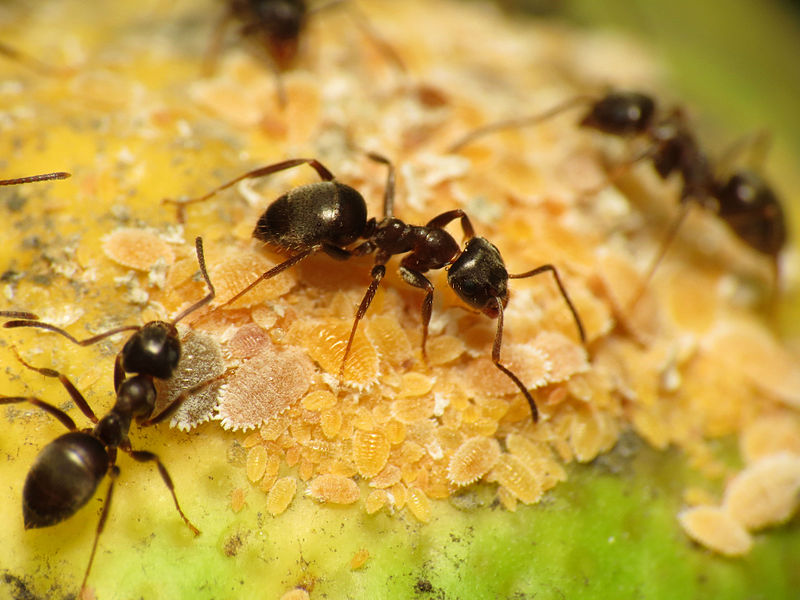
3 black ants tending to a pile of yellow aphids.

Image via Wikipedia.

By Charlie Durant, University of Leicester; Max John, University of Leicester, and Rob Hammond, University of Leicester

Have you have seen ants this year? In Britain, they were probably black garden ants, known as Lasius niger – Europe’s most common ant. One of somewhere between 12,000 and 20,000 species, they are the scourge of gardeners – but also fascinating.

The small, black, wingless workers run around the pavements, crawl up your plants tending aphids or collect tasty morsels from your kitchen. And the flying ants that occasionally appear on a warm summer’s evening are actually the reproductive siblings of these non-winged workers. Here’s what else you need to know:

1. Most ants you see are female

Ants have a caste system, where responsibilities are divided. The queen is the founder of the colony, and her role is to lay eggs. Worker ants are all female, and this sisterhood is responsible for the harmonious operation of the colony.

Their tasks range from caring for the queen and the young, foraging, policing conflicts in the colony, and waste disposal. Workers will most likely never have their own offspring. The vast majority of eggs develop as workers, but once the colony is ready the queen produces the next generation of reproductives which will go on to start own colonies.

A female ant’s fate to become a worker or queen is mainly determined by diet, not genetics. Any female ant larva can become the queen – those that do receive diets richer in protein. The other larvae receive less protein, which causes them to develop as workers.

2. Male ants are pretty much just flying sperm

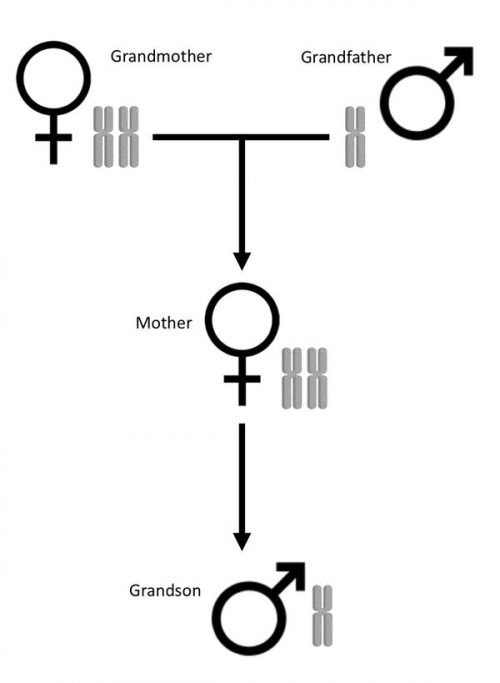
Family diagram showing number of genomes of 3 generations of ants.

Male ants have a mother but no father.

Unlike humans, with X and Y chromosomes, an ant’s sex is determined by the number of genome copies it possesses. Male ants develop from unfertilized eggs so receive no genome from a father. This means that male ants don’t have a father and cannot have sons, but they do have grandfathers and can have grandsons. Female ants, in comparison, develop from fertilized eggs and have two genome copies – one from their father and one from their mother.

Male ants function like flying sperm. Only having one genome copy means every one of their sperm is genetically identical to themselves. And their job is over quickly, dying soon after mating, although their sperm live on, perhaps for years. Essentially, their only job is to reproduce.

Ants crawling on a cupcake with swirly white icing and red sugar dots.

Let them eat cake. Image via Shutterstock.

3. After sex, queens don’t eat for weeks

When the conditions are warm and humid, the winged virgin queens and males leave their nests in search of mates. This is the behavior seen on “flying ant day”. In L. niger, mating takes place on the wing, often hundreds of meters [yards] up (hence the need for good weather). Afterwards, queens drop to the ground and shed their wings, while males quickly die. Mated queens choose a nest site and burrow into the soil, made softer from recent rain.

Once underground, the queens will not eat for weeks – until they have produced their own daughter workers. They use energy from their fat stores and redundant flight muscles to lay their first batch of eggs, which they fertilize using sperm stored from their nuptial flight. It is the same stock of sperm acquired from long dead males that allows a queen to continue laying fertilized eggs for her entire life. Queens never mate again.

4. Home-making the ant way is about cooperation, death and slavery

Sometimes two L. niger queens unite to found a nest. This initially cooperative association – which increases the chance of establishing a colony – dissolves once new adult workers emerge and then the queens fight to the death. More sinister still, L. niger colonies sometimes steal brood from their neighbors, putting them to work as slaves.

Slave-making has evolved in a number of ant species, but they also display cooperation at extraordinary levels. An extreme example of this is a “supercolony” of Argentine ants (Linepithema humile) which extends over 3,700 miles (6,000 km) of European coastline from Italy to northwest Spain, and is composed of literally billions of workers from millions of cooperating nests.

5. Queen ants can live for decades, males for a week

After establishing her colony, the queen’s work is not done and she has many years of egg-laying ahead of her. In the laboratory, L. niger queens have lived for nearly 30 years. Workers live for about a year, males little more than a week (although their sperm live longer). These extraordinary differences in longevity are purely due to the way their genes are switched on and off.

6. Ants can help humans and the environment

Ants have a major influence in ecosystems worldwide and their roles are diverse. While some ants are considered pests, others act as biological-control agents. Ants benefit ecosystems by dispersing seeds, pollinating plants and improving the quality of soil. Ants might also benefit our health, as a potential source of new medicines such as antibiotics.

So when you next see an ant, before you think to kill her, consider how fascinating she really is.

Charlie Durant, Ph.D. candidate, Department of Genetics and Genome Biology, University of Leicester; Max John, Ph.D. candidate, Department of Genetics and Genome Biology, University of Leicester, and Rob Hammond, lecturer, Department of Genetics and Genome Biology, University of Leicester

This article is republished from The Conversation under a Creative Commons license. Read the original article.

Bottom line: Facts about ants.

The Conversation


from EarthSky http://bit.ly/2X5g6Pd
3 black ants tending to a pile of yellow aphids.

Image via Wikipedia.

By Charlie Durant, University of Leicester; Max John, University of Leicester, and Rob Hammond, University of Leicester

Have you have seen ants this year? In Britain, they were probably black garden ants, known as Lasius niger – Europe’s most common ant. One of somewhere between 12,000 and 20,000 species, they are the scourge of gardeners – but also fascinating.

The small, black, wingless workers run around the pavements, crawl up your plants tending aphids or collect tasty morsels from your kitchen. And the flying ants that occasionally appear on a warm summer’s evening are actually the reproductive siblings of these non-winged workers. Here’s what else you need to know:

1. Most ants you see are female

Ants have a caste system, where responsibilities are divided. The queen is the founder of the colony, and her role is to lay eggs. Worker ants are all female, and this sisterhood is responsible for the harmonious operation of the colony.

Their tasks range from caring for the queen and the young, foraging, policing conflicts in the colony, and waste disposal. Workers will most likely never have their own offspring. The vast majority of eggs develop as workers, but once the colony is ready the queen produces the next generation of reproductives which will go on to start own colonies.

A female ant’s fate to become a worker or queen is mainly determined by diet, not genetics. Any female ant larva can become the queen – those that do receive diets richer in protein. The other larvae receive less protein, which causes them to develop as workers.

2. Male ants are pretty much just flying sperm

Family diagram showing number of genomes of 3 generations of ants.

Male ants have a mother but no father.

Unlike humans, with X and Y chromosomes, an ant’s sex is determined by the number of genome copies it possesses. Male ants develop from unfertilized eggs so receive no genome from a father. This means that male ants don’t have a father and cannot have sons, but they do have grandfathers and can have grandsons. Female ants, in comparison, develop from fertilized eggs and have two genome copies – one from their father and one from their mother.

Male ants function like flying sperm. Only having one genome copy means every one of their sperm is genetically identical to themselves. And their job is over quickly, dying soon after mating, although their sperm live on, perhaps for years. Essentially, their only job is to reproduce.

Ants crawling on a cupcake with swirly white icing and red sugar dots.

Let them eat cake. Image via Shutterstock.

3. After sex, queens don’t eat for weeks

When the conditions are warm and humid, the winged virgin queens and males leave their nests in search of mates. This is the behavior seen on “flying ant day”. In L. niger, mating takes place on the wing, often hundreds of meters [yards] up (hence the need for good weather). Afterwards, queens drop to the ground and shed their wings, while males quickly die. Mated queens choose a nest site and burrow into the soil, made softer from recent rain.

Once underground, the queens will not eat for weeks – until they have produced their own daughter workers. They use energy from their fat stores and redundant flight muscles to lay their first batch of eggs, which they fertilize using sperm stored from their nuptial flight. It is the same stock of sperm acquired from long dead males that allows a queen to continue laying fertilized eggs for her entire life. Queens never mate again.

4. Home-making the ant way is about cooperation, death and slavery

Sometimes two L. niger queens unite to found a nest. This initially cooperative association – which increases the chance of establishing a colony – dissolves once new adult workers emerge and then the queens fight to the death. More sinister still, L. niger colonies sometimes steal brood from their neighbors, putting them to work as slaves.

Slave-making has evolved in a number of ant species, but they also display cooperation at extraordinary levels. An extreme example of this is a “supercolony” of Argentine ants (Linepithema humile) which extends over 3,700 miles (6,000 km) of European coastline from Italy to northwest Spain, and is composed of literally billions of workers from millions of cooperating nests.

5. Queen ants can live for decades, males for a week

After establishing her colony, the queen’s work is not done and she has many years of egg-laying ahead of her. In the laboratory, L. niger queens have lived for nearly 30 years. Workers live for about a year, males little more than a week (although their sperm live longer). These extraordinary differences in longevity are purely due to the way their genes are switched on and off.

6. Ants can help humans and the environment

Ants have a major influence in ecosystems worldwide and their roles are diverse. While some ants are considered pests, others act as biological-control agents. Ants benefit ecosystems by dispersing seeds, pollinating plants and improving the quality of soil. Ants might also benefit our health, as a potential source of new medicines such as antibiotics.

So when you next see an ant, before you think to kill her, consider how fascinating she really is.

Charlie Durant, Ph.D. candidate, Department of Genetics and Genome Biology, University of Leicester; Max John, Ph.D. candidate, Department of Genetics and Genome Biology, University of Leicester, and Rob Hammond, lecturer, Department of Genetics and Genome Biology, University of Leicester

This article is republished from The Conversation under a Creative Commons license. Read the original article.

Bottom line: Facts about ants.

The Conversation


from EarthSky http://bit.ly/2X5g6Pd

It’s twilight time: 15 favorite photos

Sunrise over a lake, with many sailboats anchored, and clouds reflecting in the water.

Greg Diesel-Walck captured the beautiful morning twilight on the day of the summer solstice, June 21, 2019. He was at Dyke Marsh Wildlife Preserve in Alexandria, Virginia. Thank you, Greg.

Twilight is the time of day between daylight and darkness, whether after sunset or before sunrise. The sun is below the horizon, but its rays are scattered by Earth’s atmosphere to create twilight’s pinks, purples, and blues. These photos came from EarthSky Community Photos, or from EarthSky Facebook friends. You’ll love them! Thanks to all who contributed.

Read more: What exactly is twilight?

Read more: The undark nights of summer by Guy Ottewell

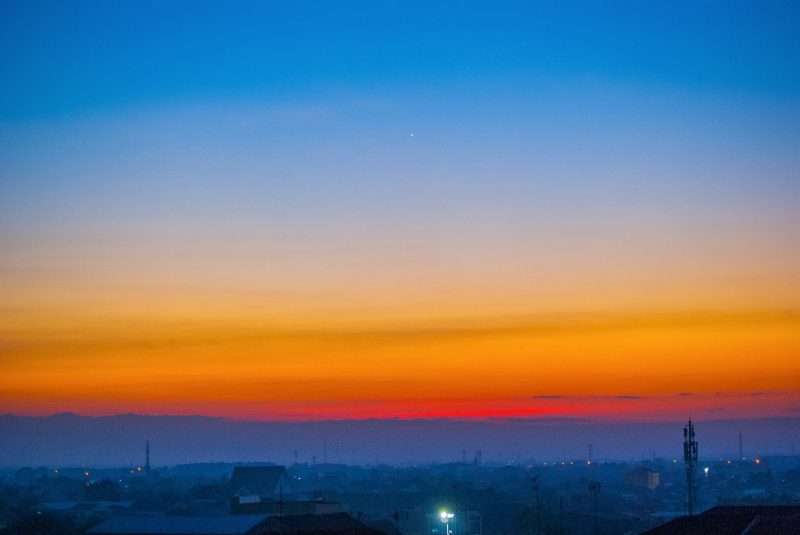
Sky fading from brilliant orange to blue over a misty town, with Venus high in the sky.

View at EarthSky Community Photos. | Asthadi Setyawan in Semarang, Central Java, Indonesia, caught this morning twilight scene, with Venus in its midst, on June 18, 2019. Thank you, Asthadi!

Swirling dark-pink clouds over rugged snowy mountains, reflected in lake.

Summer twilight via Yuri Beletsky.

Foreground: Many shorebirds. Background: Cobalt blue land against yellow sky.

Image via Joe Randall.

Pink clouds against blue sky reflected in a lake.

After sunset. Image via Lorie Vignolle-Moritz.

Few pink clouds, pale blue sky, stripe of yellow above rocky inlet.

Before sunrise. Image via Lorie Vignolle-Moritz.

Panorama of darkening blue sky with a few white clouds, trees below.

Twilight after midnight in Örebro, Sweden, via Fredrik Roos.

Lake with irregular stakes in it, reflecting pink and lavender clouds.

Twilight via Ailee Bennett Farey.

Tractor in field, background dark steep hills, sky all orange-pink.

Twilight via Cynthia Koeppe.

Orange-yellow sky with darkish clouds above beach with wavelets.

Twilight at Waimanalo Beach, Oahu, Hawaii, via Chantel Dunlap.

Wide, flat, peaceful pink and blue clouds reflected in a lake.

Twilight via Catherine Fisher.

Tall pointed tower silhouetted against hot pink sky.

Empire State Building in twilight via Oonagh Turitto.

Many pointy fir trees against stripe of blue hills and pale pink sky.

Twilight from Mount Shasta via Robert Holzman.

Slate sky, orange clouds reflected in calm sea with anchored sailboats.

Twilight at Newport, Rhode Island, via Dennis Chabot.

Glowing yellow cloud over dark pink horizon with dark blue land in foreground.

Twilight via Stu Spencer.

Bottom line: Summertime is twilight time. Photos via EarthSky Facebook friends and EarthSky Community Photos. Thanks, everybody!


from EarthSky http://bit.ly/2RwD0ZU
Sunrise over a lake, with many sailboats anchored, and clouds reflecting in the water.

Greg Diesel-Walck captured the beautiful morning twilight on the day of the summer solstice, June 21, 2019. He was at Dyke Marsh Wildlife Preserve in Alexandria, Virginia. Thank you, Greg.

Twilight is the time of day between daylight and darkness, whether after sunset or before sunrise. The sun is below the horizon, but its rays are scattered by Earth’s atmosphere to create twilight’s pinks, purples, and blues. These photos came from EarthSky Community Photos, or from EarthSky Facebook friends. You’ll love them! Thanks to all who contributed.

Read more: What exactly is twilight?

Read more: The undark nights of summer by Guy Ottewell

Sky fading from brilliant orange to blue over a misty town, with Venus high in the sky.

View at EarthSky Community Photos. | Asthadi Setyawan in Semarang, Central Java, Indonesia, caught this morning twilight scene, with Venus in its midst, on June 18, 2019. Thank you, Asthadi!

Swirling dark-pink clouds over rugged snowy mountains, reflected in lake.

Summer twilight via Yuri Beletsky.

Foreground: Many shorebirds. Background: Cobalt blue land against yellow sky.

Image via Joe Randall.

Pink clouds against blue sky reflected in a lake.

After sunset. Image via Lorie Vignolle-Moritz.

Few pink clouds, pale blue sky, stripe of yellow above rocky inlet.

Before sunrise. Image via Lorie Vignolle-Moritz.

Panorama of darkening blue sky with a few white clouds, trees below.

Twilight after midnight in Örebro, Sweden, via Fredrik Roos.

Lake with irregular stakes in it, reflecting pink and lavender clouds.

Twilight via Ailee Bennett Farey.

Tractor in field, background dark steep hills, sky all orange-pink.

Twilight via Cynthia Koeppe.

Orange-yellow sky with darkish clouds above beach with wavelets.

Twilight at Waimanalo Beach, Oahu, Hawaii, via Chantel Dunlap.

Wide, flat, peaceful pink and blue clouds reflected in a lake.

Twilight via Catherine Fisher.

Tall pointed tower silhouetted against hot pink sky.

Empire State Building in twilight via Oonagh Turitto.

Many pointy fir trees against stripe of blue hills and pale pink sky.

Twilight from Mount Shasta via Robert Holzman.

Slate sky, orange clouds reflected in calm sea with anchored sailboats.

Twilight at Newport, Rhode Island, via Dennis Chabot.

Glowing yellow cloud over dark pink horizon with dark blue land in foreground.

Twilight via Stu Spencer.

Bottom line: Summertime is twilight time. Photos via EarthSky Facebook friends and EarthSky Community Photos. Thanks, everybody!


from EarthSky http://bit.ly/2RwD0ZU

Latest dusk for northerly latitudes

Tonight – June 24, 2019 – if you’re located around 40 degrees north latitude, it’s your latest evening twilight for the year. The longest evening twilights always happen around the summer solstice. Although the Northern Hemisphere’s summer solstice, and longest day, happened a few days ago on June 21, the latest twilight at 40 degrees north latitude always occurs several days afterwards, on or near June 24.

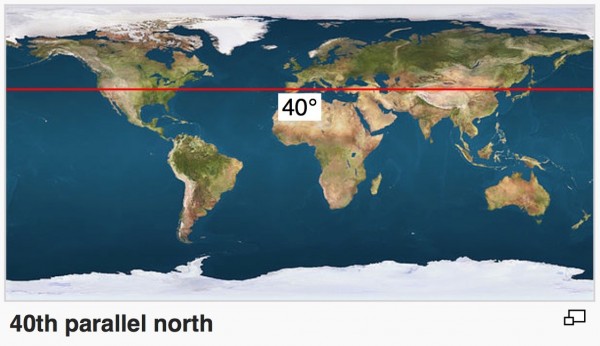
The parallel 40 degrees north passes through Philadelphia, Pennsylvania, and the northern suburbs of Denver, Colorado. Worldwide the 40th parallel runs through Beijing, China; Turkey; Japan and Spain.

Want to know for your latitude? Click here and check the “astronomical twilight” box.

The year’s latest sunsets don’t come exactly on the solstice either. For 40 degrees north latitude, the latest sunset happens about a week after the summer solstice, on or near June 27.

Earth map with red line through US, Spain, Turkey, China, and Japan.

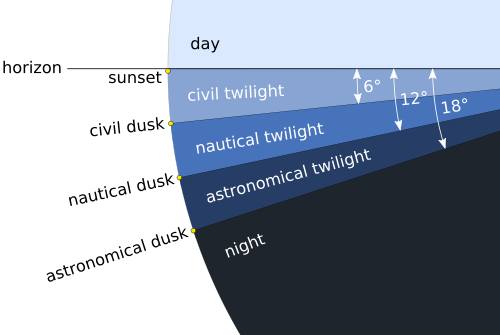
Let us introduce you to the three different kinds of twilight:

Civil twilight starts at sundown and ends when the sun is 6 degrees below the horizon.

Nautical twilight occurs when the sun is 6 to 12 degrees below the horizon.

Astronomical twilight happens when the sun is 12 to 18 degrees below the horizon.

North of 50 degrees north latitude, there’s no true night in the month of June. In June, that far north, the sun never gets far enough below the horizon for true night to occur.

It’s the land of the midnight twilight from 50 degrees north latitude to the Arctic Circle (66.5 degrees north latitude).

It’s the land of the midnight sun from the Arctic Circle to the North Pole (90 degrees north latitude).

At the temperate zones and the tropics, the longest period of twilight after sunset or before sunrise happens around the summer solstice, and the shortest period around the equinoxes. At 40 degrees latitude, astronomical twilight ends about 2 hours after sunset on the summer solstice; and on the equinoxes, astronomical twilight ends about 1 1/2 hours after sunset. Believe it or not, the duration of astronomical twilight reaches a secondary peak around the winter solstice, lasting about 1 2/3 hours after the sun goes down at 40 degrees latitude.

Read more: What exactly is twilight?

Chart with light to dark shades of blue, with 3 types of twilight labeled.

True night doesn’t begin until the sun sinks 18 degrees beneath the horizon.

Bottom line: Although the latest sunset won’t happen at 40 degrees north latitude for another few days, the latest twilight happens on June 24.


from EarthSky http://bit.ly/2WXkdNc

Tonight – June 24, 2019 – if you’re located around 40 degrees north latitude, it’s your latest evening twilight for the year. The longest evening twilights always happen around the summer solstice. Although the Northern Hemisphere’s summer solstice, and longest day, happened a few days ago on June 21, the latest twilight at 40 degrees north latitude always occurs several days afterwards, on or near June 24.

The parallel 40 degrees north passes through Philadelphia, Pennsylvania, and the northern suburbs of Denver, Colorado. Worldwide the 40th parallel runs through Beijing, China; Turkey; Japan and Spain.

Want to know for your latitude? Click here and check the “astronomical twilight” box.

The year’s latest sunsets don’t come exactly on the solstice either. For 40 degrees north latitude, the latest sunset happens about a week after the summer solstice, on or near June 27.

Earth map with red line through US, Spain, Turkey, China, and Japan.

Let us introduce you to the three different kinds of twilight:

Civil twilight starts at sundown and ends when the sun is 6 degrees below the horizon.

Nautical twilight occurs when the sun is 6 to 12 degrees below the horizon.

Astronomical twilight happens when the sun is 12 to 18 degrees below the horizon.

North of 50 degrees north latitude, there’s no true night in the month of June. In June, that far north, the sun never gets far enough below the horizon for true night to occur.

It’s the land of the midnight twilight from 50 degrees north latitude to the Arctic Circle (66.5 degrees north latitude).

It’s the land of the midnight sun from the Arctic Circle to the North Pole (90 degrees north latitude).

At the temperate zones and the tropics, the longest period of twilight after sunset or before sunrise happens around the summer solstice, and the shortest period around the equinoxes. At 40 degrees latitude, astronomical twilight ends about 2 hours after sunset on the summer solstice; and on the equinoxes, astronomical twilight ends about 1 1/2 hours after sunset. Believe it or not, the duration of astronomical twilight reaches a secondary peak around the winter solstice, lasting about 1 2/3 hours after the sun goes down at 40 degrees latitude.

Read more: What exactly is twilight?

Chart with light to dark shades of blue, with 3 types of twilight labeled.

True night doesn’t begin until the sun sinks 18 degrees beneath the horizon.

Bottom line: Although the latest sunset won’t happen at 40 degrees north latitude for another few days, the latest twilight happens on June 24.


from EarthSky http://bit.ly/2WXkdNc

Catch Mercury in the west after sunset

No matter where you live on Earth, mid to late June is an excellent time to look for the planet Mercury in your western sky after sunset. On June 23, 2019, Mercury reaches a milestone the evening sky, as this world swings out to its greatest elongation of 25 degrees east of the setting sun. Mercury, the innermost planet of the solar system, is often lost in the sun’s glare. Yet practiced sky watchers know the best chance of catching Mercury after sunset is generally around the time of Mercury’s greatest eastern elongation. That’s because Mercury is now setting its maximum time after sunset.

From most of the world, Mercury now stays out better than 1 1/2 hours after the sun. To spot Mercury, find an unobstructed horizon in the direction of sunset. Then, starting an hour or so after sundown, watch for Mercury to pop out rather low in the western sky and near the sunset point on the horizon.

Diagram showing sun, Earth and Mercury. Dotted lines between Earth and Mercury's two elongations.

Not to scale. We’re looking down from the north side of the solar system. From this vantage point, Mercury and Earth circle the sun in a counterclockwise direction. At its greatest eastern elongation, Mercury is seen in the west after sunset; and at its greatest western elongation, Mercury is seen in the east before sunrise.

Remember that binoculars always come in handy for any Mercury quest. Although Mercury is as bright as a 1st-magnitude star, its luster will be dimmed by the sunset afterglow and the murkiness of the thickened atmosphere near your horizon.

If your sky is less than crystal clear, try your luck with binoculars. Scan with them for a bright “star” near the sunset point.

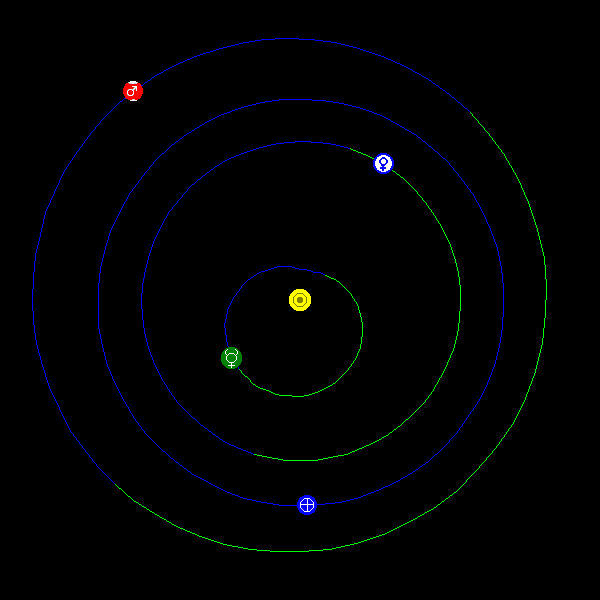
With binoculars, you might also catch the red planet Mars taking the stage with Mercury in a single binocular field around this time. Mars is a solid three times fainter than Mercury, so it’s doubtful that you’ll spot the red planet without an optical aid. See their respective positions in our sky – as viewed from the Northern Hemisphere – on the chart above. The chart below shows their positions relative to one another in orbit around the sun:

Diagram of orbits of Mercury, Mars, Earth in thin green and blue lines on black.

A bird’s-eye view of the north side of the inner solar system (Mercury, Venus, Earth and Mars) on June 23, 2019, the date of Mercury’s greatest elongation. Notice that, as seen from Earth, Mercury and Mars are nearly aligned on the same line of sight. Image via Solar System Live.

Mercury’s reign in the evening sky started on May 21, 2019, and will end on July 21, 2019. After today, Mercury will fall sunward, or in the direction of sunset.

What’s more, Mercury’s waning phase is causing this planet to dim day by day. By early July, the fading planet will be easier to spot from the Southern Hemisphere than at mid-northern latitudes.

Graph with tall gray and blue parabolas representing visual distance of Mercury from sun.

View larger. | Here are the year’s apparitions of Mercury compared: 3 swings out from the neighborhood of the sun into the evening sky (gray) and 3 into the morning sky (blue). The top figures are the maximum elongations – maximum apparent distance from the sun – reached at the top dates given beneath. Curving lines show the altitude of the planet above the horizon at sunrise or sunset, for latitude 40 degrees north (thick line) and 35 degrees south (thin), with maxima reached at the parenthesized dates below (40 degrees north bold). Chart via Guy Ottewell.

Bottom line: While the opportunity is at hand, try to spot Mercury, the solar system’s innermost planet, in late June 2019.


from EarthSky http://bit.ly/2YfgabX

No matter where you live on Earth, mid to late June is an excellent time to look for the planet Mercury in your western sky after sunset. On June 23, 2019, Mercury reaches a milestone the evening sky, as this world swings out to its greatest elongation of 25 degrees east of the setting sun. Mercury, the innermost planet of the solar system, is often lost in the sun’s glare. Yet practiced sky watchers know the best chance of catching Mercury after sunset is generally around the time of Mercury’s greatest eastern elongation. That’s because Mercury is now setting its maximum time after sunset.

From most of the world, Mercury now stays out better than 1 1/2 hours after the sun. To spot Mercury, find an unobstructed horizon in the direction of sunset. Then, starting an hour or so after sundown, watch for Mercury to pop out rather low in the western sky and near the sunset point on the horizon.

Diagram showing sun, Earth and Mercury. Dotted lines between Earth and Mercury's two elongations.

Not to scale. We’re looking down from the north side of the solar system. From this vantage point, Mercury and Earth circle the sun in a counterclockwise direction. At its greatest eastern elongation, Mercury is seen in the west after sunset; and at its greatest western elongation, Mercury is seen in the east before sunrise.

Remember that binoculars always come in handy for any Mercury quest. Although Mercury is as bright as a 1st-magnitude star, its luster will be dimmed by the sunset afterglow and the murkiness of the thickened atmosphere near your horizon.

If your sky is less than crystal clear, try your luck with binoculars. Scan with them for a bright “star” near the sunset point.

With binoculars, you might also catch the red planet Mars taking the stage with Mercury in a single binocular field around this time. Mars is a solid three times fainter than Mercury, so it’s doubtful that you’ll spot the red planet without an optical aid. See their respective positions in our sky – as viewed from the Northern Hemisphere – on the chart above. The chart below shows their positions relative to one another in orbit around the sun:

Diagram of orbits of Mercury, Mars, Earth in thin green and blue lines on black.

A bird’s-eye view of the north side of the inner solar system (Mercury, Venus, Earth and Mars) on June 23, 2019, the date of Mercury’s greatest elongation. Notice that, as seen from Earth, Mercury and Mars are nearly aligned on the same line of sight. Image via Solar System Live.

Mercury’s reign in the evening sky started on May 21, 2019, and will end on July 21, 2019. After today, Mercury will fall sunward, or in the direction of sunset.

What’s more, Mercury’s waning phase is causing this planet to dim day by day. By early July, the fading planet will be easier to spot from the Southern Hemisphere than at mid-northern latitudes.

Graph with tall gray and blue parabolas representing visual distance of Mercury from sun.

View larger. | Here are the year’s apparitions of Mercury compared: 3 swings out from the neighborhood of the sun into the evening sky (gray) and 3 into the morning sky (blue). The top figures are the maximum elongations – maximum apparent distance from the sun – reached at the top dates given beneath. Curving lines show the altitude of the planet above the horizon at sunrise or sunset, for latitude 40 degrees north (thick line) and 35 degrees south (thin), with maxima reached at the parenthesized dates below (40 degrees north bold). Chart via Guy Ottewell.

Bottom line: While the opportunity is at hand, try to spot Mercury, the solar system’s innermost planet, in late June 2019.


from EarthSky http://bit.ly/2YfgabX

Do toxic gases make advanced extraterrestrial life less likely?

Planets in orbit around a star.

Artist’s concept of the 7 known Earth-sized planets in the TRAPPIST-1 system. Three of those planets are in the habitable zone, but we don’t yet know what kinds of gases are in the planets’ atmospheres. Image via R. Hurt/NASA/JPL-Caltech/UC Riverside.

How common is life in the universe? We still don’t know the answer, but continued research seems to suggest that there should be many planets (and moons) out there capable of supporting some form of biology. But what about advanced life, in particular? A new study suggests that the number of worlds with more highly evolved, complex life forms might be fewer than some people hope.

The peer-reviewed findings come from researchers at the University of California Riverside (UCR), and indicate that many planets may have a buildup of toxic gases in their atmospheres that would make it difficult for more advanced life to evolve. These results were published in The Astrophysical Journal on June 10, 2019.

According to Timothy Lyons, a biogeochemist at UCR:

This is the first time the physiological limits of life on Earth have been considered to predict the distribution of complex life elsewhere in the universe.

The research has implications for the “habitable zone,” the region around a star where temperatures could allow liquid water to exist on the surface of a rocky planet. High levels of toxic gases could narrow down that zone or even eliminate it in some cases. As Lyons explained:

Imagine a ‘habitable zone for complex life’ defined as a safe zone where it would be plausible to support rich ecosystems like we find on Earth today. Our results indicate that complex ecosystems like ours cannot exist in most regions of the habitable zone as traditionally defined.

Diagram showing width and distance of habitable zones for 5 types of star.

Diagram depicting the boundaries of the traditional habitable zone, along with star types and some known exoplanet examples. Image via Chester Harman/ Wikipedia/ CC BY-SA 4.0.

The researchers used computer models to study atmospheric climate and photochemistry in a variety of planetary conditions. One of the most potently dangerous gases is carbon dioxide. Planets far out from their star – including Earth – need it to maintain temperatures above freezing, since it is a great greenhouse gas.

But there’s a catch for planets farther out from their stars than Earth. They would require more carbon dioxide to keep temperatures warm, but too much of the gas can be deadly to more advanced lifeforms such as animals and people. As Edward Schwieterman, the study’s lead author, noted:

To sustain liquid water at the outer edge of the conventional habitable zone, a planet would need tens of thousands of times more carbon dioxide than Earth has today. That’s far beyond the levels known to be toxic to human and animal life on Earth.

For simpler animal life, that kind of carbon dioxide level can shrink the traditional habitable zone down to about half. For more evolved animals or humans, the habitable zone is reduced to less than one third.

Nearby crescent planet, distant sun with dots for other planets.

Artist’s concept of Kepler-186f, the first Earth-sized exoplanet to be discovered orbiting in the habitable zone of its star. Such worlds may be able to support life, but toxic gases could limit how far that life can evolve. Image via NASA Ames/SETI Institute/JPL-Caltech/Astronomy.

Another deadly gas is carbon monoxide. There isn’t much of it on Earth because the sun creates chemical reactions in the atmosphere that destroy it. But for some planets that orbit red dwarf stars – smaller and cooler than the sun – the intense ultraviolet radiation can create toxic levels of carbon monoxide in their atmospheres. As Schwieterman said:

These would certainly not be good places for human or animal life as we know it on Earth.

The same researchers, however, did note earlier that microbial life might fare well in such an environment.

So how can we determine which exoplanets might be suitable for life and which ones are likely not, due to factors such as toxic gases? The only way to do that currently is to remotely study their atmospheres with telescopes. As Christopher Reinhard, another co-author of the new paper, said:

Our discoveries provide one way to decide which of these myriad planets we should observe in more detail. We could identify otherwise habitable planets with carbon dioxide or carbon monoxide levels that are likely too high to support complex life.

As might be expected, the easiest kind of life to detect would be that which lives on the planet’s surface and modifies its atmosphere, as on Earth. If a planet has life only in the subsurface (as may be the case with Mars or ocean moons like Europa and Enceladus), that would a lot harder to find, especially from many light-years away. If there were very advanced life, as in a civilization as developed or more so than humanity, they might be detected by their technosignatures or other effects on the environment of the planet. But advanced life requires favorable planetary conditions.

Sprig with four young green leaflets backlit by sunlight.

On Earth, carbon dioxide is essential for plant life, which absorbs it from the air, and then combines it with water and light to make carbohydrates, the process known as photosynthesis. But too much carbon dioxide can be deadly to more complex life forms. Image via Jason Samfield/Flickr/CC BY-NC-SA/The Conversation.

The new study can help to set limits on what kind of life may evolve depending on the toxicity of their planets’ atmospheres. It is also a reminder of how precious our own planet is, which is brimming with life of many incredibly diverse forms. As noted by Schwieterman:

I think showing how rare and special our planet is only enhances the case for protecting it. As far as we know, Earth is the only planet in the universe that can sustain human life.

Bottom line: While we don’t yet know how common, or not, life may be in the universe, determining which planets have abundant toxic gases in their atmospheres will help narrow down the search, in particular for more complex kinds of life reminiscent of those on Earth.

Source: A Limited Habitable Zone for Complex Life

Via UC Riverside News


from EarthSky http://bit.ly/2X0IB0v
Planets in orbit around a star.

Artist’s concept of the 7 known Earth-sized planets in the TRAPPIST-1 system. Three of those planets are in the habitable zone, but we don’t yet know what kinds of gases are in the planets’ atmospheres. Image via R. Hurt/NASA/JPL-Caltech/UC Riverside.

How common is life in the universe? We still don’t know the answer, but continued research seems to suggest that there should be many planets (and moons) out there capable of supporting some form of biology. But what about advanced life, in particular? A new study suggests that the number of worlds with more highly evolved, complex life forms might be fewer than some people hope.

The peer-reviewed findings come from researchers at the University of California Riverside (UCR), and indicate that many planets may have a buildup of toxic gases in their atmospheres that would make it difficult for more advanced life to evolve. These results were published in The Astrophysical Journal on June 10, 2019.

According to Timothy Lyons, a biogeochemist at UCR:

This is the first time the physiological limits of life on Earth have been considered to predict the distribution of complex life elsewhere in the universe.

The research has implications for the “habitable zone,” the region around a star where temperatures could allow liquid water to exist on the surface of a rocky planet. High levels of toxic gases could narrow down that zone or even eliminate it in some cases. As Lyons explained:

Imagine a ‘habitable zone for complex life’ defined as a safe zone where it would be plausible to support rich ecosystems like we find on Earth today. Our results indicate that complex ecosystems like ours cannot exist in most regions of the habitable zone as traditionally defined.

Diagram showing width and distance of habitable zones for 5 types of star.

Diagram depicting the boundaries of the traditional habitable zone, along with star types and some known exoplanet examples. Image via Chester Harman/ Wikipedia/ CC BY-SA 4.0.

The researchers used computer models to study atmospheric climate and photochemistry in a variety of planetary conditions. One of the most potently dangerous gases is carbon dioxide. Planets far out from their star – including Earth – need it to maintain temperatures above freezing, since it is a great greenhouse gas.

But there’s a catch for planets farther out from their stars than Earth. They would require more carbon dioxide to keep temperatures warm, but too much of the gas can be deadly to more advanced lifeforms such as animals and people. As Edward Schwieterman, the study’s lead author, noted:

To sustain liquid water at the outer edge of the conventional habitable zone, a planet would need tens of thousands of times more carbon dioxide than Earth has today. That’s far beyond the levels known to be toxic to human and animal life on Earth.

For simpler animal life, that kind of carbon dioxide level can shrink the traditional habitable zone down to about half. For more evolved animals or humans, the habitable zone is reduced to less than one third.

Nearby crescent planet, distant sun with dots for other planets.

Artist’s concept of Kepler-186f, the first Earth-sized exoplanet to be discovered orbiting in the habitable zone of its star. Such worlds may be able to support life, but toxic gases could limit how far that life can evolve. Image via NASA Ames/SETI Institute/JPL-Caltech/Astronomy.

Another deadly gas is carbon monoxide. There isn’t much of it on Earth because the sun creates chemical reactions in the atmosphere that destroy it. But for some planets that orbit red dwarf stars – smaller and cooler than the sun – the intense ultraviolet radiation can create toxic levels of carbon monoxide in their atmospheres. As Schwieterman said:

These would certainly not be good places for human or animal life as we know it on Earth.

The same researchers, however, did note earlier that microbial life might fare well in such an environment.

So how can we determine which exoplanets might be suitable for life and which ones are likely not, due to factors such as toxic gases? The only way to do that currently is to remotely study their atmospheres with telescopes. As Christopher Reinhard, another co-author of the new paper, said:

Our discoveries provide one way to decide which of these myriad planets we should observe in more detail. We could identify otherwise habitable planets with carbon dioxide or carbon monoxide levels that are likely too high to support complex life.

As might be expected, the easiest kind of life to detect would be that which lives on the planet’s surface and modifies its atmosphere, as on Earth. If a planet has life only in the subsurface (as may be the case with Mars or ocean moons like Europa and Enceladus), that would a lot harder to find, especially from many light-years away. If there were very advanced life, as in a civilization as developed or more so than humanity, they might be detected by their technosignatures or other effects on the environment of the planet. But advanced life requires favorable planetary conditions.

Sprig with four young green leaflets backlit by sunlight.

On Earth, carbon dioxide is essential for plant life, which absorbs it from the air, and then combines it with water and light to make carbohydrates, the process known as photosynthesis. But too much carbon dioxide can be deadly to more complex life forms. Image via Jason Samfield/Flickr/CC BY-NC-SA/The Conversation.

The new study can help to set limits on what kind of life may evolve depending on the toxicity of their planets’ atmospheres. It is also a reminder of how precious our own planet is, which is brimming with life of many incredibly diverse forms. As noted by Schwieterman:

I think showing how rare and special our planet is only enhances the case for protecting it. As far as we know, Earth is the only planet in the universe that can sustain human life.

Bottom line: While we don’t yet know how common, or not, life may be in the universe, determining which planets have abundant toxic gases in their atmospheres will help narrow down the search, in particular for more complex kinds of life reminiscent of those on Earth.

Source: A Limited Habitable Zone for Complex Life

Via UC Riverside News


from EarthSky http://bit.ly/2X0IB0v

Watch night launch of SpaceX Falcon Heavy June 24

Animation of mission launch and satellite delivery, via SpaceX

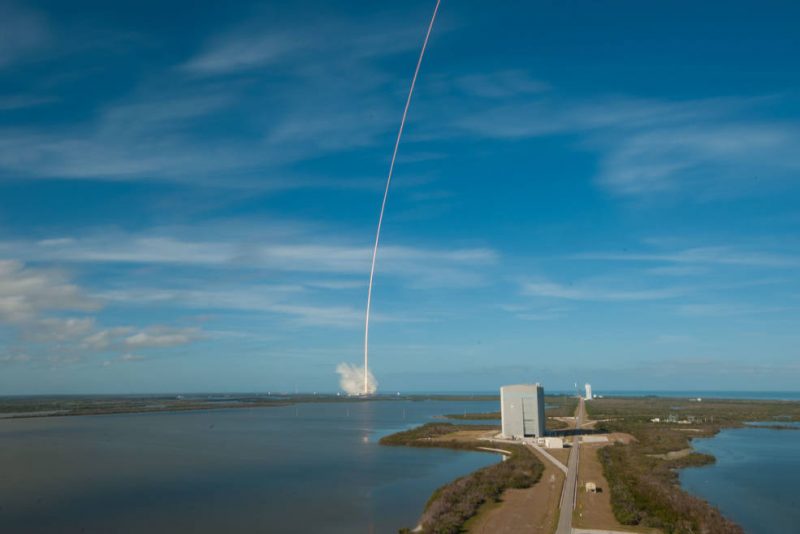
A SpaceX Falcon Heavy rocket is scheduled for launch on the night of Monday, June 24, 2019, from Kennedy Space Center in Florida. It’s the third launch, and first nighttime launch, for the Falcon Heavy, the most powerful rocket in use today.

SpaceX and the U.S. Department of Defense will launch two dozen satellites into space. SpaceX founder Elon Musk tweeted that it will be SpaceX’s “most difficult launch ever”, because the rocket must release the 24 satellites into three different orbits.

The launch window for the Falcon Heavy opens at 11:30 p.m. EDT Monday, June 24 (03:30 UTC on June 25 translate UTC to your time), with a four-hour window in case of delays. The launch will air on NASA TV, with coverage beginning at 11:00 p.m. EDT (03:30 UTC on June 25). Watch here.

The mission is called Space Test Program-2 (STP-2). Among the two dozen satellites onboard the rocket are NASA missions to test the performance of non-toxic spacecraft fuel and an advanced atomic clock to improve spacecraft navigation.

In addition, the rocket will carry 152 metal capsules packed with human ashes, arranged by a company called Celestis Memorial Spaceflights, which charges upwards of $5,000 to fly 1 gram of “participant” cremains into orbit.

The rocket will also carry Lightsail 2, a solar-sail test mission – a little spacecraft literally powered by sunbeams – promoted by science star Bill Nye.

Distant launch. Small puff of steam at base of curved vertical white line in a blue sky.

SpaceX Falcon Heavy demonstration launch in February 2018. Monday’s launch will be a night launch. Image via NASA

Bottom line: The SpaceX Falcon Heavy rocket carrying 24 satellites will launch on June 24, 2019.

Via NASA


from EarthSky http://bit.ly/2XucFB9

Animation of mission launch and satellite delivery, via SpaceX

A SpaceX Falcon Heavy rocket is scheduled for launch on the night of Monday, June 24, 2019, from Kennedy Space Center in Florida. It’s the third launch, and first nighttime launch, for the Falcon Heavy, the most powerful rocket in use today.

SpaceX and the U.S. Department of Defense will launch two dozen satellites into space. SpaceX founder Elon Musk tweeted that it will be SpaceX’s “most difficult launch ever”, because the rocket must release the 24 satellites into three different orbits.

The launch window for the Falcon Heavy opens at 11:30 p.m. EDT Monday, June 24 (03:30 UTC on June 25 translate UTC to your time), with a four-hour window in case of delays. The launch will air on NASA TV, with coverage beginning at 11:00 p.m. EDT (03:30 UTC on June 25). Watch here.

The mission is called Space Test Program-2 (STP-2). Among the two dozen satellites onboard the rocket are NASA missions to test the performance of non-toxic spacecraft fuel and an advanced atomic clock to improve spacecraft navigation.

In addition, the rocket will carry 152 metal capsules packed with human ashes, arranged by a company called Celestis Memorial Spaceflights, which charges upwards of $5,000 to fly 1 gram of “participant” cremains into orbit.

The rocket will also carry Lightsail 2, a solar-sail test mission – a little spacecraft literally powered by sunbeams – promoted by science star Bill Nye.

Distant launch. Small puff of steam at base of curved vertical white line in a blue sky.

SpaceX Falcon Heavy demonstration launch in February 2018. Monday’s launch will be a night launch. Image via NASA

Bottom line: The SpaceX Falcon Heavy rocket carrying 24 satellites will launch on June 24, 2019.

Via NASA


from EarthSky http://bit.ly/2XucFB9

adds 2