aads

Moon and Saturn from nightfall to dawn

On June 18, 2019, the big and bright waning gibbous moon shines quite close to Saturn, the sixth planet outward from the sun. Although Saturn is a notch brighter than a 1st-magnitude star, you might have some difficulty seeing Saturn in the moon’s glare tonight. That more brilliant “star” above the moon and Saturn is another planet, the fifth planet outward from the sun and largest planet in our solar system, Jupiter. You should have no trouble viewing Jupiter, as it’s the fourth-brightest celestial object to light up the heavens, after the sun, moon and planet Venus.

However, there’s no chance of mistaking Venus for Jupiter – or vice versa. Jupiter is out first thing at dusk, and shines from dusk until dawn. Venus, meanwhile, is in the morning sky, rising in the east about an hour before sunrise. In other words, Jupiter is easy to see at any time of the night in June 2019. Venus – although technically brighter – demands a deliberate effort as it sits low in the glow of dawn.

And speaking of deliberate efforts … Mars and Mercury have a close pairing on this date, too. They are not easy to see, however, sitting low in the west after sunset. See the chart below.
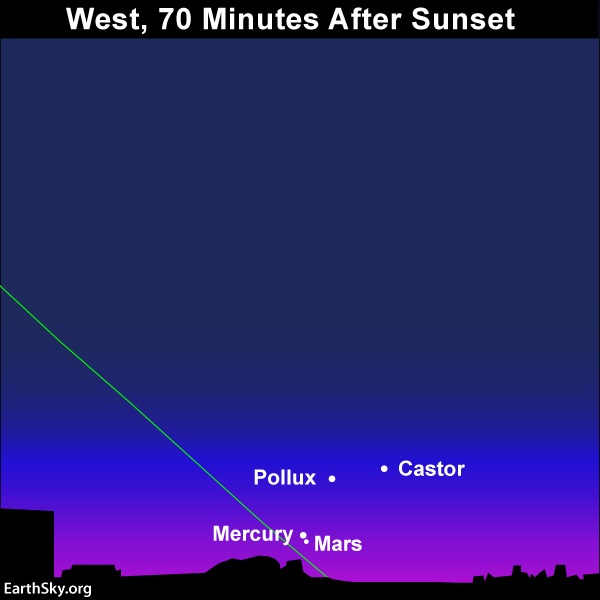
Chart with planets Mercury and Mars very close to each other near horizon, also stars Castor and Pollux.

Look westward for the close pairing of the planets Mercury and Mars on June 18, 2019. You may need binoculars to glimpse fainter Mars next to brighter Mercury.

On the other hand, the moon and Saturn will be easy to see, close together, as soon as your sky gets dark. Of course, when we say that the moon and Saturn are close together, we mean they appear on nearly the same line of sight. The two are nowhere close together in space. The moon, our closest celestial neighbor, lies about 246 thousand miles (396 thousand km) distant. Saturn, the most distant world that we can easily see with the unaided eye, resides at better than 3,400 times the moon’s distance from Earth tonight.

Saturn lodges 9.1 astronomical units (AU) from Earth right now. One astronomical unit = the Earth’s mean distance from the sun.

Click here to know the moon’s present distance from Earth.

Click here to know Saturn’s present distance from the Earth and sun.

Consulting an astronomical almanac, we find that the moon passes 0.4 degrees south of the planet Saturn on June 19 at 3:58 Universal Time. (For reference, the moon’s angular diameter equals about 1/2 degrees or 0.5 degree.) At the Central Time zone in North America, that means the moon passes 0.4 degrees south of Saturn on June 18 at 10:58 p.m. CDT (UTC-5 hours).
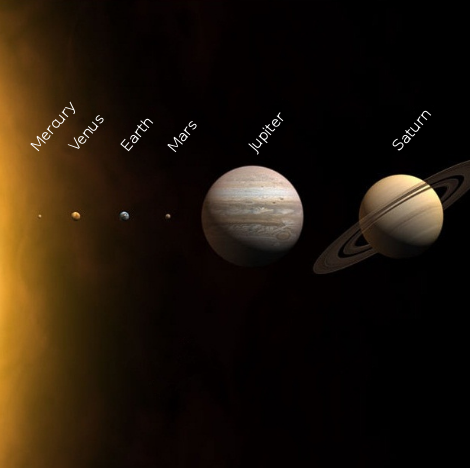
Diagram with photos of planets lined up from left to right.

This illustration shows the bright planets, plus Earth, in their order outward from the sun. Their relative sizes are approximately right, but their distances from one another are – in reality – much more vast.

Now brace yourself for a major caveat! Whenever an astronomical almanac tells you how many degrees the moon passes to the north or south of a planet or bright star, it means as viewed from the center of the Earth. From various places on the Earth’s surface, the angular distance between the moon and Saturn is not the same. The farther north you live on the globe, the farther that the moon passes to the south of Saturn; and the farther south you live, the closer that the moon swings by Saturn.

In fact, if you live as far south as southern South America (Chile, Argentina), the moon will occult, or pass directly in front of Saturn, momentarily hiding this world from view. For example, from Buenos Aries, Argentina, the moon will occult Saturn from 11:25 p.m. on June 18, 2019 until 12:15 a.m. local time on June 19, 2019. If you live within in the occultation viewing area (see the map below), find out when this occultation occurs in your sky in Universal Time. Here’s how to convert Universal Time to local time.

Map of Earth with curved parallel lines in the Southern Hemisphere.

See the solid white lines on the worldwide map? That’s where the occultation of Saturn happens in a nighttime sky on the night of June 18-19, 2019. Click here for more information.

Bottom line: As darkness falls this evening – on June 18, 2019 – look for the moon and Saturn to couple up tonight from early evening until morning dawn.


from EarthSky http://bit.ly/2wY7bQa

On June 18, 2019, the big and bright waning gibbous moon shines quite close to Saturn, the sixth planet outward from the sun. Although Saturn is a notch brighter than a 1st-magnitude star, you might have some difficulty seeing Saturn in the moon’s glare tonight. That more brilliant “star” above the moon and Saturn is another planet, the fifth planet outward from the sun and largest planet in our solar system, Jupiter. You should have no trouble viewing Jupiter, as it’s the fourth-brightest celestial object to light up the heavens, after the sun, moon and planet Venus.

However, there’s no chance of mistaking Venus for Jupiter – or vice versa. Jupiter is out first thing at dusk, and shines from dusk until dawn. Venus, meanwhile, is in the morning sky, rising in the east about an hour before sunrise. In other words, Jupiter is easy to see at any time of the night in June 2019. Venus – although technically brighter – demands a deliberate effort as it sits low in the glow of dawn.

And speaking of deliberate efforts … Mars and Mercury have a close pairing on this date, too. They are not easy to see, however, sitting low in the west after sunset. See the chart below.

Chart with planets Mercury and Mars very close to each other near horizon, also stars Castor and Pollux.

Look westward for the close pairing of the planets Mercury and Mars on June 18, 2019. You may need binoculars to glimpse fainter Mars next to brighter Mercury.

On the other hand, the moon and Saturn will be easy to see, close together, as soon as your sky gets dark. Of course, when we say that the moon and Saturn are close together, we mean they appear on nearly the same line of sight. The two are nowhere close together in space. The moon, our closest celestial neighbor, lies about 246 thousand miles (396 thousand km) distant. Saturn, the most distant world that we can easily see with the unaided eye, resides at better than 3,400 times the moon’s distance from Earth tonight.

Saturn lodges 9.1 astronomical units (AU) from Earth right now. One astronomical unit = the Earth’s mean distance from the sun.

Click here to know the moon’s present distance from Earth.

Click here to know Saturn’s present distance from the Earth and sun.

Consulting an astronomical almanac, we find that the moon passes 0.4 degrees south of the planet Saturn on June 19 at 3:58 Universal Time. (For reference, the moon’s angular diameter equals about 1/2 degrees or 0.5 degree.) At the Central Time zone in North America, that means the moon passes 0.4 degrees south of Saturn on June 18 at 10:58 p.m. CDT (UTC-5 hours).

Diagram with photos of planets lined up from left to right.

This illustration shows the bright planets, plus Earth, in their order outward from the sun. Their relative sizes are approximately right, but their distances from one another are – in reality – much more vast.

Now brace yourself for a major caveat! Whenever an astronomical almanac tells you how many degrees the moon passes to the north or south of a planet or bright star, it means as viewed from the center of the Earth. From various places on the Earth’s surface, the angular distance between the moon and Saturn is not the same. The farther north you live on the globe, the farther that the moon passes to the south of Saturn; and the farther south you live, the closer that the moon swings by Saturn.

In fact, if you live as far south as southern South America (Chile, Argentina), the moon will occult, or pass directly in front of Saturn, momentarily hiding this world from view. For example, from Buenos Aries, Argentina, the moon will occult Saturn from 11:25 p.m. on June 18, 2019 until 12:15 a.m. local time on June 19, 2019. If you live within in the occultation viewing area (see the map below), find out when this occultation occurs in your sky in Universal Time. Here’s how to convert Universal Time to local time.

Map of Earth with curved parallel lines in the Southern Hemisphere.

See the solid white lines on the worldwide map? That’s where the occultation of Saturn happens in a nighttime sky on the night of June 18-19, 2019. Click here for more information.

Bottom line: As darkness falls this evening – on June 18, 2019 – look for the moon and Saturn to couple up tonight from early evening until morning dawn.


from EarthSky http://bit.ly/2wY7bQa
Ocean advocates are increasingly concerned about climate change

This is a re-post from Yale Climate Connections by Daisy Simmons

SACRAMENTO, Calif. – The world’s oceans are deeply affected by climate change – and vice versa. But until recent years, ocean advocates throughout California had long tackled issues like over-fishing and coastal pollution without as much emphasis on the broad-reaching relationship between climate and oceans.

That’s all changed, as evidenced by a March annual lobbying event at the state capitol.

In 2004, when a dozen or so advocates gathered for the first Ocean Day, “climate change was a side issue,” said Environment California’s Dan Jacobson, who launched the event.

When more than 200 people convened from throughout the state last month, climate had become “the overarching issue” in legislator meetings on a range of topics.

“It’s become an underlying theme in everything we’re doing,” said Jacobson. “Even the guy who literally rescues animals stranded on the shore is saying, ‘Of course, this is all getting worse because of climate change.'”

Fast facts on Ocean Day 2019

Through the day, small groups from a mix of organizations like Environment California, Surfrider, and Azul met with state assembly-members and senators on a range of key ocean issues, such as offshore drilling, plastic pollution, and sea-level rise – with conversations often touching naturally on climate change.

Stern talking

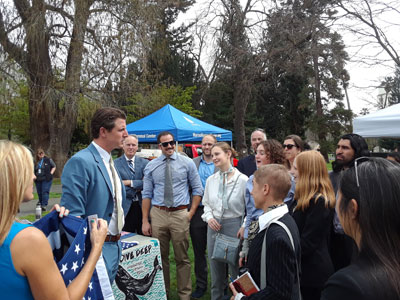
State Senator Henry Stern met with several participating groups. (Photo: Courtesy of Daisy Simmons)

For example, the single-use plastic ban many groups advocated for is a wildlife issue – and a climate issue, too. Made from oil and natural gas, simply producing plastic contributes directly to an industry that fuels climate change. Plus, new research in PLOS One suggests plastic may produce “climate-relevant trace gases” that could increase as more is produced and accumulates in oceans.

Sea-level rise also figured prominently in meetings and additional activities, from a luncheon discussing the impacts of sea-level rise on disadvantaged communities, to a “Shark Tank” session, where one scientist won for her work analyzing the costs of sea-level rise on public institutions.

Bringing home the personal impact

Scientific research addressing climate and oceans is pouring in: oceans are losing oxygen and experiencing acidification, often at drastic rates; projected damages resulting from sea-level rise “could exceed those from the worst wildfires and earthquakes.”

But also inspiring change is mounting public awareness that climate change will cause more damage to our oceans – and to ocean life as we know it – if left unchecked.

Take Heirs to Our Oceans’ Aislinn Clark, a 13-year old ocean policy advocate from Pescadero. Working on a novel in her spare time, she says she wants to be a writer in part so she can help others imagine how climate change, or inaction on it, could play out in future realities.

In her group’s meeting with Senator Hannah-Beth Jackson of California’s 19th Senate District, this driven teen declared, “we’re going to be the decision-makers.”

Jackson’s response: “I’m not going to be able to accomplish [environmental protection to the extent needed] in my lifetime, but you might be able to do it in yours …. It’s your generation that’s going to make it happen.”

Jackson is a Democrat, but there was a sense throughout the day that protecting oceans from threats like sea-level rise is important to state legislators on both sides of the aisle.

“What’s interesting is that everyone is coming together on climate,” said Jacobson. “They’re still not singing the same tune, but they’re all singing.”

The hard thing now is agreeing on particular strategies.

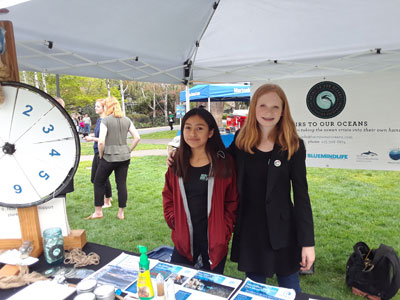
Heirs booth

Cynthia Vasquez, left, and Sophie Mansoor, right, of Heirs to Our Oceans. (Photo: Courtesy of Daisy Simmons)

For example, Amy Wolfrum of the Monterey Bay Aquarium discussed how, in Pacific Grove, California, some favor building artificial sea walls while others would opt for natural solutions like dunes.

Time is of the essence, however, when it comes to mitigating future effects of climate change and reducing impacts now.

“We have 11 years, right, until everything we do is irreversible, Heirs to Our Oceans eighth-grader Sophie Mansoor said, perhaps thinking of a 2018 IPCC report. “If we don’t reduce emissions by 45 percent, my children won’t have a future.”

What happens in California … can have a ripple effect

In absence of federal action on climate, states like California are proving important torch-carriers of the Paris climate goals.

And encouraging legislators to connect the dots between climate and ocean issues could help bring more climate-smart policy to life in a state whose population is passionate about its coast.

Today some 26 million Californians live in coastal counties – about as many as live along the coast in New Jersey, Texas and Florida combined. The state’s ocean-based economy is valued at roughly $45 billion annually, and employs more than a half million people.

And as the fifth largest economy in the world, California has the potential to make a real dent in global emissions – and serve as an example to others.

As secretary of the state’s department of natural resources Wade Crowfoot said in his Ocean Day remarks, “If we can’t do it in California, where else in the world are we going to do it?”


from Skeptical Science http://bit.ly/2IneaIZ

This is a re-post from Yale Climate Connections by Daisy Simmons

SACRAMENTO, Calif. – The world’s oceans are deeply affected by climate change – and vice versa. But until recent years, ocean advocates throughout California had long tackled issues like over-fishing and coastal pollution without as much emphasis on the broad-reaching relationship between climate and oceans.

That’s all changed, as evidenced by a March annual lobbying event at the state capitol.

In 2004, when a dozen or so advocates gathered for the first Ocean Day, “climate change was a side issue,” said Environment California’s Dan Jacobson, who launched the event.

When more than 200 people convened from throughout the state last month, climate had become “the overarching issue” in legislator meetings on a range of topics.

“It’s become an underlying theme in everything we’re doing,” said Jacobson. “Even the guy who literally rescues animals stranded on the shore is saying, ‘Of course, this is all getting worse because of climate change.'”

Fast facts on Ocean Day 2019

Through the day, small groups from a mix of organizations like Environment California, Surfrider, and Azul met with state assembly-members and senators on a range of key ocean issues, such as offshore drilling, plastic pollution, and sea-level rise – with conversations often touching naturally on climate change.

Stern talking

State Senator Henry Stern met with several participating groups. (Photo: Courtesy of Daisy Simmons)

For example, the single-use plastic ban many groups advocated for is a wildlife issue – and a climate issue, too. Made from oil and natural gas, simply producing plastic contributes directly to an industry that fuels climate change. Plus, new research in PLOS One suggests plastic may produce “climate-relevant trace gases” that could increase as more is produced and accumulates in oceans.

Sea-level rise also figured prominently in meetings and additional activities, from a luncheon discussing the impacts of sea-level rise on disadvantaged communities, to a “Shark Tank” session, where one scientist won for her work analyzing the costs of sea-level rise on public institutions.

Bringing home the personal impact

Scientific research addressing climate and oceans is pouring in: oceans are losing oxygen and experiencing acidification, often at drastic rates; projected damages resulting from sea-level rise “could exceed those from the worst wildfires and earthquakes.”

But also inspiring change is mounting public awareness that climate change will cause more damage to our oceans – and to ocean life as we know it – if left unchecked.

Take Heirs to Our Oceans’ Aislinn Clark, a 13-year old ocean policy advocate from Pescadero. Working on a novel in her spare time, she says she wants to be a writer in part so she can help others imagine how climate change, or inaction on it, could play out in future realities.

In her group’s meeting with Senator Hannah-Beth Jackson of California’s 19th Senate District, this driven teen declared, “we’re going to be the decision-makers.”

Jackson’s response: “I’m not going to be able to accomplish [environmental protection to the extent needed] in my lifetime, but you might be able to do it in yours …. It’s your generation that’s going to make it happen.”

Jackson is a Democrat, but there was a sense throughout the day that protecting oceans from threats like sea-level rise is important to state legislators on both sides of the aisle.

“What’s interesting is that everyone is coming together on climate,” said Jacobson. “They’re still not singing the same tune, but they’re all singing.”

The hard thing now is agreeing on particular strategies.

Heirs booth

Cynthia Vasquez, left, and Sophie Mansoor, right, of Heirs to Our Oceans. (Photo: Courtesy of Daisy Simmons)

For example, Amy Wolfrum of the Monterey Bay Aquarium discussed how, in Pacific Grove, California, some favor building artificial sea walls while others would opt for natural solutions like dunes.

Time is of the essence, however, when it comes to mitigating future effects of climate change and reducing impacts now.

“We have 11 years, right, until everything we do is irreversible, Heirs to Our Oceans eighth-grader Sophie Mansoor said, perhaps thinking of a 2018 IPCC report. “If we don’t reduce emissions by 45 percent, my children won’t have a future.”

What happens in California … can have a ripple effect

In absence of federal action on climate, states like California are proving important torch-carriers of the Paris climate goals.

And encouraging legislators to connect the dots between climate and ocean issues could help bring more climate-smart policy to life in a state whose population is passionate about its coast.

Today some 26 million Californians live in coastal counties – about as many as live along the coast in New Jersey, Texas and Florida combined. The state’s ocean-based economy is valued at roughly $45 billion annually, and employs more than a half million people.

And as the fifth largest economy in the world, California has the potential to make a real dent in global emissions – and serve as an example to others.

As secretary of the state’s department of natural resources Wade Crowfoot said in his Ocean Day remarks, “If we can’t do it in California, where else in the world are we going to do it?”


from Skeptical Science http://bit.ly/2IneaIZ

Atmospheric CO2 hits record high in May 2019

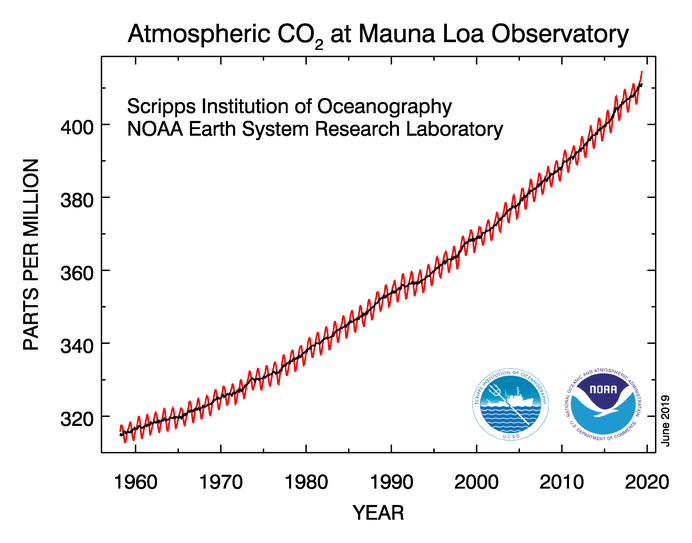
This chart was created using data from Mauna Loa Observatory in Hawaii, which has Earth’s longest continuous record of direct measurements of atmospheric carbon dioxide (CO2). Read more about this chart. Image via NOAA.

Much of what you see online from those who question human-caused global warming comes in the form of opinion articles – op-eds – usually not written by a scientist and expressing an opinion not affiliated with that publication’s editorial board. So watch for that, and watch for the authors’ affiliations (often, you can easily see their political agenda). What we’re talking about here is not opinion. It’s data, gathered by scientists at Mauna Loa Observatory in Hawaii, which has been monitoring the atmosphere and collecting data related to atmospheric change since the 1950s. In this world’s-longest data set, the highest carbon dioxide (CO2) concentration in Earth’s atmosphere yet measured was recorded last month (May 2019). The data were announced on June 4, 2019.

An increase in carbon dioxide – CO2 – contributes to global warming, according to climate scientists. The 2019 peak value in May 2019 was 3.5 ppm higher than the 411.2 ppm peak in May 2018 and marks the second-highest annual jump on record.

NOAA said in its annoucement:

Atmospheric carbon dioxide continued its rapid rise in 2019, with the average for May peaking at 414.7 parts per million (ppm). That’s not only the highest seasonal peak recorded in 61 years of observations on top of Hawaii’s largest volcano, but also the highest level in human history and higher than at any point in millions of years.

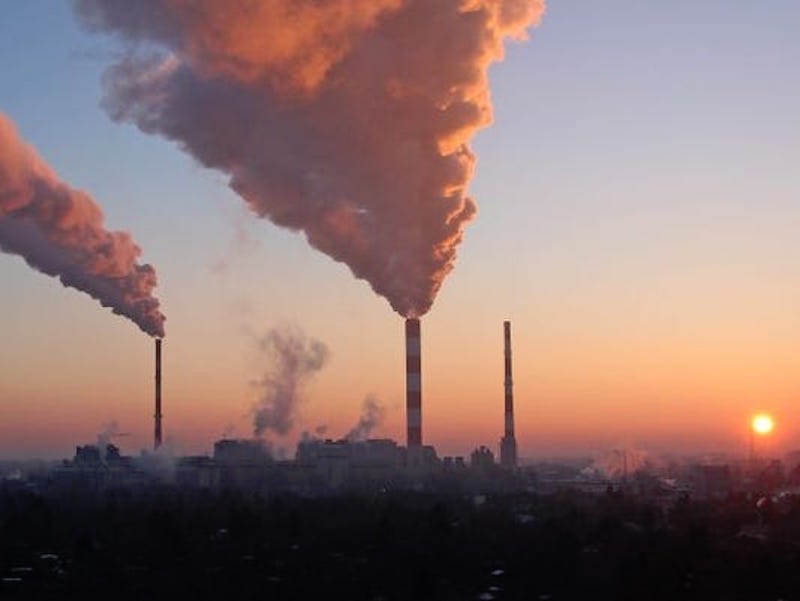
Smoke billowing from two tall, thin smokestacks as sun sets at dusty horizon.

Image via United Nations.

Nearly all climate scientists agree that increases in atmospheric CO2 – the result of the burning of oil, gas and other fossil fuels – is to blame for rising global temperatures. Pieter Tans, senior scientist with NOAA’s global monitoring division, told USA Today:

Many proposals have been made to mitigate global warming, but without a rapid decrease of CO2 emissions from fossil fuels they are pretty much futile.

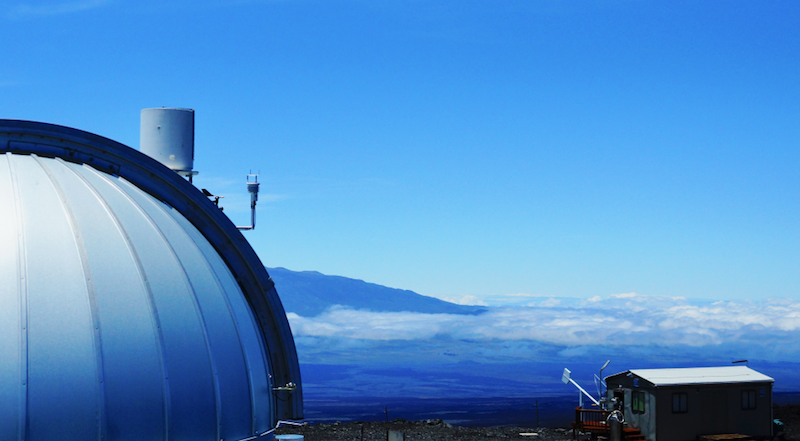
White observatory dome against blue sky background.

NOAA’s Mauna Loa Observatory in Hawaii. Recordings of atmospheric CO2 at this observatory began in 1958, initiated by Charles David Keeling of Scripps Institution of Oceanography. His early work in this area of data collection was what first alerted the world to the possibility of human-caused contribution to the “greenhouse effect” and global warming. Image via NOAA.

Not only is the concentration of CO2 in the atmosphere increasing every year, said NOAA, but the rate of increase is also accelerating. NOAA said:

The early years at Mauna Loa saw annual increases averaging about 0.7 ppm per year, increasing to about 1.6 ppm per year in the 1980s and 1.5 ppm per year in the 1990s. The growth rate rose to 2.2 ppm per year during the last decade. There is abundant and conclusive evidence that the acceleration is caused by increased emissions, Tans said.

Tans added:

It’s critically important to have these accurate, long-term measurements of CO2 in order to understand how quickly fossil fuel pollution is changing our climate. These are measurements of the real atmosphere. They do not depend on any models, but they help us verify climate model projections, which if anything, have underestimated the rapid pace of climate change being observed.

NOAA pointed out that the highest monthly mean CO2 value of the year occurs in May, just before plants start to remove large amounts of the greenhouse gas from the atmosphere during the Northern Hemisphere growing season.

Bottom line: The highest yet measured concentration of atmospheric carbon dioxide (CO2) was recorded in May 2019, at the Mauna Loa Observatory in Hawaii.

Via NOAA


from EarthSky http://bit.ly/2WMJuVi

This chart was created using data from Mauna Loa Observatory in Hawaii, which has Earth’s longest continuous record of direct measurements of atmospheric carbon dioxide (CO2). Read more about this chart. Image via NOAA.

Much of what you see online from those who question human-caused global warming comes in the form of opinion articles – op-eds – usually not written by a scientist and expressing an opinion not affiliated with that publication’s editorial board. So watch for that, and watch for the authors’ affiliations (often, you can easily see their political agenda). What we’re talking about here is not opinion. It’s data, gathered by scientists at Mauna Loa Observatory in Hawaii, which has been monitoring the atmosphere and collecting data related to atmospheric change since the 1950s. In this world’s-longest data set, the highest carbon dioxide (CO2) concentration in Earth’s atmosphere yet measured was recorded last month (May 2019). The data were announced on June 4, 2019.

An increase in carbon dioxide – CO2 – contributes to global warming, according to climate scientists. The 2019 peak value in May 2019 was 3.5 ppm higher than the 411.2 ppm peak in May 2018 and marks the second-highest annual jump on record.

NOAA said in its annoucement:

Atmospheric carbon dioxide continued its rapid rise in 2019, with the average for May peaking at 414.7 parts per million (ppm). That’s not only the highest seasonal peak recorded in 61 years of observations on top of Hawaii’s largest volcano, but also the highest level in human history and higher than at any point in millions of years.

Smoke billowing from two tall, thin smokestacks as sun sets at dusty horizon.

Image via United Nations.

Nearly all climate scientists agree that increases in atmospheric CO2 – the result of the burning of oil, gas and other fossil fuels – is to blame for rising global temperatures. Pieter Tans, senior scientist with NOAA’s global monitoring division, told USA Today:

Many proposals have been made to mitigate global warming, but without a rapid decrease of CO2 emissions from fossil fuels they are pretty much futile.

White observatory dome against blue sky background.

NOAA’s Mauna Loa Observatory in Hawaii. Recordings of atmospheric CO2 at this observatory began in 1958, initiated by Charles David Keeling of Scripps Institution of Oceanography. His early work in this area of data collection was what first alerted the world to the possibility of human-caused contribution to the “greenhouse effect” and global warming. Image via NOAA.

Not only is the concentration of CO2 in the atmosphere increasing every year, said NOAA, but the rate of increase is also accelerating. NOAA said:

The early years at Mauna Loa saw annual increases averaging about 0.7 ppm per year, increasing to about 1.6 ppm per year in the 1980s and 1.5 ppm per year in the 1990s. The growth rate rose to 2.2 ppm per year during the last decade. There is abundant and conclusive evidence that the acceleration is caused by increased emissions, Tans said.

Tans added:

It’s critically important to have these accurate, long-term measurements of CO2 in order to understand how quickly fossil fuel pollution is changing our climate. These are measurements of the real atmosphere. They do not depend on any models, but they help us verify climate model projections, which if anything, have underestimated the rapid pace of climate change being observed.

NOAA pointed out that the highest monthly mean CO2 value of the year occurs in May, just before plants start to remove large amounts of the greenhouse gas from the atmosphere during the Northern Hemisphere growing season.

Bottom line: The highest yet measured concentration of atmospheric carbon dioxide (CO2) was recorded in May 2019, at the Mauna Loa Observatory in Hawaii.

Via NOAA


from EarthSky http://bit.ly/2WMJuVi

The scientists on a mission to revolutionise brain tumour research

Illustration of a puzzle of a brain with missing pieces

In January 2018, Baroness Tessa Jowell bravely stood up in the House of Lords and called for more funding and support for people with brain tumours. “For what would every cancer patient want?” she asked. “To know that the best, the latest science was being used – wherever in the world it was developed, whoever began it.”

She stressed the need for investment and international collaboration, so we’re delighted to announce 3 newly-funded, world-class brain tumour research teams that aren’t afraid to think big.

The odds of surviving a brain tumour have remained dismally low for decades. And our Brain Tumour Awards, which were announced in May 2018, are designed to accelerate progress in understanding brain tumours and finding ways to treat them.

From developing tiny particles that could deliver drugs across the barrier surrounding the brain to going back to basics, the teams’ science impressed our expert panel. And they will now receive £18 million to put their research plans in to action.

We spoke to the team leaders about how they plan to use this much-needed cash injection.

New strides across the brain’s protective barrier

Brain tumours are a complex patchwork of cells that can adapt rapidly to cancer drugs. “It’s very unlikely that a single drug is going to do much,” says Professor Neil Carragher, from the University of Edinburgh, who is fronting one of the teams and will also be supported by The Brain Tumour Charity.

“We really need drug combinations.”

To find these combinations, Carragher’s team – including other laboratories from the University of Edinburgh, University of Oxford and Massachusetts Institute of Technology (MIT) – will scour a chemical library containing thousands of different potential drugs, testing thousands of different combinations on brain tumour samples collected from patients. They’ll speed this process up by using automated, robotic microscopes.

Carragher is all too aware that people are dying from brain tumours right now. He says they’ll be testing all approved drugs, as well as experimental drugs that have passed initial safety testing in people. This means that if an effective drug combination is found, the team won’t have to jump the initial regulatory hurdles needed to get them into clinical testing, which could help get promising treatments to patients faster.

Nanoparticles crossing the blood brain barrier in mice. (Lam. C, F. et al. 2018)

Outsmarting brain tumours’ survival tactics isn’t the only challenge. They’re also shielded from drugs by a protective filter, called the blood brain barrier, that separates the blood from the fluid that bathes the brain. Until now, it’s been a struggle getting any cancer drug through, let alone many. Luckily, the team has a potential nano-sized solution.

Professor Paula Hammond, head of the chemical engineering at Massachusetts Institute of Technology (MIT), and also part of the team, has invented nanoparticles that can deliver drug combinations across the blood brain barrier.

Once they’ve placed the drug inside the nanoparticle, says Carragher, they make another layer and fit a different drug in a separate compartment. “You have multiple drugs, mixed together in different parts of the nanoparticle,” he says.

The results from the team’s initial lab tests should point to the best drug combination that can be loaded up into these nanoparticles. The hope is that this approach will help old drugs that previously failed to break through the barrier a fresh chance at reaching and targeting the brain tumour.

Designing new brain tumour drugs specifically for children

Professor Richard Gilbertson, from the Cancer Research UK Cambridge Institute, is starting from the position that we need to completely rethink research into childhood brain tumours.

“We’ve not moved the needle in brain tumours for children in the last 50 years,” he says, explaining that that the solution to children’s brain tumours may lie at the start of a brain cell’s life.

“A lot of children’s brain tumours are developmental diseases. Our studies have shown that the biology of cells in a brain tumour of a five-year-old is very similar to a population of cells which existed when the baby was an embryo in the womb,” Gilbertson explains.

We’ve not moved the needle in brain tumours for children in the last 50 years.

– Professor Richard Gilbertson, Cancer Research UK Cambridge Institute

To understand why and how this happens, Gilbertson’s team is going to build a map that details the activity of normal cells in the brain.

“This tissue that was once present when these kids were in the womb is now in the wrong place at the wrong time. By having a neuroscience approach, which looks at normal development and seeing what persists, you can start to look at a whole series of drug targets which wasn’t available before.”

By understanding what’s normal, Gilbertson hopes to build a clearer picture of how these processes go wrong to form a tumour. And he thinks the answer is right in front of us, it just takes careful and meticulous investigation of basic brain biology.

Drugging the ‘undruggable’

Our third team is also hoping to fill in the blanks around brain biology.

They’re focusing on glioblastoma, the most common and lethal brain tumour that kills more people than any other. It’s the disease Tessa Jowell sadly died from.

According to the project’s lead, Professor Steve Pollard from the University of Edinburgh, these aggressive brain tumours live in a paradox. “A large proportion of the tumour cells within the tumours aren’t really active, they’re sleeping,” he says.

These dormant cells are what makes brain tumours so hard to treat. When sleeping cells are inactive, they don’t respond to radiotherapy or chemo. When the patient stops receiving treatment, these dormant cells wake up, and the disease returns.

“We don’t know what defines these sleeping cells, or how they wake up,” says Pollard.

But if they did then they could design small molecules that could stop the tumour growing again. These therapies could either force the tumour cells to permanently stay asleep, or alternatively, force them out of their slumber so treatment eliminates them.

“We’re asking ourselves: ‘how can we drug the undruggable?’” says Pollard. Research suggests it’s more complicated than cells simply being ‘awake’ or ‘asleep’. Understanding the whole range of cell states could point to common molecules on all brain tumour cells, sleepy or awake, that could be useful targets for drugs.

“We know that these cell states are controlled by molecules that turn genes on and off,” says Pollard. So part of the team will be finding new drugs that could intercept these molecules.

Other team members will try to understand why the immune system doesn’t detect these sleeping cells.

“This could help us keep sleeping cells under control and prevent tumours returning.”

Let the research begin

There’s a lot of hard work ahead, but these scientists certainly bring hope to a disease that has cut short many lives. We don’t yet know what they will discover, but we do know these teams offer “the best, the latest science” and bring us one step closer to Baroness Jowell’s wish: “That we can live well with cancer, not just be dying of it. All of us. For longer.”

Gabi


from Cancer Research UK – Science blog http://bit.ly/2WKxusq
Illustration of a puzzle of a brain with missing pieces

In January 2018, Baroness Tessa Jowell bravely stood up in the House of Lords and called for more funding and support for people with brain tumours. “For what would every cancer patient want?” she asked. “To know that the best, the latest science was being used – wherever in the world it was developed, whoever began it.”

She stressed the need for investment and international collaboration, so we’re delighted to announce 3 newly-funded, world-class brain tumour research teams that aren’t afraid to think big.

The odds of surviving a brain tumour have remained dismally low for decades. And our Brain Tumour Awards, which were announced in May 2018, are designed to accelerate progress in understanding brain tumours and finding ways to treat them.

From developing tiny particles that could deliver drugs across the barrier surrounding the brain to going back to basics, the teams’ science impressed our expert panel. And they will now receive £18 million to put their research plans in to action.

We spoke to the team leaders about how they plan to use this much-needed cash injection.

New strides across the brain’s protective barrier

Brain tumours are a complex patchwork of cells that can adapt rapidly to cancer drugs. “It’s very unlikely that a single drug is going to do much,” says Professor Neil Carragher, from the University of Edinburgh, who is fronting one of the teams and will also be supported by The Brain Tumour Charity.

“We really need drug combinations.”

To find these combinations, Carragher’s team – including other laboratories from the University of Edinburgh, University of Oxford and Massachusetts Institute of Technology (MIT) – will scour a chemical library containing thousands of different potential drugs, testing thousands of different combinations on brain tumour samples collected from patients. They’ll speed this process up by using automated, robotic microscopes.

Carragher is all too aware that people are dying from brain tumours right now. He says they’ll be testing all approved drugs, as well as experimental drugs that have passed initial safety testing in people. This means that if an effective drug combination is found, the team won’t have to jump the initial regulatory hurdles needed to get them into clinical testing, which could help get promising treatments to patients faster.

Nanoparticles crossing the blood brain barrier in mice. (Lam. C, F. et al. 2018)

Outsmarting brain tumours’ survival tactics isn’t the only challenge. They’re also shielded from drugs by a protective filter, called the blood brain barrier, that separates the blood from the fluid that bathes the brain. Until now, it’s been a struggle getting any cancer drug through, let alone many. Luckily, the team has a potential nano-sized solution.

Professor Paula Hammond, head of the chemical engineering at Massachusetts Institute of Technology (MIT), and also part of the team, has invented nanoparticles that can deliver drug combinations across the blood brain barrier.

Once they’ve placed the drug inside the nanoparticle, says Carragher, they make another layer and fit a different drug in a separate compartment. “You have multiple drugs, mixed together in different parts of the nanoparticle,” he says.

The results from the team’s initial lab tests should point to the best drug combination that can be loaded up into these nanoparticles. The hope is that this approach will help old drugs that previously failed to break through the barrier a fresh chance at reaching and targeting the brain tumour.

Designing new brain tumour drugs specifically for children

Professor Richard Gilbertson, from the Cancer Research UK Cambridge Institute, is starting from the position that we need to completely rethink research into childhood brain tumours.

“We’ve not moved the needle in brain tumours for children in the last 50 years,” he says, explaining that that the solution to children’s brain tumours may lie at the start of a brain cell’s life.

“A lot of children’s brain tumours are developmental diseases. Our studies have shown that the biology of cells in a brain tumour of a five-year-old is very similar to a population of cells which existed when the baby was an embryo in the womb,” Gilbertson explains.

We’ve not moved the needle in brain tumours for children in the last 50 years.

– Professor Richard Gilbertson, Cancer Research UK Cambridge Institute

To understand why and how this happens, Gilbertson’s team is going to build a map that details the activity of normal cells in the brain.

“This tissue that was once present when these kids were in the womb is now in the wrong place at the wrong time. By having a neuroscience approach, which looks at normal development and seeing what persists, you can start to look at a whole series of drug targets which wasn’t available before.”

By understanding what’s normal, Gilbertson hopes to build a clearer picture of how these processes go wrong to form a tumour. And he thinks the answer is right in front of us, it just takes careful and meticulous investigation of basic brain biology.

Drugging the ‘undruggable’

Our third team is also hoping to fill in the blanks around brain biology.

They’re focusing on glioblastoma, the most common and lethal brain tumour that kills more people than any other. It’s the disease Tessa Jowell sadly died from.

According to the project’s lead, Professor Steve Pollard from the University of Edinburgh, these aggressive brain tumours live in a paradox. “A large proportion of the tumour cells within the tumours aren’t really active, they’re sleeping,” he says.

These dormant cells are what makes brain tumours so hard to treat. When sleeping cells are inactive, they don’t respond to radiotherapy or chemo. When the patient stops receiving treatment, these dormant cells wake up, and the disease returns.

“We don’t know what defines these sleeping cells, or how they wake up,” says Pollard.

But if they did then they could design small molecules that could stop the tumour growing again. These therapies could either force the tumour cells to permanently stay asleep, or alternatively, force them out of their slumber so treatment eliminates them.

“We’re asking ourselves: ‘how can we drug the undruggable?’” says Pollard. Research suggests it’s more complicated than cells simply being ‘awake’ or ‘asleep’. Understanding the whole range of cell states could point to common molecules on all brain tumour cells, sleepy or awake, that could be useful targets for drugs.

“We know that these cell states are controlled by molecules that turn genes on and off,” says Pollard. So part of the team will be finding new drugs that could intercept these molecules.

Other team members will try to understand why the immune system doesn’t detect these sleeping cells.

“This could help us keep sleeping cells under control and prevent tumours returning.”

Let the research begin

There’s a lot of hard work ahead, but these scientists certainly bring hope to a disease that has cut short many lives. We don’t yet know what they will discover, but we do know these teams offer “the best, the latest science” and bring us one step closer to Baroness Jowell’s wish: “That we can live well with cancer, not just be dying of it. All of us. For longer.”

Gabi


from Cancer Research UK – Science blog http://bit.ly/2WKxusq

No, asteroid 2006 QV89 won’t strike Earth in September

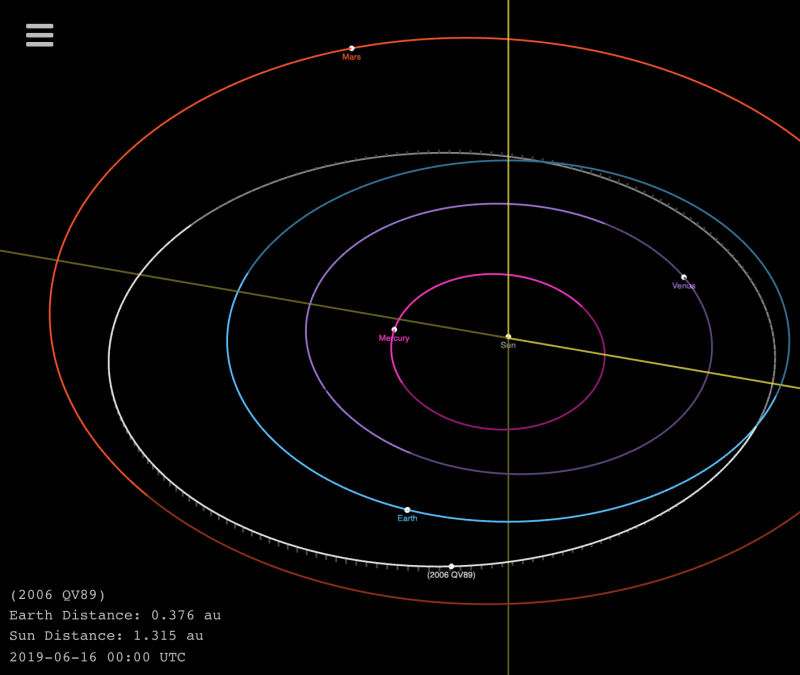
Diagram showing orbits of Earth, inner planets, and asteroid 2006 QV89.

Viewed on this scale, from above the solar system, it looks as if the orbits of Earth and asteroid 2006 QV89 intersect. Yet this asteroid’s pass on September 9, 2019 shouldn’t be a particularly close one. Image via NASA’s Center for Near Earth Object Studies.

Over this past month, there’ve been numerous articles (for example, here and here) about a space rock that’ll pass closest to Earth on September 9, 2019. Some focus on the minuscule chance this asteroid might strike Earth in September, but we’re here to focus on the much, much, much greater chance this asteroid will not strike us. In fact, asteroid 2006 QV89 is currently classified by astronomers as NO HAZARD. It is not expected to hit Earth. Although asteroid 2006 QV89 does appear on a “risk objects list” from the European Space Agency, it is important to note that the asteroid has a Torino Scale of 0, which indicates its no hazard status. You can note that for yourself on the chart below, from ESA. Like many asteroids, 2006 QV89 is on a “risk” list, but ESA currently classifies it as a non-priority risk.

As of June 2019, calculations made by NASA/JPL with the available data suggest the space rock will not even have a particularly close approach to Earth in September 2019.

According to NASA’s Center for Near Earth Object Studies, 2006 QV89 will likely pass so far from our planet that there is a 99.989 percent chance the space rock will miss the Earth in September 2019.

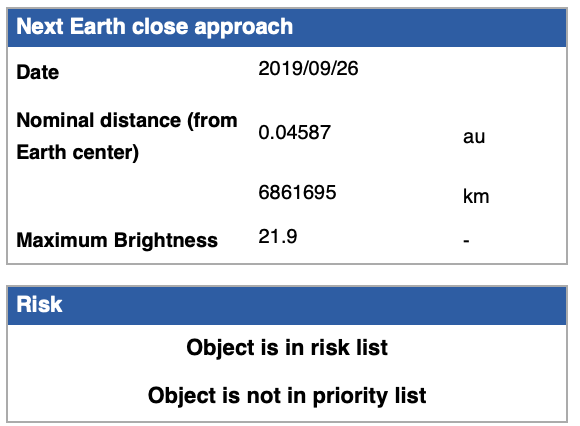
ESA chart showing various orbital parameters for 2006 QV89.

This chart from the European Space Agency – published in June 2019 – shows the September 2019 distance of asteroid 2006 QV89 as 4,263,660 miles (6,861,695 km), or some 17 times the moon’s distance. The object is in astronomers’ “risk” category, but it’s not on their “priority” list.

Many asteroids temporarily appear in a risk list due to uncertainties in their orbits. These sorts of uncertainties typically occur when an object has been recently discovered by observatories, and seen only during a few nights after the discovery, afterwards becaming too faint to observe. As an asteroid is re-observed – and astronomers’ asteroid-orbit modeling programs recognize it as an asteroid previously detected – the incoming new observations let astronomers better refine its orbit. The Catalina Sky Survey in Arizona discovered 2006 QV89 on August 29, 2006. At that time, it had a very short (10-day) observation arc. The Arecibo Observatory made radar observations of this asteroid on September 6, 2006. Then, as it sped on, it was lost from view again and has not been detected since 2006.

Yet – from their brief observations of it, and from their knowledge of asteroids in general, which has grown dramatically in recent decades – astronomers can estimate that 2006 QV89 is about 98-131 feet (30-40 meters) in diameter, or about the length of an American football field. It’s classified as an Apollo type asteroid, which are Earth-crossing asteroids, of which some 20,000 are known as of January, 2019.

Writing at Science20, Robert Walker had a good explanation for the status on asteroid 2006 QV89. He wrote on June 7, 2019:

Short summary for the panicking: Expected to miss and currently classified NO HAZARD. Tiny, most likely for an asteroid of that size is ‘Splosh in Pacific’. Likely many thousands of years before any such asteroid hits an urban area.

It is just a random asteroid, there are many in the table every year with dates that they ‘could’ hit, but they are classified as no hazard because they are all expected to miss. The press just picks up one of those many asteroids at random from time to time. Every year many asteroids are removed from the table that had dates of possible impacts that year. It is just one of numerous NO HAZARD asteroids currently in the table.

Some time in the next century or two then we can expect one of those many asteroids to hit, but if they are being tracked we would have at least 10 years warning to evacuate any city. The most likely thing is that the next asteroid to hit just sploshes harmlessly in the ocean. Hitting a city is extremely unlikely and most likely have to wait many thousands of years for that. An impact close enough to a city to warn residents to watch out for flying glass like Chelyabinsk is more likely and could happen, but not nearly as likely as a harmless splosh in the ocean.

This is an example of a ‘sensationalist press chose a random asteroid’ story. NASA didn’t warn us about it, and nor did ESA. It is expected to miss and is currrently classified as no hazard.

In short … don’t worry about ateroid 2006 QV89. It’s not going to hit us.

So how about seeing it as it passes? According to ESA, asteroid 2006 QV89 will show a maximum brightness or magnitude of +21.9 on September, 2019, which means the space rock will appear extremely faint. It’ll be so faint that will not even be visible with most telescopes, except for a few huge, observatory-type instruments.

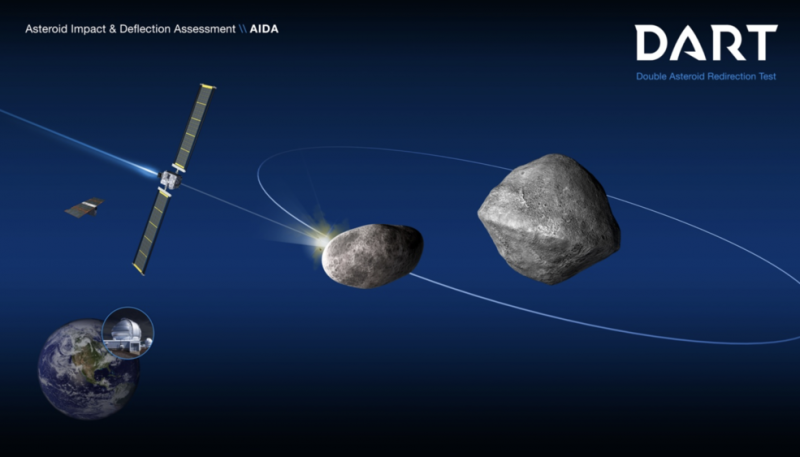
Diagram of spacecraft's trajectory toward small space rock in orbit around slightly larger one.

NASA plans to try to deflect a space rock from its path around September 2022. This schematic of the DART mission shows the impact on the moonlet of asteroid Didymos. Post-impact observations from Earth-based optical telescopes and planetary radar would, in turn, measure the change in the moonlet’s orbit about the parent body. Image via NASA/Johns Hopkins Applied Physics Lab.

Astronomers and other scientists are practicing with every close pass of an asteroid, in order to better prepare for a real scenario of any dangerous close approach on the future. What’s more, NASA is going to practice deflecting an asteroid from its path. The Double Asteroid Redirection Test (DART mission) is a planned space probe that will demonstrate the effects of crashing an impactor spacecraft into an asteroid moon for planetary defense purposes. It will launch in June, 2021 and will try to impact a 525-foot (160-meter) moonlet in the binary asteroid Didymos. The intentional impact should occur around September, 2022. Read more about DART.

Eventually, it’s likely we will learn to deflect an incoming asteroid. Right now, though, if scientists were to detect an incoming asteroid, the best defense we have is to determine the impact area as precisely as possible, and then to evacuate the area. An excellent exercise occurred on November 13, 2015. A small object – which then was determined to be space debris – was detected with a trajectory that would intercept Earth. A team of scientists was able to determine it would enter Earth’s atmosphere over the ocean near Sri Lanka, and a “no fly”and “no fishing” zone was issued.

So there you have it. As we’ve said many times before, and as is still true, as of now, there’s no known dangerous asteroid that poses any imminent risk of Earth impact. Could an asteroid strike Earth? Of course. That’s why astronomers continue to be watchful.

Bottom line: Asteroid 2006 QV89 has been unfairly hyped as posing a threat to Earth in September 2019. In fact, it’s one of many asteroids on astronomers’ risk list, but it’s not classified as a priority risk. It’s classified as “no hazard.”


from EarthSky http://bit.ly/2WLnudE
Diagram showing orbits of Earth, inner planets, and asteroid 2006 QV89.

Viewed on this scale, from above the solar system, it looks as if the orbits of Earth and asteroid 2006 QV89 intersect. Yet this asteroid’s pass on September 9, 2019 shouldn’t be a particularly close one. Image via NASA’s Center for Near Earth Object Studies.

Over this past month, there’ve been numerous articles (for example, here and here) about a space rock that’ll pass closest to Earth on September 9, 2019. Some focus on the minuscule chance this asteroid might strike Earth in September, but we’re here to focus on the much, much, much greater chance this asteroid will not strike us. In fact, asteroid 2006 QV89 is currently classified by astronomers as NO HAZARD. It is not expected to hit Earth. Although asteroid 2006 QV89 does appear on a “risk objects list” from the European Space Agency, it is important to note that the asteroid has a Torino Scale of 0, which indicates its no hazard status. You can note that for yourself on the chart below, from ESA. Like many asteroids, 2006 QV89 is on a “risk” list, but ESA currently classifies it as a non-priority risk.

As of June 2019, calculations made by NASA/JPL with the available data suggest the space rock will not even have a particularly close approach to Earth in September 2019.

According to NASA’s Center for Near Earth Object Studies, 2006 QV89 will likely pass so far from our planet that there is a 99.989 percent chance the space rock will miss the Earth in September 2019.

ESA chart showing various orbital parameters for 2006 QV89.

This chart from the European Space Agency – published in June 2019 – shows the September 2019 distance of asteroid 2006 QV89 as 4,263,660 miles (6,861,695 km), or some 17 times the moon’s distance. The object is in astronomers’ “risk” category, but it’s not on their “priority” list.

Many asteroids temporarily appear in a risk list due to uncertainties in their orbits. These sorts of uncertainties typically occur when an object has been recently discovered by observatories, and seen only during a few nights after the discovery, afterwards becaming too faint to observe. As an asteroid is re-observed – and astronomers’ asteroid-orbit modeling programs recognize it as an asteroid previously detected – the incoming new observations let astronomers better refine its orbit. The Catalina Sky Survey in Arizona discovered 2006 QV89 on August 29, 2006. At that time, it had a very short (10-day) observation arc. The Arecibo Observatory made radar observations of this asteroid on September 6, 2006. Then, as it sped on, it was lost from view again and has not been detected since 2006.

Yet – from their brief observations of it, and from their knowledge of asteroids in general, which has grown dramatically in recent decades – astronomers can estimate that 2006 QV89 is about 98-131 feet (30-40 meters) in diameter, or about the length of an American football field. It’s classified as an Apollo type asteroid, which are Earth-crossing asteroids, of which some 20,000 are known as of January, 2019.

Writing at Science20, Robert Walker had a good explanation for the status on asteroid 2006 QV89. He wrote on June 7, 2019:

Short summary for the panicking: Expected to miss and currently classified NO HAZARD. Tiny, most likely for an asteroid of that size is ‘Splosh in Pacific’. Likely many thousands of years before any such asteroid hits an urban area.

It is just a random asteroid, there are many in the table every year with dates that they ‘could’ hit, but they are classified as no hazard because they are all expected to miss. The press just picks up one of those many asteroids at random from time to time. Every year many asteroids are removed from the table that had dates of possible impacts that year. It is just one of numerous NO HAZARD asteroids currently in the table.

Some time in the next century or two then we can expect one of those many asteroids to hit, but if they are being tracked we would have at least 10 years warning to evacuate any city. The most likely thing is that the next asteroid to hit just sploshes harmlessly in the ocean. Hitting a city is extremely unlikely and most likely have to wait many thousands of years for that. An impact close enough to a city to warn residents to watch out for flying glass like Chelyabinsk is more likely and could happen, but not nearly as likely as a harmless splosh in the ocean.

This is an example of a ‘sensationalist press chose a random asteroid’ story. NASA didn’t warn us about it, and nor did ESA. It is expected to miss and is currrently classified as no hazard.

In short … don’t worry about ateroid 2006 QV89. It’s not going to hit us.

So how about seeing it as it passes? According to ESA, asteroid 2006 QV89 will show a maximum brightness or magnitude of +21.9 on September, 2019, which means the space rock will appear extremely faint. It’ll be so faint that will not even be visible with most telescopes, except for a few huge, observatory-type instruments.

Diagram of spacecraft's trajectory toward small space rock in orbit around slightly larger one.

NASA plans to try to deflect a space rock from its path around September 2022. This schematic of the DART mission shows the impact on the moonlet of asteroid Didymos. Post-impact observations from Earth-based optical telescopes and planetary radar would, in turn, measure the change in the moonlet’s orbit about the parent body. Image via NASA/Johns Hopkins Applied Physics Lab.

Astronomers and other scientists are practicing with every close pass of an asteroid, in order to better prepare for a real scenario of any dangerous close approach on the future. What’s more, NASA is going to practice deflecting an asteroid from its path. The Double Asteroid Redirection Test (DART mission) is a planned space probe that will demonstrate the effects of crashing an impactor spacecraft into an asteroid moon for planetary defense purposes. It will launch in June, 2021 and will try to impact a 525-foot (160-meter) moonlet in the binary asteroid Didymos. The intentional impact should occur around September, 2022. Read more about DART.

Eventually, it’s likely we will learn to deflect an incoming asteroid. Right now, though, if scientists were to detect an incoming asteroid, the best defense we have is to determine the impact area as precisely as possible, and then to evacuate the area. An excellent exercise occurred on November 13, 2015. A small object – which then was determined to be space debris – was detected with a trajectory that would intercept Earth. A team of scientists was able to determine it would enter Earth’s atmosphere over the ocean near Sri Lanka, and a “no fly”and “no fishing” zone was issued.

So there you have it. As we’ve said many times before, and as is still true, as of now, there’s no known dangerous asteroid that poses any imminent risk of Earth impact. Could an asteroid strike Earth? Of course. That’s why astronomers continue to be watchful.

Bottom line: Asteroid 2006 QV89 has been unfairly hyped as posing a threat to Earth in September 2019. In fact, it’s one of many asteroids on astronomers’ risk list, but it’s not classified as a priority risk. It’s classified as “no hazard.”


from EarthSky http://bit.ly/2WLnudE

What causes flashes on the moon?

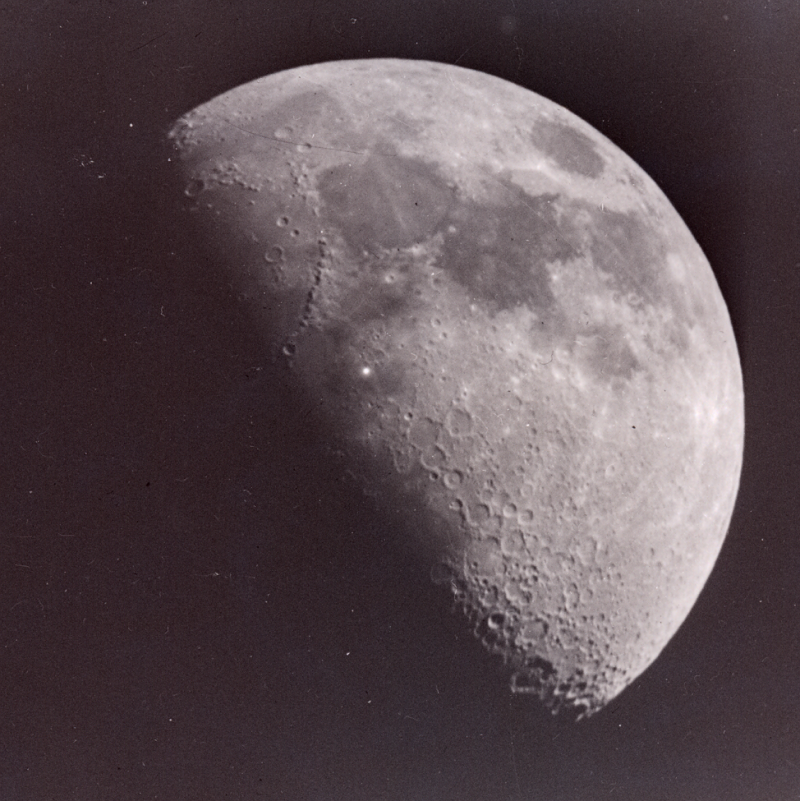
"Lunar flare" bright spot on moon.

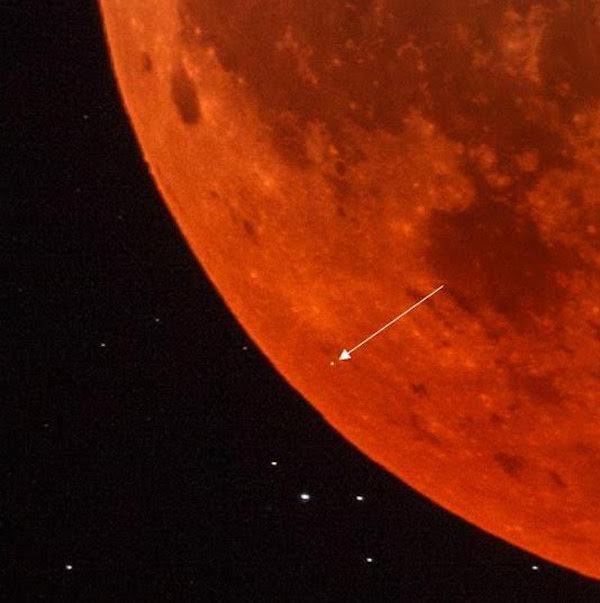
A “lunar flare” example of TLP – seen near the lunar terminator, or line between light and dark on the moon, on November 15, 1953 by Leon H. Stuart in Tulsa, Oklahoma. He caught the flash with an 8-inch telescope. Image via Leon H. Stuart.

Even though it’s so close and has been visited by both robotic spacecraft and human astronauts, the moon can still be a mysterious place. There is a lot we still don’t know about our nearby neighbor, including what causes unusual flashes of light and other light phenomena on its surface. These brief light displays – also known as Transient Lunar Phenomena (TLP) – have been seen for centuries, but they’re still not entirely explained. Recently, a professor in Germany announced his new study to try to figure out, at last, what is creating these intriguing lunar phenomena.

Hakan Kayal is Professor of Space Technology at Julius-Maximilians-Universität Würzburg (JMU) in Bavaria, Germany. He wants to try to find the explanation(s) for these odd light phenomena. He and his team have built a new telescope in a private observatory in Spain, which started lunar observations in April 2019. The telescope is in a rural area far from light pollution, about 60 miles (100 km) north of Seville. As to why it is located in Spain, Kayal said:

There are simply better weather conditions for observing the moon than in Germany.

The telescope has two cameras that observe the moon, remote-controlled from the JMU campus in Germany. If a flash or other light source is detected, the cameras will trigger other actions from the telescope, but only if both cameras make the detection. Photos and video are automatically taken and recorded, and an email is sent to Kayal and his team.

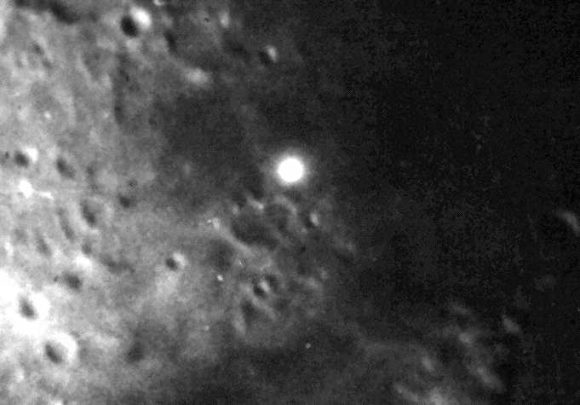
"Lunar flare" bright spot on moon.

A closer view of the “lunar flare” TLP seen by Leon H. Stuart in 1953. Image via Leon H. Stuart.

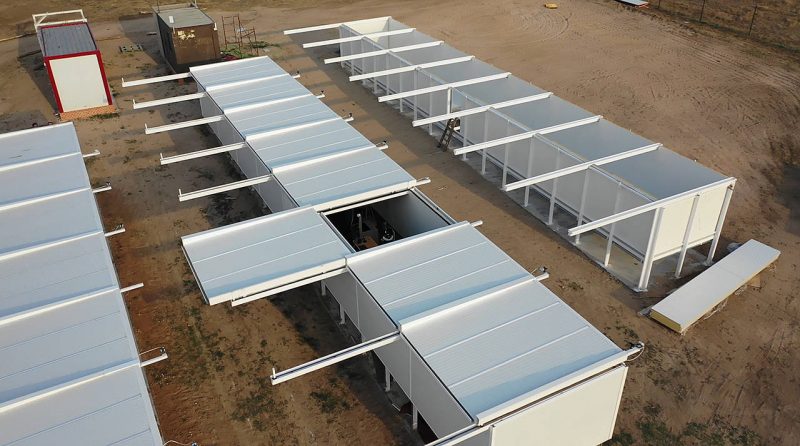
Moon telescope in Spain.

The moon telescope at the observatory in Spain. Image via Hakan Kayal/Universität Würzburg.

The software being used at the telescope of Kayal and his team is still being refined. Eventually, it’ll incorporate artificial intelligence – estimated to take another year to complete – so that then system gradually learns to distinguish a moon flash from technical faults in the telescope or from objects such as birds and airplanes passing in front of the cameras. And what about those SpaceX Starlink satellites? They may also have the potential to create headaches for Kayal’s team. Reducing false alarms is a key objective for Kayal. He would later like to use the same kind of cameras on a satellite orbiting Earth, where there is no interference from Earth’s atmosphere. Kayal said:

We will then be rid of the disturbances caused by the atmosphere.

When a flash or other luminous phenomenon is detected, those results can then be compared to those from other telescopes used by the European Space Agency. According to Kayal:

If the same thing was seen there, the event can be considered confirmed.

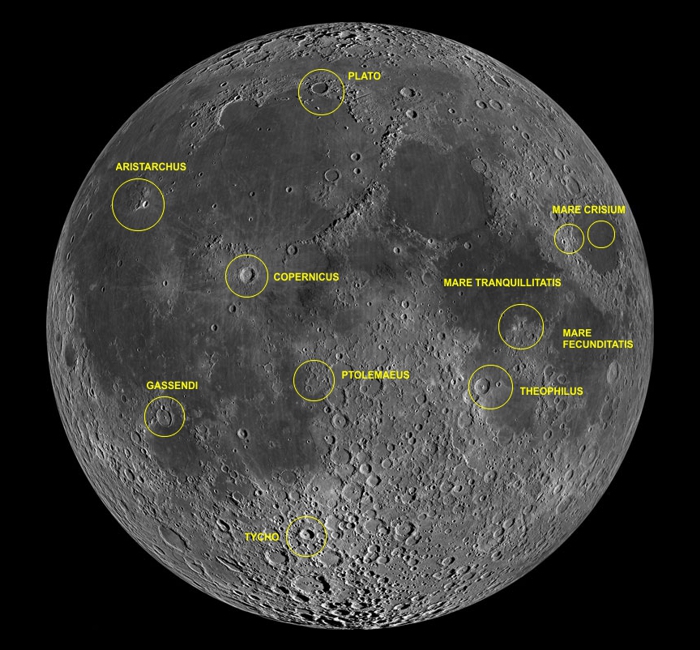
TLP hotspots on moon.

Map of some known TLP “hot spots” on the moon. Image via Dan Heim/Sky Lights.

Unconfirmed sightings of Transient Lunar Phenomena have been reported for centuries. One of the earliest recorded sightings took place on June 18, 1178, when five or more monks from Canterbury reported an “upheaval” on the moon shortly after sunset.

There was a bright new moon, and as usual in that phase its horns were tilted toward the east; and suddenly the upper horn split in two. From the midpoint of this division a flaming torch sprang up, spewing out, over a considerable distance, fire, hot coals, and sparks. Meanwhile the body of the moon which was below writhed, as it were, in anxiety, and, to put it in the words of those who reported it to me and saw it with their own eyes, the moon throbbed like a wounded snake. Afterwards it resumed its proper state. This phenomenon was repeated a dozen times or more, the flame assuming various twisting shapes at random and then returning to normal. Then after these transformations the moon from horn to horn, that is along its whole length, took on a blackish appearance.

Along with flashes, TLP have been reported as gaseous mists, reddish, green, blue or violet colorations, other brightening and even darkenings. There are currently two comprehensive catalogs, one of which has 2,254 events going back to the 6th century. At least one-third of those were seen in the Aristarchus plateau region.

What are the possible explanations for TLP? One problem with finding explanations is that most reports are made by only one observer, or from a single location on Earth, making verification difficult.

That said, current theories include outgassing, impact events, electrostatic phenomena, and unfavorable observation conditions in Earth’s atmosphere. At least some of them are likely caused by gases escaping the surface during moonquakes, according to Kayal:

Seismic activities were also observed on the moon. When the surface moves, gases that reflect sunlight could escape from the interior of the moon. This would explain the luminous phenomena, some of which last for hours.

Plus, we know some flashes are likely caused by meteorite impacts, which still occur quite often on the moon. One such likely event was seen on the night of January 20-21, 2019 when a meteorite hit the moon’s surface during a total lunar eclipse. It was caught in photos and on video as well as being seen by people just watching the eclipse. It was the first known instance of such a flash occurring during an eclipse.

Meteorite impact on moon.

View larger at EarthSky Community Photos. | This flash on the red, eclipsed moon came from a meteorite strike! Image via Greg Hogan in Kathleen, Georgia. Thanks, Greg!

Astronomer Patrick Moore coined the term Transient Lunar Phenomena in 1968, in his co-authorship of NASA Technical Report R-277 Chronological Catalog of Reported Lunar Events 1540 to 1966.

In the 1960s, NASA ran its own investigation of TLP, called Project Moon-Blink. The background was described as follows:

There have been some puzzling reports over the years. Before 1843 astronomers listed Linne as a normal but steep-walled crater about five miles in diameter. In 1866 Schmidt, a famed astronomer, reported that Linne was not a crater at all but looked more like a whitish cloud. Later observers disagreed with both descriptions, saying it was a low mound about four miles across, with a deep crater one mile in diameter in its top. Much later – in 1961 – Patrick Moore, one of the foremost … lunar astronomers, was astonished that Linne appeared to be a normal crater about three miles in diameter. Moore examined it with two telescopes then called another astronomer. He examined it with a third instrument and reported a similar inexplicable appearance. The following night was cloudy, but the next night Linne appeared as Moore had always seen it, a gently rounded dome with a small crater on top. Moore attributed the changes to unusual lighting effects. During the [1950s], several incontrovertible observations have been reported of unusual color activity on or just above the lunar surface. These may be divided into two categories: those events localized to a few square miles of lunar area and those covering a significant portion of the lunar surface. Insufficient evidence exists at present to determine whether these two types of events are similar or dissimilar in nature …

During NASA’s Clementine mission to the moon in 1994, several events were reported, four of which were photographed. But later analysis showed no discernible differences at the sites where the events were seen.

The Lunascan Project in the 1990s and 2000s also used to catalog TLP sightings, which can be read about in the website archives.

Currently, observations of TLP are being coordinated by the Association of Lunar and Planetary Observers and the British Astronomical Association.

While this mystery is yet to be fully solved, it seems apparent that there is likely more than one cause of TLP. Meteorite impacts, as have been observed are one, but they don’t explain all the reported sightings. Other causes may point to residual geologic activity on the moon, even though it has long been thought of as a dead world. It will be very interesting to see what scientists like Kayal find in the near future.

Haykan Kayal.

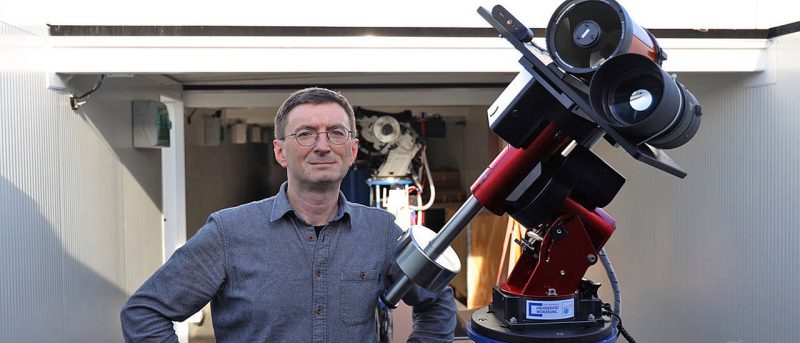
Haykan Kayal standing next to the moon telescope. Image via Tobias Greiner/Universität Würzburg.

Bottom line: Transient Lunar Phenomena have intrigued astronomers for centuries. Thanks to scientists like Haykan Kayal, we might now be closer to finding out just what causes these odd light flashes on our nearest celestial neighbor.

Via Universität Würzburg


from EarthSky http://bit.ly/2XfNvWW
"Lunar flare" bright spot on moon.

A “lunar flare” example of TLP – seen near the lunar terminator, or line between light and dark on the moon, on November 15, 1953 by Leon H. Stuart in Tulsa, Oklahoma. He caught the flash with an 8-inch telescope. Image via Leon H. Stuart.

Even though it’s so close and has been visited by both robotic spacecraft and human astronauts, the moon can still be a mysterious place. There is a lot we still don’t know about our nearby neighbor, including what causes unusual flashes of light and other light phenomena on its surface. These brief light displays – also known as Transient Lunar Phenomena (TLP) – have been seen for centuries, but they’re still not entirely explained. Recently, a professor in Germany announced his new study to try to figure out, at last, what is creating these intriguing lunar phenomena.

Hakan Kayal is Professor of Space Technology at Julius-Maximilians-Universität Würzburg (JMU) in Bavaria, Germany. He wants to try to find the explanation(s) for these odd light phenomena. He and his team have built a new telescope in a private observatory in Spain, which started lunar observations in April 2019. The telescope is in a rural area far from light pollution, about 60 miles (100 km) north of Seville. As to why it is located in Spain, Kayal said:

There are simply better weather conditions for observing the moon than in Germany.

The telescope has two cameras that observe the moon, remote-controlled from the JMU campus in Germany. If a flash or other light source is detected, the cameras will trigger other actions from the telescope, but only if both cameras make the detection. Photos and video are automatically taken and recorded, and an email is sent to Kayal and his team.

"Lunar flare" bright spot on moon.

A closer view of the “lunar flare” TLP seen by Leon H. Stuart in 1953. Image via Leon H. Stuart.

Moon telescope in Spain.

The moon telescope at the observatory in Spain. Image via Hakan Kayal/Universität Würzburg.

The software being used at the telescope of Kayal and his team is still being refined. Eventually, it’ll incorporate artificial intelligence – estimated to take another year to complete – so that then system gradually learns to distinguish a moon flash from technical faults in the telescope or from objects such as birds and airplanes passing in front of the cameras. And what about those SpaceX Starlink satellites? They may also have the potential to create headaches for Kayal’s team. Reducing false alarms is a key objective for Kayal. He would later like to use the same kind of cameras on a satellite orbiting Earth, where there is no interference from Earth’s atmosphere. Kayal said:

We will then be rid of the disturbances caused by the atmosphere.

When a flash or other luminous phenomenon is detected, those results can then be compared to those from other telescopes used by the European Space Agency. According to Kayal:

If the same thing was seen there, the event can be considered confirmed.

TLP hotspots on moon.

Map of some known TLP “hot spots” on the moon. Image via Dan Heim/Sky Lights.

Unconfirmed sightings of Transient Lunar Phenomena have been reported for centuries. One of the earliest recorded sightings took place on June 18, 1178, when five or more monks from Canterbury reported an “upheaval” on the moon shortly after sunset.

There was a bright new moon, and as usual in that phase its horns were tilted toward the east; and suddenly the upper horn split in two. From the midpoint of this division a flaming torch sprang up, spewing out, over a considerable distance, fire, hot coals, and sparks. Meanwhile the body of the moon which was below writhed, as it were, in anxiety, and, to put it in the words of those who reported it to me and saw it with their own eyes, the moon throbbed like a wounded snake. Afterwards it resumed its proper state. This phenomenon was repeated a dozen times or more, the flame assuming various twisting shapes at random and then returning to normal. Then after these transformations the moon from horn to horn, that is along its whole length, took on a blackish appearance.

Along with flashes, TLP have been reported as gaseous mists, reddish, green, blue or violet colorations, other brightening and even darkenings. There are currently two comprehensive catalogs, one of which has 2,254 events going back to the 6th century. At least one-third of those were seen in the Aristarchus plateau region.

What are the possible explanations for TLP? One problem with finding explanations is that most reports are made by only one observer, or from a single location on Earth, making verification difficult.

That said, current theories include outgassing, impact events, electrostatic phenomena, and unfavorable observation conditions in Earth’s atmosphere. At least some of them are likely caused by gases escaping the surface during moonquakes, according to Kayal:

Seismic activities were also observed on the moon. When the surface moves, gases that reflect sunlight could escape from the interior of the moon. This would explain the luminous phenomena, some of which last for hours.

Plus, we know some flashes are likely caused by meteorite impacts, which still occur quite often on the moon. One such likely event was seen on the night of January 20-21, 2019 when a meteorite hit the moon’s surface during a total lunar eclipse. It was caught in photos and on video as well as being seen by people just watching the eclipse. It was the first known instance of such a flash occurring during an eclipse.

Meteorite impact on moon.

View larger at EarthSky Community Photos. | This flash on the red, eclipsed moon came from a meteorite strike! Image via Greg Hogan in Kathleen, Georgia. Thanks, Greg!

Astronomer Patrick Moore coined the term Transient Lunar Phenomena in 1968, in his co-authorship of NASA Technical Report R-277 Chronological Catalog of Reported Lunar Events 1540 to 1966.

In the 1960s, NASA ran its own investigation of TLP, called Project Moon-Blink. The background was described as follows:

There have been some puzzling reports over the years. Before 1843 astronomers listed Linne as a normal but steep-walled crater about five miles in diameter. In 1866 Schmidt, a famed astronomer, reported that Linne was not a crater at all but looked more like a whitish cloud. Later observers disagreed with both descriptions, saying it was a low mound about four miles across, with a deep crater one mile in diameter in its top. Much later – in 1961 – Patrick Moore, one of the foremost … lunar astronomers, was astonished that Linne appeared to be a normal crater about three miles in diameter. Moore examined it with two telescopes then called another astronomer. He examined it with a third instrument and reported a similar inexplicable appearance. The following night was cloudy, but the next night Linne appeared as Moore had always seen it, a gently rounded dome with a small crater on top. Moore attributed the changes to unusual lighting effects. During the [1950s], several incontrovertible observations have been reported of unusual color activity on or just above the lunar surface. These may be divided into two categories: those events localized to a few square miles of lunar area and those covering a significant portion of the lunar surface. Insufficient evidence exists at present to determine whether these two types of events are similar or dissimilar in nature …

During NASA’s Clementine mission to the moon in 1994, several events were reported, four of which were photographed. But later analysis showed no discernible differences at the sites where the events were seen.

The Lunascan Project in the 1990s and 2000s also used to catalog TLP sightings, which can be read about in the website archives.

Currently, observations of TLP are being coordinated by the Association of Lunar and Planetary Observers and the British Astronomical Association.

While this mystery is yet to be fully solved, it seems apparent that there is likely more than one cause of TLP. Meteorite impacts, as have been observed are one, but they don’t explain all the reported sightings. Other causes may point to residual geologic activity on the moon, even though it has long been thought of as a dead world. It will be very interesting to see what scientists like Kayal find in the near future.

Haykan Kayal.

Haykan Kayal standing next to the moon telescope. Image via Tobias Greiner/Universität Würzburg.

Bottom line: Transient Lunar Phenomena have intrigued astronomers for centuries. Thanks to scientists like Haykan Kayal, we might now be closer to finding out just what causes these odd light flashes on our nearest celestial neighbor.

Via Universität Würzburg


from EarthSky http://bit.ly/2XfNvWW

Strawberry Moon and Jupiter from dusk to dawn

On both June 16 and 17, 2019, the moon will appear full to the eye as it shines close to the king planet Jupiter all night long. The crest of the moon’s full phase comes at a specific instant, though – the instant the moon and sun are most opposite each other on our sky’s dome for this month – and that moment happens on June 17, 2019, at 8:31 UTC: translate UTC to your time. For the most of us in the North America, that means the moon turns full in the wee hours before sunrise on Monday, June 17. More about that below. In North America, we call the June full moon the Strawberry Moon or Rose Moon. In the Southern Hemisphere, where the impending June winter solstice is bringing about short days and long nights, this June full moon is the Long Night Moon.

Read more: What are the full moon names?

Astronomers would say the moon is full when it’s opposite the sun in ecliptic longitude. In other words, the elongation between the sun and moon is 180 degrees at full moon. Click here to know the present moon-sun elongation, remembering that a positive number means a waxing moon and a negative number a waning moon.

Full moon photo rising behind Lick Observatory.

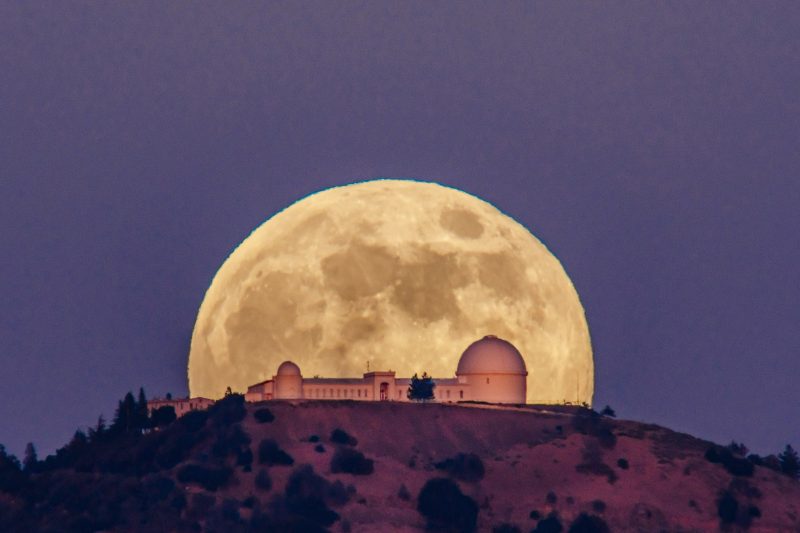
Kwong Liew wrote on June 27, 2018: “I wanted to capture the full moon rising behind the Lick Observatory in San Jose, California. After a lot of planning I found a location 12 miles away on a country road. The timing of the moonrise coincides with the sunset so there is good light to bring out the details of the observatory.”

For the most of us in the North America, 8:31 UTC on June 17 – the full moon instant – happens in the wee hours before sunrise on Monday, June 17. At North American and U.S. time zones, the full moon falls on June 17 at 5:31 a.m. ADT, 4:31 a.m. EDT, 3:31 a.m. CDT, 2:31 a.m. MDT, 1:31 a.m. PDT, 12:31 a.m. AKDT – and on June 16, at 10:31 p.m. HST.

Worldwide map showing day and night sides of Earth

Worldwide map showing the day and night sides of Earth at the instant of full moon (2019 June 17 at 8:31 UTC). The shadow line at left, running by North and South America depicts sunrise June 17, 2019. The shadow line at right, running through Australia, depicts sunset June 17. Image via the US Naval Observatory

If this full moon were truly opposite the sun, there would be a total eclipse of the moon. However this June full moon sweeps to the north of the Earth’s dark shadow, and therefore avoids being eclipsed. Next month, however, the northern part of the full moon will clip the southern part of the Earth’s dark shadow to stage a partial lunar eclipse on July 16, 2019.

The full moon acts as a mirror, reflecting the sun’s position in the sky for six month hence. Because the sun is so far south in December, tonight’s moon will follow the low path of the winter sun in the Northern Hemisphere, yet the high path of the summer sun in the Southern Hemisphere. North of the Arctic Circle, where the sun shines 24 hours around the clock, you won’t see any moon at all; yet, south of the Antarctic Circle, where there is no sun at all, the June full moon will mimic the midnight sun of summer.

Telescopic image of Jupiter, combined with telescopic image of Saturn.

View at EarthSky Community Photos. | Isn’t this a cool composite image of Jupiter and Saturn? Last week, Earth went between the sun and Jupiter. Now the giant planet is near the moon (see chart above). On July 9, we’ll go between the sun and Saturn, and, this Tuesday evening, the moon will pass Saturn in our sky. Tom Marsala of Menifee, California caught both planets before sunup last week, and wrote: “As I was processing Jupiter, Saturn came into view behind a tree. So I was able to get both!”

Bottom line: Around each month’s full moon, the moon rises in the east around sunset, climbs highest up for the night around midnight and sets in the west around sunrise. Look for the moon and king planet Jupiter to light up the nighttime from dusk until dawn around June 16 and 17, 2019.


from EarthSky http://bit.ly/2XP8Zqt

On both June 16 and 17, 2019, the moon will appear full to the eye as it shines close to the king planet Jupiter all night long. The crest of the moon’s full phase comes at a specific instant, though – the instant the moon and sun are most opposite each other on our sky’s dome for this month – and that moment happens on June 17, 2019, at 8:31 UTC: translate UTC to your time. For the most of us in the North America, that means the moon turns full in the wee hours before sunrise on Monday, June 17. More about that below. In North America, we call the June full moon the Strawberry Moon or Rose Moon. In the Southern Hemisphere, where the impending June winter solstice is bringing about short days and long nights, this June full moon is the Long Night Moon.

Read more: What are the full moon names?

Astronomers would say the moon is full when it’s opposite the sun in ecliptic longitude. In other words, the elongation between the sun and moon is 180 degrees at full moon. Click here to know the present moon-sun elongation, remembering that a positive number means a waxing moon and a negative number a waning moon.

Full moon photo rising behind Lick Observatory.

Kwong Liew wrote on June 27, 2018: “I wanted to capture the full moon rising behind the Lick Observatory in San Jose, California. After a lot of planning I found a location 12 miles away on a country road. The timing of the moonrise coincides with the sunset so there is good light to bring out the details of the observatory.”

For the most of us in the North America, 8:31 UTC on June 17 – the full moon instant – happens in the wee hours before sunrise on Monday, June 17. At North American and U.S. time zones, the full moon falls on June 17 at 5:31 a.m. ADT, 4:31 a.m. EDT, 3:31 a.m. CDT, 2:31 a.m. MDT, 1:31 a.m. PDT, 12:31 a.m. AKDT – and on June 16, at 10:31 p.m. HST.

Worldwide map showing day and night sides of Earth

Worldwide map showing the day and night sides of Earth at the instant of full moon (2019 June 17 at 8:31 UTC). The shadow line at left, running by North and South America depicts sunrise June 17, 2019. The shadow line at right, running through Australia, depicts sunset June 17. Image via the US Naval Observatory

If this full moon were truly opposite the sun, there would be a total eclipse of the moon. However this June full moon sweeps to the north of the Earth’s dark shadow, and therefore avoids being eclipsed. Next month, however, the northern part of the full moon will clip the southern part of the Earth’s dark shadow to stage a partial lunar eclipse on July 16, 2019.

The full moon acts as a mirror, reflecting the sun’s position in the sky for six month hence. Because the sun is so far south in December, tonight’s moon will follow the low path of the winter sun in the Northern Hemisphere, yet the high path of the summer sun in the Southern Hemisphere. North of the Arctic Circle, where the sun shines 24 hours around the clock, you won’t see any moon at all; yet, south of the Antarctic Circle, where there is no sun at all, the June full moon will mimic the midnight sun of summer.

Telescopic image of Jupiter, combined with telescopic image of Saturn.

View at EarthSky Community Photos. | Isn’t this a cool composite image of Jupiter and Saturn? Last week, Earth went between the sun and Jupiter. Now the giant planet is near the moon (see chart above). On July 9, we’ll go between the sun and Saturn, and, this Tuesday evening, the moon will pass Saturn in our sky. Tom Marsala of Menifee, California caught both planets before sunup last week, and wrote: “As I was processing Jupiter, Saturn came into view behind a tree. So I was able to get both!”

Bottom line: Around each month’s full moon, the moon rises in the east around sunset, climbs highest up for the night around midnight and sets in the west around sunrise. Look for the moon and king planet Jupiter to light up the nighttime from dusk until dawn around June 16 and 17, 2019.


from EarthSky http://bit.ly/2XP8Zqt

Planetary health and '12 years' to act

This is a re-post from Yale Climate Connections by Jeffrey Kiehl

Life makes us wake up to needed changes.

A visit to the doctor’s office and accompanied tests indicate you have been diagnosed as pre-diabetic. Your doctor indicates two pathways to addressing the condition before things get worse. You can change your lifestyle, or you can take medication with possible side effects. If you accept the medical facts and adopt the first recommendation, then you will set a goal.

For example, “I will lose 20 pounds over the next three months and diligently monitor my glucose levels.” You talk with health and wellness experts and come up with a plan to reach those goals. Up to this point you have been in the stages of symptom diagnosis and receiving expert advice. Now, the hard work begins: You actually have to change the way you have been living your life.

You need to eat differently and exercise more, and you need to do these things every day for the rest of your life. You also need to monitor your progress to ensure you are meeting your goals. Initially, you may even question the accuracy of the diagnosis, or your doctor’s conclusion. You may even seek a second opinion. You wonder how long you can wait to change the way you have been living.

Of course, in any life-threatening situation, the answer to the question of “How long can I wait?” is obvious: You can’t, can’t wait. You must make changes in your lifestyle immediately. You must overcome any and all resistances to act.

Doing so, you discover that you lose weight and your glucose levels dramatically decline. You may even obtain a new diagnosis that you are no longer “pre-diabetic.” These are not easy goals to accomplish. Overcoming years of lifestyle behaviors is hard work. You will need encouragement and help from others, but it is possible. The other challenging part of this journey is to stick with the plan even after you have achieved your goals. Complacency will lead you back to the “at risk” category.

Climate prescription: ’12 years left’ to cut emissions

We find ourselves in a similar, but even more challenging, situation, regarding climate change. Over the past eight months, since an October report from leading global scientists, we hear repeated warnings that we have “12 years left” to address climate change. Specifically, we have 12 years left to significantly reduce global carbon emissions if we are to have more than a 50 percent chance of keeping global warming below 1.5°C (about 2.7°F).

Over the past few months the warnings have become more dire, indicating that we will exceed 1.5°C much earlier than thought and that even a 2°C target will be challenging to meet. Although the difference between 1.5° and 2.0° may not sound important, in terms of global warming, it is quite significant. It is the difference between moderate to very high risk of heatwave deaths, agricultural collapse, and extreme weather damages. A very recent study indicates that when one considers national emissions rather than global emissions, the U.S. will be unable to meet the Paris accords goal by 2100. Couple these projections with observed accelerating changes in the cryosphere, and extreme weather events, ocean warming, melting permafrost … and things are quite dire.

‘Time for a new clinical diagnosis: global climate anxiety disorder’

My clinical colleagues report more people are coming to them with what can be best described as severe climate change anxiety and distress. They suffer from symptoms of severe anxiety in response to learning about climate change and reading or listening to online stories about it.

Perhaps it is time for a new clinical diagnosis: global climate anxiety disorder (GCAD). But let’s not pathologize what some people are feeling, as we should all be disturbed by what is happening to the climate system. We should fear for the future of our children and grandchildren.

And rather than reaching a point that precludes our acting, we must resolve to do all that is possible to reduce the concentration of carbon dioxide in the atmosphere, personally and collectively.

We have a fact-based diagnosis. We have expert advice on what we need to do to avoid the worst consequences of elevated atmospheric carbon dioxide. And as with the safe levels of glucose for a healthy body, we know the safe levels of atmospheric carbon dioxide for a healthy planet. As with a physician’s advice to a pre-diabetic, experts have even provided pathways to reach these levels.

The patient asks the doctor:

  • How much time do I have to deal with this problem?
  • How long can I wait before I make the recommended changes in lifestyle?
  • Do I really have to reduce my carbohydrates?
  • Can’t I live reasonably well with higher glucose levels?

We ask similar questions concerning climate change. The well-publicized statements that we have “12 years left” before we miss the target of holding global temperatures below 1.5° (or 25 years left to limit warming to 2.0°C) can be interpreted as a plan of waiting and then acting. The truth of the matter is we need to act now. Adding another 0.5°C warming to the present 1.0°C comes with significant disruption to planetary and human health. Adding an additional 0.5° to 1.5°C pushes symptoms like heatwave deaths, displacement of millions driven away from populated coastlines by sea-level rise, and high risks to agricultural productivity into the extreme danger range.

Giving up unhealthy lifestyles leads to ‘personal wellness’

And as with our personal health situation, we (and our planet) move from a condition of pre-diabetes to untreated diabetes … with all of its deadly health consequences.

It really comes down to how willing we are as individuals and societies to change our lifestyle. Interestingly, when you ask people how they feel after reducing their carbs, losing that weight and increasing their daily exercise leads them to appreciate how much better they feel. They have more energy, feel better about themselves, and enjoy life more. The seeming “sacrifice of giving up” has turned into improved personal wellness.

It is quite likely we will discover similar improvements to our wellness once we resolve to live a low-carbon lifestyle. Indeed, people who have made this transition already express such experiences.

We need to support one another in making the required changes to limit global warming. We need to convey the benefits of giving up our old unhealthy lifestyles to create a healthy environment for all of us.


from Skeptical Science http://bit.ly/2WLkRbz

This is a re-post from Yale Climate Connections by Jeffrey Kiehl

Life makes us wake up to needed changes.

A visit to the doctor’s office and accompanied tests indicate you have been diagnosed as pre-diabetic. Your doctor indicates two pathways to addressing the condition before things get worse. You can change your lifestyle, or you can take medication with possible side effects. If you accept the medical facts and adopt the first recommendation, then you will set a goal.

For example, “I will lose 20 pounds over the next three months and diligently monitor my glucose levels.” You talk with health and wellness experts and come up with a plan to reach those goals. Up to this point you have been in the stages of symptom diagnosis and receiving expert advice. Now, the hard work begins: You actually have to change the way you have been living your life.

You need to eat differently and exercise more, and you need to do these things every day for the rest of your life. You also need to monitor your progress to ensure you are meeting your goals. Initially, you may even question the accuracy of the diagnosis, or your doctor’s conclusion. You may even seek a second opinion. You wonder how long you can wait to change the way you have been living.

Of course, in any life-threatening situation, the answer to the question of “How long can I wait?” is obvious: You can’t, can’t wait. You must make changes in your lifestyle immediately. You must overcome any and all resistances to act.

Doing so, you discover that you lose weight and your glucose levels dramatically decline. You may even obtain a new diagnosis that you are no longer “pre-diabetic.” These are not easy goals to accomplish. Overcoming years of lifestyle behaviors is hard work. You will need encouragement and help from others, but it is possible. The other challenging part of this journey is to stick with the plan even after you have achieved your goals. Complacency will lead you back to the “at risk” category.

Climate prescription: ’12 years left’ to cut emissions

We find ourselves in a similar, but even more challenging, situation, regarding climate change. Over the past eight months, since an October report from leading global scientists, we hear repeated warnings that we have “12 years left” to address climate change. Specifically, we have 12 years left to significantly reduce global carbon emissions if we are to have more than a 50 percent chance of keeping global warming below 1.5°C (about 2.7°F).

Over the past few months the warnings have become more dire, indicating that we will exceed 1.5°C much earlier than thought and that even a 2°C target will be challenging to meet. Although the difference between 1.5° and 2.0° may not sound important, in terms of global warming, it is quite significant. It is the difference between moderate to very high risk of heatwave deaths, agricultural collapse, and extreme weather damages. A very recent study indicates that when one considers national emissions rather than global emissions, the U.S. will be unable to meet the Paris accords goal by 2100. Couple these projections with observed accelerating changes in the cryosphere, and extreme weather events, ocean warming, melting permafrost … and things are quite dire.

‘Time for a new clinical diagnosis: global climate anxiety disorder’

My clinical colleagues report more people are coming to them with what can be best described as severe climate change anxiety and distress. They suffer from symptoms of severe anxiety in response to learning about climate change and reading or listening to online stories about it.

Perhaps it is time for a new clinical diagnosis: global climate anxiety disorder (GCAD). But let’s not pathologize what some people are feeling, as we should all be disturbed by what is happening to the climate system. We should fear for the future of our children and grandchildren.

And rather than reaching a point that precludes our acting, we must resolve to do all that is possible to reduce the concentration of carbon dioxide in the atmosphere, personally and collectively.

We have a fact-based diagnosis. We have expert advice on what we need to do to avoid the worst consequences of elevated atmospheric carbon dioxide. And as with the safe levels of glucose for a healthy body, we know the safe levels of atmospheric carbon dioxide for a healthy planet. As with a physician’s advice to a pre-diabetic, experts have even provided pathways to reach these levels.

The patient asks the doctor:

  • How much time do I have to deal with this problem?
  • How long can I wait before I make the recommended changes in lifestyle?
  • Do I really have to reduce my carbohydrates?
  • Can’t I live reasonably well with higher glucose levels?

We ask similar questions concerning climate change. The well-publicized statements that we have “12 years left” before we miss the target of holding global temperatures below 1.5° (or 25 years left to limit warming to 2.0°C) can be interpreted as a plan of waiting and then acting. The truth of the matter is we need to act now. Adding another 0.5°C warming to the present 1.0°C comes with significant disruption to planetary and human health. Adding an additional 0.5° to 1.5°C pushes symptoms like heatwave deaths, displacement of millions driven away from populated coastlines by sea-level rise, and high risks to agricultural productivity into the extreme danger range.

Giving up unhealthy lifestyles leads to ‘personal wellness’

And as with our personal health situation, we (and our planet) move from a condition of pre-diabetes to untreated diabetes … with all of its deadly health consequences.

It really comes down to how willing we are as individuals and societies to change our lifestyle. Interestingly, when you ask people how they feel after reducing their carbs, losing that weight and increasing their daily exercise leads them to appreciate how much better they feel. They have more energy, feel better about themselves, and enjoy life more. The seeming “sacrifice of giving up” has turned into improved personal wellness.

It is quite likely we will discover similar improvements to our wellness once we resolve to live a low-carbon lifestyle. Indeed, people who have made this transition already express such experiences.

We need to support one another in making the required changes to limit global warming. We need to convey the benefits of giving up our old unhealthy lifestyles to create a healthy environment for all of us.


from Skeptical Science http://bit.ly/2WLkRbz

2019 SkS Weekly Climate Change & Global Warming News Roundup #24

A chronological listing of news articles posted on the Skeptical Science Facebook Page during the past week, i.e., Sun, Jun 9 through Sat, June 15, 2019

Editor's Pick 

Costa Rica Doubled Its Forest Cover In Just 30 Years!

Cosata Rico 

Costa Rica has a long-standing commitment to the environment. The country is now one of the leading nations of sustainability, biodiversity, and other protections. The country’s first lady, urban planner Claudia Dobles, said in an interview with The New York Times that they plan to be completely fossil fuel free by 2050 and that achieving that goal would combat a “sense of negativity and chaos” in the face of global warming. “We need to start providing answers,” she said.

Which is exactly what they’ve been doing. One of their most incredible feats so far is managing to generate all the country’s power from solely renewable sources for three years consecutively! Then there’s also what they plan to do, which is absolutely incredible – they are set to be carbon-free and plastic-free by 2021. In addition, they’ve tackled the dilemma of deforestation remarkably – resulting in a doubling of tree coverage across the country in the last 30 years.

After decades of deforestation, Costa Rica has reforested to the point that half of the country’s land surface is covered with trees again. That forest cover is able to absorb a huge amount of carbon dioxide from the atmosphere, combating climate change for us all.

Costa Rica Doubled Its Forest Cover In Just 30 Years! by Andrea D. Steffen, Environment, Intelligent Living, June 4, 2019 


Links posted on Facebook

Sun June 9 2019

Mon June 10 2019

Tue June 11 2019

Wed June 12 2019

Thu June 13 2019

Fri June 14 2019

Sat June 15 2019


from Skeptical Science http://bit.ly/2wY0EFk
A chronological listing of news articles posted on the Skeptical Science Facebook Page during the past week, i.e., Sun, Jun 9 through Sat, June 15, 2019

Editor's Pick 

Costa Rica Doubled Its Forest Cover In Just 30 Years!

Cosata Rico 

Costa Rica has a long-standing commitment to the environment. The country is now one of the leading nations of sustainability, biodiversity, and other protections. The country’s first lady, urban planner Claudia Dobles, said in an interview with The New York Times that they plan to be completely fossil fuel free by 2050 and that achieving that goal would combat a “sense of negativity and chaos” in the face of global warming. “We need to start providing answers,” she said.

Which is exactly what they’ve been doing. One of their most incredible feats so far is managing to generate all the country’s power from solely renewable sources for three years consecutively! Then there’s also what they plan to do, which is absolutely incredible – they are set to be carbon-free and plastic-free by 2021. In addition, they’ve tackled the dilemma of deforestation remarkably – resulting in a doubling of tree coverage across the country in the last 30 years.

After decades of deforestation, Costa Rica has reforested to the point that half of the country’s land surface is covered with trees again. That forest cover is able to absorb a huge amount of carbon dioxide from the atmosphere, combating climate change for us all.

Costa Rica Doubled Its Forest Cover In Just 30 Years! by Andrea D. Steffen, Environment, Intelligent Living, June 4, 2019 


Links posted on Facebook

Sun June 9 2019

Mon June 10 2019

Tue June 11 2019

Wed June 12 2019

Thu June 13 2019

Fri June 14 2019

Sat June 15 2019


from Skeptical Science http://bit.ly/2wY0EFk

adds 2