See the best deep-sky photos of December 2025 here
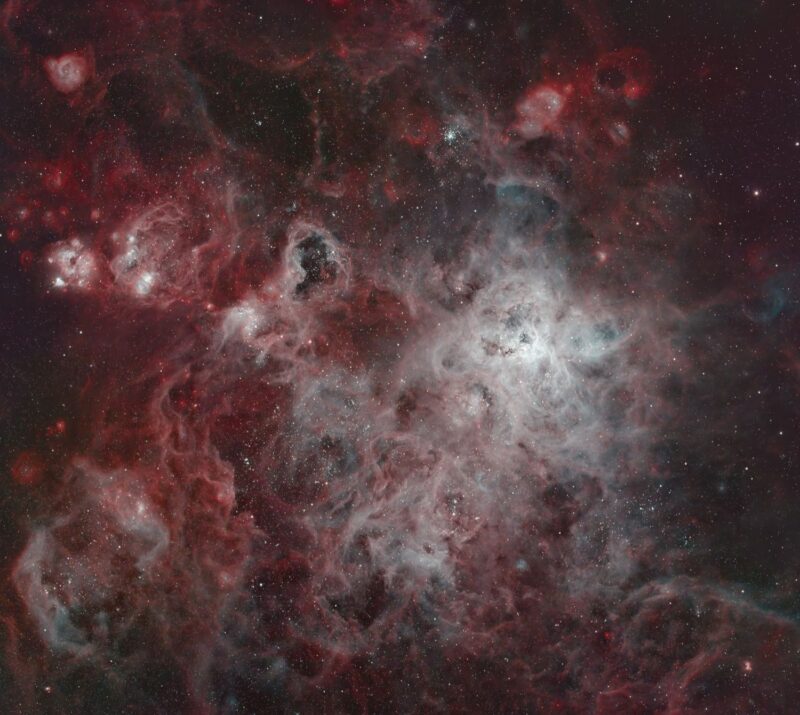
View at EarthSky Community Photos. | Bruno Pinto in Joinville, Santa Catarina, Brazil, captured the Tarantula nebula inside the Large Magellanic Cloud on December 26, 2025. Bruno wrote: “NGC 2070 (also known as Caldwell 103) is a large open cluster and candidate super star cluster. This cluster was discovered by French astronomer Nicolas-Louis de Lacaille in 1752. It is at the center of the Tarantula nebula and produces most of the energy that makes the latter’s gas and dust visible. Its central condensation is the star cluster R136, one of the most energetic star clusters known.” Thank you, Bruno! See more deep-sky photos from December 2025 below.
Stunning deep-sky photos from our community
The EarthSky community has many talented astrophotographers who capture stunning images of the deep sky. We gathered some of our favorite deep-sky photos we received in December 2025 for you to enjoy. Do you have some of your own images to share? You can submit them to us here. We would love to see them!
Deep-sky photos of diffuse nebulae
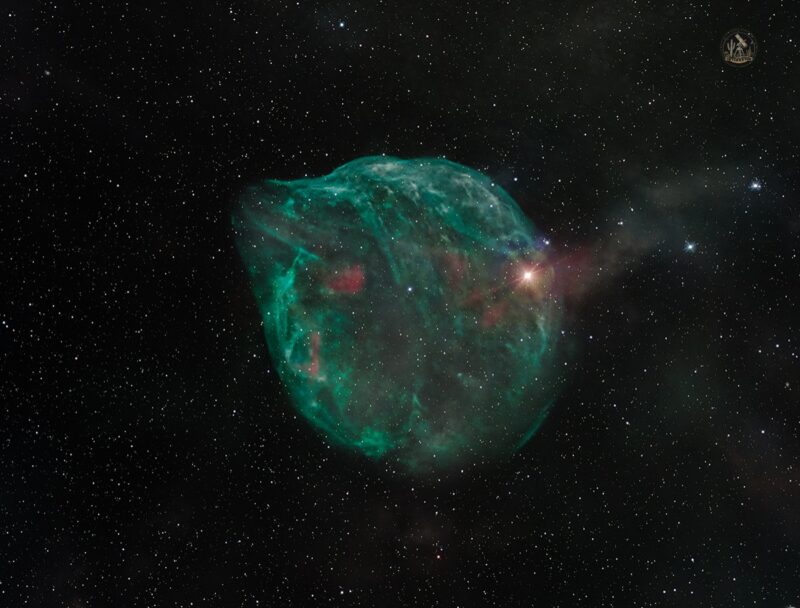
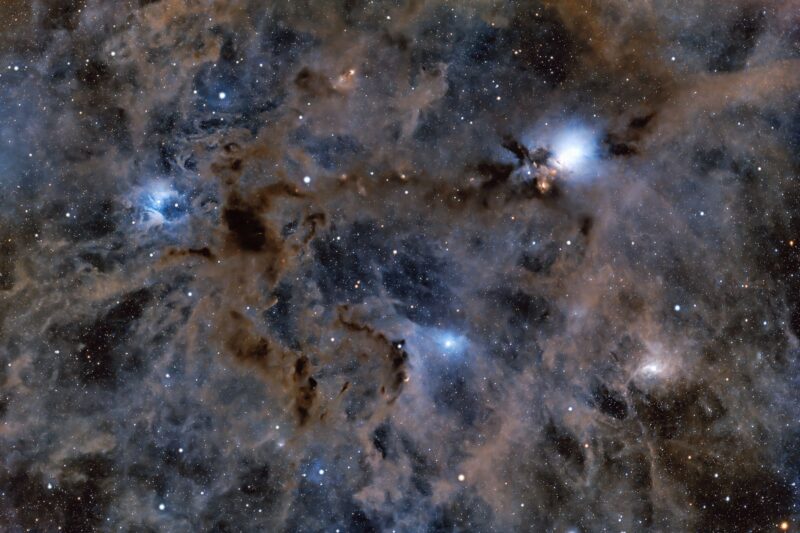
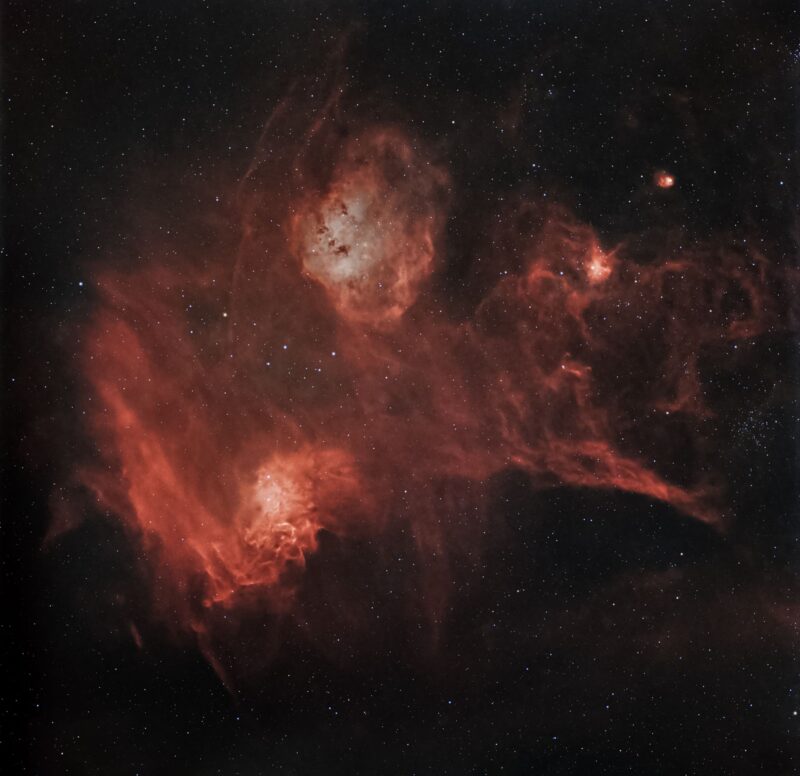
View at EarthSky Community Photos. | Jelieta Walinski at Desert Bloom Observatory in St. David, Arizona, captured the Dolphin Head nebula on December 22, 2025. Jelieta wrote: “Adrift in the winter constellation Canis Major, the Dolphin Head nebula (Sh2-308) glows softly in oxygen-rich green, its arc sculpted by stellar winds racing through interstellar space. This vast bubble, nearly 60 light-years across, was carved by the intense outflow from the massive Wolf-Rayet star EZ Canis Majoris, whose powerful winds collide with surrounding gas, causing it to fluoresce in narrow wavelengths of light, especially doubly ionized oxygen.” Thank you, Jelieta!View at EarthSky Community Photos. | Steven Bellavia in Smithfield, Virginia, captured nebulae at the intersection of the constellations of Perseus, Taurus and Aries on December 16, 2025. Steven wrote: “This is a very rich area of the sky. It contains the bright Embryo nebula, an active star-forming region 1,000 light-years distant. It also contains dark nebulae and more. Much of the area has interstellar molecular clouds – which is gas and dust – spanning a wide portion of space and the sky.” Thank you, Steven!View at EarthSky Community Photos. | Aquib Ali Ansari in Jaipur, Rajasthan, India, captured over 30 hours of data for these nebulae in December 2025. Aquib wrote: “This image captures a wide-field view of the constellation Auriga, featuring the glowing emission of the Flaming Star nebula and the Tadpole nebula, alongside the open star clusters Messier 36 and Messier 38. Located about 1,500 light-years from Earth, young, massive stars illuminate these nebulae. The image highlights the delicate balance between stars and gas in this active star-forming region of our galaxy.” Thank you, Aquib!
More deep-sky photos of diffuse nebulae
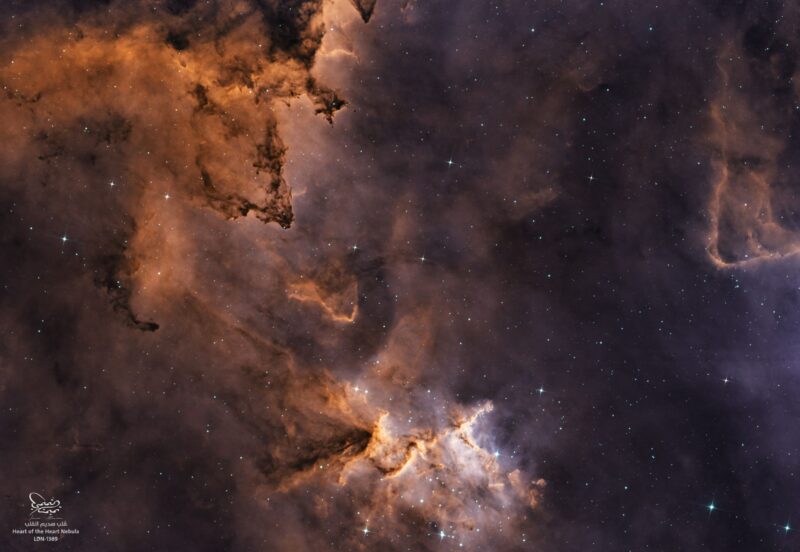
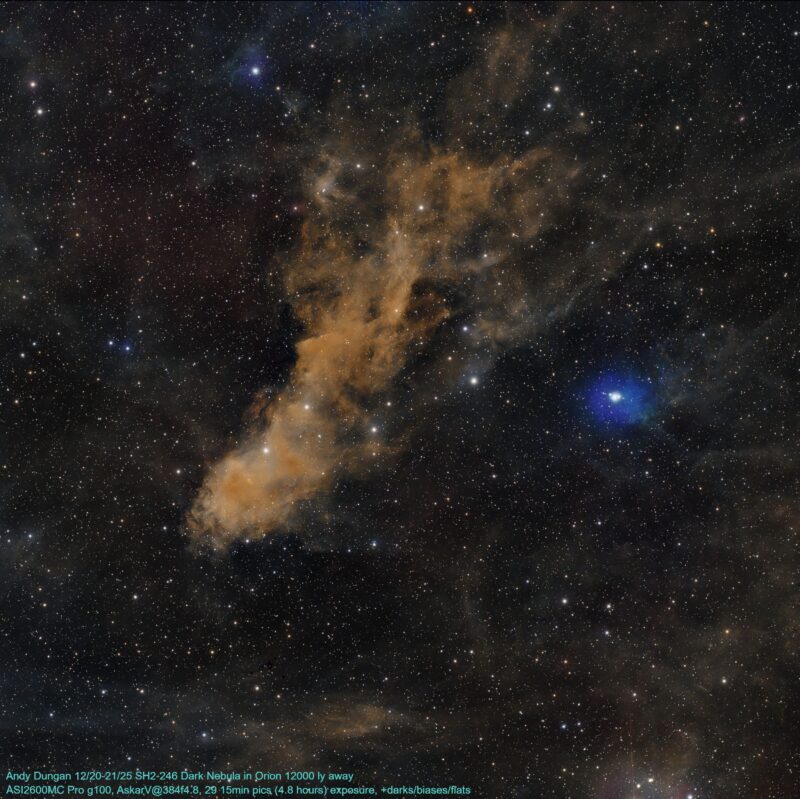
View at EarthSky Community Photos. | Tameem Altameemi in the United Arab Emirates captured the Heart nebula nebula in the constellation Cassiopeia on December 12, 2025. Tameem wrote: “Deep within the vast expanse of the Heart nebula, glowing clouds of gas and shadowy dust reveal a region shaped by both creation and destruction. In this image, delicate filaments of ionized gas intertwine with dark dust lanes, tracing the invisible forces at work. This view focuses on the inner core of the Heart nebula, a dynamic and ever-changing environment that offers a glimpse into the lifecycle of stars and the complex processes that shape our galaxy.” Thank you, Tameem!View at EarthSky Community Photos. | Andy Dungan near Cotopaxi, Colorado, captured the nebula Sh2-246, in the constellation Orion, on December 21, 2025. Sh 2-246 is visible in the direction of dark nebulae: Lynds dark cloud LDN 1562, which together with Lynds dark cloud LDN 1563, forms a local dust ridge. Andy wrote: “There are a whole lot of ‘dark’ nebula out there in space. I realized there was this large object in the upper left hand corner of Orion. So, I just took pics of it to see what was out there.” Thank you, Andy!
A butterfly and fox fur
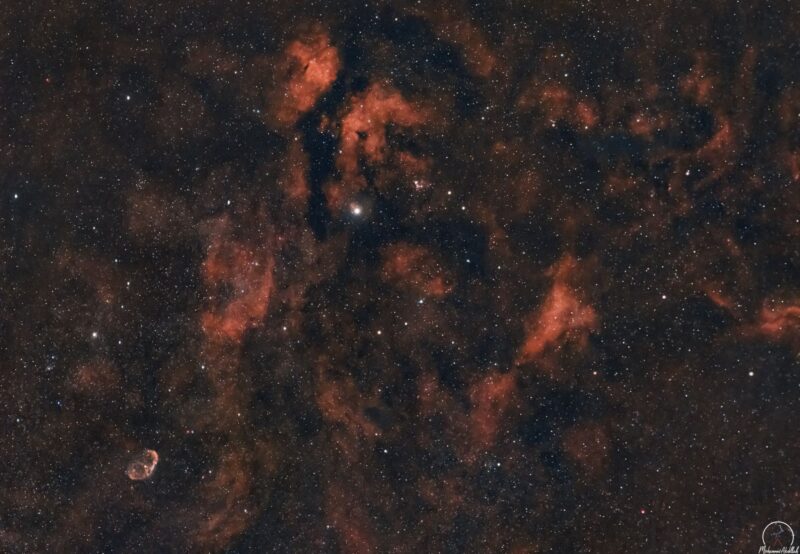
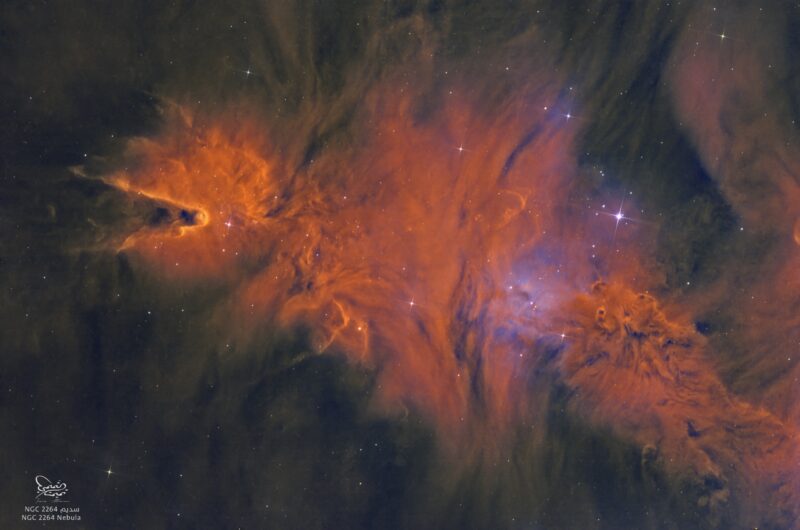
View at EarthSky Community Photos. | Mohammed Abdallah in Suez, Egypt, captured the nebulosity surrounding the star Sadr, in the constellation Cygnus, on December 14, 2025. Mohammed wrote: “This is my shot of the Sadr region and the distinct Butterfly nebula IC1318, which has many star-forming regions. You can see the Crescent nebula below, too!” Thank you, Mohammed!View at EarthSky Community Photos. | Tameem Altameemi in the United Arab Emirates captured the Fox Fur region of NGC 2264 on December 13, 2025. Tameem wrote: “What sculpts the flowing clouds of gas within NGC 2264? Radiation and stellar winds from young, massive stars play the leading role. Located about 2,500 light-years away in the constellation Monoceros, NGC 2264 is a complex star-forming region that includes glowing nebulae, dark dust lanes and newly born stars still embedded within their natal clouds. The emission region shown here is commonly known as the Fox Fur nebula, named for its filamentary, fur-like appearance.” Thank you, Tameem!
The Orion nebula and the Horsehead nebula
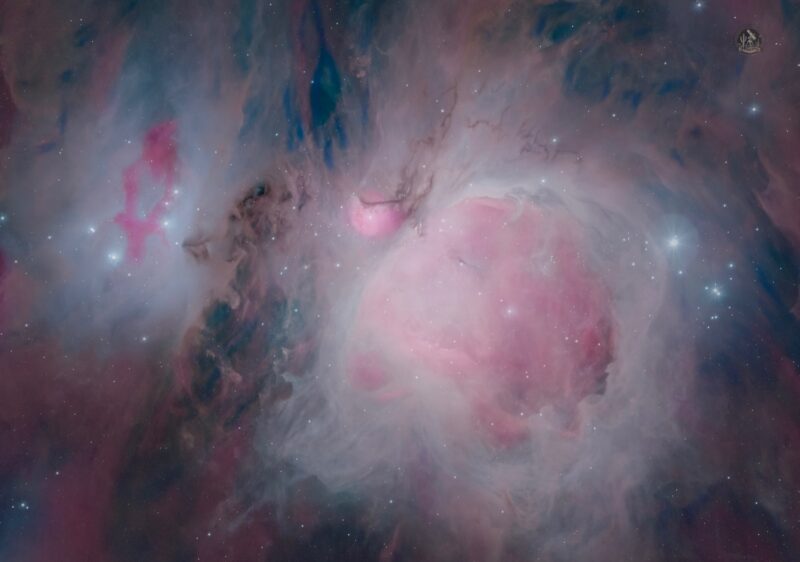
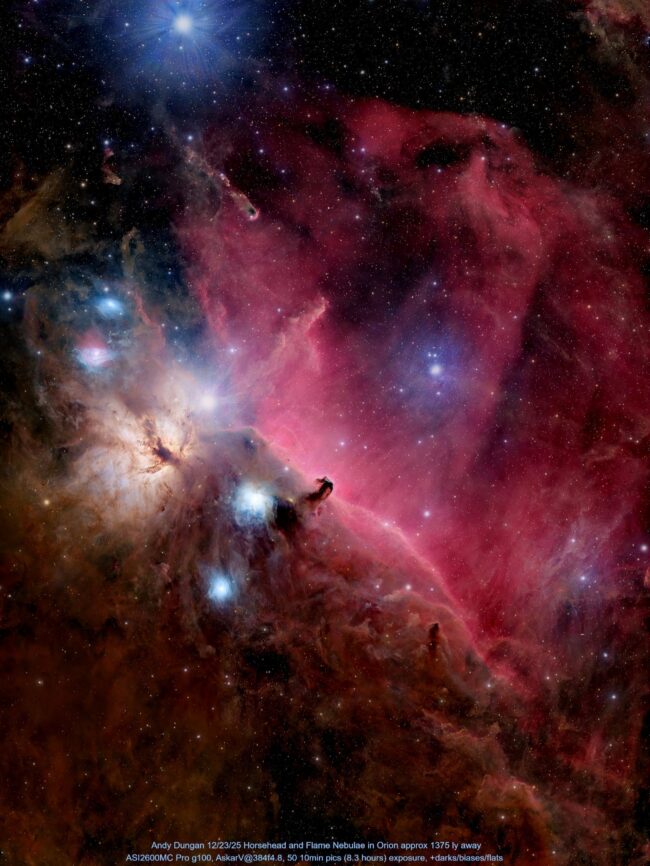
View at EarthSky Community Photos. | Jelieta Walinski at Desert Bloom Observatory in St. David, Arizona, captured the core of the Orion Nebula on December 2, 2025. Jelieta wrote: “This portrait of the Orion Nebula (M42) reveals what the universe shares only when darkness is allowed to remain unbroken. Across 161 exposures of 600 seconds, taken over 14 sleepless nights, 110 hours of ancient photons gathered here: each one a fragment of a star’s beginning.” Thank you, Jelieta!View at EarthSky Community Photos. | Andy Dungan near Cotopaxi, Colorado, captured the Horsehead nebula and the Flame nebula on December 23, 2025. Andy wrote: “Just to the left of the Orion Nebula these two nebulae make a spectacular show. The Flame is the lighter colored one. If you look closely and cock your head to the left I think you will see the flame. And no one would mistake the Horsehead in this pic. It’s about as iconic a piece of space as you can get.” Thank you, Andy!
The Pleiades star cluster
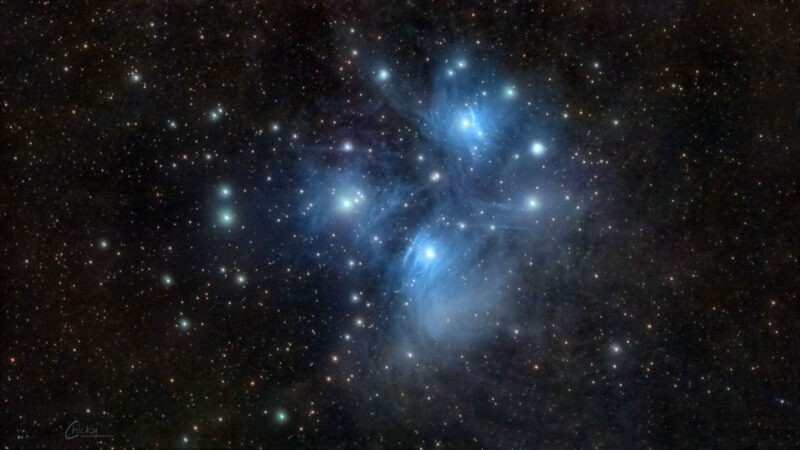
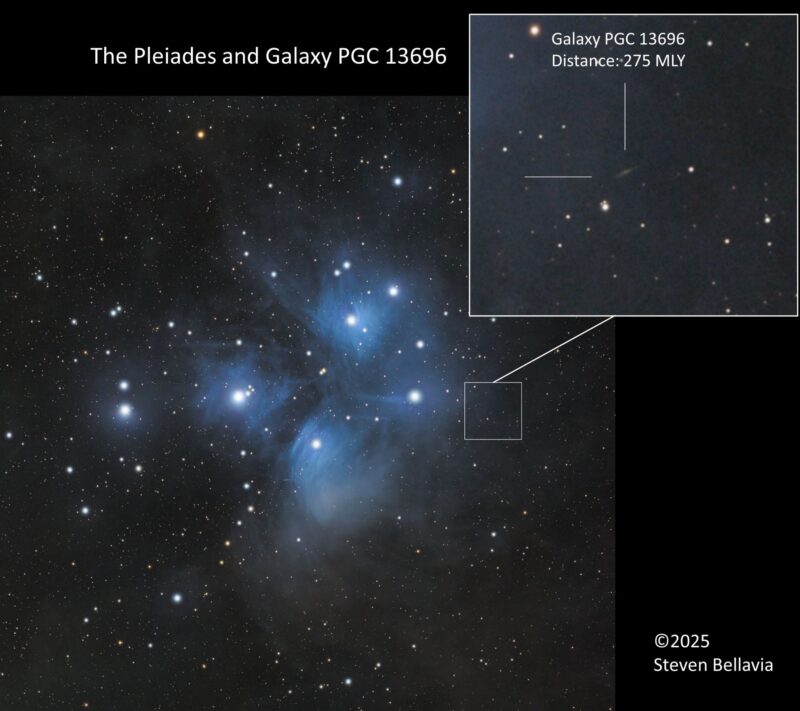
View at EarthSky Community Photos. | Chicky Leclair in Helotes, Texas, completed this long exposure of the Pleiades star cluster on December 25, 2025. Chicky wrote: “This image is a mega-stack combining data capture across 11 sessions: a total of 4,623 images equating to nearly 50 hours of data. Thanks to a great community of software script developers and YouTube educators who freely share their tools and knowledge. Definitely a keeper. Incredible results for a compact, smart telescope.” Thank you, Chicky!View at EarthSky Community Photos. | Steven Bellavia in Smithfield, Virginia, captured the Pleiades star cluster together with a distant galaxy on December 12, 2025. Steven wrote: “The Pleiades is an open star cluster in the constellation Taurus. At a distance of about 450 light-years, it is among the nearest star clusters to Earth. And hiding – incredibly further in the background – is galaxy PGC 13696, which is 275 million light-years away.” Thank you, Steven!
Bottom line: Enjoy this gallery of deep-sky photos for December 2025 from our EarthSky community. If you have a great photo to share, send it in, too. We love to see them!
View at EarthSky Community Photos. | Bruno Pinto in Joinville, Santa Catarina, Brazil, captured the Tarantula nebula inside the Large Magellanic Cloud on December 26, 2025. Bruno wrote: “NGC 2070 (also known as Caldwell 103) is a large open cluster and candidate super star cluster. This cluster was discovered by French astronomer Nicolas-Louis de Lacaille in 1752. It is at the center of the Tarantula nebula and produces most of the energy that makes the latter’s gas and dust visible. Its central condensation is the star cluster R136, one of the most energetic star clusters known.” Thank you, Bruno! See more deep-sky photos from December 2025 below.
Stunning deep-sky photos from our community
The EarthSky community has many talented astrophotographers who capture stunning images of the deep sky. We gathered some of our favorite deep-sky photos we received in December 2025 for you to enjoy. Do you have some of your own images to share? You can submit them to us here. We would love to see them!
Deep-sky photos of diffuse nebulae
View at EarthSky Community Photos. | Jelieta Walinski at Desert Bloom Observatory in St. David, Arizona, captured the Dolphin Head nebula on December 22, 2025. Jelieta wrote: “Adrift in the winter constellation Canis Major, the Dolphin Head nebula (Sh2-308) glows softly in oxygen-rich green, its arc sculpted by stellar winds racing through interstellar space. This vast bubble, nearly 60 light-years across, was carved by the intense outflow from the massive Wolf-Rayet star EZ Canis Majoris, whose powerful winds collide with surrounding gas, causing it to fluoresce in narrow wavelengths of light, especially doubly ionized oxygen.” Thank you, Jelieta!View at EarthSky Community Photos. | Steven Bellavia in Smithfield, Virginia, captured nebulae at the intersection of the constellations of Perseus, Taurus and Aries on December 16, 2025. Steven wrote: “This is a very rich area of the sky. It contains the bright Embryo nebula, an active star-forming region 1,000 light-years distant. It also contains dark nebulae and more. Much of the area has interstellar molecular clouds – which is gas and dust – spanning a wide portion of space and the sky.” Thank you, Steven!View at EarthSky Community Photos. | Aquib Ali Ansari in Jaipur, Rajasthan, India, captured over 30 hours of data for these nebulae in December 2025. Aquib wrote: “This image captures a wide-field view of the constellation Auriga, featuring the glowing emission of the Flaming Star nebula and the Tadpole nebula, alongside the open star clusters Messier 36 and Messier 38. Located about 1,500 light-years from Earth, young, massive stars illuminate these nebulae. The image highlights the delicate balance between stars and gas in this active star-forming region of our galaxy.” Thank you, Aquib!
More deep-sky photos of diffuse nebulae
View at EarthSky Community Photos. | Tameem Altameemi in the United Arab Emirates captured the Heart nebula nebula in the constellation Cassiopeia on December 12, 2025. Tameem wrote: “Deep within the vast expanse of the Heart nebula, glowing clouds of gas and shadowy dust reveal a region shaped by both creation and destruction. In this image, delicate filaments of ionized gas intertwine with dark dust lanes, tracing the invisible forces at work. This view focuses on the inner core of the Heart nebula, a dynamic and ever-changing environment that offers a glimpse into the lifecycle of stars and the complex processes that shape our galaxy.” Thank you, Tameem!View at EarthSky Community Photos. | Andy Dungan near Cotopaxi, Colorado, captured the nebula Sh2-246, in the constellation Orion, on December 21, 2025. Sh 2-246 is visible in the direction of dark nebulae: Lynds dark cloud LDN 1562, which together with Lynds dark cloud LDN 1563, forms a local dust ridge. Andy wrote: “There are a whole lot of ‘dark’ nebula out there in space. I realized there was this large object in the upper left hand corner of Orion. So, I just took pics of it to see what was out there.” Thank you, Andy!
A butterfly and fox fur
View at EarthSky Community Photos. | Mohammed Abdallah in Suez, Egypt, captured the nebulosity surrounding the star Sadr, in the constellation Cygnus, on December 14, 2025. Mohammed wrote: “This is my shot of the Sadr region and the distinct Butterfly nebula IC1318, which has many star-forming regions. You can see the Crescent nebula below, too!” Thank you, Mohammed!View at EarthSky Community Photos. | Tameem Altameemi in the United Arab Emirates captured the Fox Fur region of NGC 2264 on December 13, 2025. Tameem wrote: “What sculpts the flowing clouds of gas within NGC 2264? Radiation and stellar winds from young, massive stars play the leading role. Located about 2,500 light-years away in the constellation Monoceros, NGC 2264 is a complex star-forming region that includes glowing nebulae, dark dust lanes and newly born stars still embedded within their natal clouds. The emission region shown here is commonly known as the Fox Fur nebula, named for its filamentary, fur-like appearance.” Thank you, Tameem!
The Orion nebula and the Horsehead nebula
View at EarthSky Community Photos. | Jelieta Walinski at Desert Bloom Observatory in St. David, Arizona, captured the core of the Orion Nebula on December 2, 2025. Jelieta wrote: “This portrait of the Orion Nebula (M42) reveals what the universe shares only when darkness is allowed to remain unbroken. Across 161 exposures of 600 seconds, taken over 14 sleepless nights, 110 hours of ancient photons gathered here: each one a fragment of a star’s beginning.” Thank you, Jelieta!View at EarthSky Community Photos. | Andy Dungan near Cotopaxi, Colorado, captured the Horsehead nebula and the Flame nebula on December 23, 2025. Andy wrote: “Just to the left of the Orion Nebula these two nebulae make a spectacular show. The Flame is the lighter colored one. If you look closely and cock your head to the left I think you will see the flame. And no one would mistake the Horsehead in this pic. It’s about as iconic a piece of space as you can get.” Thank you, Andy!
The Pleiades star cluster
View at EarthSky Community Photos. | Chicky Leclair in Helotes, Texas, completed this long exposure of the Pleiades star cluster on December 25, 2025. Chicky wrote: “This image is a mega-stack combining data capture across 11 sessions: a total of 4,623 images equating to nearly 50 hours of data. Thanks to a great community of software script developers and YouTube educators who freely share their tools and knowledge. Definitely a keeper. Incredible results for a compact, smart telescope.” Thank you, Chicky!View at EarthSky Community Photos. | Steven Bellavia in Smithfield, Virginia, captured the Pleiades star cluster together with a distant galaxy on December 12, 2025. Steven wrote: “The Pleiades is an open star cluster in the constellation Taurus. At a distance of about 450 light-years, it is among the nearest star clusters to Earth. And hiding – incredibly further in the background – is galaxy PGC 13696, which is 275 million light-years away.” Thank you, Steven!
Bottom line: Enjoy this gallery of deep-sky photos for December 2025 from our EarthSky community. If you have a great photo to share, send it in, too. We love to see them!


Aucun commentaire:
Enregistrer un commentaire