
Watch this video about the peculiar kiwi bird.
Science matters. Wonder matters. You matter. Join our 2025 Donation Campaign today.
Few creatures spark as much curiosity as the kiwi, a bird that defies almost every expectation we might have about birds. It doesn’t fly, has tiny wings, lays huge eggs and only lives in one very specific corner of the planet: New Zealand. While it may seem modest or even clumsy, the kiwi is a national symbol and living legend. With its secretive behavior and nocturnal habits, it remains an enigma to many, even within its homeland.
But behind its cute and quirky appearance lies a story of adaptation, threat and conservation efforts that has captured the attention of scientists, environmentalists and citizens alike. What makes this bird so special that so many people fight for its survival?
What does a kiwi look like?
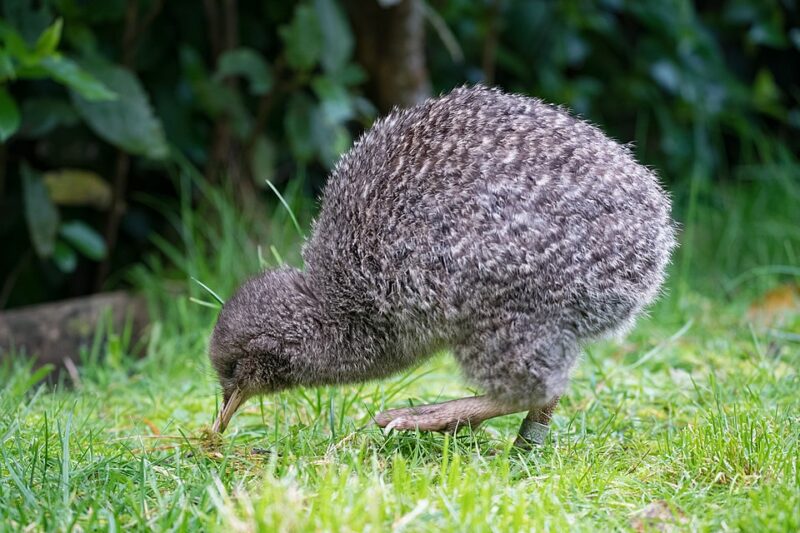
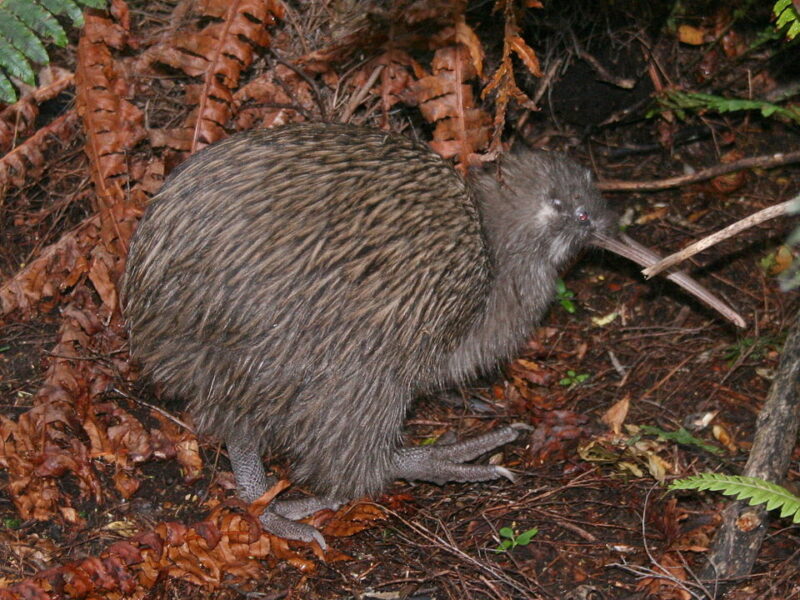
At first glance, the kiwi doesn’t look much like a bird. With a round body covered in soft, hair-like feathers, it resembles a mammal more than a bird. It stands between 10 and 18 inches (25 and 46 cm) tall, depending on the species, and can weigh anywhere from 2.2 to more than 6.6 pounds (1 to 3-plus kg). Its wings are nearly invisible and useless for flight, making it one of the few truly flightless birds.
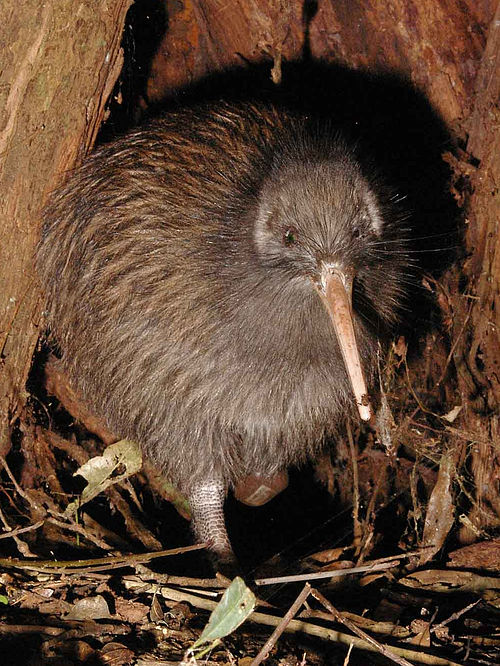
One of its most distinctive features is its long, slender, slightly downward-curving bill, with nostrils located at the tip. That’s a very rare trait among birds. This design allows it to sniff out insects and worms underground with great precision, capturing them without needing to see them.
Legs and feathers
The kiwi has short but very strong legs. In fact, they are adapted for walking long distances through dense, damp terrain. Each foot has four toes with sharp claws used for digging up insects and worms and for creating burrows where it sleeps during the day.
Surprisingly, despite the animal’s small size, its legs can account for up to 1/3 of its body weight. And it’s not completely defenseless. Although it can’t fly, these muscular legs let it move quickly along the ground and even deliver kicks to defend itself if needed.
Its plumage is also quite unique. Unlike other birds, kiwi feathers are soft and shaggy, resembling hair more than traditional feathers. This coat acts as camouflage in forest vegetation and also provides insulation against the cold. The color is usually grayish brown, helping it blend in with its surroundings. Kiwis live mainly in dense forests, wet jungles, mountainous areas and scrublands.
What makes the kiwi special?
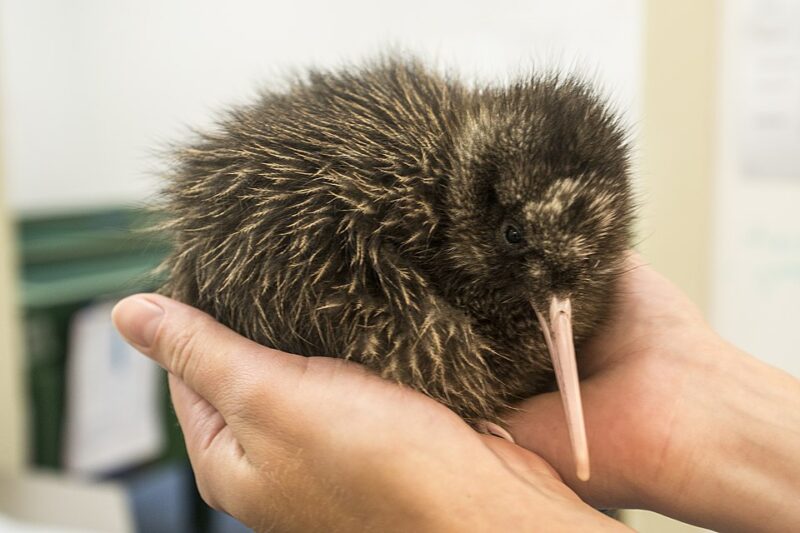
The kiwi has a number of unique abilities that set it apart from other birds. Despite its relatively small size, it lays an egg that can weigh up to 20% of the bird’s body weight. It’s one of the largest egg-to-body ratios in the animal kingdom. This means the chicks are born developed and independent, with full feathers and the ability to forage for food within days.

Another rarity is its keen sense of smell – uncommon in birds – which allows it to detect prey underground without seeing it. It is also nocturnal, helping it avoid some predators and reduce competition for food.
In terms of behavior, kiwis are territorial and often live in pairs for many years, sometimes for life. They communicate with each other through guttural sounds and whistles that echo through the forest at night. This reserved character, combined with its unique biology, has turned the kiwi into a near-mythical creature, both for the Maori people and for nature lovers worldwide.
Protecting kiwis for future generations
The kiwi is currently endangered. Of the five recognized species, several are at risk of extinction due to habitat loss, forest fragmentation and the presence of predators such as cats, ferrets, stoats and dogs. These animals didn’t exist in New Zealand before European settlers arrived and introduced them. And since kiwis didn’t evolve alongside them, they lack proper defense mechanisms.
To protect them, the New Zealand government and various organizations have launched ambitious conservation programs, including captive breeding, releasing birds into protected areas and intensive management of invasive species.
Stewart Island brown kiwi (Tokoeka) feeding in manuka at Mason Bay, Stewart Island (Rakiura) New Zealand. Video via Mosborne01/ Wikipedia (CC BY-SA 3.0).
Bottom line: The kiwi is probably the bird that least resembles a bird: it has tiny wings, doesn’t fly and looks like it has hair instead of feathers.
Read more: Australian lyrebirds have a hidden skill for farming
Read more: Pelicans are the masters of air, land and water
The post Kiwi: The bird that can’t fly and walks at night first appeared on EarthSky.
from EarthSky https://ift.tt/F8fjRQt
Watch this video about the peculiar kiwi bird.
Science matters. Wonder matters. You matter. Join our 2025 Donation Campaign today.
Few creatures spark as much curiosity as the kiwi, a bird that defies almost every expectation we might have about birds. It doesn’t fly, has tiny wings, lays huge eggs and only lives in one very specific corner of the planet: New Zealand. While it may seem modest or even clumsy, the kiwi is a national symbol and living legend. With its secretive behavior and nocturnal habits, it remains an enigma to many, even within its homeland.
But behind its cute and quirky appearance lies a story of adaptation, threat and conservation efforts that has captured the attention of scientists, environmentalists and citizens alike. What makes this bird so special that so many people fight for its survival?
What does a kiwi look like?
At first glance, the kiwi doesn’t look much like a bird. With a round body covered in soft, hair-like feathers, it resembles a mammal more than a bird. It stands between 10 and 18 inches (25 and 46 cm) tall, depending on the species, and can weigh anywhere from 2.2 to more than 6.6 pounds (1 to 3-plus kg). Its wings are nearly invisible and useless for flight, making it one of the few truly flightless birds.
One of its most distinctive features is its long, slender, slightly downward-curving bill, with nostrils located at the tip. That’s a very rare trait among birds. This design allows it to sniff out insects and worms underground with great precision, capturing them without needing to see them.
Legs and feathers
The kiwi has short but very strong legs. In fact, they are adapted for walking long distances through dense, damp terrain. Each foot has four toes with sharp claws used for digging up insects and worms and for creating burrows where it sleeps during the day.
Surprisingly, despite the animal’s small size, its legs can account for up to 1/3 of its body weight. And it’s not completely defenseless. Although it can’t fly, these muscular legs let it move quickly along the ground and even deliver kicks to defend itself if needed.
Its plumage is also quite unique. Unlike other birds, kiwi feathers are soft and shaggy, resembling hair more than traditional feathers. This coat acts as camouflage in forest vegetation and also provides insulation against the cold. The color is usually grayish brown, helping it blend in with its surroundings. Kiwis live mainly in dense forests, wet jungles, mountainous areas and scrublands.
What makes the kiwi special?
The kiwi has a number of unique abilities that set it apart from other birds. Despite its relatively small size, it lays an egg that can weigh up to 20% of the bird’s body weight. It’s one of the largest egg-to-body ratios in the animal kingdom. This means the chicks are born developed and independent, with full feathers and the ability to forage for food within days.
Another rarity is its keen sense of smell – uncommon in birds – which allows it to detect prey underground without seeing it. It is also nocturnal, helping it avoid some predators and reduce competition for food.
In terms of behavior, kiwis are territorial and often live in pairs for many years, sometimes for life. They communicate with each other through guttural sounds and whistles that echo through the forest at night. This reserved character, combined with its unique biology, has turned the kiwi into a near-mythical creature, both for the Maori people and for nature lovers worldwide.
Protecting kiwis for future generations
The kiwi is currently endangered. Of the five recognized species, several are at risk of extinction due to habitat loss, forest fragmentation and the presence of predators such as cats, ferrets, stoats and dogs. These animals didn’t exist in New Zealand before European settlers arrived and introduced them. And since kiwis didn’t evolve alongside them, they lack proper defense mechanisms.
To protect them, the New Zealand government and various organizations have launched ambitious conservation programs, including captive breeding, releasing birds into protected areas and intensive management of invasive species.
Stewart Island brown kiwi (Tokoeka) feeding in manuka at Mason Bay, Stewart Island (Rakiura) New Zealand. Video via Mosborne01/ Wikipedia (CC BY-SA 3.0).
Bottom line: The kiwi is probably the bird that least resembles a bird: it has tiny wings, doesn’t fly and looks like it has hair instead of feathers.
Read more: Australian lyrebirds have a hidden skill for farming
Read more: Pelicans are the masters of air, land and water
The post Kiwi: The bird that can’t fly and walks at night first appeared on EarthSky.
from EarthSky https://ift.tt/F8fjRQt

Aucun commentaire:
Enregistrer un commentaire