
Lost moon Chrysalis transformed into rings
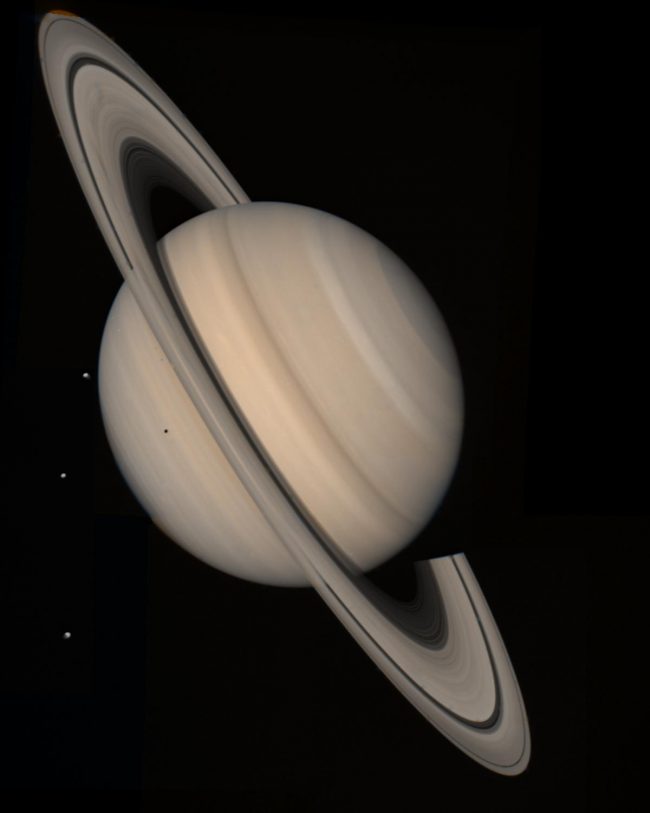
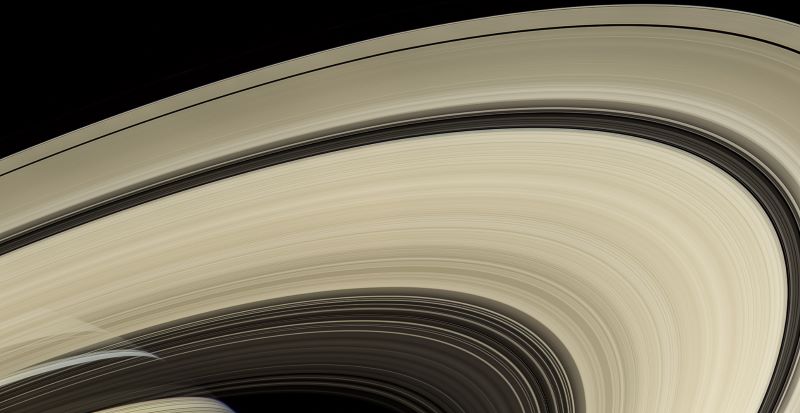
Saturn’s breathtaking rings are the oddball in the outer solar system. All the gas giant planets in our solar system have rings, but the others are just a whisper. So, Saturn’s massive, majestic rings along with the steep tilt of the planet’s rotation have had scientists wondering. On September 15, 2022, scientists at UC Berkeley announced that they believe the rings and tilt are linked. They said that some 160 million years ago, a large moon of Saturn tore apart to become the planet’s rings. They dubbed the lost moon Chrysalis for its power to transform from a moon into glorious rings, just as a chrysalis transforms into a beautiful butterfly.
The team of scientists, led by Jack Wisdom of MIT, published their study this week in the peer-reviewed journal Science.
The rings are younger than the planet
In 2019, a team of scientists concluded that Saturn’s rings are relatively recent compared to the planet itself. The planet formed with the rest of the solar system about 4.5 billion years ago. But they said the rings were a newer feature, having formed just 100 million years ago or less.
The new study proposes that Saturn’s ring system comes from a moon that was once about the size of Iapetus, the 3rd largest moon of Saturn. They theorized that this moon got too close to its parent planet. Then, Saturn swallowed 99% of it while the rest became the rings. Wisdom explained:
The tilt is too large to be a result of known formation processes in a protoplanetary disk or from later, large collisions. A variety of explanations have been offered, but none is totally convincing. The cool thing is that the previously unexplained young age of the rings is naturally explained in our scenario.
Saturn and Neptune’s connection
Though Saturn and Neptune are a billion miles apart, they still had a connection. The tilt of Saturn’s axis precesses – or wobbles like a toy top – at almost the same rate as the precession of the orbit of Neptune. The term for this interaction is a resonance.
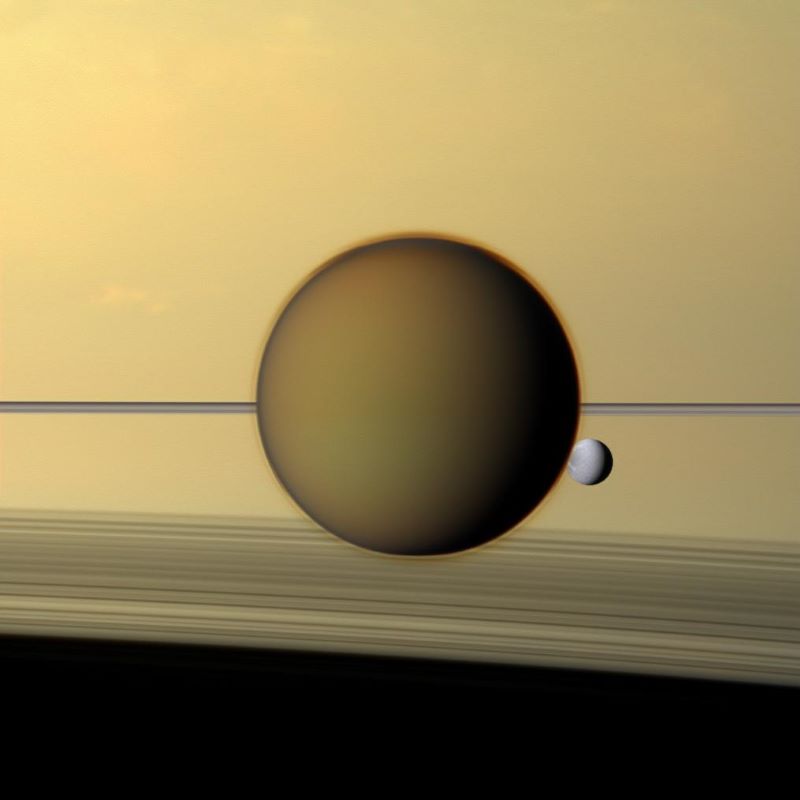
So, for billions of years, the resonance between Neptune and Saturn caused Saturn’s tilt. But Titan, Saturn’s largest moon, is drifting outward from the planet. The study said that this movement destabilized the Saturnian system, which caused it to lose a moon and fall out of resonance. That lost moon became the rings we see today.
Saturn’s lost moon Chrysalis
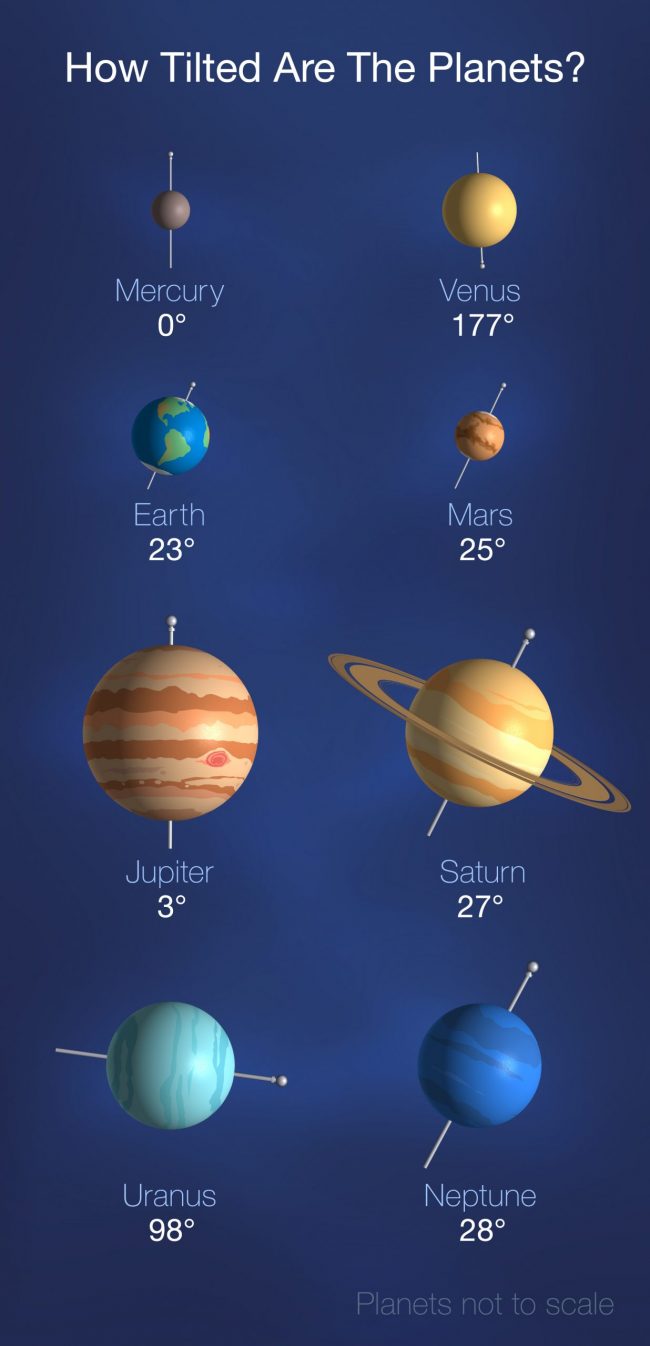
Some solar system objects, such as Mercury and Jupiter, have almost no axial tilt. Other objects, including Earth and Saturn, have large axial tilts. Earth tilts 23.5 degrees from upright, while Saturn’s tilt is 26.7 degrees. One reason for Saturn’s large tilt may be due to its precession being locked in a resonance with the precession of the orbit of Neptune. Scientists said this resonance would have turned a slight tilt into a big tilt.
For the new study, Wisdom needed to more precisely know Saturn’s angular momentum. A higher angular momentum (a relation of its mass, velocity and radius) would mean Saturn would be better able to resist the influence of the sun or other planets. So he asked Burkhard Militzer of UC Berkeley for help. Militzer said about Saturn’s angular momentum:
If it’s very large, then the system is in resonance, and Neptune can do the job: We understand why the planet formed spinning vertically, and Neptune has tilted it over time. If, on the other hand, the angular momentum is small, then the whole thing falls apart, and you have to come up with some other theory why Saturn would spin on its side.
Militzer’s team was able to use measurements from the Cassini mission to provide Saturn’s angular momentum. They were surprised to see that the angular momentum was just a tiny bit too small for the two planets to be in resonance today. However, calculations showed that Saturn would have been in resonance if it had once had an additional moon.
Breaking up is hard to do
After billions of years of being in resonance with Neptune, how did Saturn break it off? Computer simulations showed the most likely scenario is that at some point Titan got in resonance with Chrysalis, destabilizing its orbit. Eventually, Chrysalis moved too close to Saturn, and the planet’s gravity tore it apart. The remainder of Chrysalis that didn’t fall into Saturn became the ring system. Based on the speed Titan is moving away from Saturn, the scientists estimate this event happened between 100 and 200 million years ago, which would match the current estimate for the age of the rings.
Militzer explained how this changed Saturn’s connection to Neptune:
You’re losing this whole moon, and then you can have one less handle to jerk Saturn around.
He also explained how it changed Saturn’s axial tilt:
The rapid migration of Titan gives a new possibility for explaining the tilt of Saturn. The formula for the rate of precession of the spin axis depends on the presence of the satellites. So, the system could have escaped the resonance if Saturn used to have an additional satellite that was lost, changing the rate of precession enough to escape the resonance, but leaving the system close to the resonance.
More precise measurements in the future will help them confirm their theory. Wisdom said:
It’s a pretty good story, but like any other result, it will have to be examined by others. But it seems that this lost satellite was just a chrysalis, waiting to have its instability.
Bottom line: A new study said that Saturn’s lost moon Chrysalis had a close encounter with its home planet, tearing it apart and forming the ring system we see today.
Read more: Saturn’s rings: Top tips for seeing
Read more: What’s the weather like on Titan?
The post How Saturn’s lost moon Chrysalis became its rings first appeared on EarthSky.
from EarthSky https://ift.tt/Y4jR8DH
Lost moon Chrysalis transformed into rings
Saturn’s breathtaking rings are the oddball in the outer solar system. All the gas giant planets in our solar system have rings, but the others are just a whisper. So, Saturn’s massive, majestic rings along with the steep tilt of the planet’s rotation have had scientists wondering. On September 15, 2022, scientists at UC Berkeley announced that they believe the rings and tilt are linked. They said that some 160 million years ago, a large moon of Saturn tore apart to become the planet’s rings. They dubbed the lost moon Chrysalis for its power to transform from a moon into glorious rings, just as a chrysalis transforms into a beautiful butterfly.
The team of scientists, led by Jack Wisdom of MIT, published their study this week in the peer-reviewed journal Science.
The rings are younger than the planet
In 2019, a team of scientists concluded that Saturn’s rings are relatively recent compared to the planet itself. The planet formed with the rest of the solar system about 4.5 billion years ago. But they said the rings were a newer feature, having formed just 100 million years ago or less.
The new study proposes that Saturn’s ring system comes from a moon that was once about the size of Iapetus, the 3rd largest moon of Saturn. They theorized that this moon got too close to its parent planet. Then, Saturn swallowed 99% of it while the rest became the rings. Wisdom explained:
The tilt is too large to be a result of known formation processes in a protoplanetary disk or from later, large collisions. A variety of explanations have been offered, but none is totally convincing. The cool thing is that the previously unexplained young age of the rings is naturally explained in our scenario.
Saturn and Neptune’s connection
Though Saturn and Neptune are a billion miles apart, they still had a connection. The tilt of Saturn’s axis precesses – or wobbles like a toy top – at almost the same rate as the precession of the orbit of Neptune. The term for this interaction is a resonance.
So, for billions of years, the resonance between Neptune and Saturn caused Saturn’s tilt. But Titan, Saturn’s largest moon, is drifting outward from the planet. The study said that this movement destabilized the Saturnian system, which caused it to lose a moon and fall out of resonance. That lost moon became the rings we see today.
Saturn’s lost moon Chrysalis
Some solar system objects, such as Mercury and Jupiter, have almost no axial tilt. Other objects, including Earth and Saturn, have large axial tilts. Earth tilts 23.5 degrees from upright, while Saturn’s tilt is 26.7 degrees. One reason for Saturn’s large tilt may be due to its precession being locked in a resonance with the precession of the orbit of Neptune. Scientists said this resonance would have turned a slight tilt into a big tilt.
For the new study, Wisdom needed to more precisely know Saturn’s angular momentum. A higher angular momentum (a relation of its mass, velocity and radius) would mean Saturn would be better able to resist the influence of the sun or other planets. So he asked Burkhard Militzer of UC Berkeley for help. Militzer said about Saturn’s angular momentum:
If it’s very large, then the system is in resonance, and Neptune can do the job: We understand why the planet formed spinning vertically, and Neptune has tilted it over time. If, on the other hand, the angular momentum is small, then the whole thing falls apart, and you have to come up with some other theory why Saturn would spin on its side.
Militzer’s team was able to use measurements from the Cassini mission to provide Saturn’s angular momentum. They were surprised to see that the angular momentum was just a tiny bit too small for the two planets to be in resonance today. However, calculations showed that Saturn would have been in resonance if it had once had an additional moon.
Breaking up is hard to do
After billions of years of being in resonance with Neptune, how did Saturn break it off? Computer simulations showed the most likely scenario is that at some point Titan got in resonance with Chrysalis, destabilizing its orbit. Eventually, Chrysalis moved too close to Saturn, and the planet’s gravity tore it apart. The remainder of Chrysalis that didn’t fall into Saturn became the ring system. Based on the speed Titan is moving away from Saturn, the scientists estimate this event happened between 100 and 200 million years ago, which would match the current estimate for the age of the rings.
Militzer explained how this changed Saturn’s connection to Neptune:
You’re losing this whole moon, and then you can have one less handle to jerk Saturn around.
He also explained how it changed Saturn’s axial tilt:
The rapid migration of Titan gives a new possibility for explaining the tilt of Saturn. The formula for the rate of precession of the spin axis depends on the presence of the satellites. So, the system could have escaped the resonance if Saturn used to have an additional satellite that was lost, changing the rate of precession enough to escape the resonance, but leaving the system close to the resonance.
More precise measurements in the future will help them confirm their theory. Wisdom said:
It’s a pretty good story, but like any other result, it will have to be examined by others. But it seems that this lost satellite was just a chrysalis, waiting to have its instability.
Bottom line: A new study said that Saturn’s lost moon Chrysalis had a close encounter with its home planet, tearing it apart and forming the ring system we see today.
Read more: Saturn’s rings: Top tips for seeing
Read more: What’s the weather like on Titan?
The post How Saturn’s lost moon Chrysalis became its rings first appeared on EarthSky.
from EarthSky https://ift.tt/Y4jR8DH

Aucun commentaire:
Enregistrer un commentaire