
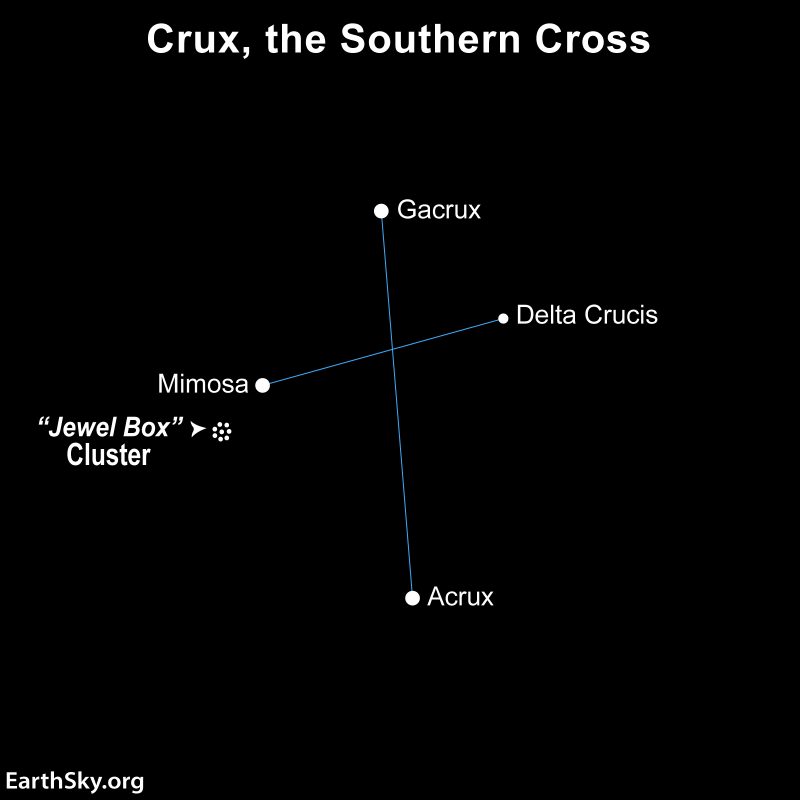
If you’re in the Southern Hemisphere, Crux the Southern Cross is one of the easiest constellations you can identify. It’s also one of the most famous! And it’s a reliable marker to the south celestial pole, the point around which the entire southern sky turns.
Crux consists of four relatively bright stars, close to one another and suggestive of a cross. This constellation is circumpolar, staying above the horizon all year round for observers at and south of 34 degrees south latitude. So, for example:
- At Sydney, Australia, (~34° S), most or all of Crux is circumpolar.
- At Buenos Aires, Argentina, (~35° S), it’s comfortably circumpolar.
- At Cape Town, South Africa, (~34° S), same story.
- Farther north – say at the equator – Crux rises and sets seasonally.
- North of about 27 degrees north latitude, Crux never rises at all.
In many ways, Crux is almost the mirror opposite of northern circumpolar constellations like Ursa Major the Greater Bear, with its famous Big Dipper asterism. Like the Big Dipper for northern observers, the Southern Cross is the southern sky’s iconic “always there” pattern.
How to see it from the Southern Hemisphere
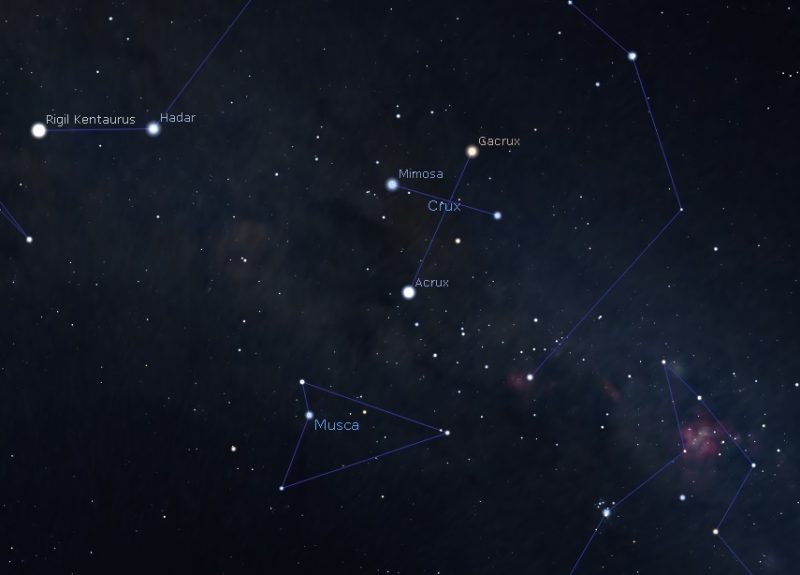
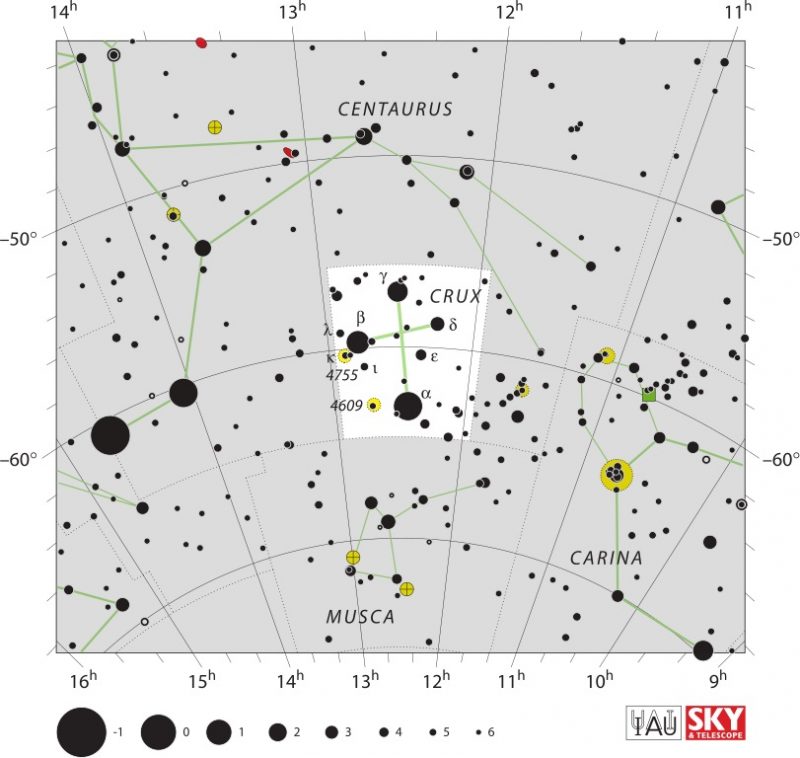
Crux lies between the constellations Centaurus the Centaur and Musca the Fly. You can locate it simply by looking for four bright stars close together. The stars are less than 5 degrees apart. Five degrees is about the width of your three middle fingers held at arm’s length.
The compact size of Crux makes it the smallest of all the 88 constellations.
And Crux does resemble a cross. But it could also be considered kite-shaped.
Want an exact view from your location? Try Stellarium
How to see it from the Northern Hemisphere
Seeing the Southern Cross from the Northern Hemisphere is a matter of your location + timing + atmosphere + horizon quality.
First, your location. Know what your latitude allows. Crux sits around -60 degrees declination, so:
- At the equator (0 degrees) it can rise to ~30° high. That’s easy to see if the sky is clear.
- At 26 degrees north latitude it barely scrapes the sky at about 4 degrees above the southern horizon.
- At ~27 degrees north latitude and northward it never rises above the horizon.
So at 26 degrees north latitude you are in the extreme edge zone. You can’t just look up and observe the Southern Cross. Instead, you must hunt for it at the most distorted layer of atmosphere above your southern horizon. And you must be hunting at the exact right time.
More Northern Hemisphere viewing tips
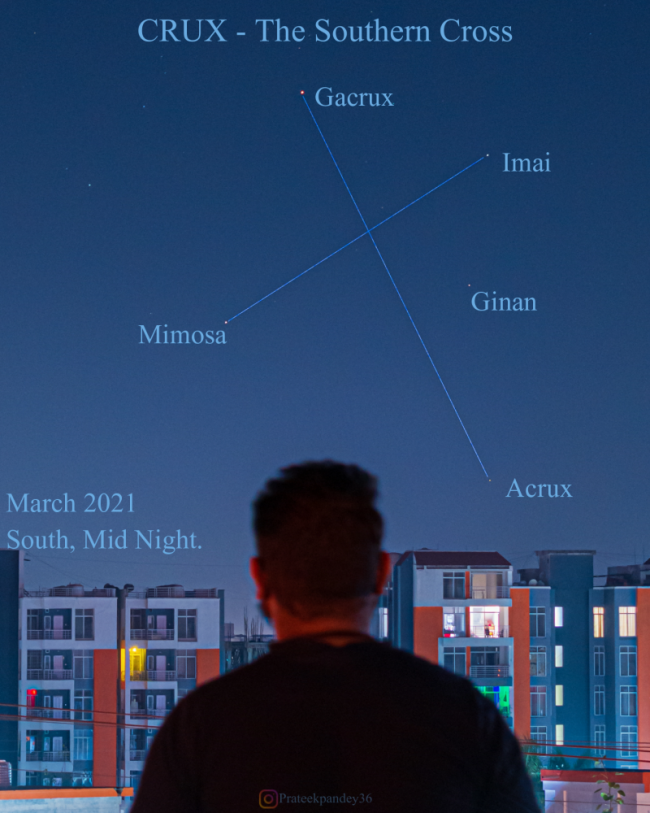
Consider the timing. May is a good time to find Crux in the evening sky from the Northern Hemisphere. It’s visible in other months, too, but not at such a convenient time. In March, you have to wait until about 1 a.m. your local time to catch the Southern Cross at its highest elevation. In December and January, you have to catch it before dawn.
No matter the hour or date, Crux climbs to its highest point – crosses your sky’s meridian – in the sky when it’s due south. It’s easy to visualize a cross within this pattern of stars, because the pattern stands upright over your southern horizon.
And speaking of your horizon … To see the Southern Cross from anywhere in the Northern Hemisphere, you’ll want a clear, unobstructed southern horizon. A dark sky will be best. Visit EarthSky’s Best Places to Stargaze.
Read more about seeing the Southern Cross from the Northern Hemisphere.
Want an exact view from your location? Try Stellarium
Stars of Crux
The brightest star of the Southern Cross is Alpha Crucis, or Acrux. It’s the bottom star of the Cross and shines at magnitude 0.77 from a distance of 320 light-years. It’s also the 12th brightest star in the sky.
Moving in a clockwise circle around the Cross we come to the 2nd brightest star, Beta Crucis, sometimes called Becrux or Mimosa. Beta Crucis is magnitude 1.25 from a distance of 350 light-years.
Next, on the top of the Cross, is Gamma Crucis, or Gacrux. Gacrux shines at magnitude 1.59 at a distance of 88 light-years. Finally, on the right side of the cross, is Delta Crucis. It shines at magnitude 2.79 from a distance of 360 light-years.
Use the Southern Cross to find due south

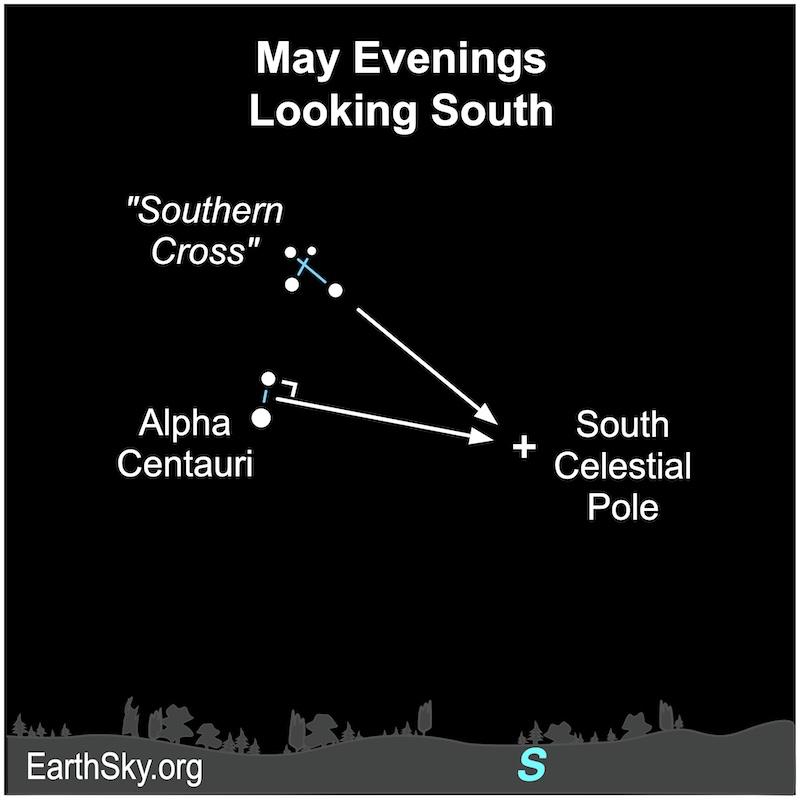
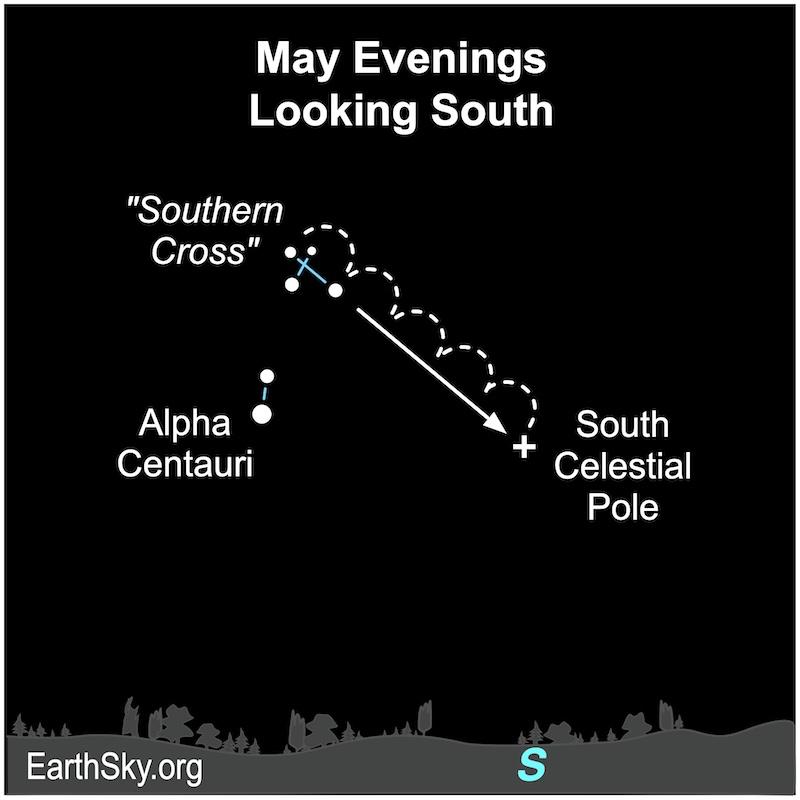
The Jewel Box and other clusters in Crux
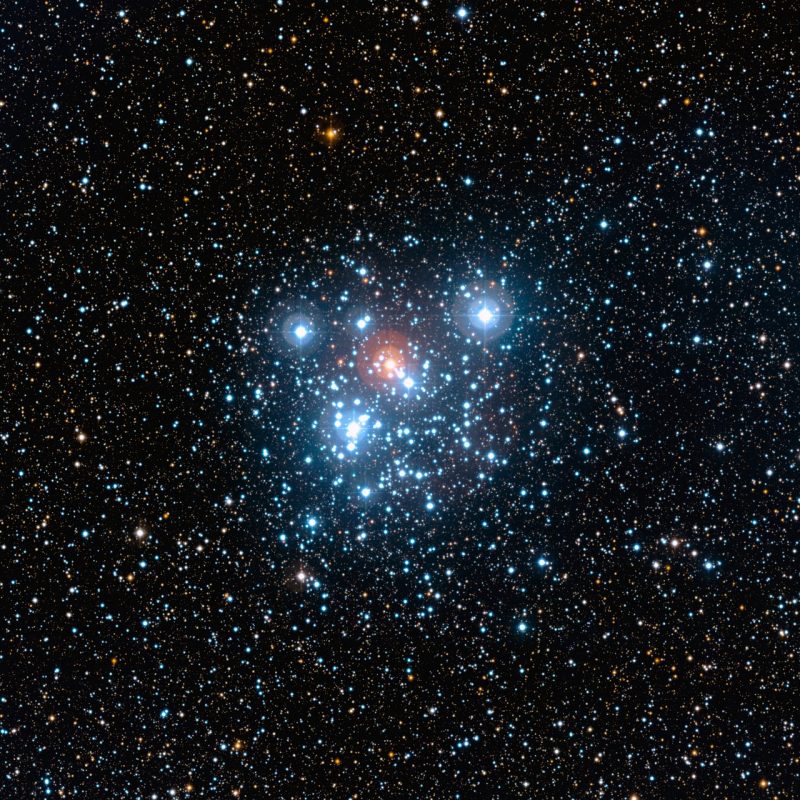
The Jewel Box is one of the most beautiful open clusters in the Southern Hemisphere. It lies just 1 degree from Beta Crucis. The Jewel Box, or NGC 4755, is bright at magnitude 4.2. Kappa Crucis, a magnitude 5.89 star, lies inside.
You can see the Jewel Box without optical aid. But a pair of binoculars or a telescope will bring more of the stars into focus.
Can you see color differences between these glittering gems?
The Coalsack Nebula
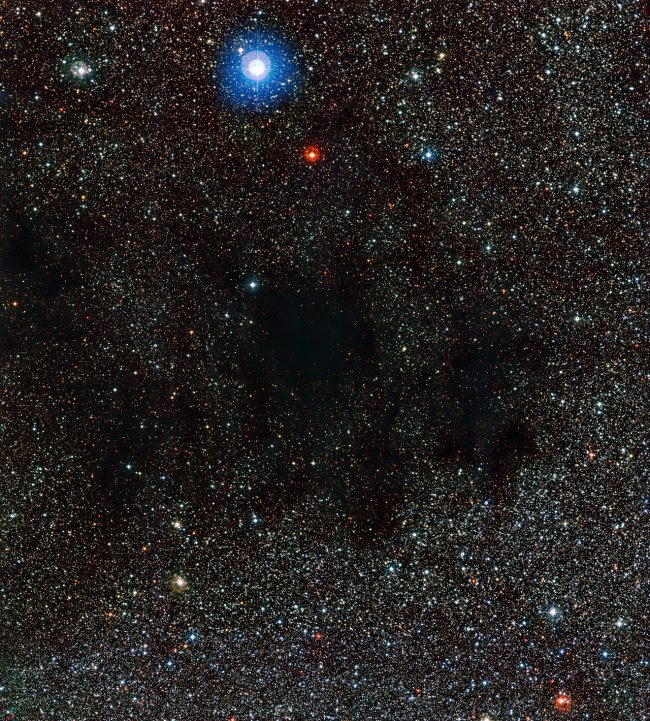
The easiest dark nebula to see in the sky is the Coalsack Nebula, found in the southeastern corner of Crux. The Coalsack is a dark, cloudy patch of dust and gas that obscures an entire swath of the Milky Way’s stars that lies behind it.
Bottom line: Crux, the constellation of the Southern Cross, is a hallmark of southern skies and contains the open cluster known as the Jewel Box.
Read more: How to see the Southern Cross from the Northern Hemisphere
The post Meet Crux, the constellation of the Southern Cross first appeared on EarthSky.
from EarthSky https://ift.tt/XTkY6ey
If you’re in the Southern Hemisphere, Crux the Southern Cross is one of the easiest constellations you can identify. It’s also one of the most famous! And it’s a reliable marker to the south celestial pole, the point around which the entire southern sky turns.
Crux consists of four relatively bright stars, close to one another and suggestive of a cross. This constellation is circumpolar, staying above the horizon all year round for observers at and south of 34 degrees south latitude. So, for example:
- At Sydney, Australia, (~34° S), most or all of Crux is circumpolar.
- At Buenos Aires, Argentina, (~35° S), it’s comfortably circumpolar.
- At Cape Town, South Africa, (~34° S), same story.
- Farther north – say at the equator – Crux rises and sets seasonally.
- North of about 27 degrees north latitude, Crux never rises at all.
In many ways, Crux is almost the mirror opposite of northern circumpolar constellations like Ursa Major the Greater Bear, with its famous Big Dipper asterism. Like the Big Dipper for northern observers, the Southern Cross is the southern sky’s iconic “always there” pattern.
How to see it from the Southern Hemisphere
Crux lies between the constellations Centaurus the Centaur and Musca the Fly. You can locate it simply by looking for four bright stars close together. The stars are less than 5 degrees apart. Five degrees is about the width of your three middle fingers held at arm’s length.
The compact size of Crux makes it the smallest of all the 88 constellations.
And Crux does resemble a cross. But it could also be considered kite-shaped.
Want an exact view from your location? Try Stellarium
How to see it from the Northern Hemisphere
Seeing the Southern Cross from the Northern Hemisphere is a matter of your location + timing + atmosphere + horizon quality.
First, your location. Know what your latitude allows. Crux sits around -60 degrees declination, so:
- At the equator (0 degrees) it can rise to ~30° high. That’s easy to see if the sky is clear.
- At 26 degrees north latitude it barely scrapes the sky at about 4 degrees above the southern horizon.
- At ~27 degrees north latitude and northward it never rises above the horizon.
So at 26 degrees north latitude you are in the extreme edge zone. You can’t just look up and observe the Southern Cross. Instead, you must hunt for it at the most distorted layer of atmosphere above your southern horizon. And you must be hunting at the exact right time.
More Northern Hemisphere viewing tips
Consider the timing. May is a good time to find Crux in the evening sky from the Northern Hemisphere. It’s visible in other months, too, but not at such a convenient time. In March, you have to wait until about 1 a.m. your local time to catch the Southern Cross at its highest elevation. In December and January, you have to catch it before dawn.
No matter the hour or date, Crux climbs to its highest point – crosses your sky’s meridian – in the sky when it’s due south. It’s easy to visualize a cross within this pattern of stars, because the pattern stands upright over your southern horizon.
And speaking of your horizon … To see the Southern Cross from anywhere in the Northern Hemisphere, you’ll want a clear, unobstructed southern horizon. A dark sky will be best. Visit EarthSky’s Best Places to Stargaze.
Read more about seeing the Southern Cross from the Northern Hemisphere.
Want an exact view from your location? Try Stellarium
Stars of Crux
The brightest star of the Southern Cross is Alpha Crucis, or Acrux. It’s the bottom star of the Cross and shines at magnitude 0.77 from a distance of 320 light-years. It’s also the 12th brightest star in the sky.
Moving in a clockwise circle around the Cross we come to the 2nd brightest star, Beta Crucis, sometimes called Becrux or Mimosa. Beta Crucis is magnitude 1.25 from a distance of 350 light-years.
Next, on the top of the Cross, is Gamma Crucis, or Gacrux. Gacrux shines at magnitude 1.59 at a distance of 88 light-years. Finally, on the right side of the cross, is Delta Crucis. It shines at magnitude 2.79 from a distance of 360 light-years.
Use the Southern Cross to find due south
The Jewel Box and other clusters in Crux
The Jewel Box is one of the most beautiful open clusters in the Southern Hemisphere. It lies just 1 degree from Beta Crucis. The Jewel Box, or NGC 4755, is bright at magnitude 4.2. Kappa Crucis, a magnitude 5.89 star, lies inside.
You can see the Jewel Box without optical aid. But a pair of binoculars or a telescope will bring more of the stars into focus.
Can you see color differences between these glittering gems?
The Coalsack Nebula
The easiest dark nebula to see in the sky is the Coalsack Nebula, found in the southeastern corner of Crux. The Coalsack is a dark, cloudy patch of dust and gas that obscures an entire swath of the Milky Way’s stars that lies behind it.
Bottom line: Crux, the constellation of the Southern Cross, is a hallmark of southern skies and contains the open cluster known as the Jewel Box.
Read more: How to see the Southern Cross from the Northern Hemisphere
The post Meet Crux, the constellation of the Southern Cross first appeared on EarthSky.
from EarthSky https://ift.tt/XTkY6ey

Aucun commentaire:
Enregistrer un commentaire